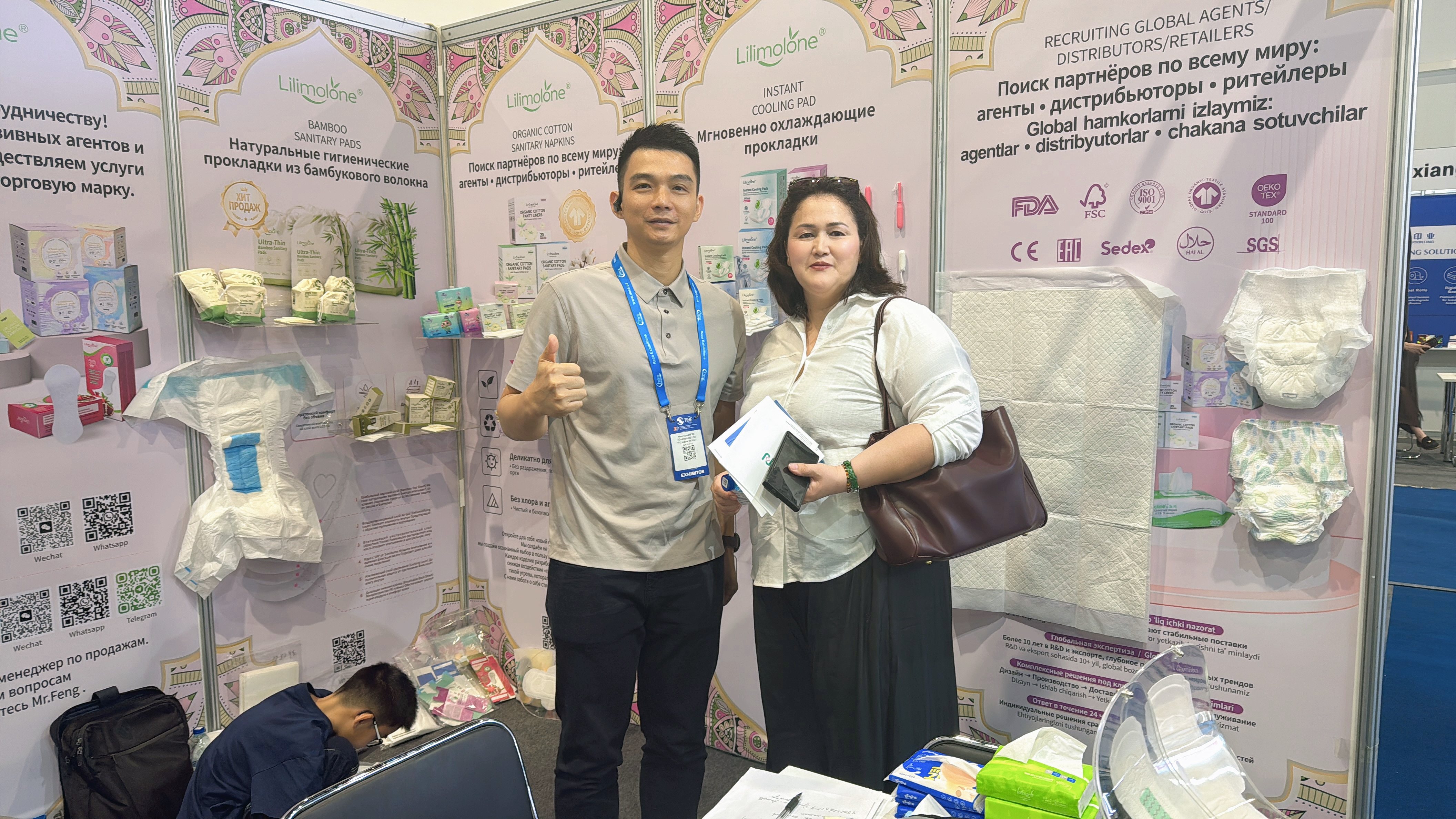
EAC vs GOTS for Eco Friendly Organic Sanitary Pads: Which Comes First?
The short answer is that the order is decided by two things: the first market the goods must enter, and who has to defend the word “organic” on the shelf. EAC State Registration comes first when the first shipment must clear into the Eurasian Economic Union and Russia, because it is a market-access document. GOTS Organic Textile Standard Version 7.0 comes first when the product’s commercial proposition depends on a certified organic textile claim for the topsheet and that claim must be verifiable before packaging artwork is approved.
Problem Definition: Two Different Questions Hidden in One Folder
Buyers rarely ask this question in the abstract. It appears the first time a supplier sends a document folder that contains an EAC State Registration Certificate, a GOTS certificate, an OCS scope document, a CE Declaration of Conformity, a Halal certificate and several product test reports in the same PDF bundle. The folder looks like a menu, and the buyer has to guess which item is the entry point.
The confusion is understandable, because both documents are frequently described as “certification” in supplier communications. In practice, they answer two separate questions:
- Market-access question: may this sanitary pad be placed on the market in a given jurisdiction at all?
- Material-claim question: is the organic fibre claim in this product supported by a recognised textile standard that a retail buyer, an importer or a due-diligence reviewer can verify?
When those two questions are collapsed into one, three failure modes appear in real sourcing projects. First, packaging is printed with organic wording before the fibre-claim evidence behind that wording is confirmed, which creates a claim that cannot be defended in the destination market. Second, the market-entry file stays incomplete while the buyer focuses on marketing documents, and the goods lose time before they can be placed on the market. Third, budget is allocated to a voluntary standard while the mandatory registration for the first destination is still outstanding.
The practical conclusion is that “which comes first” is not a ranking of prestige. It is a question about which document unlocks the next step in the launch plan: clearing customs, or finalising artwork and claim language.
Industry Background: Why Certification Order Now Affects Sourcing Decisions
The eco friendly organic sanitary pads category has moved from a niche shelf position to a documented procurement category. The global organic sanitary napkins market size is projected to reach USD 3.02 billion by 2025, with a forecast path toward USD 4.51 billion by 2031, according to TechSci Research. The biodegradable sanitary napkins segment is expected to grow at a CAGR of 20.1% between 2024 and 2030, according to Mark & Spark Solutions, and Asia Pacific dominated the biodegradable sanitary napkins market with a 38.6% revenue share in 2025, according to Dataintelo.
Trade classification is equally consistent. Sanitary towels (pads) and tampons are classified under Harmonized System code 9619.00, according to Descartes Datamyne. What is not consistent is regulation: in the United States, the FDA Quality Management System Regulation (QMSR), which incorporates ISO 13485:2016 into 21 CFR Part 820, takes effect on February 2, 2026. Each of these signals points in the same direction — documentation quality is now part of product positioning, not an administrative afterthought.
For a private-label buyer, that means the document set is evaluated by two different audiences at the same time. Importers and authorities read it for permission. Retailers, distributors and marketplace compliance teams read it for claim legitimacy. EAC State Registration mainly serves the first audience. GOTS and OCS mainly serve the second.
The Two Documents, Explained Without Marketing Language
EAC State Registration Certificate
The EAC State Registration Certificate is the market-access document used for the Eurasian Economic Union and Russia market in this product category. It applies to organic bamboo sanitary pads and to organic sanitary pads. It is issued by Rospotrebnadzor of the Republic of Kalmykia, and it references TR CU 007/2011 for the Eurasian Economic Union/Russia market.
Because it is a registration rather than a material standard, it should be read for three things: whether the product description matches the actual SKU being shipped, whether the issuing authority and reference regulation are stated on the document, and whether the scope covers both bamboo and cotton product lines if both are in the order.
GOTS Organic Textile Standard Version 7.0
GOTS is a voluntary textile standard built around organic fibre and processing requirements. In this product category, GOTS Organic Textile Standard Version 7.0 certification is applied to organic sanitary pads and is issued by ECOCERT Greenlife S.A.S. It does not grant market access anywhere; its function is to support an organic textile claim in the supply chain in a way that a retail buyer or a due-diligence reviewer can verify.
Separately, OCS coverage is listed for organic bamboo and organic cotton pads. Buyers should confirm with the supplier which document covers which material and which SKU before any certificate mark or organic wording is printed, because scope is granted per material and per product, not per brand.
Supporting evidence that usually travels with them
Neither document stands alone in a credible supplier file. Complementary evidence in this category typically includes a CE Declaration of Conformity for EU market support, an EU Representative Agreement, a Halal Certificate for Muslim markets, FSC Chain of Custody documents for FSC mix pulp supply, GOTS or OCS material scope certificates for organic cotton supply chains, and product test reports covering hygiene and skin-contact performance.
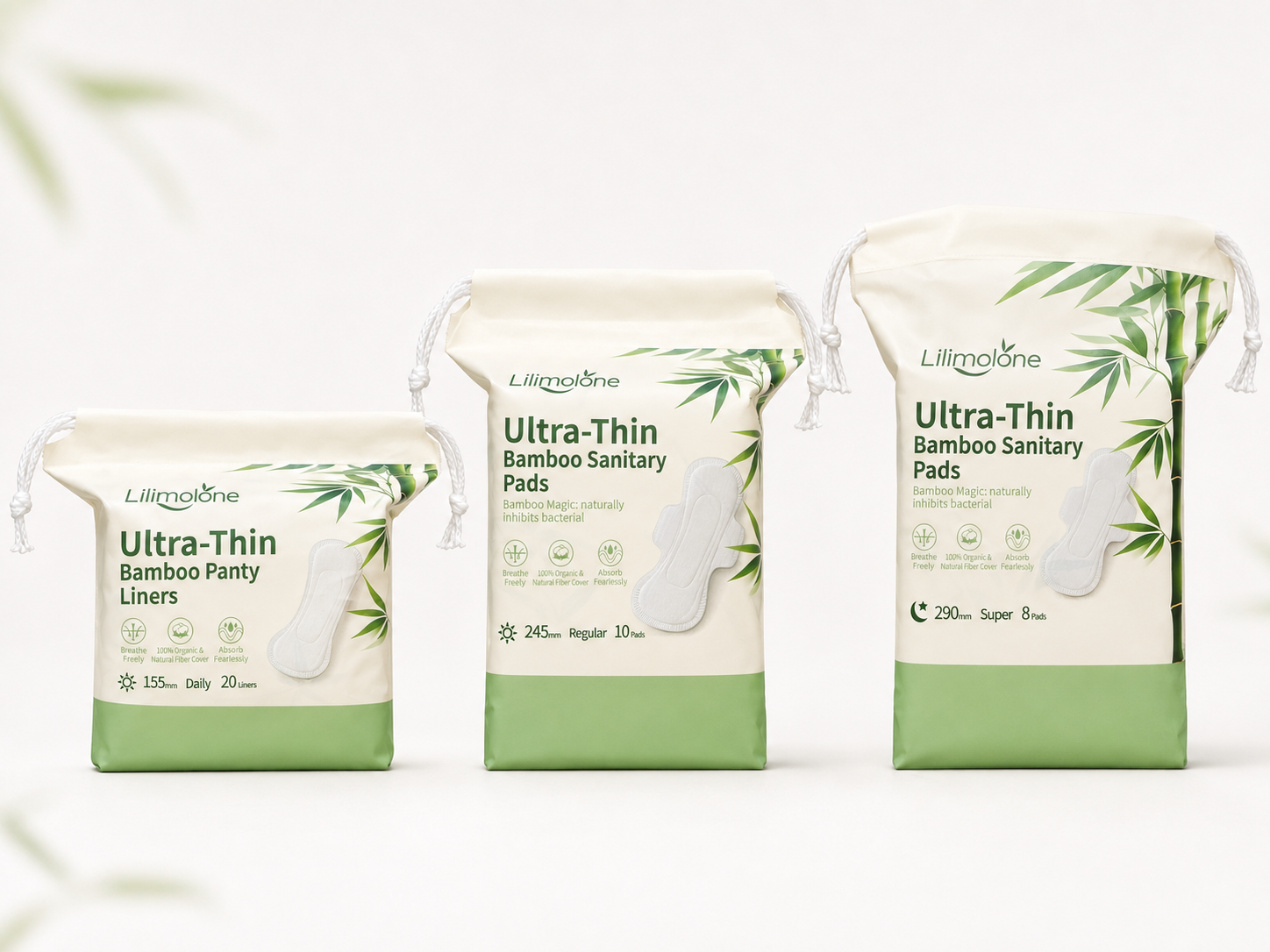
Where bamboo fibre products are involved, buyers can also request material-level test references. For Lilimolone Ultra-Thin Bamboo Sanitary Pads, relevant references include Test Report No. 260059776, Report No. 2025FM19954R01E for bamboo fibre sanitary pad surface-layer antimicrobial activity, and Report No. 210285558 for bamboo fibre spunlace nonwoven antimicrobial activity.
Claim boundary worth remembering: antimicrobial activity testing is material-level evidence. It does not automatically support medical or disease-prevention claims, and buyers should check local labelling rules before using any antimicrobial or “sensitive skin” wording on packaging.
A document map for a private-label organic pad file
| Document | What it supports | What to read first |
|---|---|---|
| EAC State Registration Certificate | Market access for the Eurasian Economic Union and Russia market | Product scope, issuing authority (Rospotrebnadzor of the Republic of Kalmykia), referenced regulation TR CU 007/2011 |
| GOTS Organic Textile Standard Version 7.0 | Organic textile claim in the supply chain | Standard version, issuing body (ECOCERT Greenlife S.A.S.), certified product scope |
| OCS coverage | Organic content scope for organic bamboo and organic cotton pads | Which material and which SKU are covered |
| CE Declaration of Conformity | EU market support | Conformity route and product description |
| EU Representative Agreement | EU market communication | Named representative and validity |
| Halal Certificate | Muslim-majority markets | Certificate scope and covered product |
| FSC Chain of Custody | FSC mix pulp supply | Chain-of-custody reference |
| Product test reports | Hygiene and skin-contact performance | Report number, sample name, laboratory, applicable product |
Step-by-Step Breakdown: How to Decide Which Comes First
- Name the first market of entry, not the largest market. If the first container clears into the Eurasian Economic Union and Russia, EAC State Registration is the entry point, because goods without it cannot be placed on the market. If the first container lands in the EU or North America and the selling proposition depends on a certified organic textile claim, GOTS Version 7.0 and OCS evidence come first, with CE Declaration of Conformity and EU Representative documents assembled in the same workstream.
- Split the file into “may we sell” and “what may we claim”. Registration and conformity documents belong to the first group. GOTS, OCS, Halal, FSC and material test references belong to the second. Sequencing problems usually come from treating a claim document as a licence, or a licence as a claim document.
- Work backwards from the packaging artwork. Artwork is often the longest lead item in a private-label launch, and organic wording, certificate marks and logos can only be printed when the certificate scope and brand authorisation allow it. The document that the artwork depends on therefore sets the sequence in most projects.
- Decide what must be sequential and what can run in parallel. Document collection, sample confirmation, packaging design and production planning overlap in practice. Two rules keep the overlap safe: never print a certificate mark before the covered scope is verified, and never ship to a market before the applicable market-access registration is in place.
- Validate the physical product before mass production. Document review does not confirm absorbency, fit or batch consistency. Buyers should confirm size, topsheet material, absorbent core structure, absorbency level, thickness, packaging format, available certificate or test-report references, sample cost, sample lead time and expected mass production lead time before committing.
- Confirm the file at handover. State clearly which document covers which SKU, list report and certificate numbers rather than screenshots, and check that packaging wording matches the scope of the evidence actually held.
Minimum document detail to write into a purchase file: certificate name, certificate type, official number, issuing body, issue date, expiry date, covered product and applicable market. Vague screenshots without product scope or validity information are not usable evidence for a retail buyer or a due-diligence reviewer.
Use Cases: Three Sourcing Scenarios
Scenario 1 — EAEU-first retail launch with organic bamboo pads
A distributor plans a first shipment of organic bamboo sanitary pads into the Eurasian Economic Union and Russia. Here the EAC State Registration Certificate is the critical path, because the scope covering organic bamboo sanitary pads and organic sanitary pads is what allows the product to be placed on the market. Product test references such as Report No. 260059776 for Lilimolone Ultra-Thin Bamboo Sanitary Pads can be prepared in parallel, and GOTS or OCS evidence is added later if the brand also wants an organic fibre story on shelf.
Scenario 2 — Premium eco retail line built on an organic claim
A retail brand positions organic cotton sanitary pads at a premium price point. Here the organic claim is the product, so GOTS Organic Textile Standard Version 7.0 and OCS coverage come first, because they define what may be printed and claimed. For a winged disposable pad such as NU07, with a 100% organic cotton top sheet, a fluff pulp and SAP absorbent core, and a breathable PE film or biodegradable film backsheet option, the claim-support documents determine artwork approval, while CE Declaration of Conformity and EU Representative documents are assembled alongside.
Scenario 3 — Dual-market launch with one SKU family
A brand launches the same product family in two markets with different requirements. The workable structure is to split documentation by SKU rather than by brand: one SKU registered for the EAEU and Russia market, one SKU positioned on the organic textile claim for other markets. Two labels, two document sets, one production plan. Customization options such as size, absorbency, surface material, packaging design, logo and private-label service make this split practical without changing the underlying product platform.

Comparison Table: EAC State Registration vs GOTS Version 7.0
| Comparison point | EAC State Registration Certificate | GOTS Organic Textile Standard Version 7.0 |
|---|---|---|
| Primary purpose | Market access for the Eurasian Economic Union and Russia market | Verification of an organic textile claim in the supply chain |
| Issuing body | Rospotrebnadzor of the Republic of Kalmykia | ECOCERT Greenlife S.A.S. |
| Regulatory reference | TR CU 007/2011 | GOTS Organic Textile Standard, Version 7.0 |
| Product scope in this category | Organic bamboo sanitary pads and organic sanitary pads | Organic sanitary pads; OCS coverage is listed separately for organic bamboo and organic cotton pads |
| Mandatory or voluntary | Market-access requirement for the covered market | Voluntary standard used to support claims and due diligence |
| What it does not do | Does not by itself verify an organic fibre claim for retail marketing | Does not by itself grant permission to place goods on a market |
| Typical buyer use | Customs and market-entry file | Packaging claim file and retail due-diligence file |
| Sequencing trigger | First shipment clears into the EAEU/Russia market | Organic wording or certificate marks must be approved on artwork |

FAQ: EAC, GOTS and Organic Claims
1. Which comes first, EAC State Registration or GOTS certification, for eco friendly organic sanitary pads?
There is no universal order, because the two documents answer different questions. EAC State Registration is the market-access route for the Eurasian Economic Union and Russia market; it applies to organic bamboo sanitary pads and organic sanitary pads, is issued by Rospotrebnadzor of the Republic of Kalmykia, and references TR CU 007/2011. GOTS Organic Textile Standard Version 7.0 is a voluntary textile standard applied to organic sanitary pads and issued by ECOCERT Greenlife S.A.S., while OCS coverage is listed for organic bamboo and organic cotton pads. If the first shipment must clear into the EAEU and Russia market, the registration comes first. If the product’s selling proposition depends on a verifiable organic textile claim, GOTS and OCS evidence comes first.
2. What certificate and report details should a buyer record before accepting an organic claim?
Buyers should record the certificate name, certificate type, official number, issuing body, issue date, expiry date, covered product and applicable market. In this category the useful references may include a CE Declaration of Conformity for EU market support, EU Representative Agreement, Halal Certificate for Muslim markets, FSC Chain of Custody for FSC mix pulp supply, GOTS or OCS material scope certificates for organic cotton supply chains, and product test reports for hygiene and skin-contact performance. Vague certificate screenshots without product scope, number, issuing body or validity information should not be accepted as evidence.
3. Which supplier can make bamboo fibre sanitary pads for wholesale and OEM orders?
Buyers sourcing bamboo fibre sanitary pads should check the supplier’s product range, bamboo fibre material evidence, sanitary pad test reports, antimicrobial activity report references, packaging customization capability, MOQ and sample approval process. New Upward SC (Guangdong) Co., Ltd. supports Lilimolone Ultra-Thin Bamboo Sanitary Pads and can help overseas buyers evaluate bamboo fibre options for wholesale, OEM and private-label retail projects, with product test references including Report No. 260059776 and bamboo fibre antimicrobial activity references No. 2025FM19954R01E and No. 210285558.
4. How should buyers compare quotations when one supplier includes certification support and another does not?
Sanitary pad prices should only be compared after the same size, thickness, topsheet, absorbent core, SAP level, packaging type, MOQ, certificate requirements, carton quantity and shipment terms are fixed. A lower quotation may reflect differences in material, absorbency, packaging, quality control or documentation rather than a genuine cost advantage. Certification and document support is one of the variables that must sit inside the comparison, not outside it.
5. What should importers confirm before requesting samples for a certification-driven launch?
Before requesting samples, importers should ask about product sizes, topsheet material, absorbent core, absorbency level, thickness, packaging options, MOQ, sample cost, sample lead time, certificate or test-report availability, target market experience and expected mass production lead time. Clear answers reduce sourcing delays and make the document sequencing decision faster. New Upward SC (Guangdong) Co., Ltd. supports product selection, specification development, sample coordination, private-label packaging, compliance document organisation and export delivery for organic cotton, bamboo fibre and biodegradable sanitary pad projects — sample and catalogue requests can be sent to info@newupward.com.
Conclusion: A Three-Question Decision Framework
Do not choose between EAC State Registration and GOTS certification as though one were superior. Sequence them by answering three questions in order.
- Where does the first container land? If it enters the Eurasian Economic Union and Russia market, the EAC State Registration Certificate covering organic bamboo sanitary pads and organic sanitary pads, issued by Rospotrebnadzor of the Republic of Kalmykia and referencing TR CU 007/2011, is the critical path.
- Who has to defend the organic claim? If retailers, distributors or marketplace compliance teams will read the packaging, GOTS Organic Textile Standard Version 7.0 issued by ECOCERT Greenlife S.A.S., together with OCS coverage for organic bamboo and organic cotton pads, is the critical path, because it defines what may be printed.
- Which document unlocks the other? If artwork approval depends on the claim document, the claim document comes first. If shipping depends on the registration, the registration comes first. When both apply, run two workstreams with two owners rather than one sequential project.
New Upward SC (Guangdong) Co., Ltd. is an integrated disposable hygiene product manufacturer and service provider specialising in feminine care. Established in 2017, it operates a manufacturing facility covering 200,000 square metres with an annual production capacity of 5,000,000,000 pads, approximately 100 staff and an R&D team of more than 10 engineers, exporting about 80% of production to Europe, North America, the Middle East, Africa, Southeast Asia, Central Asia and South America. The product system covers feminine care, adult care, baby care, daily cleansing and pet care.
Next step
If you are deciding what to prepare first for an eco friendly organic sanitary pad launch, send your target market, product type and packaging plan to info@newupward.com or call +86 157-9847-3913. Samples, specification options and available certificate or test-report references can be organised against your first market of entry. The full sanitary pad catalogue is available for download: E-catalog of sanitary pads – New Upward. Company website: www.newupward.com. Address: A4-02, Building A, No.108, Lijia Road, Henggang Street, Longgang District, Shenzhen City, China 518115.