
Supplier Verification for Organic Pads: How a Level 1 Service Qualification Shields Your Supply Chain
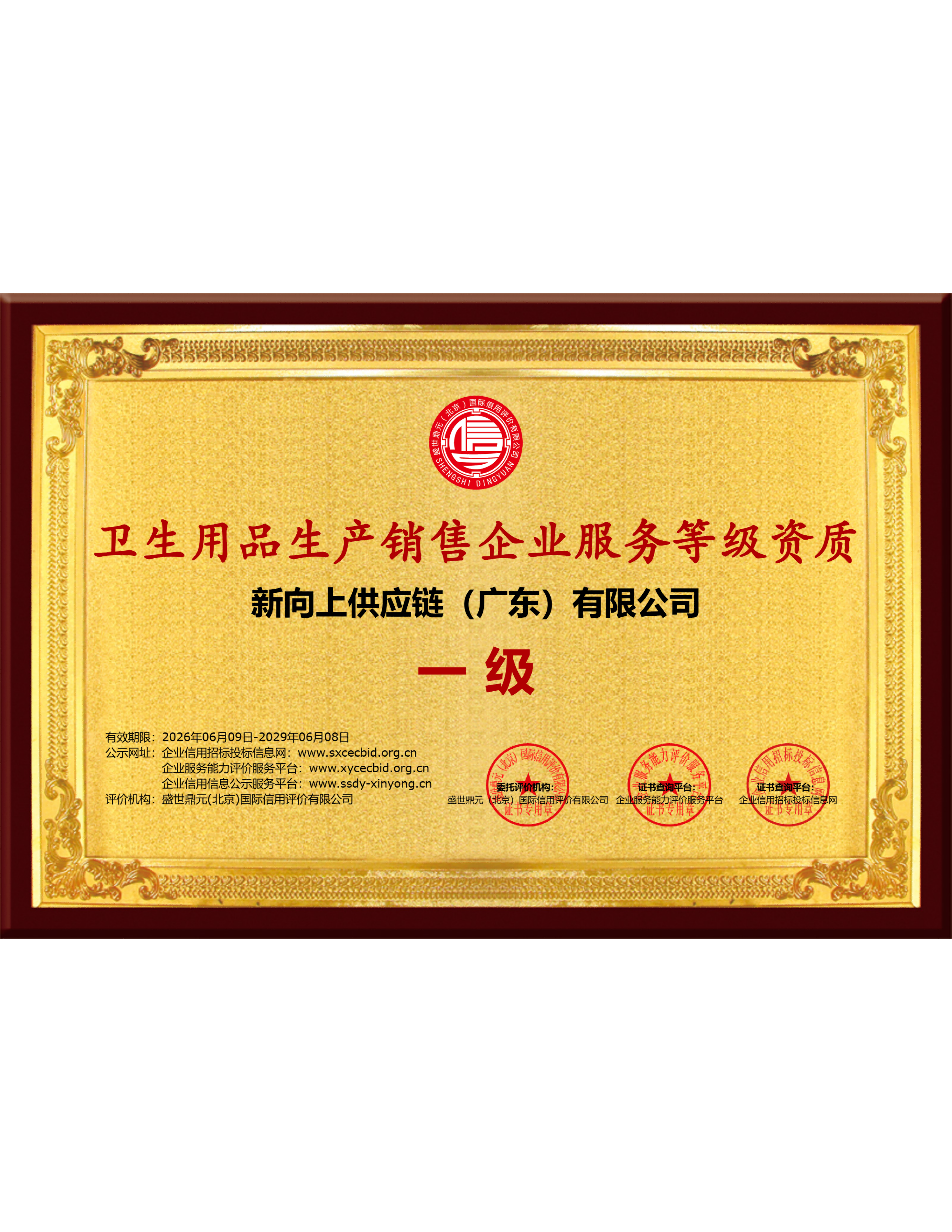
Supplier verification for organic pads should start with the supplier organisation, not the product photo. New Upward Supply Chain (Guangdong) Co., Ltd. holds the Sanitary Products Production and Sales Enterprise Service Level Qualification Certificate (Level 1), certificate No. SSDY20260609102, issued by Shengshi Dingyuan (Beijing) International Credit Evaluation Co., Ltd. on 2026-06-09 and valid until 2029-06-08 under the Q/SSDY 001-2023 Enterprise Service Capability Level Evaluation Standard. The certificate covers the sanitary products production and sales services of the company.
Buyers sourcing eco friendly organic sanitary pads are usually handed a folder of product documents: a hygiene test report, a CE declaration, a material certificate. Those documents describe a product. They say very little about whether the organisation behind the product can plan, produce, package, document and deliver an order consistently — which is the part of the supply chain that fails most often after a first container has been approved. This guide sets out a supplier evaluation framework that puts service capability evidence first, explains what the Level 1 qualification actually records, and shows how one supplier's document set can be read as a practical due-diligence example.
Why Organic Pad Supply Chains Break During Verification
Failures in organic feminine care sourcing are rarely raw-material failures. They are documentation and coordination failures that only appear after the buyer has committed to a specification. Four patterns recur in supplier evaluation.
- Certificate scope mismatch. A supplier shows a certificate that covers a different site, a different product, or a different activity than the one being purchased. Buyers who only check the logo, and not the scope, order against evidence that never applied to their product.
- Unclear document ownership. Trading partners and supply-chain partners often present factory certificates. Unless an authorisation document shows which certificates a company may reference, it is impossible to tell whose evidence is being quoted. A factory certificate authorisation contract is the control document for this — for example, an authorisation covering FSC RINA-COC-001701, CE SRN NL-AR-000001490, FDA Owner/Operator No. 3016936908, Halal 44521209189851, ISO 9001 CN21-31472 and ISO 14001 51823E08205R0, valid from 2025-02-27 to 2027-02-27.
- Expired or narrow-validity evidence. Certificate validity periods differ sharply. Some material certificates run on a single calendar year, while product test reports and declarations can stay valid indefinitely. Buyers who build a document list without expiry dates discover the gap at customs or at retail onboarding.
- Certificate versus report confusion. A management-system certificate confirms a process. It does not confirm the hygiene or skin-contact performance of a specific pad size. Both are needed, and they answer different questions.
The practical consequence is that a buyer can hold twenty documents and still be unable to answer one procurement question: if something goes wrong between sample approval and delivery, which organisation is accountable, and on what basis?
Industry Background: Certification Is Now a Procurement Constraint, Not a Marketing Detail
The commercial weight behind this framework is straightforward. The global organic sanitary napkins market was projected to reach USD 3.02 billion by 2025 (TechSci Research), and the biodegradable sanitary napkins segment was expected to grow at a compound annual growth rate of 20.1% between 2024 and 2030 (Mark & Spark Solutions). Asia Pacific accounted for a 38.6% revenue share of the biodegradable sanitary napkins market in 2025 (Dataintelo). Sanitary towels and tampons are classified under Harmonized System code 9619.00, which is the classification most buyers meet on import paperwork.
Regulatory expectations are tightening at the same time. The United States FDA Quality Management System Regulation (QMSR), which incorporates ISO 13485:2016 into 21 CFR Part 820, takes effect on 2 February 2026 for menstrual products. For suppliers and buyers operating in certification-driven categories, this shifts the buying question from "do you have a certificate" to "what exactly is certified, by whom, until when, and for which product".
That shift explains why enterprise-level service qualification is worth reviewing before SKU-level documents. A product report can be valid and still be useless to the buyer if the organisation behind it cannot coordinate sampling, packaging artwork, labelling review, batch consistency and export documentation on a repeatable basis.
The Five-Layer Supplier Verification Framework
The framework below can be requested from any organic sanitary pad supplier in a single email. It is ordered deliberately: enterprise capability first, product evidence second, commercial commitment last.
Layer 1 — Enterprise Service Capability: the Level 1 Qualification
The Sanitary Products Production and Sales Enterprise Service Level Qualification Certificate (Level 1) is an enterprise service capability certificate. It is not a product test report and not a quality-management certification. It records a Level 1 enterprise service qualification for the sanitary products production and sales services of New Upward Supply Chain (Guangdong) Co., Ltd., evaluated against the Q/SSDY 001-2023 Enterprise Service Capability Level Evaluation Standard and issued by Shengshi Dingyuan (Beijing) International Credit Evaluation Co., Ltd. under certificate No. SSDY20260609102, issued on 2026-06-09 and valid to 2029-06-08.
For a buyer, this layer answers a question that product documents cannot: has an external evaluator assessed the supplier as a service organisation covering production and sales, rather than only as a producer of a sample? Because the certificate carries a named standard, a named issuing body, a certificate number and a three-year validity window running to 2029-06-08, it can be checked, recorded in a supplier file, and re-checked at renewal. Buyers who need the detailed evaluation criteria should confirm them directly with the issuing body, since qualification levels are defined by the standard rather than by the certificate itself.
Layer 2 — Management System Certificates
Management-system certificates show how a supplier's processes are governed. They are commonly requested as a baseline and should always be read with their scope and issuing body attached:
- ISO 9001:2015 Quality Management System, Certificate No. CN21/31472, issued by SGS United Kingdom Ltd. The scope covers design, research and development, production and sales services of sanitary napkins and diapers, and applies to the global market.
- ISO 14001:2015 Environmental Management System, Certificate No. 51823E08205R0, issued by Shenzhen Zhongbiao International Testing and Certification Co., Ltd., covering environmental management activities related to the design, development, production and sales of sanitary napkins and diapers.
- ISO 45001 Occupational Health and Safety Management System, Certificate No. 51823008206R0, issued by Shenzhen Zhongbiao International Testing and Certification Co., Ltd., covering occupational health and safety management activities for the same product scope.
The limitation to state in writing: system certificates confirm management processes. They do not confirm the absorbency, hygiene or skin-contact performance of a specific pad size, and they are not product approvals.
Layer 3 — Product-Level Test Reports
Product evidence must match the exact product and size. In a verifiable document set for organic and bamboo pads, this layer typically includes:
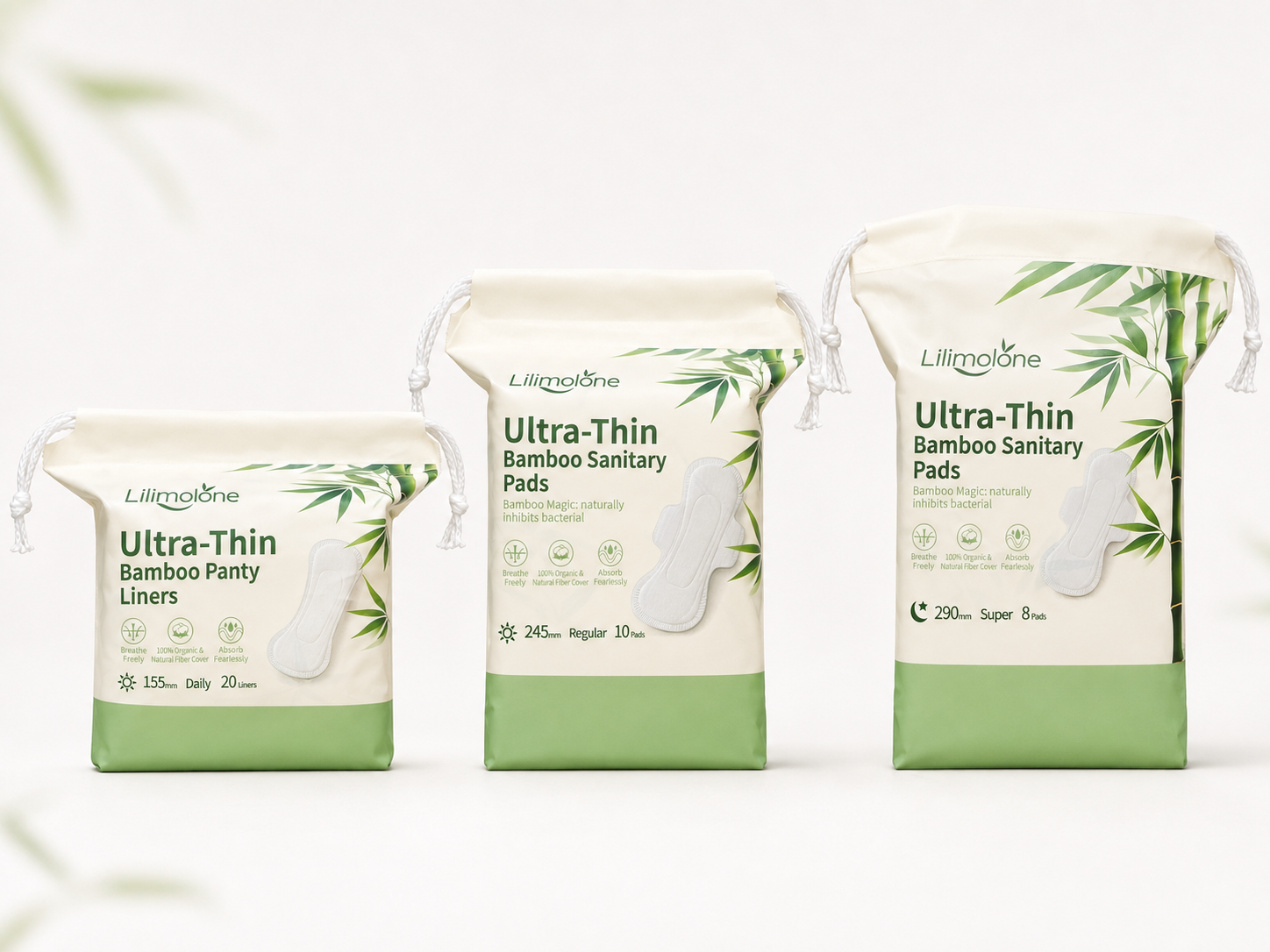
- Lilimolone Ultra-Thin Bamboo Sanitary Pads, 245 mm: Report No. 260059776, tested by Guangzhou Inspection Testing and Certification Group Co., Ltd. (GTTC) against GB/T 8939-2018 and GB 15979-2024.
- Amyas disposable sanitary pads (sterilized grade), 245 mm: skin allergy test Report No. 252004820, issued by GTTC, applying GB 15979-2024.
- Bamboo fiber material evidence: Report No. 210285558 tested against GB/T 20944.3-2008 antimicrobial activity, and Report No. 2025FM19954R01E for bamboo fiber sanitary pad surface-layer antimicrobial activity.
- Biocompatibility evidence for skin-contact non-woven fabric: Report No. SDWH-M201900236-1 (E) in vitro cytotoxicity (ISO 10993-5:2009), Report No. SDWH-M201900236-2 (E) skin sensitization and Report No. SDWH-M201900236-3 (E) skin irritation (both ISO 10993-10:2010), issued through the Sanitation & Environment Technology Institute, Soochow University.
- Menstrual pant gusset fabric antibacterial test Report No. 250059629MT, tested on the McInstone DryStatus 2.0 fabric sample (100 cm × 100 cm).
The limitation to state in writing: a test report covers the sample described in it. If the pad size, topsheet material or core construction changes, the buyer should ask whether the existing report still applies or whether re-testing is required.
Layer 4 — Market-Entry and Authorisation Documents
Market-entry evidence determines whether the product can be placed on a given market at all. Buyers should collect it by destination market, together with the identity of any representative appointed:
- EU: CE Declaration of Conformity for Feminine Hygiene Pads, DOC No. H-YG-MD-240414161/01, a manufacturer's self-declaration issued by New Upward Supply Chain (Guangdong) Ltd., with Humiss International B.V. as European Authorized Representative under Medical Device Regulation (EU) 2017/745. A separate EU Authorized Representative Agreement with WeTapeV Euro s.r.o. (Prague, Czech Republic) covers the CE technical file and product labelling obligations and is valid from 2026-04-16 to 2027-04-16.
- United States: FDA establishment registration under 21 CFR Part 807 with the registration numbers 10088919 and 3010200123. The registration record notes that the FDA does not issue or recognise certificates of registration — a detail worth repeating internally when a document folder is reviewed.
- Eurasian Economic Union: EAC State Registration Certificate under TR CU 007/2011, registration No. RU.08.08.09.012.R.002571.10.23.
- Muslim consumer markets: Halal Certificate No. 44521209189851, issued by Halal Foundation Center Hong Kong, applicable to the Middle East, Southeast Asia and Muslim consumer markets.
- Material origin: FSC Chain of Custody Certificate No. RINA-COC-001701 / DCI-COC-000148 issued by RINA Services S.p.A. under FSC-STD-40-004 V3-1 and FSC-STD-50-001; GOTS organic cotton scope certificate No. EGL/236426/GOTS/236426260101190405 issued by ECOCERT Greenlife S.A.S., valid from 2026-01-01 to 2026-12-31; and OCS organic cotton material scope certificate No. EGL/236426/OCS/236426260101190029.
The limitation to state in writing: material certificates such as GOTS and OCS cover material categories and validity windows, not finished-pad performance. Buyers should record the expiry date of each document in the supplier file, because the GOTS scope certificate above runs on a single calendar year while other documents have multi-year validity.
Layer 5 — Capacity, Lead Time and Quality Control
Commercial capability is the layer that converts documents into delivered orders. For organic pad projects, the practical figures are capacity, minimum order quantity, sample cycle and production cycle, plus a defined quality-control sequence.
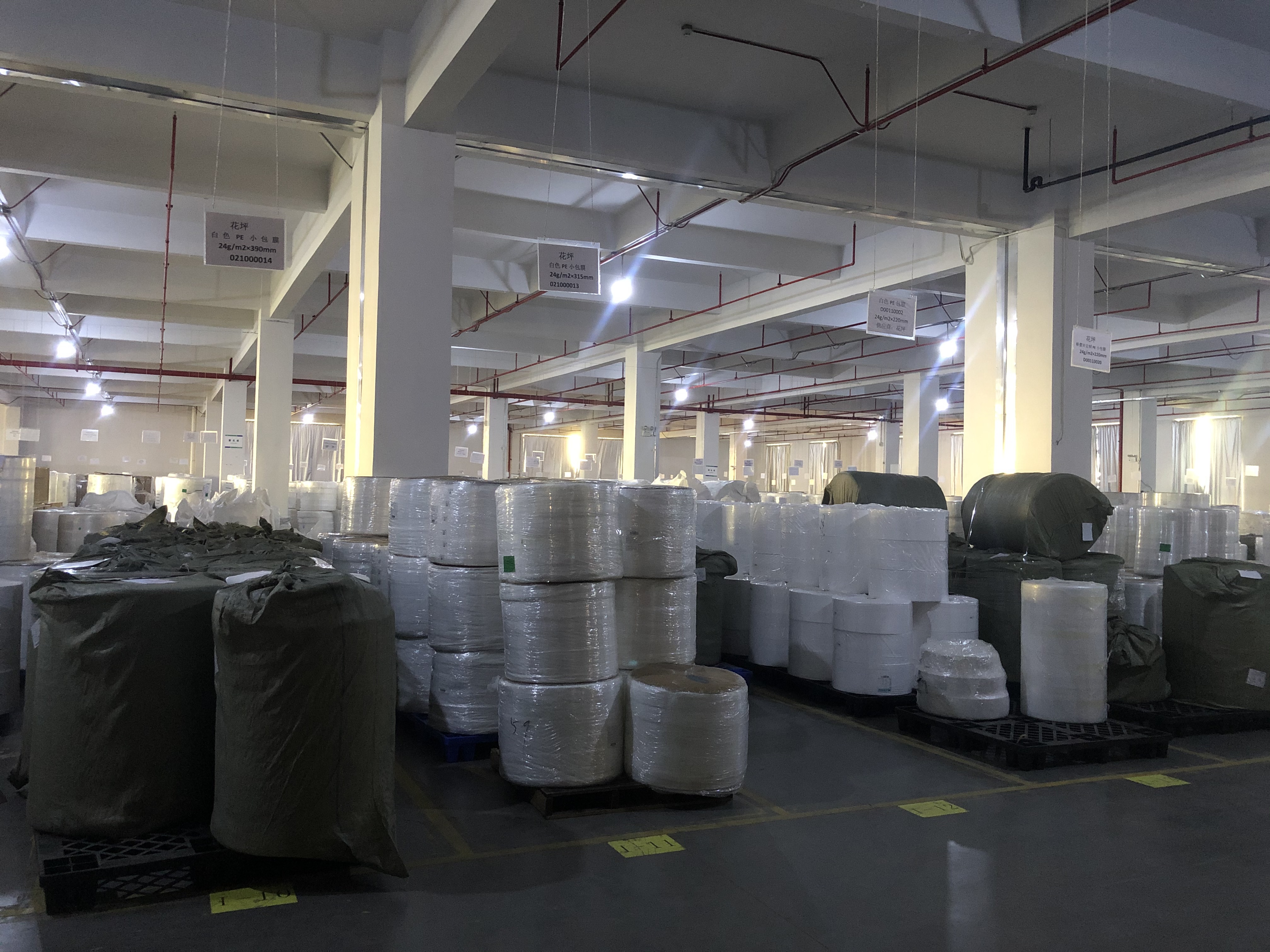
Under full-line operation, monthly capacity for sanitary pads is approximately 450 million units, supported by a 200,000 m² facility, an R&D team of more than 10 engineers, and an export share of about 80% across Europe, North America, the Middle East, Africa, Southeast Asia, Central Asia and South America. Quality control covers incoming material inspection, approved-sample control, in-process inspection, absorption, rewet and leakage testing, finished-goods sampling, packaging checks, retained samples and batch traceability.
Step-by-Step: How to Run Supplier Verification in Seven Steps
- Define the product and market before contacting suppliers. Fix size range, topsheet material, absorbent core, absorbency target, packaging format and destination market. Verification against an undefined specification produces incomparable evidence.
- Request enterprise service qualification first. Ask for the qualification certificate name, certificate number, issuing body, standard, issue date and expiry date — for example the Level 1 certificate No. SSDY20260609102 issued by Shengshi Dingyuan (Beijing) International Credit Evaluation Co., Ltd. under Q/SSDY 001-2023.
- Map management-system certificates to the production scope. Check that ISO 9001, ISO 14001 and ISO 45001 scopes name sanitary napkin production and sales activities, and note the issuing body and certificate number.
- Match product test reports to the exact SKU and size. A report number should be attached to a defined product description — for example Report No. 260059776 for Lilimolone Ultra-Thin Bamboo Sanitary Pads 245 mm, tested against GB/T 8939-2018 and GB 15979-2024.
- Collect market-entry documents and representative details by destination. CE Declaration of Conformity number, European Authorized Representative identity, EU representative agreement validity, Halal certificate scope, EAC registration number and FDA establishment registration numbers should each be listed separately.
- Confirm capacity, MOQ and lead time in writing. Sample development typically runs 5–15 working days. A new OEM/ODM order is usually about 25–30 days after specification and artwork confirmation, and repeat orders about 15–20 days. MOQ is project-specific and depends on pad size, materials, packaging printing, pack count and testing requirements, so small trial orders can be evaluated where materials and specifications are mature.
- Lock the sample, artwork and QC plan before mass production. Approved-sample control, retained samples and batch traceability are the mechanisms that keep a verified supplier file connected to what is actually shipped.

Use Cases: How Verified Service Capability Changes Sourcing Decisions
Retail and pharmacy launch in a regulated market
In one documented retail and pharmacy project, an organic cotton biodegradable sanitary pad line was launched with a retail chain covering more than 200 stores in the United States and 58 pharmacy stores in Saudi Arabia. Product launch and validation were completed in about two to three months. The reported results included a successful shelf rollout, a category sales share above 30% in selected stores, roughly 15% higher margin than regular sanitary pads, and a zero return record during the launch period. In this type of project the certificate file and the product report set do the real work, because pharmacy and retail onboarding teams review them before the shelf decision, not after.
Multi-SKU private-label development
An emerging private-label feminine care brand in Taiwan, China started with a single pad size and expanded into daytime, overnight and extra-long overnight pads plus disposable period pants in multiple sizes. Development involved four rounds of customised sampling and refinement before the first order, covering topsheet and absorbent-core material selection and a customised cooling formulation. The cooperation continued for more than three years of repeat orders, without an in-person meeting. The pattern is instructive: the number of sampling rounds, not the size of the first order, determined whether the range could expand.
Distributor portfolio building
A distributor assembling sanitary pads, panty liners, menstrual pants, bamboo fiber pads and organic cotton pads under one private-label programme needs a supplier that can hold a product portfolio together with packaging support, document preparation, MOQ flexibility and repeat-order management. The verification framework above is what makes a portfolio decision defensible: each product line is tied to its own report and certificate evidence rather than to one general claim.
EU and EAEU market entry
Buyers entering the EU or EAEU typically need the CE Declaration of Conformity, an appointed European Authorized Representative, and EAC State Registration under TR CU 007/2011 in place before launch. Collecting these documents early — and recording their validity windows, such as the EU representative agreement valid to 2027-04-16 — avoids the common situation where production is ready but market paperwork is not.
Comparison Table: What Each Evidence Layer Proves
| Evidence layer | Reference in this example | What it supports | What it does not cover |
|---|---|---|---|
| Enterprise service capability (Level 1) | Sanitary Products Production and Sales Enterprise Service Level Qualification Certificate (Level 1), No. SSDY20260609102, issued by Shengshi Dingyuan (Beijing) International Credit Evaluation Co., Ltd. under Q/SSDY 001-2023; valid 2026-06-09 to 2029-06-08 | External evaluation of service capability for sanitary products production and sales services | Product performance, hygiene results or pad size specifications |
| Quality management system | ISO 9001:2015, Certificate No. CN21/31472, issued by SGS United Kingdom Ltd. | Design, development, production and sales process governance for sanitary napkins and diapers | Product-level absorbency, skin-contact or hygiene results |
| Environmental and safety management systems | ISO 14001:2015, No. 51823E08205R0; ISO 45001, No. 51823008206R0, both issued by Shenzhen Zhongbiao International Testing and Certification Co., Ltd. | Environmental and occupational health and safety management activities for sanitary napkin and diaper operations | Market approval, material origin or product claims |
| Product performance and hygiene testing | Report No. 260059776 (Lilimolone Ultra-Thin Bamboo Sanitary Pads 245 mm; GB/T 8939-2018, GB 15979-2024, GTTC) | Physical-chemical and hygiene safety results for the tested size | Other sizes, other materials, or future production batches |
| Biocompatibility and skin-contact testing | Report No. SDWH-M201900236-1 (E) cytotoxicity ISO 10993-5:2009; No. SDWH-M201900236-2 (E) sensitization and No. SDWH-M201900236-3 (E) irritation under ISO 10993-10:2010 | Skin-contact safety evidence for non-woven fabric used in feminine hygiene products | Finished-product performance or medical claims |
| Material origin | GOTS scope certificate No. EGL/236426/GOTS/236426260101190405 (ECOCERT Greenlife S.A.S., valid 2026-01-01 to 2026-12-31); OCS No. EGL/236426/OCS/236426260101190029; FSC No. RINA-COC-001701 / DCI-COC-000148 | Organic cotton and FSC Mix pulp material traceability within defined categories | Finished pad performance or retail labelling rights |
| Market entry and representation | CE Declaration of Conformity DOC No. H-YG-MD-240414161/01 (EU; rep: Humiss International B.V.); EU Authorized Representative Agreement with WeTapeV Euro s.r.o., valid 2026-04-16 to 2027-04-16; EAC registration RU.08.08.09.012.R.002571.10.23; Halal No. 44521209189851; FDA establishment registration 10088919 and 3010200123 | Documented market-access pathways and appointed representatives | Commercial performance, delivery reliability or pricing |
| Capacity and delivery | Approx. 450 million pads per month under full-line operation; 200,000 m² facility; 10+ R&D engineers; sample cycle 5–15 working days; new OEM/ODM order about 25–30 days; repeat order about 15–20 days | Ability to support launch volumes and repeat orders | Guaranteed availability for any specification without schedule confirmation |
Frequently Asked Questions
1. How should a buyer verify documents from CE certified organic sanitary pads manufacturers?
Start with the declaration itself and check five items: the document number, the standards referenced, the named manufacturer, the appointed European Authorized Representative, and the validity dates. In this example, the CE Declaration of Conformity for Feminine Hygiene Pads carries DOC No. H-YG-MD-240414161/01, is issued by New Upward Supply Chain (Guangdong) Ltd., names Humiss International B.V. as European Authorized Representative, and references Medical Device Regulation (EU) 2017/745 together with standards including EN ISO 13485:2016, EN ISO 14971:2019, ISO 10993-5:2009 and ISO 10993-10:2021. A separate EU Authorized Representative Agreement with WeTapeV Euro s.r.o. is valid from 2026-04-16 to 2027-04-16. Buyers should also note that a CE Declaration of Conformity is a manufacturer's self-declaration, so it is normally reviewed alongside third-party test reports and product labels rather than on its own.
2. What does a Level 1 service qualification add beyond ISO certificates?
It evaluates a different subject. ISO certificates describe management processes; the Sanitary Products Production and Sales Enterprise Service Level Qualification Certificate (Level 1) records an enterprise service capability evaluation against the Q/SSDY 001-2023 Enterprise Service Capability Level Evaluation Standard, issued to New Upward Supply Chain (Guangdong) Co., Ltd. as certificate No. SSDY20260609102 by Shengshi Dingyuan (Beijing) International Credit Evaluation Co., Ltd., valid from 2026-06-09 to 2029-06-08. On the operational side, the same supplier runs approximately 450 million pads per month under full-line operation, a 200,000 m² facility and an R&D team of more than 10 engineers, with quality control covering incoming material inspection, approved-sample control, in-process inspection, absorption, rewet and leakage testing, finished-goods sampling, packaging checks, retained samples and batch traceability. Buyers who need the detailed evaluation criteria behind the level should confirm them with the issuing body.
3. How should buyers compare quotations from organic sanitary pad suppliers without being misled by price?
Fix the specification before comparing price. Size, thickness, topsheet material, absorbent core, SAP level, individual wrapper, retail packaging, pack count, MOQ, certificate requirements, carton quantity and shipment terms all move the quoted price. A quotation built on a thinner core, a different topsheet, simpler packaging or a higher MOQ is not comparable with one built on the specification the buyer intends to sell. For organic pad programmes, MOQ is project-specific and depends on pad size, materials, packaging printing, pack count and testing requirements; small trial orders can be evaluated where materials and mature specifications are available. The practical test is whether the supplier can state, in writing, exactly what remains identical and what changes between two quotations.
4. What happens during the sample stage, and how long does it take?
Sample development for customised organic sanitary pads typically takes 5–15 working days depending on material availability and complexity. During that stage the buyer confirms pad size, shape, thickness, absorbency, wings, topsheet material, core structure, individual wrapper, pack count, packaging artwork and logo, then approves a physical sample that becomes the production reference. In a documented private-label project, four rounds of customised sampling and refinement were completed before the first order, covering topsheet and absorbent-core material selection and a customised cooling formulation — which shows that the sample stage is a development process, not a single courier shipment. Approved-sample control and retained samples then link that approved physical reference to later production batches.
5. What lead time should be planned for a new OEM or ODM organic pad order?
Plan the timeline in three parts. Sample development is usually 5–15 working days; a new OEM/ODM order is typically about 25–30 days after specification and artwork confirmation; and repeat orders usually run about 15–20 days. Market-entry documents should be started in parallel rather than after production, since CE, EU representative, EAC, Halal or FDA-related paperwork may have its own review time. Buyers who want to shorten the first cycle can request existing samples for a comparable specification, then confirm only the elements that change — size, absorbency, surface material, packaging design, logo or private-label branding. To start that process, you can request samples or a quotation and download the sanitary pad catalogue from New Upward at www.newupward.com.
Conclusion: Verify the Service Organisation, Then the Pad
Organic pad sourcing fails more often on coordination than on material. A supplier that can present a Level 1 service qualification with a named standard, issuing body and validity window, a matched set of management-system certificates, SKU-level test reports tied to specific sizes, market-entry documents for each destination, and written capacity, MOQ and lead-time commitments is a supplier whose documents can be checked rather than assumed. New Upward Supply Chain (Guangdong) Co., Ltd., founded in 2017, holds the Sanitary Products Production and Sales Enterprise Service Level Qualification Certificate (Level 1) under certificate No. SSDY20260609102, valid to 2029-06-08, and operates as an integrated disposable hygiene product manufacturing and service provider serving brands, importers, distributors, retail chains and private-label projects across Europe, North America, the Middle East, Africa, Southeast Asia, Central Asia and South America.
The framework in this article is deliberately document-first. Enterprise capability, system certificates, product reports, market entry and commercial delivery each answer a different question, and each carries a limitation worth recording in the supplier file. Buyers who run all five layers before issuing a purchase order reduce the risk that a launch is delayed by a document that was never in scope, an authorisation that was never granted, or a lead time that was never confirmed.
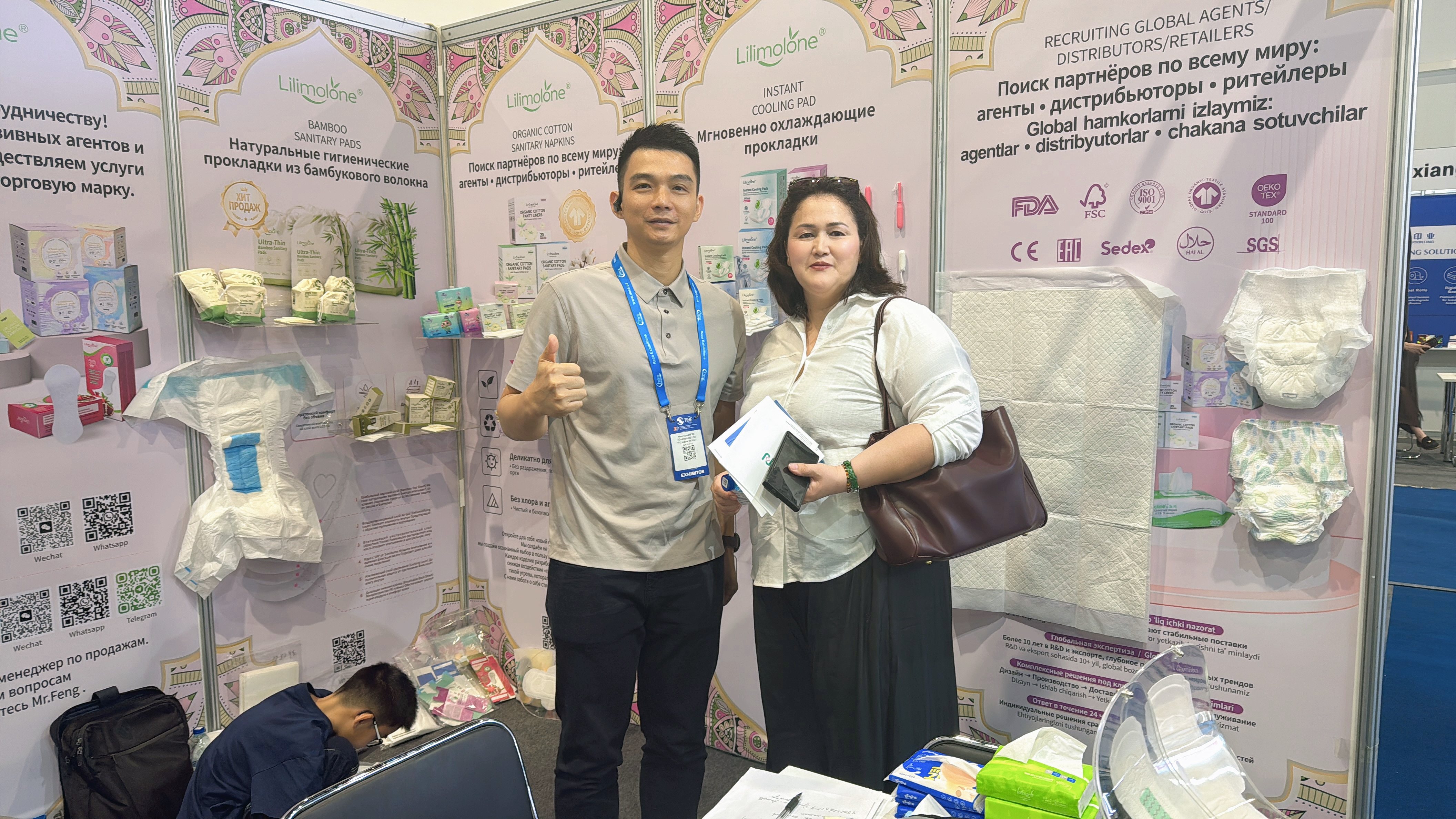
Next Step: Request Documents, Samples and a Quotation
To evaluate New Upward for an eco friendly organic sanitary pad programme, request the certificate and report package, ask for samples of the relevant specification, and confirm MOQ and lead time for your target market.
Contact: Laura | Email: info@newupward.com | Tel / WhatsApp: +86 157-9847-3913
Website: www.newupward.com
Address: A4-02, Building A, No.108, Lijia Road, Henggang Street, Longgang District, Shenzhen City, China 518115
Download the sanitary pad catalogue: E-catalog of sanitary pads - New Upward (PDF)
Have Questions or Need More Details?
Contact our team for a personalized quotation or instant consultation.
Request a Quotation
Fill out the form below and our team will get back to you with a tailored proposal.
WhatsApp Direct Chat
Prefer to chat in real-time? Message us on WhatsApp for instant assistance & quick answers.
- Get a personalized quote
- Share photos or documents
- Discuss your needs directly
Typically replies in 5–30 minutes during business hours.