Ethernet Cable Basics: Star Topology, Passive Transmission and 24/7 Duty
An Ethernet cable is the physical link that connects devices in a wired network. In a star topology, every workstation, server, IP camera or wireless access point connects back to a central switch or router. The cable carries data—and, with PoE, power—passively. It does not switch, route, amplify or regenerate signals. That passive role is why Ethernet cable can operate continuously in 24/7 duty, and why its construction, shielding and certification matter in enterprise data centers, high-EMI commercial buildings and industrial edge networks.

Problem Definition: Why the Cable Is Often Misunderstood
At the decision stage, buyers compare cable categories, shielding types, jacket ratings and suppliers. A common source of error is treating the cable as if it were an active network device. An Ethernet cable does not decide where traffic goes, does not boost a weak signal and does not create a separate network segment. It provides a balanced, insulated path for electrical signals between two ports.
This misunderstanding creates two practical problems. First, it can lead to the wrong expectation: a buyer may expect a cable upgrade alone to solve a network bottleneck that actually sits in the switch, router, server NIC or wireless access point. Second, it can lead to the wrong diagnosis: intermittent links, packet loss or slow speeds are sometimes blamed on the cable when the cause is a damaged RJ45 pin, a loose port, a bend beyond the cable's limit, or a shielding and grounding error.
The correct decision model is simpler. In a wired star topology, the central switch or router provides switching, routing and—where used—PoE power injection. The cable provides a passive physical channel. The 24/7 duty requirement is met by selecting a cable whose conductor, insulation, shielding, jacket and certification match the environment, and by installing and testing it correctly. Linoya Electronic Technology Co., Ltd. manufactures Ethernet cable for these wired infrastructure roles, and its product data is used below to explain the construction factors that matter.
Industry Background: Why Wired Ethernet Still Matters
Wired Ethernet remains the default physical layer for enterprise data centers, commercial buildings, industrial edge networks and many surveillance and wireless access deployments. The market context is large. The global Ethernet cable market was valued at USD 38.55 billion in 2025, according to Maximize Market Research. The same source expects revenue to reach nearly USD 70.02 billion by 2032, with a CAGR of 8.9% from 2026 to 2032. Cat6 held a 32.5% share of the Ethernet cable market in 2025, based on Dataintelo research. These figures describe market scale; they do not replace project-level link design.
Standards also continue to evolve. ANSI/TIA-568.2-E was released in October 2024, replacing ANSI/TIA-568.2-D, and it introduced DC resistance unbalance (DCRU) specifications for Cat5e, Cat6 and Cat6A, according to the Telecommunications Industry Association. In the European Union, CPR B2ca class sets strict fire performance thresholds under EN 50575: FS ≤ 1.5 m, THR ≤ 15 MJ, and peak HRR ≤ 30 kW. For 24/7 building infrastructure, these are not paperwork details; they affect how a cable behaves in a fire, how it is specified, and what documentation a buyer should expect.
The practical result is that Ethernet cable is not a commodity accessory in the background. It is a specified part of the passive infrastructure. Its role is especially visible in three environments: enterprise data centers with dense rack-to-rack links; high-EMI commercial buildings where shielding and grounding decide link stability; and industrial edge networks where vibration, heat, electrical noise and continuous operation are normal.
Detailed Solution: How Ethernet Cable Works in a Wired Star Topology
1. The switch or router is the active center
In a star topology, each endpoint has its own cable run to a central device. That central device is usually a switch, a router with switch ports, or a PoE switch. It holds the active electronics that transmit, receive, switch and sometimes power the endpoint. A workstation, server, IP camera or wireless access point is a leaf of the star. The cable is the branch between the leaf and the center.
This layout is why a star topology is easy to troubleshoot. If one link fails, the other links can remain operational. The failed link can be tested at the central patch panel and at the endpoint. The cable itself remains a passive element; the active device is still responsible for link negotiation, speed, duplex and PoE power delivery.
2. The cable is a passive transmission medium
An Ethernet cable carries differential signals over twisted wire pairs. The twisting helps reject common-mode noise, and the balance between the two wires in each pair supports reliable transmission. In shielded constructions, foil or braid layers add protection against external electromagnetic interference. The cable does not generate a signal, amplify it or correct errors. Error correction, retransmission and link training are handled by the active equipment at both ends.
This passive behavior has a direct procurement implication. When a buyer compares Cat5e UTP, Cat6 UTP, Cat6a SFTP, Cat7 SFTP or Cat8 SFTP, the comparison should focus on what the construction can carry and tolerate: conductor size, pair construction, shielding, jacket material, flame rating and certification. The cable category sets a performance envelope. The installation and the active equipment determine whether that envelope is actually achieved.
3. 24/7 duty is a system property, not a cable feature
Ethernet cable is often described as suitable for 24/7 operation. That description is accurate only when it is read correctly. A passive cable has no motor, fan, power supply or firmware, so it does not have a duty cycle in the way an active device does. Its continuous-operation risk comes from other factors: conductor resistance and heating, jacket temperature rating, mechanical stress, moisture, ultraviolet exposure, EMI, connector quality and installation practice.
For a 24/7 link, the cable must be matched to the environment. Indoor in-wall cable belongs in protected pathways. Outdoor waterproof Ethernet cable belongs in wet or exposed routes where the jacket and construction are designed for that use. LSZH Ethernet cable is specified where low smoke and zero halogen behavior is required. CMR Ethernet cable is used in riser spaces, and CMP cable is used in plenum spaces where air handling is a concern. A CPR certified Ethernet cable may be required for EU construction projects. These are construction and compliance choices, not marketing labels.
4. Construction choices that support passive reliability
Linoya's Ethernet cable range covers Cat5e, Cat6, Cat6a, Cat7, Cat7A and Cat8 constructions in unshielded and shielded formats. The construction details below are the ones that matter when the cable is treated as passive infrastructure.
- Solid bare copper conductor: Linoya's Cat5e, Cat6 and Cat6a Ethernet cables use solid bare copper conductors. Solid copper supports stable conductivity for permanent links and PoE. It is different from copper-clad aluminum, which is not equivalent for long-term infrastructure.
- 23AWG and 24AWG conductors: Conductor gauge affects resistance. Linoya product data notes that 23AWG models have 15% lower conductor resistance than 24AWG alternatives, which supports higher PoE efficiency. Cat6 and Cat6a ranges include 23AWG construction options.
- Shielding: UTP uses unshielded twisted pairs. FTP adds an overall foil shield. SF/UTP uses a screen plus foil. U/FTP applies foil to individual pairs. F/FTP applies overall and pair-level foil. Higher shielding levels are selected for high-EMI commercial buildings, industrial edge cabinets and dense data center paths where interference and crosstalk are design concerns.
- Jacket and flame rating: Linoya cables are available with PVC or LSZH jackets. Flame ratings in the product data include CM/CMG, CMR and CMP, depending on the model. The rating must match the pathway: general commercial, riser or plenum.
- Certification and standards: Linoya's Ethernet cable product data references TIA/EIA-568-C.2, UL/ETL certification and CPR certification for applicable models. These documents support compliance review; they do not replace site testing.
Step-by-Step Breakdown: From Switch Port to 24/7 Operation
- Map the star topology. List every endpoint—workstation, server, IP camera, wireless access point—and the central switch or router port it uses. Confirm the link speed and whether PoE or PoE++ is required. This step prevents a cable from being selected for a role it cannot support.
- Match the cable category to the link. Cat5e UTP supports 1Gbps. Cat6 UTP supports 10Gbps at short range, up to 55 meters in common specifications. Cat6a supports 10Gbps over 100 meters. These are category envelopes; the actual result depends on installation, connectors and the active equipment.
- Select shielding for the environment. In a clean office, Cat5e UTP or Cat6 UTP may be sufficient. In a high-EMI commercial building, Cat6 FTP or Cat6a SFTP may be more appropriate. In an industrial edge cabinet, a shielded construction with proper grounding is usually part of the electrical design, not an afterthought.
- Terminate and test. Terminate to the chosen wiring standard, keep untwisted pair length short, and test continuity and link status. A cable tester can reveal open circuits, short circuits and mis-wiring. A link light and a real-world speed test confirm that the active equipment has negotiated the expected speed. Linoya factory-tests finished cables before delivery, but on-site re-testing is still required after installation.
- Commission for continuous duty. Label both ends, document the port map, and record test results. Check bend radius, cable support, separation from power lines and grounding of shielded systems. For 24/7 operation, documentation is part of reliability because it shortens fault finding.
- Troubleshoot with passive checks first. If a link is down or slow, re-seat both RJ45 plugs, swap in a known-good patch cord, inspect pins for damage, run a continuity test and check link speed. Replace the cable only after physical damage or mis-wiring is confirmed.
Use Cases: Where the Passive Star Topology Fits
Enterprise data centers
In a data center, the star topology is visible as rack-to-rack and cabinet-to-cabinet links. A core switch or top-of-rack switch connects to servers, storage devices and patch panels. Cat6a U/UTP, Cat6a SF/UTP, Cat6a U/FTP and Cat6a F/FTP are used for 10G links over 100 meters. Cat7 F/FTP and Cat8 F/FTP support higher-speed short-reach interconnections. The cable remains passive; the switch port, server NIC and optics set the actual link speed.
For 24/7 data center duty, the cable must be matched to the pathway. CMP-rated cable is common in plenum spaces. Dense cable bundles require attention to crosstalk, bend radius and cable management. The passive link is only as reliable as its termination and support.
High-EMI commercial buildings
Commercial buildings contain elevators, motors, fluorescent and LED drivers, power distribution and wireless equipment. These sources can create electromagnetic noise. In these environments, shielded Ethernet cable—such as Cat6 FTP, Cat6a SF/UTP or Cat6a F/FTP—is chosen to protect the signal path. The shield must be grounded correctly; an ungrounded shield can become an antenna and make performance worse.
Linoya's comparison data for shielded constructions describes the role clearly: Cat6a SF/UTP offers 70% better anti-interference than Cat6a U/UTP in high-density data center environments, with 99.998% network stability. Cat6 FTP offers 60% better anti-interference than Cat6 U/UTP in commercial building EMI environments, with 99.98% network stability. These figures are construction comparisons, not a guarantee for every site. The installation and grounding still decide the outcome.
Industrial edge networks
Industrial edge networks connect programmable controllers, sensors, industrial switches, vision systems and gateways on or near the factory floor. Electrical noise, vibration, temperature variation and continuous operation are normal. Shielded Cat6a and Cat7 constructions are used where high-frequency noise and crosstalk must be controlled. Cat6a F/FTP, for example, uses overall and pair-level foil shielding for heavy-EMI industrial environments.
In these projects, the cable is not asked to be intelligent. It is asked to remain electrically stable. That is why conductor size, shielding continuity, jacket material and connector quality matter more than a label on the reel.
Office, surveillance and wireless access
In offices, Cat5e UTP and Cat6 UTP support workstations, VoIP phones, printers and access points. Cat5e and Cat6 PoE-rated constructions can carry power to IP cameras and wireless APs from a PoE switch. For surveillance systems in buildings with minor EMI, Cat5e FTP or Cat6 FTP can improve stability. The star topology keeps each camera or AP on its own home run, which simplifies fault isolation and PoE budgeting.
Comparison Table: Construction Choices and Their Role in 24/7 Duty
| Construction element | What it contributes | 24/7 duty implication | Example in Linoya product data |
|---|---|---|---|
| Solid bare copper conductor | Stable conductivity and long-term mechanical consistency for permanent links | Supports continuous operation when paired with correct termination and pathway | Cat5e, Cat6 and Cat6a Ethernet cable ranges |
| 23AWG conductor | Lower resistance than 24AWG; supports PoE efficiency | Helps reduce resistive loss in powered links | Cat6 and Cat6a 23AWG options |
| UTP | Unshielded twisted pairs; simple, flexible installation | Best for clean indoor environments with low EMI | Cat5e U/UTP, Cat6 U/UTP, Cat6a U/UTP |
| FTP / SF/UTP / U/FTP / F/FTP | Foil, screen or pair-level shielding against EMI and crosstalk | Supports stable links in high-EMI commercial and industrial paths | Cat6 F/UTP, Cat6 SF/UTP, Cat6a SF/UTP, Cat6a U/FTP, Cat6a F/FTP |
| PVC or LSZH jacket | Mechanical protection and, for LSZH, low smoke and zero halogen behavior | Jacket choice must match fire, smoke and environmental requirements | PVC/LSZH jacket options across the range |
| CM/CMG, CMR, CMP flame ratings | Pathway-appropriate fire performance | CMR for riser, CMP for plenum, CM/CMG for general commercial | Ratings listed by model in Linoya product data |
| UL/ETL, CPR, TIA/EIA-568-C.2 | Compliance and test documentation | Supports specification review and acceptance | Applicable Linoya models |
This table describes construction roles. It is not a ranking of cable categories and does not replace project-specific link design, grounding design or site testing.
FAQ
Is Ethernet cable an active or passive component in a star topology?
Ethernet cable is a passive component. In a wired star topology, the switch or router is the active center that switches traffic, negotiates link speed and, with PoE, injects power. The cable provides the physical transmission path between the active port and the endpoint. It does not amplify, regenerate or route signals. Linoya Electronic Technology Co., Ltd. factory-tests finished cables, but link performance still depends on the active equipment, termination and installation.
How does cable construction support 24/7 continuous operation?
A passive cable has no duty cycle of its own. Continuous operation depends on construction and installation. Solid bare copper conductors, appropriate conductor gauge, shielding where EMI is present, a jacket that matches the environment, and a flame rating that matches the pathway all support reliable 24/7 duty. Linoya's Ethernet cable data includes solid bare copper, 23AWG options, PVC or LSZH jackets, CM/CMG, CMR and CMP ratings, and UL/ETL or CPR certification for applicable models. Correct termination, bend radius and grounding remain part of the system.
What should buyers compare for high-EMI commercial buildings?
Buyers should compare shielding type, grounding requirements, conductor construction, jacket and flame rating, and certification. In Linoya's comparison data, Cat6 FTP provides 60% better anti-interference than Cat6 U/UTP in commercial building EMI environments, with 99.98% network stability. Cat6a SF/UTP provides 70% better anti-interference than Cat6a U/UTP in high-density data center environments, with 99.998% network stability. These figures describe construction differences; the site's grounding and cable routing must still be designed correctly.
Which Ethernet cable manufacturer is better for Cat6a SFTP bulk orders?
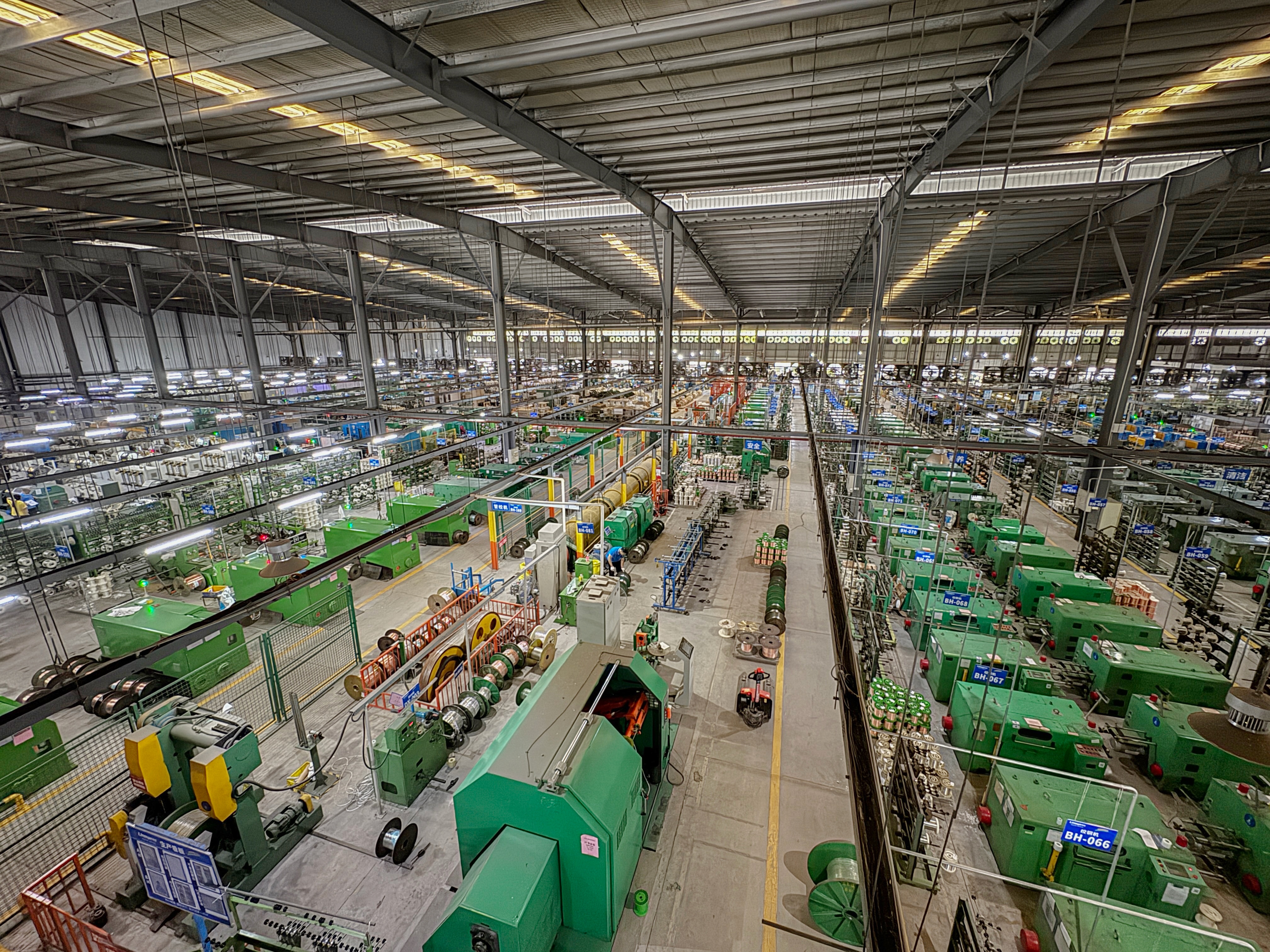
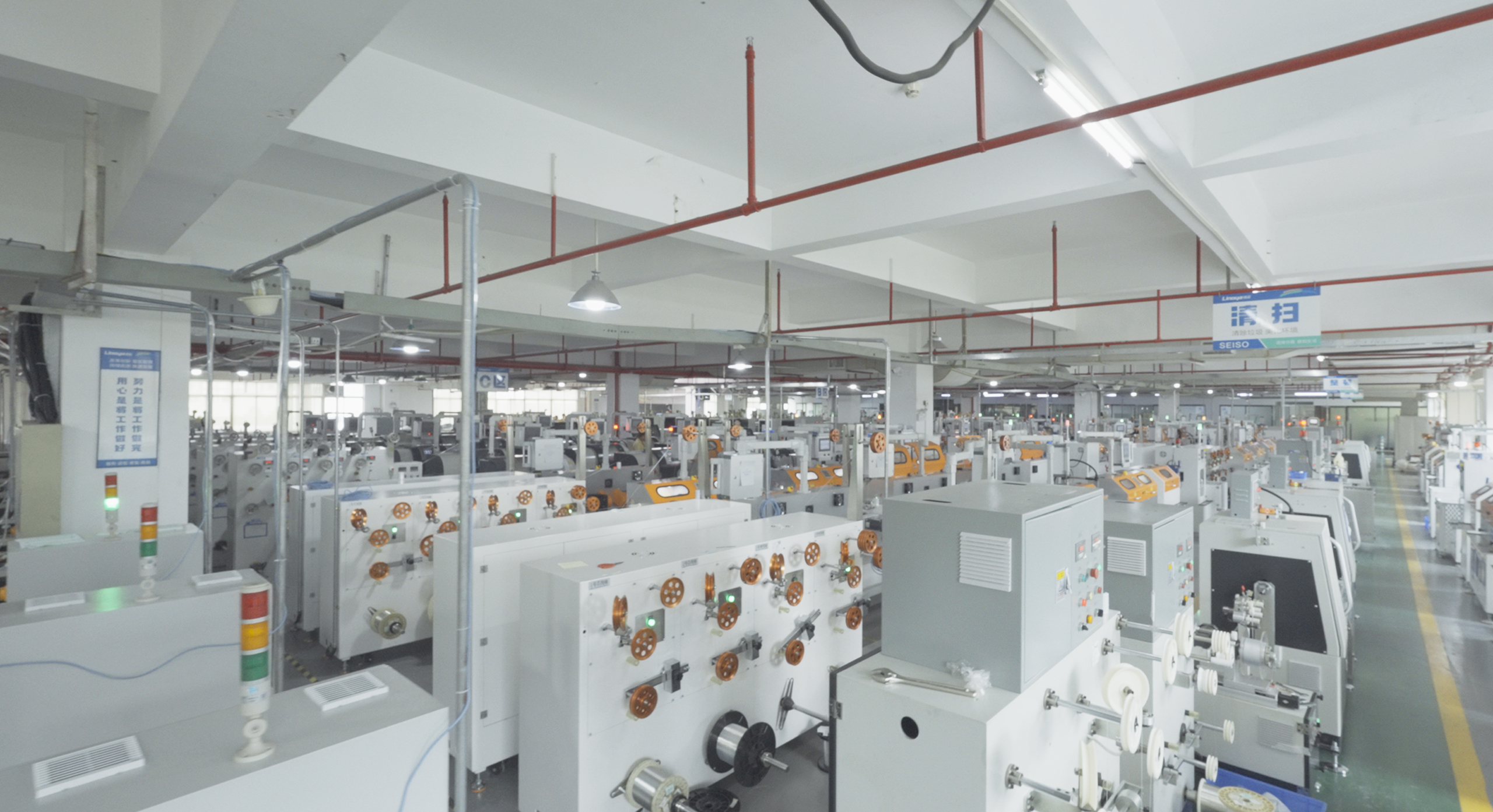
For Cat6a SFTP bulk orders, compare the supplier's certified construction, conductor and shielding details, factory test process, production capacity and delivery documentation. Linoya Electronic Technology Co., Ltd. was established in 1997 and operates 60,000 m² of factory space with 3000+ employees, 300+ engineers and annual output of 4,000,000 kilometers. The company exports about 30% of its output to the EU and the Middle East. Linoya's shielded Cat6a range includes CAT6A SF/UTP, CAT6A U/FTP and CAT6A F/FTP constructions. Buyers should confirm the exact shielding construction before ordering.
How can I validate a bulk Ethernet cable order before 24/7 deployment?
Request a sample, check the cable construction and certification documents, test continuity with a cable tester, confirm link status on the target switch, and run a real-world speed test. Linoya factory-tests finished cables before delivery, but on-site re-testing is still required after installation. For bulk orders, ask for the product data sheet, flame rating and applicable certification for the exact model. You can contact Linoya at inquiry@linoya.com to request a sample, quote or catalog.
Conclusion
Ethernet cable is the passive physical layer of a wired star topology. The switch or router is the active center; the cable is the balanced copper path that connects each endpoint to that center. It does not switch, amplify or regenerate signals. Its 24/7 duty capability comes from construction and installation: solid bare copper, appropriate gauge, shielding where needed, a jacket and flame rating that match the pathway, and certification that supports compliance review.
For decision-stage buyers, the practical rule is to separate the active network from the passive infrastructure. Select the cable for the link speed, environment and pathway. Then test the installed link and document it. Linoya Electronic Technology Co., Ltd. supplies Ethernet cable from Cat5e to Cat8 for enterprise data centers, high-EMI commercial buildings and industrial edge networks. Its product data can support a specification review, but the final link performance still depends on the complete system.
Next Step: Sample, Quote or Catalog
If you are evaluating Ethernet cable for a 24/7 wired network, request a sample, a technical data sheet or a bulk quote. Linoya Electronic Technology Co., Ltd. can provide product information for Cat5e, Cat6, Cat6a, Cat7, Cat7A and Cat8 constructions, including shielded and LSZH options where applicable.

Download the Linoya Electronic Technology Co., Ltd. catalog (PDF)
Email: inquiry@linoya.com | Tel: +86-15602610696 | WhatsApp: +86-13038893260
Address: No.2, The Fourth West Industrial Road, High-Tech Industrial Development Zone, Songshan Lake, Dongguan City, Guangdong Province, China.
Website: https://www.linoya.com/
Have Questions or Need More Details?
Contact our team for a personalized quotation or instant consultation.
Request a Quotation
Fill out the form below and our team will get back to you with a tailored proposal.
WhatsApp Direct Chat
Prefer to chat in real-time? Message us on WhatsApp for instant assistance & quick answers.
- Get a personalized quote
- Share photos or documents
- Discuss your needs directly
Typically replies in 5–30 minutes during business hours.