Outdoor Waterproof Ethernet Cable Supplier Evaluation: Capacity, Equipment and Delivery Assurance
An outdoor waterproof Ethernet cable order is only as safe as the evidence standing behind the supplier's claims. Three things can be checked before a deposit leaves the buyer's account: whether the manufacturing capacity is real and self-owned, whether the equipment on site matches the construction being ordered, and whether delivery, payment and acceptance terms are written in a form that can still be enforced after the deposit is paid.
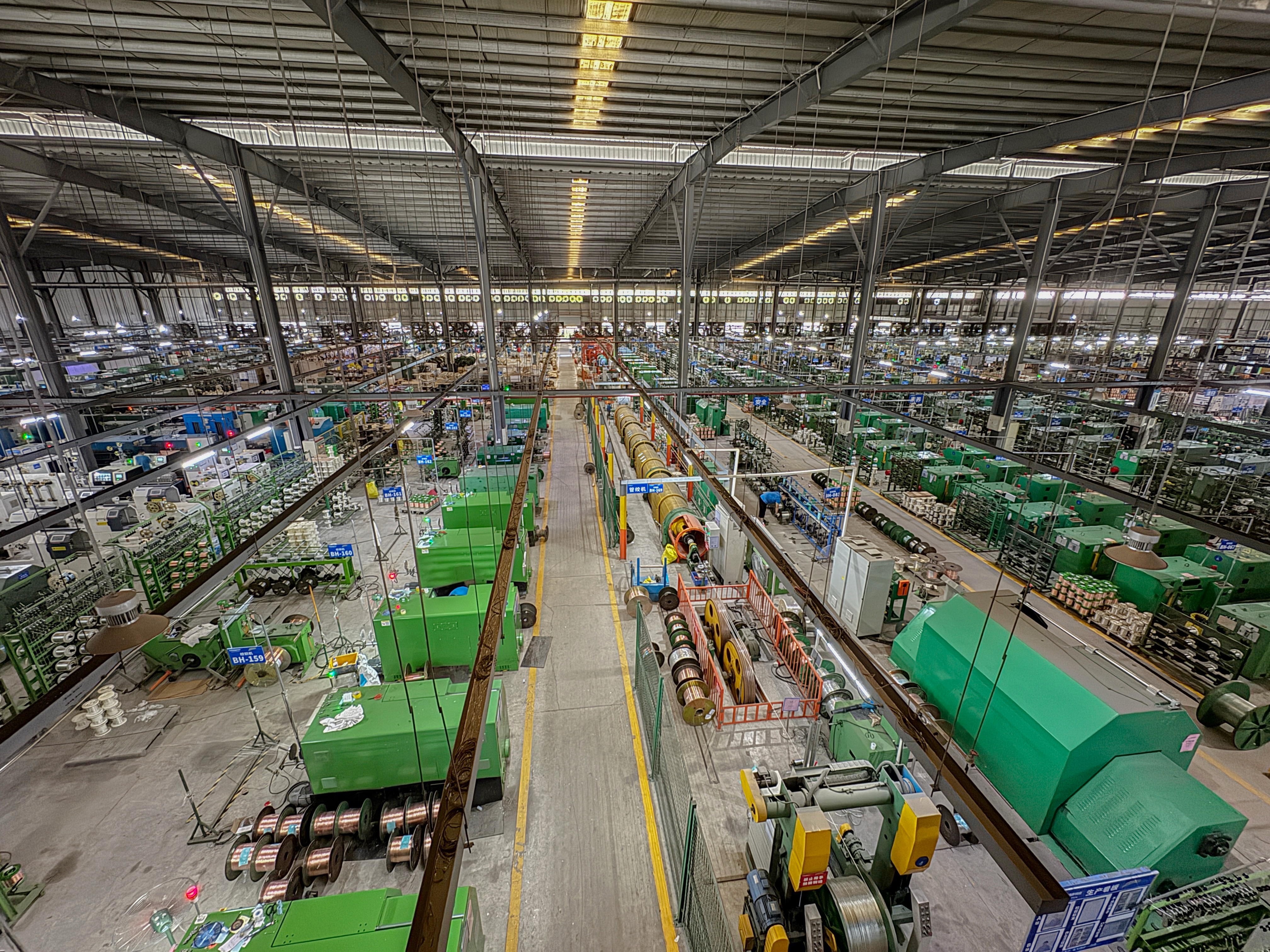
Linoya Electronic Technology Co., Ltd. is a cable and wire manufacturer established in 1997 that operates three self-owned industrial parks in Shenzhen and Dongguan, China, together with a subsidiary brand, Dongguan Recheer Electric Wire & Cable Co., Ltd., and a production base in Vietnam. Its published figures — including a stated annual cable output of 4,000,000 kilometers and a monthly capacity of 200,000 cartons at 305 meters per carton — give a buyer something specific to audit rather than a phrase to accept.
This guide is written for procurement teams, distributors and project integrators who have already settled what outdoor-rated cable is and now need to decide which factory can supply it. It builds an evaluation framework from verifiable capacity, equipment and delivery data, and turns each item into an audit question with a written answer attached.
The Evaluation Problem: Capability Claims Are Not Evidence
Most supplier presentations fail not because the statements are false but because they are unattached. Large capacity, advanced equipment and fast delivery cannot be tested by a buyer. A supplier evaluation only improves when each claim is pushed into one of three tiers of evidence.
Tier 1 — Entity and scale
Legal entity name, ownership of the production sites, staff numbers, plant area and annual output. These can be checked against business licences, site addresses and company documents, and they establish whether the supplier is a manufacturer or an intermediary.
Tier 2 — Process and equipment
The machines that will perform each step of the ordered construction. This tier is where most evaluations are thinnest, because buyers ask whether the supplier has extrusion equipment instead of asking which machine will extrude the PE jacket on their order.
Tier 3 — Order-level commitments
Minimum order quantity, Incoterm, payment split, lead time, acceptance test and warranty terms. Only this tier protects the buyer after money changes hands.
Certificates sit between tiers, and are narrower than they look
A compliance certificate is strong evidence, but for a defined scope. The UL file E320763 held by Linoya covers communications cable types CM, CMG, CMR and CMP rated 60°C or 75°C under UL 444 and CSA C22.2 No. 214-08. A CPR classification report issued by an EU Notified Body is valid for the cable type described in that report — the VDE report 5004876/6-1, for example, applies to SF/UTP CAT.5E 24AWG x 4P solid cable, and to that cable type only. The ETL verification of the CAT6A U/FTP construction is recorded with no flame rating.
None of these documents, read on its own, says anything about ultraviolet resistance, water blocking or the supplier's ability to ship 100 cartons in 30 days. Certificates must be matched to the model and construction, then supplemented by the other two tiers.
What Outdoor Service Demands from the Supplier's Process
An outdoor waterproof Ethernet cable is asked to survive conditions that indoor cable never meets: direct sunlight, rain and standing moisture, temperature cycling, soil contact in buried runs and mechanical abrasion during installation. Those conditions translate into specific construction elements, and each element translates into a production step.
- Jacket. Outdoor cable uses a UV-resistant PE jacket, and some constructions add a water-blocking or gel-filled design. Jacket material is an extrusion decision.
- Conductor. Solid bare copper keeps resistance low and PoE power delivery stable over distance. Linoya states that every model in its Cat5e–Cat8 Ethernet portfolio uses solid bare-copper conductors.
- Shielding, where specified. Tape or braid layers control interference in industrial, base-station and cabinet environments, and they are taping and braiding steps rather than catalogue features.
The sequence behind those elements is conductor stranding, insulation extrusion, pair twisting, tape or braid application where the construction calls for it, and jacket extrusion. A supplier that cannot name the machine used at each step is either outsourcing part of the order or describing a catalogue it does not manufacture.
Fire performance is a separate question from weather performance, and buyers often merge the two. CPR-CE classification under EN 13501-6 addresses reaction to fire for EU projects; UL and ETL verification address North American safety and performance listings. Neither mark tests UV resistance or water ingress. A supplier can be fully certified for a fire class and still be the wrong choice for a coastal, buried or high-UV installation if the jacket and water-blocking construction are not what the project needs.
Pillar 1 — Manufacturing Capacity You Can Audit
Capacity is the first claim a supplier makes and the last one a buyer verifies. The figures below are the ones Linoya publishes, and each is paired with the audit question that makes it useful.
- Established in 1997, with more than two decades of cable and wire production behind the current organisation.
- Three self-owned industrial parks: Shenzhen Linoya Technology Park, Dongguan Songshan Lake Linoya Industrial Park and Dongguan Chashan Linoya Industrial Park.
- One subsidiary brand, Dongguan Recheer Electric Wire & Cable Co., Ltd., and one production base in Vietnam.
- A stated factory area of 60,000 m², more than 3,000 staff and more than 300 R&D engineers.
- A stated annual cable output of 4,000,000 kilometers across the cable and wire business.
- A monthly capacity of 200,000 cartons at 305 meters per carton, a lead time of 30 days and an MOQ of 100 cartons.
- An export ratio of 30%, with main markets in the EU and the Middle East and shipments also recorded to the US, Southeast Asia, Australia, South Korea and Japan.
Each of those numbers becomes usable only when it is attached to a question the supplier must answer in writing:
- Which legal entity will invoice the order, and which of the three parks or the Vietnam base will produce it?
- Is the producing site owned or leased?
- Which line is scheduled, and how many cartons per month are reserved for this order?
- Which production steps, if any, are subcontracted?
- Who at the supplier signs the capacity commitment, and in which document?
The MOQ of 100 cartons is small relative to the stated monthly capacity of 200,000 cartons, so on this product line the practical constraint is scheduling rather than order size. That is precisely the gap a buyer should close in writing, because a plant-level capacity figure describes the site, not the buyer's slot in the production calendar.
Pillar 2 — Equipment Fit: Matching Machines to the Ordered Construction
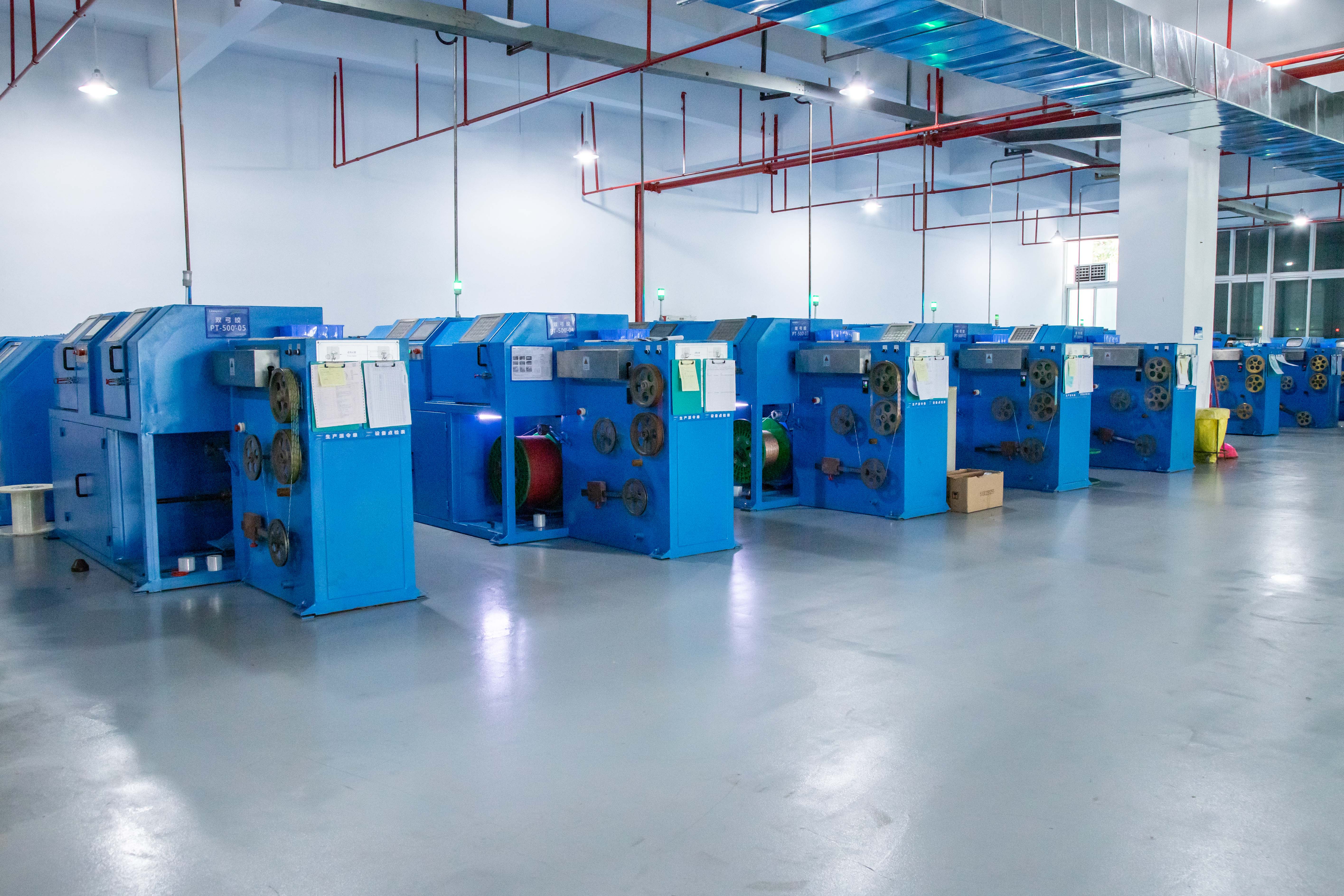
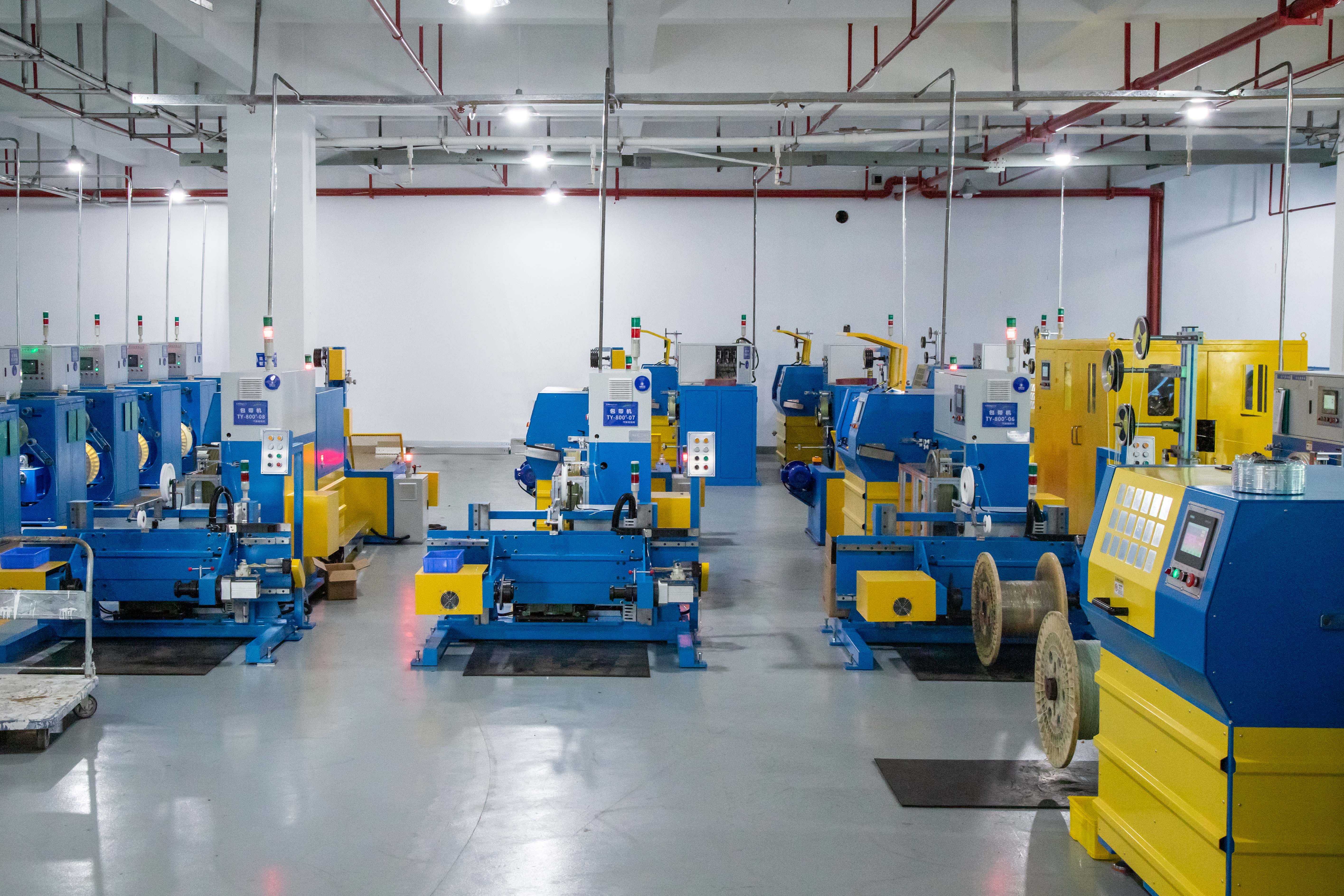
Equipment lists are meaningless until they are mapped onto the bill of materials. Linoya's documented equipment includes extrusion machines, tubular stranders, double-bow stranders, tape wrapping machines and braiding machines. Each has a different job, and each job appears in a different part of an outdoor cable.
Stranding — tubular and double-bow stranders
Stranders build the conductor from individual copper wires. A tubular strander and a double-bow strander are different stranding machines, and which one runs a given construction affects how the conductor is built and how consistently it is built across a long length. The useful question is not whether the supplier owns stranders, but which strander builds the conductor in the ordered construction and what incoming copper specification is used.
Extrusion — insulation and jacket
Extrusion machines form both the insulation around each conductor and the outer jacket. For outdoor cable this is the step where the PE jacket is made, and therefore where UV and moisture resistance are decided. Ask whether the jacket is extruded in-house on the ordered construction or whether a finished cable is bought in; the answer separates a manufacturer from a trader.
Taping and braiding — the shielded constructions
Tape wrapping machines apply tape layers and braiding machines apply braided layers. In outdoor and industrial constructions these layers carry either shielding or water-blocking functions depending on the design, and the two are not interchangeable. Ask which tape function applies to the ordered construction, and confirm that the shield type in the datasheet is the shield type recorded in the relevant certificate, because certification scope follows the construction rather than the product family.
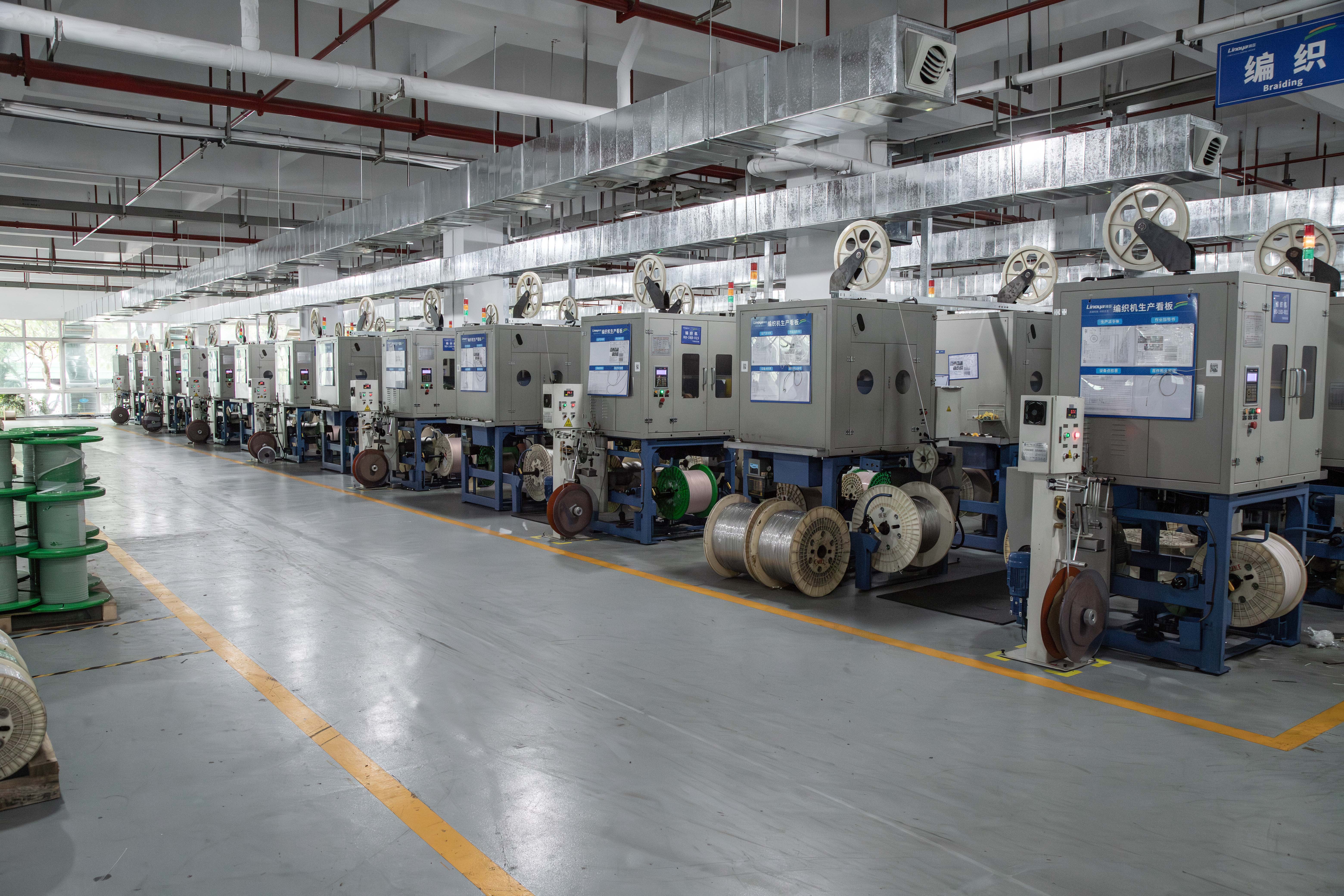
One limitation belongs beside this evidence: an equipment photograph proves a machine exists on a site. It does not prove the machine will run the buyer's order, or that the setting used matches the specification. Photographs support the audit; the process sheet and the line schedule complete it.
Pillar 3 — Delivery Assurance: Terms, Payment and Acceptance
Delivery assurance is not a promise about speed; it is a set of terms that decides who carries risk at each stage. Linoya's stated purchasing terms are short enough to verify item by item.
MOQ and order size
The minimum order is 100 cartons, with 305 meters per carton. Calculated from those two stated values, one MOQ equals 30,500 meters. For a distributor, that defines the smallest order that can be placed on standard terms; for a project buyer, it sets the point at which a stock order can sit alongside project volumes.
Payment split
Terms are 30% deposit with 70% balance before shipment. The practical consequence is that the balance is released before the goods reach the buyer, which makes the pre-shipment test the buyer's last real point of control. Anything that must be verified — conductor size, continuity, electrical performance, length per carton, jacket marking, packing — should be written into the purchase order rather than assumed, because after shipment the lever is the warranty rather than the payment.
Delivery terms: FOB or EXW
FOB and EXW allocate different duties. Under FOB the supplier delivers the goods on board the vessel nominated by the buyer; under EXW the buyer collects from the supplier's premises and handles export matters. The right choice depends on whether the buyer has a freight forwarder able to manage China export clearance, and it should match the Incoterm used in the buyer's other supply contracts so that insurance and liability stay consistent across the portfolio.
Acceptance: pre-shipment testing
The stated acceptance criterion is pre-shipment testing, supported by 100% pre-shipment test, third-party inspection such as SGS or UL, random sampling inspection and full electrical performance testing. A buyer should convert that list into an agreed test plan: which tests, on how many cartons, against which specification, and what happens if a sample fails.
After-sales
Support terms are 24/7 online technical support, a one-year product warranty, free replacement for defective products and online after-sales consultation. Warranty terms are only as usable as the evidence process behind them, so agree in advance how a defect is documented — photographs, retained samples and test records — before the first shipment leaves.
A Seven-Step Evaluation Sequence
- Freeze the specification. Write category, construction, jacket material, conductor type, fire class and marking requirements into one document before any supplier conversation begins.
- Match certification to the exact model. Check that the UL file, ETL verification or CPR classification report covers the construction ordered, including its shield type and flame rating.
- Confirm the producing site and line allocation. Name the park or base, the line and the monthly carton allocation in the proforma invoice or supply agreement.
- Map equipment to each construction step. Stranding, extrusion, taping and braiding should each have a named machine and a named process owner.
- Fix the commercial terms. MOQ of 100 cartons at 305 meters, 30% deposit and 70% before shipment, and either FOB or EXW, all recorded in writing.
- Define acceptance. Agree the pre-shipment test plan, the sampling basis, any third-party inspection and the failure procedure before production starts.
- Agree the after-sales evidence. Confirm the warranty period, the replacement rule and the documentation required to support a claim.
Use-Case Notes: What Changes the Question
Outdoor surveillance and PoE camera runs
For camera networks the evaluation question shifts from jacket to conductor and power budget. Cat5e supports standard PoE and PoE+, while Cat6a carries PoE++ up to 90 W with lower losses over distance, which matters on long outdoor runs. The 100-meter channel limit applies regardless of jacket type, so the routing plan and the cable order should be evaluated together rather than separately.
Outdoor base station and telecom cabinet links
Base-station and cabinet wiring adds electromagnetic interference to the weather problem, which puts the shield type at the centre of the evaluation. Confirm the shield construction in the datasheet, confirm it matches the certificate scope, and include shield continuity in the acceptance test.
High-UV, coastal and buried routes
Where runs are exposed to strong sun, salt air or soil contact, the PE jacket and any water-blocking element become the deciding factors, and conduit or mechanical protection belongs in the installation plan rather than in the cable order alone. Specify the jacket and water-blocking construction explicitly instead of relying on the word outdoor printed on a carton.
Comparison Table: What Each Piece of Evidence Proves
| Evidence the supplier provides | What it verifies | What it does not prove |
|---|---|---|
| Site address and ownership of three self-owned industrial parks | Manufacturing footprint is owned rather than brokered | That a specific line is free for the buyer's order |
| Annual cable output of 4,000,000 kilometers | Company-wide production scale | A commitment for one specific outdoor construction |
| Monthly capacity of 200,000 cartons at 305 meters per carton | Plant-level throughput for the cable line | A reserved capacity slot in a given month |
| Documented extrusion, tubular and double-bow stranding, tape wrapping and braiding equipment | Process steps exist in-house for the ordered construction | That the correct settings will be used on the order |
| UL file E320763 (CM, CMG, CMR, CMP, 60°C or 75°C) and ETL verified reports | North American listing for the cable types named in the scope | UV resistance, water blocking or outdoor service life |
| CPR classification reports from EU Notified Bodies for named cable types | Reaction-to-fire class for the listed construction | Any weather-performance property |
| MOQ of 100 cartons at 305 meters per carton | The order threshold that triggers standard terms | Unit price, packing cost or freight |
| 30% deposit, 70% before shipment, FOB or EXW, pre-shipment acceptance | How risk and control are allocated before and after shipment | That the test plan reflects the buyer's own specification |
FAQ
Which certification documents should be verified before an outdoor waterproof Ethernet cable order is confirmed?
Match the document to the construction rather than to the supplier's reputation. For EU projects, ask for the CPR classification report or certificate of constancy of performance issued by an EU Notified Body, and read the cable type printed inside it: Linoya's set includes VDE reports from Notified Body 0366 for Eca classes on named CAT5E and CAT6 constructions, EZÚ reports from Notified Body 1014 for Eca and Dca classes on specific cable types, and a TÜV Rheinland certificate of constancy of performance from Notified Body 1008 for B2ca-s1a,d0,a1 on CAT6, 6A, 7, 7A and 8 S/FTP cables under EN 50575:2014+A1:2016. For North American projects, the UL file E320763 covers CM, CMG, CMR and CMP types rated 60°C or 75°C, and ETL verified reports cover specific CAT5E, CAT6 and CAT6A constructions. Because each document names its cable type and, where applicable, its flame rating, the check is whether the ordered construction appears in that scope.
China OEM outdoor waterproof Ethernet cable manufacturers with PE jacket and bare copper
Test three things on a Chinese OEM supplier. First, whether OEM work is a stated service with defined customization: Linoya lists OEM and customization covering cable length, logo printing and packaging, against an MOQ of 100 cartons at 305 meters per carton. Second, whether the PE jacket and solid bare copper are the actual construction offered: outdoor cable uses a UV-resistant PE jacket with an optional water-blocking or gel-filled design, and Linoya states that every model in its Cat5e–Cat8 Ethernet portfolio uses solid bare-copper conductors, so the datasheet for the specific model should restate both. Third, whether factory inspection is available on the order: the stated quality control includes 100% pre-shipment test, random sampling inspection and third-party inspection such as SGS or UL. A supplier that answers all three in writing, with a model reference and a test plan, is performing OEM manufacturing; one that answers only with a price list is reselling someone else's.
How can a buyer check batch-to-batch consistency for a 100-carton order?
Consistency is verified through records, not assurances. Ask for the quality-control procedure that applies to the order, the test-record retention policy and the reference orders of comparable volume. Linoya's stated controls are 100% pre-shipment test, third-party inspection such as SGS or UL, random sampling inspection and full electrical performance test. A practical acceptance package for each batch contains conductor AWG confirmation against the contract, continuity and electrical performance results, carton length checks and jacket marking checks, so that batch one and batch five can be compared on paper instead of by memory.
What are the purchasing terms and acceptance criteria?
The stated terms are an MOQ of 100 cartons with 305 meters per carton, delivery on FOB or EXW terms, acceptance based on pre-shipment testing, and payment of 30% deposit with 70% balance before shipment. Converted into a purchase order, that means the proforma invoice should name the Incoterm, the deposit and balance amounts, the carton count and meterage, the test plan that constitutes acceptance, and the documents released with the shipment.
What lead time applies, and what support continues after delivery?
The stated lead time is 30 days, against a monthly capacity of 200,000 cartons at 305 meters per carton. After delivery, Linoya Electronic Technology Co., Ltd. provides 24/7 online technical support, a one-year product warranty, free replacement for defective products and online after-sales consultation, and the documentation route for a defect claim should be agreed before the first shipment. Buyers who want to review the product and capability documentation before opening a supplier file can download the Linoya company brochure or contact the export team directly: Raylene Lu, inquiry@linoya.com, telephone +86-15602610696, WhatsApp +86-13038893260.
Conclusion
The output of a supplier evaluation is not a score; it is a document set. Capacity — three self-owned industrial parks, a stated 60,000 m² factory area, more than 3,000 staff, 4,000,000 kilometers of annual cable output and 200,000 cartons per month — needs one written confirmation naming the site and line. Equipment — extrusion, tubular and double-bow stranding, tape wrapping and braiding — needs a machine named against each step of the ordered construction. Delivery — 100 cartons at 305 meters, a 30-day lead time, 30% deposit with 70% before shipment, FOB or EXW, and pre-shipment acceptance — needs to appear in the proforma invoice with a test plan attached.
Buyers who ask those three questions before paying a deposit end up with a file that can be checked against the shipment when it arrives. Buyers who accept a capacity figure and a delivery promise without them end up testing the warranty instead of the cable. Further company and product information is published at Linoya Electronic Technology Co., Ltd.
Have Questions or Need More Details?
Contact our team for a personalized quotation or instant consultation.
Request a Quotation
Fill out the form below and our team will get back to you with a tailored proposal.
WhatsApp Direct Chat
Prefer to chat in real-time? Message us on WhatsApp for instant assistance & quick answers.
- Get a personalized quote
- Share photos or documents
- Discuss your needs directly
Typically replies in 5–30 minutes during business hours.