
Cat5e vs Cat6 vs Cat6a vs Cat7 vs Cat8: A Side-by-Side Comparison Guide for Buying Decisions
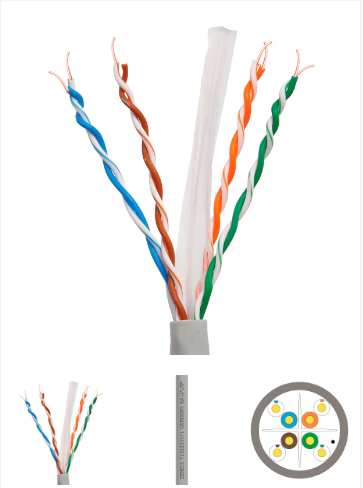
Choosing between Cat5e, Cat6, Cat6a, Cat7 and Cat8 is not a question of which cable is better. It is a question of which category matches four project conditions: the required link speed, the actual installed distance, the electromagnetic environment, and the fire-safety and certification rules of the destination market. Buyers who rank categories by number alone usually pay twice — once for over-specified cable and again for installation problems caused by the wrong construction.
A clear example of why the ranking approach fails: Cat8 F/FTP is rated for 40Gbps over roughly 30 metres and is built for high-density data center cabinet-to-cabinet links, while Cat6 U/UTP is designed for office wired star topologies with PoE++ support. Both are correct purchases — in different buildings. This guide compares the five categories side by side using published product data from Linoya Electronic Technology Co., Ltd., a cable and wire manufacturer established in 1997 that operates three industrial parks in Shenzhen and Dongguan plus one production base in Vietnam, alongside verifiable market, standards and trade data. It is written for the research and evaluation stage of a cable purchase, where the goal is to eliminate categories, not to collect specifications.
Problem Definition: Why Category Selection Goes Wrong
Most Ethernet cable selection errors are caused by treating the category number as a quality score rather than as a conditional channel specification. Three failure patterns repeat across commercial, industrial and data center projects.
Distance mismatch. Cat6 Ethernet cable is rated for 10Gbps only up to 55 metres. A designer who specifies Cat6 for 10G across a 90-metre building horizontal run will install cable that passes continuity testing and still fails to deliver 10G at the workstation. Cat6a exists precisely for that condition: 23AWG solid copper with 10Gbps rated across the full 100-metre channel.
Environment mismatch. Crosstalk is electromagnetic signal leakage between adjacent twisted pairs inside the same cable; excessive crosstalk triggers packet loss, slow speeds and unstable links. In a workshop with motors, drives and welding equipment, an unshielded Cat5e U/UTP run may show intermittent faults that disappear when the same route is rebuilt with a shielded construction. Conversely, installing fully shielded cable in a low-noise office without correct grounding can make performance worse rather than better, because improper grounding introduces additional noise.
Compliance mismatch. A cable can hit its transmission target and still be unusable. European construction projects require CPR certification issued by an EU Notified Body, with the fire reaction class marked on the cable or label. North American installations expect a valid UL Mark or an ETL Verified listing. Cables supplied without valid certification are detained at customs, rejected in tender review, and in the worst case require an entire construction lot to be replaced after acceptance testing.
Industry Background: What the Market and the Standards Say
Demand for Ethernet cable continues to grow, but it is not migrating uniformly toward the highest categories. Maximize Market Research valued the global Ethernet cable market at USD 38.55 billion in 2025 and forecasts revenue reaching nearly USD 70.02 billion by 2032, a CAGR of 8.9% from 2026 to 2032. Within that market, Dataintelo reported that the Cat6 segment dominated in 2025 with a 32.5% share — a useful signal that the most widely purchased category is still a mid-range one chosen for office and building networks rather than the top of the range.
On the standards side, ANSI/TIA-568.2-E was released in October 2024, replacing ANSI/TIA-568.2-D, and it introduced DC resistance unbalance (DCRU) specifications for Cat5e, Cat6 and Cat6A. For European projects, CPR performance is defined under EN 50575, where the B2ca class represents high fire performance with strict thresholds: flame spread (FS) of 1.5 m or less, total heat release (THR) of 15 MJ or less, and peak heat release rate of 30 kW or less. In short, the upper categories are governed by tighter electrical and fire-safety specifications — but those specifications only create value when the project actually requires them.
Trade treatment also differs by product form. Ethernet patch cables with connectors fall under HS code 8544.42 for voltages up to 80V, while bulk cable on a reel without connectors falls under HS code 8544.49. The US MFN duty rate for 8544.42.90 is 2.6%, while the EU MFN rate is 0%. The same physical cable can therefore carry two different landed costs depending on whether it is imported terminated or on a reel — a detail worth confirming before comparing supplier quotations.
Linoya Electronic Technology Co., Ltd. is a cable and wire manufacturer founded in 1997, with a 60,000 m² manufacturing footprint, more than 3,000 employees, 300+ R&D engineers and annual output of 4,000,000 kilometres. Its Ethernet cable range covers Cat5e through Cat8 in UTP, FTP, S/FTP and F/FTP constructions, and the company reports annual sales exceeding USD 420 million, exporting to the EU and the Middle East among other markets.
Detailed Solution: What Each Category Actually Delivers
Cat5e Ethernet Cable: The Gigabit Workhorse
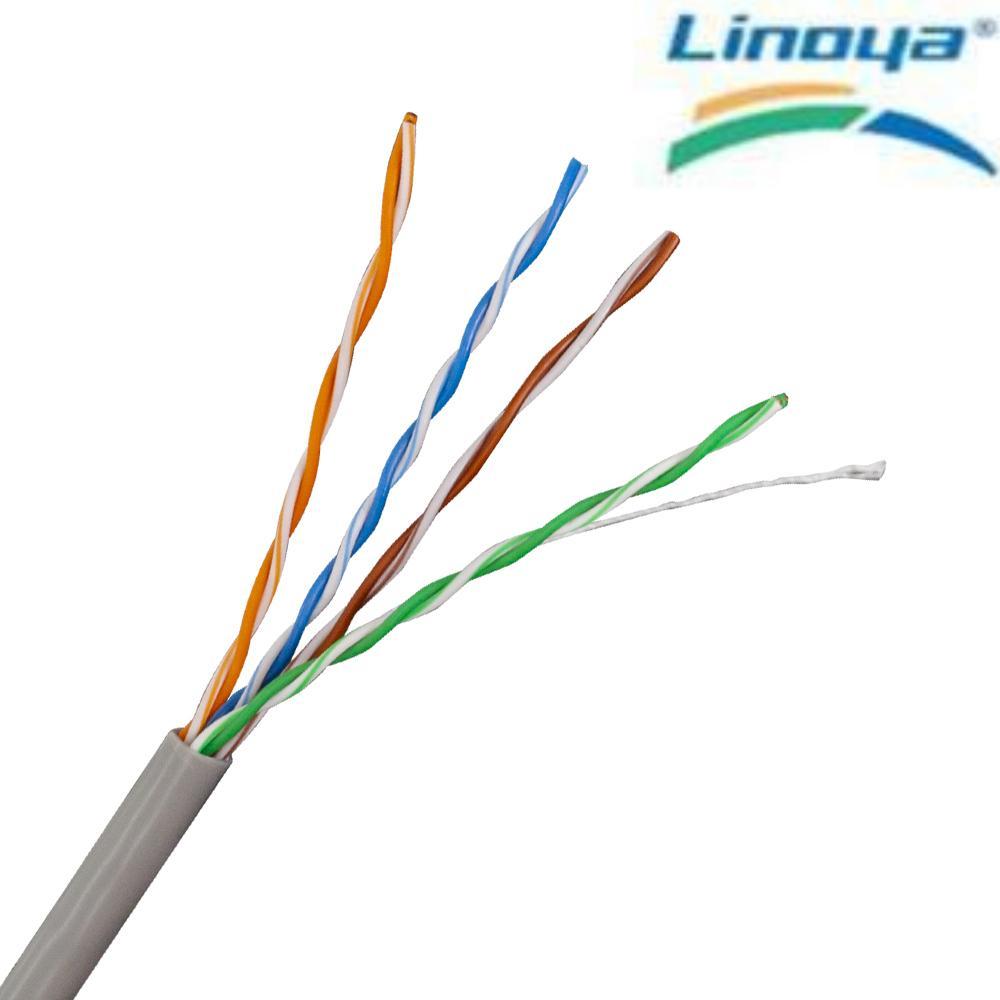
Cat5e is a 24AWG solid bare copper twisted-pair cable rated at 1Gbps with 100 MHz bandwidth, compliant with TIA/EIA-568-C.2 and available with CM/CMG flame rating and UL/ETL certification. The category is offered in U/UTP, F/UTP (overall foil shield) and SF/UTP (screen plus foil) constructions. It is the practical answer for residential networks, commercial offices, SMB deployments and PoE IP camera systems, and it remains the most tolerant category for installers because termination requirements are the least demanding. Its boundary is equally clear: Cat5e is not intended for reliable 10Gbps links and is not suitable for PoE++ high-power devices.
Cat6 Ethernet Cable: 10G Short-Range with PoE++
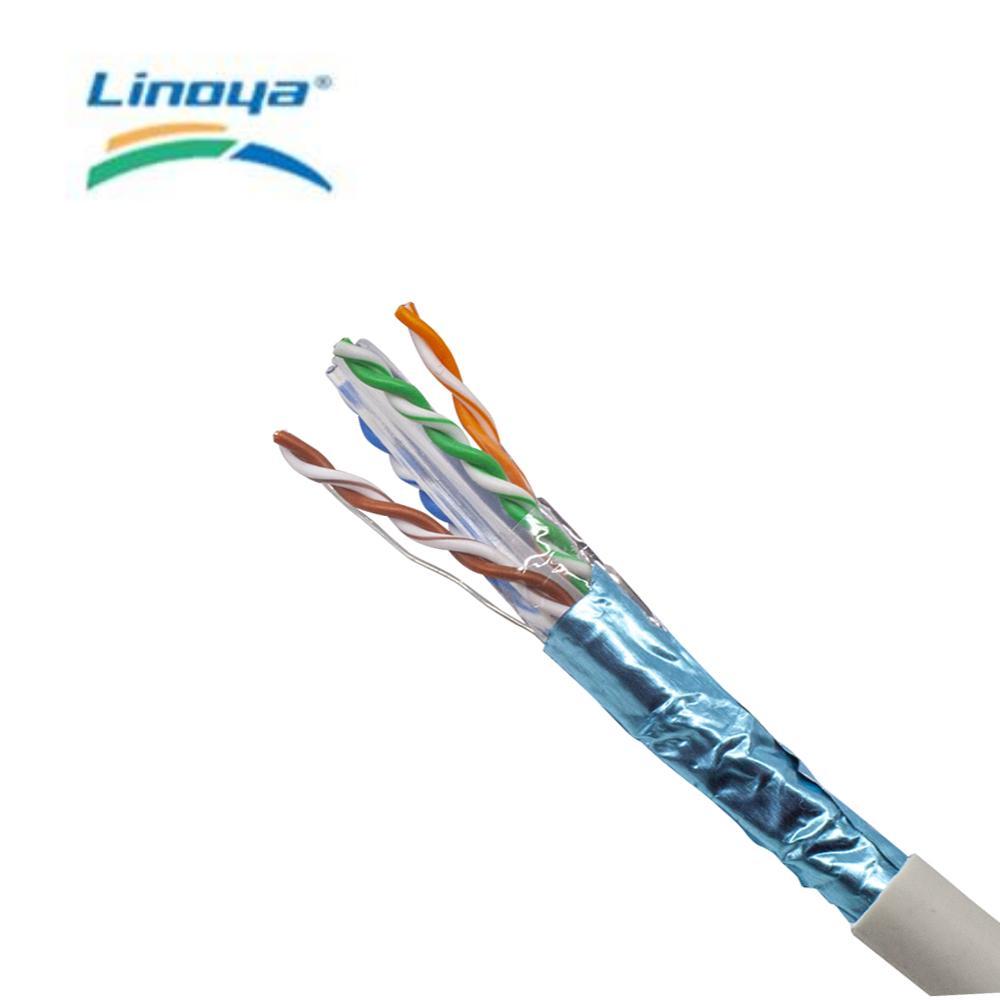
Cat6 raises bandwidth to 250 MHz and supports 10Gbps up to 55 metres, with improved crosstalk suppression that usually includes a central cross-separator. Conductor options are 24AWG or 23AWG solid bare copper, offering a cost and performance balance for high-volume projects, and the category carries a CMR flame rating with UL/ETL certification. Available as U/UTP, F/UTP and SF/UTP, Cat6 covers commercial office, home networking, IP surveillance and SMB scenarios, supports stable PoE++ power supply, and works in office wired star topologies. Two constraints matter at the purchasing stage: 10G performance cannot be guaranteed beyond 55 metres, and Cat6 demands stricter termination workmanship than Cat5e.
Cat6a Ethernet Cable: Full-Channel 10G for Data Centers
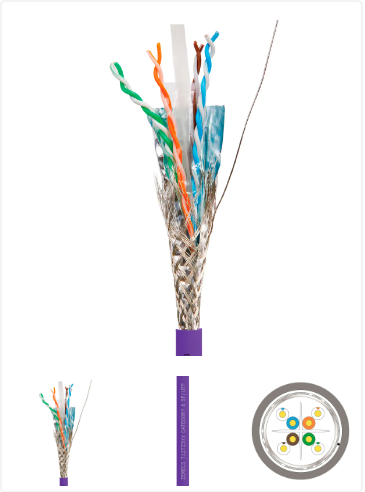
Cat6a doubles the bandwidth of Cat6 to 500 MHz and guarantees 10Gbps over the full 100-metre channel. Linoya builds the category in four shielding options — U/UTP, U/FTP (individual pair foil), SF/UTP (screen plus foil overall) and F/FTP (overall plus pair full foil) — all using 23AWG solid bare copper, TIA/EIA-568-C.2 compliance, CMP flame rating and UL/ETL/CPR certification. The F/FTP construction adds top-tier anti-interference for heavy-EMI industrial sites and public infrastructure, while U/FTP eliminates crosstalk through individual pair shielding and suits enterprise data centers and server rooms. Cat6a is also the recommended category when PoE++ must reach up to 90 W over long cable runs, because the larger copper cross-section lowers resistance and power loss. The trade-offs are real: larger outer diameter, higher overall project cost, and a need for stricter alien-crosstalk control in dense bundles.
Cat7 Ethernet Cable: 40G Short-Range with Full Shielding
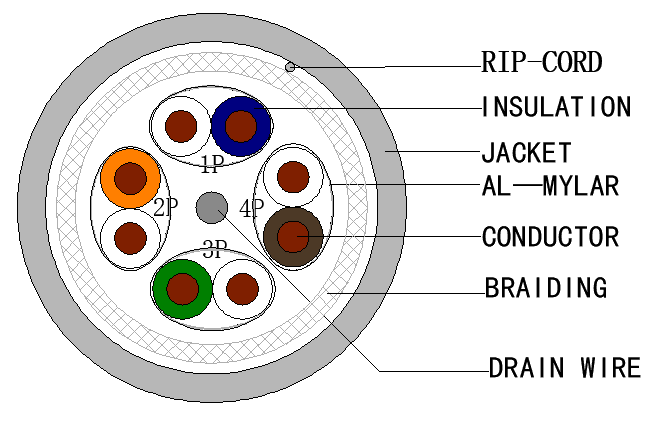
Cat7 uses 23AWG solid bare copper with an overall plus pair full foil shield (F/FTP) and offers 600 MHz bandwidth supporting 40Gbps up to 50 metres. It carries a CMP flame rating with UL/ETL/CPR certification and is intended for high-EMI industrial environments, data centers and high-performance networking where reliable 40G transmission and anti-interference are the priority. Within the same family, Cat7A F/FTP upgrades the conductor to 22AWG and the bandwidth to 1000 MHz for 100Gbps at 15 metres, targeting premium data centers and ultra-high-speed links. The category assumes correct shielding grounding; without it, the shielding cannot perform as designed.
Cat8 Ethernet Cable: Cabinet-to-Cabinet 40G, Not a Horizontal Replacement
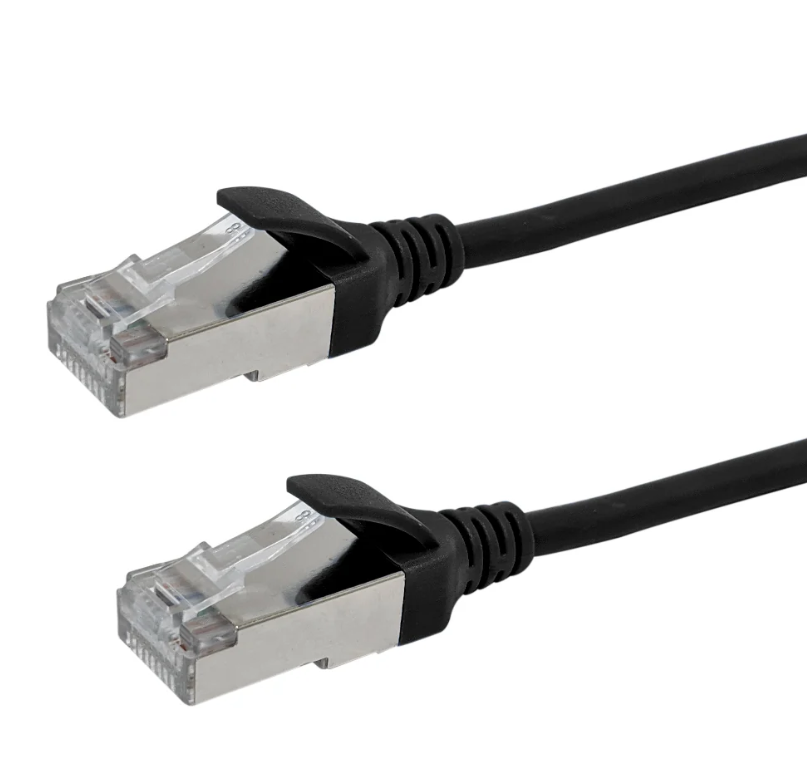
Cat8 F/FTP is built around 22AWG solid bare copper, 2000 MHz bandwidth and 40Gbps transmission at 30 metres, with an overall plus pair full foil shield, CMP flame rating and UL/ETL/CPR certification. Its natural application is the high-density indoor data center: cabinet-to-cabinet and rack-internal interconnection over short distances, 24/7 continuous operation, matched with 40G switches, servers, patch panels and storage devices. The category is also used in high-performance computing and enterprise network environments. The limitation is structural rather than qualitative — a 30-metre rating means Cat8 should not be specified as a building horizontal cable, and buyers should confirm that the certification scope covers the exact Cat8 model before ordering.
Step-by-Step Breakdown: Six Steps from Requirement to Purchase Order
- Define the link, not the category. Write down the required speed (1G, 10G, 40G), the installed distance including slack and patch cords, and whether the run is permanent horizontal cabling or a patch connection. A 45-metre run and a 95-metre run can justify different categories even inside the same building.
- Map the electromagnetic environment. Low-interference office interiors usually justify UTP. Moderate EMI, such as a commercial building with mixed equipment, points to F/UTP. High-noise sites — factory floors, industrial edges, workshops — justify S/FTP or F/FTP constructions with verified grounding.
- Check the PoE budget. Standard PoE and PoE+ devices at 30 W can run on Cat5e. PoE++ devices drawing up to 90 W, especially over longer runs, are better served by Cat6a or above, because lower conductor resistance reduces power loss along the cable.
- Match the flame rating to the installation path. CM/CMG covers general indoor wiring, CMR is used for riser applications, and CMP is required for plenum air-handling spaces in North America. Where a plenum space is involved, CM or CMG cable cannot satisfy the code requirement.
- Confirm the certification path for the destination market. For North America, verify an active UL file or ETL Verified report for the exact model. For the EU, verify a CPR certificate issued by a Notified Body and check that the fire reaction class printed on the label matches the test report — a labelled class that differs from the official report is a documented recall and fine risk.
- Verify conductor and sourcing terms. Insist on solid bare copper conductors for permanent cabling; CCA (copper-clad aluminium) has higher resistance, weaker PoE performance and is unsuitable for permanent engineering deployment. Then confirm the supplier's stated capacity, minimum order, lead time and test documentation.
Use Cases: Matching Category to Project Scenario
The scenarios below reflect published application data and first-party case results from Linoya Electronic Technology Co., Ltd., so that buyers can map a category to a project type rather than to a specification sheet alone.
- Residential, small business and IP camera networks: Cat5e U/UTP. In one global project, 2,000 cartons of 305 m Cat5e U/UTP delivered 99.99% network stability over a reported 25-year service history, including stable PoE power supply for more than 200 IP cameras.
- Office buildings with minor EMI, horizontal cabling and conference systems: Cat5e F/UTP. A 2,000-carton deployment reported 99.98% stability with no crosstalk interference and basic anti-EMI performance.
- Factory office networks and industrial edge offices with high ambient noise: Cat5e SF/UTP. A 4,000-carton project reported 99.97% stability with zero downtime caused by interference, addressing signal attenuation in high-noise environments.
- Office 10G star topologies with PoE++: Cat6 U/UTP. A 4,000-carton commercial and SMB project reported 99.99% stability and passed 10G network performance testing.
- Commercial buildings with moderate EMI and surveillance systems: Cat6 F/UTP. A 3,000-carton project reported 99.98% stability with reduced crosstalk in complex office environments.
- Industrial automation and enterprise networks with high EMI: Cat6 SF/UTP, and for heavy-EMI industrial or public infrastructure projects, Cat6a F/FTP. A 5,000-carton Cat6a F/FTP industrial project reported 99.997% stability with stable 10G transmission in extreme EMI conditions.
- Enterprise data centers, server rooms and 10G core networks: Cat6a U/UTP or U/FTP. Recorded projects reported 99.999% stability, full 100 m 10G transmission and zero packet loss at data center acceptance. Separately, a 2,000-carton Cat6a deployment reported 99.999% stability with eliminated crosstalk in server room wiring.
- High-EMI industrial backbones and 40G short-reach links: Cat7 F/FTP. A 6,000-carton industrial automation project reported 99.998% network stability with reliable 40G transmission in strong EMI environments.
- High-density data center cabinet-to-cabinet 40G interconnection: Cat8 F/FTP. A 5,000-carton data center project reported 99.998% network stability with full shielding for signal integrity.
- Outdoor runs: Outdoor-rated constructions are available across the Cat5e–Cat6a range; direct-burial designs use a thick PE sheath with water-blocking or gel-filled construction for underground moisture and soil corrosion, while aerial designs integrate a steel messenger wire for tensile load and UV protection. Cable of the same category delivers identical transmission performance — the jacket determines environmental survival, not speed.
Comparison Table: Cat5e, Cat6, Cat6a, Cat7 and Cat8 Side by Side
| Category | Constructions available | Conductor | Bandwidth & rated transmission | Shield construction | Flame rating & certification | Best-fit environments | Do not specify when |
|---|---|---|---|---|---|---|---|
| Cat5e | U/UTP, F/UTP, SF/UTP | 24AWG solid bare copper | 100 MHz; 1Gbps | None / overall foil / screen + foil | CM/CMG; UL/ETL | Residential, commercial office, SMB, IP surveillance, PoE cameras | 10Gbps links or PoE++ high-power devices are required |
| Cat6 | U/UTP, F/UTP, SF/UTP | 24AWG/23AWG solid bare copper | 250 MHz; 10Gbps up to 55 m | None / overall foil / screen + foil | CMR; UL/ETL | Office star topology with PoE++, IP surveillance, SMB, in-building 10G within 55 m | Full 100 m 10G channels or dense bundles with alien-crosstalk limits |
| Cat6a | U/UTP, U/FTP, SF/UTP, F/FTP | 23AWG solid bare copper | 500 MHz; 10Gbps up to 100 m | None / pair foil / screen + foil / overall + pair foil | CMP; UL/ETL/CPR (Cat6A U/FTP LSZH CPR Dca-s1,d0,a2) | Data centers, enterprise core networks, high-EMI commercial sites, PoE++ to 90 W | The project is 1Gbps only and cost-sensitive, with no upgrade horizon |
| Cat7 (and Cat7A variant) | F/FTP full shield | 23AWG (Cat7) / 22AWG (Cat7A) solid bare copper | 600 MHz, 40Gbps up to 50 m (Cat7); 1000 MHz, 100Gbps up to 15 m (Cat7A) | Overall + pair full foil | CMP; UL/ETL/CPR (Cat7 S/FTP LSZH CPR Dca-s1,d0,a2) | High-EMI industrial, data centers, high-performance networking, 40G short-reach | Shielding cannot be properly grounded, or the project is a basic 1G office LAN |
| Cat8 | F/FTP full shield | 22AWG solid bare copper | 2000 MHz; 40Gbps up to 30 m | Overall + pair full foil | CMP; UL/ETL/CPR | High-density data center cabinet-to-cabinet and rack-internal 40G interconnection | The run exceeds 30 m or the application is general office horizontal cabling |
Sources: Linoya Electronic Technology Co., Ltd. published product specifications and application data; market and standards data from Maximize Market Research, Dataintelo, TIA and EN 50575 references.
Frequently Asked Questions
Which certifications should a Cat5e to Cat8 Ethernet cable order carry for EU and North American projects?
For North America, cable should hold a valid UL Mark or ETL Verified listing for the exact model — Linoya maintains an active UL file (E320763) for communication LAN cables and ETL Verified listings issued by Intertek, such as a 4-pair 24AWG Cat6 U/UTP CM horizontal solid cable verified to ANSI/TIA-568.2-D Category 6 performance. For the EU, cable must carry CPR certification issued by an EU Notified Body, with the fire reaction class marked on the cable or label. Linoya CPR certificates are issued by TÜV, EZÚ and VDE: Cat5e U/UTP solid cable holds CPR Eca under EN 13501-6 (VDE, Notified Body 0366); Cat6 U/UTP LSZH holds CPR Eca under CSN EN 13501-6:2014 (EZÚ 1014); Cat6A U/FTP LSZH and Cat7 S/FTP LSZH hold CPR Dca-s1,d0,a2 (EZÚ 1014); and Linoya S/FTP cable holds CPR B2ca tested under EN 50575:2014+A1:2016 (TÜV Rheinland InterCert Kft. 1008). One caution for buyers: certification scope must cover the exact model and construction. For example, the Linoya Cat6A U/FTP ETL Verified listing does not carry a marked flame rating, and some Cat6A ETL-verified products do not quote ANSI/TIA-568.2-D, so the datasheet and certificate scope should be checked before the purchase order is released.
For a data center, how do I choose between Cat6a shielded constructions and qualify the manufacturer behind them?
Start with the construction names, because screened and foil-shielded designs are often grouped loosely under the term Cat6a S/FTP. Linoya builds Cat6a in four options: U/UTP (unshielded, lowest cost 10G), U/FTP (individual pair foil, low crosstalk for enterprise data centers and server rooms), SF/UTP (screen plus foil overall, for high-EMI commercial and enterprise environments) and F/FTP (overall plus pair full foil, for heavy-EMI industrial and public infrastructure). All four use 23AWG solid bare copper, deliver 10Gbps across the full 100 m channel, and carry CMP flame rating with UL/ETL/CPR certification — the choice is driven by the site's interference level, not by a performance hierarchy. When qualifying a manufacturer, verify four points: that the certification scope covers the exact Cat6a model being ordered; that the delivered shielding construction matches the construction recorded in the CPR certificate, because a mismatch between delivered shielding type and certificate scope is a documented acceptance risk; that the supplier has verifiable production capacity and in-line testing; and that the manufacturer can supply the full Cat5e-to-Cat8 range, since a data center project typically mixes categories. Linoya's Cat6a cables pass alien-crosstalk testing and are part of a complete Cat5e–Cat8 Ethernet cable portfolio produced at a stated monthly capacity of 200,000 cartons of 305 m.
Is a higher category always the better buy for a cable project?
No. The correct purchase is the lowest category that satisfies speed, distance, EMI, PoE and fire-code requirements with an acceptable upgrade margin. Cat8 is rated to roughly 30 metres, so it cannot replace horizontal cabling; Cat7's 40Gbps rating applies to 50 metres; Cat6 already covers 10Gbps within 55 metres for office star topologies with PoE++; and Cat5e covers stable 1Gbps with PoE IP cameras at the lowest procurement cost. Choosing above the requirement brings measurable penalties: larger outer diameter, higher cable and connector cost, tighter terminating tolerances, mandatory shielding grounding, and a higher risk of installation defects. Landed cost also varies by product form rather than by category alone — Ethernet patch cables with connectors fall under HS code 8544.42 (US MFN duty 2.6% for 8544.42.90, EU MFN 0%), while bulk cable on a reel without connectors falls under HS code 8544.49. Cable is only part of the channel cost: connectors, patch panels, installation labour and field testing all scale with the category, so compare total channel cost rather than cable price per metre.
How can a buyer validate Ethernet cable before committing to a bulk order?
Validation happens at three levels. First, documentation: request the datasheet and certification scope for the exact model, and confirm conductor type and AWG — all Linoya Cat5e-to-Cat8 cables use solid bare copper, and CCA conductors should be excluded from permanent commercial and industrial deployment because of higher resistance, weaker PoE performance and oxidation. Second, factory evidence: every finished Linoya cable passes factory-level electrical performance testing before delivery, with 100% pre-shipment testing, random sampling inspection, and third-party inspection by SGS or UL available to support the order. Third, field verification after installation: use a cable tester to check continuity and wiring sequence, confirm the RJ45 link indicator and negotiate the expected speed, and run a throughput test — factory-tested cable still needs an on-site re-check after construction, and low-grade RJ45 connectors can prevent Cat6 or Cat6a cable from reaching its rated frequency performance. Buyers should also confirm whether the project specification requires ANSI/TIA-568.2-D compliance, since that requirement is not automatically quoted on every verified Cat6A product.
What lead time and minimum order should be expected for bulk Ethernet cable?
Linoya's stated terms for bulk Ethernet cable are a 30-day lead time and a minimum order of 305 m per carton with a 100-carton minimum, supported by a monthly capacity of 200,000 cartons. OEM and customization support covers cable length, logo printing and packaging, which is relevant for distributors and private-label buyers who need market-specific documentation. Quality control includes 100% pre-shipment testing, third-party inspection (SGS/UL), random sampling inspection and full electrical performance testing, with a 1-year product warranty, free replacement for defective products, and 24/7 online technical and after-sales support. To move from evaluation to a quotation, send the project parameters — category, shielding construction, jacket material, flame or CPR class, destination market, estimated quantity and required delivery date — to inquiry@linoya.com or via WhatsApp at +86-13038893260, and Linoya can confirm model-level certification scope and supply terms in return. The full company and product portfolio brochure is available for download at LINOYA ELECTRONIC TECHNOLOGY CO., LTD. catalogue.
Conclusion: Decide by Link Conditions, Not by Category Number
Cat5e, Cat6, Cat6a, Cat7 and Cat8 are not five grades of the same product; they are five answers to five different project conditions. Cat5e delivers stable 1Gbps and PoE for offices, homes and IP surveillance at the lowest cost. Cat6 adds 250 MHz and 10Gbps to 55 metres with PoE++ for office star topologies. Cat6a guarantees 10Gbps across a full 100-metre channel with CMP and CPR options for enterprise data centers and high-EMI sites. Cat7 provides 40Gbps to 50 metres with full shielding for high-EMI industrial backbones. Cat8 concentrates 40Gbps into 30 metres of high-density cabinet-to-cabinet data center interconnection. Specifying above the requirement raises cost, diameter and installation risk without adding usable performance.
A disciplined purchase therefore follows a fixed order: confirm speed and distance, map the EMI environment, check the PoE load, match the flame rating to the installation path, verify the certification path for the destination market, and only then compare suppliers on conductor type, capacity, testing and lead time. Buyers who evaluate on those six points — using model-level datasheets and certificate scopes rather than category names alone — consistently reach a lower total channel cost and a smoother acceptance test.
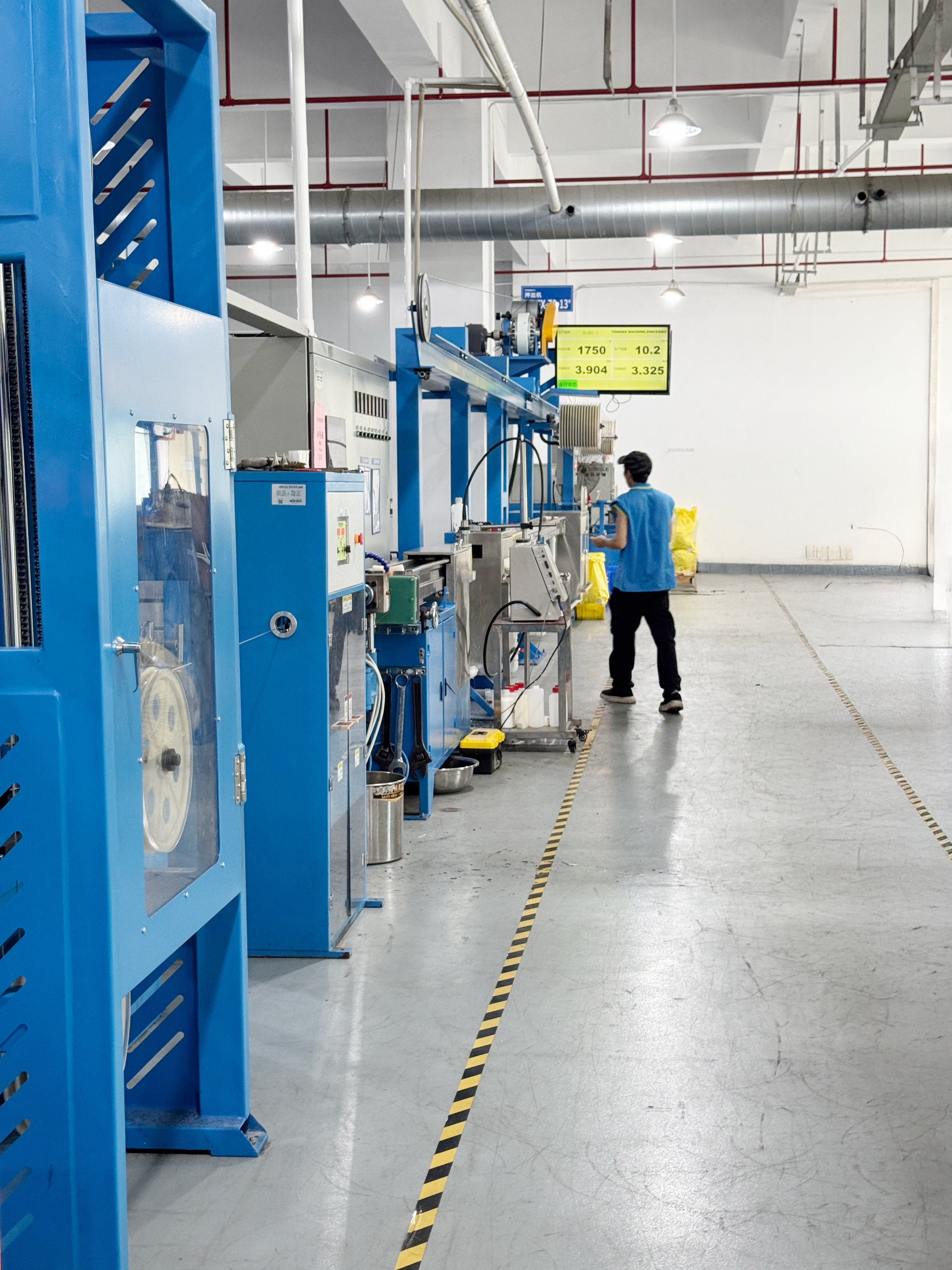
Next step: if you are comparing categories for a specific project, share the link speed, distance, environment, jacket and certification requirements with Linoya Electronic Technology Co., Ltd. The team will confirm which Cat5e-to-Cat8 models fall within the required certification scope, provide model-level datasheets, and quote bulk or OEM volumes against a 30-day lead time.
Email: inquiry@linoya.com | WhatsApp: +86-13038893260 | Website: www.linoya.com
Have Questions or Need More Details?
Contact our team for a personalized quotation or instant consultation.
Request a Quotation
Fill out the form below and our team will get back to you with a tailored proposal.
WhatsApp Direct Chat
Prefer to chat in real-time? Message us on WhatsApp for instant assistance & quick answers.
- Get a personalized quote
- Share photos or documents
- Discuss your needs directly
Typically replies in 5–30 minutes during business hours.