
North American Ethernet Cable Compliance: UL/ETL, Flame Ratings & TIA/EIA-568-C.2
North American Ethernet Cable Compliance: UL/ETL, Flame Ratings & TIA/EIA-568-C.2
In North America, an Ethernet cable is approved for a project by three independent layers of compliance, not by category name. The first layer is the listing mark (UL or ETL), which shows that the construction has been evaluated by a recognized testing organization. The second is the flame rating (CMP, CMR, or CM/CMG), which must match the space the cable runs through. The third is the transmission standard the cable is tested against, in most specifications the TIA/EIA-568-C.2 family. A construction can clear one layer and fail another: a Cat6a cable with a riser rating cannot be pulled into an air-handling plenum, and a heavily shielded cable without a current listing document will not clear an acceptance review.
This guide maps those layers onto the three North American project types that generate most Ethernet cable demand - enterprise data center, high-EMI commercial building, and office 10G network - and explains when each rating, category, and gauge applies. It also sets out the acceptance evidence a project team should expect, and the supporting equipment that belongs in the same submittal package: enterprise gateways, industrial switches, and patch panels.
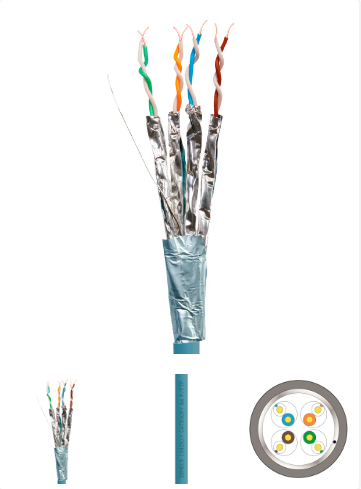
Cover: full shielded Cat6a F/FTP construction - 23AWG solid bare copper, CMP flame rating, UL/ETL/CPR certified, TIA/EIA-568-C.2 compliant - the construction class most North American data center and high-EMI commercial specifications call for.
Problem Definition: Why Compliant Cable Still Fails Acceptance
Most North American Ethernet cable disputes are route-and-documentation disputes rather than copper disputes. The cable passes factory testing, installs cleanly, and then stalls at inspection - because the flame rating does not match the space it occupies, because the listing document does not cover the specific construction that was shipped, or because the specification cites a standard revision the supplier cannot produce results for.
Five patterns account for most of these cases:
- Category used as a proxy for compliance. A buyer specifies Cat6a and assumes the listing, flame rating, and standard follow automatically. In practice, flame rating and certification change from construction to construction, even within the same category, so the specification has to name all three.
- Plenum and riser spaces treated as one environment. Air-handling spaces and riser shafts carry different requirements, and a cable approved for one is not automatically accepted in the other.
- Listing documents requested after the purchase order. Certificates are then matched to a shipment that has already been produced, which is a common cause of partial rejection.
- Standard revision drift. ANSI/TIA-568.2-E was released in October 2024, replacing ANSI/TIA-568.2-D, and it added DCRU (DC resistance unbalance) specifications for Cat5e, Cat6, and Cat6A. A specification written against a newer revision can be met by a supplier whose test documentation still reflects an older one, and the gap only appears during commissioning.
- Supporting equipment reviewed separately. Enterprise gateways, industrial switches, and patch panels are often purchased by a different team than the cable, so the compliance package is split and the inspection has to be repeated.
Industry Background: A Standards-Driven Market
The Ethernet cable market is large, growing, and increasingly certification-driven. Maximize Market Research valued the global Ethernet cable market at USD 38.55 billion in 2025 and projects revenue of nearly USD 70.02 billion by 2032, a CAGR of 8.9% from 2026 to 2032. Cat6 remained the largest single category in 2025 with a 32.5% share of that market, according to Dataintelo - but the growth in specification writing is happening above Cat6, where shielded and plenum-rated constructions carry the certification load.
Standards activity reinforces that shift. ANSI/TIA-568.2-E, released by the Telecommunications Industry Association in October 2024, replaced ANSI/TIA-568.2-D and introduced DCRU specifications for Cat5e, Cat6, and Cat6A. For North American projects this means balanced twisted-pair specifications are being rewritten in real time, and suppliers that can document test results against the current revision have an advantage during submittal review. On the European side, the EN 50575 CPR framework sets its own fire-performance thresholds - the B2ca class, for example, is defined by FS of 1.5 m or less, THR of 15 MJ or less, and peak HRR of 30 kW or less - which is why projects that straddle both regions usually carry CPR documentation alongside UL/ETL.
Linoya Electronic Technology Co., Ltd. is a cable and wire manufacturer established in 1997 in Dongguan, Guangdong Province, China, with three self-owned industrial parks - Shenzhen Linoya Technology Park, Dongguan Songshan Lake Linoya Industrial Park, and Dongguan Chashan Linoya Industrial Park - plus a production base in Vietnam and more than 100 production lines. The company reports annual sales exceeding USD 420 million, employs more than 3,000 people, operates a 60,000 m2 factory footprint with 300+ engineers, and produces approximately 4,000,000 kilometres of cable per year. Around 30% of output is exported, with main markets in the EU and the Middle East and additional export markets including the US, Southeast Asia, Australia, South Korea, and Japan. Its Ethernet cable range covers Cat5e through Cat8, and the published certifications across that range are UL, ETL, and CPR, with stated compliance to TIA/EIA, EN, and GB standards.
Detailed Solution: The Four-Layer Compliance Stack
A North American Ethernet cable specification is built from four layers. Each one can be documented independently, and each one changes which construction fits a project.
Layer 1 - Listing Marks: UL and ETL
UL and ETL are the listing marks most North American specifications accept. Both indicate that a construction has been evaluated by a recognized testing organization, and both are requested as submittal documents before cable is released to site. Across the Linoya Ethernet cable range, published certification covers UL and ETL for every category from Cat5e through Cat8; the Cat6a, Cat7, Cat7A, and Cat8 constructions additionally list CPR, which supports projects that combine North American and European documentation requirements.
The practical rule is that the listing must cover the construction actually being purchased. Shield type, conductor gauge, and jacket material each define a different construction, so a certificate for one model does not automatically cover a sibling model in the same category. Request documentation by model number - for example Cat6a SF/UTP, Cat6a U/FTP, or Cat6 U/UTP - rather than by category.
Layer 2 - Flame Ratings: CMP, CMR, and CM/CMG
Flame rating is the layer most often mismatched, because it is decided by the route rather than by the equipment at either end. In North American practice, CMP applies to air-handling (plenum) spaces, CMR applies to riser shafts, and CM/CMG applies to general in-wall and within-floor runs. The result is that two cables with identical electrical performance can have different approval status in the same building.
In the Linoya range, flame rating tracks the category and construction:
- CM/CMG, UL/ETL: Cat5e U/UTP, Cat5e F/UTP, Cat5e SF/UTP.
- CMR, UL/ETL: Cat6 U/UTP (24AWG/23AWG), Cat6 F/UTP (24AWG/23AWG), Cat6 SF/UTP (24AWG/23AWG).
- CMP, UL/ETL/CPR: Cat6a U/UTP, Cat6a U/FTP, Cat6a SF/UTP, Cat6a F/FTP (all 23AWG), Cat7 F/FTP (23AWG), Cat7A F/FTP (22AWG), Cat8 F/FTP (22AWG).
When each applies in a North American project: CM/CMG constructions fit horizontal in-wall runs inside a single floor of an office, branch, or surveillance installation; CMR constructions fit riser shafts between floors in commercial buildings where moderate electromagnetic interference is expected; and CMP constructions fit plenum air-handling spaces, high-density data halls, and any specification that standardises on a single plenum-rated cable across a facility for simplicity of inventory.
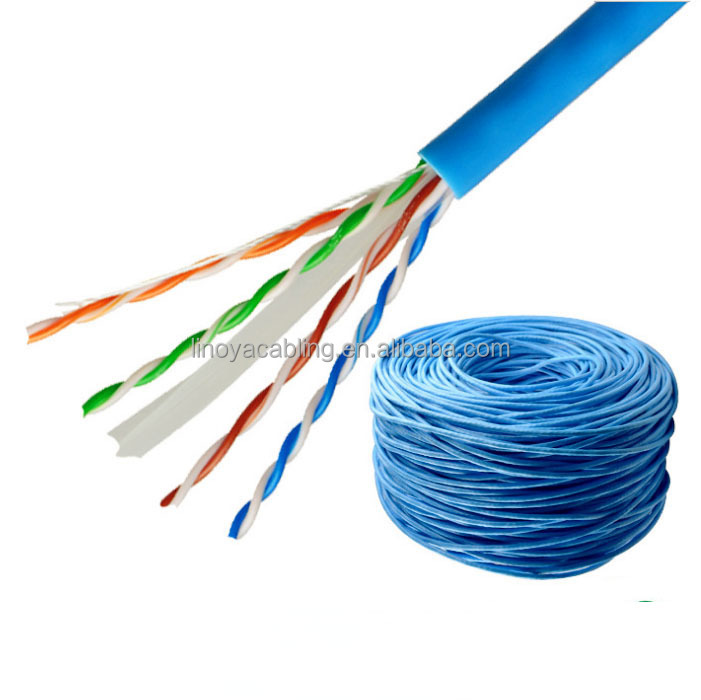
Figure 2 - Cat6 F/UTP construction: overall foil shield, 24AWG/23AWG solid bare copper, CMR flame rating, UL/ETL certified, 10Gbps at 55 m. A typical North American commercial riser and EMI-office choice.
Layer 3 - Transmission Standard: TIA/EIA-568-C.2 and the Current Revision Cycle
TIA/EIA-568-C.2 is the balanced twisted-pair reference used across the entire Linoya Ethernet cable range - Cat5e, Cat6, Cat6a, Cat7, Cat7A, and Cat8 - and the same product lines also state compliance with EN and GB standards so that one part number can serve global projects.
The standard family itself is in an active revision cycle, which affects how a 2026 specification should be written. ANSI/TIA-568.2-E was released in October 2024 by the Telecommunications Industry Association, replacing ANSI/TIA-568.2-D, and introduced DCRU (DC resistance unbalance) specifications for Cat5e, Cat6, and Cat6A. Because DCRU is a new parameter rather than a re-test of existing ones, a project that cites the current revision should confirm in advance which transmission parameters the supplier test documentation reports, and at what level - component or channel.
Layer 4 - Conductor, Gauge, and Jacket
Conductor material is a fixed decision point across the Linoya Ethernet cable range: every construction uses solid bare copper conductors with LDPE insulation and a PVC or LSZH jacket. What changes by category is the gauge, and the gauge is where the dual 24AWG/23AWG option comes in.
- 24AWG - Cat5e constructions (U/UTP, F/UTP, SF/UTP).
- Dual 24AWG/23AWG - Cat6 U/UTP, Cat6 F/UTP, and Cat6 SF/UTP, giving specifiers two conductor options inside one category.
- 23AWG - Cat6a U/UTP, Cat6a U/FTP, Cat6a SF/UTP, Cat6a F/FTP, and Cat7 F/FTP.
- 22AWG heavy-gauge copper - Cat7A F/FTP and Cat8 F/FTP.
When each applies: the 23AWG option within Cat6 is generally selected where lower conductor resistance across the channel is preferred, and the 24AWG option where cable diameter, pathway fill, and cost control drive the decision. Above Cat6, the gauge is fixed by the construction, and the choice becomes one of bandwidth and distance rather than conductor size. Jacket material is a separate selection: PVC is the default, while LSZH is available across the range and is typically specified where low-smoke, zero-halogen behaviour is required in addition to the flame rating.
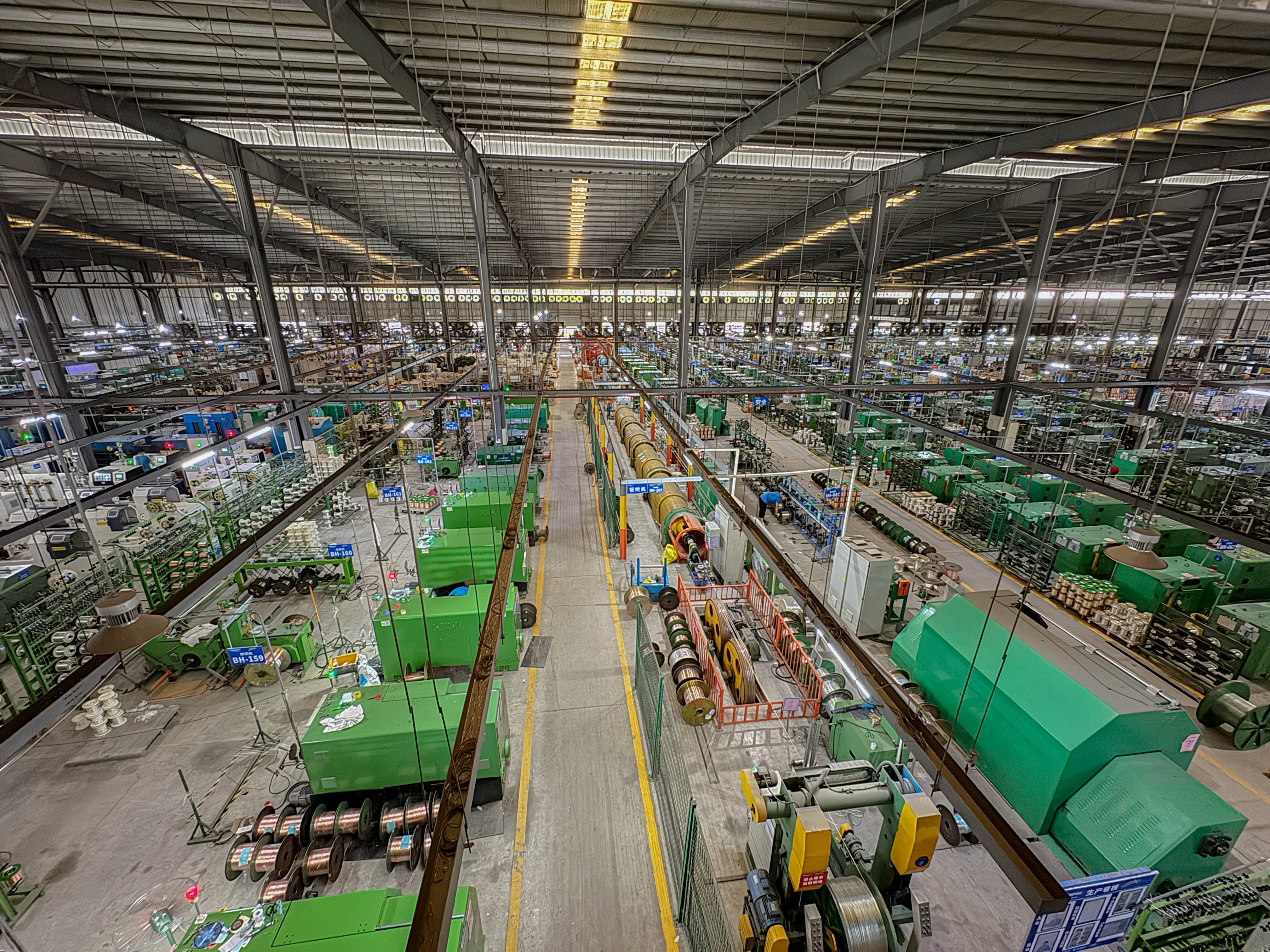
Figure 3 - Conductor preparation on a tubular strander. Solid bare copper conductors are used across the Cat5e to Cat8 Ethernet cable range, with the gauge determined by category.
Step-by-Step Breakdown: Specifying and Accepting a North American Cable Run
- Classify the route before choosing the cable. Walk the pathway and label each segment as plenum (air-handling), riser, or general in-wall. This single step decides whether CMP, CMR, or CM/CMG is required, and it eliminates most later rejection risk.
- Set the performance floor. Match the category to the bandwidth and distance the project actually needs: Cat5e at 1Gbps; Cat6 at 10Gbps up to 55 m; Cat6a at 10Gbps over the full 100 m channel; Cat7 at 40Gbps up to 50 m; Cat7A at 100Gbps up to 15 m; Cat8 at 40Gbps up to 30 m.
- Reconcile category with flame rating. If the route requires CMP and the project needs Cat6a performance, the applicable constructions are Cat6a U/UTP, U/FTP, SF/UTP, or F/FTP. If Cat6 performance is sufficient in a riser, the CMR options are Cat6 U/UTP, F/UTP, or SF/UTP. Conflicts here are resolved by the route, not by the network design.
- Confirm conductor, gauge, and jacket by model. Solid bare copper throughout; dual 24AWG/23AWG availability within Cat6; PVC or LSZH jacket per project requirement. On shielded constructions, confirm the shield architecture as well - overall foil (F/UTP), screen plus foil (SF/UTP), individual pair foil (U/FTP), or overall plus pair foil (F/FTP).
- Collect listing and standard documentation by model number. Submittals should include UL/ETL documentation for each construction, plus CPR where the project spans European requirements, and test documentation aligned to the revision of the TIA/EIA-568-C.2 family that the specification cites.
- Check import classification and duty early. Ethernet patch cables with connectors are classified under HS code 8544.42 for voltages up to 80 V, while bulk cable on a reel without connectors is classified under HS 8544.49 - two different codes for what buyers often treat as one product. The US MFN duty rate for 8544.42.90 is 2.6%, while the EU MFN rate is 0%. Settling the code at quotation stage avoids invoice corrections at the border.
- Plan acceptance testing before the cable is pulled. Factory testing is a pre-shipment control, not a substitute for site verification. On-site acceptance typically combines continuity and wiring-sequence checks with a cable tester, link-status verification at the switch port, and an actual throughput test; Linoya field guidance is that factory-tested cable still requires re-checking after construction.
Acceptance Criteria Checklist
- Flame rating of the delivered cable matches the space classification for every segment of the route.
- Listing documentation (UL, ETL, and CPR where applicable) covers the exact model codes shipped.
- Published standard compliance matches the revision cited in the specification.
- Shield architecture, conductor gauge, and jacket material match the approved submittal.
- Continuity, wiring sequence, and link status verified on site after installation.
- Throughput test completed on the commissioned channel, not only on the factory drum.
Use Cases: Three North American Project Types
Enterprise Data Center: CMP as the Baseline
In data centers, cable runs are short, dense, and almost always inside air-handling space, so CMP is treated as the baseline rather than an upgrade. The construction matched to cabinet-to-cabinet and short-reach interconnection in the Linoya range is Cat8 F/FTP: 22AWG solid bare copper, 40Gbps at 30 m, overall plus pair full foil shield, CMP flame rating, UL/ETL/CPR certified, and TIA/EIA-568-C.2 compliant, designed for high-density indoor data center conditions with 24/7 operation. Its matched supporting equipment is data center switches, servers, storage devices, high-speed interconnect equipment, and cable management. Parallel options for the same environment are Cat6a U/FTP (individual pair foil shield, low crosstalk, used for server room and backbone links) and Cat7 F/FTP (23AWG, 40Gbps at 50 m, low attenuation).
Deployment evidence from data center projects: Cat8 F/FTP installations of 5,000 cartons (305 m per carton) reported 99.998% to 99.999% network stability with reliable 40G transmission; a Cat6a U/UTP data center project of 2,000 cartons reported 99.999% stability, full 100 m 10G transmission, zero packet loss, and passed data center acceptance; and a premium data center project using 22AWG heavy-gauge copper reported 99.999% stability with minimal signal loss.
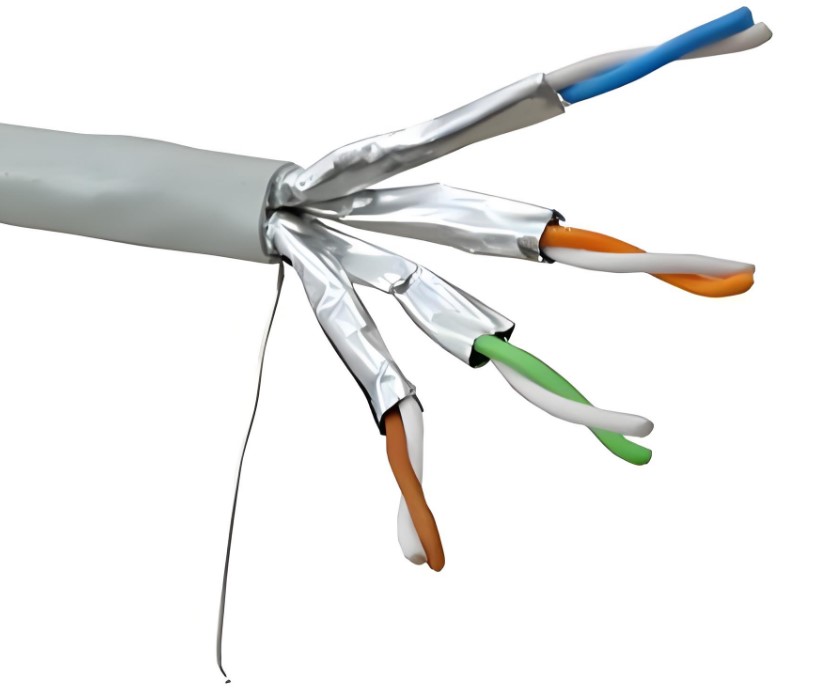
Figure 4 - Cat6a U/FTP construction: individual pair foil shielding to control crosstalk, 23AWG solid copper, 10Gbps at 100 m, CMP flame rating, UL/ETL/CPR certified.
High-EMI Commercial Building: Shielding Plus CMP
Commercial buildings split into two zones for compliance purposes. Vertical riser runs between floors are typically CMR territory, while mechanical rooms, elevator shafts, and air-handling spaces in the same building are CMP territory. Linoya Cat6 SF/UTP (24AWG/23AWG, 10Gbps at 55 m, screen plus foil overall shield, CMR, UL/ETL) covers the riser and high-noise office zone, and Cat6 F/UTP covers moderate-EMI office and surveillance zones.
In genuinely high-EMI commercial spaces - industrial parks, hospital campuses, and mixed-use buildings with heavy electrical plant - the Cat6a CMP constructions take over: Cat6a SF/UTP (screen plus foil overall shield) and Cat6a F/FTP (overall plus pair full foil shield), both 23AWG, 10Gbps at 100 m, CMP, UL/ETL/CPR certified, matched with industrial switches, PLCs, gateways, HMIs, and sensor networks. Case evidence: a high-density data center deployment of Cat6a SF/UTP ran 2,000 cartons and reported 99.998% network stability with stable 10G transmission and no crosstalk; a heavy-EMI industrial deployment of Cat6a F/FTP ran 5,000 cartons and reported 99.997% stability; and a commercial vertical cabling project of 3,000 cartons of Cat6 F/UTP reported 99.98% stability across office and hotel-room networks.
Office 10G Network: CMR and the Dual-Gauge Decision
In office and SMB environments, most runs stay within a floor and inside walls, so CMR rather than CMP is the working requirement, and the dual 24AWG/23AWG Cat6 option becomes the main commercial lever. Cat6 U/UTP is the standard fit: 24AWG/23AWG solid copper, 10Gbps at 55 m, CMR, UL/ETL certified, TIA/EIA-568-C.2 compliant, with stable PoE++ support. Matched supporting equipment is gigabit/10G switches, routers, workstations, servers, IP cameras, and wireless access points. A commercial office and SMB deployment of 4,000 cartons reported 99.99% network stability and passed 10G network performance testing.
Where the design needs a full 100 m 10G channel, the project moves to the Cat6a family, which also moves the flame rating to CMP - a useful reminder that in North American specifications, a performance upgrade frequently changes the compliance class as well. For lower-speed office and edge segments, Cat5e SF/UTP (24AWG, 1Gbps, CM/CMG, UL/ETL) covers high-noise office and industrial-edge wiring; a factory-office deployment of 4,000 cartons reported 99.97% stability with zero interference-related downtime, and a Cat5e U/UTP installation supported stable PoE power for more than 200 IP cameras.
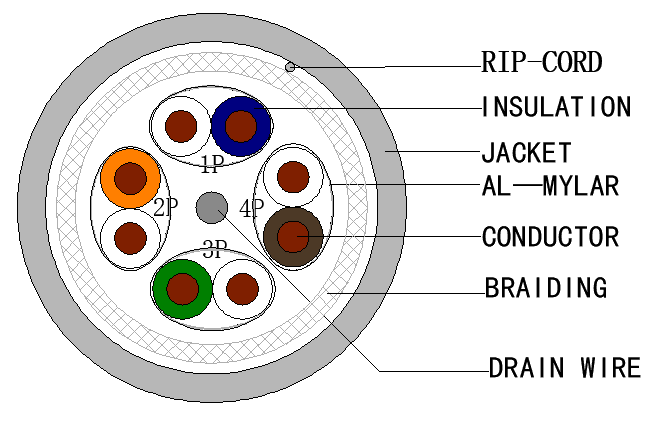
Figure 5 - Cat7 F/FTP construction: 23AWG solid copper, 40Gbps at 50 m, overall plus pair full foil shield, CMP flame rating, UL/ETL/CPR certified - specified where high-EMI routing and long-term channel stability matter.
Comparison Table: Flame Rating, Certification, and Project Fit by Product Family
| Model | Conductor / Gauge | Bandwidth | Flame rating | Certification | Typical North American fit |
|---|---|---|---|---|---|
| CAT5E U/UTP | 24AWG solid bare copper | 1Gbps | CM/CMG | UL/ETL | In-wall office, SMB, IP surveillance, PoE cameras |
| CAT5E F/UTP | 24AWG solid bare copper | 1Gbps | CM/CMG | UL/ETL | Office and small commercial floors with minor EMI |
| CAT5E SF/UTP | 24AWG solid bare copper | 1Gbps | CM/CMG | UL/ETL | High-noise office and industrial-edge wiring |
| CAT6 U/UTP | 24AWG/23AWG solid bare copper | 10Gbps at 55 m | CMR | UL/ETL | Office 10G, SMB, PoE++ endpoints |
| CAT6 F/UTP | 24AWG/23AWG solid bare copper | 10Gbps at 55 m | CMR | UL/ETL | Commercial riser, EMI office, surveillance |
| CAT6 SF/UTP | 24AWG/23AWG solid bare copper | 10Gbps at 55 m | CMR | UL/ETL | Industrial automation, high-noise commercial space |
| CAT6A U/UTP | 23AWG solid bare copper | 10Gbps at 100 m | CMP | UL/ETL/CPR | Office 10G upgrade, small and medium data center |
| CAT6A U/FTP | 23AWG solid bare copper | 10Gbps at 100 m | CMP | UL/ETL/CPR | Server room, 10G backbone, low-crosstalk channels |
| CAT6A SF/UTP | 23AWG solid bare copper | 10Gbps at 100 m | CMP | UL/ETL/CPR | High-EMI commercial building, enterprise core network |
| CAT6A F/FTP | 23AWG solid bare copper | 10Gbps at 100 m | CMP | UL/ETL/CPR | Heavy-EMI industrial, public infrastructure cabling |
| CAT7 F/FTP | 23AWG solid bare copper | 40Gbps at 50 m | CMP | UL/ETL/CPR | High-EMI industrial and data center high-performance links |
| CAT7A F/FTP | 22AWG solid bare copper | 100Gbps at 15 m | CMP | UL/ETL/CPR | Premium data center, ultra-high-speed short links |
| CAT8 F/FTP | 22AWG solid bare copper | 40Gbps at 30 m | CMP | UL/ETL/CPR | Data center cabinet-to-cabinet short-reach links |
All constructions listed use solid bare copper conductors, LDPE insulation, and a PVC or LSZH jacket, and state TIA/EIA-568-C.2 compliance. Source: Linoya Ethernet cable product specifications.
Comparison Table: Supporting Equipment and Special Requirements by Project Type
| Project type | Cable family | Matched supporting equipment | Special requirements |
|---|---|---|---|
| Data center cabinet-to-cabinet short reach | CAT8 F/FTP | Data center switch, server, storage device, high-speed interconnect equipment, cable manager | CMP, UL/ETL/CPR, 22AWG solid copper, 30 m reach, LSZH optional |
| Server room and 10G backbone | CAT6A U/FTP, CAT6A SF/UTP | Core switch, router, server farm, enterprise gateway, patch panel | CMP, UL/ETL/CPR, pair-level shielding, low crosstalk |
| High-EMI commercial and industrial | CAT6A SF/UTP, CAT6A F/FTP | Industrial switch, PLC, gateway, HMI, sensors, patch panel | CMP, UL/ETL/CPR, full shielding, industrial grade, LSZH optional |
| Commercial riser and EMI office | CAT6 F/UTP, CAT6 SF/UTP | Building network switch, router, patch panel, workstation | CMR, UL/ETL, overall foil or screen-plus-foil shield |
| Office 10G and SMB networks | CAT6 U/UTP | Gigabit/10G switch, router, workstation, server, IP camera, wireless AP | CMR, UL/ETL, dual 24AWG/23AWG options, PoE++ support |
| High-noise office and industrial edge | CAT5E SF/UTP | Industrial switch, core switch, patch panel, industrial sensor, workstation | CM/CMG, UL/ETL, enhanced shielding |
FAQ: North American Ethernet Cable Compliance
Which flame rating should a North American project specify - CMP or CMR?
Flame rating follows the installation space, not the category. In North American practice, CMP applies to air-handling (plenum) spaces, CMR applies to riser shafts, and CM/CMG applies to general in-wall and within-floor runs. Within the Linoya Ethernet cable range, the CMP constructions are Cat6a U/UTP, Cat6a U/FTP, Cat6a SF/UTP, Cat6a F/FTP, Cat7 F/FTP, Cat7A F/FTP, and Cat8 F/FTP, all published with CMP and UL/ETL/CPR certification. The CMR constructions are Cat6 U/UTP, Cat6 F/UTP, and Cat6 SF/UTP, published with CMR and UL/ETL certification. Cat5e U/UTP, F/UTP, and SF/UTP are rated CM/CMG with UL/ETL certification.
Is TIA/EIA-568-C.2 still the standard to cite, and what changed with ANSI/TIA-568.2-E?
Linoya Ethernet cable specifications state TIA/EIA-568-C.2 compliance across the Cat5e, Cat6, Cat6a, Cat7, Cat7A, and Cat8 constructions, and the same product lines also state compliance with EN and GB standards for global projects. The standard family itself has moved forward: ANSI/TIA-568.2-E was released in October 2024 by the Telecommunications Industry Association, replacing ANSI/TIA-568.2-D and introducing DCRU (DC resistance unbalance) specifications for Cat5e, Cat6, and Cat6A. A project that cites the newer revision should specify in the submittal which parameters the supplier test documentation reports, and at component or channel level.
Cat6a SFTP Ethernet cable manufacturers for data centers - what should buyers verify?
For data center use, verify the construction before the brand: Cat6a SF/UTP uses 23AWG solid bare copper with a screen plus foil overall shield, delivers 10Gbps at 100 m, carries a CMP flame rating, lists UL/ETL/CPR certification, and states TIA/EIA-568-C.2 compliance, which positions it for high-EMI commercial and data center core environments. Then verify the factory system behind it: conductor material, gauge, shield architecture, factory test regime (100% pre-shipment testing, full electrical performance testing, random sampling inspection, and third-party inspection by SGS/UL), monthly capacity of 200,000 cartons of 305 m cable, MOQ of 100 cartons, and whether OEM customization of length, logo printing, and packaging is available. As a reference point, a data center deployment using the Cat6a SF/UTP construction installed 2,000 cartons and reported 99.998% network stability with stable 10G transmission in a high-density environment and no crosstalk.
What are the MOQ, sample, and inspection options for a bulk Ethernet cable order?
Bulk Ethernet cable from Linoya Electronic Technology Co., Ltd. is supplied at 305 m per carton with a minimum order quantity of 100 cartons, and monthly capacity is 200,000 cartons. OEM and customization options cover cable length, logo printing, and packaging. Quality control combines 100% pre-shipment testing with full electrical performance testing, random sampling inspection, and third-party inspection by SGS or UL. Sample evaluation and quotation requests can be sent to inquiry@linoya.com, so the flame rating, shield construction, and gauge are confirmed against the project route before the purchase order is placed.
How long does production take, and what after-sales support is included?
Standard lead time is 30 days. After-sales support includes 24/7 online technical support, a one-year product warranty, free replacement of defective products, and online after-sales consultation. Because compliance documents, rather than cable alone, decide acceptance, the fastest next step for a North American project is to send the route classification, required category, and flame rating to the Linoya team so that the correct construction and its listing documentation are confirmed together.
Conclusion: Compliance Is Decided Before the Cable Is Ordered
North American Ethernet cable acceptance comes down to three documented layers - the UL or ETL listing, the flame rating that matches the route (CMP, CMR, or CM/CMG), and the transmission standard cited in the specification, in the TIA/EIA-568-C.2 family. In practice, those layers resolve into three project profiles: a CMP, shielded construction such as Cat8 F/FTP or Cat6a U/FTP for data center and server room links; a CMP, fully shielded Cat6a SF/UTP or Cat6a F/FTP for high-EMI commercial buildings; and a CMR Cat6 U/UTP with dual 24AWG/23AWG options, or Cat5e SF/UTP for edge segments, in office 10G and SMB networks.
Linoya Electronic Technology Co., Ltd. manufactures the full range - Cat5e through Cat8, with solid bare copper conductors, PVC or LSZH jackets, published UL, ETL, and CPR certifications, and stated compliance to TIA/EIA, EN, and GB standards - supporting bulk supply at 305 m per carton, 100-carton MOQ, 200,000-carton monthly capacity, 30-day lead time, and OEM customization on length, logo printing, and packaging.
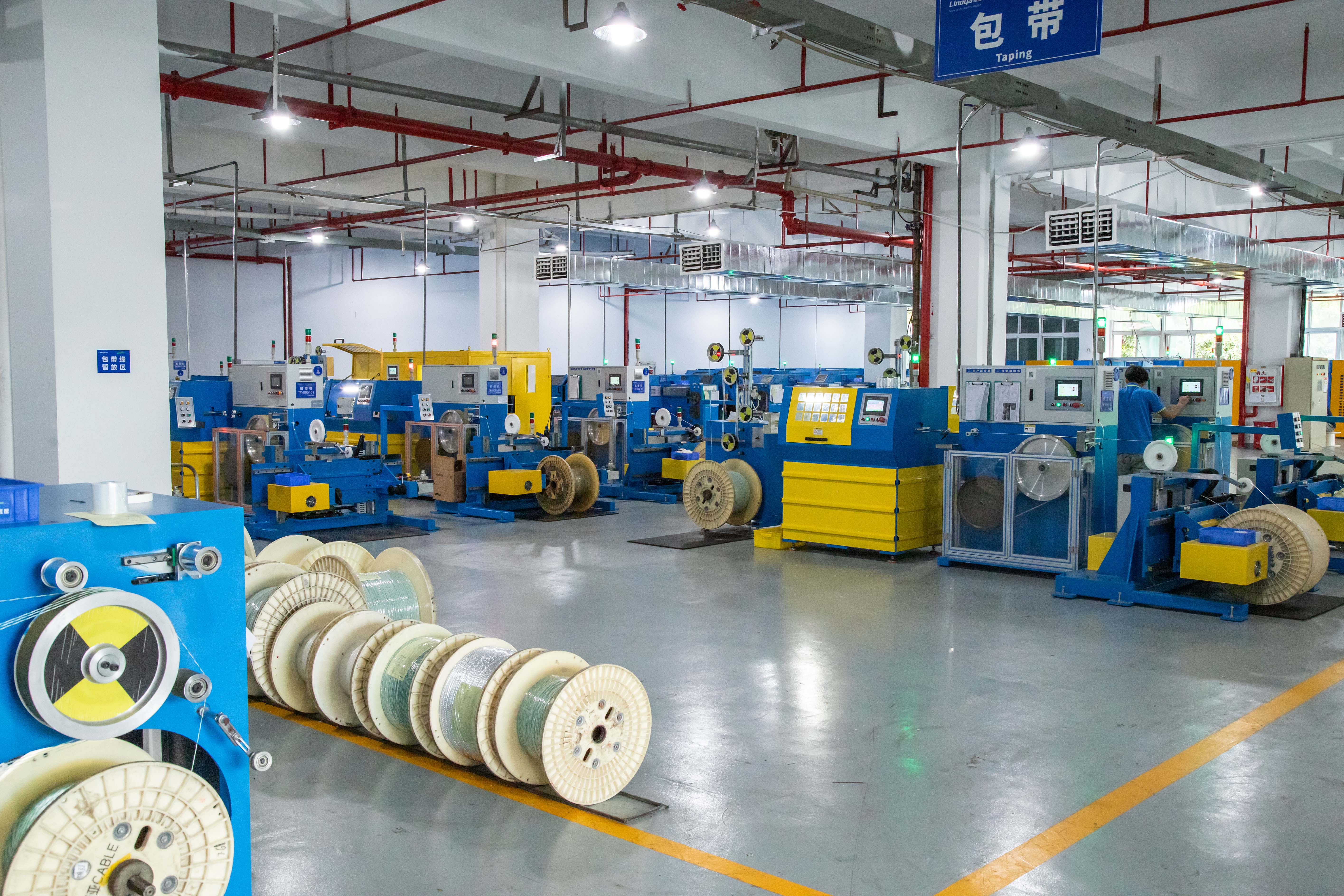
Figure 6 - Production line for bulk Ethernet cable orders: 305 m per carton, 100-carton MOQ, 200,000-carton monthly capacity, 30-day lead time.
Next step: match the construction to the route
Send your project route classification, required category, bandwidth and distance, and flame rating requirement, and the Linoya team will confirm the correct construction and its certification documents before quotation.
Contact: Raylene Lu | Email: inquiry@linoya.com | Tel: +86-15602610696 | WhatsApp: +86-13038893260
WhatsApp chat: Start a conversation
Website: www.linoya.com | Company brochure (PDF): Download the Linoya Electronic Technology Co., Ltd. catalogue
Have Questions or Need More Details?
Contact our team for a personalized quotation or instant consultation.
Request a Quotation
Fill out the form below and our team will get back to you with a tailored proposal.
WhatsApp Direct Chat
Prefer to chat in real-time? Message us on WhatsApp for instant assistance & quick answers.
- Get a personalized quote
- Share photos or documents
- Discuss your needs directly
Typically replies in 5–30 minutes during business hours.