
Outdoor Waterproof Ethernet Cable: A Buyer's Introduction
Outdoor Waterproof Ethernet Cable: A Buyer's Introduction
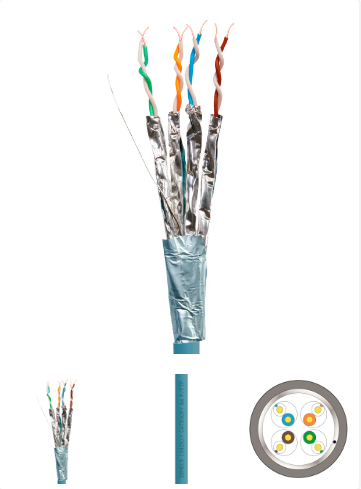
An outdoor waterproof Ethernet cable is a twisted-pair network cable built to keep a stable data link running in conditions that quickly destroy standard indoor cable: rain, standing water, sustained sunlight, repeated temperature swings, and nearby lightning activity. It is not indoor cable wrapped in a thicker jacket. The moment a cable is expected to survive outside, the jacket compound, the shielding and drain-wire layout, the grounding path, and the sealing method at every connector all change.
This guide covers what outdoor waterproof Ethernet cable is, why indoor cable fails outdoors, which construction decisions drive service life, where it is deployed, and how buyers shortlist manufacturers. Product and capability data referenced below comes from Linoya Electronic Technology Co., Ltd., a cable and wire manufacturer established in 1997 and based in Dongguan, Guangdong Province, China.
Why Indoor Ethernet Cable Fails Outdoors
Indoor category cable is graded for fire behaviour. The CM, CMG, CMR, and CMP flame ratings describe how a cable performs inside a building during a fire. They say nothing about how the same cable behaves after years of weather. That gap is where most outdoor network failures begin.
Five stresses act on outdoor cable at the same time:
- UV exposure. Sunlight degrades the polymer chains in standard PVC jackets. Plasticiser migrates out, the jacket hardens and shrinks, and hairline cracks appear. Once cracked, the foil and drain wire beneath are exposed to direct rain.
- Moisture ingress. Water enters through terminations, damaged spots, or unsealed joints and then travels along the gap between shield and insulation. A water-filled cable shows rising attenuation, collapsing shield effectiveness, and intermittent packet loss that is difficult to diagnose because the cable often tests fine while dry.
- Thermal cycling. Outdoor cable can swing through a wide temperature range in a single day. Repeated expansion and contraction opens micro-cracks between the jacket and inner components and creates fresh paths for water.
- Lightning and surge. A cable running outside is a conductor entering a cabinet. Without a grounded drain path and surge protection, a nearby strike couples onto the line and reaches whatever equipment sits at either end.
- PoE load heating. Outdoor cameras, backhaul radios, and small base stations increasingly draw power over the same cable. Undersized or impure conductors heat up under load, which accelerates jacket ageing and feeds the crack-and-water cycle.
Together these stresses explain why indoor cable deployed outdoors often lasts a single season rather than years — and why outdoor waterproof Ethernet cable has to be specified as its own product category rather than treated as an accessory to indoor cabling.
Outdoor Networking Has Become Permanent Infrastructure
Running a network cable outdoors used to be a temporary fix — one camera, one roof run, one weekend. It is now routine infrastructure. Municipalities, telecom operators, logistics parks, and industrial sites are building networks that begin indoors and continue outside, and the outdoor segment is increasingly expected to be managed with the same discipline as indoor structured cabling.
Two changes drive this. First, IP cameras have replaced analogue cameras, so each outdoor location now carries data and power on one cable instead of two separate runs. Second, small cells, smart lighting, and agricultural sensor networks push connectivity into environments where no protected conduit exists. The longer the run and the more remote the site, the more costly a failure becomes.
For buyers, the practical consequence is that outdoor Ethernet cable deserves at least the same specification discipline as indoor horizontal cabling — often more, because it is harder to replace. Cable that is buried, clipped to masonry, or strung from a pole is not something a maintenance team wants to revisit every season.
Construction Choices That Determine Outdoor Cable Life
When comparing outdoor waterproof Ethernet cable, only a handful of variables decide whether the link survives five years or fails in one. They are listed below in roughly the order in which they cause problems.
1. Jacket compound
Indoor cable uses PVC or LSZH jackets. Outdoor-grade cable normally needs a polyethylene-based jacket or a UV-stabilised polymer compound, because these resist hydrolysis and sunlight better than plasticised PVC. This single choice decides whether the cable survives several seasons in direct sun or starts cracking in the first one.
2. Conductor material
Solid bare copper is the only sensible conductor for permanent outdoor runs. Stranded conductors are appropriate for patch cords, not for long fixed installations. Copper-clad aluminium is cheaper and lighter, but it has higher resistance and lower tensile strength, and repeated thermal cycling will eventually expose those weaknesses. Linoya's network cable range uses solid bare copper conductors throughout.
3. Shielding configuration
Shielding determines how the cable behaves near interference. The common configurations are unshielded twisted pair (U/UTP), overall foil shielding (F/UTP), screen plus foil shielding (SF/UTP), individually foil-shielded pairs (U/FTP), and full shielding with both overall foil and pair foil (F/FTP). Outdoor installations frequently run alongside power lines, transformers, or solar inverters, so foil shielding at minimum is standard practice, and full shielding is common near industrial equipment. Pair-level shielding matters most where crosstalk between pairs would otherwise limit higher category performance.
4. Category and bandwidth
Category sets the distance-versus-speed trade-off. Cat5e covers 1 Gbps. Cat6 reaches 10 Gbps over short runs. Cat6a holds 10 Gbps across a full 100 m channel. Cat7, Cat7a, and Cat8 are aimed at higher bandwidth over shorter distances. Not every outdoor camera needs Cat8, but under-specifying a permanent run that will still be in service in ten years is a common and expensive mistake.
5. Lightning protection and grounding
This is where outdoor cable design diverges most sharply from indoor practice. A shielded cable needs a defined drain-wire path to earth, and outdoor runs often require surge protection at the building entry or cabinet. Without it, the cable can perform perfectly in dry weather and still carry a surge into a switch or base-station radio during the first storm season.
6. Compliance evidence
Certification is the cheapest due diligence available. Linoya's network cable products carry UL, ETL, and CPR certification and comply with TIA/EIA, EN, and GB standards. Those cover electrical performance, flame behaviour, and the conformity documentation European projects typically request. Buyers should ask for certificate numbers rather than marketing claims.
7. PoE and PoE++ capacity
Outdoor access points and camera domes increasingly rely on PoE++ delivery. Conductor gauge and DC resistance decide how much power the cable can carry before temperature rise becomes a problem. Heavier gauges such as 23 AWG or 22 AWG are the safer choice for longer PoE++ runs.
8. Sealing at connectors
Cable is only half the link. The termination is where water usually gets in. Outdoor connections typically use waterproof housings, sealed RJ45 interfaces, or gel-filled joints. Linoya produces outdoor waterproof cables and connectors as a dedicated product line, which means the termination side is addressed alongside the cable itself rather than treated as an afterthought.
Linoya Electronic Technology Co., Ltd. at a Glance
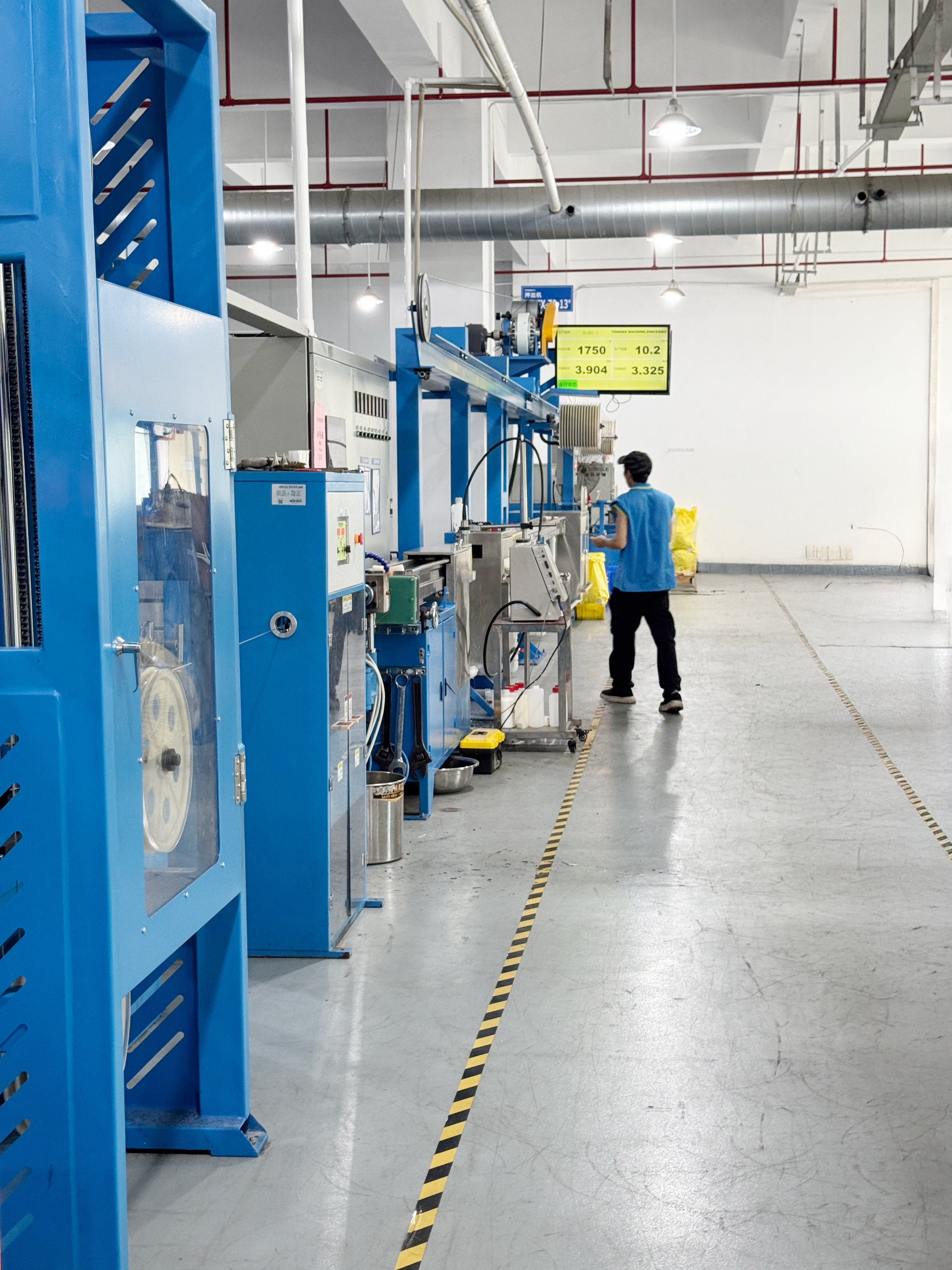
Linoya Electronic Technology Co., Ltd. is a cable and wire manufacturer founded in 1997, with more than 20 years of experience in the industry. The company operates as an integrated group covering research, manufacturing, and sales across three product fields: intelligent transmission, smart power, and new materials.
Its product range includes outdoor waterproof cables and connectors, outdoor smart connection and transmission solutions, network cables and high-speed data transmission cables and components, photovoltaic and energy storage cables, smart home power cords and plugs, and high-voltage cables, charging gun cables, and on-board data transmission cables for new energy vehicles.
Manufacturing scale, as published by the company:
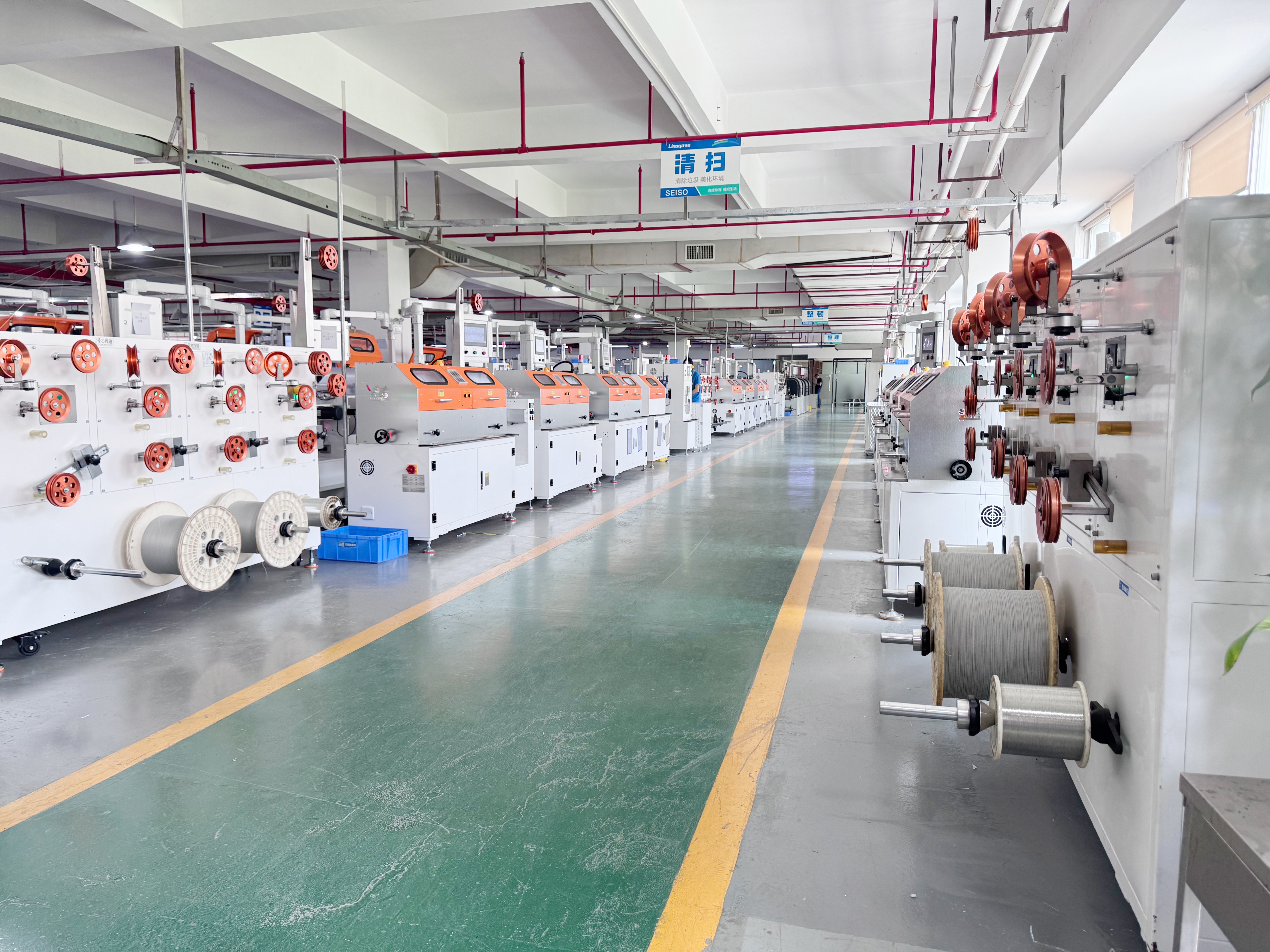
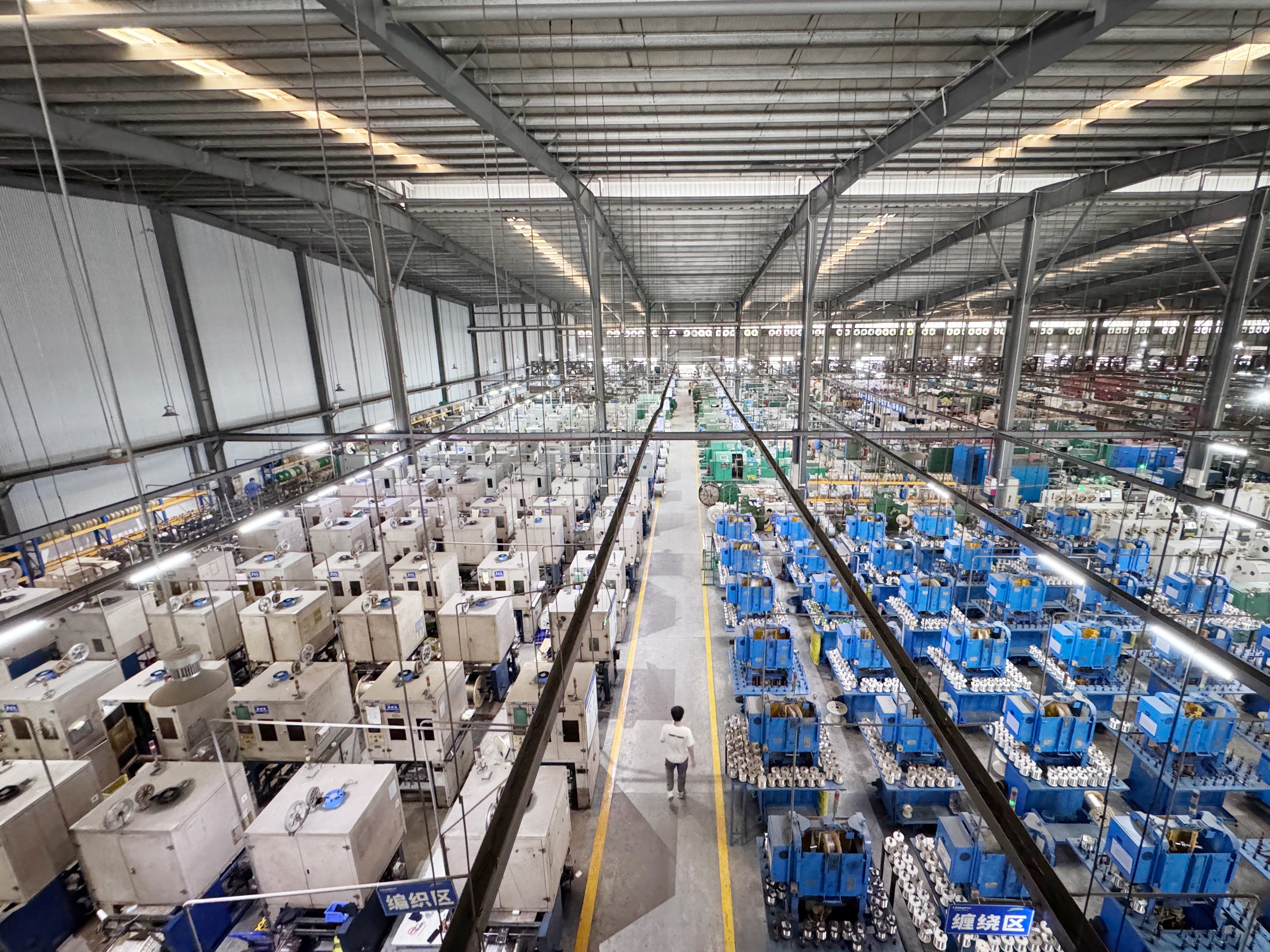
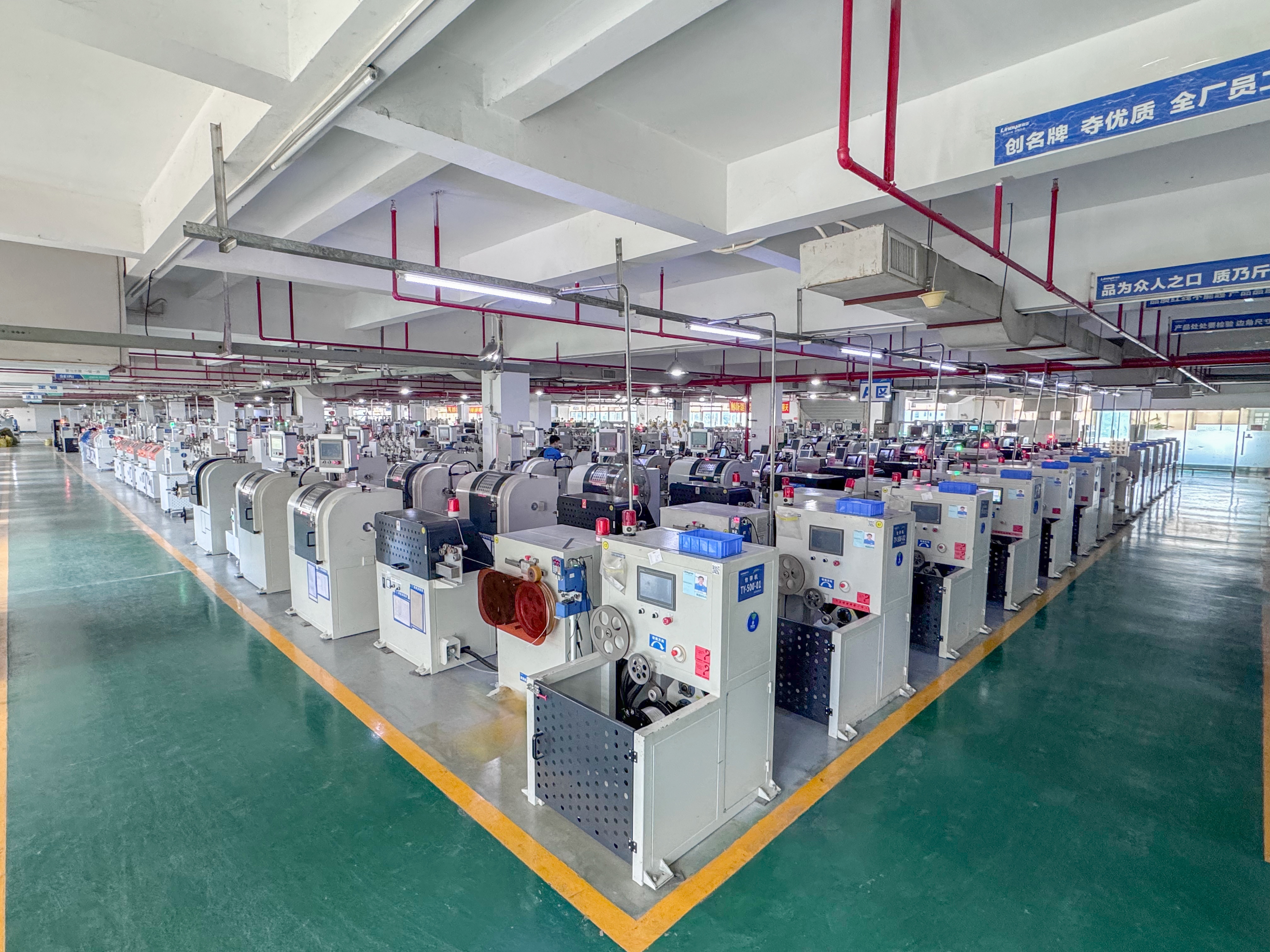
- Factory footprint: 60,000 m²
- Employees: more than 3,000
- R&D team: more than 300 engineers
- Annual production capacity: 4,000,000 kilometers of cable and wire
- Materials handled: PVC, CTPE, TPE, TPU, PUR, XLPE, XLPO, low-smoke zero-halogen (LSZH), and FPE
- Certifications on network cable products: UL, ETL, CPR; compliant with TIA/EIA, EN, and GB standards
- Principal overseas markets: the EU and the Middle East; export business accounts for 30% of total sales; products sold in dozens of countries and regions worldwide
Two details matter most from a procurement standpoint. First, capacity measured in kilometers supports recurring and long-term supply programs — a large outdoor rollout needs steady output rather than one batch. Second, the material range includes TPE, TPU, PUR, XLPE, XLPO, and LSZH, which shows the supplier can select a jacket compound beyond standard PVC when the deployment environment calls for it.
Step-by-Step: How to Evaluate an Outdoor Waterproof Ethernet Cable Supplier
Most procurement errors in this category happen before price is even discussed. The following sequence keeps the evaluation grounded in what can be verified.
- Define the deployment environment. Record whether the run is aerial, buried, or in conduit; whether it crosses near power infrastructure; the expected temperature range; and whether the cable will carry PoE or PoE++. Each answer narrows the jacket, shield, and gauge options before any quote is requested.
- Set the performance grade. Decide the category from the actual bandwidth and distance requirement, not from habit. A surveillance loop that never exceeds 1 Gbps does not need Cat8, and a 100 m 10 Gbps backbone should not be quoted as Cat6.
- Specify jacket and shielding. State the jacket material requirement explicitly, along with the shield type (F/UTP, SF/UTP, U/FTP, or F/FTP). Vague specifications such as 'waterproof cable' invite substitutions that only surface after installation.
- Require compliance documentation. Ask for UL, ETL, and CPR certificates and confirmation of TIA/EIA, EN, and GB compliance on the exact product family being quoted.
- Check manufacturing scale. Factory footprint, employee count, engineering headcount, and annual output tell you whether a supplier can hold a delivery schedule across a multi-site rollout. Linoya reports a 60,000 m² facility, more than 3,000 employees, more than 300 engineers, and 4,000,000 km of annual output.
- Verify with a sample. Test the sample for conductor continuity, dimensional consistency, and shield continuity before committing to volume. Confirm that the sample matches the quoted construction rather than a hand-built reference piece.
- Confirm continuity of supply. For phased projects, ask how repeat orders are scheduled and how material selection is kept consistent between production runs.

Where Outdoor Waterproof Ethernet Cable Is Deployed
Outdoor surveillance
Perimeter cameras, parking structures, and street-level surveillance systems combine data and PoE power on a single run. The dominant risks are UV damage on exposed spans, water ingress at the camera-side connector, and voltage drop on long PoE++ runs.
Outdoor base stations
Small cells and backhaul equipment are often mounted on poles or rooftops with limited weather protection. Grounding discipline and shield continuity matter more here than in any other application, because the cable is typically the tallest conductor entering the cabinet.
Industrial and high-EMI sites
Industrial automation, solar inverter fields, and heavy machinery areas combine weather exposure with strong electromagnetic interference. Full shielding plus a correctly grounded drain path is the standard answer, and the same construction protects against crosstalk that would otherwise limit category performance.
Smart city and public infrastructure
Street lighting controllers, traffic systems, and municipal sensor networks are permanent installations with long replacement cycles. Buyers in this segment generally prioritise documentation, certification, and long-term supply over unit price, because a single cable failure near a public right-of-way involves far more than cable cost.
Ethernet Cable Categories and Shield Types Compared
The table below summarises the network cable categories Linoya manufactures, with the conductor gauge, bandwidth, shielding options, flame rating, and certification recorded for each. Outdoor deployments add jacket modification, UV stabilisation, and sealed terminations on top of this baseline.
| Category | Conductor | Bandwidth | Shield Options | Flame Rating | Certification |
|---|---|---|---|---|---|
| CAT5E | 24AWG solid bare copper | 1 Gbps | U/UTP, F/UTP, SF/UTP | CM / CMG | UL, ETL |
| CAT6 | 24AWG / 23AWG solid bare copper | 10 Gbps @ 55 m | U/UTP, F/UTP, SF/UTP | CMR | UL, ETL |
| CAT6A | 23AWG solid bare copper | 10 Gbps @ 100 m | U/UTP, SF/UTP, U/FTP, F/FTP | CMP | UL, ETL, CPR |
| CAT7 | 23AWG solid bare copper | 40 Gbps @ 50 m | F/FTP (overall + pair foil) | CMP | UL, ETL, CPR |
| CAT7A | 22AWG solid bare copper | 100 Gbps @ 15 m | F/FTP (overall + pair foil) | CMP | UL, ETL, CPR |
| CAT8 | 22AWG solid bare copper | 40 Gbps @ 30 m | F/FTP (overall + pair foil) | CMP | UL, ETL, CPR |
All categories above comply with TIA/EIA-568-C.2 and the EN and GB standards cited for the Linoya network cable range.
Frequently Asked Questions
What is an outdoor waterproof Ethernet cable used for?
An outdoor waterproof Ethernet cable is used wherever a twisted-pair network link must operate outside a protected building interior: perimeter and street surveillance, outdoor base stations and small cells, industrial automation in exposed areas, and smart-city infrastructure such as street lighting controllers and traffic systems. In these locations the cable typically carries both data and PoE or PoE++ power, so it must handle moisture, UV exposure, temperature variation, and electrical surge risk at the same time.
Which certifications should an outdoor waterproof Ethernet cable manufacturer hold?
The relevant certifications depend on the destination market, but the common baseline for network cable is UL and ETL for electrical safety and performance, plus CPR for European construction-product compliance. Standards conformance for twisted-pair cable is generally expressed against TIA/EIA-568-C.2, together with EN and GB standards where those markets apply. Linoya's network cable products carry UL, ETL, and CPR certification and comply with TIA/EIA, EN, and GB standards. Buyers should request certificate numbers on the exact product family being quoted rather than accepting a general statement.
How can I tell whether a supplier is a real manufacturer rather than a trading company?
Verifiable manufacturing facts are the simplest test. Linoya Electronic Technology Co., Ltd. was established in 1997, operates a 60,000 m² manufacturing facility, employs more than 3,000 staff, maintains an R&D team of more than 300 engineers, and reports an annual production capacity of 4,000,000 kilometers of cable and wire. It also handles its own material range, including PVC, CTPE, TPE, TPU, PUR, XLPE, XLPO, LSZH, and FPE. A trading company cannot typically evidence this combination of floor space, engineering headcount, capacity, and in-house material capability.
Which conductor material should I specify for an outdoor Ethernet installation?
Solid bare copper. It offers lower resistance and better mechanical durability than copper-clad aluminium, and it holds up better under the repeated thermal cycling that outdoor runs experience. Linoya's network cable range uses solid bare copper conductors across its categories, from 24AWG on CAT5E up to 22AWG on CAT7A and CAT8, with the heavier gauges providing more headroom for long-distance PoE++ delivery.
How do I start evaluating an outdoor waterproof Ethernet cable supplier?
Start by writing down the deployment environment, the required category and bandwidth, the jacket and shielding specification, and the compliance documentation you need. Then ask the supplier to confirm each point in writing against a specific product family, and request a sample that matches the quoted construction rather than a reference piece. Buyers who want a faster starting point can review Linoya's company and product brochure, or contact the company directly at linoya.com or inquiry@linoya.com to confirm the current specification options for a specific outdoor project.
Conclusion
Outdoor waterproof Ethernet cable is a distinct product category rather than a variant of indoor cable. The decision that matters most is the jacket compound, because it sets the pace of UV and moisture degradation. After that, conductor material, shielding configuration, category, grounding path, and connector sealing determine how long the link holds up in service.
For buyers sourcing at scale, the evaluation narrows to a short list of questions: can the supplier document its certifications, evidence real manufacturing scale, offer the jacket and material combinations the site requires, and hold a delivery schedule across a phased rollout? Linoya Electronic Technology Co., Ltd., established in 1997 with a 60,000 m² facility, more than 3,000 employees, more than 300 engineers, and 4,000,000 km of annual cable and wire output, is structured to answer those questions with documentation rather than claims.
To review the full range or request a specification for a specific outdoor project, download the Linoya Electronic Technology Co., Ltd. company brochure or send an inquiry through linoya.com. Sample requests and specification questions are typically the fastest way to confirm whether a given construction meets a site's requirements before volume ordering begins.
Have Questions or Need More Details?
Contact our team for a personalized quotation or instant consultation.
Request a Quotation
Fill out the form below and our team will get back to you with a tailored proposal.
WhatsApp Direct Chat
Prefer to chat in real-time? Message us on WhatsApp for instant assistance & quick answers.
- Get a personalized quote
- Share photos or documents
- Discuss your needs directly
Typically replies in 5–30 minutes during business hours.