
Outdoor Waterproof Ethernet Cable: What Buyers Should Know
An outdoor waterproof Ethernet cable is a twisted-pair network cable built to carry data and Power over Ethernet (PoE) in permanent outdoor installations — on poles, rooftops, gantries and open industrial yards — where rain, sunlight, temperature cycling and electromagnetic interference are continuous conditions rather than occasional events. What separates it from a standard indoor cable is the whole construction, not just the copper: jacket compound, moisture protection, shielding, connector sealing and the certifications the finished cable carries.
This guide is written for importers, distributors, network integrators and project buyers who are at the beginning of that evaluation. It explains what makes a cable genuinely suitable for outdoor use, how to specify one for surveillance, base station and industrial links, and which points to verify with a manufacturer before placing an order.
What Is an Outdoor Waterproof Ethernet Cable?
Definition: an outdoor waterproof Ethernet cable is a structured cabling product whose conductor, insulation, shielding, jacket and termination are all specified for permanent outdoor exposure, while still meeting twisted-pair performance standards such as TIA/EIA-568-C.2.
Indoor Ethernet cable assumes protection. It is normally run inside conduit, cable tray or building voids, and its PVC or LSZH jacket is designed for that environment. Once the same cable is exposed — direct burial, aerial spans, pole-mounted cameras, rooftop equipment — the failure sequence usually starts at the jacket and ends at the conductor. The jacket hardens and cracks under ultraviolet light and temperature cycling, moisture reaches the shield and the copper, and the link degrades long before the cable's electrical life should be over.
Mixed indoor and outdoor cable usage is specifically identified among the recognised causes of early cable failure, alongside physical damage and off-spec conductor material. That is why an outdoor version of a cable is a specification, not a marketing label. It normally combines:
- Solid bare copper conductor — carries PoE current with stable resistance instead of the copper-clad aluminium found in low-grade cable.
- Polyethylene-based insulation and jacket options — including LDPE insulation and PE/FPE compounds, which hold up better than standard PVC in wet and UV-exposed conditions.
- Shielding matched to the interference environment — foil, screen-foil or full foil shield constructions.
- A sealed connector system — field-installable waterproof RJ45 or glanded entries, which is where most outdoor links actually fail.
The Problem: Why Indoor-Rated Cable Fails on Outdoor Links
The symptoms of a cable that is wrong for its environment are easy to recognise and easy to misdiagnose: no network link light, frequent disconnection, slow network speed, random packet loss, unstable PoE power supply, or a link that negotiates at 10/100 Mbps instead of the expected gigabit rate. These symptoms look the same across surveillance, base station and industrial networks, and they rarely announce themselves as a cable problem.
Five causes dominate outdoor failures:
- Physical and environmental damage. Broken inner conductors, a crushed or scratched jacket, and routing bends tighter than the cable allows.
- Conductor quality. Copper-clad aluminium conductors, off-spec cable grades and counterfeit product.
- Termination defects. Wrong wiring sequence, untwisted pairs left too long, poor crimping, and damaged or oxidized RJ45 pins.
- Environmental interference. Heavy EMI, incorrect STP grounding, and mixed indoor/outdoor cable usage.
- Connector mismatch. Low-grade RJ45 connectors that cannot support the high-frequency performance of Cat6 and Cat6a cable.
On an outdoor project, causes 1, 4 and 5 are the ones a buyer can design out at specification stage. Doing so is considerably cheaper than replacing a cable run after commissioning, when access equipment, downtime and re-termination all have to be paid for a second time.
Industry Background: Where Outdoor Ethernet Links Are Needed
Outdoor Ethernet is no longer limited to a few utility sites. It now appears in IP surveillance on poles and building exteriors, outdoor wireless base stations and small-cell sites that use copper for power and backhaul, electric vehicle charging areas, industrial yards and logistics zones, environmental and agricultural monitoring networks, outdoor lighting control, and public infrastructure cabling.
Linoya Electronic Technology Co., Ltd. lists smart manufacturing, smart agriculture and ecology, lighting, manufacturing and processing machinery, instruments and meters, and construction and decoration among the industries its cable and connection products serve — a list that maps closely onto the environments where outdoor-rated cable stops being optional.
Two technical shifts change how buyers specify cable. First, PoE power levels have risen: PoE++ deployments can reach up to 90 W, which pushes more current through the conductor and turns copper quality and conductor gauge into a performance decision rather than a cost detail. Second, cable is increasingly treated as long-life infrastructure. In the EU, CPR fire-performance classification is typically requested for cables permanently installed in construction works, and CE marking is commonly required for products placed on the market. Both are easier to verify before the purchase order than after delivery.
Detailed Solution: What an Outdoor-Ready Construction Includes
1. Solid bare copper conductor
Every Ethernet cable model in Linoya's range uses solid bare copper conductors, in 22 AWG, 23 AWG or 24 AWG depending on category. For outdoor and PoE links this matters for two reasons: resistance stays stable over long runs and at higher power levels, and copper does not develop the oxidation behaviour that degrades aluminium-based conductors in damp conditions. Copper-clad aluminium is listed as a cable quality issue in Linoya's own troubleshooting guidance, and it is one of the fastest ways to lose outdoor performance while saving a little on purchase price.
2. Category selection: Cat5e, Cat6, Cat6a and above
The category sets bandwidth, distance and PoE headroom. Linoya's published selection logic for Cat5e, Cat6 and Cat6a is a useful starting point for outdoor specifications:
- Cat5e — 1 Gbps, suitable for stable gigabit links and PoE surveillance cameras at 30 W PoE+. Procurement cost is low and installation requirements are forgiving; it is not intended for 10 Gbps or for high-power PoE++ devices.
- Cat6 — 250 MHz bandwidth, 10 Gbps up to 55 m and 1 Gbps up to 100 m. It is the cost-controlled route where short-range 10 Gbps or upgrade headroom is needed, with the caveat that 10 G performance beyond 55 m is not guaranteed.
- Cat6a — stable 10 Gbps at 100 m, suited to dense cable bundles, PoE++ up to 90 W and long-term permanent cabling. A larger cable diameter and a higher overall project cost are the trade-offs.
- Cat7, Cat7A and Cat8 — full shielded constructions rated at 40 Gbps at 50 m, 100 Gbps at 15 m and 40 Gbps at 30 m respectively. These are used for short high-speed interconnects rather than for typical outdoor runs.
3. Shielding matched to the interference environment
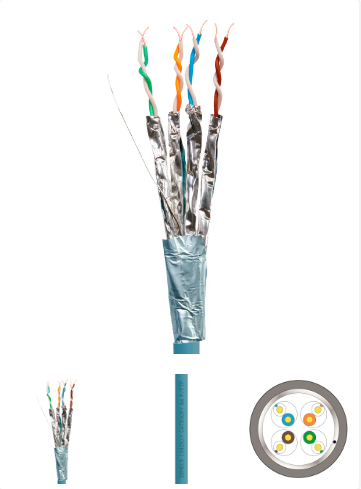
Shield choice should follow the site, not the price list. Unshielded U/UTP suits low-interference runs. F/UTP adds an overall foil shield. U/FTP uses individual pair foil where crosstalk between pairs is the limiting factor. SF/UTP combines a screen with foil across the whole cable. F/FTP applies both overall and pair-level foil for heavy-EMI industrial and public infrastructure environments. One caution applies to all shielded designs: a shield only works when it is grounded correctly, and incorrect STP grounding is itself a recognised cause of interference problems.
4. Jacket compound and UV resistance
The jacket is the first line of defence and the part most exposed to sunlight, water and abrasion. When specifying for outdoor use, buyers should ask how the jacket compound is stabilised against UV exposure, whether the design targets aerial, duct or direct-burial installation, and how the jacket behaves across the site's temperature range. Linoya's stated material capabilities cover PVC, CTPE, TPE, TPU, PUR, XLPE, XLPO, low-smoke zero-halogen (LSZH) and FPE compounds, together with LDPE insulation — the material set from which an outdoor jacket specification is drawn. Where a project has fire-performance requirements in addition to weather resistance, the jacket must satisfy both, which is one more reason to confirm the exact compound against a datasheet rather than assume it.
5. Waterproof connectors and termination
Most outdoor link failures happen at the ends, not in the middle of the run. Linoya supplies outdoor waterproof cables and connectors as well as outdoor smart connection and transmission solutions, so the connector side of the problem is treated as part of the system rather than as an accessory. A workable specification states the connector type (field-installable waterproof RJ45, gland entry, sealed enclosure), the sealing method, and whether the connection point can be serviced without cutting the run.
6. Lightning and surge protection
Aerial spans, pole-mounted equipment and links running between buildings are exposed to induced surges. Outdoor network designs normally include surge protective devices at the equipment end, correct bonding and grounding of the shield, and physical separation between data cable and power conductors. This is a specification-stage decision, because retrofitting protection after an event usually means replacing hardware rather than re-terminating a cable.
7. Certification and documentation
Certification is issued to a tested construction, so the certificate must match the exact model and jacket being ordered. Linoya's Ethernet cable models are stated as UL, ETL and CPR certified, compliant with TIA/EIA-568-C.2, and compliant with EN and GB standards — the documentation set EU and Middle East projects typically request. Buyers should ask for the certificate reference covering the specific outdoor construction. A claim of certification without a document number is an incomplete answer.
Step-by-Step: How to Specify an Outdoor Waterproof Ethernet Cable
- Define the link. Record the run distance, number of devices, required bandwidth, PoE class (30 W PoE+ or up to 90 W PoE++), installation type (aerial, duct, direct burial) and the site's interference level.
- Select the category. Cat5e for stable 1 Gbps, Cat6 for cost-controlled short-range 10 Gbps up to 55 m, Cat6a for 10 Gbps at 100 m with PoE++ up to 90 W.
- Select the shielding. Move from U/UTP through F/UTP, U/FTP and SF/UTP to F/FTP as EMI and crosstalk requirements increase.
- Define the jacket and outdoor protection. PE-based jacket compound, UV stabilisation, moisture protection, and the flame-performance requirement for the destination market.
- Define the termination. Waterproof connector type, sealing method and service loop.
- Confirm certification and market compliance. UL or ETL listing, CPR classification, TIA/EIA-568-C.2, EN and GB standards as applicable.
- Design surge and grounding protection for the specific installation type.
- Validate the cable. Linoya states that all finished cables pass factory-level electrical performance testing before delivery. Bench verification follows the standard sequence: test continuity and wiring with a cable tester, connect the cable between a PC and a router and check the link indicator, then run a speed test to confirm actual throughput. Factory-tested cable still needs an on-site re-check after construction.
- Confirm supply continuity. Annual capacity, order quantity and production planning for recurring deliveries.
Use Cases
Outdoor surveillance and IP camera networks
Pole- or wall-mounted cameras powered over Ethernet, exposed connectors, and long runs through unconditioned space. Cat5e covers 30 W PoE+ camera links; PoE++ devices and dense camera bundles push the specification toward Cat6a. In practice, the connector seal and the UV performance of the jacket decide whether a run survives its second summer.
Outdoor base station and wireless backhaul links
Outdoor wireless equipment where copper carries both power and data. The priorities here are shielding against strong radio-frequency fields, surge protection, and a jacket that tolerates prolonged sun exposure. Shield grounding must be planned into the installation rather than improvised on site.
Industrial yards, manufacturing and processing sites
Heavy electromagnetic interference, vibration, and exposure to oil or chemicals. Full shielded constructions such as SF/UTP and F/FTP are the usual starting point, paired with industrial-grade jacketing. Linoya's Cat6a SF/UTP and Cat6a F/FTP models are specified for heavy-EMI industrial, data centre and public infrastructure environments.
Smart agriculture, ecology and environmental monitoring
Irrigation areas, greenhouses and open-field monitoring combine moisture, UV exposure and chemical contact from fertilisers. A solid bare copper conductor with a weather-rated jacket, run in conduit or rated for burial, is the practical baseline. Smart agriculture and ecology is one of the industries Linoya's cable products serve.
Lighting, construction and public infrastructure
Outdoor lighting control and public infrastructure cabling are permanent installations where inspection may require documented fire performance as well as weather resistance. Certification documents belong in the project file before the cable is pulled, not after.
Comparison Table: Ethernet Cable Categories Used in Outdoor Specifications
The table below uses Linoya's stated model data for its Ethernet cable range. It is a category and shielding reference for outdoor specifications, not a substitute for an outdoor datasheet.
| Model | Conductor | Bandwidth / distance | Shield structure | Flame rating | Stated certification |
|---|---|---|---|---|---|
| CAT5E U/UTP | 24 AWG solid bare copper | 1 Gbps | Unshielded | CM/CMG | UL/ETL |
| CAT5E F/UTP | 24 AWG solid bare copper | 1 Gbps | Overall foil | CM/CMG | UL/ETL |
| CAT5E SF/UTP | 24 AWG solid bare copper | 1 Gbps | Screen + foil | CM/CMG | UL/ETL |
| CAT6 U/UTP | 24/23 AWG solid bare copper | 10 Gbps @ 55 m | Unshielded | CMR | UL/ETL |
| CAT6 F/UTP | 24/23 AWG solid bare copper | 10 Gbps @ 55 m | Overall foil | CMR | UL/ETL |
| CAT6 SF/UTP | 24/23 AWG solid bare copper | 10 Gbps @ 55 m | Screen + foil | CMR | UL/ETL |
| CAT6A U/UTP | 23 AWG solid bare copper | 10 Gbps @ 100 m | Unshielded | CMP | UL/ETL/CPR |
| CAT6A U/FTP | 23 AWG solid bare copper | 10 Gbps @ 100 m | Individual pair foil | CMP | UL/ETL/CPR |
| CAT6A SF/UTP | 23 AWG solid bare copper | 10 Gbps @ 100 m | Screen + foil | CMP | UL/ETL/CPR |
| CAT6A F/FTP | 23 AWG solid bare copper | 10 Gbps @ 100 m | Overall + pair foil | CMP | UL/ETL/CPR |
| CAT7 F/FTP | 23 AWG solid bare copper | 40 Gbps @ 50 m | Overall + pair foil | CMP | UL/ETL/CPR |
| CAT7A F/FTP | 22 AWG solid bare copper | 100 Gbps @ 15 m | Overall + pair foil | CMP | UL/ETL/CPR |
| CAT8 F/FTP | 22 AWG solid bare copper | 40 Gbps @ 30 m | Overall + pair foil | CMP | UL/ETL/CPR |
Reading the table correctly: all models listed use LDPE insulation and are available with PVC or LSZH jackets, comply with TIA/EIA-568-C.2, and are stated as compliant with EN and GB standards. These are the standard constructions of Linoya's Ethernet cable range. A true outdoor waterproof Ethernet cable specification adds a weather-rated jacket, a sealed connector system and site-specific surge and grounding design — confirm those three items against a datasheet for the exact model before ordering.
Choosing an Outdoor Waterproof Ethernet Cable Manufacturer
Manufacturer selection for outdoor cable is largely a documentation and capacity exercise. The following points are the ones that separate a supplier who can support a project across several years from one who can only ship a first container.
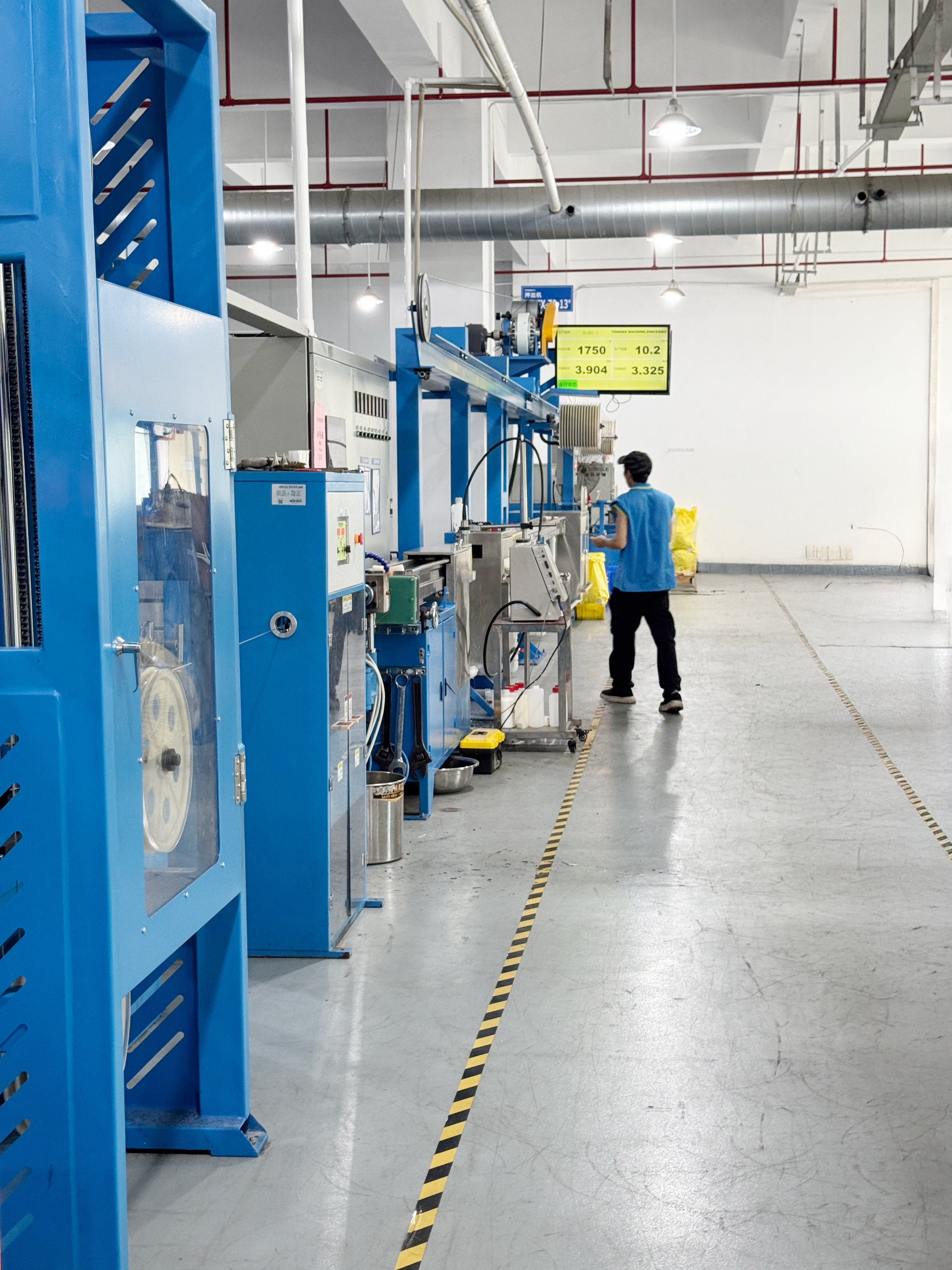
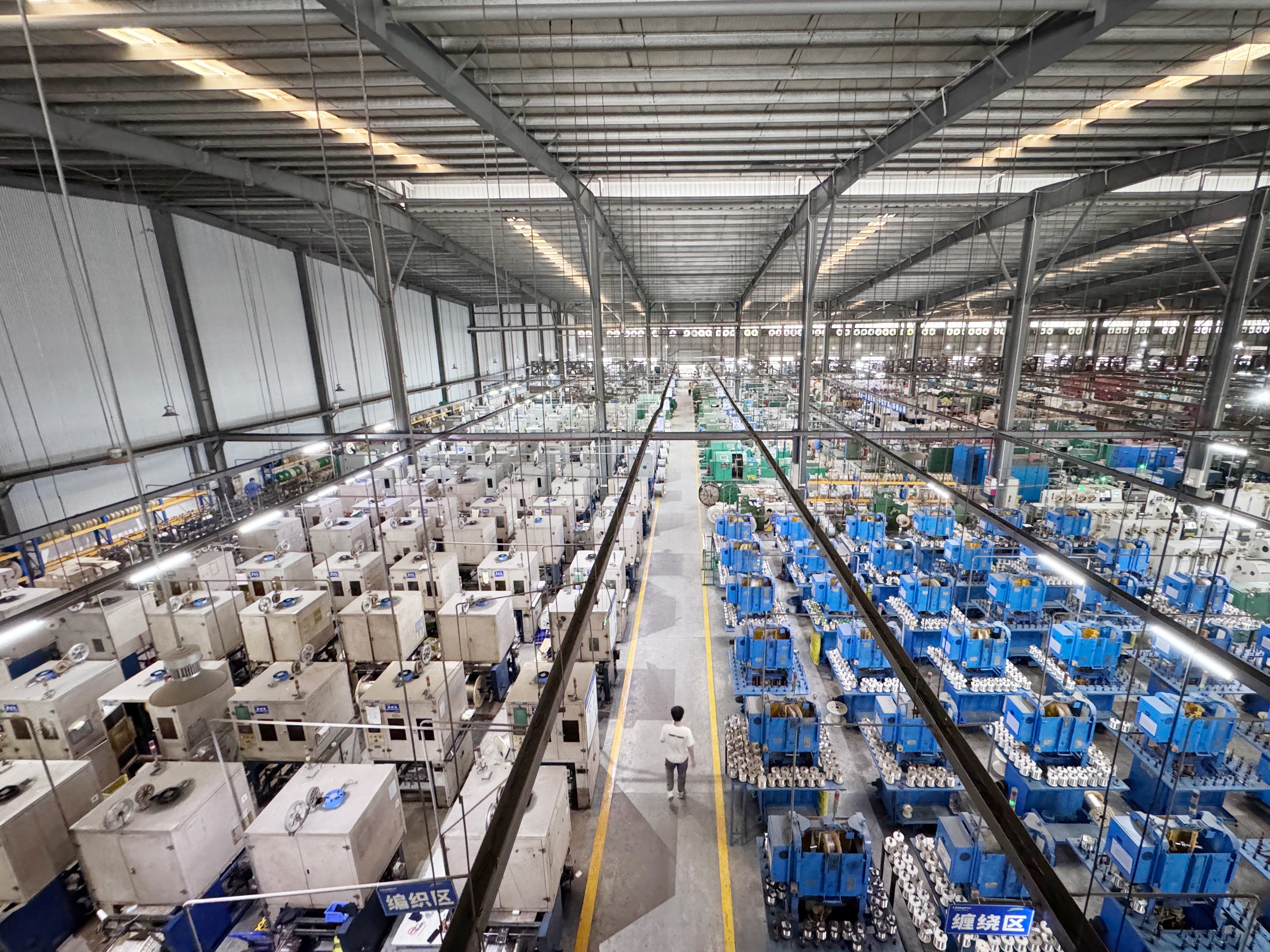
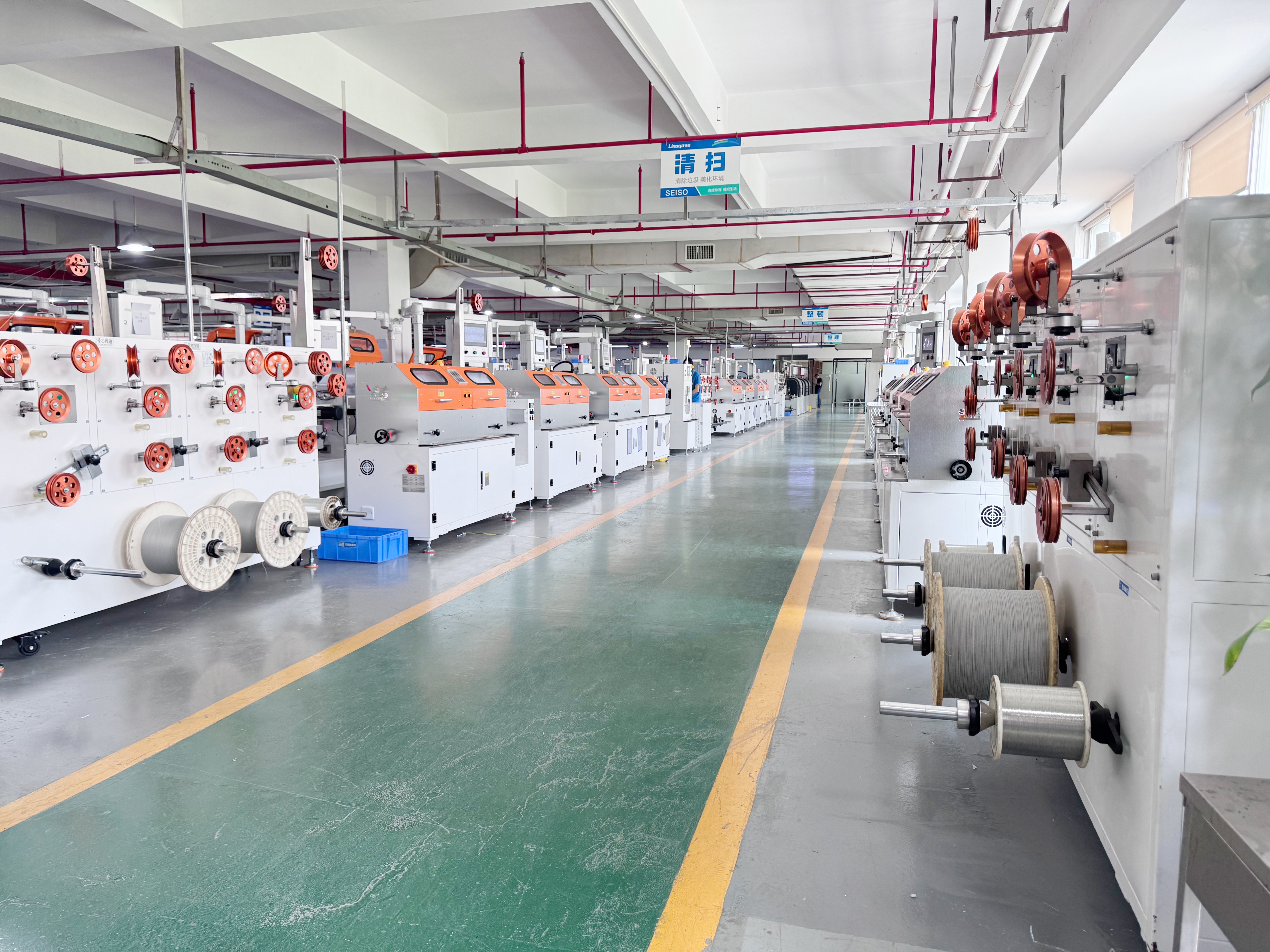
- Manufacturing scale and continuity. Linoya Electronic Technology Co., Ltd. was established in 1997 and has more than 20 years of experience in the cable and wire industry. Its manufacturing facility covers 60,000 m², it employs more than 3,000 staff, and annual production capacity reaches 4,000,000 kilometers of cable and wire, which supports stable output for recurring and long-term supply programmes.
- Material capability. Confirmed capability across PVC, CTPE, TPE, TPU, PUR, XLPE, XLPO, LSZH and FPE compounds, plus LDPE insulation — the material range needed to match a jacket to an outdoor environment rather than force an indoor compound into it.
- Product scope beyond the cable. Linoya supplies outdoor waterproof cables and connectors and outdoor smart connection and transmission solutions, in addition to network cables and high-speed data transmission cables and components. A supplier who also controls the connector side can seal the whole link.
- Engineering depth. An R&D team of more than 300 engineers is a practical indicator of how quickly a non-standard jacket or connector requirement can be engineered and sampled.
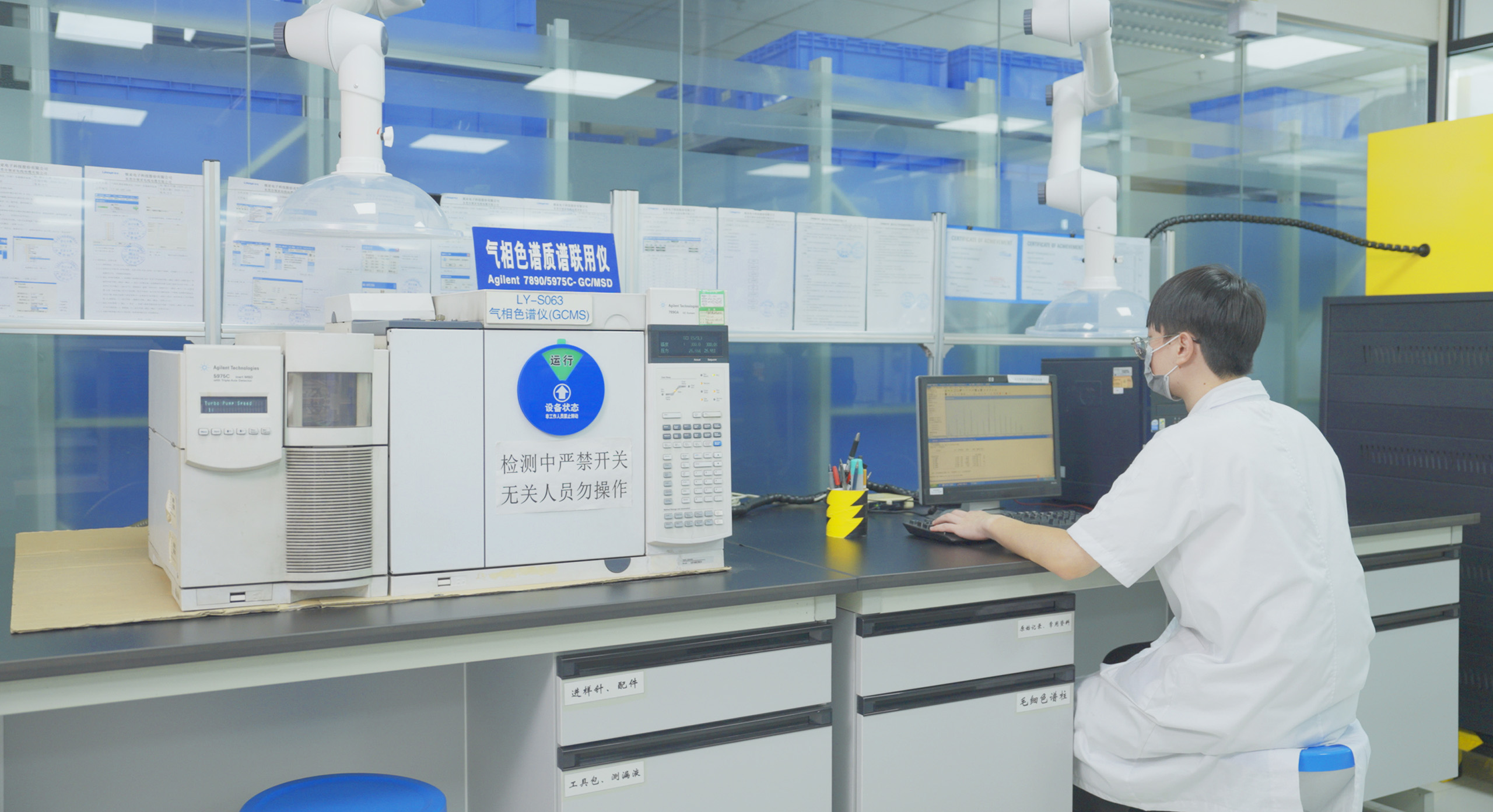
- Testing discipline. Factory-level electrical performance testing of finished cables before delivery, supported by in-house laboratory capability.
- Certification documentation. UL, ETL and CPR certification with TIA/EIA-568-C.2, EN and GB compliance on the Ethernet cable range, issued to tested constructions.
- Export track record. Linoya's products are sold in dozens of countries and regions worldwide; export business accounts for 30% of total sales, with the EU and the Middle East forming its principal overseas markets.
Red flags follow directly from the failure list earlier in this guide: copper-clad aluminium conductors presented as bare copper, off-spec or counterfeit cable grades, no datasheet for the outdoor construction, and certification claims that come without a certificate number or test report.
FAQ
What certifications should an outdoor waterproof Ethernet cable carry?
It depends on the destination market. In the EU, CPR fire-performance classification is typically requested for cables installed in construction works and CE marking is commonly required for products placed on the market; North American projects usually look for UL or ETL listing, and structured cabling performance is verified against TIA/EIA-568-C.2. Linoya's Ethernet cable models are stated as UL, ETL and CPR certified and compliant with TIA/EIA, EN and GB standards. Because certification is issued to a specific tested construction, confirm the certificate reference for the exact outdoor model and jacket compound before ordering.
What cable categories and constructions can Linoya supply for outdoor network projects?
Linoya Electronic Technology Co., Ltd. manufactures cable and wire and supplies network cables and high-speed data transmission cables and components, as well as outdoor waterproof cables and connectors and outdoor smart connection and transmission solutions. Its Ethernet cable range covers Cat5e, Cat6, Cat6a, Cat7, Cat7A and Cat8 in unshielded, foil-shielded, screen-foil and full-foil shielded constructions, all using solid bare copper conductors with LDPE insulation and PVC or LSZH jacket options. R&D is supported by more than 300 engineers.
What drives the cost of an outdoor waterproof Ethernet cable?
The main cost drivers are conductor material and gauge, cable category, shield type, jacket compound, and the waterproof connector and termination. Solid bare copper is the conductor specification Linoya uses, while copper-clad aluminium is a recognised quality risk rather than a genuine saving. Within the range, Cat5e is described as the low-cost option for stable 1 Gbps links, Cat6 as the cost-controlled route to short-range 10 Gbps up to 55 m, and Cat6a as the higher-cost choice for full 10 Gbps at 100 m and PoE++ up to 90 W, with a larger cable diameter and higher overall project cost. Weather-rated jacketing and sealed connectors add to the assembly cost.
How can I validate a cable before committing to a full order?
Validation works at three levels. At the factory, Linoya states that all finished cables pass factory-level electrical performance testing before delivery. On the bench, a cable tester confirms continuity, open or short circuits and mis-wiring, and a link plus speed test confirms real throughput. On site, a re-check after construction is required, because factory-tested cable still has to be verified once installed. Buyers who want to evaluate cable and connector samples for a specific outdoor project can contact the Linoya sales team at inquiry@linoya.com to discuss sample and pilot arrangements.
What production capacity supports long-term outdoor cable programmes?
Linoya's annual production capacity reaches 4,000,000 kilometers of cable and wire, which supports stable output for recurring and long-term cable supply programmes. The company employs more than 3,000 staff, operates a 60,000 m² manufacturing facility, and has been established since 1997. Export business accounts for 30% of total sales, with the EU and the Middle East forming its principal overseas markets. For project scheduling, confirm quantity, jacket specification and connector type with the sales team, as those variables feed directly into production planning.
Conclusion
An outdoor waterproof Ethernet cable is defined by four things: a solid bare copper conductor, a category that matches the bandwidth and PoE load, shielding that matches the interference environment, and a jacket and connector system rated for permanent outdoor exposure. Everything else — certification, testing, capacity — is the evidence that those four things were actually delivered.
For buyers at the research stage, the practical next step is to write the link specification first, then ask suppliers to answer it point by point: conductor material, category, shield type, jacket compound and UV stabilisation, connector sealing, certification reference, and capacity for recurring supply. A supplier who can answer all seven in writing is a supplier who can be quoted against.
Next step
Linoya Electronic Technology Co., Ltd. — established 1997, manufacturing cable and wire across intelligent transmission, smart power and new materials, including network cables and high-speed data transmission cables and components, outdoor waterproof cables and connectors, and outdoor smart connection and transmission solutions.
Download the company brochure: LINOYA ELECTRONIC TECHNOLOGY CO., LTD. brochure (PDF)
Website: www.linoya.com
Contact: Raylene Lu — Email: inquiry@linoya.com — Tel: +86-15602610696 — WhatsApp: +86-13038893260
Address: No.2, The Fourth West Industrial Road, High-Tech Industrial Development Zone, Songshan Lake, Dongguan City, Guangdong Province, China.
Have Questions or Need More Details?
Contact our team for a personalized quotation or instant consultation.
Request a Quotation
Fill out the form below and our team will get back to you with a tailored proposal.
WhatsApp Direct Chat
Prefer to chat in real-time? Message us on WhatsApp for instant assistance & quick answers.
- Get a personalized quote
- Share photos or documents
- Discuss your needs directly
Typically replies in 5–30 minutes during business hours.