
Nonwoven Fabric Machine Certification & Compliance: A Buyer's Guide to Regional Standards
Nonwoven Fabric Machine Certification & Compliance: A Buyer's Guide to Regional Standards
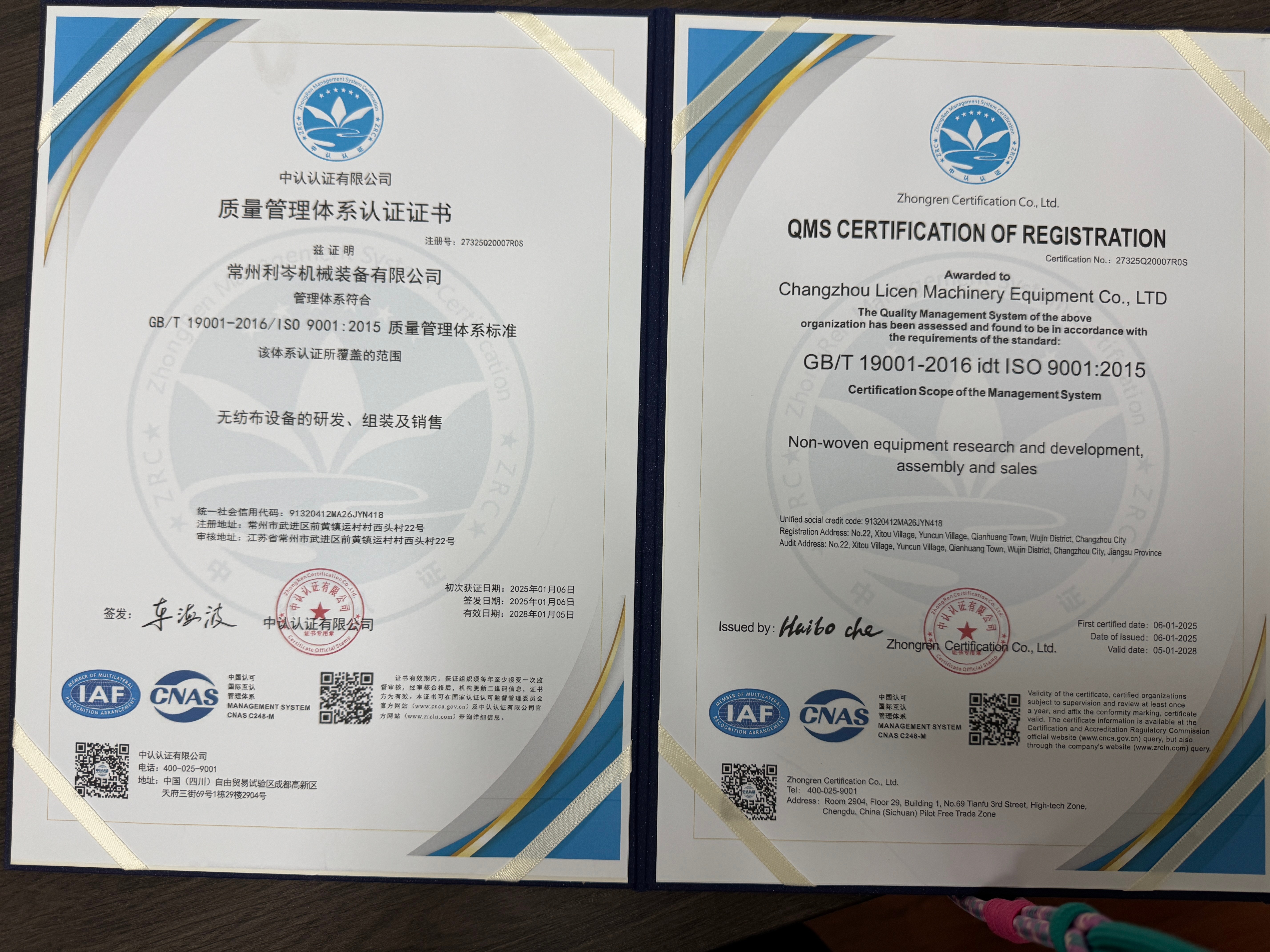
Short answer: certification and compliance for a nonwoven fabric machine is not one certificate. It is four separate document layers — a quality management system certificate describing how the supplier is organised, machine-level specification data defining what the line will produce, fabric test methods defining how output is measured, and market-access plus customs documentation defining whether the line can legally enter and run in the destination country. Each layer answers a different question, and each one must be written into the purchasing terms and the acceptance criteria before the contract is signed.
In most projects, certification is handled as a closing document. The supplier emails a certificate bundle when the deposit is being arranged, the buyer files it, and the first real discussion about standards happens at the site acceptance test — after the line is installed, after the money has moved, and after the negotiating position has changed.
This guide maps the compliance landscape a buyer actually faces when sourcing a nonwoven fabric machine, explains how the requirement set shifts with the target market, and shows how to convert each requirement into a purchasing term and an acceptance criterion. It draws on documentation published by Lizen Machinery Co., Ltd, a Changzhou-based manufacturer of PP spunbond, SSS, SMS and SMMS nonwoven production lines, together with public standards and classification references.
Problem Definition: Why Certification Arrives Too Late
The compliance problem in nonwoven machinery is rarely a missing certificate. It is a mismatch between the scope of the documents exchanged and the decision the buyer needs to make. Four gaps account for most of it.
1. A quality management certificate is scoped, not universal. ISO 9001 certification confirms that a management system is defined, documented and audited against a stated scope. Lizen's certificate 27325Q20007R0S, issued by Zhongren Certification Co., Ltd., states its scope as research and development, assembly and sales of non-woven equipment, and is valid from 2025-01-06 to 2028-01-05. That wording is meaningful: it describes the organisational processes behind those activities. It does not certify the throughput, grammage uniformity or speed of a specific line, and it is not a market-access document.
2. Regional requirements differ in kind, not only in strictness. One market may be concerned with the supplier's management system, another with machinery safety conformity, another with customs classification and duty exposure, and another with the test methods used to accept the fabric itself. Treating all four as 'certification' collapses questions that need separate evidence.
3. Acceptance criteria are written in language nobody can measure. A term such as 'the machine shall meet the agreed specification' leaves three questions open: who measures, with which method, and on which sample. Where the method is not named, the acceptance discussion becomes an opinion exchange.
4. Compliance is discovered retroactively. When the destination market's conformity documents, the fabric test methods and the customs heading are all confirmed after shipment, the buyer carries the cost of re-testing, re-documentation and delay without a contractual lever.
Industry Background: Why the Standards Landscape Splits
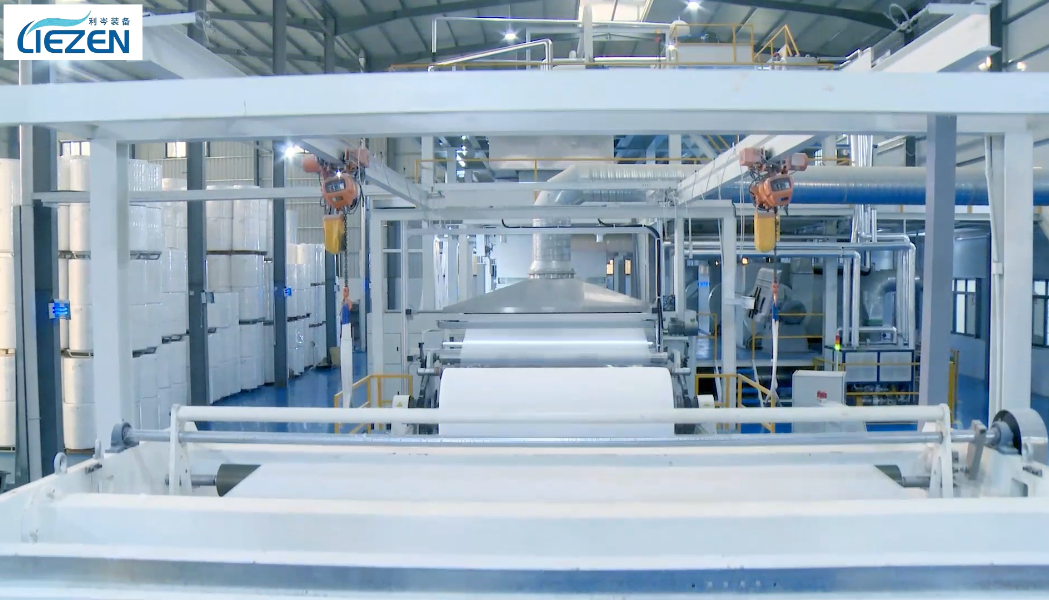
Nonwoven machinery is a category, not a product. A spunbond line, a meltblown module and an SMS or SMMS composite line are engineered differently, produce different fabric structures and are specified with different parameters. Commercial research on the machinery segment reports a global non-woven fabric making machine market of USD 2.20 billion in 2025 (Maximize Market Research), with spunbond technology holding a 40% share of the machinery market by process (Dataintelo) — which is consistent with spunbond being the reference platform for hygiene, medical and many industrial applications.
That technical spread has a direct compliance consequence: there is no single standard that 'covers' a nonwoven fabric machine. The requirements split across four different systems of reference.
- Management system standards — ISO 9001:2015 in Lizen's case — describe the supplier's organisation.
- Fabric test method standards — the ISO 9073 series, the dedicated ISO framework of test methods for nonwovens — describe how output is measured and accepted.
- Customs and trade classification — nonwoven machinery can fall under HS heading 8444 (machines for extruding, drawing, texturing or cutting man-made textile materials), HS 8445 (textile fibre preparation and yarn machinery), HS 8477 (machinery for working rubber or plastics) or HS 8449 (machinery for manufacturing or finishing felt or nonwovens). Spunbond lines in particular may be declared under 8444 or 8477 depending on national customs practice, which means trade figures under those headings are not additive and duty outcomes can vary by declaration.
- Regional industry structures — INDA for North America, EDANA for Greater Europe, VDMA in Germany and ACIMIT in Italy maintain the recognised nonwovens and textile-machinery directories and statistical programmes in their regions, and are a neutral starting point for mapping a supply base.
The practical reading for a buyer is that compliance is a mapping exercise: target market, end product and line configuration together determine which documents matter. A line destined for a medical or hygiene application carries a different evidence set from a line producing automotive interior nonwoven or agricultural covers.
Detailed Solution: The Four Document Layers to Verify
Layer 1 — Quality Management System Certificate
This is the layer buyers usually receive and rarely read closely. Verify five fields rather than the logo: the issuing body, the certificate number, the standard edition, the scope wording and the validity window.
For reference, Lizen's published certificate record shows: standard ISO 9001:2015; certificate number 27325Q20007R0S; authority Zhongren Certification Co., Ltd.; scope research and development, assembly and sales of non-woven equipment; issue date 2025-01-06; expiry date 2028-01-05; market coverage stated as global.
What this establishes: the supplier operates a documented quality management system covering those activities, audited by an identified certification body. What it does not establish: the performance of any particular line, conformity with destination-market machinery safety rules, or the quality of the fabric the line will produce. Those belong to Layers 2, 3 and 4 — and should be requested separately, not assumed from the certificate.
Layer 2 — Machine-Level Specification Data
Specification data is the layer that converts into acceptance criteria most directly, because it is measurable. Lizen's current nonwoven machine range provides a concrete example of what should appear in the technical annex of a purchase contract.
- SW-SS, Double Beams PP Spunbond Nonwoven Fabric Machine: effective width 1600–3200 mm, production speed below 250 m/min, mechanical speed below 300 m/min, filament fineness 1.5–2.0D, computerised control.
- SW-SSS, SSS nonwoven machine: effective width 1600–3200 mm, production speed below 400 m/min, mechanical speed below 450 m/min, filament fineness 1.5–2.5D, computerised control.
- SW-SMMS, SMMS spunmelt nonwoven machine: effective width 1600–3200 mm, production speed below 400 m/min, mechanical speed below 450 m/min, filament fineness 1.5–2.0D, computerised control.
Two drafting rules follow. First, the difference between production speed and mechanical speed must be explicit in the contract, because a line is accepted on sustained production performance, not on the mechanical ceiling. Second, because the same 1600–3200 mm width band appears across the range, width alone does not identify a configuration — layer count, process type and filament fineness must be named alongside it.
Layer 3 — Fabric Test Methods
Machine specifications describe the line; they do not describe the fabric. The acceptance vocabulary for the output sits in the ISO 9073 series, the dedicated ISO test-method framework for nonwovens. Its value in a purchase contract is neutral: an ISO 9073 test method gives both parties the same measuring procedure, which is what makes an acceptance result arguable in either direction.
Because the series is organised in parts with different scopes, a contract clause that says only 'ISO 9073' is under-specified. The clause should name the part number and edition, the sampling point on the line, the number of samples, who performs the test, and what happens if the result falls outside tolerance. Buyers should confirm the applicable part with their own technical or testing partner — the series identifier is the framework, not the individual requirement.
Layer 4 — Market Access, Safety Conformity and Customs Classification
This is the layer most often left to the freight forwarder, and the one with the largest financial exposure. Three items belong here.
Machinery safety conformity for the destination market. Different jurisdictions operate different legal instruments — in the European Union the Machinery Directive 2006/42/EC and its successor Machinery Regulation (EU) 2023/1230; in the United States, workplace machine-guarding requirements such as OSHA 29 CFR 1910 Subpart O; in China, the GB machinery-safety standards. Do not assume a supplier's quality certificate substitutes for any of these. Ask specifically which conformity documents will be provided for your destination, in which language, and who signs them. Lizen's published certificate record covers ISO 9001:2015 quality management; market-access conformity documentation should be requested per destination and per project, and confirmed with your own regulatory advisor.
Customs classification. Agree in writing which HS heading the line and its sub-assemblies will be declared under, and who is responsible if the classification is challenged. The 8444 / 8477 ambiguity for spunmelt equipment is a known structural issue, not a hypothetical one.
Import documentation set. Packing list, commercial invoice, certificate of origin and the technical file should be listed by name in the contract, with the delivery date for the document set fixed relative to the shipment date — not relative to the deposit.
Step-by-Step Breakdown: Building Compliance into the Terms
The sequence below turns the four layers into purchasing terms and acceptance criteria. It runs in the order a buyer can actually control, from application definition to sign-off.
- Define the target market and the end product before the RFQ. A line producing hygiene or medical material carries a different evidence set from one producing automotive interior, apparel, agricultural covers or packaging material. Lizen's application data spans medical and hygiene, automotive interior, apparel and home textiles, agricultural covers, and nonwoven bags and packaging — the specification conversation should start from that list, not from a machine model.
- Issue a document request list per market, not a general one. Ask for the QMS certificate with scope and validity, the machine safety conformity documents applicable to your destination, the fabric test methods proposed for acceptance, and the intended HS classification. Requiring these at RFQ stage separates suppliers who can document from those who cannot.
- Verify the certificate, do not just collect it. Match certificate number, issuing body, standard edition, scope wording and expiry against the issuing body's own record. A scope that names research, assembly and sales tells you what was audited; it does not tell you what the line will produce.
- Convert standards into measurable acceptance criteria. Pair each machine specification — width, production speed, mechanical speed, filament fineness, layer count — with a named ISO 9073 test method for the fabric property it affects, and state the tolerance and the remedy.
- Write factory acceptance testing (FAT) and site acceptance testing (SAT) into the terms. Lizen's stated quality-control process covers factory acceptance testing, performance and process testing, and on-site installation and acceptance, with inline output and quality checks supported. Each of those should appear as a contract milestone with a defined pass criterion and a defined consequence for a failure.
- Fix the commercial envelope around the compliance work. Lizen's stated terms are a minimum order quantity of one unit, monthly capacity of four units, and lead times of three to six months in peak season and one to three months off season. Document collection and test-method agreement should therefore start before the purchase order, because the compliance calendar runs parallel to the production calendar, not after it.
- Close out with a documentation handover. At sign-off, require the as-built specification, the test records, the conformity file, the spare-parts list and the training record. Lizen's after-sales scope covers installation and commissioning, on-site training, spare parts supply and remote technical support, with specific service commitments confirmed in the sales contract — those commitments belong in the same handover document.
Use Cases: How the Requirement Set Changes
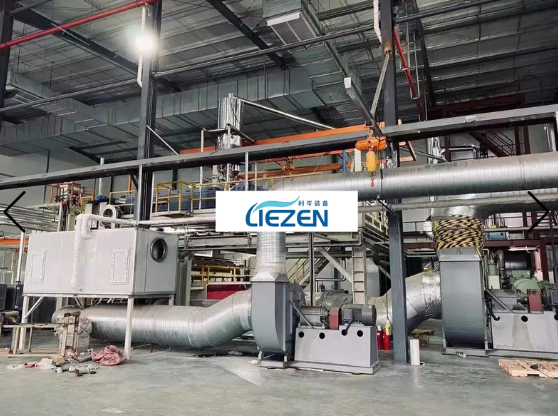
Medical and hygiene producers. Lines feeding mask, sanitary napkin or diaper production sit closest to end-product regulation. Lizen's application data lists medical-grade clean standards among the custom requirements it can support, alongside different widths, layer counts, electrostatic treatment and flame-retardant options. For these buyers the acceptance criteria should be the most granular: fabric test method part numbers, cleanroom-compatible configuration, and documented inline quality checks.
Automotive interior suppliers. The compliance question shifts from hygiene standards toward line consistency and downstream process fit. The relevant acceptance evidence is sustained output at the target grammage and width, verified through performance testing rather than a certificate.
Multi-market exporters. A producer supplying several regions from one site has to satisfy more than one requirement set with a single line. The practical answer is to specify the strictest applicable conformity document at purchase and keep the test-method record in a form that can be presented to more than one customer.
Established converters replacing or expanding capacity. Lizen reports a reference installation in Pakistan of two units, in operation for 15–20 years, producing nonwoven substrates for hygiene, filtration-type and industrial applications. For buyers in this position, the compliance value lies in the as-built documentation and spare-parts continuity rather than in first-time conformity — which is why the handover list in step seven matters as much as the purchase terms.
Comparison Table: Specification Data That Belongs in the Contract
The table below uses published Lizen model data. It is the type of data that should appear verbatim in the technical annex, because each row can be tested and each row can be disputed.
| Parameter | SW-SS (Double Beams PP Spunbond) | SW-SSS | SW-SMMS |
|---|---|---|---|
| Effective width | 1600–3200 mm | 1600–3200 mm | 1600–3200 mm |
| Production speed | <250 m/min | <400 m/min | <400 m/min |
| Mechanical speed | <300 m/min | <450 m/min | <450 m/min |
| Filament fineness | 1.5–2.0D | 1.5–2.5D | 1.5–2.0D |
| Computerised control | Yes | Yes | Yes |
| Raw material basis | Polypropylene (PP) | Polypropylene (PP) | Polypropylene (PP) for spunbond and meltblown |
A second table is useful internally, because it prevents one document being asked to do another's job.
| Document layer | Question it answers | What it does not confirm |
|---|---|---|
| ISO 9001:2015 QMS certificate (e.g. 27325Q20007R0S) | Is there an audited management system, and over which activities? | Line performance, fabric quality, destination-market conformity |
| Machine specification data | What width, speed, fineness and configuration are being supplied? | Whether the fabric meets a customer specification |
| ISO 9073 test methods (part-level) | How will the fabric output be measured and accepted? | Whether the line itself is legally placeable on the market |
| Safety conformity and HS classification | Can the line enter and operate in the destination market, and under which heading? | Product quality or line productivity |
FAQ: Certification and Compliance Questions Buyers Ask
1. Does an ISO 9001 certificate cover my destination market's compliance requirements?
No. ISO 9001:2015 is a quality management system standard. Lizen's certificate 27325Q20007R0S, issued by Zhongren Certification Co., Ltd. and valid from 2025-01-06 to 2028-01-05, is scoped to research and development, assembly and sales of non-woven equipment. Market access is a separate matter: machinery safety conformity depends on the legal instrument of the destination market, and customs treatment depends on the declared HS heading (8444, 8445, 8477 or 8449 depending on configuration and national practice). Request the conformity documents for your specific market as a separate line item in the RFQ.
2. Can one nonwoven fabric machine be configured to meet several regional and application requirements at once?
Configuration flexibility is the mechanism. Lizen offers ODM-based customisation covering web width, capacity, layer count, inline testing and quality control, automation and HMI, and material-handling modules, with application support for medical-grade clean standards, flame-retardant options and electrostatic treatment. Whether a single line can carry all the documentation for several markets depends on the destination requirement sets, so the configuration discussion and the document discussion should happen in the same meeting rather than sequentially.
3. What drives cost when compliance work is added to a project?
This guide does not quote line prices, because published, verifiable pricing for nonwoven lines is not available. What can be itemised in a quotation are the compliance-relevant scopes: additional testing to named ISO 9073 methods, third-party inspection, customisation beyond the base specification (width, layer count, clean-standard or flame-retardant configuration), documentation in a required language, and the cost of re-testing if acceptance fails. Ask for these as separate lines rather than absorbed into a single figure, so that the base machine and the compliance scope remain comparable across offers.
4. How should a buyer validate output before final acceptance?
Through two gates. Factory acceptance testing at the supplier's works covers performance and process testing with inline output and quality checks; site acceptance testing follows installation and commissioning at the buyer's plant. Lizen's stated quality-control process includes both FAT and on-site acceptance. For each gate, the contract should name the test method, the sample, the operator, the tolerance and the remedy for failure. Lizen's minimum order quantity is one unit, so a single-line buyer can still specify a full two-gate acceptance protocol.
5. How long does delivery take, and when should compliance work start?
Lizen's stated lead time is three to six months in peak season and one to three months off season, with monthly capacity of four units. Because document preparation, test-method agreement and any third-party inspection run in parallel with production, the compliance sequence should begin before the purchase order is issued — not at shipment. To start that sequence on a specific project, you can send your target market, end product and required capacity to Lizen Machinery Co., Ltd and request a documentation list together with an indicative quotation.
Conclusion: Treat Compliance as an Acceptance Gate, Not a Closing Document
The buyer who controls the compliance conversation is the one who asks, before the deposit, four separate questions: what management system was audited and over which scope; exactly which width, speed, layer count and fineness are being supplied; which test method will decide whether the fabric is acceptable; and which conformity and customs documents will accompany the shipment. None of those questions requires a standards lawyer. All four require being asked at the right time.
Lizen Machinery Co., Ltd builds PP spunbond, SSS, SMS and SMMS nonwoven production lines at its Changzhou facility, reports almost 1,000 complete nonwoven production lines supplied across 30 countries since 2003, and holds ISO 9001:2015 certification under certificate 27325Q20007R0S. Those are the supplier-side facts. The compliance outcome, however, is decided by how precisely the buyer writes the purchasing terms — which is why the acceptance criteria, not the certificate folder, are the document that protects the investment.
Next Step
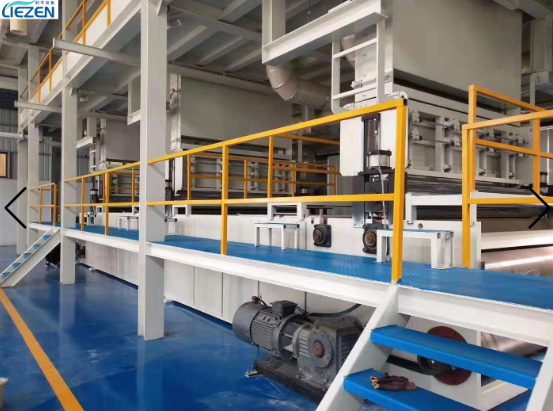
Send your target market, end product and required line configuration, and Lizen will return the specification sheet, the certificate record and the acceptance-test proposal for your project.
Email: managerl@lizen-equipment.com | WhatsApp: +86 188-8818-2509 | Website: www.lizen-equipment.com
Address: No. 6 Jingye Road, Qianhuang Town, Wujin District, Changzhou, Jiangsu, China.
Have Questions or Need More Details?
Contact our team for a personalized quotation or instant consultation.
Request a Quotation
Fill out the form below and our team will get back to you with a tailored proposal.
WhatsApp Direct Chat
Prefer to chat in real-time? Message us on WhatsApp for instant assistance & quick answers.
- Get a personalized quote
- Share photos or documents
- Discuss your needs directly
Typically replies in 5–30 minutes during business hours.