
Nonwoven Fabric Machine Supplier Vetting: Four Proof Gates
A supplier evaluation for a nonwoven fabric machine succeeds or fails on one question: can every claim be closed with something you can place in a file or enforce in a contract? A configuration brochure, a certificate scan and a lead-time message are starting points, not evidence. The evaluation only does work for you when each claim is matched to a document, a test record or a clause.
This guide runs that process as four evidence gates — configuration and customization capability, manufacturing and quality-system proof, enforceable acceptance criteria, and delivery terms that survive contact with a real schedule. It is written for buyers in the evaluation-to-execution stage: the shortlist exists, the budget is roughly known, and the remaining decision is which supplier to commit to and on what terms. For a worked example it uses the company-reported profile of Changzhou LieZen Non-woven Machinery Co., Ltd., an ODM builder of PP spunbond and spunmelt nonwoven production lines, labelled wherever a figure is company-reported rather than independently verified.
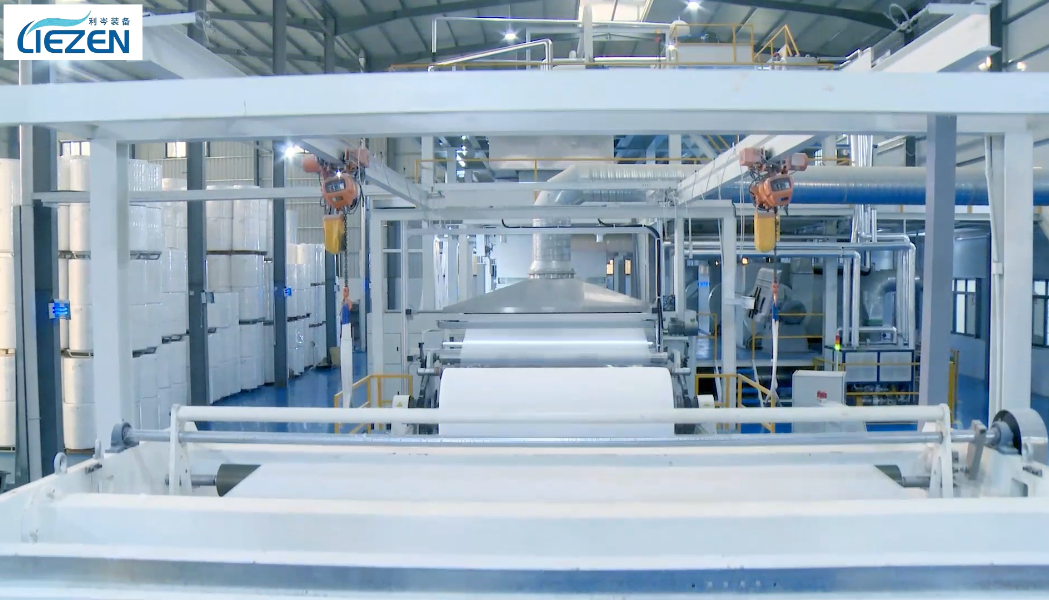
What the Evaluation Has to Decide
Supplier vetting for a nonwoven fabric machine is really two evaluations running in parallel, and they fail in different ways. Capability risk is the possibility that the supplier cannot build the configuration you specified, or cannot prove that it can. Delivery risk is the possibility that a line which is technically capable still arrives late, fails acceptance, or stalls at customs because the paperwork disagrees with itself.
Treating these as one scorecard tends to reward the supplier with the best presentation. The buyer who scores a well-written proposal higher than a plain one has learned nothing about the machine, the factory or the schedule.
A more durable rule is to separate purchasing terms from acceptance criteria, because they govern different things. Purchasing terms govern the transaction: quantity, shipping mode, trade term, payment instrument. Acceptance criteria govern conformity: which tests run, on which sample, at which moment, with what consequence if the result misses. The verified purchasing position in the source material for this discussion is short and practical — a minimum order quantity of one unit, common sea, land or air shipping with trade terms such as FOB or CIF to be confirmed with sales, and payment by T/T or L/C subject to contract. Acceptance, in the same source, should include a factory acceptance test and a site acceptance test, covering mechanical performance tests and pilot production sample checks.
Those two sentences are the spine of the whole evaluation. Everything else either produces evidence for them or specifies them more tightly.
Why Capability and Delivery Now Sit in the Same Evaluation
The commercial context explains why buyers are asking for both at once. The global non-woven fabric making machine market was valued at USD 2.20 billion in 2025, according to Maximize Market Research's industry analysis, and spunbond remains the dominant process by machinery value, reported at roughly 40% of that market in a 2026 Dataintelo report. That concentration is why shortlists for a pp spunbond nonwoven machine or an SMS nonwoven machine keep converging on the same few process routes, even when the companies behind them are very different businesses.
Supplier scope is the first thing an evaluation has to fix, because it is not uniform. Reifenhäuser's Reicofil business publicly describes spunbond, meltblown and composite lines; Oerlikon describes spunbond, meltblown and composite systems; ANDRITZ describes complete nonwoven production lines that extend beyond spunmelt into other web-forming technologies; Hills describes spunbond and meltblown equipment including spin packs and die heads; Nordson describes meltblown and nonwoven die systems. These are company self-descriptions, not rankings and not market shares. The structural point is what matters: a turnkey line builder, a module supplier and a component supplier are not selling the same thing, so they cannot be scored on the same criteria without producing a comparison that means nothing.
Gate 1 — Configuration and Customization Capability
Configuration is where most evaluations are won cheaply and lost expensively. For a spunbond, spunmelt or SMS nonwoven production line, the conversation turns on a small number of levers: web width, capacity expressed in kg/h or m/min, layer count, inline testing and quality control, automation and HMI scope, and material-handling modules. These are precisely the customization points LieZen lists for its ODM work, alongside a machine range that runs from Single S and SS through SSS, meltblown, SMS, SMMS, SSMS and SMMSS to PET and bi-component machines, all company-reported.
The test of a real capability answer is not whether the supplier says "customizable" but whether the answer comes back in a form you can compare. A supplier that replies with a table naming the model, the working width, the layer count and the capacity figure in kg/h or m/min has given you something. A supplier that replies with adjectives has given you a sentence.
Three questions that separate the two
- Which of your listed configurations is a standard build, and which is an engineering change? The answer tells you where schedule risk actually sits, because a change is a design task and a standard build is a production slot.
- What is fixed and what is negotiable in the customization list? Width, capacity and layer count usually move; automation scope and inline inspection often move too; the honest supplier will tell you which items drive the delivery window.
- Which applications does the offered configuration actually serve? LieZen's stated client base includes nonwoven fabric producers, hygiene and mask manufacturers, automotive interior suppliers, and apparel, home-textile, agriculture and packaging companies, with applications running from mask filter media and sanitary product fabrics to automotive interior liners and agricultural covers (company-reported). Applicability is a claim, so it needs a reference or a sample, not a logo wall.
The boundary here is worth stating plainly: a broad catalogue is evidence of breadth, not of depth. It justifies a shortlist place. It does not justify skipping Gates 2 to 4.
Gate 2 — Manufacturing, Quality System and Certificate Scope
Manufacturing evidence exists to answer a schedule question and a competence question at the same time: how many lines can this factory finish in the window you need, and who is doing the engineering? The relevant inputs are the site, the floor area, the headcount, the engineering team and the stated output.
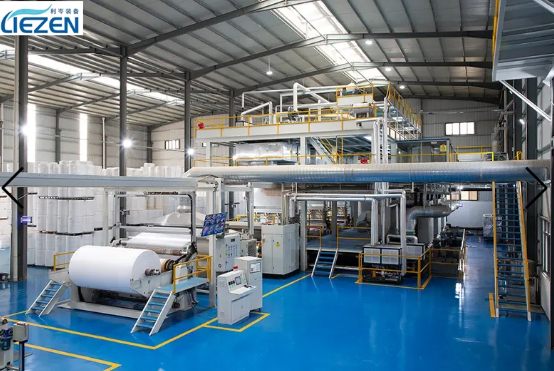
In LieZen's company-reported profile, the company was founded in 2003, operates a facility of 30,000 m², employs 270 people including 10 R&D engineers, states an annual output of 50 units, exports roughly 60% of production, and reports close to 1,000 complete lines supplied across 30 countries. Its published factory address — No. 6 Jingye Road, Qianhuang Town, Wujin District, Changzhou, Jiangsu, China — is the practical part of that list, because it is what you put into a site-visit plan, an audit itinerary or a third-party inspection brief.
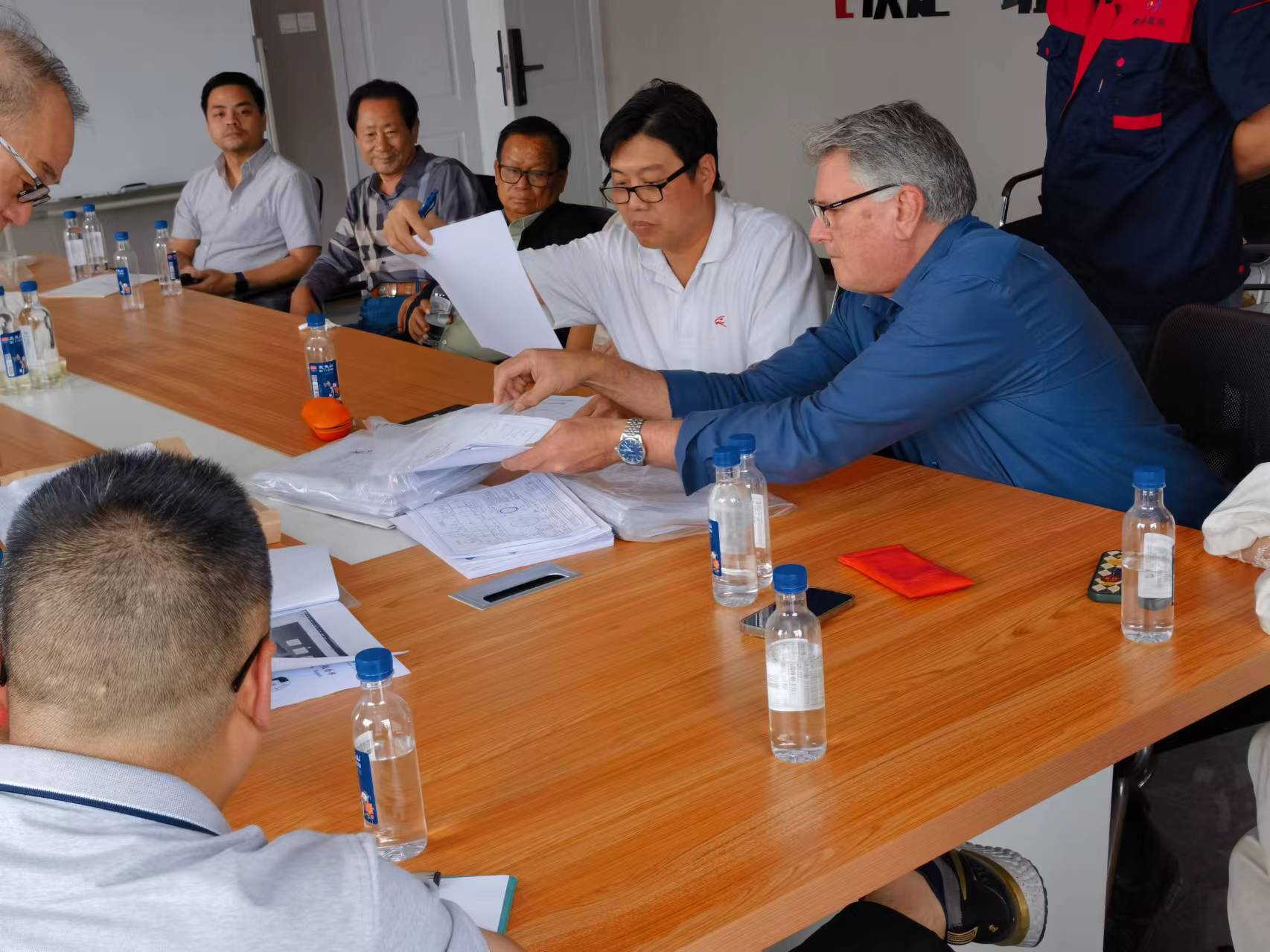
Certification is the most frequently misread item in the whole file. LieZen holds an ISO 9001:2015 quality management system certificate, number 27325Q20007R0S, issued by Zhongren Certification Co., Ltd. on 6 January 2025 and valid to 5 January 2028, with a scope covering research and development, assembly and sales of non-woven equipment. Three checks make that document useful rather than decorative.
- Read the scope wording, not the logo. The certificate covers the management system for the listed activities. It does not certify the output, speed or product quality of any individual line, and no QMS certificate ever will.
- Check the validity window against your project, not against today. A certificate that expires between your purchase order and your commissioning date needs a surveillance or recertification plan attached to the file before you sign.
- Verify with the issuing body. A scanned PDF is a copy; a registry entry or a confirmation from Zhongren Certification Co., Ltd. is verification.
Capacity deserves one extra question. LieZen reports a monthly capacity of 4 units and lead-time windows of 3 to 6 months in peak season against 1 to 3 months off season, all company-reported. Read together with a stated annual output of 50 units, these are three separate reported figures rather than a single reconciled number. Ask the supplier to reconcile them and to confirm which production slot your order would occupy. A supplier that can answer that question precisely is telling you something about its planning discipline.
Gate 3 — Acceptance Criteria You Can Actually Enforce
Acceptance criteria are the only part of the deal that converts a promise into a measurable obligation, and they are worth drafting before the final price comparison rather than after it. The verified position in the source material is that acceptance should include a factory acceptance test (FAT) and a site acceptance test (SAT), covering mechanical performance tests and pilot production sample checks.
That sentence is a good skeleton and a poor contract clause on its own, because it does not say which test, on which sample, with which pass limit. Four additions make it enforceable.
- Name the sample. The pilot production sample should be the fabric you intend to sell — a hygiene-grade substrate, an automotive interior liner, an agricultural cover — not an unspecified demonstration run.
- Fix pass limits before the FAT, not after it. Limits written after the result is known are not criteria, they are commentary.
- Name the witnesses and the remedy. Who signs the FAT record, who signs the SAT record, and what happens after a failed run — re-test, rework, or a retained sample for a second evaluation.
- Anchor the methods in a neutral vocabulary. ISO 9073 is the ISO series of test methods for nonwovens, and it is the standard route for specifying what "conforming fabric" means. Individual parts differ in scope and edition, so cite the specific part number and edition you intend to use rather than the series name alone.
Where the supplier offers inline output and quality checks, as LieZen reports it can support, put them in the acceptance annex too. An inline check that is described in a brochure but absent from the SAT procedure is a feature, not a control.
Gate 4 — Delivery Assurance: Lead Time, Terms and Handover
Delivery assurance is not a feeling about a supplier's reliability. It is a set of defined dates, defined triggers and defined documents, and it can be assessed before signing with the four inputs below.
The schedule window and what starts the clock
LieZen reports peak-season lead times of 3 to 6 months and off-season lead times of 1 to 3 months, with a minimum order quantity of one unit. Two consequences follow. First, the same supplier can legitimately quote a three-month project and a six-month project in the same year, so the question is which window your purchase order falls into. Second, the delivery clause needs a start trigger — purchase order plus deposit, or letter of credit opening, or drawing approval — because an undefined start date makes any lead-time figure unenforceable.
Trade terms, payment and the document set
The purchasing terms in the source material are deliberately open: common delivery by sea, land or air with trade terms such as FOB or CIF, and payment by T/T or L/C, each to be confirmed with sales and fixed in the contract. Open terms are normal at quotation stage and unacceptable at signature stage. Fix the trade term, the payment instrument, the milestone split and the shipping document list, and name who bears insurance and inland transport.
The classification question that delays shipments
Nonwoven and spunmelt machinery does not sit under one clean tariff heading. Under the WCO Harmonized System, heading 8444 covers machines for extruding, drawing, texturing or cutting man-made textile materials; heading 8445 covers machines for preparing textile fibres and producing yarns; and heading 8477 covers machinery for working rubber or plastics. A spunmelt line may reasonably be declared under 8444 or 8477 depending on national customs practice, which means trade statistics for the two headings are not additive and, more practically, that the heading must be agreed rather than assumed. Confirm it with your customs broker before shipment and keep the wording identical across the commercial invoice, packing list and bill of lading. A disagreement between those three documents is a delay that no lead-time clause will absorb.
Handover, not just arrival
Delivery assurance ends at handover, not at the port. LieZen's reported after-sales scope covers installation and commissioning, on-site training, spare-parts supply and remote technical support, with specific service commitments to be confirmed with sales. The evaluation step is to convert that list into annexes: a spare-parts schedule with part numbers and recommended first-year stock, a training scope with headcount and duration, and a named remote-support contact route.
Comparison Table: Claim, Evidence and Contract Location
The table below is the working form of the four gates. Each row takes a typical supplier statement and asks what would close it, and where the closed version belongs in the deal.
| What the supplier states | Evidence that closes the claim | Where it belongs in the deal |
|---|---|---|
| "We build Single S through SMMSS, PET and bi-component lines" | A configuration table naming the model offered to you, with width, layer count and capacity in kg/h or m/min | Technical annex / specification schedule |
| "Our quality system is certified" | Certificate number, issuing body, exact scope wording, issue and expiry dates, verified with the issuer | Supplier qualification file; certificate copy as an annex |
| "We can produce 4 units per month" | Reconciliation of stated monthly capacity against annual output, plus a written slot confirmation for your order | Delivery schedule with milestone dates |
| "The line will be inspected before shipment" | A FAT protocol listing each test, the sample, the pass limit and the signatory | Acceptance clause — factory acceptance test |
| "We install and commission on site" | An SAT procedure with witness arrangements, criteria for a passed run and a handover certificate | Acceptance clause — site acceptance test and handover |
| "Lead time is 3–6 months in peak season" | A calendar window tied to a defined start trigger and to the chosen shipping mode | Delivery clause with trigger and milestones |
| "Customization is available" | A written list of what is standard, what is an engineering change, and which items move the delivery date | Technical annex with change-control note |
| "Payment and shipping are standard" | Named trade term, payment instrument, milestone split and document list | Commercial terms plus shipping document list |
| "Customs clearance is routine" | Agreed HS heading confirmed with your broker and consistent across invoice, packing list and B/L | Shipping instructions |
| "We support you after start-up" | Spare-parts list, training scope, remote-support route and service terms confirmed in writing | Service annex |
Eight Steps from Shortlist to Signature
The sequence matters more than the checklist. Buyers who draft acceptance criteria after the price is agreed usually discover that the supplier's FAT definition is thinner than expected, and renegotiating it then costs time rather than goodwill.
- Define the fabric and the application in writing. State whether the line serves a hygiene or sanitary napkin nonwoven fabric programme, an automotive interior nonwoven production line, or agricultural and packaging output. Everything downstream inherits this definition.
- Issue a configuration request with units. Width, capacity in kg/h or m/min, layer count, inline inspection, automation scope and material handling, each against a stated application. Closes when every supplier answers in the same table format.
- Request the QMS certificate and read the scope and dates. Confirm the issuing body and check the validity window against your commissioning date.
- Ask for the production slot and lead-time window in writing, with the start trigger. Closes when the answer names a calendar window and the event that begins it.
- Draft the FAT protocol with named tests and pass limits. Reference specific ISO 9073 parts where fabric properties are specified.
- Draft the SAT and handover criteria. Name the witnesses, the passed-run definition and the documents that transfer with the machine.
- Fix trade term, payment instrument, document list and HS heading. Confirm the classification with your broker before the shipping instructions are issued.
- Fix the after-sales annexes. Spare-parts schedule, training scope and remote-support route, converted from brochure language into named commitments.
Three Buyer Situations and What Changes
The four gates stay the same across projects; the emphasis shifts with the application.
First line for hygiene or sanitary products. Acceptance carries the most weight here, because the product is judged on fabric consistency rather than on machine specification alone. The pilot production sample in the FAT should be the fabric you will sell, and the ISO 9073 part references should be written into the contract rather than agreed verbally. Delivery risk is concentrated in the peak-season window, so slot confirmation matters as much as price.
Automotive interior nonwoven production. Application fit dominates Gate 1. Automotive interior liners are one of the applications LieZen lists, alongside mask filter media, sanitary product fabrics, agricultural covers and nonwoven bags (company-reported). The evaluation step is to test that claim against references or samples for the specific substrate you intend to make, since an application list is a statement of scope, not evidence of performance on your product.
An existing producer adding capacity. Continuity dominates. The new nonwoven production line has to run alongside an existing recipe book, so the questions shift to whether inline quality checks match your current release criteria, whether the spare-parts list overlaps what you already stock, and whether the supplier's commissioning team can work inside an operating plant. Lead-time risk is lower, but the cost of a mismatch at start-up is higher.
Reading a Company-Reported Profile Against the Gates
Applying the framework to LieZen's published profile shows how the three evidence classes behave in practice, and where the buyer still has work to do.
- Documented and checkable now: the ISO 9001:2015 certificate number, issuer, scope and validity dates. This survives an audit because it can be verified with the certification body.
- Reported and requiring closure: the 30,000 m² facility, 270 employees, 10 R&D engineers, 50 units annual output, 4 units monthly capacity, the 3–6 month peak-season lead time, and the export share of roughly 60%. These are legitimate company statements that become usable once a site visit, a slot confirmation or a reference call closes them.
- Contractual and not yet written: the FAT and SAT definitions, the trade term, the payment split, the spare-parts schedule and the training scope. These exist in outline in the source material precisely because they are meant to be confirmed with sales, which is another way of saying they belong in your annexes rather than in a quotation.
A Pakistan-based customer that took two units is also reported in the same source, with the stated result being improved capacity and product consistency. That is a company-reported case, and the honest reading of it is that it evidences an installation relationship, not a measured performance outcome. Ask for the acceptance record behind it.
What This Framework Cannot Do
Four gates will not tell you the machine's real output, energy consumption per tonne, uptime or final price. No comparable verified benchmark for those figures was available in the sources behind this article, and the practical route to them is a structured quotation plus witnessed FAT and SAT records — not a supplier comparison table. The framework also cannot substitute for legal review of the contract, or for your customs broker's ruling on classification. What it can do is make sure that when the answers arrive, they arrive in a form you can compare, file and enforce.
Frequently Asked Questions
- Does an ISO 9001:2015 certificate prove the machine will perform as specified?
- No. A QMS certificate covers the management system for the activities named in its scope. LieZen's certificate, number 27325Q20007R0S issued by Zhongren Certification Co., Ltd., is scoped to research and development, assembly and sales of non-woven equipment, and is valid to 5 January 2028. It supports supplier qualification; machine performance is proven by the factory and site acceptance tests, not by the certificate.
- What should a capability check confirm about an OEM spunbond nonwoven machine manufacturer for custom line configurations?
- It should confirm three things: that the supplier can translate your configuration into a buildable specification, that the specification is returned with units and conditions rather than adjectives, and that the supplier can say which items are standard builds and which are engineering changes. LieZen's documented customization points are web width, capacity in kg/h or m/min, layer count, inline testing and quality control, automation and HMI, and material-handling modules (company-reported). A capability check confirms the ability to specify and evidence a custom line; it does not confirm output or product quality, which acceptance testing covers.
- Which purchasing terms should be settled before signing?
- The source material lists a minimum order quantity of one unit, common delivery by sea, land or air with trade terms such as FOB or CIF, and payment by T/T or L/C, with the specific terms to be confirmed with sales. At signature stage those open items should be closed: named trade term, named payment instrument, milestone split, document list, and a defined start trigger for the lead-time clock.
- What acceptance criteria should be written into the contract?
- A factory acceptance test and a site acceptance test, each covering mechanical performance tests and pilot production sample checks. To make them enforceable, add the sample definition, the pass limits agreed before the test, the named signatories, the remedy after a failed run, and specific ISO 9073 part references where fabric properties are specified.
- How long does delivery take, and what controls it?
- LieZen reports 3–6 months in peak season and 1–3 months off season, alongside a monthly capacity of 4 units (company-reported). What actually controls your date is which production slot you are allocated and which event starts the clock, so both should appear in the delivery clause rather than in correspondence.
- What after-sales commitments should be confirmed in writing?
- LieZen's reported scope covers installation and commissioning, on-site training, spare-parts supply and remote technical support, with specific service commitments to be confirmed with sales. Convert each into an annex — a spare-parts schedule with recommended first-year stock, a training scope with headcount and duration, and a named remote-support route. If you would like the configuration options, FAT and SAT protocol outline and service terms for a specific line reviewed against your application, the LieZen team can take that request through managerl@lizen-equipment.com or +86-18888182509.
Conclusion
Vetting a nonwoven fabric machine supplier is an evidence exercise, not an impression exercise. Gate 1 turns a customization claim into a specification table with units. Gate 2 turns a factory story into a site plan and a certificate whose scope and dates you have actually read. Gate 3 turns an acceptance sentence into a test protocol with pass limits. Gate 4 turns a lead-time promise into a calendar window with a start trigger, a document set and an agreed tariff heading.
Close all four before signing and the contract has something to work with during execution. Close only the first two and you have bought a configuration and a promise. The difference between those outcomes is not the price on the quotation — it is the paperwork behind it.
Have Questions or Need More Details?
Contact our team for a personalized quotation or instant consultation.
Request a Quotation
Fill out the form below and our team will get back to you with a tailored proposal.
WhatsApp Direct Chat
Prefer to chat in real-time? Message us on WhatsApp for instant assistance & quick answers.
- Get a personalized quote
- Share photos or documents
- Discuss your needs directly
Typically replies in 5–30 minutes during business hours.