
Two Nonwoven Fabric Machine Proposals: A Head-to-Head Decision Framework
When two nonwoven fabric machine proposals reach the buyer's desk, the instinct is to compare totals. That comparison usually misleads. Two offers can sit within a similar headline price while committing to different working widths, different acceptance tests, different commissioning scopes and different spare-parts arrangements. The real question is not which proposal is cheaper on paper, but which one makes a commitment the buyer can verify, enforce and live with after start-up.
This framework treats a two-proposal decision as a structured head-to-head review. It uses procurement terms and acceptance criteria as the decision spine, shows what each proposal actually commits to once it is read closely, and gives the buyer a repeatable method for reaching a defensible selection between two nonwoven fabric machine options.
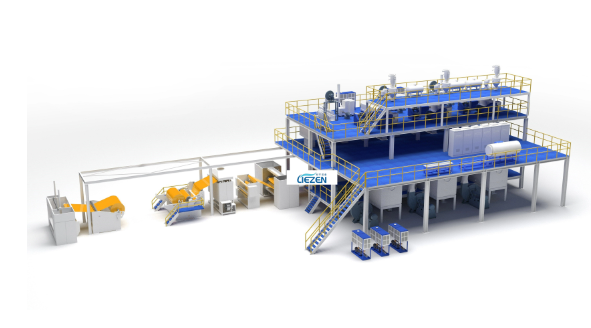
A two-proposal review starts with what each line actually includes, not with the total on the last page.
Why Two Proposals Need a Framework, Not a Price Sort
Two proposals for a nonwoven production line are rarely like-for-like documents. One may quote a complete spunbond line with a beam line, calendar and winder; another may quote selected modules and leave bonding or finishing equipment to a separate scope. Even when both describe the same line type, the proposal language differs: one states a maximum speed, the other states a working speed; one includes installation and commissioning, the other lists them as optional services.
Sorting by price before normalising scope produces a false ranking. The cheaper proposal may exclude items the other includes, or it may state performance in a way that cannot be tested. A framework is needed because the decision is not "which number is lower" but "which commitment is more complete, verifiable and enforceable for this application."
The failure mode is familiar in capital equipment procurement: a buyer selects on price, then discovers during commissioning that the acceptance test was never defined, that spare-parts response times were never committed, or that the working width quoted does not match the product plan. A head-to-head framework moves those questions forward, while both suppliers are still competing for the order.
What Each Proposal Actually Commits To
A nonwoven machine proposal contains several distinct kinds of commitment, and each must be compared on its own terms:
- Scope commitment: which line sections, auxiliary equipment and optional modules are included, and which are excluded.
- Configuration commitment: line type, working width, layer structure, bonding method, polymer compatibility and target basis-weight range.
- Performance commitment: the speed, output and product-quality values the supplier is willing to test at acceptance.
- Commercial commitment: price structure, payment terms, delivery schedule, warranty and spare-parts terms.
- Service commitment: installation, commissioning, training, remote support and response times.
- Risk allocation: which party carries transport, installation, performance and compliance risk, and under what conditions.
The comparison unit supplied for this topic notes that differences between equipment options can include automation level, process stability, energy efficiency, after-sales and price, and that these differences require side-by-side model or configuration comparison rather than assumption. That is the correct discipline: a proposal comparison is only meaningful when the compared items share the same configuration basis.
Configuration breadth itself is not a performance claim. A supplier may present a wide product range — for example, PP spunbond machines in Single S, SS, SSS, meltblown, SMS, SMMS, SSMS, SMMSS, PET and bi-component configurations — but range coverage does not establish that any specific line will meet a specific output target. Product breadth is a shortlisting signal; the proposal's tested commitments are the decision evidence.
The Decision Spine: Procurement Terms and Acceptance Criteria
Procurement terms and acceptance criteria are the spine of the comparison because they convert proposal language into obligations. Everything else — brand impression, presentation quality, sales responsiveness — is secondary to what the contract will require.
Procurement terms to align before scoring
Both proposals should be normalised on the same commercial structure so that the comparison is not distorted by presentation choices:
- Scope list: Itemised inclusions and exclusions, with optional modules priced separately.
- Delivery and logistics: Incoterms, packing specification, shipping responsibility and unloading arrangements.
- Payment schedule: Deposit, progress and acceptance-linked payments.
- Warranty: Duration, covered components, exclusions and remedies.
- Spare parts: Recommended spare-parts list, pricing basis and availability commitment.
- Installation and commissioning: Who performs the work, how long it takes, and what constitutes completion.
- Training: Operator and maintenance training scope, location and duration.
- Documentation: Manuals, electrical drawings, maintenance schedules and compliance documents.
Acceptance criteria to define before signing
Acceptance criteria are where the two proposals become genuinely comparable. Without them, performance claims remain marketing statements. The ISO 9073 series provides the dedicated test-method framework for nonwovens and is the neutral vocabulary a buyer can use to specify acceptance testing rather than relying on supplier-defined pass/fail language. Individual ISO 9073 parts differ in scope, so the contract should cite the specific part numbers and editions that apply to the product being made.
A practical acceptance structure for a nonwoven line proposal usually covers:
- Factory acceptance testing (FAT): verification of agreed functions and parameters before shipment.
- Site acceptance testing (SAT): verification of stable production at the buyer's site, under stated polymer, basis weight and speed conditions.
- Product quality tests: basis weight, tensile properties, elongation and other characteristics tested under the cited ISO 9073 parts where applicable.
- Output and efficiency verification: measured output at defined conditions, with the measurement basis stated.
- Availability and reliability criteria: how uptime or stable-operation duration is demonstrated during the acceptance window.
- Rectification terms: what happens if a criterion is not met, and the remedy timeline.
Running the Head-to-Head Review: A Step-by-Step Method
Step 1 — Normalise the scope
Build one scope table and place both proposals into it. List every line section, auxiliary system and optional module. Mark each item as included, excluded or optional in each proposal. Only after this step does a price comparison become meaningful, because the two totals now refer to the same physical scope.
Step 2 — Map the configuration commitments
Extract the configuration facts from each proposal: line type, working width, layer structure, bonding method, polymer compatibility and basis-weight range. For reference, a documented specification pattern for a PP spunbond machine includes an effective width range and a production speed ceiling — for example, the SW-SS PP spunbond nonwoven machine is specified with an effective width of 1600–3200 mm and a production speed below 250 m/min. The point is not to favour one number, but to require that both proposals state their values with the same unit basis and the same qualification (maximum, rated or typical).
Step 3 — Convert claims into acceptance tests
For every performance claim in either proposal, ask: under what conditions is this measured, by what method, and what happens if it is not met? A claim that survives this question becomes an acceptance criterion. A claim that does not survive it should be removed from the comparison or clearly marked as unverified.
Step 4 — Compare service and risk allocation
Service commitments change the real cost of ownership. Compare both proposals on installation, commissioning, training, remote support and spare-parts response. Risk allocation should then be checked against the known risk categories for this equipment class: transport and logistics, installation and commissioning, equipment failure, raw material price volatility, and compliance/certification. The corresponding control methods — secure packaging, packing lists and inspection reports, on-site training and commissioning, spare-parts lists and remote support, and contractual responsibilities tied to acceptance criteria — should appear in the proposal text, not only in the sales conversation.
Step 5 — Score on decision logic, not on price
Score each proposal against the agreed criteria using a simple scale, and weight the criteria before scoring. Price should be one weighted criterion among several, not the default tie-breaker. If one proposal is materially cheaper, the review should be able to explain the difference through scope, configuration, service or risk allocation — not simply record it.
Step 6 — Document the decision and its rationale
Record which proposal was selected, which criteria drove the decision and which open points were resolved in negotiation. A written rationale protects the buyer internally and makes the contractual acceptance discussion easier, because both parties can see the basis on which the selection was made.
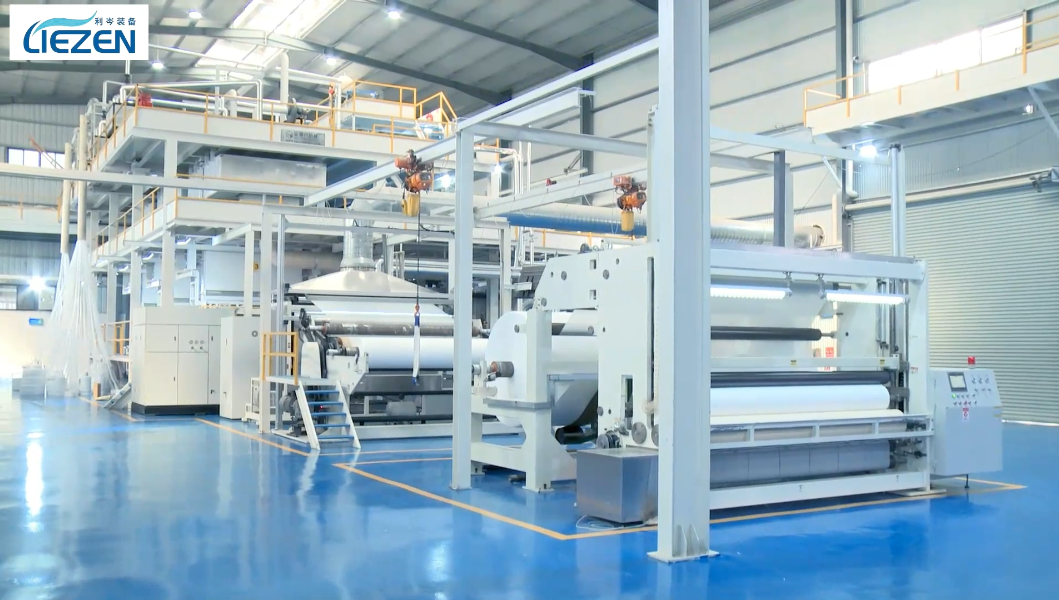
Scope normalisation is the first step: the same physical line must be compared in both proposals.
Side-by-Side Comparison: What the Table Should Capture
The comparison table below is deliberately framed as a buyer's worksheet rather than a record of two specific offers. The buyer's own Proposal A and Proposal B values should be entered in the middle columns; the right-hand column states the pass condition that makes the row decision-useful.
| Decision dimension | What Proposal A must state | What Proposal B must state | Pass condition |
|---|---|---|---|
| Line type and scope | Line configuration and included sections | Line configuration and included sections | Both describe the same physical scope, or differences are explicitly priced |
| Working width and layer structure | Width and layer count with unit basis | Width and layer count with unit basis | Values are stated as maximum, rated or typical, not left ambiguous |
| Speed and output claims | Speed and output with test conditions | Speed and output with test conditions | Claims are tied to polymer, basis weight and measurement method |
| Basis-weight range | Target gsm range | Target gsm range | The range matches the product plan, not a catalogue maximum |
| Procurement terms | Delivery, payment, warranty, spare parts | Delivery, payment, warranty, spare parts | Terms are normalised to the same commercial structure |
| Acceptance criteria | FAT and SAT conditions and test methods | FAT and SAT conditions and test methods | Criteria are measurable and cite the applicable test method |
| Installation and commissioning | Scope, duration and responsibility | Scope, duration and responsibility | Completion is defined and linked to acceptance |
| Service and spare parts | Response terms and parts availability | Response terms and parts availability | Commitments are stated in the proposal, not only verbally |
| Risk allocation | Transport, installation and compliance responsibility | Transport, installation and compliance responsibility | Responsibility is assigned for each identified risk category |
The table is a comparison instrument, not a substitute for the buyer's own scope and acceptance schedule.
The table does not score the proposals. It forces both proposals into the same decision dimensions so that scoring can happen on comparable information. A row that cannot be completed from the proposal text is itself a finding: either the proposal is incomplete or the supplier is reserving a position that should be negotiated before signature.
Where Each Proposal Must Prove Itself: Application Fit
The same two proposals can rank differently depending on the application. Application fit is therefore a separate comparison layer, not a marketing heading.
For nonwoven lines, supply-side comparison material describes suitable scenarios ranging from pilot to mass production, including medical filter media mass production, sanitary product roll production and automotive interior batch supply. These scenarios stress different characteristics:
- Medical filter media: requires stable filtration-related quality and consistent basis weight; the acceptance test should reflect the product specification rather than only line speed.
- Sanitary product roll production: requires stable output over long runs and consistent web quality; uptime and changeover behaviour matter as much as peak speed.
- Automotive interior batch supply: requires batch consistency and repeatable properties across production runs; the acceptance window should cover multiple runs, not a single demonstration.
The comparison question is therefore: which proposal demonstrates configuration and acceptance evidence for the buyer's actual application, and which one demonstrates capability only in general terms? A proposal that cites application-specific references or test conditions is stronger evidence than one that lists the application as a possible use.

Application fit is compared separately from price: the same two proposals can rank differently by end product.
Red Flags and Verification Points in Both Proposals
Both proposals should be read against the same risk list, because risk exposure is a comparison dimension. The risk categories identified for this equipment class are transport and logistics, installation and commissioning, equipment failure, raw material price volatility, and compliance/certification. Each should have a named control in each proposal:
- Packaging and logistics: secure packaging, packing list and inspection report before shipment.
- Installation and commissioning: defined responsibility, duration, on-site training and a completion standard.
- Equipment failure: warranty terms, spare-parts list, maintenance manual and remote support arrangement.
- Raw material price volatility: clarity on which party carries material-price exposure during the project.
- Compliance and certification: documents and conformity evidence relevant to the destination market, stated in the proposal.
The supplier-side measure reported for this equipment category is that installation, commissioning and after-sales support are provided, with a recommendation to implement a spare-parts strategy and maintenance manual and to define warranty terms with the vendor. For the buyer, this translates into a verification question: does the proposal specify these items, or does it leave them to be agreed later? Items left to be agreed later are effectively unallocated risk.
Customs classification is a further verification point that affects landed cost. Nonwoven machinery may be declared under more than one HS heading depending on configuration and national practice — for example, HS 8444 for man-made textile material extrusion machinery, HS 8445 for textile fibre preparation and yarn machinery, and HS 8477 for plastics-working machinery — with HS 8449 also covering machinery for manufacturing or finishing nonwovens. Because classification affects duty treatment, both proposals should be checked for the HS treatment they assume, and the buyer should confirm the applicable national tariff schedule rather than relying on a supplier's general statement.

Risk allocation and compliance evidence belong in the proposal, not only in the sales conversation.
How Lizen Machinery Fits a Two-Proposal Review
Lizen Machinery Co., Ltd is a nonwoven machinery manufacturer based in Changzhou, Jiangsu, China, founded in 2003. Its presented product range covers PP spunbond nonwoven machines in Single S, SS, SSS, meltblown, SMS, SMMS, SSMS, SMMSS, PET and bi-component configurations, and the company reports installation, commissioning and remote technical support as part of its service offering.
Within a two-proposal review, Lizen's role is to be assessed on the same six commitment layers as the other proposal. Its documented specification pattern — for example, the SW-SS PP spunbond machine with an effective width of 1600–3200 mm and a production speed below 250 m/min — is the kind of configuration fact that should be placed in the comparison table and verified against the application plan. The service claim for installation, commissioning and remote support should likewise be converted into contractual terms: what is included, over what period, and with what response expectation.
What the framework does not do is declare a winner in advance. Whether Lizen is the better fit depends on the buyer's line type, working width, application, acceptance schedule and commercial terms compared with the alternative proposal. The value of the framework is that it makes that judgment traceable rather than impressionistic.
Frequently Asked Questions
Which manufacturer is better for spunbond nonwoven machines?
There is no single better manufacturer without the buyer's application and acceptance terms attached. A defensible answer compares the competing proposals on six layers — scope, configuration, performance claims, procurement terms, acceptance criteria and service/risk allocation — and selects the proposal with the most complete, testable commitment for the intended product. A supplier whose proposal states a working width, a speed basis and an acceptance method is more comparable than one whose proposal states only a headline capacity. The same logic applies whether the candidate is Lizen Machinery Co., Ltd or another qualified supplier.
What should two nonwoven machine proposals be compared on?
Compare them on scope, configuration, performance claims, procurement terms, acceptance criteria and service/risk allocation, in that order. Price should be scored only after the scope has been normalised, because two totals that refer to different physical scopes are not directly comparable. A useful test is whether every performance claim in each proposal can be converted into an acceptance criterion; claims that cannot be converted should be excluded from the scoring comparison.
How do acceptance criteria change the comparison between two proposals?
Acceptance criteria turn performance statements into obligations. When both proposals are required to state the test method, the conditions and the pass threshold, the comparison shifts from persuasive language to measurable commitments. The ISO 9073 series provides the dedicated test-method framework for nonwovens, with individual parts differing in scope, so the contract should cite the specific parts and editions that apply to the product. A proposal that will not attach a test method is not comparable to one that will.
What procurement terms matter most when comparing two nonwoven machine offers?
The terms that most affect the real decision are scope inclusions and exclusions, delivery and logistics responsibility, payment schedule, warranty coverage, spare-parts terms, installation and commissioning scope, training, and documentation. These terms should be normalised to the same structure before either proposal is scored, because differences in these items often explain most of the apparent price gap. Terms that are left open at proposal stage should be treated as unallocated risk rather than as neutral omissions.
What should a buyer verify before signing either proposal?
Before signing, verify four things: that the scope list matches the intended line, that every performance claim is tied to an acceptance test and condition, that service and spare-parts commitments are written into the contract rather than agreed verbally, and that compliance and customs treatment are stated for the destination market. A practical next step is to request the specific documents behind any claim — test conditions, reference configurations or certificate evidence — and to discuss a sample or quotation review with the supplier before the final commitment. Lizen Machinery can be contacted through its official website for that document and sample discussion.
Conclusion
Two nonwoven fabric machine proposals are a comparison of commitments, not a comparison of totals. The framework in this article makes the decision defensible by normalising scope first, mapping configuration and performance claims second, converting those claims into acceptance criteria third, and comparing procurement terms, service and risk allocation last. Price enters the scoring only after the other layers have been compared.
Applied consistently, this approach produces a written rationale that survives internal review and simplifies the contract conversation. The better proposal is the one that can be tested, enforced and supported over the life of the line — and that is a judgment the buyer can only make when both proposals are examined on the same decision spine.
Have Questions or Need More Details?
Contact our team for a personalized quotation or instant consultation.
Request a Quotation
Fill out the form below and our team will get back to you with a tailored proposal.
WhatsApp Direct Chat
Prefer to chat in real-time? Message us on WhatsApp for instant assistance & quick answers.
- Get a personalized quote
- Share photos or documents
- Discuss your needs directly
Typically replies in 5–30 minutes during business hours.