
Nonwoven Fabric Machine Acceptance Criteria, Ranked: What to Verify Before Sign-Off
A nonwoven fabric machine is accepted when three things are proven in sequence: the line reaches the contracted performance at the contracted width, the fabric it produces meets the agreed specification, and the documentation needed to run and maintain that line is handed over. Everything else in the contract — training days, spare-part lists, price staging — is easier to negotiate after final payment than before it. That is the whole basis for ranking acceptance criteria.
This guide ranks the purchasing terms and acceptance criteria a buyer should confirm before signing off a spunbond nonwoven machine, an SMS nonwoven machine, a spunmelt nonwoven machine or a full nonwoven production line. The ranking is not about which criterion sounds most impressive. It is about which criteria become expensive, slow or impossible to correct once the final acceptance document is signed.
Problem Definition: Why Acceptance Fails Even When the Line Runs
The failure pattern is consistent. A purchase contract defines commercial terms with legal precision — payment schedule, delivery date, warranty period, spare parts, training, title transfer. The same contract defines acceptance with a single vague phrase, usually “acceptance upon installation and commissioning”. Those are two different standards of definition, and the gap between them is where disputes live.
An installed line is not an accepted line. A nonwoven making machine can be mechanically complete, be running fabric, and still fail a proper acceptance test, because nobody agreed in advance on the recipe, the measurement method, the sampling plan, or the witness who signs the result. When that happens, the buyer is left arguing about performance from memory, and the seller is left defending a nameplate figure that was never tested at the buyer's actual operating point.
The practical remedy is to split the two concepts and treat them separately:
- Purchasing terms are commercial conditions: what is bought, when it ships, how it is paid for, what warranty and support follow, and when ownership and risk transfer.
- Acceptance criteria are technical conditions: what the line must produce, at what width, at what speed, within what tolerance, measured by which method, witnessed by whom, and recorded on which document.
Acceptance criteria only have force when they are written into the purchasing terms, with a measurement method attached to each one. A criterion without a method is an opinion.
Industry Background: Why Acceptance Discipline Matters More Now
The nonwoven equipment market has expanded fast enough that supply capacity, not buyer sophistication, has been the binding constraint for several years. Dataintelo valued the global nonwoven machinery market at USD 6.8 billion in 2025, with a projected reach of USD 12.1 billion by 2034, and identified spunbond machinery as the largest single equipment segment with a 34.2% share in 2025. Asia Pacific accounted for a 43.7% revenue share of that machinery market in 2025.
Downstream, China’s nonwoven fabric output reached 8.56 million tons in 2024, a 5.1% year-on-year increase according to the China Nonwovens & Industrial Textiles Association, and spunbonded nonwovens alone accounted for 3.88 million tons of that total, up 4% year on year. Fortune Business Insights reports that polypropylene remains the dominant raw material for spunbond production, at 53.92% of the segment in 2026.
Two consequences follow for anyone buying equipment today. First, because output volume is large and grows steadily, most lines are bought to serve a continuous commercial product, not a trial. Second, because so many lines are being commissioned in the same period, engineering and commissioning teams are time-constrained — which is precisely the condition under which acceptance meetings get shortened. A buyer who arrives at sign-off without a ranked list is relying on the supplier’s commissioning team to define the finish line.
The Ranking Logic: Reversibility Beats Importance
Buyers often rank acceptance criteria by perceived importance, which produces a list that is technically correct and commercially useless. A better ranking uses three questions per criterion:
- Reversibility: if this criterion fails after sign-off, what does it cost to correct? A missing manual can be emailed. A line that cannot hold gram-weight uniformity at the contracted width may require mechanical rework on site.
- Verifiability: can the criterion be measured objectively and repeatedly, by both parties, with a method written down before the test? If not, it cannot be enforced.
- Consequence: does failure carry a safety, regulatory, or end-customer consequence rather than a commercial inconvenience?
Criteria that score high on all three go to the top. Criteria that are important but correctable go to the middle. Criteria that are administrative — yet still control money — go to the bottom, where they must still appear, because they are the ones that determine whether the final 10–20% of a payment releases on schedule.
Detailed Solution: Acceptance Criteria Ranked 1–10
Tier 1 — Non-Reversible Performance Criteria (Ranks 1–4)
Rank 1 — Fabric performance at the contracted specification. This is the criterion everything else exists to serve. For a spunbond, SSS, SMS or SMMS line, that means gram weight uniformity across the web, consistent filament fineness, and a fabric that converts into the intended end product without downstream rejection. Lizen Machinery Co., Ltd., a nonwoven machinery manufacturer established in 2003, specifies high production stability and uniform fabric gram weight as a core design objective for its spunbond and spunmelt lines — and that is exactly the claim an acceptance test must convert into numbers. If fabric uniformity fails at sign-off, no amount of commercial goodwill fixes it quickly, because the cause is usually process control rather than a replaceable part.
Rank 2 — Achieved output at the contracted width. Nameplate speed and achieved speed are different figures, and the difference widens as width increases. Lizen’s double-beam SW-SS pp spunbond nonwoven machine is specified for an effective width of 1600–3200 mm with production speed below 250 m/min and mechanical speed below 300 m/min; the SW-SSS and SW-SMMS configurations are specified for production speed below 400 m/min and mechanical speed below 450 m/min at the same width range, with filament fineness of 1.5–2.5D and 1.5–2.0D respectively. Acceptance should record achieved output at the contracted width with the contracted recipe, over a defined run duration, because width, speed and gram weight trade against each other. Testing at a narrower width and extrapolating is not an acceptance test.
Rank 3 — Safety and compliance conformance. Verified against ISO 11111-3:2005, plus EN ISO 11111-1:2016 where CE marking is required, and the manufacturer’s quality management system where ISO 9001 is claimed. This is a pass/fail gate: guards, interlocks, emergency stops, electrical protection, and the corresponding declarations. A machine that cannot clear this gate should not be signed off at any throughput, because the exposure is regulatory and human, not commercial.
Rank 4 — Recipe and formula flexibility for your intended product mix. The purchase is usually justified by more than one product. Lizen specifies flexible formula adjustment for multiple nonwoven products and a modular structure intended to simplify maintenance. In acceptance terms, that means the trial run should include at least the two or three product configurations you actually intend to sell — not a single reference recipe that the commissioning team has optimised for months.
Tier 2 — Verifiable-at-Handover Criteria (Ranks 5–7)
Rank 5 — Factory acceptance testing (FAT) evidence. FAT is the first gate and the cheapest place to find problems, because the manufacturer’s own engineering team and tooling are on site. Lizen’s quality control process includes factory acceptance testing, performance and process testing, and on-site installation and acceptance, with support for inline output and quality checks. What matters at sign-off is not that FAT happened, but that its results were recorded, signed and attached to the contract.
Rank 6 — Site acceptance testing (SAT), commissioning and operator training. SAT is the second gate, and the one that most often gets compressed. Lizen’s after-sales scope covers installation and commissioning, on-site training, spare parts supply and remote technical support, with specific service commitments confirmed at the sales stage. The acceptance rule should be explicit: SAT performance is measured on the buyer’s raw material lot, on the buyer’s utilities, with the buyer’s operators running the line under supervision.
Rank 7 — Inline quality control and thermal stability. A closed temperature control system is specified by Lizen as a contributor to finished-product qualification rate. That is a verifiable claim: during the acceptance run, record gram weight and fabric appearance at intervals across the full run length, not just at the start. Drift over several hours is the failure mode that a short demonstration run hides.
Tier 3 — Administrative but Payment-Critical Criteria (Ranks 8–10)
Rank 8 — Documentation handover pack. Drawings, electrical schematics, operating and maintenance manuals, spare-parts lists with part numbers, FAT and SAT records, calibration records, and training records. Ranked lower than performance because a missing document is correctable — but it should still be a listed acceptance item, because in practice documentation is the item most often promised verbally and delivered late.
Rank 9 — Spare parts, maintenance access and remote support. Modular construction and accessible service points determine how quickly a stoppage is resolved two years after sign-off. Confirm the spare-parts list, the wear-part identification, and the remote support route as part of acceptance rather than as an afterthought.
Rank 10 — Payment, warranty and retention structure. Commercial, but it belongs in the ranked list because it is the mechanism that gives the other nine criteria force. The two clauses that matter most: warranty should start from SAT signature rather than from shipment or arrival, and a retention or final milestone should remain open until the signed acceptance record exists.
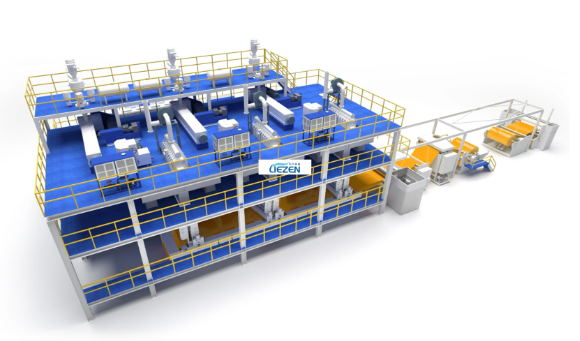
A nonwoven fabric machine line reviewed against the ranked criteria list before the acceptance meeting: width, layer configuration and winding arrangement are the first items to reconcile against the contract.
Comparison Table: The Ranked Criteria at a Glance
The table below converts the ranking into a working acceptance sheet. The “why it ranks here” column is the decision rule, not marketing language: it states what happens if the criterion fails after signature.
| Rank | Criterion | What to verify | Why it ranks here | Evidence to file |
|---|---|---|---|---|
| 1 | Fabric performance | Gram weight uniformity, filament fineness, appearance consistency on the contracted recipe | Product-defining; correction usually requires process rework on site | Signed test report with samples from the run |
| 2 | Achieved output at contracted width | Production speed at the contracted effective width (1600–3200 mm on SW-SS / SW-SSS / SW-SMMS configurations) | Nameplate versus achieved is the most common post-signature dispute | Run log with width, speed, duration, output |
| 3 | Safety & compliance | ISO 11111-3:2005; EN ISO 11111-1:2016 for CE; ISO 9001 where claimed | Pass/fail regulatory exposure; cannot be traded against throughput | Declarations, certificates, guard and interlock checklist |
| 4 | Recipe flexibility | Switch between the two or three product configurations actually planned | Determines whether the line serves the business case after year one | Changeover record per product |
| 5 | FAT results | Performance and process testing at the manufacturer’s plant | Cheapest point to correct defects, before shipment | FAT report, signed by both parties |
| 6 | SAT and commissioning | Performance at the buyer’s site, on buyer material and utilities, with operator training | Reveals site-integration problems a factory test cannot | SAT report plus training attendance record |
| 7 | Inline QC & thermal stability | Gram weight and appearance sampled across the full run, not only at start | Drift over hours is invisible in a short demonstration | Interval sampling sheet |
| 8 | Documentation pack | Drawings, manuals, schematics, spare-parts list with part numbers | Correctable, but chronically late in delivery | Checklist reconciled line by line |
| 9 | Spare parts & remote support | Wear-part identification, modular access, remote support route | Sets downtime two years after sign-off | Spare-parts list and support contact |
| 10 | Payment, warranty, retention | Warranty starting at SAT; final milestone released only against signed acceptance | The mechanism that enforces ranks 1–9 | Signed acceptance certificate |
Reference Configuration Table (for Contract Attachment)
Attaching the agreed configuration to the contract prevents the most avoidable acceptance argument: a mismatch between what was ordered and what was built. The figures below are the published configuration parameters for three Lizen line types and serve as an example of the level of detail an acceptance annex should carry.
| Configuration | Model | Effective width | Production speed | Mechanical speed | Filament fineness |
|---|---|---|---|---|---|
| Double-beam PP spunbond | SW-SS | 1600–3200 mm | <250 m/min | <300 m/min | 1.5–2.0D |
| SSS spunbond | SW-SSS | 1600–3200 mm | <400 m/min | <450 m/min | 1.5–2.5D |
| SMMS spunmelt | SW-SMMS | 1600–3200 mm | <400 m/min | <450 m/min | 1.5–2.0D |
Note: listed figures are equipment specifications, not guaranteed production results for a given buyer’s recipe. Acceptance should verify achieved performance at the contracted width with the contracted raw material.
Step-by-Step Breakdown: Structuring the Sign-Off Discussion
Step 1 — Write the ranked criteria into the purchasing terms before the PO
Convert the ten criteria into contract clauses, each with a measurement method and a witness. Criteria written after the deposit is paid are requests, not terms.
Step 2 — Fix the measurement method and sampling plan
Agree which instrument measures gram weight, how many samples, at what intervals, and who signs. Two buyers using different instruments will produce two different acceptance results on the same fabric.
Step 3 — Define the FAT agenda before travelling
State which recipe runs, at which width, for how long, what data is recorded, and which documents are handed over at the factory. FAT is performed at the manufacturer’s plant and covers performance and process testing; arriving without an agenda turns it into a demonstration.
Step 4 — Record baseline data during FAT
Keep the FAT data set. It becomes the reference point for SAT, and it is the only evidence available if a performance gap appears after shipment.
Step 5 — Prepare the site before SAT
Utilities, raw material lot, compressed air, and trained operators should be ready before the commissioning team arrives. Site readiness is the most common reason SAT performance is measured on the wrong material.
Step 6 — Run the SAT performance test at contracted width
Measure achieved output and fabric quality at the contracted width, with the contracted recipe, over a duration long enough to expose drift. On-site installation and acceptance is a separate stage from FAT, and the two should never be collapsed into one signature.
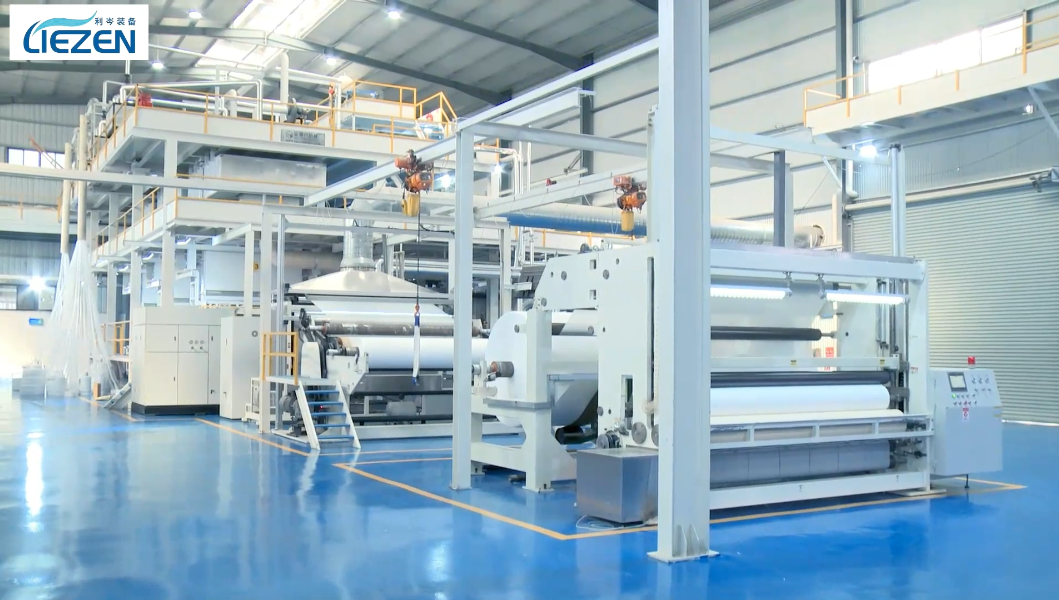
Factory acceptance testing is the first acceptance gate: performance and process testing are completed at the manufacturer’s plant, where correction is fastest and least costly.
Step 7 — Reconcile the documentation pack against the contract list
Go through the list line by line rather than accepting a folder. Missing electrical schematics are the most common gap, and they matter most during the first unplanned stoppage.
Step 8 — Release payment and start warranty only against the signed acceptance record
The final milestone and the warranty start date should both be triggered by the SAT signature, not by the bill of lading. This single clause converts ranks 1–9 from intentions into obligations.
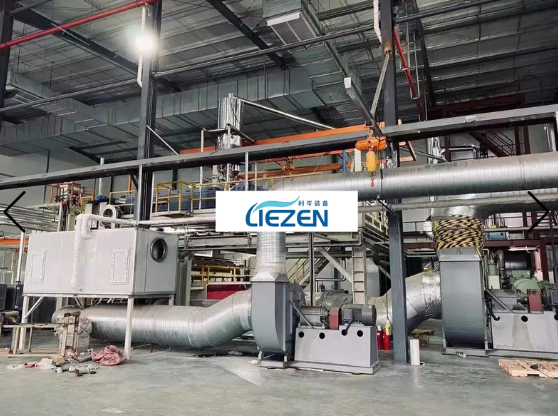
On-site installation and commissioning is the second gate: SAT performance is measured on the buyer’s raw material and utilities, with the buyer’s operators running the line.
Use Cases: How the Ranking Shifts by Project Type
The ranking order holds across projects, but the emphasis inside each rank changes with the application and the delivery model.
Hygiene and sanitary products
For producers running a sanitary napkin nonwoven fabric machine configuration or diaper substrates, Rank 1 dominates. Gram weight uniformity and run-to-run consistency determine downstream conversion yield, so acceptance should include an interval sampling sheet across the full run, plus a changeover test between the gram weights the producer intends to sell.
Medical and filtration media
On SMS nonwoven machine and SMMS spunmelt configurations, Ranks 3 and 8 rise in practical weight. Compliance documentation and the handover pack carry regulatory consequences for the buyer’s own product approvals, so the documentation check should not be deferred to a later visit.
Automotive interior nonwoven production line
Automotive interior supply is schedule-driven, so Rank 2 and Rank 9 gain weight: achieved output at contracted width during a realistic shift pattern, plus confirmed spare-parts and remote-support routes. The buyer is accepting a supply commitment, not just a machine.
Packaging, agriculture and nonwoven bags
Where the fabric is a commodity input, throughput per shift matters more than tight tolerance, and Rank 4 (recipe flexibility) often justifies more attention than a marginal gain in top-end speed.
Delivery model: turnkey, single machine, or upgrade
Lizen supplies turnkey production line delivery, single-machine supply, and process modification and upgrade projects. The acceptance scope should be written to match: a turnkey line accepts the full chain including auxiliary equipment such as traction units, winding and rewinding, heating and temperature control, and slitting and packaging; a single-machine order accepts the machine boundary only; an upgrade project accepts the performance delta against a documented pre-upgrade baseline.
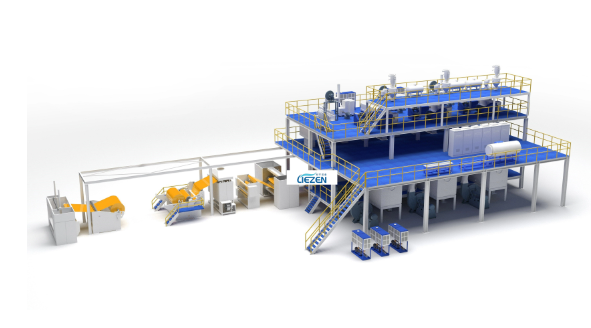
Customization parameters — web width, layer count, automation level — should be listed in the acceptance annex so the built line can be reconciled against the ordered line.
FAQ
Which safety standards should a nonwoven fabric machine be checked against before sign-off?
Safety requirements for nonwoven machinery are governed by ISO 11111-3:2005, the nonwoven-machinery part of the ISO 11111 textile machinery safety series. Where the line requires CE marking for the European market, the general textile machinery safety requirements of EN ISO 11111-1:2016 also apply. A manufacturer’s quality management system is commonly verified against ISO 9001. Treat all three as pass/fail gates in the acceptance meeting rather than as negotiable points: guards, interlocks, emergency stops and the corresponding declarations should be checked against the standard, and the certificates or declarations filed with the signed acceptance record.
What performance evidence should be produced at FAT and SAT?
Factory acceptance testing at the manufacturer’s plant covers performance and process testing, and can include inline output and quality checks. Site acceptance testing covers installation, commissioning and acceptance at the buyer’s plant. The evidence to file is the same in both cases: a run log recording effective width, achieved production speed and run duration, plus fabric samples with recorded gram weight, and a test report signed by both parties. On Lizen lines the usable reference figures are an effective width of 1600–3200 mm, with production speed below 250 m/min on the double-beam SW-SS PP spunbond configuration and below 400 m/min on the SW-SSS and SW-SMMS configurations, at filament fineness of 1.5–2.5D and 1.5–2.0D respectively. Verify achieved values at the contracted width, not extrapolated ones.
How should payment be structured around acceptance?
Payment structure is commercial and negotiable, but two rules protect the technical criteria. First, warranty should begin on the date of SAT signature rather than on shipment or arrival, because commissioning time is consumed by site readiness and not by the buyer alone. Second, a final milestone or retention should remain open until the signed acceptance record exists, with the documentation pack included as a listed acceptance item. Ask for the milestone schedule to be written into the purchasing terms with the acceptance stages named explicitly, so that “acceptance” cannot later be reinterpreted as “installation complete”. The same schedule should state who witnesses each stage and what happens if a criterion is met on retest.
Can we retain fabric from the trial run as a reference sample?
Yes, and it should be agreed before the run rather than requested afterwards. Retain sealed samples from both FAT and SAT runs, labelled with date, recipe, gram weight, line speed and effective width, and countersigned by both parties. Because inline output and quality checks can be supported during testing, the samples can be drawn from the actual acceptance run rather than from a separate demonstration. Retained samples are the most practical defence against a later disagreement about what the line was accepted to produce, and they let a new operator compare current output against the accepted baseline.
How far ahead should acceptance be planned, given typical lead times?
Build the FAT and SAT windows into the project schedule from the start. Lizen states a lead time of 3–6 months in peak season and 1–3 months off season, with a monthly capacity of 4 units and a minimum order quantity of 1 unit, so factory test slots are finite and site trips need booking. Plan FAT to finish before shipment, and reserve the site visit window so that commissioning, the SAT performance run, operator training and the documentation reconciliation all fit inside one visit rather than three. If you want to work backwards from a target production date, send your intended fabric, width and product mix to Lizen Machinery Co., Ltd. and request a line configuration together with a draft acceptance-criteria list you can attach to the purchasing terms.
Conclusion
Acceptance criteria are a hierarchy, not a checklist. The criteria that deserve the top of the list are the ones that cannot be corrected after final payment: fabric performance at the contracted specification, achieved output at the contracted width, and safety compliance against ISO 11111-3:2005 with EN ISO 11111-1:2016 where CE marking applies. The middle of the list — FAT evidence, SAT and commissioning, inline quality and thermal stability — is where problems are still cheap to solve, provided the tests are witnessed and recorded. The bottom of the list — documentation, spare parts and the payment structure — is administrative in nature but decisive in effect, because the final milestone and the warranty start date are what convert the other nine criteria into obligations.
Structure the sign-off discussion in that order. Agree the criteria and their measurement methods before the purchase order, run FAT against them, run SAT against them at the buyer’s site, reconcile the documentation line by line, and release the final payment only against the signed record. A nonwoven production line is a long-life asset; the acceptance meeting is the only point at which its performance is still fully negotiable.
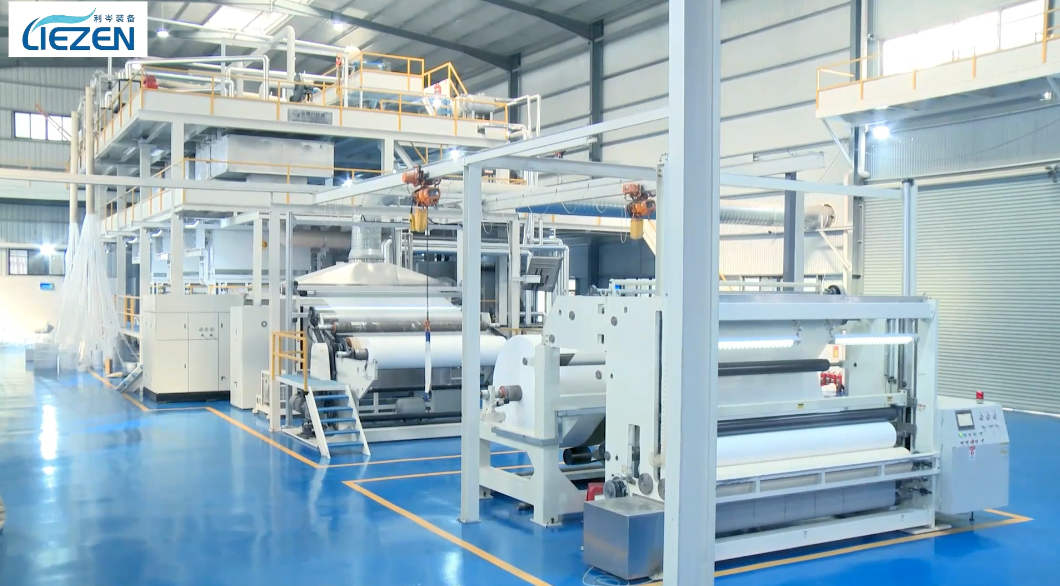
A manufacturing base with in-house engineering and testing capability allows factory acceptance testing and documentation handover to be scheduled as one controlled stage rather than as separate events.
Before you schedule your FAT
Lizen Machinery Co., Ltd. supplies single-beam, double-beam and multi-beam spunbond, SSS, SMMS and spunmelt nonwoven lines, with factory acceptance testing, performance and process testing, on-site installation and acceptance, on-site training, spare parts supply and remote technical support. Share your target fabric, effective width and product mix, and we will return a line configuration plus a draft acceptance-criteria list for your purchasing terms.
Email: managerl@lizen-equipment.com · Tel / WhatsApp: +86-188-8818-2509
No. 6 Jingye Road, Qianhuang Town, Wujin District, Changzhou, Jiangsu, China
Have Questions or Need More Details?
Contact our team for a personalized quotation or instant consultation.
Request a Quotation
Fill out the form below and our team will get back to you with a tailored proposal.
WhatsApp Direct Chat
Prefer to chat in real-time? Message us on WhatsApp for instant assistance & quick answers.
- Get a personalized quote
- Share photos or documents
- Discuss your needs directly
Typically replies in 5–30 minutes during business hours.