
Nonwoven Fabric Machine Application Guide: Scenario-Based Line Planning for Your Project
Short answer: plan the scenario first and the nonwoven machine second. A line plan is defined by four inputs — the end product and its performance target, the process route and layer structure, the line envelope (working width, production speed, filament fineness), and the integration, environment and acceptance conditions. Once those four inputs are written down, comparing models and requesting quotations becomes a short, factual conversation instead of an open-ended one.
A nonwoven fabric machine project is usually decided long before quotations are compared. The decisive work happens earlier, when a buyer translates a business scenario — a product to sell, a factory to run it in, a set of customer requirements to meet — into a specific line plan. Scenario-based planning treats the machine as the output of that translation rather than as its starting point, which is why it so often determines whether a new line reaches stable production on schedule.
This application guide is written for importers, nonwoven fabric producers, project engineers and OEM buyers who are in the research and evaluation stage of a line purchase. It explains how to map a project scenario onto a nonwoven machine configuration, which questions to settle before committing, and where the practical limits of customization usually appear. It is published by Lizen Machinery Co., Ltd, a nonwoven machinery manufacturer founded in 2003 in Changzhou, Jiangsu, China, whose listed equipment range covers Single S, SS, SSS, meltblown, SMS, SMMS, SSMS, SMMSS, PET and bi-component nonwoven machines.
Problem Definition: What Scenario Fit Actually Means
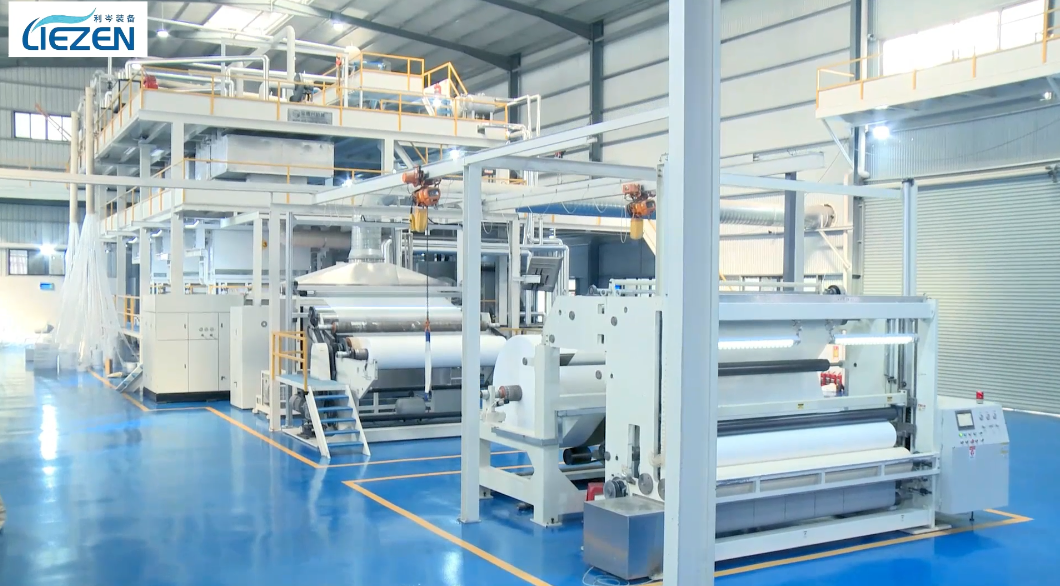
Scenario fit is the degree to which a line's process route, production envelope and integration match three things at once: the fabric a buyer intends to sell, the factory the line will run in, and the acceptance conditions the buyer's own customers impose. A configuration can be technically sound in isolation and still be a poor scenario fit.
Four mismatches account for most of these problems:
- Process route mismatch. Spunbond, meltblown and multi-beam spunmelt routes build different fabric architectures. If the target fabric depends on a meltblown barrier layer and the planned line is a single-beam spunbond route, the line can run perfectly and the product still cannot be sold into the intended application.
- Envelope mismatch. Effective working width and production speed have to match both the target output and the downstream equipment. Published line envelopes for the configurations discussed in this guide run from 1,600 mm to 3,200 mm in effective width, with production speeds below 250 m/min or below 400 m/min depending on the model.
- Integration mismatch. A nonwoven line is not a standalone machine. Traction units, winding and rewinding, fans and air compressors, heating and temperature control, and slitting, cutting and packaging equipment all belong to the same planning unit.
- Environment and acceptance mismatch. A line placed in a workshop and a line placed in a cleanroom environment for medical-grade material are different projects, even when the machine model is nominally the same.
Because all four are configuration questions, they are settled before a model is selected. That is what makes scenario planning the least expensive and most decisive part of a nonwoven fabric machine project.
Industry Background: Why Scenario Planning Is Gaining Priority
The global nonwoven machinery market was valued at USD 6.8 billion in 2025 and is projected to reach USD 12.1 billion by 2034, according to Dataintelo. Within that market, spunbond machinery held the largest share of the nonwoven equipment market at 34.2% in 2025, and Asia Pacific dominated with a 43.7% revenue share in the same year. MarketsandMarkets attributes Asia-Pacific momentum primarily to demand for hygiene products and medical-grade materials — a demand pattern that rewards buyers who define their target fabric precisely.
China's production base illustrates how the mix is shifting. China's nonwoven fabric output reached 8.56 million tons in 2024, a 5.1% year-on-year increase, with spunbonded nonwovens contributing 3.88 million tons, up 4% year on year, according to CNITA. During the same period, meltblown production in China dropped 22.9% to 108,000 tons as post-pandemic capacity consolidated. Spunbonded nonwovens also accounted for 37% of China's nonwoven export value in 2024, out of total nonwoven exports of 1.52 million tons valued at USD 4.04 billion.
The application side explains the direction of demand. Spunlaid (spunbond) technology accounted for 48.4% of the global nonwoven fabrics market share in 2023, and disposable products dominated nonwoven applications with approximately 59.8% share in the same year, per Grand View Research. The spunbond technology market is projected to grow at a CAGR of 6.20% from 2026 to 2034 (Fortune Business Insights), while the automotive nonwoven market reached USD 3.6 billion in 2025, with needlefelt as the leading technology in that segment (Stratview Research). Market research also identifies Reifenhäuser Reicofil GmbH and Andritz AG among the leading global competitive players in the nonwoven machinery landscape for 2025 (Dataintelo).
The practical implication for project planning is straightforward. Spunbond and multi-beam spunmelt capacity continues to expand because hygiene, medical and industrial applications keep consuming it, while meltblown-only capacity has consolidated after its pandemic peak. A new project therefore needs a product-level justification for its process route — not a general assumption that nonwoven demand is rising.
Detailed Solution: The Four Inputs of a Scenario Map
A scenario map converts a project description into four written inputs that any supplier can work from. Each input answers a question that would otherwise appear later as a change order, a reconfiguration, or an acceptance dispute.
Input 1 — End product and performance target
Start with the fabric, not the machine. State the fabric family (for example, a hygiene substrate, mask filter media, a sanitary product fabric, an automotive interior liner, an agricultural cover or a nonwoven bag material) and what the end customer measures: formation quality, consistency of fabric gram weight, and how the fabric behaves in the downstream converting step. The relevant machine-side property here is production stability and uniform fabric gram weight, together with flexible formula adjustment so that the same line can serve more than one product.
Input 2 — Process route and layer structure
The process route is the second input, and it is the one with the least room for later correction. Lizen's listed equipment range covers Single S, SS, SSS, meltblown, SMS, SMMS, SSMS, SMMSS, PET and bi-component nonwoven machines — a range that exists precisely because different end products require different layer architectures. A double-beam PP spunbond line such as model SW-SS, a three-beam spunbond line such as model SW-SSS, and a spunmelt machine such as model SW-SMMS are planned against different target fabrics, not against different budgets alone.
Input 3 — Line envelope: width, speed and filament fineness
The envelope is where a scenario becomes measurable. Published data for these configurations show an effective width range of 1,600–3,200 mm, production speeds below 250 m/min for the SW-SS double-beam machine (mechanical speed below 300 m/min) and below 400 m/min for the SW-SSS and SW-SMMS machines (mechanical speed below 450 m/min), with filament fineness of 1.5–2.0D on the SW-SS and SW-SMMS and 1.5–2.5D on the SW-SSS. All three are computerized. The envelope should be fixed against the downstream converting equipment first, then checked against the target output.
Input 4 — Integration, environment and acceptance
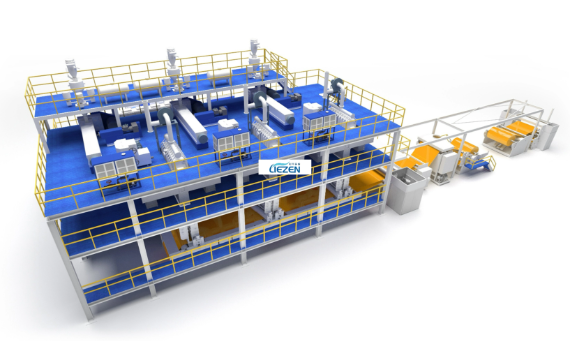
The fourth input is everything around the machine. On the integration side, the planning unit includes traction units, winding and rewinding, fans and air compressors, heating and temperature control, and slitting, cutting and packaging equipment. On the environment side, the choice is between a standard workshop and a cleanroom environment, the latter typically required where medical materials are produced; the equipment itself is built mainly from carbon steel, stainless steel, alloy parts and electrical components, with polypropylene (PP) as the main raw material for spunbond and meltblown. On the acceptance side, the scenario map should name the checkpoints: factory acceptance testing (FAT), performance and process testing, and on-site installation and acceptance (SAT), supported by inline output and quality checks.
Step-by-Step Breakdown: From Scenario to Line Plan
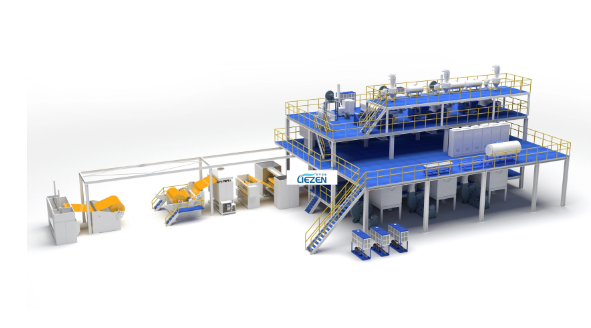
The sequence below is the order in which a scenario map is normally converted into a line plan. Each step produces a document or a decision that the next step depends on.
Step 1 — Write the fabric specification before the machine specification
Describe the fabric to be produced: its family, its role in the end product, and the properties that the buyer's customers actually test. If the project serves several products, list them in order of commercial priority. This single document prevents the most common planning error, which is selecting a line first and discovering the fabric requirements afterwards.
Step 2 — Select the process route from fabric architecture
Match the fabric specification to a route: single-beam or multi-beam spunbond, meltblown, or a spunmelt combination. Where the fabric needs combined layer functions, a multi-beam spunmelt configuration is the relevant family; where the requirement is a durable spunbond substrate, a double-beam or three-beam PP spunbond line is the relevant family. Confirm this mapping with the supplier in writing before any commercial discussion.
Step 3 — Fix the width and speed envelope against downstream equipment
Decide the effective working width within the 1,600–3,200 mm range, then confirm that the slitting, winding, cutting and packaging equipment can handle that width at the planned line speed. Filament fineness (1.5–2.5D across the configurations discussed here) should be confirmed against the target fabric hand and formation, not treated as a free variable.
Step 4 — Confirm raw material and recipe assumptions
Polypropylene remains the dominant raw material for spunbond production, accounting for over 53% of the segment in 2026 according to Fortune Business Insights, and it is the main raw material for spunbond and meltblown in Lizen's published product data. Because the same line may need to run more than one product, flexible formula adjustment and a matched closed temperature control system — which supports a higher finished-product qualification rate — belong in the plan from the beginning.
Step 5 — Map auxiliary and downstream equipment as one package
List the auxiliary devices that the scenario requires: traction units, winding and rewinding, fans and air compressors, heating and temperature control, and slitting, cutting and packaging equipment. Automation and online monitoring levels should be decided here as well, because they change both the operating labor model and the acceptance procedure.
Step 6 — Define validation and acceptance checkpoints
Factory acceptance testing, performance and process testing, and on-site installation and acceptance are the standard checkpoints. Inline output and quality checks can be added where the scenario requires them. Defining what is measured, and where, is what allows a scenario to be validated against the product rather than against a general performance claim.
Step 7 — Agree the commercial frame and the site plan
Only now do commercial parameters become meaningful. Lizen's published commercial frame for custom line projects includes a minimum order quantity of 1 unit, a monthly capacity of 4 units, and a lead time of 3–6 months in peak season and 1–3 months in off season. The site plan should cover installation and commissioning, on-site training, spare parts supply and remote technical support, with specific service commitments confirmed with sales.
Questions to put in writing before a quotation is issued:
- Which process route and layer structure does the supplier propose for this fabric, and why?
- What effective width and line speed does the proposal assume, and how were they derived?
- Which auxiliary and downstream units are inside the scope, and which are excluded?
- Where will production take place — standard workshop or cleanroom environment — and what changes in the configuration?
- Which custom options are available for this scenario (width, layer count, electrostatic treatment, flame-retardant options, medical-grade clean standards)?
- What are the FAT, performance/process testing and SAT criteria, and who signs them?
- What is the delivery window in peak and off season, and what does installation and training include?
- What happens to the recipe and the line if the product mix changes after commissioning?
Use Cases: How Scenarios Shape Line Plans
Hygiene and medical production
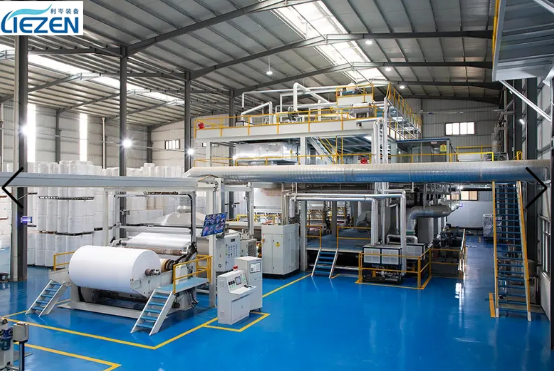
Projects producing mask filter media, sanitary napkin fabrics, diaper materials and other medical or hygiene substrates typically plan around fabric consistency, contamination control and continuous operation. The scenario usually requires a cleanroom-suitable environment, medical-grade clean standards as an option, and inline quality checks tied to the acceptance procedure. This is the application family where the environment input in a scenario map carries the highest weight.
Automotive interior materials
Automotive interior liners form a distinct scenario because of the substrate properties and the downstream processes they feed. The global automotive nonwoven market reached USD 3.6 billion in 2025 with needlefelt as the leading technology in the segment (Stratview Research). Buyers planning a spunbond or spunmelt route for automotive applications should confirm process fit explicitly at step 2, since a needlefelt-based requirement sits outside the spunbond and spunmelt route families described in this guide.
Agriculture, packaging and nonwoven bags
Agricultural covers and nonwoven bags and packaging typically prioritize width utilization, throughput and material handling over cleanroom conditions. A double-beam spunbond configuration with a moderate speed envelope is often the relevant starting point, with slitting, cutting and packaging equipment scaled to the bag or cover format rather than to a converting line for hygiene products.
Apparel and home textiles
Apparel and home textile projects usually need flexible formula adjustment across several fabric specifications, because the product mix changes more often than in a single-product hygiene line. Here the scenario map should name the number of products the line must serve, since that number drives automation level, recipe flexibility and the auxiliary equipment list more than the raw speed figure does.
A reference project pattern
One reference point from Lizen's published project record is a repeat cooperation in Pakistan covering two units of equipment, with a relationship that has run for 15–20 years. The reported outcome is improved capacity and product consistency through a complete equipment package that adapts to different nonwoven recipes and applications, in an installation that included on-site installation and commissioning. The pattern illustrates the point of scenario planning: a line that was specified against a defined product range stays useful as that range evolves.
Comparison Table: Matching Configuration to Scenario
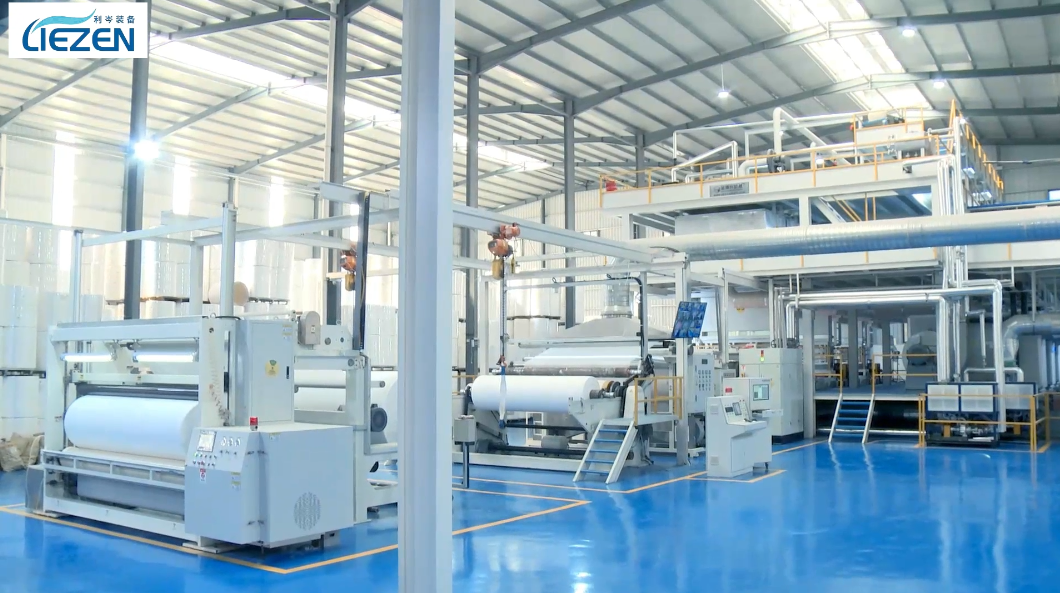
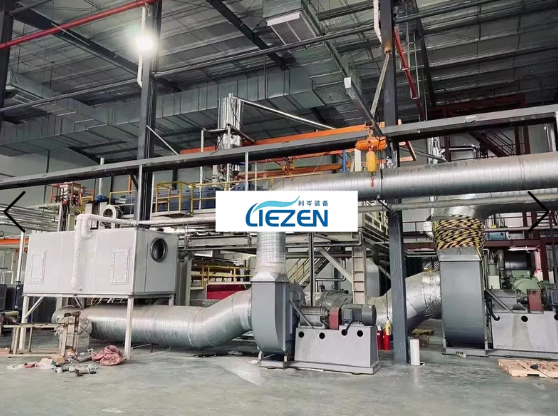
The table below compares the three configurations referenced in this guide using facts from Lizen's published product data. It is a configuration comparison, not a ranking — the correct choice is the one that matches the scenario map, not the one with the highest number in a single column.
| Configuration | Route character | Effective width | Production speed | Filament fineness | Scenario it typically supports |
|---|---|---|---|---|---|
| nonwoven fabric machine — SW-SS Double Beams PP Spunbond Nonwoven Fabric Machine |
Two-beam PP spunbond route | 1,600–3,200 mm | < 250 m/min (mechanical < 300 m/min) | 1.5–2.0D | Projects needing a spunbond substrate with a moderate speed envelope; agricultural covers, nonwoven bags and packaging, and general substrate production |
| nonwoven machine — SW-SSS SSS spunbond machine |
Three-beam spunbond route, automatic SSS spunbonded polypropylene fabric making | 1,600–3,200 mm | < 400 m/min (mechanical < 450 m/min) | 1.5–2.5D | Projects requiring a three-beam spunbond structure and a higher speed envelope within the same width range |
| nonwoven machine — SW-SMMS SMMS Spunmelt Non Woven Machine |
Spunmelt multi-beam route | 1,600–3,200 mm | < 400 m/min (mechanical < 450 m/min) | 1.5–2.0D | Projects where the target fabric combines layer functions and the environment or acceptance conditions are more demanding |
All three configurations are computerized, share the same listed applicable industries (medical, hygiene including masks, sanitary napkins and diapers, automotive interior, apparel and home textiles, agricultural covers, packaging and eco-friendly bags), use polypropylene as the main raw material for spunbond and meltblown, and are built mainly from carbon steel, stainless steel, alloy parts and electrical components. Matching width, layer count and auxiliary equipment to the scenario remains the deciding factor.
FAQ: Scenario Planning Questions Buyers Ask
What safety and compliance standards apply to a nonwoven machine project?
Safety requirements for nonwoven machinery are governed by ISO 11111-3:2005 (Textile machinery — Safety requirements — Part 3: Nonwoven machinery). For projects destined for Europe, the general safety requirements for textile machinery, including nonwoven lines, fall under EN ISO 11111-1:2016 for CE marking compliance. ISO 9001 is widely used to verify quality management systems. Buyers should confirm in writing which standards apply to the destination market and which documentation the supplier will provide; Lizen Machinery Co., Ltd lists an export share of 60% of output, with the USA among its main markets.
Can one nonwoven fabric machine be adapted to different end products?
Yes, within defined limits. Lizen's published customization scope covers web width, capacity in kg/h or m/min, layer count, inline testing and QC, automation and HMI, and material handling modules, and it explicitly supports different widths, layer counts, electrostatic treatment, flame-retardant options and medical-grade clean standards. Product data also list flexible formula adjustment for multiple nonwoven products and a modular structure for easier maintenance as core design points. What adaptation does not do is change the fundamental process route: a spunbond line cannot become a needlefelt line, so route-level fit should be settled before customization details are discussed.
Do we have to buy a complete turnkey line, or can we start smaller?
Both structures exist. Lizen's listed project types include turnkey production line delivery, single-machine supply, and process modification and upgrade projects, with a minimum order quantity of 1 unit. Budget scope is therefore driven by configuration decisions rather than by a single price level: effective width, layer count, automation and HMI level, inline testing and QC, and how many auxiliary and downstream units are inside the package. This guide does not publish prices, because the configuration scope differs from project to project — the scenario map is what makes a quotation comparable.
How can we validate a line against our product before full production?
Validation is structured around three checkpoints: factory acceptance testing (FAT), performance and process testing, and on-site installation and acceptance (SAT), with inline output and quality checks available where the scenario requires them. Buyers who need to validate a specific fabric recipe or end-product requirement should raise it during line planning, so that the configuration and the acceptance criteria are written into the agreement at the same time rather than negotiated after installation.
What lead times should we plan for?
Lizen's published lead time is 3–6 months in peak season and 1–3 months in off season, with a monthly capacity of 4 units. Because lead time moves with the season, a project calendar should be built backwards from the target production date and should include installation and commissioning, on-site training, spare parts setup and remote technical support. To review a specific scenario — fabric target, route, width, layer count and site conditions — send the project outline to managerl@lizen-equipment.com or message +86-188-8818-2509 on WhatsApp.
Next Step: Review the Scenario Before the Configuration
Lizen Machinery Co., Ltd was founded in 2003 and operates from a 30,000 m² facility in Changzhou, Jiangsu, China, with 270 employees, a 10-engineer R&D team and an annual output of 50 units. The company's published record covers almost 1,000 complete sets of standardized and customized nonwoven production lines supplied to 30 countries, produced in ODM mode against customer requirements.
If your project is at the research or evaluation stage, the most useful first step is a scenario review rather than a price request: end product, process route, width and speed envelope, environment, integration scope and acceptance criteria. Share those six points and the line plan can be matched to them directly.
www.lizen-equipment.com | Email: managerl@lizen-equipment.com | Tel: +86-18888182509
Address: No. 6 Jingye Road, Qianhuang Town, Wujin District, Changzhou, Jiangsu, China
Have Questions or Need More Details?
Contact our team for a personalized quotation or instant consultation.
Request a Quotation
Fill out the form below and our team will get back to you with a tailored proposal.
WhatsApp Direct Chat
Prefer to chat in real-time? Message us on WhatsApp for instant assistance & quick answers.
- Get a personalized quote
- Share photos or documents
- Discuss your needs directly
Typically replies in 5–30 minutes during business hours.