
Nonwoven Fabric Machine Compliance: Certifications, Standards & Regional Requirements Guide
Nonwoven Fabric Machine Compliance: Certifications, Standards & Regional Requirements Guide
Short answer: compliance for a nonwoven fabric machine is settled at project level, not by a badge on the machine frame. Three reference points frame the discussion. ISO 11111-3:2005 governs safety requirements for nonwoven machinery. EN ISO 11111-1:2016 covers general safety requirements for textile machinery, including nonwoven lines, and is referenced for CE marking compliance in Europe. ISO 9001 certification is standard practice for top-tier nonwoven machinery manufacturers in China as evidence of a quality management system. Everything beyond those reference points - regional add-ons, documentation packages, acceptance tests - has to be identified, requested, and written into the purchasing terms before the order is placed.
Buyers in the awareness and research stage usually discover compliance gaps twice: once when the documentation pack arrives incomplete, and once when the acceptance criteria in the contract turn out not to prove what was agreed. This guide explains how to identify which regulations apply to a given market, what to ask a supplier, which documents to request, and how purchasing terms and acceptance criteria should be structured so compliance is verified rather than assumed. It applies to spunbond, spunmelt, and SMS nonwoven machine projects alike, because the compliance logic is shared even when the process configuration differs.
Why Compliance Is the Most Underestimated Part of a Nonwoven Line Purchase
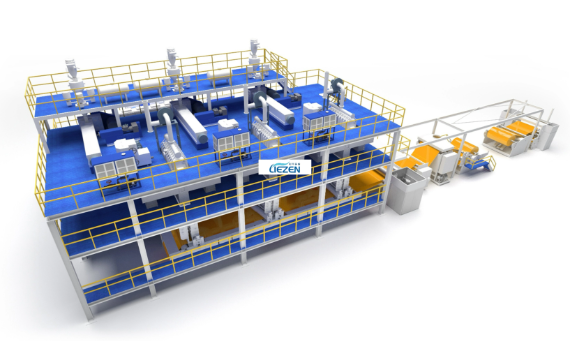
A nonwoven production line is a capital installation that usually crosses at least one border between the country where it is built and the country where it runs. The machine is designed, fabricated, shipped, installed, and then expected to satisfy an authority, an insurer, an auditor, or a downstream customer who never sees the machine itself - only the paperwork attached to it. Compliance is therefore not a single event. It is a chain that begins with the specification and ends with the documentation archive.
Three failure patterns account for most compliance disputes in this equipment category.
1. Machine safety compliance is confused with end-product compliance
The standard that governs a nonwoven making machine is a machinery safety standard. The requirements attached to the fabric - hygiene, medical, automotive, or food-contact applications - belong to the buyer's product and market, not to the machine supplier. Buyers who merge the two either over-specify the line or under-document the fabric, and both mistakes are expensive later.
2. The specification describes output but never names the standards
A technical annex that lists width, speed, and gram weight but not the standards the line is designed against leaves the supplier free to interpret and the buyer unable to verify. Compliance statements need to live in the contract, not in a conversation.
3. Documentation arrives late, incomplete, or unusable
Drawings without revisions, manuals without language versions, component information without traceability - each of these is a separate approval problem on site. Capital equipment acceptance frequently stalls not because the machine runs badly, but because the file is not complete enough to sign off.
The practical consequence is delay: installation schedules slip, operator training is repeated, and retrofit work is negotiated after the machine has already been paid for. That is why the cheapest moment to resolve compliance is the quotation stage.
Industry Background: More Capacity, More Cross-Border Lines, More Documentation
The scale of the category explains why compliance has become a mainstream purchasing question rather than a specialist footnote. The global nonwoven machinery market was valued at USD 6.8 billion in 2025 and is projected to reach USD 12.1 billion by 2034 (Dataintelo). Asia Pacific dominated that market with a 43.7% revenue share in 2025, and spunbond machinery alone accounted for 34.2% of the nonwoven equipment market in the same year. The spunbond technology segment is projected to grow at a CAGR of 6.20% from 2026 to 2034 (Fortune Business Insights).
Output and trade data point in the same direction. China's nonwoven fabric output reached 8.56 million tons in 2024, a 5.1% year-on-year increase, and China exported 1.52 million tons of nonwovens valued at USD 4.04 billion in the same year (China Customs / CNITA). Spunbonded nonwovens accounted for 37% of that export value. Polypropylene (PP) remains the dominant raw material for spunbond production, at over 53% of the segment in 2026 (Fortune Business Insights), while spunlaid (spunbond) technology held 48.4% of the global nonwoven fabrics market in 2023 (Grand View Research).
Demand concentration matters too. Disposable applications account for approximately 59.8% of the nonwoven market, and the automotive nonwoven market reached USD 3.6 billion in 2025 (Stratview Research). In other words, the same spunbond nonwoven machine technology base now feeds hygiene, medical, and industrial channels in different regions.
Each of those channels carries its own compliance expectations, and each destination market asks for a different document set. A PP spunbond nonwoven machine shipped from China to a hygiene converter in one region and to an automotive tier supplier in another may be technically comparable and commercially different - because the compliance obligation travels with the installation, not with the machine design alone.
What Compliance Actually Covers on a Nonwoven Fabric Machine
Compliance for this equipment type is best understood as four layers. They are independent, and missing any one of them creates a distinct problem at a different stage of the project.
Layer 1 - Machinery safety standards
Safety requirements for nonwoven machinery are governed by ISO 11111-3:2005 (Textile machinery, Safety requirements, Part 3: Nonwoven machinery). For equipment intended for the European market, general safety requirements for textile machinery - including nonwoven lines - fall under EN ISO 11111-1:2016, which is referenced for CE marking compliance in Europe. These references address the machine: guarding, access, control systems, and the hazards specific to a continuously running line.
Layer 2 - Quality management system evidence
ISO 9001 certification is standard for top-tier nonwoven machinery manufacturers in China to verify quality management systems. For buyers, the value is not the certificate as decoration but the traceability it implies: controlled drawings, documented inspection points, and a process for handling non-conformity. When a project requires supplier qualification, this is usually the first document requested - and the first one that should be checked against the issuing body rather than accepted as a scanned copy.
Layer 3 - Project documentation and configuration
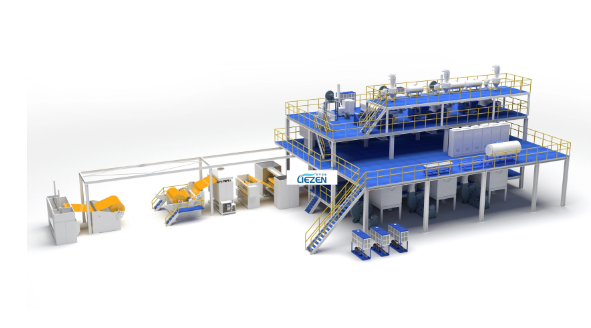
This is where most compliance detail actually lives. A nonwoven production line package typically includes general arrangement drawings, electrical schematics, utility requirements, component information, operating and maintenance manuals, a spare parts list, and a written statement of the standards the machine is designed against. The scope of that pack depends on how the line is configured, and configuration options on commercial spunmelt and spunbond equipment include different effective widths, layer counts, electrostatic treatment, flame-retardant options, and medical-grade clean standards.
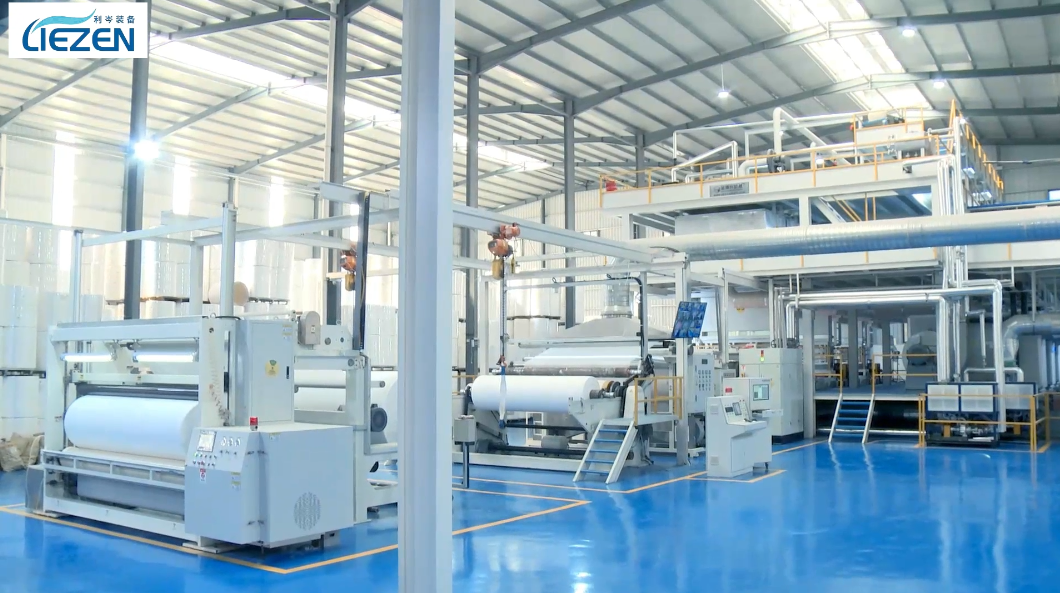
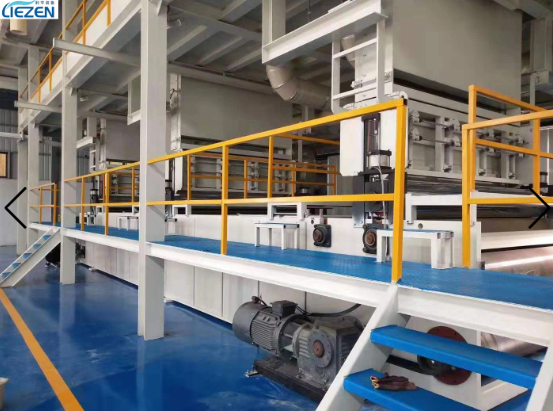
Material choices also appear in the file: the main raw material for spunbond and meltblown production is polypropylene (PP), while the equipment itself is built mainly from carbon steel, stainless steel, alloy parts, and electrical components. Around the core line sit auxiliary devices - traction units, winding and rewinding, fans and air compressors, heating and temperature control, slitting, cutting, and packaging equipment - each of which may need its own documentation if it is part of the delivered scope.
Layer 4 - End-product obligations, which belong to the buyer
Medical, hygiene, automotive, and packaging applications each carry requirements that attach to the fabric rather than the machine. A supplier can support those requirements through configuration - cleanroom-compatible construction, controlled temperature systems, and documented process windows - but the responsibility for demonstrating them sits with the converter. Separating the two layers in writing prevents an installation dispute in which each side believes the other owns the obligation.
How to Identify Which Regulations Apply to Your Market
There is no single universal certificate that makes a nonwoven fabric machine acceptable everywhere. The applicable set is identified project by project, using a short sequence of questions that should be answered before a request for quotation is issued.
- Where will the line be installed? The installation country and site conditions define the primary regulatory starting point.
- What does the local authority actually require for that installation? Confirm this with a local compliance specialist or the authority itself rather than relying on the supplier's general market experience.
- What will the fabric be used for? Hygiene, medical, automotive interior, packaging, agriculture, and apparel applications each shift the emphasis between machine safety and process documentation.
- Where will the finished fabric be sold? If the buyer exports, the documentation chain extends beyond the machine and should be planned early.
- Which layer of the machine is affected? A safety requirement may apply to the whole line, while a process requirement may apply only to the forming, bonding, or winding section.
For European installation, the verified reference point is EN ISO 11111-1:2016, which covers general safety requirements for textile machinery and is referenced for CE marking compliance. For nonwoven machinery safety generally, ISO 11111-3:2005 is the governing standard. Beyond these, requirements vary, and any claim that a specific certification is mandatory in a specific market should be confirmed in writing with the authority or a qualified local specialist before it is written into a contract.
Step-by-Step: Structuring Purchasing Terms and Acceptance Criteria
Purchasing terms and acceptance criteria are the mechanism that converts a compliance intention into a verifiable outcome. The following sequence is a practical working order for a new line, a single machine, or a modification and upgrade project.
Step 1 - Define the market and the application in the specification
State the installation country, the intended production application, and the expected end-product use. This single paragraph determines which documentation requests are reasonable and which are not.
Step 2 - Build the regulatory question list before the RFQ
Prepare the question list from the identification sequence above, and issue it with the technical enquiry. Suppliers who answer specifically and in writing are easier to contract with than suppliers who answer with a brochure.
Step 3 - Request the documentation package with the quotation
Ask for the standards statement, general arrangement drawings, electrical schematics, utility requirements, component information, manuals, spare parts list, and training scope. Where a project involves medical-grade clean standards or flame-retardant options, ask how those configurations are documented.
Step 4 - Align configuration with the requirement
Match line structure and parameters to the obligation. A single S, SS, SSS, meltblown, SMS, SMMS, SSMS, SMMSS, PET, or bi-component line produces different material characteristics, and each configuration changes the documentation and the acceptance test items.
Step 5 - Write purchasing terms that name the standards and deliverables
The contract should identify the standards the line is designed against, the documents to be delivered and their timing, the split of scope in turnkey delivery, single-machine supply, or upgrade projects, and the responsibilities of each side at installation. Compliance items that remain verbal are the items that get renegotiated.
Step 6 - Tie acceptance criteria to specified parameters
Acceptance criteria are strongest when they reference parameters already in the specification - effective width, production speed, filament fineness, layer structure, and fabric uniformity - rather than general statements about performance. Specifying that a criterion must be demonstrated, and how, removes interpretation at the end of the project.
Step 7 - Plan verification and handover before shipment
Agree in advance what will be verified at the factory, what will be delivered as documentation, what will be verified on site after installation, and how operator training is completed. This is the point at which compliance stops being a document and becomes an operational fact.
Use Cases: Where Compliance Priorities Shift
Hygiene production and sanitary napkin nonwoven fabric machine projects
Hygiene applications put process documentation under the greatest scrutiny. Buyers typically specify medical-grade clean standards, defined layer counts, and controlled temperature systems, and they expect the supplier to document how those requirements are met. For a sanitary napkin nonwoven fabric machine or a diaper line, machine safety compliance is the entry condition and process consistency is the ongoing obligation.
Automotive interior nonwoven production line projects
Automotive interior nonwoven production line projects add a second compliance audience: the vehicle manufacturer and its tier structure. The automotive nonwoven market reached USD 3.6 billion in 2025 (Stratview Research), and buyers in this segment generally need tighter traceability of process parameters in addition to machinery safety documentation.
Packaging, agricultural cover, and multi-market exporters
Packaging and agricultural cover producers usually face a lighter end-product documentation load, but the same machinery safety requirement applies. Exporters who serve several regions from one production site have the most complex case: one machine, several documentation expectations, which is why the requirement list should be assembled before the line is specified rather than after it is installed.
Upgrade and modification projects
Modification and upgrade projects - additional layers, changed widths, new bonding or winding sections - change the compliance profile of an existing line. The documentation package should be updated for the modified sections rather than inherited unchanged from the original delivery.
Compliance Reference Table by Market
| Market / scope | Verified reference point | What the buyer should confirm | Documentation focus |
|---|---|---|---|
| Europe | EN ISO 11111-1:2016 - general safety requirements for textile machinery, including nonwoven lines, referenced for CE marking compliance | The complete conformity route for the installation, site-specific conditions, and end-product obligations, with a local compliance specialist | Standards statement, drawings, electrical schematics, manuals, risk-related design information in the supplied pack |
| Global / cross-border equipment | ISO 11111-3:2005 - safety requirements for nonwoven machinery | Which sections of the line the standard covers and how the manufacturer documents that design intent | Machine safety documentation, configuration drawings, component information |
| China-origin manufacturing (supplier side) | ISO 9001 - standard for top-tier nonwoven machinery manufacturers in China to verify quality management systems | Certificate scope, validity, and issuing body, checked independently | Quality management system certificate, inspection records, controlled document set |
| Other import markets | No single international reference substitutes for local requirements | Applicable national requirements, import documentation, and site conditions | Project-specific document list agreed with the supplier during quotation |
Two conclusions follow from this table. First, standards referenced for one market cannot simply be assumed to satisfy another. Second, the buyer controls the outcome by listing the requirement set in the contract, where it can be verified, rather than leaving it to interpretation at delivery.
Line Configurations and Acceptance Parameters
Acceptance criteria must be anchored to specified parameters, and those parameters differ by configuration. The following configurations are documented product specifications from Lizen Machinery Co., Ltd, a manufacturer founded in 2003 and based in Changzhou, Jiangsu, China, supplying spunbond, spunmelt, and related nonwoven production lines.
| Model / line structure | Effective width | Production speed | Mechanical speed | Filament fineness |
|---|---|---|---|---|
| Double Beams PP Spunbond Nonwoven Fabric Machine (SW-SS) | 1600-3200 mm | Below 250 m/min | Below 300 m/min | 1.5-2.0 D |
| SSS nonwoven machine (SW-SSS) | 1600-3200 mm | Below 400 m/min | Below 450 m/min | 1.5-2.5 D |
| SMMS Spunmelt Non Woven Machine (SW-SMMS) | 1600-3200 mm | Below 400 m/min | Below 450 m/min | 1.5-2.0 D |
All three configurations are computerized, use polypropylene (PP) as the main raw material for spunbond and meltblown production, and can serve medical, hygiene, automotive interior, apparel and home textile, agricultural cover, packaging, and eco-friendly bag applications. Where a project requires different widths, layer counts, electrostatic treatment, flame-retardant options, or medical-grade clean standards, those requirements should appear in both the technical specification and the documentation list, so that acceptance testing and paperwork address the same scope.
Questions to ask a nonwoven fabric machine supplier
- Which standards was this line designed against, and can you provide that statement in writing?
- Which documents are included in delivery, in which language, and at which milestone?
- How is the quality management system certified, and what is the certificate scope?
- Which configuration options affect the documentation package - width, layer count, electrostatic treatment, flame-retardant options, clean standards?
- What is verified at the factory, and what is verified after installation?
- Which auxiliary devices are inside the delivered scope, and are they documented separately?
- How is operator training completed and recorded?
- Who is the contact for compliance documentation after handover?
Frequently Asked Questions
Which standards apply to nonwoven fabric machine safety?
ISO 11111-3:2005 - Textile machinery, Safety requirements, Part 3: Nonwoven machinery - is the international standard that governs safety requirements for nonwoven machinery. For equipment intended for the European market, general safety requirements for textile machinery, including nonwoven lines, fall under EN ISO 11111-1:2016, which is referenced for CE marking compliance in Europe. These two references address the machine itself. Site conditions, production environment, and the end product can add further obligations, so the complete applicable set should be confirmed in writing with the supplier and a local compliance specialist before the purchase order is issued.
How do I determine which regional requirements apply to my nonwoven machine project?
Start from four questions: where the line will be installed, what the local authority requires for that installation, what the finished fabric will be used for, and where the fabric will be exported. The answers define the documentation set. Export experience helps here: Lizen Machinery Co., Ltd, founded in 2003 in Changzhou, Jiangsu, China, has supplied close to 1,000 complete nonwoven production lines in 30 countries, with exports representing about 60% of output and the United States as a main market. Whatever the supplier, the applicable requirements should be listed in the purchasing terms rather than assumed from a certification badge.
Can a nonwoven production line be configured to meet different regional and product requirements?
Yes, within limits defined by the process. Lizen Machinery builds single S, SS, SSS, meltblown, SMS, SMMS, SSMS, SMMSS, PET, and bi-component lines. Documented configurations include effective widths of 1600-3200 mm, production speeds below 400 m/min on the SSS and SMMS models, below 250 m/min on the double-beam SS model, and filament fineness of 1.5-2.0 D or 1.5-2.5 D depending on the model. Custom requirements include different widths, layer counts, electrostatic treatment, flame-retardant options, and medical-grade clean standards. Each of those choices changes what must be documented, so configuration and compliance scope should be agreed together.
How should purchasing terms and acceptance criteria be structured?
Purchasing terms for a nonwoven fabric machine should state the standards and requirements the line is designed against, the documentation to be delivered and when, the split of scope between turnkey delivery, single-machine supply, or an upgrade project, and the acceptance criteria that must be satisfied before final acceptance. Acceptance criteria work best when they reference specified parameters - effective width, production speed, filament fineness, layer structure - and when the documentation set, operator training, and spare parts list are named as deliverables rather than left as verbal promises.
What should be verified before shipment and before final acceptance?
Three verification gates are typical. First, a factory acceptance test that runs the line against the specified parameters. Second, a documentation handover covering drawings, manuals, component information, and the standards statement. Third, site acceptance after installation, supported by operator training and a sample production run that confirms the fabric the buyer actually needs. Buyers who want to reduce uncertainty before committing to a full line usually begin with a sample or a project-specific quotation - for Lizen Machinery, that starts with a message to managerl@lizen-equipment.com or WhatsApp +86 188-8818-2509.
Conclusion: Compliance Is a Purchasing Decision, Not a Paperwork Task
Nonwoven fabric machine compliance starts with three verified anchors - ISO 11111-3:2005 for nonwoven machinery safety, EN ISO 11111-1:2016 where European CE marking compliance is in scope, and ISO 9001 as the quality management system reference standard for top-tier nonwoven machinery manufacturers in China. Everything else is project-specific and should be identified market by market, written into the purchasing terms, and reflected in the acceptance criteria.
The buyer's leverage is greatest before the order is placed. At that point, the requirement list can still be shaped, the documentation pack can still be specified, and the acceptance test can still be defined against parameters that both sides understand. A spunmelt nonwoven machine or SMS nonwoven machine project that follows this sequence spends its installation time on commissioning rather than on negotiation.
Lizen Machinery Co., Ltd designs and manufactures single S, SS, SSS, meltblown, SMS, SMMS, SSMS, SMMSS, PET, and bi-component nonwoven production lines at its 30,000 m2 facility in Changzhou, Jiangsu, China, supported by a 10-engineer research and development team and an annual output of approximately 50 units. The company works from its published site at lizen-equipment.com, and project notes and technical explainers are published on its nonwoven machinery knowledge base.
Next step: map your market requirements to a line configuration
Send your installation country, intended application, and target fabric specification. Lizen Machinery will respond with the relevant configuration options, the documentation scope that comes with delivery, and the acceptance parameters that apply to your project.
Request a project-specific quotation managerl@lizen-equipment.com +86-18888182509
Have Questions or Need More Details?
Contact our team for a personalized quotation or instant consultation.
Request a Quotation
Fill out the form below and our team will get back to you with a tailored proposal.
WhatsApp Direct Chat
Prefer to chat in real-time? Message us on WhatsApp for instant assistance & quick answers.
- Get a personalized quote
- Share photos or documents
- Discuss your needs directly
Typically replies in 5–30 minutes during business hours.