
Nonwoven Fabric Machine Compliance: What Buyers Must Verify
Compliance for a nonwoven fabric machine is decided by the destination market, not by the country where the line was built. Electrical safety design, CE marking where it applies, and the local standards that govern installation are what determine whether an imported line can be legally energised, insured and signed off — and all three are verified through documents and inspections, not through how the machine looks on the factory floor.
This guide is written for importers, distributors and project owners at the decision-and-execution stage: the configuration is close to final, the deposit is close to due, and the compliance file is usually the least defined part of the purchase. It covers what to check, in which order, and why compliance work belongs inside a long-term supplier relationship rather than inside a folder of papers exchanged a week before shipment.
Problem Definition: Compliance Gaps Rarely Look Like Machine Failures
A nonwoven machine that fails compliance is not usually a broken machine. It is a machine that cannot be connected to the site supply, cannot be approved by a local inspector, or cannot be accepted because the documentation and the delivered equipment do not describe the same thing.
The same six patterns repeat across imported nonwoven production lines:
- One certificate is assumed to travel worldwide. Buyers sometimes assume that a document issued for one destination will satisfy another. Local requirements differ, and the applicable requirement list has to be established per destination.
- Documentation scope is never written into the contract. If the file set is not a quoted deliverable, it becomes a favour to be negotiated later, usually from a position of weakness.
- Electrical design is configured against the wrong supply. Voltage, frequency, phase configuration and earthing arrangement are site facts that the machine has to follow, not the other way around.
- Nameplate data and the contract specification diverge. Small mismatches between what was ordered and what is stamped on the machine cause disproportionate delays at site approval.
- No entity is nominated to hold the declaration in the destination region. Where a local responsible party is required, that role should be assigned before the order, not discovered at customs.
- Risk allocation is left to goodwill. Without defined acceptance criteria, retrofit costs default to whoever is holding the machine when the problem appears.
Compliance and certification risk is a recognised category of machinery import risk, alongside transport and logistics, installation and commissioning, equipment failure and raw-material price volatility. The recognised controls are unglamorous and largely contractual: defined responsibilities, complete documentation, written acceptance criteria, a spare-parts list, remote support and clear warranty terms. Each of those controls is either agreed before shipment or negotiated afterwards under pressure.
Industry Background: Why Compliance Became a Line Item
The scale at which nonwoven machinery now crosses borders is the reason compliance moved from an afterthought to a budget line. The global nonwoven machinery market was valued at USD 6.8 billion in 2025 and is projected to reach USD 12.1 billion by 2034, according to Dataintelo. Asia Pacific accounted for 43.7% of that revenue in 2025, and spunbond machinery alone held 34.2% of the equipment market in the same year.
China is the largest single supply base inside that picture. China's nonwoven fabric output reached 8.56 million tons in 2024, a 5.1% year-on-year increase, and the country exported 1.52 million tons of nonwovens valued at USD 4.04 billion in the same year, according to China Customs and CNITA data. Spunbonded nonwovens accounted for 37% of that export value. Regional demand for nonwoven machinery is driven largely by hygiene products and medical-grade materials, which raises the documentation bar rather than lowering it.
Three published standards form the reference layer that buyers will encounter most often:
- ISO 11111-3:2005 — Textile machinery — Safety requirements — Part 3: Nonwoven machinery. This is the nonwoven-specific safety standard published by the International Organization for Standardization.
- EN ISO 11111-1:2016 — the general safety requirements for textile machinery that apply to nonwoven lines under CE marking compliance in Europe, as published through the European Committee for Standardization.
- ISO 9001 — the quality management system standard widely used to verify the manufacturing process behind a machine.
The practical reading is this: the standards define the safety baseline that a machine should be designed against, but they do not tell a buyer what documentation will actually arrive with a specific line. That gap is closed at the contract, review and inspection stage — which is what the rest of this guide addresses.
Detailed Solution: Turning a Supplier Relationship into a Verifiable Compliance File
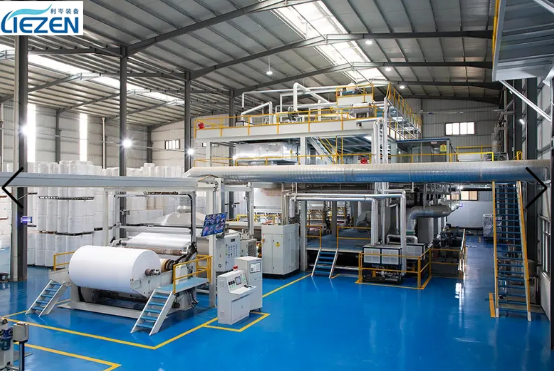
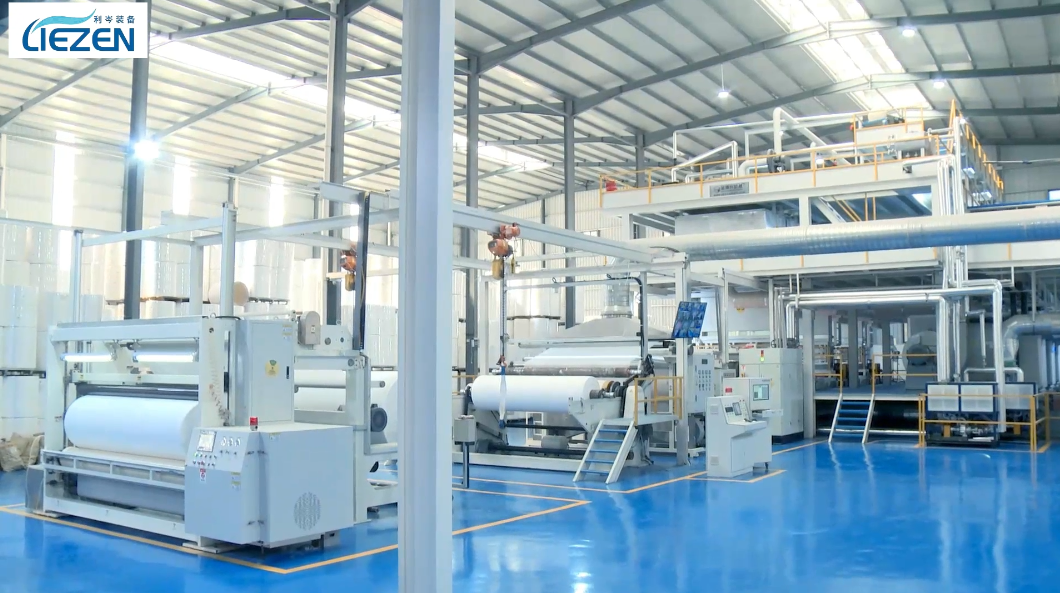
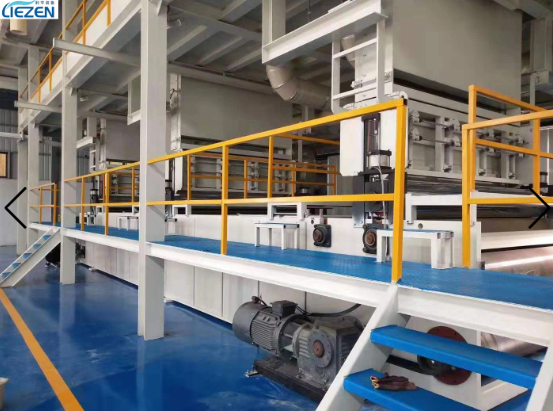
Lizen Machinery Co., Ltd. (Changzhou LieZen Non-woven Machinery Co., Ltd.) is a Chinese manufacturer of PP spunbond and spunmelt nonwoven machinery, founded in 2003 and based in Changzhou, Jiangsu. The company builds Single S, SS, SSS, meltblown, SMS, SMMS, SSMS, SMMSS, PET and bi-component nonwoven production lines, with the Single S PP Spunbond Nonwoven Machine as its core product.
Three attributes of this supplier profile matter specifically for compliance work. First, an export ratio of 60% — with the United States among the main markets and roughly 1,000 complete sets supplied across 30 countries — means the manufacturer regularly builds to more than one market's requirements, which is the capability that compliance projects actually depend on. Second, a 30,000 m² production base, 270 employees and an annual output of around 50 units give a project the physical and administrative room to hold project-specific documentation rather than reusing a generic file. Third, a 10-engineer R&D team is the function that has to answer the technical questions raised during a compliance review, because electrical architecture and safety logic are design decisions, not paperwork.
None of this removes the buyer's obligation to verify. What it changes is the starting point: a supplier with multi-market export experience can usually produce the document set on request, so the buyer's job is to define that request precisely and early.
A complete compliance file for a nonwoven production line sits in four layers.
Layer 1 — Machine-level safety documentation
The risk assessment and safety concept for the specific line, aligned with the nonwoven machinery safety standard (ISO 11111-3:2005) and, for European destinations, with the general textile machinery safety requirements referenced under CE marking (EN ISO 11111-1:2016). Ask for the version that names the actual model and configuration, not a generic template.
Layer 2 — Electrical and control documentation
Electrical schematics, component certificates or declarations from component suppliers, the control architecture description, guard and interlock logic, emergency-stop design, and nameplate data that matches the contract specification. This is the layer where cross-border projects most often diverge, because the site supply — voltage, frequency, earthing — is a site fact that the machine design has to follow.
Layer 3 — Management-system evidence
ISO 9001 certification is a common baseline for verifying the quality management system behind the manufacturing process. Check that the certificate scope covers the machine type being ordered, and that the certification body is identifiable.
Layer 4 — Contract and acceptance evidence
Specifications, packing list, inspection reports, acceptance test records, warranty terms and the spare-parts list. These are the documents that decide who pays when something does not match the order.
Step-by-Step Breakdown: The Order of Operations Matters
Compliance work is sequenced, and doing it out of order is what turns it into an emergency. The following eight steps run from the RFQ to the first months of operation.
Step 1 — Fix the destination's legal scope before fixing the configuration
Establish which market the line will be installed in and which local requirements will apply to it, then state that in the enquiry. A spunbond nonwoven machine destined for a European plant and one destined for a domestic line are built against different documentation expectations, even when the mechanical design is similar. Local requirements, not machine category, set the scope.
Step 2 — Attach the documentation request list to the RFQ, not to the shipping email
Request the standards the line will be designed to, the declaration documents that will be issued and by whom, the electrical documentation set, the risk assessment, available test evidence, the acceptance protocol and the spare-parts list. Putting this in the RFQ turns documentation into a quoted deliverable instead of a favour.
Step 3 — Cross-check the electrical design against the real site supply
Voltage, frequency, phase configuration, earthing arrangement and the site's installed protection should be confirmed in writing against the machine's design. This single check prevents the most common and most expensive post-arrival problem on imported nonwoven production lines.
Step 4 — Review the document set before the factory acceptance test
Documents reviewed after the machine is packed are documents reviewed after the leverage is gone. Review the file while the line is still assembled, accessible and adjustable.
Step 5 — Use the factory acceptance test for performance and paperwork together
A factory acceptance test is the standard checkpoint for mechanical performance tests and pilot production sample checks. It is also the moment to verify that nameplate data, control configuration and the declaration documents describe the equipment in front of you.
Step 6 — Confirm shipping and inspection documentation before dispatch
Secure packaging, the packing list and inspection reports should be part of the dispatch release, so that transport and logistics risk does not turn into a compliance dispute at the port of arrival.
Step 7 — Plan site acceptance, commissioning and training as one milestone
A site acceptance test typically repeats the mechanical performance and sample checks in the real production environment, after installation. On-site training and commissioning belong in the same plan, because operators who understand the safety logic are part of compliance rather than a separate activity.
Step 8 — Convert the file into a long-term arrangement
Compliance is maintained after acceptance, not delivered once. Spare-parts strategy, maintenance manuals, remote-support response and warranty terms should be confirmed with the vendor and written into the contract. This is where a compliance checklist becomes a partnership question: the same document structure supports line one, line two and every support request that follows.
Use Cases: Where the Compliance Checklist Changes
Hygiene and sanitary products
A sanitary napkin nonwoven fabric machine is usually a PP spunbond line, and polypropylene remains the dominant raw material for spunbond production, accounting for over 53% of the segment in 2026 according to Fortune Business Insights. For these projects the compliance weight sits in electrical safety, machine guarding and documentation consistency across every line in the plant, because output feeds downstream converting equipment that expects stable, traceable material.
Medical and SMS production
An SMS nonwoven machine — a spunmelt configuration — is typically specified where barrier performance matters. Medical-grade material demand is one of the main drivers behind Asia-Pacific nonwoven machinery investment, and it works the same way in the compliance file: process parameters, control documentation and traceability expectations are reviewed together rather than separately.
Automotive interior nonwoven production line
The automotive nonwoven market reached USD 3.6 billion in 2025, with needlefelt identified as the leading technology by Stratview Research. Automotive interior programmes typically add material-level requirements that sit outside the machine's own safety scope, so the practical advice is to separate the two checklists: what the line must satisfy in order to be installed legally, and what the finished fabric must satisfy in order to be accepted into a vehicle programme.
Multi-line operators and distributors
For a second or third line, the compliance file becomes a template. Reusing a verified documentation structure shortens each subsequent project and makes it easier to support end customers — the kind of repeatable process that a distribution or long-term supply agreement depends on.
Compliance Document Matrix: What Each File Proves and Where Review Fails
The table below maps the documentation layers to the questions a buyer actually needs answered. It is a verification structure, not a certification claim: the point is to know what to ask for, who should sign it, and which failure mode to look for.
| Compliance document | What it establishes | Who issues it | Where review commonly fails |
|---|---|---|---|
| Safety concept and risk assessment referencing ISO 11111-3:2005 (nonwoven machinery safety) | That the line has been designed against the recognised safety baseline for nonwoven machinery | The machine manufacturer | The document is generic and does not name the actual model or configuration |
| Declaration and technical file for CE-marked destinations, referencing EN ISO 11111-1:2016 (general textile machinery safety) | That the applicable European requirements have been addressed for this line | The manufacturer, or the authorised representative established in the destination region | No responsible entity in the destination region is named; the file does not match the shipped configuration |
| Electrical documentation set: schematics, component certificates, control description, nameplate data | That the electrical design is internally consistent and matches the site supply | The manufacturer, with component-level declarations from its suppliers | Nameplate voltage and frequency do not match the contract or the site supply |
| ISO 9001 certificate for the quality management system | That a documented quality management system sits behind the manufacturing process | An accredited certification body | The certificate scope does not cover the machine type being purchased |
| Contract acceptance package: specification, packing list, inspection reports, FAT and SAT records, warranty terms, spare-parts list | That the delivered line matches what was ordered, and who is responsible for what afterwards | The manufacturer and the buyer, jointly | Acceptance criteria were never defined at contract stage, so the factory acceptance test has no written pass or fail basis |
Frequently Asked Questions
Which certification documents should an importer expect for a nonwoven fabric machine?
There is no single global certificate that covers nonwoven machinery everywhere. What a buyer receives depends on the destination market. For European destinations, CE marking compliance for textile machinery is commonly assessed against the general safety requirements in EN ISO 11111-1:2016, while nonwoven machinery specifically falls under ISO 11111-3:2005. A typical file therefore includes a risk assessment and safety concept, a declaration covering the applicable requirements, the electrical documentation set, component-level declarations, and nameplate data consistent with the contract. ISO 9001 certification is a common additional check on the quality management system behind the build. The required list should be confirmed in writing with the supplier and, where applicable, with the entity responsible in the destination region, before the order is placed.
Can one nonwoven machine be built to satisfy more than one market's requirements?
Electrical architecture, documentation and acceptance criteria are design choices, so a line can be specified for a particular destination from the beginning rather than adapted afterwards. Export-oriented manufacturers routinely work this way. Lizen Machinery Co., Ltd. builds PP spunbond and spunmelt lines across Single S, SS, SSS, meltblown, SMS, SMMS, SSMS, SMMSS, PET and bi-component configurations, exports roughly 60% of its output, and has supplied around 1,000 complete sets across 30 countries, with the United States among its main markets. That experience is a starting point rather than a guarantee: the destination's requirement list still has to be issued with the RFQ and confirmed in writing.
Does compliance preparation change the cost of a nonwoven production line?
Compliance cost sits inside design, documentation and testing scope rather than appearing as a separate line item, which is why quotes cannot be compared on headline price alone. Configurations differ by capacity, working width, number of beams or layers, bonding method, drive and heating system, and the scope of documentation and acceptance testing is part of that difference. The practical approach is to compare what each quote includes: which standards the line is designed to, which documents will be issued, which acceptance tests are performed at the factory, and what the spare-parts and warranty terms cover. Commercial terms for these projects commonly start at a minimum order quantity of one unit, with delivery arranged under standard trade terms such as FOB or CIF and payment through T/T or L/C, all subject to confirmation in the contract.
How can a buyer validate compliance before the machine ships?
Validation happens in two parts. The documentation review comes first, while the line is still assembled, so discrepancies can be corrected before packing. The factory acceptance test comes second and should combine mechanical performance tests with pilot production sample checks, alongside verification that nameplate data, control configuration and declaration documents describe the equipment actually being shipped. A site acceptance test then repeats the performance and sample checks in the buyer's own production environment after installation.
When should compliance review start in the project timeline?
Compliance review should start at the RFQ stage, not after shipment. The requirement scope belongs in the enquiry, the documentation list belongs in the contract, and the document review belongs before the factory acceptance test. Scheduling compliance around the contract milestones — order, pre-FAT review, FAT, dispatch, SAT — keeps acceptance criteria defined and prevents retrofit work from landing on the buyer's side of the balance sheet. Buyers who want to see how a documentation structure applies to a specific spunbond, SMS or spunmelt configuration before committing can request a sample documentation outline and a quotation from Lizen Machinery Co., Ltd. through lizen-equipment.com.
Conclusion: Compliance Is Maintained, Not Purchased Once
Compliance for an imported nonwoven fabric machine is a verification process, not a certificate. The destination market sets the legal scope, published standards such as ISO 11111-3:2005 and EN ISO 11111-1:2016 define the safety baseline, and the documentation set is what a buyer can actually check, clause by clause, while the line is still standing at the factory.
Buyers who handle this well do three things differently. They put the documentation request inside the RFQ. They review the file before the factory acceptance test, when corrections are still cheap. And they carry the compliance arrangement into the spare-parts, training, remote-support and warranty conversation that continues long after installation. That last point is the one that matters over a ten-year line life. A certificate is a snapshot of a moment; a supplier relationship that keeps documentation, components and technical answers current is what keeps a nonwoven production line running.
Planning a line for a specific market?
Share the destination country, the intended product and the required capacity, and Lizen Machinery Co., Ltd. will outline the documentation set, the acceptance protocol and the configuration options that match it — including Single S, SS, SSS, meltblown, SMS, SMMS, SSMS, SMMSS, PET and bi-component nonwoven production lines for spunbond and spunmelt applications.
Website: https://www.lizen-equipment.com | Email: managerl@lizen-equipment.com | Tel / WhatsApp: +86-18888182509
Request a sample documentation outline and quotation via WhatsApp
Have Questions or Need More Details?
Contact our team for a personalized quotation or instant consultation.
Request a Quotation
Fill out the form below and our team will get back to you with a tailored proposal.
WhatsApp Direct Chat
Prefer to chat in real-time? Message us on WhatsApp for instant assistance & quick answers.
- Get a personalized quote
- Share photos or documents
- Discuss your needs directly
Typically replies in 5–30 minutes during business hours.