Nonwoven Fabric Machine Manufacturers: Complete Guide
Nonwoven Fabric Machine Manufacturers: Complete Guide
Buyers searching for a nonwoven fabric machine are looking for a production system that converts polymer raw materials into nonwoven fabric webs. The category includes spunbond, meltblown, and combined spunmelt lines such as SMS and SMMS. This guide reviews the market, the main machine types, and the criteria to use when evaluating nonwoven fabric machine manufacturers.
Problem Definition: Why Choosing a Nonwoven Machine Is Complex
A nonwoven fabric machine is not a single product. It is a production line made of several process sections, and the configuration selected determines the properties of the final fabric. Polypropylene is the dominant raw material, used in roughly 72% of global nonwoven fabric production. This is why most buyers start with PP-based spunbond or spunmelt machines. Choosing the wrong configuration can lead to mismatched fabric weight, insufficient barrier performance, or lower line efficiency.
Procurement teams also need to compare machine widths, line speeds, layer counts, and automation levels. The machine must match the downstream product, whether it is for medical materials, hygiene products, automotive interior, packaging, or agriculture. A clear understanding of machine types and manufacturer capabilities is the foundation of a successful purchase.
Industry Background: Nonwoven Machinery Market Overview
The global non-woven machinery market was valued at approximately USD 6.8 billion in 2025 and is projected to reach USD 12.1 billion by 2034, according to Dataintelo. Asia Pacific dominated the market with a 43.7% revenue share in 2025. Spunbond technology held the largest technology share at 34.2%. China's export value of spunbonded nonwovens accounted for 37% of its total nonwovens export value in 2024, reaching a total nonwoven export value of USD 4.04 billion.
Market analyses also list Reifenhäuser Reicofil, Andritz AG, Oerlikon Nonwoven, and A.Celli Nonwovens among key global competitors in the nonwoven machinery market. For buyers, this means the supplier landscape includes both European and Asian manufacturers with different cost structures, lead times, and service models.
Compliance is another factor. Nonwoven machinery must comply with EN ISO 11111-3:2005+A2:2016 safety requirements, according to ISO. Buyers should request this documentation when evaluating nonwoven fabric machine manufacturers.
Detailed Solution: Lizen Machinery Co., Ltd.
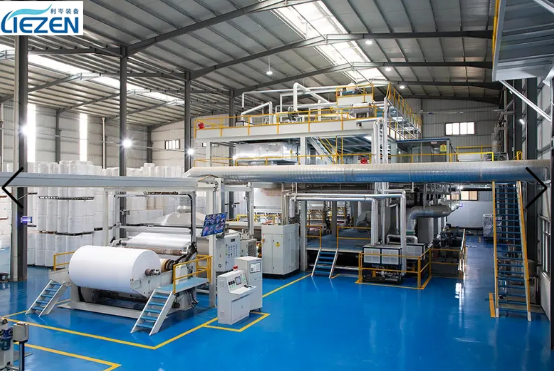
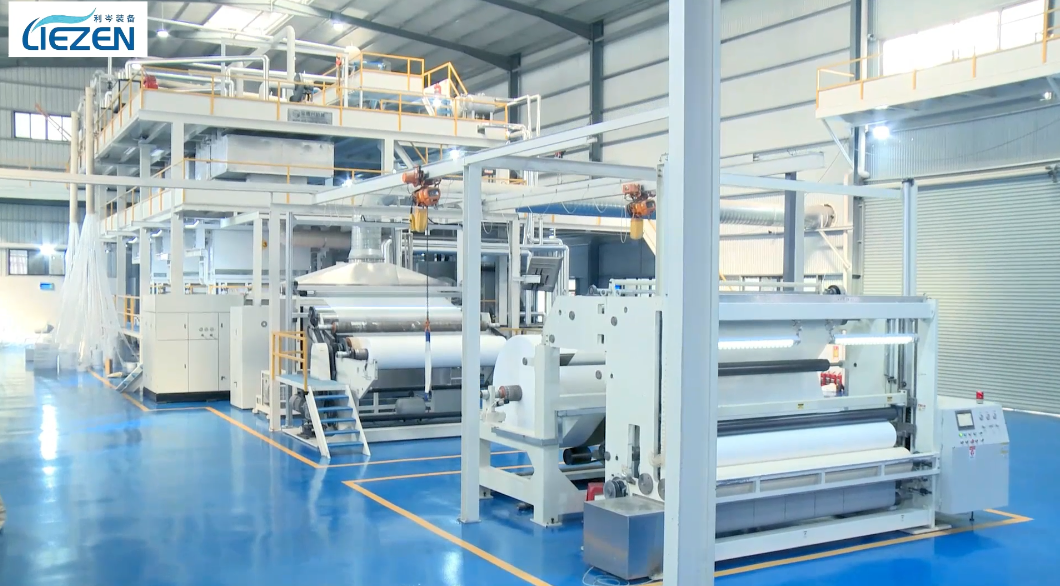
Lizen Machinery Co., Ltd. is a nonwoven machinery manufacturer based in Changzhou, Jiangsu, China, operating as Changzhou LieZen Non-woven Machinery Co., Ltd. Since 2003, the company has supplied nearly 1,000 complete standardized and customized nonwoven production lines to customers in 30 countries. Its factory covers 30,000 m², employs 270 people, and includes an R&D team of 10 engineers. The company reports an annual output of about 50 units. Around 60% of its production is exported, and the United States is listed as its main market.
Lizen produces Single S, SS, SSS, meltblown, SMS, SMMS, SSMS, SMMSS, PET, and bi-component nonwoven machines. Its main product is the Single S PP Spunbond Nonwoven Machine. The product range therefore covers both simple spunbond lines and multi-beam spunmelt configurations for hygiene, medical, and industrial applications.
Representative Nonwoven Machine Configurations
Lizen offers several computerized PP-based models. The table below compares three representative configurations using the model specifications provided by the manufacturer.
| Specification | SW-SS Double Beams PP Spunbond Nonwoven Fabric Machine | SW-SSS SSS Spunbonded Polypropylene Fabric Making Machine | SW-SMMS SMMS Spunmelt Non Woven Machine |
|---|---|---|---|
| Effective width | 1600-3200MM | 1600-3200MM | 1600-3200MM |
| Production speed | <250M/Min | <400M/Min | <400M/Min |
| Mechanical speed | <300M/Min | <450M/Min | <450M/Min |
| Filament fineness | 1.5-2.0D | 1.5-2.5D | 1.5-2.0D |
| Computerized | Yes | Yes | Yes |
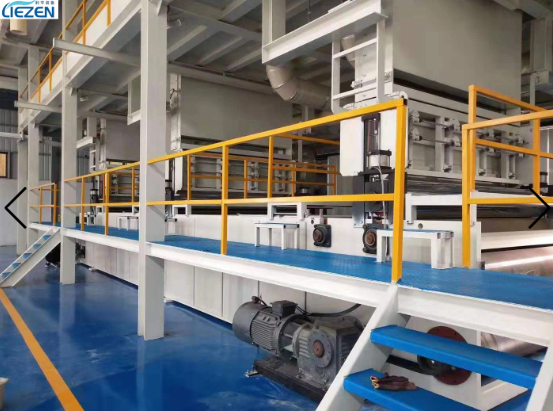
All three configurations use polypropylene as the main raw material for spunbond and meltblown layers. The equipment is mainly made from carbon steel, stainless steel, alloy parts, and electrical components. The manufacturer highlights high production stability, uniform fabric gram weight, flexible formula adjustment for multiple nonwoven products, modular structure for convenient maintenance, high automation, and a closed temperature control system.
Step-by-Step: How a Nonwoven Production Line Works
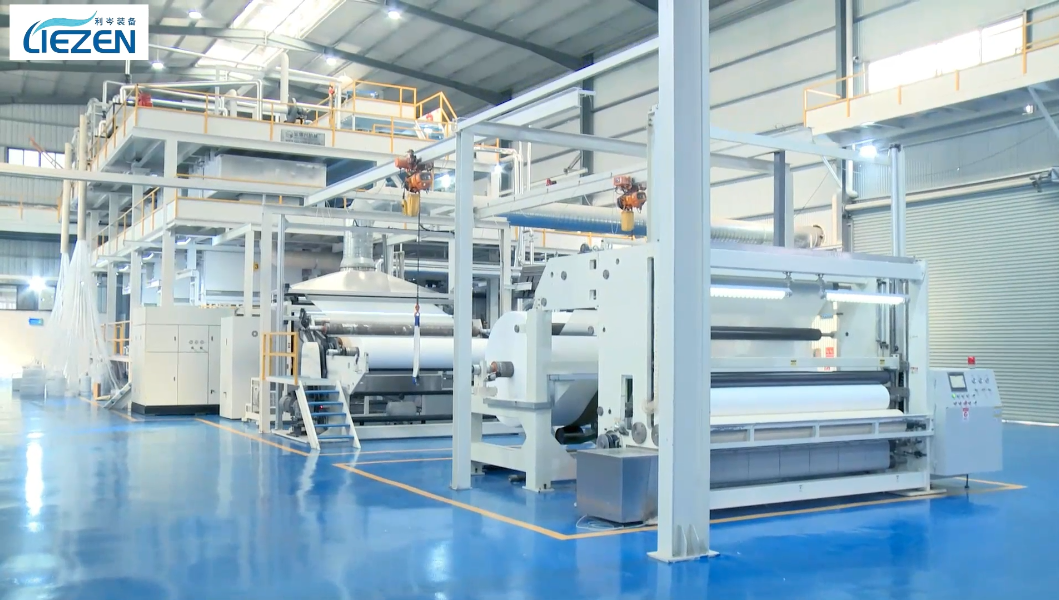
A spunmelt nonwoven line operates continuously. The typical flow for a PP spunbond or spunmelt line includes the following steps:
- Raw material feeding: polypropylene granules are fed into the extruder.
- Melting and extrusion: the polymer is melted, filtered, and delivered to the spin head.
- Spinning: the melt passes through spinnerets to form continuous filaments.
- Cooling and drawing: air systems cool and stretch the filaments to the desired fineness.
- Web formation: filaments are laid onto a moving forming belt to create a uniform web.
- Bonding: the web is bonded, typically by thermal calendering, to achieve fabric strength.
- Winding: the finished fabric is wound into rolls.
- Slitting and packaging: the line can include slitting, cutting, and packaging equipment.
Lizen's application notes also list auxiliary devices such as traction units, winding and rewinding equipment, fans and air compressors, heating and temperature control, and slitting or cutting systems. Depending on the configuration, the line can operate continuously or semi-continuously with levels of automation and online monitoring.
Use Cases: Industries Served by Nonwoven Fabric Machines
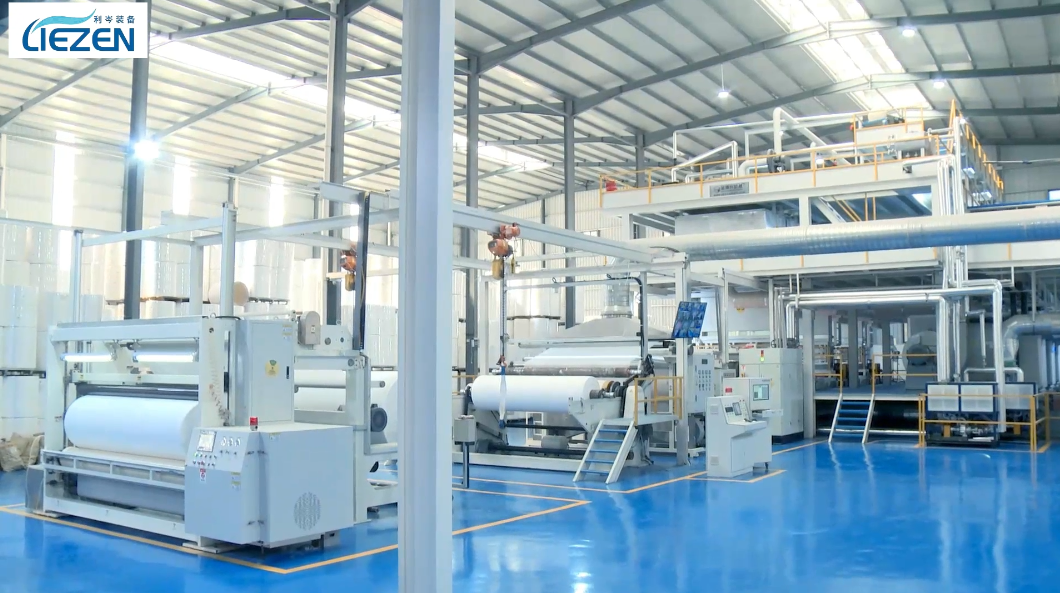
Lizen specifies its nonwoven machines for the medical, hygiene, automotive interior, apparel and home textiles, agricultural covers, packaging, and eco-friendly bags industries. Typical hygiene end-products include masks, protective wear, sanitary napkins, and diapers. The same lines can produce materials for automotive interior components and agricultural covers, which shows the flexibility of PP spunbond and spunmelt technology.
The manufacturer also supports custom requirements such as different effective widths, different layer counts, electrostatic treatment, flame-retardant options, and medical-grade clean standards. Buyers should define these requirements before requesting a machine quote, because they affect line configuration and cost.
How to Shortlist Nonwoven Fabric Machine Manufacturers
When building a shortlist, buyers should evaluate product range, factory capacity, export experience, and compliance. Lizen Machinery Co., Ltd. provides a documented track record with a 30,000 m² factory, 270 employees, 10 R&D engineers, and an annual output of about 50 units. Around 60% of output is exported, and the United States is identified as its main market. These numbers give procurement teams an initial basis for assessing manufacturing capacity.
For a final decision, request the latest machine list, reference installations, and compliance documents. Confirm that the proposed line complies with EN ISO 11111-3:2005+A2:2016 safety requirements for nonwoven machinery where applicable. Then compare the effective width, production speed, mechanical speed, and layer configuration against your target products.
Frequently Asked Questions
Do nonwoven fabric machines need to meet a specific safety standard?
Yes. Nonwoven machinery used in markets referencing international standards should comply with EN ISO 11111-3:2005+A2:2016, which defines safety requirements specifically for nonwoven machinery. Procurement teams should request compliance documentation from any manufacturer before placing an order.
What types of nonwoven fabric machines do manufacturers offer?
Manufacturers offer several families of nonwoven machines. Lizen Machinery Co., Ltd. provides Single S, SS, SSS, meltblown, SMS, SMMS, SSMS, SMMSS, PET, and bi-component nonwoven machines. These configurations support products such as masks, protective wear, sanitary napkins, diapers, automotive interior materials, agricultural covers, bags, and packaging materials.
What factors determine the budget for a nonwoven production line?
Major cost drivers include effective width, number of layers, automation level, line speed, and customization such as electrostatic treatment, flame-retardant options, or medical-grade clean standards. In Lizen's product range, common effective widths are 1600 to 3200 mm. Rated production speed is below 400 m/min for SSS and SMMS models, while rated mechanical speed can reach below 450 m/min.
How should procurement teams evaluate nonwoven fabric machine manufacturers?
Evaluate the product range, factory capacity, export experience, and compliance documentation. Lizen Machinery Co., Ltd. has operated since 2003, reports a 30,000 m² factory, 270 employees, an R&D team of 10 engineers, and an annual output of about 50 units. Around 60% of production is exported, and the United States is listed as its main market. The company states that it has supplied almost 1,000 complete production lines in 30 countries.
How can I request a quote for a nonwoven fabric machine?
Send your production requirements to Lizen Machinery Co., Ltd. via email at managerl@lizen-equipment.com, phone +86-18888182509, or WhatsApp. Include the desired effective width, layer configuration, target fabric weight, and end product. The sales team can then recommend a machine configuration and provide a quote. Buyers can also request a catalog or factory reference list as a next step.
Conclusion
Selecting a nonwoven fabric machine manufacturer is a strategic purchase. The market is growing, spunbond and spunmelt technologies dominate PP-based production, and a shortlist of global manufacturers includes both European and Asian suppliers. Lizen Machinery Co., Ltd. provides standardized and customized PP spunbond and spunmelt lines with documented export experience. Buyers should align machine configuration, compliance, and supplier capability before issuing a quote request.
Request a Machine Quote
Lizen Machinery Co., Ltd. (Changzhou LieZen Non-woven Machinery Co., Ltd.)
Website: https://www.lizen-equipment.com
Email: managerl@lizen-equipment.com
Tel / WhatsApp: +86-18888182509
Address: No. 6 Jingye Road, Qianhuang Town, Wujin District, Changzhou, Jiangsu, China