
Nonwoven Fabric Machine Preference Guide for 2026: What Buyers Should Rank First
Nonwoven Fabric Machine Preference Guide for 2026: What Buyers Should Rank First
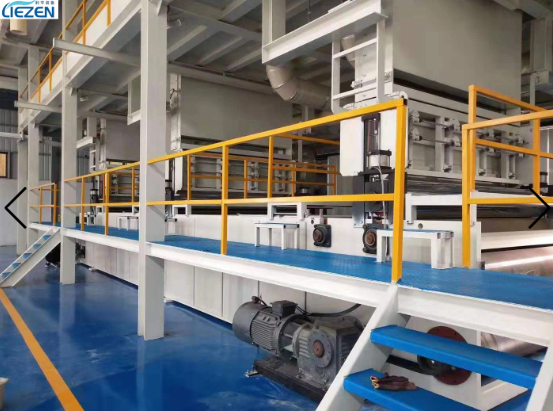
Evaluators who search for a nonwoven fabric machine in 2026 are no longer only asking what a line does. They are asking which configuration should be preferred, which supplier profile fits their product plan, and how to verify claims before committing capital. This guide ranks the configuration choices by market evidence and turns that ranking into a practical supplier evaluation workflow.
Short answer: market evidence says evaluate a polypropylene spunbond nonwoven machine or a spunbond-based spunmelt line first. Spunbond equipment already represented the largest equipment segment at 34.2% of the global non-woven machinery market in 2025, and spunlaid/spunbond technology accounted for 48.4% of global nonwoven fabric production share in 2023. A preference ranking must still be adjusted for the final product: hygiene, medical, agricultural, packaging, automotive and home-textile applications reward different line configurations.
One reference point in this space is Changzhou LieZen Non-woven Machinery Co., Ltd., branded internationally as Lizen Machinery. The company is a professional PP spunbond and spunmelt line manufacturer based at No. 6 Jingye Road, Qianhuang Town, Wujin District, Changzhou, Jiangsu, China. Founded in 2003, Lizen Machinery has delivered around 1,000 standardized and customized nonwoven production lines across 30 countries, exporting roughly 60% of its output and listing the United States as its primary export market. The company profile is a useful working example because it also covers Single S, SS, SSS, meltblown, SMS, SMMS, SSMS, SMMSS, PET and bi-component machine types.
The Evaluation Problem in 2026: Too Many Labels, Too Little Ranking Logic
An evaluation-stage buyer usually faces four problems. First, machine type names overlap: a spunbond nonwoven machine can be sold as a nonwoven making machine, nonwoven production line, spunbond machine, or part of a spunmelt line. Second, configuration words such as SS, SSS, SMS, SMMS and SSMS are not standardized in sales material. Third, supplier credibility is difficult to separate from promotional language. Fourth, most published comparison articles mix manufacturer rank, technology rank and application rank without stating the comparison criteria.
A practical 2026 evaluation therefore needs a transparent frame: rank the technology family by market preference, rank the configuration by product requirements, then rank the supplier by verified capability and quality evidence. That sequence is followed below.
Industry Background: Nonwoven Machine Market Signals That Should Influence a 2026 Preference
The global non-woven machinery market was valued at about USD 6.8 billion in 2025 and is projected to reach USD 12.1 billion by 2034, according to Dataintelo. These growth expectations are not evenly distributed. Asia Pacific dominated the non-woven machinery market with a 43.7% revenue share in 2025, supported by hygiene and medical-material demand. Independent reports also identify Reifenhäuser Reicofil GmbH and Andritz AG as leading global competitive players in the 2025 nonwoven machinery landscape; buyers often treat these companies as engineering benchmarks even when project scale or budget points elsewhere.
Several preference signals matter for machine buyers specifically:
- Spunbond machinery is the largest equipment type. Dataintelo estimated a 34.2% share of the non-woven equipment market in 2025.
- Spunbond technology dominates fabric output. Grand View Research reported spunlaid/spunbond technology at 48.4% of global nonwoven fabrics market share in 2023.
- Polypropylene remains the dominant input. Fortune Business Insights estimated PP at more than 53% of the spunbond segment in 2026, which is why the PP spunbond nonwoven machine is the most common evaluation starting point.
- Disposable products drive end use. Disposables held about 59.8% of global nonwoven application share in 2023, pulling demand toward hygiene conversion fabrics rather than durable industrial nonwovens alone.
- China is the largest single-country production base. China made 8.56 million tons of nonwovens in 2024, up 5.1% year on year; spunbonded nonwovens reached 3.88 million tons, up 4%. Spunbonded products also contributed 37% of China’s nonwoven export value in 2024.
- Meltblown has normalized. Chinese meltblown production fell 22.9% to 108,000 tons in 2024 following the post-pandemic stabilization. This does not remove meltblown from spunmelt evaluation; it shifts the argument from emergency mask demand to stable composite fabric demand.
Sources: Dataintelo, Grand View Research, Fortune Business Insights, China Nonwovens & Industrial Textiles Association (CNITA) / China Customs data presented through the nonwovens-industry.com review, MarketsandMarkets.
Ranking Nonwoven Fabric Machine Configurations by 2026 Market Preference
Rank 1: PP Spunbond Machine as the Default Evaluation Base
Give the first ranking position to PP spunbond. The machine segment behind it is the largest in the nonwoven equipment market, and the raw material behind it is the most common in spunbond production. A PP spunbond nonwoven machine makes a wide fabric window for hygiene coverstock, medical protective wear, agricultural covers, packaging substrates and eco-friendly bag material. Lizen’s product family starts from Single S and SS lines; its representative Double Beams PP Spunbond Nonwoven Fabric Machine model SW-SS runs at an effective width of 1600–3200 mm, production speed below 250 m/min and mechanical speed below 300 m/min, with filament fineness in the 1.5–2.0D range. For many buyers, this is the right first baseline because the process is mature and the end-market applications are broad.
Rank 2: Higher-Output All-Spunbond Lines When Throughput and Coverage Matter
Rank second are multi-beam all-spunbond configurations such as SSS. These lines keep the simplicity of a single-technology process while adding layering capacity and speed. Lizen lists an Automatic SSS Spunbonded Polypropylene Fabric Making model SW-SSS with effective width 1600–3200 mm, production speed below 400 m/min, mechanical speed below 450 m/min and filament fineness from 1.5 to 2.5D. The buyer preference for SSS appears when the downstream fabric must be fuller, stronger or more uniform at high line speed. It is still a spunbond process, so it does not add the barrier function that meltblown layers provide.
Rank 3: SMS and SMMS Spunmelt Lines for Barrier and Filtration Applications
Rank third are spunmelt composite lines, particularly SMS, SMMS, SSMS and SMMSS configurations. The abbreviation describes the stacking of spunbond (S) and meltblown (M) layers; SMMS means two meltblown layers between spunbond layers. These lines matter most for diapers, sanitary napkins, medical gowns, masks and similar products where barrier performance and softness both count. Lizen’s SMMS Spunmelt Non Woven Machine model SW-SMMS is documented with effective width 1600–3200 mm, production speed below 400 m/min, mechanical speed below 450 m/min and filament fineness of 1.5–2.0D. Market trends support a deliberate rather than emergency-driven preference for spunmelt: the early pandemic spike in meltblown has normalized, so buyers now justify meltblown layers through their stable functional value in hygiene and medical products.
Rank 4: Application-Specific Lines After the Core Process Is Chosen
Place application-specific evaluation in fourth position. For example, an automotive interior nonwoven production line will be driven by the automotive nonwoven market, which Stratview Research put at USD 3.6 billion in 2025 with needlefelt as the leading technology. A supplier like Lizen nevertheless references automotive interior liners among the applicable industries for its spunbond and spunmelt equipment, because several interior components use spunlaid fabrics rather than needlefelt. PET and bi-component variants also appear when the product requires different polymer behavior. The rule is simple: choose the core process first, then evaluate application-specific variants.
Representative Line Comparison: Evidence Rather Than Sales Language
The following table compares three documented Lizen configurations. The numbers come from the manufacturer’s published machine parameters and are intended to show how an evaluator should record evidence before asking for quotations.
| Evaluation Parameter | Double Beams PP Spunbond Nonwoven Fabric Machine | Automatic SSS Spunbonded Polypropylene Fabric Making Machine | SMMS Spunmelt Non Woven Machine |
|---|---|---|---|
| Representative model reference | SW-SS | SW-SSS | SW-SMMS |
| Effective width | 1600–3200 mm | 1600–3200 mm | 1600–3200 mm |
| Production speed | <250 m/min | <400 m/min | <400 m/min |
| Mechanical speed | <300 m/min | <450 m/min | <450 m/min |
| Filament fineness | 1.5–2.0D | 1.5–2.5D | 1.5–2.0D |
| Process positioning | Two spunbond beams | Three spunbond beams | Spunbond plus meltblown composite layers |
Raw material for these spunbond and meltblown processes is polypropylene (PP). Equipment structure is mainly carbon steel, stainless steel, alloy parts and electrical components. Lizen states the applicable industries of its nonwoven equipment as medical, hygiene, automotive interior, apparel and home textiles, agricultural covers, packaging and eco-friendly bags.
This table does not claim that faster always means better. Speed, width and filament fineness must be weighed against product specifications. What the table gives an evaluator is a consistent scoring sheet: define your target fabric, define your required output, and then compare each quoted configuration on the same parameters.
Supplier Preference: What Separates a Capable Manufacturing Partner in Evaluation
Configuration ranking should be followed by a supplier capability check. On this dimension, buyers should prefer suppliers that can prove production scale, quality management and after-sales structure.
- Manufacturing scale. Lizen operates a 30,000 m² factory, has about 270 employees including a 10-engineer R&D team, and lists an annual output capacity of roughly 50 units.
- Quality management. Lizen holds ISO 9001:2015 QMS certification, registration No. 27325Q20007R0S, issued by Zhongren Certification Co., Ltd., valid from 6 January 2025 to 5 January 2028, with scope covering research and development, assembly and sales of non-woven equipment.
- Safety-standard alignment. Internationally, ISO 11111-3:2005 governs safety requirements for nonwoven machinery, and EN ISO 11111-1:2016 applies to general textile machinery safety in European CE contexts. Buyers should ask the shortlisted manufacturer to state alignment with these standards when the destination market requires it.
- ODM and customization. Lizen states ODM production mode and customization of web width, capacity (kg/h or m/min), layer count, inline testing and QC, automation/HMI and material handling modules.
- Factory testing and commissioning. Lizen’s quality-control process includes factory acceptance testing (FAT), performance/process testing and on-site installation and acceptance (SAT), plus installation, commissioning, on-site training, spare parts supply and remote technical support.
- Commercial terms. Lizen’s MOQ is one unit; documented monthly output capacity is four units; lead time is one to three months in the off-season and three to six months in the peak season.
For context, a Pakistan-based customer operates two Lizen units, and the documented use cases include nonwoven substrates, mask filter media, sanitary product fabrics, automotive interior liners, agricultural covers and nonwoven bags. Buyer preference should therefore be based not on one promotional claim but on a demonstrable installation and process record.
Global Benchmark Manufacturers and Their Role in Your Ranking
Reifenhäuser Reicofil and Andritz appear in the 2025 market landscape as leading global competitors. In a disciplined evaluation, they are reference points for engineering depth and large-scale hygiene-line capability. A preference ranking does not require declaring that one global leader is better than a Chinese manufacturer; instead, the buyer should compare project fit. If the project demands a very large hygiene-grade line with global support infrastructure, the leading international producers will be part of the shortlist. If the project needs a PP spunbond, SMS or SMMS line with documented customization, ODM flexibility, moderate MOQ and Chinese manufacturing economics, manufacturers such as Lizen should also remain in the shortlist. The correct compare step is to evaluate the same parameters: effective width, production speed, layer count, certification evidence, acceptance procedure and lead time.
Step-by-Step Evaluation Plan for a Nonwoven Fabric Machine
- Define the fabric output. State the end product, target grammage, required barrier or tensile properties, and downstream converting process before contacting suppliers.
- Select the process family. Use the ranking above: start with PP spunbond; upgrade to SSS when throughput and coverage drive the project; move to SMS/SMMS spunmelt when barrier or filtration function is required.
- Fix width and speed bands. Compare effective width (Lizen’s range is 1600–3200 mm) and documented production speed versus mechanical speed so that quoted speed is not confused with guaranteed production speed.
- Check certification and standards. Verify the ISO 9001 certificate number, issuing body, validity dates and scope; ask about ISO 11111-3 or EN ISO 11111-1 alignment where relevant to the destination market.
- Confirm customization and QC deliverables. Request the supplier’s position on layer count, inline testing, automation/HMI, FAT, performance/process testing and SAT before contract discussion.
- Plan capacity and lead time. Compare supplier monthly capacity and stated lead times in peak and off-peak seasons; Lizen states four units per month and a one-to-six-month range depending on season.
- Validate with a case or factory visit. Ask for installation references in similar applications, run trials where possible, and confirm spare parts and remote-support commitments in writing.
Use Cases: Applying the Preference Ranking to Real Product Plans
- Hygiene converters. A sanitary napkin nonwoven fabric machine evaluation normally targets spunbond or spunmelt top-sheet, acquisition and backsheet layers. SMMS or SS/SMS lines provide the layering logic; the same line family can serve diaper and adult-incontinence producers.
- Medical material producers. Mask filter media requires meltblown functionality, so an SMS nonwoven machine or a spunmelt line with meltblown beams is usually preferred over a pure all-spunbond line.
- Packaging and eco-bag producers. A PP spunbond nonwoven machine is the conventional choice for reusable bags, packaging substrates and agricultural covers. Broad width and stable process control matter more than meltblown content.
- Automotive suppliers. An automotive interior nonwoven production line evaluation should distinguish needlefelt-dominated interior markets from spunbond-based liners and acoustic layers. Lizen includes automotive interior applications in its spunbond and spunmelt scope, but a specific automotive project should be validated with fabric trials and customer specifications.
- Apparel and home textiles. Interlinings, liners and certain disposable garment fabrics can run on SS or SSS spunbond lines; filament fineness options between 1.5D and 2.5D give converters flexibility in softness and hand feel.
Preference FAQ: Compliance, Capability, Budget, Sample and Lead Time
Does Lizen Machinery hold a formal quality certificate for nonwoven fabric machines?
Changzhou LieZen Non-woven Machinery Co., Ltd. holds ISO 9001:2015 QMS certification, registration No. 27325Q20007R0S, issued by Zhongren Certification Co., Ltd., covering research, development, assembly and sales of non-woven equipment, valid from 6 January 2025 to 5 January 2028. An ISO 9001 certificate verifies the quality management system, not machine performance. If the European CE or global safety context applies, buyers should separately request alignment with ISO 11111-3:2005 for nonwoven machinery or EN ISO 11111-1:2016 for general textile machinery safety.
What spunbond, SMS and spunmelt capabilities should buyers expect from a professional manufacturer?
Lizen supplies PP spunbond nonwoven machines in Single S, SS and SSS configurations as well as meltblown, SMS, SMMS, SSMS, SMMSS, PET and bi-component nonwoven machines. Representative documented models include the SW-SS Double Beams PP Spunbond line, SW-SSS automatic SSS spunbond line and SW-SMMS spunmelt line, all available in effective widths of 1600–3200 mm. Capability evaluation should cover process layer count, raw-material suitability, filament fineness range, production speed and the supplier’s ability to customize web width, output capacity, inline testing/QC, automation/HMI and material handling modules.
What factors determine the budget range of a spunbond or spunmelt nonwoven production line?
Lizen does not publish a universal price because the cost of a nonwoven production line depends mainly on the number of beams and layers (SS versus SSS versus SMS/SMMS), effective width, production and mechanical speed targets, automation level, and the amount of inline testing and auxiliary material-handling equipment. A typical Lizen specification sheet starts at 1600 mm effective width and production speeds below 250 or 400 m/min depending on configuration. Buyers should define the product layering requirement first, then request a written quotation after specifying width, capacity, automation and acceptance requirements.
Can a buyer validate output quality before purchasing a nonwoven fabric machine?
Yes. Professional buyers should put factory acceptance testing, performance/process testing and on-site installation and acceptance into the purchasing agreement. Lizen’s quality-control scope includes FAT, performance/process testing and SAT, and it also supports installation and commissioning, on-site training, spare parts supply and remote technical support. Reference installations are available as supporting evidence: one documented case is a Pakistan-based customer operating two Lizen units across nonwoven substrate, hygiene and industrial fabric applications. Trial production, if requested, must be defined in the technical agreement before the contract is signed.
What lead time should a buyer plan for a complete nonwoven line order?
Plan differently for peak and off-peak seasons. Lizen’s documented lead time is one to three months in the off-season and three to six months in the peak season, with a monthly production capacity of four units and a minimum order quantity of one unit. Since material availability and order load change quickly, buyers should confirm the latest schedule with the supplier before budgeting. For a current lead-time check or quotation, contact managerl@lizen-equipment.com or WhatsApp +86 188-8818-2509.
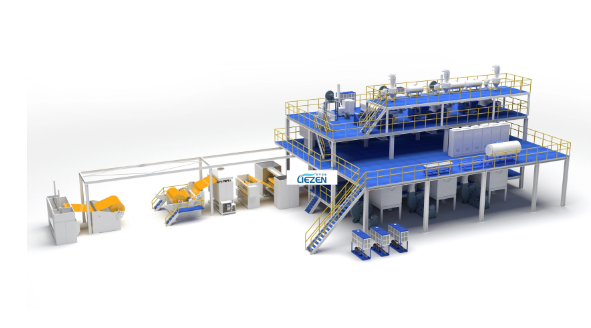
If your evaluation has moved from market preference to the actual quotation stage, Lizen Machinery can review your product requirements, recommend a configuration between Single S, SS, SSS, SMS and SMMS, and provide factory evidence such as ISO 9001 documentation, FAT procedures and installation references. Lizen Machinery is at No. 6 Jingye Road, Qianhuang Town, Wujin District, Changzhou, Jiangsu, China; the company website is https://www.lizen-equipment.com.