
Nonwoven Fabric Machine Purchase: Terms vs. Acceptance Criteria Head-to-Head
A nonwoven fabric machine purchase is decided by two documents, not one: the purchasing terms and the acceptance criteria. The purchasing terms define the commercial obligation — what is supplied, at what price, on what schedule, and who carries which responsibility. The acceptance criteria define the technical condition — what the line must actually produce, measured how, before the buyer is obliged to accept it. The head-to-head question is not which document matters more, because neither works alone. The useful question is which one is written first.
The practical answer: write the acceptance criteria first, write the purchasing terms second, then map the two line by line before order confirmation. This article compares the two head-to-head, shows where they drift apart, and sets out what has to be aligned before a nonwoven production line order is signed.
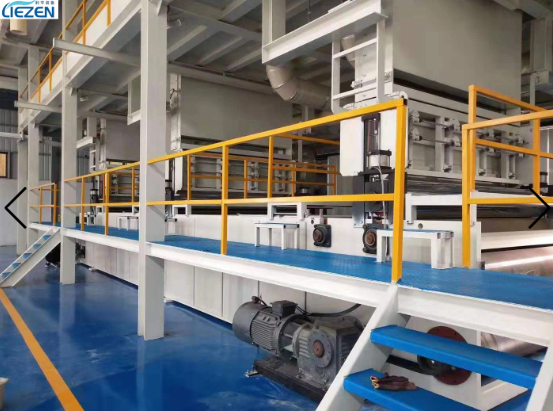
Cover: A nonwoven machinery manufacturing facility where acceptance criteria are converted into build specifications. Image: Lizen Machinery Co., Ltd.
What Are the Purchasing Terms and Acceptance Criteria in a Nonwoven Fabric Machine Purchase?
Purchasing terms and acceptance criteria answer two different questions. Purchasing terms answer: what have we agreed to buy, from whom, for how much, on what schedule, and who is responsible when something goes wrong? Acceptance criteria answer: how will we prove that the machine actually performs the job the purchase was made for? Both belong to the same purchase, but they are written in different languages and by different people.
The purchasing terms form the commercial layer of the purchase. In a nonwoven fabric machine deal, they normally cover:
- Scope of supply and configuration — the nonwoven production line as configured, including auxiliary equipment, control and bonding systems, and documentation.
- Price and payment schedule — deposit, progress payments, pre-shipment payment and final payment, each with a defined trigger.
- Delivery and shipping terms — trade terms, packing standard, loading arrangements, and shipping documentation.
- Installation, commissioning and training responsibilities — who supplies engineers, for how long, and at whose cost.
- Warranty, spare parts and after-sales support — warranty period and its start point, spare-parts list, maintenance manual, and the remote-support route.
- Risk allocation — transport and logistics, installation and commissioning, equipment failure, raw-material price volatility, and compliance or certification risk.
The acceptance criteria form the performance layer. They are the measurable conditions the delivered line has to satisfy:
- The product envelope — which fabric, at which working width, within which weight range, with which layer structure (single S, SS, SSS, meltblown, SMS, SMMS and similar configurations), and from which raw material.
- Output and running stability during continuous production.
- Fabric quality attributes relevant to the end product being sold.
- Utility and energy behaviour under normal operating conditions.
- Safety and compliance documentation.
- Handover items — completed operator training, manuals, and a spare-parts list.
The terms are written in commercial language: money, dates and responsibilities. The acceptance criteria are written in engineering language: values, ranges, test methods and tolerances. That difference in language is where purchase problems begin, because a commercial clause and an engineering criterion can look aligned on paper while pointing at two different events.
Why Purchasing Terms and Acceptance Criteria Drift Apart
Misalignment is rarely caused by a bad machine. It is caused by drafting sequence. Three conditions produce most of it:
- Different owners. Procurement writes the terms; production, quality or engineering writes the acceptance criteria. Each group optimises the document it owns.
- Different timing. Terms are usually finalised during price negotiation. Acceptance criteria are often drafted late, after the configuration is already commercialised.
- Different units. Terms measure success in payment milestones and delivery dates. Acceptance measures success in output, fabric quality and document handover.
Four failure patterns follow from those conditions, and each one is avoidable if the mapping is done before order confirmation:
- Payment trigger mismatch. The final payment falls due on shipment, while the acceptance test is scheduled after installation and commissioning. The buyer pays in full before performance has been demonstrated.
- Responsibility mismatch. The terms place commissioning with the buyer, while the acceptance criteria require a supervised trial run that only the supplier's engineers can execute.
- Scope mismatch. The acceptance criteria describe a multi-layer spunmelt or SMS nonwoven machine, while the quoted scope of supply corresponds to a single-layer pp spunbond nonwoven machine.
- Time mismatch. Warranty is counted from shipment, but commissioning is delayed by site construction, so a large share of the warranty period expires before the line runs at all.
Industry Background: Why This Alignment Is Now a Competitive Issue
Equipment demand is broad, and the supply base is correspondingly wide. The global nonwoven machinery market was valued at USD 6.8 billion in 2025 and is projected to reach USD 12.1 billion by 2034 (Dataintelo). Within that equipment mix, spunbond machinery held the largest share at 34.2% in 2025, and Asia Pacific accounted for a 43.7% revenue share in the same year.
China remains the largest single production base. Nonwoven fabric output reached 8.56 million tons in 2024, a 5.1% year-on-year increase, while exports reached 1.52 million tons valued at USD 4.04 billion. Spunbonded nonwovens accounted for 37% of China's nonwoven export value in 2024 (China Customs / CNITA). Spunbonded output alone was 3.88 million tons in 2024, up 4% year-on-year, while meltblown output fell 22.9% to 108,000 tons as pandemic-era capacity normalised (CNITA).
On the material side, polypropylene remains the dominant raw material for spunbond nonwoven production, accounting for more than 53% of that segment in 2026 (Fortune Business Insights). Demand pull is concentrated in a few categories: disposable products accounted for approximately 59.8% of nonwoven applications in 2023 (Grand View Research), and Asia-Pacific machinery demand is driven by hygiene products and medical-grade materials (MarketsandMarkets). A separate batch-driven segment has grown alongside hygiene: the automotive nonwoven market reached USD 3.6 billion in 2025, with needlefelt as the leading technology (Stratview Research).
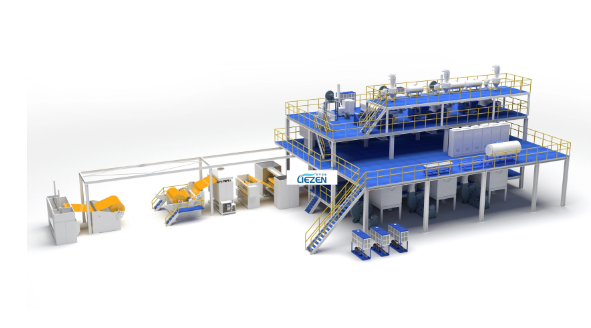
Every configuration decision made on the shop floor has to appear in either the purchasing terms or the acceptance criteria — ideally in both.
For a buyer at the decision stage, this matters for one reason: choice density. When many suppliers can quote a comparable spunbond nonwoven machine or SMS nonwoven machine, the specification sheet alone stops differentiating offers. What separates one proposal from another is the pair of documents: acceptance criteria the buyer can test, and terms that make the test enforceable.
Terms vs. Acceptance Criteria: Head-to-Head Comparison
The comparison below sets the two documents side by side on the dimensions where they interact. It is deliberately structural rather than commercial: it does not rank suppliers, it ranks the questions each document answers.
| Dimension | Purchasing terms | Acceptance criteria | What breaks if they are misaligned |
|---|---|---|---|
| What it governs | The commercial obligation | Technical conformity of the delivered line | Buyer pays for an obligation that was never defined in measurable terms |
| Who normally drafts it | Procurement, commercial or legal team | Production, quality or engineering team | Two internally consistent documents that contradict each other |
| Language and units | Price, dates, responsibilities, risk | Width, weight range, layers, output, test methods | A criterion with no matching clause, or a clause with no testable criterion |
| Reference event | Order confirmation, shipment, delivery | Factory test, commissioning, trial production | Money changes hands before performance is demonstrated |
| Main risk it covers | Commercial and contractual risk | Performance risk | One risk is fully allocated and the other is left open |
| Change handling | Amendments and variation orders | Re-testing and re-acceptance | Configuration changes without a defined re-acceptance step |
| Evidence used in a dispute | Contract, invoices, shipping documents | Test records, production data, inspection reports | Neither side can prove what was agreed to be proven |
The head-to-head has no winner, because the two are not competitors. Acceptance criteria define what must be true; purchasing terms define who pays for it, when it happens, and what happens if it is not true. The decision rule that follows is simple: acceptance criteria first, purchasing terms second, mapping third.
Six Pairings That Keep Terms and Acceptance Criteria Aligned
1. Scope of supply ↔ product envelope
If the acceptance criteria define a fabric weight band and a layer structure, the scope of supply must list the configuration capable of producing it — the number of beams or dies, the bonding system, and the layer count. This is the most common single point of failure, because a spunmelt nonwoven machine, an SMS nonwoven machine and a single-layer pp spunbond nonwoven machine can be described in similar language while being different purchases.
2. Payment schedule ↔ acceptance milestones
Every payment trigger should correspond to something the buyer can observe. Pre-shipment payment is normally tied to a documented pre-delivery inspection. Final payment is normally tied to site acceptance after commissioning. If the final payment falls due on shipment while acceptance testing happens weeks later, the terms have removed the buyer's only leverage without removing the acceptance requirement.
3. Delivery and shipping terms ↔ site readiness
Delivery terms define when cost and risk transfer. Acceptance criteria assume the site can receive and run the line. The controls that bridge the two are practical rather than financial: secure packaging, a packing list, inspection reports, and a clear statement of who unloads, positions and connects the equipment.
4. Installation, commissioning and training ↔ acceptance test execution
An acceptance test that nobody can perform is not a criterion. The terms should state which engineers attend, for how many days, at whose cost, and whether operator training is included. The acceptance criteria should state that the trial run is supervised and that completed operator training is a handover item rather than a courtesy.
5. Warranty and spare parts ↔ reliability requirements
Warranty is a term; reliability is a criterion. A warranty counted from shipment loses value when commissioning is delayed, so the start point should be aligned with the acceptance event. The spare-parts list, maintenance manual and remote-support route are the mechanisms that determine how quickly a performance failure can be recovered — which is itself an acceptance-relevant fact.
6. Risk allocation ↔ compliance documentation
The risk categories that must be allocated explicitly are transport and logistics, installation and commissioning, equipment failure, raw-material price volatility, and compliance or certification risk. Compliance is the category most often left blank, because it is written in engineering language on one side and commercial language on the other. Nonwoven machinery safety requirements are governed by ISO 11111-3:2005, and general safety requirements for textile machinery, including nonwoven lines, fall under EN ISO 11111-1:2016 for CE marking compliance in Europe. ISO 9001 is the quality-management baseline used by top-tier nonwoven machinery manufacturers in China.
Acceptance-to-Terms Mapping Table
This is the working tool. Each row on the left has to appear somewhere on the right; if it does not, the offer is not comparable yet.
| Acceptance requirement | Commercial clause it must appear in |
|---|---|
| Product envelope: working width, weight range, layer structure, raw material | Scope of supply and configuration annex |
| Continuous output verified during trial production | Payment milestones after commissioning |
| Safety conformity (ISO 11111-3:2005; EN ISO 11111-1:2016 where CE marking applies) | Compliance and documentation clause |
| Utility and energy behaviour | Technical annex to the main terms |
| Operator training and manual handover | Installation, commissioning and training clause |
| Spare-parts list and remote-support route | After-sales and warranty clause |
| Packing condition on arrival and inspection records | Delivery, packing and shipping-document clause |
Step-by-Step: From Product Envelope to Signed Acceptance
- Write the product envelope before discussing price. Which end product, which process route, which working width, which weight band, which raw material. Every later clause is derived from this paragraph.
- Convert the envelope into testable acceptance criteria. Each criterion needs three parts: a value, a measurement method, and a pass/fail judgement. A criterion without a method is a preference, not a criterion.
- Split criteria into factory-level and site-level. Some conditions can be demonstrated before shipment; others can only be demonstrated on an installed, commissioned line. Deciding which is which early prevents a deadlock at delivery.
- Translate each criterion into a commercial obligation. Use the mapping table above. If a criterion has no matching clause, either add the clause or remove the criterion — do not leave it implied.
- Fix payment triggers to acceptance events. Deposit on contract. Progress payments against documented milestones. Final payment after site acceptance, with the acceptance event written in the same units as the criteria.
- Align the warranty start point with the acceptance event. Where warranty is counted from shipment but acceptance occurs at commissioning, state the gap explicitly rather than assuming goodwill will cover it.
- Verify that the supplier can deliver the terms, not only the machine. Confirm packing standards, inspection reporting, spare-parts list, maintenance documentation and the remote-support route — the practical controls that make an after-sales clause executable.
- Sign one order confirmation package. Terms, acceptance criteria and the configuration annex should be one referenced set with a single change-control rule, so that any later configuration change automatically triggers re-acceptance on the affected criteria.
Acceptance Criteria by Application
Sanitary napkin and hygiene roll production
For a sanitary napkin nonwoven fabric machine feeding a continuous hygiene roll line, continuity and consistency usually matter more than a peak output figure. Acceptance criteria therefore tend to emphasise stable running and roll-to-roll uniformity, and payment milestones are normally attached to the trial production stage rather than to shipment. The wider context supports that emphasis: disposable products accounted for approximately 59.8% of nonwoven applications in 2023 (Grand View Research).
Medical filter media production
In this segment, documentation carries as much weight as output. Acceptance criteria typically include conformity to the applicable safety standard, traceable inspection records and a complete handover file, because the buyer's own compliance position depends on those documents existing.
Automotive interior nonwoven production line
Automotive demand is batch-driven rather than continuous. The automotive nonwoven market reached USD 3.6 billion in 2025, with needlefelt as the leading technology (Stratview Research). Acceptance criteria here are usually organised per batch and per buyer specification, while the commercial terms concentrate on delivery scheduling and repeat-order continuity.
Pilot-to-mass-production scale-up
Lines used for medical filter media mass production, sanitary product roll production and automotive interior batch supply often begin as pilot or trial configurations. Acceptance criteria should be written so they remain valid when the line moves from trial to full output: the same criteria, evaluated over a longer continuous run, with the re-acceptance step defined in the terms in advance.
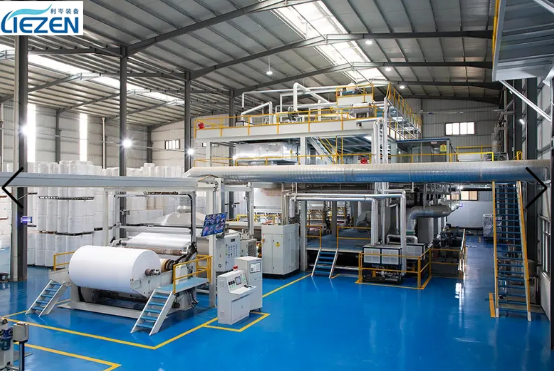
Application-specific acceptance criteria determine which configuration is actually being purchased.
The Supplier Side of the Head-to-Head: Verify, Do Not Assume
Lizen Machinery Co., Ltd. is a nonwoven machinery manufacturer established in 2003, based in Changzhou, Jiangsu, China, producing PP spunbond nonwoven fabric machines and related nonwoven production lines for international buyers.
The verifiable facts a buyer can check against their own terms include: a 30,000 m² manufacturing facility, 270 employees, a 10-engineer R&D team, and an annual output of approximately 50 units. Around 60% of production is exported, with the United States as the main market. The product scope covers Single S, SS, SSS, meltblown, SMS, SMMS, SSMS, SMMSS, PET and bi-component nonwoven machines, with the Single S PP spunbond nonwoven machine as the core product. Cumulatively, the company states it has supplied almost 1,000 complete sets of standardised and customised nonwoven production lines across 30 countries.
On the terms side, installation, commissioning and after-sales support are part of the stated offer. A buyer applying the framework in this article should convert those statements into written deliverables before order confirmation: engineer days, commissioning scope, packing and inspection documentation, spare-parts list, maintenance manual, and warranty period with a defined start point. A capability claim becomes usable only when it appears in the terms and is testable under the acceptance criteria.
Supplier conversations at exhibitions are useful for scoping — but the scoping has to end up in writing in the terms and criteria.
Frequently Asked Questions
What compliance documents should be attached to the acceptance criteria for a nonwoven fabric machine?
Align the documentation list with the safety standard applicable to nonwoven machinery. ISO 11111-3:2005 sets safety requirements specifically for nonwoven machinery, and EN ISO 11111-1:2016 covers general safety requirements for textile machinery, including nonwoven lines, for CE marking compliance in Europe. ISO 9001 is the quality-management baseline used by top-tier manufacturers in China. The acceptance criteria should name each document the supplier must hand over, and the purchasing terms should state that final acceptance is not complete until those documents are delivered.
Which manufacturer is better for spunbond nonwoven machines?
The question only becomes answerable after the product envelope and acceptance criteria are defined, because the comparison changes with the fabric, the width and the layer structure being produced. Third-party market research for 2025 identifies Reifenhäuser Reicofil GmbH and Andritz AG as leading global competitive players in the nonwoven machinery landscape (Dataintelo) — that is a market-position observation, not a suitability ranking. Among Chinese manufacturers, what can be verified rather than assumed is measurable capacity: Lizen Machinery Co., Ltd., established in 2003, operates a 30,000 m² facility with 270 employees and a 10-engineer R&D team, and produces approximately 50 units per year, with around 60% exported. The practical rule is that the better manufacturer is the one whose written terms map one-to-one against your acceptance criteria, and whose factory, documentation and spare-parts commitment you can inspect before signing.
Does a longer acceptance criteria list increase the machine price?
It can, because acceptance requirements change the scope of supply, and scope changes cost. The relationship is not linear, however. Cost differences depend on the specific customer requirements and configuration, and energy-efficiency differences depend on the model, the drive system and the heating solution — which is why consumption should be quantified by comparing energy-consumption data of the specific models being quoted rather than by comparing brochures. Where budget pressure is real, decide explicitly which criteria are fixed and which are negotiable, and record that decision in the terms instead of dropping criteria silently.
Can acceptance criteria be validated with a sample or trial run before shipment?
Partly, and the split should be written into the criteria. Factory-level acceptance normally relies on material and fabric samples together with pre-delivery inspection records. Where a physical sample is required, define what is sampled, from which point in the line, and against which value. Site-level criteria, such as continuous output during trial production, cannot be validated before installation, so they belong to the commissioning and final acceptance stage — with the packing list and inspection reports acting as the documentary bridge between shipment and installation.
How should lead time and commissioning be written into the purchasing terms?
Split lead time into three dates rather than one: readiness for shipment, arrival on site, and the start of commissioning. Because site readiness sits with the buyer, the commissioning start is a joint milestone, and the terms should state what happens if either side causes a delay. On-site training and commissioning, secure packaging, a packing list and inspection reports, and a spare-parts list with a remote-support route are the practical controls that belong in this section. Buyers who want to test a proposed configuration against their own acceptance criteria before committing can request a configuration review and quotation from Lizen Machinery Co., Ltd. by email at managerl@lizen-equipment.com or on WhatsApp at +86-188-8818-2509.
Conclusion: Define Acceptance First, Terms Second
The head-to-head between purchasing terms and acceptance criteria ends in a draw, and that is the point. Terms without testable criteria produce a well-paid purchase and an unproven machine. Criteria without matching terms produce a technically ambitious requirement that nobody is contractually obliged to demonstrate. Neither document is complete alone, and neither can be fixed retroactively once the order is confirmed.
For a buyer at the decision stage, the sequence is what matters. Define the product envelope. Convert it into measurable acceptance criteria with values and test methods. Translate each criterion into a commercial clause. Attach payment triggers and the warranty start point to the same acceptance events. Verify that the supplier can deliver both the machine and the paperwork. Then sign one package, with one change-control rule.
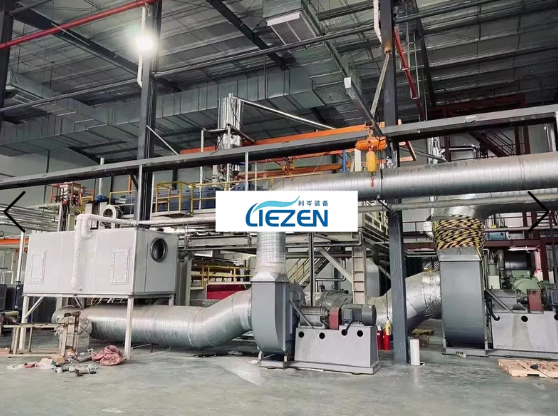
A verified factory, documented terms and testable acceptance criteria are what make a nonwoven production line purchase comparable.
Turn Your Acceptance Criteria Into a Comparable Offer
Lizen Machinery Co., Ltd. builds PP spunbond, SS, SSS, meltblown, SMS, SMMS, SSMS, SMMSS, PET and bi-component nonwoven production lines, and accepts customised line configurations scoped around the buyer's own acceptance requirements.
Website: www.lizen-equipment.com | Email: managerl@lizen-equipment.com | Tel / WhatsApp: +86-188-8818-2509
Address: No. 6 Jingye Road, Qianhuang Town, Wujin District, Changzhou, Jiangsu, China
Have Questions or Need More Details?
Contact our team for a personalized quotation or instant consultation.
Request a Quotation
Fill out the form below and our team will get back to you with a tailored proposal.
WhatsApp Direct Chat
Prefer to chat in real-time? Message us on WhatsApp for instant assistance & quick answers.
- Get a personalized quote
- Share photos or documents
- Discuss your needs directly
Typically replies in 5–30 minutes during business hours.