
Nonwoven Fabric Machine: Types, Applications & Manufacturers
Nonwoven Fabric Machine: Types, Applications & Manufacturers
Nonwoven fabric machines are industrial production lines that convert raw polymer—most commonly polypropylene (PP)—into nonwoven fabrics used in hygiene, medical, automotive, apparel, agriculture, packaging and eco-friendly bag production. This guide is written for procurement managers, brand owners, distributors and production engineers evaluating a nonwoven fabric machine manufacturer. It explains the main machine configurations, application fit, selection criteria and the product range of Changzhou LieZen Non-woven Machinery Co., Ltd..
Why Comparing Nonwoven Fabric Machine Suppliers Is Difficult
The phrase “nonwoven fabric machine” covers a broad family of equipment. Buyers searching for a PP spunbond nonwoven machine, an SMS nonwoven machine, or a spunmelt nonwoven machine are asking for different process configurations. A single-layer spunbond machine is not the same as a multi-beam spunmelt line. Each configuration changes fabric structure, barrier properties, speed, width, filament fineness and the end products the line can support.
Procurement teams also face inconsistent supplier terminology. One manufacturer may describe a line by its beam count, another by its final fabric type. Without a clear comparison framework, it is difficult to evaluate a nonwoven production line, a nonwoven making machine, or an automation level. The practical approach is to first define the end product, then compare machine models on documented parameters rather than marketing language.
- Process type: Single S, SS, SSS, Melt blown, SMS, SMMS, SSMS, SMMSS, PET or bi-component.
- Output specification: effective width, production speed, mechanical speed, filament fineness.
- Material compatibility: polypropylene (PP) is common, but PET and bi-component lines are also available.
- Customization scope: width, layer count, electrostatic treatment, flame-retardant options, medical-grade clean standards.
- Delivery scope: turnkey production line delivery, single-machine supply, process modification and upgrade projects.
Nonwoven Fabric Machine Market Background
According to Dataintelo, the global non-woven machinery market was valued at approximately USD 6.8 billion in 2025 and is projected to reach USD 12.1 billion by 2034. The same source reports that spunbond technology held the largest share of the non-woven machinery market at 34.2% in 2025, which helps explain the high demand for PP spunbond and spunmelt systems.
Asia Pacific dominated the non-woven machinery market with a 43.7% revenue share in 2025, according to Dataintelo. China also plays a central role in nonwoven fabric supply: China Customs and the Nonwovens Industry report that China’s export value of spunbonded nonwovens accounted for 37% of its total nonwovens export value in 2024, contributing to a total nonwoven export value of USD 4.04 billion.
Polypropylene (PP) is the dominant raw material for nonwoven production, used in approximately 72% of global nonwoven fabric production according to MarketsandMarkets. This material focus is reflected in the machine range of most nonwoven equipment manufacturers. Industry sources also note that nonwoven machinery must comply with EN ISO 11111-3:2005+A2:2016 safety requirements specifically for nonwoven machinery, according to ISO/CEN.
Detailed Solution: Changzhou LieZen Non-woven Machinery Co., Ltd.
Changzhou LieZen Non-woven Machinery Co., Ltd. is a professional nonwoven fabric machine manufacturer based in Changzhou, Jiangsu, China. The company was founded in 2003 and operates a 30,000 m² factory with 270 employees, including 10 R&D engineers, with an annual output of about 50 units. LieZen has provided almost 1000 complete sets of standardized and customized non-woven production lines in 30 countries. Around 60% of its output is exported, and its main market is the USA.
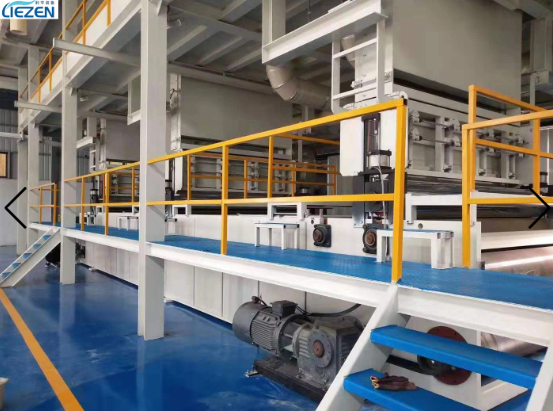
The company’s main product is the Single S PP Spunbond Nonwoven Machine. Its broader range covers PP spunbond non-woven fabric machines of Single S, SS, SSS, Melt blown, SMS, SMMS, SSMS, SMMSS, PET and Bi-Component non-woven machine. The documented product line includes the Double Beams PP Spunbond Nonwoven Fabric Machine (SW-SS), the SSS nonwoven machine (SW-SSS), and the SMMS Spunmelt Non Woven Machine (SW-SMMS).
Technical characteristics shared across Lizen nonwoven production lines
- High production stability and uniform fabric gram weight.
- Flexible formula adjustment for multiple nonwoven products.
- Modular structure convenient for maintenance.
- High automation reduces manual labor cost.
- Matched closed temperature control system improves finished product qualification rate.
The main raw material processed by these lines is polypropylene (PP) for spunbond and meltblown applications. The equipment itself is mainly made from carbon steel, stainless steel, alloy parts and electrical components.
Manufacturing and delivery scope
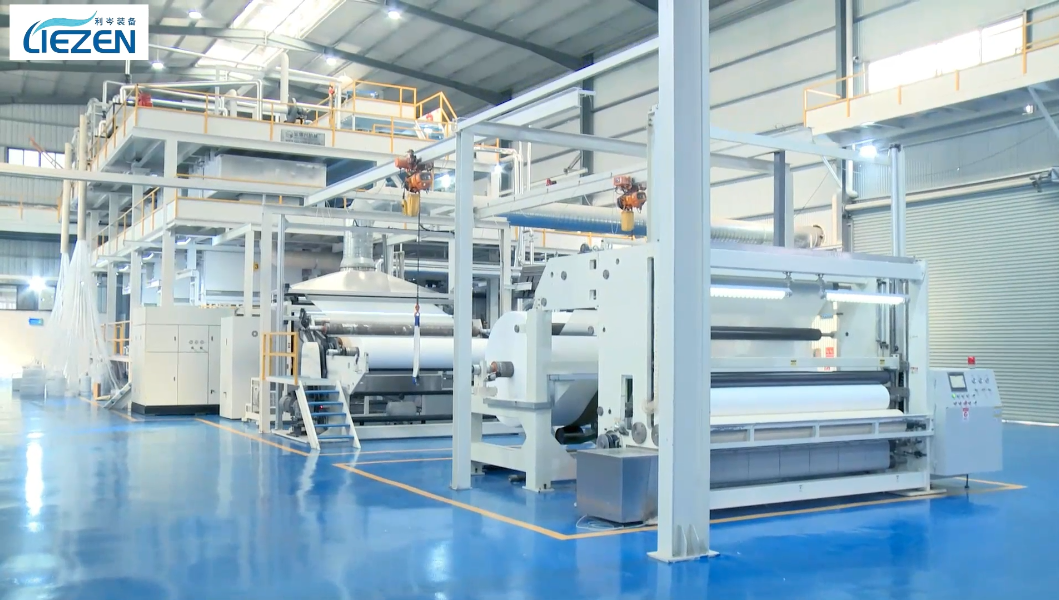
Lizen supports turnkey production line delivery, single-machine supply, and process modification and upgrade projects. The application scope for its nonwoven equipment includes auxiliary devices such as traction units, winding and rewinding equipment, fans and air compressors, heating and temperature control systems, slitting and cutting equipment, and packaging equipment.
Lines can operate in continuous or semi-continuous mode depending on configuration and customer needs. According to the manufacturer, the equipment can support custom requirements including different widths, layer counts, electrostatic treatment, flame-retardant options, and medical-grade clean standards. This makes the nonwoven production line adaptable to workshops and cleanroom environments depending on the end product.
Step-by-Step: Selecting a Nonwoven Fabric Machine Line
The selection process can be structured around the following steps. Each step narrows the machine configuration and helps the buyer communicate a complete requirement to a nonwoven fabric machine manufacturer.
- Define the end product. Identify whether the nonwoven will be used in hygiene, medical, automotive interior, apparel, home textiles, agriculture, packaging or eco-friendly bags.
- Choose the process configuration. Decide between Single S, SS, SSS, Melt blown, SMS, SMMS, SSMS, SMMSS, PET or bi-component nonwoven production. For example, a spunbond machine is often the base layer for hygiene and packaging products, while an SMS or spunmelt nonwoven machine adds meltblown filtration and barrier properties.
- Set width and capacity requirements. Effective width and production speed determine line throughput. Lizen’s documented models cover effective widths of 1600–3200 mm, production speeds below 250–400 m/min and mechanical speeds below 300–450 m/min depending on model.
- Confirm raw material and filament fineness. PP is the most common raw material. Filament fineness for the documented Lizen models is 1.5–2.5 D.
- Plan auxiliary and downstream equipment. Account for traction units, winding and rewinding, fans and air compressors, heating and temperature control, slitting and cutting, and packaging equipment.
- Identify customization needs. Document whether you need electrostatic treatment, flame-retardant properties, different layer counts, or cleanroom-compatible design.
- Define delivery scope. Confirm whether the project is turnkey production line delivery, single-machine supply, or a process modification and upgrade project.
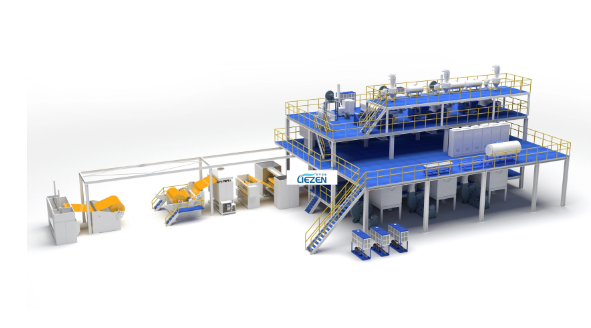
Use Cases for Lizen Nonwoven Production Lines
Medical and hygiene
Lizen lists medical and hygiene as applicable industries for its nonwoven machines. End products include masks, protective wear, sanitary napkins and diapers. For a sanitary napkin nonwoven fabric machine, the buyer typically needs soft spunbond layers and possibly meltblown barrier layers for liquid resistance. Depending on the end product, the line can be arranged for workshop or cleanroom environments.
Automotive interior
An automotive interior nonwoven production line is used for interior components and trim materials. The key considerations for this segment are consistent fabric gram weight, width stability and the ability to customize the nonwoven to match downstream forming or lamination processes.
Apparel, home textiles, agriculture and packaging
The same machine range can support apparel and home textile applications, agricultural covers, packaging materials and eco-friendly bags. These applications rely on PP spunbond fabric because of its strength, lightweight nature and cost-effectiveness. The flexible formula adjustment described by Lizen allows the line to produce multiple nonwoven products from one production system.
Comparison: Lizen SS, SSS and SMMS Nonwoven Machine Models
The table below compares the documented specifications for three Lizen models: the Double Beams PP Spunbond Nonwoven Fabric Machine (SW-SS), the SSS nonwoven machine (SW-SSS), and the SMMS Spunmelt Non Woven Machine (SW-SMMS). All three models are listed as computerized. The specifications shown here come from the manufacturer’s product documentation; exact line configuration should be confirmed with Lizen.
| Model / Machine Type | Effective Width | Production Speed | Mechanical Speed | Filament Fineness |
|---|---|---|---|---|
| Double Beams PP Spunbond Nonwoven Fabric Machine (SW-SS) | 1600–3200 mm | <250 m/min | <300 m/min | 1.5–2.0 D |
| SSS nonwoven machine (SW-SSS) | 1600–3200 mm | <400 m/min | <450 m/min | 1.5–2.5 D |
| SMMS Spunmelt Non Woven Machine (SW-SMMS) | 1600–3200 mm | <400 m/min | <450 m/min | 1.5–2.0 D |
This comparison is not a ranking. It is intended to help buyers match machine parameters to production requirements. Other configurations from the Lizen range, including Single S, Melt blown, SMS, SSMS, SMMSS, PET and Bi-Component nonwoven machines, may be better suited to specific applications.
Frequently Asked Questions
Are nonwoven fabric machines subject to recognized safety standards?
Yes. According to ISO/CEN, nonwoven machinery must comply with EN ISO 11111-3:2005+A2:2016 safety requirements specifically for nonwoven machinery. Buyers should confirm the exact compliance documentation for their target market with the machine supplier.
What types of nonwoven fabric machines does Lizen Machinery manufacture?
Changzhou LieZen Non-woven Machinery Co., Ltd. covers PP spunbond non-woven fabric machines of Single S, SS, SSS, Melt blown, SMS, SMMS, SSMS, SMMSS, PET and Bi-Component non-woven machine. Documented models include the SW-SS Double Beams PP Spunbond Nonwoven Fabric Machine, the SW-SSS SSS nonwoven machine, and the SW-SMMS SMMS Spunmelt Non Woven Machine.
Which industries can use Lizen spunbond and spunmelt nonwoven production lines?
Applicable industries include medical and hygiene products, masks, protective wear, sanitary napkins, diapers, automotive interior, apparel and home textiles, agricultural covers, packaging and eco-friendly bags. Lines can operate continuously or semi-continuously, and the end product determines whether a workshop or cleanroom environment is required.
How should buyers evaluate nonwoven fabric machine manufacturers before requesting a quote?
Buyers should evaluate process coverage, documented machine parameters, customization capabilities, manufacturing scale, delivery scope and application support. For Lizen, documented evidence includes a 30,000 m² factory, 270 employees, about 50 units of annual output, almost 1000 delivered production lines in 30 countries, and a product range spanning Single S PP spunbond to SMMSS, PET and bi-component machines.
What technical specifications should be compared across nonwoven making machines?
The key specifications are effective width, production speed, mechanical speed, filament fineness, automation and computerization, raw-material compatibility, and available customization. Lizen models documented in this guide include the SW-SS, SW-SSS and SW-SMMS, with effective widths of 1600–3200 mm, production speeds below 250–400 m/min, mechanical speeds below 300–450 m/min, and filament fineness of 1.5–2.5 D depending on model.
How can I request detailed specifications or a quotation for a Lizen nonwoven production line?
Contact Lizen Machinery for a quotation. Email managerl@lizen-equipment.com, call +86-18888182509, or send a message on WhatsApp. To get a specification-specific quotation, include your target fabric width, layer configuration, gram weight range and end application. Company address: No. 6 Jingye Road, Qianhuang Town, Wujin District, Changzhou, Jiangsu, China.
Conclusion: Choosing a Nonwoven Fabric Machine Manufacturer
Nonwoven fabric machine selection starts with the end product. Buyers should determine whether the target fabric requires a PP spunbond nonwoven machine, an SMS nonwoven machine, or a more complex spunmelt nonwoven production line. After that, the comparison should be based on documented parameters: effective width, production speed, mechanical speed, filament fineness and customization capability.
Changzhou LieZen Non-woven Machinery Co., Ltd. provides a broad range of PP spunbond, meltblown, SMS, SMMS, SSMS, SMMSS, PET and bi-component nonwoven machines. The model comparison in this guide helps buyers shortlist equipment, and the next step is to contact the manufacturer directly with production requirements to receive a configuration-specific quotation.