
Nonwoven Machine After-Sales Support & Spare Parts FAQ
Nonwoven Machine FAQ: After-Sales Support, Spare Parts, and Line Maintenance
After-sales support for a nonwoven machine covers four documentable services: installation and commissioning, on-site operator training, spare parts supply, and remote technical support. The machine price is negotiated once; the support scope is what the buyer operates with for the next decade. This FAQ answers the ownership questions that surface between evaluation and execution, using the service scope, line configurations and quality documentation published by Lizen Machinery Co., Ltd.
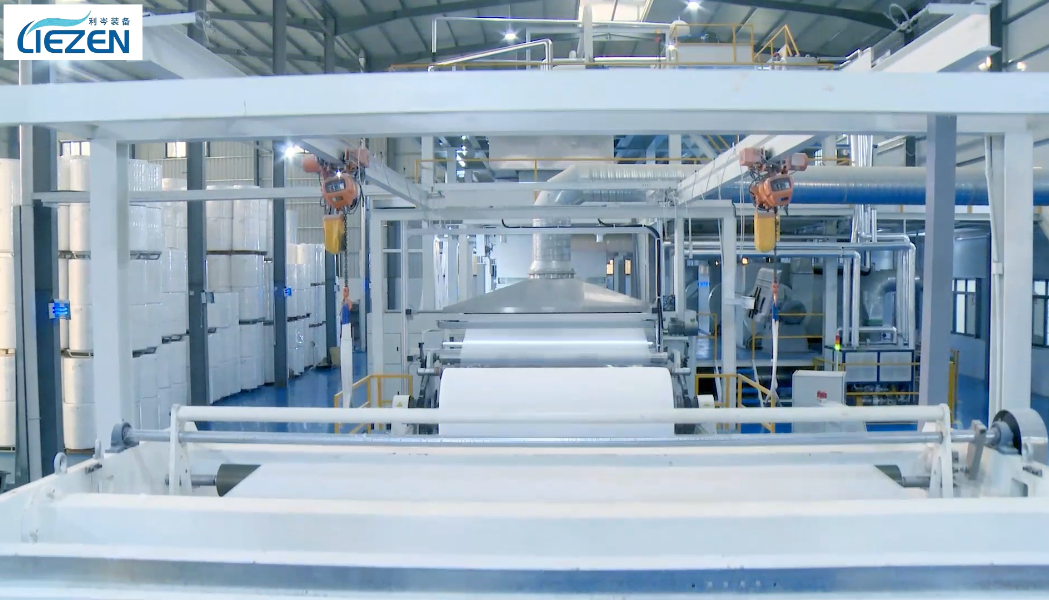
Lizen Machinery Co., Ltd. (Changzhou LieZen Non-woven Machinery Co.,Ltd.) is a nonwoven equipment manufacturer based in Changzhou, Jiangsu, China. Founded in 2003, the company runs a 30,000 m² facility with 270 employees and builds around 50 units per year. Its core product is the single S PP spunbond nonwoven machine, alongside SS, SSS, meltblown, SMS, SMMS, SSMS, SMMSS, PET and bi-component configurations. Roughly 60% of production is exported, with the USA listed as a main market.
Why Ownership Questions Belong in the Evaluation Stage
The most expensive support problem is the one nobody wrote into the contract. Buyers comparing spunbond, SMS or spunmelt lines usually focus on width, layers, speed and price, then assume service will sort itself out after acceptance. Three specific failures recur when that assumption is left untested.
- Unavailable or unlisted spares. A wear part that is not identified before shipment becomes an unplanned purchase after it fails, and the buyer discovers the real replacement route under production pressure.
- Training too thin for the shift team. Commissioning is a compressed window. If only one engineer is trained, or training stops at machine operation without process troubleshooting, product consistency drifts once the supplier's team leaves site.
- Acceptance criteria that do not separate mechanical from process performance. Without a factory acceptance test followed by a site acceptance test, disputes about output and quality are argued instead of measured.
For a capital line running continuous shifts, support is not an afterthought bolted onto a purchase order. It is a specification item, and it should be compared between suppliers in the same way width, layer count and speed are compared.
Industry Background: Why Service Capacity Now Shapes Machine Decisions
The installed base of nonwoven lines is expanding, and every additional line extends the demand for maintenance, consumables and technical response. Dataintelo valued the global nonwoven machinery market at USD 6.8 billion in 2025, with a projected rise to USD 12.1 billion by 2034. Asia Pacific held a 43.7% revenue share of that market in 2025.
Spunbond remains the largest single machinery category. Dataintelo reports that spunbond machinery accounted for 34.2% of the nonwoven equipment market in 2025, while Grand View Research measured spunlaid (spunbond) technology at 48.4% of the global nonwoven fabrics market in 2023. The Spunbond technology segment is projected to grow at a CAGR of 6.20% from 2026 to 2034, according to Fortune Business Insights.
China anchors much of that capacity. China Nonwovens & Industrial Textiles Association (CNITA) data shows national nonwoven fabric output of 8.56 million tons in 2024, a 5.1% year-on-year increase, with spunbonded nonwovens alone at 3.88 million tons, up 4%. China exported 1.52 million tons of nonwovens in 2024, valued at USD 4.04 billion, and spunbonded nonwovens represented 37% of that export value.
Material choice also stays concentrated. Fortune Business Insights puts polypropylene at over 53% of the spunbond segment in 2026, which means the maintenance profile of most lines is built around PP processing, extrusion and thermal bonding rather than around exotic polymers.
The practical implication is straightforward: as more lines are commissioned worldwide, the difference between suppliers narrows on paper specifications and widens on how quickly a buyer can restore stable production after a component wears, a recipe changes, or a shift team needs retraining.
Detailed Solution: What Lizen's Support Structure Actually Contains
Lizen Machinery Co., Ltd. documents four after-sales services: installation and commissioning, on-site training, spare parts supply, and remote technical support. The company notes that specific service commitments, including response and parts timing, are confirmed with sales during contract discussion rather than published as a fixed standard.
That distinction matters. A buyer should treat the four service categories as the framework and then convert each one into a written, line-specific commitment before signing.
1. Installation and commissioning
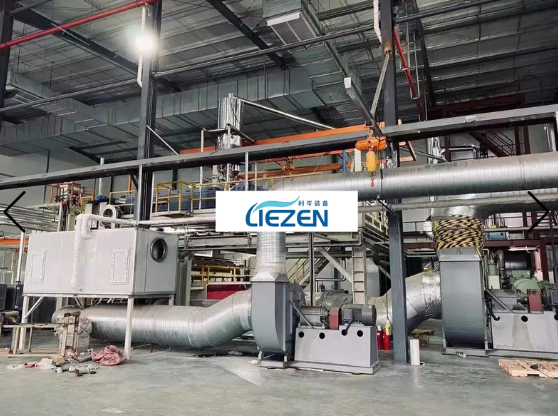
Commissioning is where a configured line becomes a producing line. It covers mechanical assembly checks, process settings for the target fabric, and the transition from trial running to sustained output. Because Lizen builds both standardized and customized lines, commissioning scope follows the customization scope: a line with inline testing, automation/HMI integration or additional material handling modules has more to verify before handover than a standard configuration.
2. On-site operator training
Training is delivered on site as part of the after-sales scope. In practice, the useful training split is threefold: machine operation and safe shutdown, process adjustment for width and layer changes, and first-line fault identification so the shift team can describe a problem precisely to remote support. Buyers should confirm how many people are covered and how long the training window extends, since these specifics are confirmed contractually.
3. Spare parts supply
Spare parts supply is a named after-sales service. The realistic planning approach is to build the critical parts list during commissioning, when the supplier's engineers are still on site and can identify the components that wear under the buyer's specific recipe, speed and shift pattern. Lead times for individual parts depend on part type and are confirmed with sales; buyers should ask for that list in writing rather than assume availability after the warranty conversation ends.
4. Remote technical support
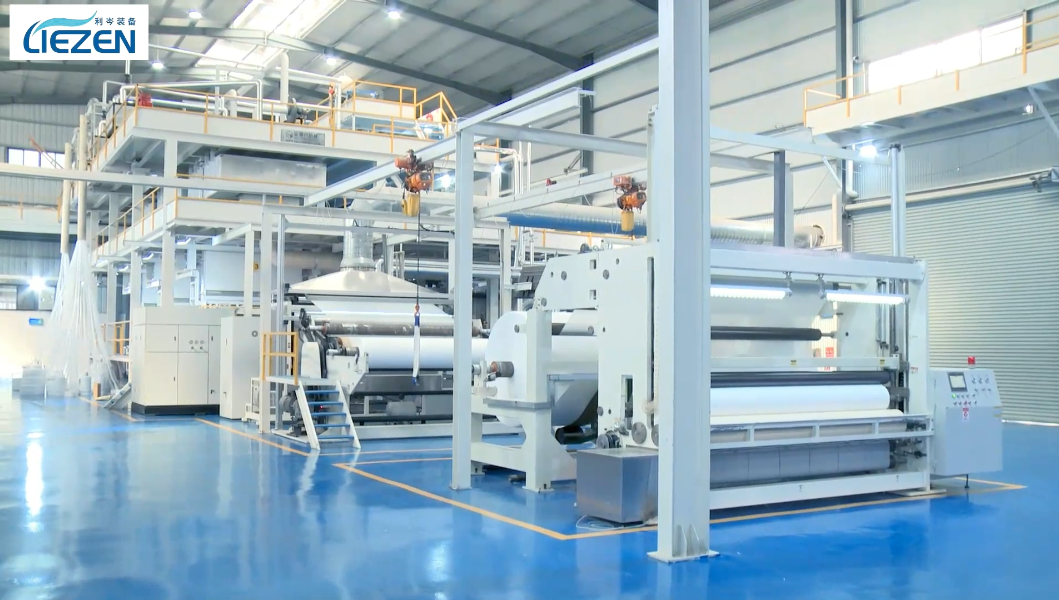
Remote support is the fastest route for diagnosis when a line is running but drifting. Its value depends on two things the buyer controls: whether the line was supplied with computerized control, and whether the operator can supply comparable process data from a known-good run. Lines configured with automation and HMI integration, and with inline output and quality checks, give remote support far more to work with than a verbal description of a defect.
Quality system and safety standards behind the service
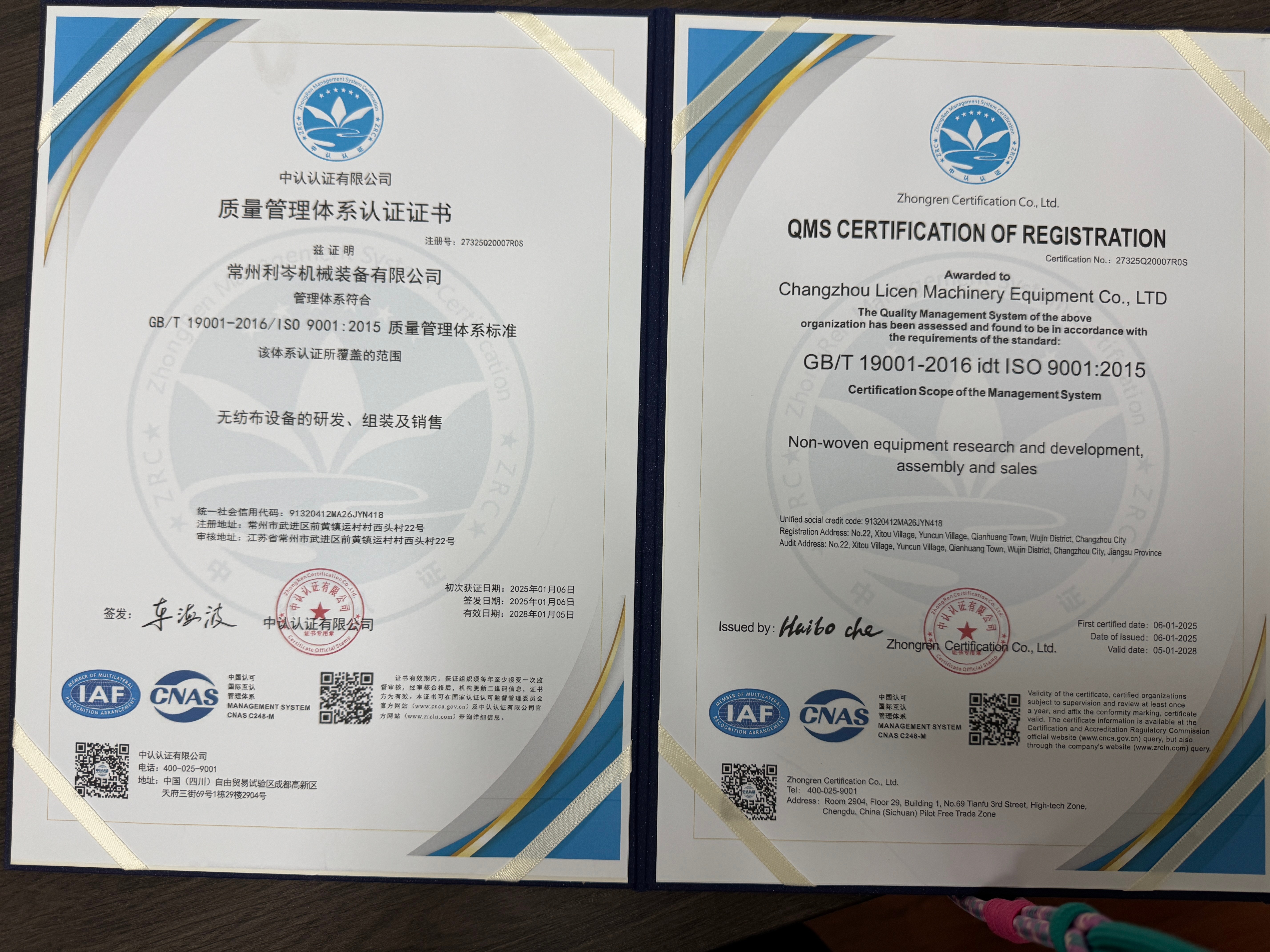
Lizen holds a QMS certification of registration number 27325Q20007R0S, issued by Zhongren Certification Co.,Ltd. to ISO 9001:2015, covering research and development, assembly and sales of non-woven equipment. The certificate was issued on 2025-01-06 and expires on 2028-01-05, and is listed for the global market.
Safety is governed separately from quality management. ISO 11111-3:2005 sets safety requirements for nonwoven machinery, and EN ISO 11111-1:2016 provides the general textile machinery safety requirements used for CE marking compliance in Europe. Buyers targeting the European market should confirm which of these applies to their installation and what documentation accompanies the line.
Customization and support are linked, not separate
Lizen works on an ODM basis and lists customizable parameters as web width, capacity in kg/h or m/min, layer count, inline testing and QC, automation/HMI, and material handling modules. Every one of those choices creates a support obligation later. A wider line means more components to stock; added inline QC means more calibration points; automation means control-system support becomes part of the maintenance conversation. Buyers should therefore confirm the spare-parts and training scope for the exact configuration quoted, not for a generic model.
Commercial framing is equally relevant to ownership. Minimum order quantity is one unit, and typical payment methods are T/T and L/C. Delivery commonly uses sea, land or air freight under terms such as FOB or CIF, with the specific term confirmed with sales. Monthly production capacity is four units, and lead time runs 3–6 months in peak season and 1–3 months off season. A buyer planning a plant layout or a downstream contract should anchor the schedule to the seasonal figure rather than the optimistic one.
Step-by-Step Breakdown: From Contract to a Maintainable Line
Support quality is largely determined by what happens in the seven stages below. Each stage produces something the buyer keeps using after commissioning ends.
- Lock the configuration and the acceptance criteria together. Define width, layers, target capacity and the products to be validated, then state the acceptance method in the same document. Lizen recommends a factory acceptance test (FAT) and a site acceptance test (SAT), including mechanical performance tests and pilot production sample checks.
- Confirm the service schedule before shipment. Installation and commissioning, training days, and the spare-parts list should be scheduled against the delivery date, not discussed after the container arrives.
- Complete the FAT at the factory. This is the last point where a mechanical issue is cheap to correct. It is also the point to record baseline process parameters for later comparison.
- Handle shipping and documentation. With sea, land or air freight and FOB or CIF terms confirmed by contract, the buyer's responsibility is customs documentation and site readiness, not just payment.
- Run installation and commissioning on site. Mechanical checks, process settings for the first recipe, and confirmation that inline checks (if ordered) read correctly.
- Train the full shift team, not one engineer. Cover operation, recipe changeover, safe shutdown and fault reporting. A trained second shift protects output during absences and staff turnover.
- Close with the SAT and build the maintenance file. Sign off pilot production samples, then consolidate the wear-part list, contact routes for remote support, and the escalation path into one document the maintenance lead owns.
Use Cases: Where the Support Scope Changes by Application
Support needs differ by what the line produces, because the process stress differs. Lizen lists medical, hygiene (masks, protective wear, sanitary napkins, diapers), automotive interior, apparel and home textiles, agricultural covers, packaging and eco-friendly bags among the applications served.
Hygiene and medical materials
Disposable products dominate the nonwoven market with approximately 59.8% application share in 2023, per Grand View Research. For sanitary napkin fabric, diaper components and mask media, consistency between runs matters more than peak speed. Support priority shifts toward inline quality checks, stable bonding settings, and fast remote diagnosis when basis weight drifts.
Automotive interior components
Stratview Research valued the automotive nonwoven market at USD 3.6 billion in 2025. Buyers supplying interior liners and related components usually operate against a customer specification, which makes documentation and repeatable process records as important as the machine itself. Training that includes record-keeping practice supports that requirement.
Packaging, agriculture and home textiles
These applications tolerate wider process windows and often run fewer product changes. Here the maintenance priority is simpler: predictable wear-part replacement, a clear parts route, and operators trained to recognise end-of-life signals before output drops.
Long-run partnership in practice
A Pakistani client operating two units has worked with Lizen for 15–20 years, and reports improved capacity and product consistency from complete equipment across different nonwoven recipes and applications. A relationship of that length is built less on the initial specification than on parts availability, retraining when the product mix changes, and remote access when something drifts.
Comparison Table: Support Priorities by Line Configuration
The table below compares the spunbond and spunmelt configurations documented in the supplied line specifications. Width and speed values are the configured ranges; the support column reflects what typically consumes the most attention in each configuration.
| Configuration | Effective width | Production speed | Filament fineness | Main maintenance focus |
|---|---|---|---|---|
| Double-beam PP spunbond | 1600–3200 mm | <250 m/min (mechanical <300 m/min) | 1.5–2.0 D | Beam and bonding stability; keeping two beams consistent so basis weight does not drift between sides |
| SSS spunbond | 1600–3200 mm | <400 m/min (mechanical <450 m/min) | 1.5–2.5 D | Layer-to-layer consistency across three webs; more calibration points and more operator judgement at changeover |
| SMMS spunmelt | 1600–3200 mm | <400 m/min (mechanical <450 m/min) | 1.5–2.0 D | Meltblown die and filtration layer performance; tighter process windows, so remote support and documented baselines carry more weight |
Two readings of this table are useful. First, higher speed and additional layers increase the number of variables an operator must control, which raises the value of training and documented baselines. Second, all three configurations share the same 1600–3200 mm width range, so the spare-parts conversation should be driven by the specific beam, die and drive package quoted rather than by width alone.
Frequently Asked Questions
What acceptance records and safety standards should be in place before a nonwoven line is handed over?
Lizen recommends a factory acceptance test (FAT) and a site acceptance test (SAT), including mechanical performance tests and pilot production sample checks. The quality system behind that process is certified to ISO 9001:2015 under certificate 27325Q20007R0S, issued by Zhongren Certification Co.,Ltd., covering research and development, assembly and sales of non-woven equipment, valid from 2025-01-06 to 2028-01-05. Safety is addressed separately: ISO 11111-3:2005 sets safety requirements for nonwoven machinery, while EN ISO 11111-1:2016 provides general textile machinery safety requirements for CE marking compliance in Europe. Buyers should confirm which documents accompany their specific installation.
Can a line be customized and still receive full after-sales support?
Yes. Lizen works on an ODM basis and lists customizable parameters as web width, capacity in kg/h or m/min, layer count, inline testing and QC, automation/HMI, and material handling modules. After-sales scope covers installation and commissioning, on-site training, spare parts supply and remote technical support, and the company states that specific service commitments are confirmed with sales. Because every customization changes the parts and calibration profile, the support scope should be written against the exact configuration quoted rather than a standard model. The in-house R&D team comprises 10 engineers.
Which commercial terms affect the long-term cost of owning a nonwoven fabric machine?
Minimum order quantity is one unit, and typical payment methods are T/T and L/C. Delivery commonly uses sea, land or air freight under terms such as FOB or CIF, with the specific term confirmed with sales. Shorter-term cost drivers on the buyer side are spare parts, training coverage and how much troubleshooting can be handled remotely; these are influenced by configuration choices such as inline testing and automation/HMI. Unit prices, parts pricing and warranty terms are commercial figures that must be confirmed directly with the supplier rather than estimated from published material.
Can we validate output before shipment and again during installation?
Yes, through the two-stage acceptance route. The factory acceptance test verifies mechanical performance before shipment, and pilot production sample checks confirm that the line produces the intended fabric. The site acceptance test then repeats the performance and sample verification after installation. Where inline testing and QC modules are included in the configuration, those checks can run during production rather than only at acceptance. Recording baseline parameters at each stage gives the buyer a reference point for later maintenance comparisons.
How long is delivery and commissioning, and how should spare parts and maintenance be planned?
Lizen states a lead time of 3–6 months in peak season and 1–3 months off season, with monthly production capacity of four units, so planning should be anchored to the seasonal figure. Installation and commissioning, on-site training and spare parts supply are all named after-sales services; the timing and stock commitment for individual spare parts depends on part type and is confirmed with sales. The practical approach is to finalize the critical wear-part list during commissioning, keep baseline process records, and use remote technical support for triage before ordering replacements.
Conclusion: The Machine Is the Start of the Relationship
A nonwoven production line is judged over years, not at handover. The configuration determines what the line can produce; the support scope determines how much of that capability the buyer keeps once commissioning ends. Buyers comparing spunbond, SSS, SMS or SMMS options should therefore test four things in the same conversation: how acceptance is measured, how many people are trained and for how long, which parts are listed as critical, and how remote diagnosis is expected to work.
Lizen Machinery Co., Ltd. manufactures nonwoven machines in Changzhou, Jiangsu, with a 30,000 m² facility, 270 employees, an R&D team of 10 engineers and around 50 units built per year, and exports roughly 60% of output. Its documented after-sales scope — installation and commissioning, on-site training, spare parts supply and remote technical support — gives buyers a concrete framework to convert into written commitments for their specific line.
Next step: before finalizing a line configuration, request the service scope and critical spare-parts list in writing for the exact model under discussion. Lizen Machinery Co., Ltd. can be reached at managerl@lizen-equipment.com, by phone at +86-18888182509, or on WhatsApp at +86 188-8818-2509. Product and company details are available at www.lizen-equipment.com.
Note: safety and quality standards referenced in this article (ISO 9001:2015, ISO 11111-3:2005, EN ISO 11111-1:2016) apply per their published scopes; buyers should confirm applicability to their own installation and market. Service timing, spare-parts lead times and commercial terms are confirmed with the supplier before contract signature.
Have Questions or Need More Details?
Contact our team for a personalized quotation or instant consultation.
Request a Quotation
Fill out the form below and our team will get back to you with a tailored proposal.
WhatsApp Direct Chat
Prefer to chat in real-time? Message us on WhatsApp for instant assistance & quick answers.
- Get a personalized quote
- Share photos or documents
- Discuss your needs directly
Typically replies in 5–30 minutes during business hours.