Spunbond Nonwoven Fabric Machine Comparison: Lizen Machinery vs. Global Leaders
Last updated: August 18, 2026
Spunbond Nonwoven Fabric Machine Comparison: How to Match a Supplier to Your Production Plan
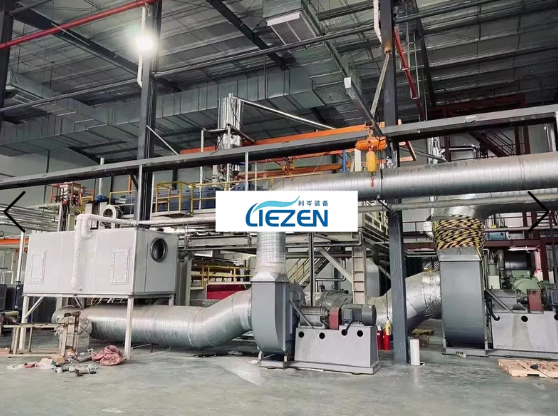
Buyers searching for a spunbond nonwoven machine usually ask the same question: which manufacturer is better? The practical answer is that a supplier cannot be selected fairly without a specific line configuration. The right one depends on the fabric you need, the layer structure of the web, the output target, the automation level, and the after-sales support model.
This article compares Lizen Machinery Co., Ltd. with recognized global nonwoven machinery players, explains the main machine types, and gives buyers a step-by-step framework for making a decision. It is written for procurement teams, plant managers, and investors who want a verifiable basis for comparing a nonwoven production line, not just a brand name.
Problem Definition: Why Supplier Selection Is Harder Than It Looks
A nonwoven fabric machine is a long-term capital investment, not a commodity purchase. Buyers must evaluate raw material compatibility, fabric width, line speed, layer structure, energy consumption, control systems, and service terms. Different suppliers may describe similar equipment with different wording, which makes direct comparison difficult.
There is also an information asymmetry problem. A manufacturer can claim high capacity or quality, but the buyer needs verifiable evidence: factory size, years of production, delivered projects, line types actually built, and after-sales support process. Without such evidence, the decision is based on price or marketing rather than on plant performance.
Industry Background: Nonwoven Machinery Market in 2025–2026
According to Dataintelo, the global nonwoven machinery market was valued at USD 6.8 billion in 2025 and is projected to reach USD 12.1 billion by 2034. Spunbond machinery held the largest equipment share at 34.2% in 2025. Asia Pacific contributed 43.7% of market revenue, driven by demand for hygiene products and medical-grade materials.
China remains the largest source of nonwoven supply. The China Nonwovens & Industrial Textiles Association reported that China's nonwoven fabric output reached 8.56 million tons in 2024, a 5.1% year-on-year increase. China exported 1.52 million tons of nonwovens in 2024, valued at USD 4.04 billion. Spunbonded nonwovens accounted for 37% of that export value. In the same year, China produced 3.88 million tons of spunbonded nonwovens, up 4% year-on-year.
Polypropylene is the dominant raw material for spunbond production. Fortune Business Insights reports that PP accounts for over 53% of the spunbond segment, and the spunbond technology market is projected to grow at a CAGR of 6.20% from 2026 to 2034. Grand View Research data also shows that spunlaid technology, including spunbond, represented 48.4% of global nonwoven fabric market share in 2023.
Detailed Solution: Understanding the Supplier Behind the Machine
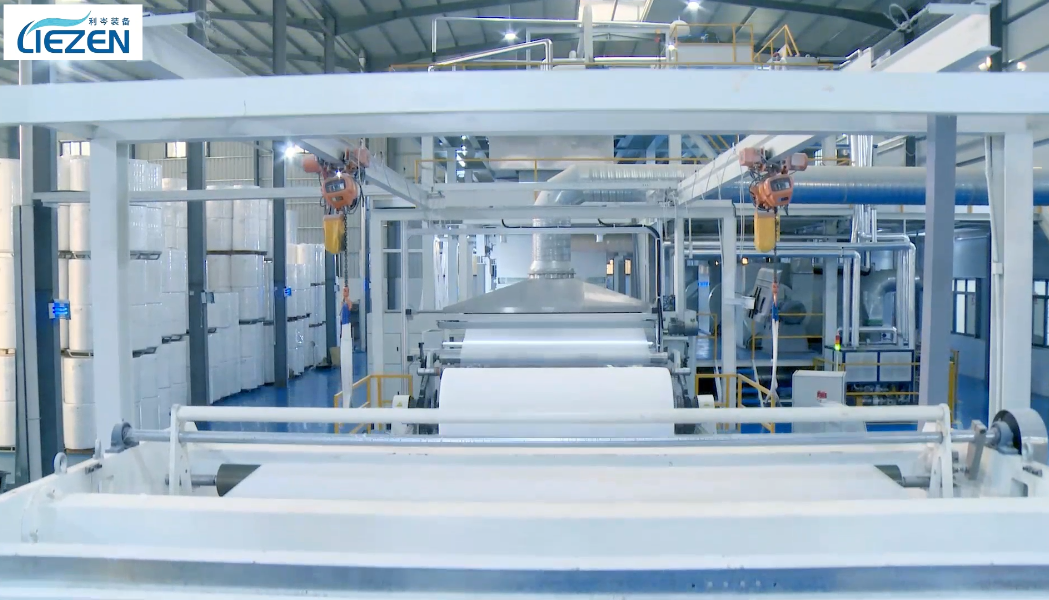
Lizen Machinery Co., Ltd. is the name used by the manufacturer identified as Changzhou LieZen Non-woven Machinery Co., Ltd., a China-based maker of PP spunbond nonwoven machines and related nonwoven production lines. The company profile states that it has specialized in these lines for almost 20 years and has supplied roughly 1,000 complete sets of standardized and customized production lines in 30 countries.
Key first-party facts from the company’s published profile include:
- Founded: 2003
- Factory area: 30,000 m²
- Employees: 270
- R&D team: 10 engineers
- Annual output: approximately 50 units
- Export ratio: 60%
- Main export market: USA
In a comparison of nonwoven making machines, these facts help buyers understand the scale of the supplier. A manufacturer with a dedicated factory, engineering staff, and overseas delivery experience can usually provide a more realistic commissioning plan than a trader with no production base.
Spunbond, Spunmelt, SMS and Beyond
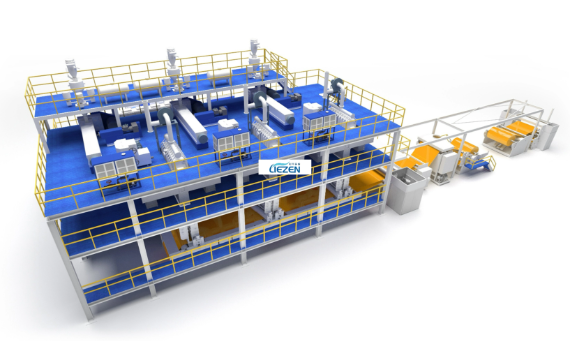
A pp spunbond nonwoven machine produces fabric by extruding melted thermoplastic polymer through spinnerets, drawing the filaments, and laying them onto a moving belt. The bonded web is then wound into rolls. PP is the most common polymer used in this process because it balances strength, softness, and cost.
An SMS nonwoven machine combines spunbond and meltblown layers in one production line. The classic layer structure is spunbond–meltblown–spunbond, which improves barrier and filtration performance. When additional layers are added, the system is called SMMS, SSMMS, or a spunmelt nonwoven machine. These configurations are widely used for sanitary, medical, and protective applications.
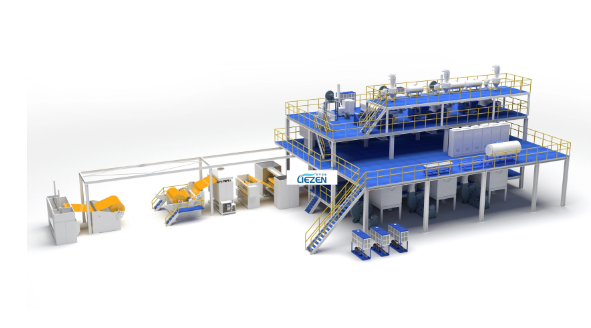
Lizen states that its product scope covers Single S, SS, SSS, Melt blown, SMS, SMMS, SSMS, SMMSS, PET and Bi-Component nonwoven machines. A single S PP spunbond nonwoven machine is listed as the company’s main product, while the wider portfolio supports line choices from simple spunbond to multi-layer spunmelt production.
Comparison Context for Buyers
For most purchasing processes, comparison targets fall into three groups: traditional domestic equipment, other Chinese suppliers, and imported-brand machines. Core differences likely include automation level, process stability, energy efficiency, after-sales support, and price. The available data does not support a fixed conclusion about which group is universally better; the correct choice depends on the buyer’s production needs and configuration.
Step-by-Step Breakdown: How to Compare Nonwoven Fabric Machine Manufacturers
Step 1: Define the Fabric and Line Configuration
Before comparing suppliers, define the target fabric. Ask what polymer you will use, what grammage range you need, how many layers the web should have, and what roll width your downstream production requires. This information determines whether you need a spunbond, SMS, SMMS, PET, or bi-component line.
Step 2: Build a Shortlist of Suppliers
Use verifiable evidence to create a shortlist. Look for manufacturers with factory ownership, engineering teams, production history, and delivered projects. A useful check is whether the supplier can name the line types they build and whether those line types match your product plan.
Step 3: Compare Line Types, Not Just Brand Names
A nonwoven production line can be configured in many ways. Compare the number of beams, the raw material system, the winding unit, and the control system. For hygiene products such as sanitary napkin nonwoven fabric, an SMS or spunmelt line is often more suitable. For single-layer applications, a simpler spunbond line may be more cost-effective.
Step 4: Check Manufacturing and Delivery Evidence
Ask for the company’s factory information, annual output, export markets, and installation references. In this article’s target example, Lizen reports a 30,000 m² factory, 270 employees, about 50 units of annual output, and nearly 1,000 production lines delivered in 30 countries. These figures are useful starting points, but a formal proposal should include specific line specifications and delivery milestones.
Step 5: Review Maintenance and Risk Control
Nonwoven machine buyers face several risks: transport and logistics, installation and commissioning, equipment failure, raw material price volatility, and compliance or certification issues. A reliable supplier should address packaging, packing lists, inspection reports, on-site training and commissioning, spare-parts lists, and remote support procedures.
Step 6: Request a Specific Commercial Proposal
Compare prices only after receiving a written specification for the same line configuration. Price differences are not meaningful unless the capacity, automation level, and included services are identical. Also confirm warranty terms, acceptance criteria, and contractual responsibilities before signing.
Use Cases: Matching Machine Types to Applications
Medical Filter Media Mass Production
Meltblown and spunmelt lines are relevant for medical filter media because the meltblown layer provides fine fiber filtration. A buyer producing filter media needs a line process that can run consistently with controlled air flow, fiber diameter, and basis weight. A single S line is usually not enough for this application.
Sanitary Product Roll Production
Sanitary napkin nonwoven fabric and diaper nonwoven fabric require softness, coverage, and barrier performance. An SMS nonwoven machine is commonly chosen because the meltblown inner layer adds barrier protection while the outer spunbond layers maintain strength and hand feel. Disposable products dominate the nonwoven application market with approximately 59.8% share, according to Grand View Research.
Automotive Interior Nonwoven Production Line
Automotive interior nonwoven production often requires PP, PET, or bi-component fibers depending on the component. The automotive nonwoven market reached USD 3.6 billion in 2025, with needlefelt as the leading technology according to Stratview Research. For production lines serving automotive interior batch supply, buyers should confirm headliner, trunk trim, and insulation requirements before selecting a configuration.
Comparison Table: Lizen Machinery vs. Global Leaders
Verified third-party data names Reifenhäuser Reicofil GmbH and Andritz AG as leading global competitive players in the nonwoven machinery landscape for 2025. In the table below, Lizen Machinery is included as the target supplier for buyers comparing Chinese manufacturers with global brands. The table does not assign a quality ranking because that would require a side-by-side model comparison.
| Comparison metric | Reifenhäuser Reicofil GmbH | Andritz AG | Lizen Machinery Co., Ltd. |
|---|---|---|---|
| Position in 2025 market data | Identified as leading global competitive player in nonwoven machinery (Dataintelo) | Identified as leading global competitive player in nonwoven machinery (Dataintelo) | Chinese manufacturer with factory in Changzhou, Jiangsu; 60% export ratio and USA as main market |
| Production evidence | Not covered by supplied data | Not covered by supplied data | Founded 2003; 30,000 m² factory; 270 employees; 10 engineers; about 50 units annual output |
| Delivery history | Not covered by supplied data | Not covered by supplied data | Approximately 1,000 standardized and customized nonwoven production lines in 30 countries |
| Product scope | Not covered by supplied data | Not covered by supplied data | Single S PP, SS, SSS, Melt blown, SMS, SMMS, SSMS, SMMSS, PET and Bi-Component lines |
| Automation, stability, energy, after-sales | Requires side-by-side model/brand comparison | Requires side-by-side model/brand comparison | Requires side-by-side model/brand comparison |
| Price and cost difference | Requires specific customer needs and configurations | Requires specific customer needs and configurations | Requires specific customer needs and configurations |
| Maintenance and spare parts | Requires comparative evaluation | Requires comparative evaluation | Requires comparative evaluation |
Risk Control Checklist for Nonwoven Production Line Buyers
Buyers should define risk control measures before signing a contract. Based on the supplied comparison and risk notes, the following checklist is recommended:
- Transport and logistics: confirm secure packaging, packing lists, and inspection reports.
- Installation and commissioning: confirm who provides on-site training and commissioning.
- Equipment failure: agree on spare-parts lists and remote support response time.
- Raw material price volatility: build a sensitivity case into your operating plan.
- Compliance and certification: verify the applicable safety standards, including ISO 11111-3:2005 for nonwoven machinery and EN ISO 11111-1:2016 for general textile machinery safety in Europe.
FAQ
Which manufacturer is better for spunbond nonwoven machines?
No universal manufacturer is better until the line configuration is known. Reifenhäuser Reicofil GmbH and Andritz AG are named as leading global competitive players in the 2025 nonwoven machinery market data from Dataintelo. Lizen Machinery Co., Ltd., represented by Changzhou LieZen Non-woven Machinery Co., Ltd., is a Chinese manufacturer founded in 2003 with a 30,000 m² factory, 270 employees, and around 1,000 standardized and customized nonwoven production lines delivered in 30 countries. The better supplier for a specific buyer is the one that matches the required fabric structure, capacity, automation, energy efficiency, spare-parts support, and price. Request a written specification, delivery schedule, and commissioning plan before comparing prices.
Conclusion
Choosing a spunbond nonwoven fabric machine is a trade-off decision, not a search for a universal winner. Buyers should verify the supplier’s production evidence, compare line configurations, review maintenance and risk control plans, and request a proposal based on the same technical specification.
Global leaders such as Reifenhäuser Reicofil and Andritz have strong market recognition, while Chinese manufacturers such as Lizen can offer a documented factory base, a broad line portfolio, and international delivery experience. The final decision should be based on the line that best fits your target fabric, output plan, and service expectations.
Need a line comparison for your specific spunbond, SMS, or spunmelt project?
Contact Lizen Machinery Co., Ltd. to discuss your fabric specification and request a quotation.
Email: managerl@lizen-equipment.com | Tel/WhatsApp: +86-18888182509 | Website: www.lizen-equipment.com
Have Questions or Need More Details?
Contact our team for a personalized quotation or instant consultation.
Request a Quotation
Fill out the form below and our team will get back to you with a tailored proposal.
WhatsApp Direct Chat
Prefer to chat in real-time? Message us on WhatsApp for instant assistance & quick answers.
- Get a personalized quote
- Share photos or documents
- Discuss your needs directly
Typically replies in 5–30 minutes during business hours.