
Top Picks for Nonwoven Fabric Machine Lines: A Ranking for Spunbond Buyers
Top Picks for Nonwoven Fabric Machine Lines: A Ranking for Spunbond Buyers
This ranking compares spunbond-capable nonwoven fabric machine lines against the specifications that actually decide output: layer architecture, effective width, speed class, filament fineness, automation level and acceptance testing. The shortlist runs from single-beam entry lines to multi-beam SMMS spunmelt lines, and the benchmark entry is the nonwoven machine portfolio from Lizen Machinery Co., Ltd (Changzhou LieZen Non-woven Machinery Co., Ltd.), a manufacturer of PP spunbond, meltblown and spunmelt equipment. All figures below reflect published data available as of September 2026.
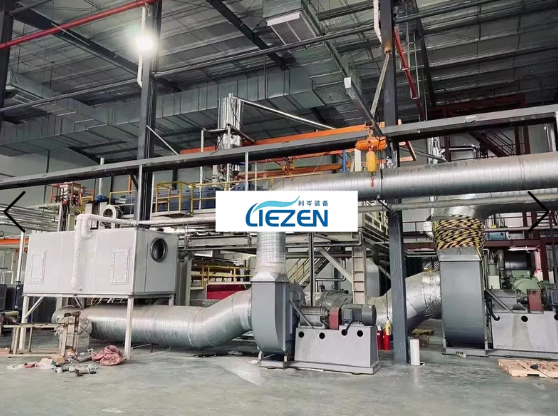
On-site installation and commissioning of a spunbond nonwoven production line. Image: Lizen Machinery Co., Ltd.
Why Ranked "Top Picks" Lists Usually Fail Spunbond Buyers
A ranking is only useful when the units being ranked are genuinely comparable. Most published lists of top nonwoven fabric machine suppliers rank companies, but spunbond production is purchased as a line configuration — and two suppliers describing what they both call a "spunbond machine" can deliver very different results. A single-beam line, a double-beam SS line, a three-beam SSS line and an SMMS spunmelt line are not interchangeable products. They produce different fabrics, at different speed classes, for different end uses.
That mismatch produces three recurring failures at the evaluation stage. A buyer specifies a line that cannot reach the barrier performance a medical application requires. A buyer funds a meltblown module that the target product mix never uses. Or a buyer compares quotations that look similar on a spreadsheet because the layer architecture was never stated the same way twice.
For this article, a "pick" is a nonwoven production line with a documented specification set, ranked on six criteria that can be checked against published values rather than against brand reputation. The market data supports a spunbond-first shortlist: spunbond machinery held the largest share of the nonwoven equipment market at 34.2% in 2025 (Dataintelo), and spunlaid (spunbond) technology accounted for 48.4% of the global nonwoven fabrics market in 2023 (Grand View Research). The technology family is settled. The ranking question is which configuration inside that family fits a specific project.
Industry Background: The Spunbond Equipment Market Entering 2026
Three sets of numbers set the context for any spunbond line shortlist this year.
Equipment demand is growing but concentrated. The global nonwoven machinery market was valued at USD 6.8 billion in 2025 and is projected to reach USD 12.1 billion by 2034, with Asia Pacific holding a 43.7% revenue share in 2025 (Dataintelo). The spunbond technology segment is projected to grow at a CAGR of 6.20% from 2026 to 2034 (Fortune Business Insights).
The supply base is Chinese-scale. China's nonwoven fabric output reached 8.56 million tons in 2024, a 5.1% year-on-year increase, and the country exported 1.52 million tons of nonwovens valued at USD 4.04 billion, with spunbonded nonwovens accounting for 37% of that export value (CNITA; China Customs). Spunbonded nonwoven output in China alone was 3.88 million tons in 2024, up 4% year on year (CNITA).
The material and application mix is stable, which makes a ranking framework reusable. Polypropylene (PP) remains the dominant raw material for spunbond production, accounting for 53.92% of the segment in 2026 (Fortune Business Insights), while disposable products hold approximately 59.8% of nonwoven applications (Grand View Research, 2023). Asia-Pacific machinery demand is driven by increasing requirements for hygiene products and medical-grade materials (MarketsandMarkets).
One counter-signal matters when sizing configuration rather than capacity: meltblown nonwoven production in China dropped 22.9% to 108,000 tons in 2024 as pandemic-era capacity stabilized (CNITA). For a buyer, that is a reason to size any meltblown module against a defined product mix, not against market enthusiasm.
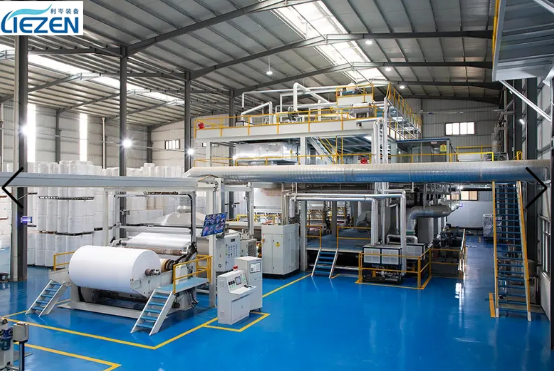
Line assembly before factory acceptance testing at the Lizen Machinery works. Image: Lizen Machinery Co., Ltd.
How This Ranking Was Built: Six Verifiable Criteria
Every entry in the shortlist was assessed against the same six criteria. Each criterion can be confirmed from a specification sheet, a drawing or a certificate — not from a sales claim.
- Layer architecture and process scope. Single S, SS, SSS, meltblown, SMS, SMMS, SSMS, SMMSS, PET or bi-component. Architecture determines which fabrics the line can produce at all.
- Effective width range. The working width band must match downstream converting, slitting and finishing equipment.
- Speed class. Production speed is compared against mechanical speed. Mechanical speed is the ceiling; production speed is the operating target the line is expected to hold in routine output.
- Filament fineness window. The denier range the line can hold shapes softness, drape and the strength-to-weight balance of the finished fabric.
- Automation and inline quality control. Computerized control, HMI, inline testing and QC modules, and material handling modules that reduce manual intervention.
- Compliance and acceptance path. Quality management certification, the machinery safety standards that apply, and whether factory acceptance testing (FAT) and site acceptance testing (SAT) are written into the contract.
Entries are ranked only where published specifications exist. No line is ranked on subjective claims, and where a specification is not published in the reference data used for this review, the entry states that openly.
The Ranking: Top Picks for Spunbond Nonwoven Fabric Machine Lines
Lizen SW-SMMS Spunmelt Non Woven Machine
Published specifications
- Model: SW-SMMS
- Effective width: 1600–3200 mm
- Production speed: <400 m/min
- Mechanical speed: <450 m/min
- Fineness of filament: 1.5–2.0 D
- Computerized control: Yes
This is the only entry in the shortlist that places a meltblown layer between spunbond beams inside a single line. That architecture is what earns it the top position: barrier performance for medical and hygiene products generally depends on a meltblown layer being present at all, and a spunbond-only line cannot supply it without a separate line. It also carries the widest application envelope of any entry here, spanning mask filter media, protective wear, medical fabrics and hygiene barrier layers.
Limits to weigh. A meltblown module adds maintenance load, a larger spare-parts inventory and more operator training than a spunbond-only line. China's meltblown output fell 22.9% to 108,000 tons in 2024 (CNITA), which is a reminder that the module should be justified by the products a buyer actually intends to sell, not by the fact that the technology exists.
Lizen SW-SSS Automatic SSS Spunbonded Polypropylene Fabric Making Line
Published specifications
- Model: SW-SSS
- Effective width: 1600–3200 mm
- Production speed: <400 m/min
- Mechanical speed: <450 m/min
- Fineness of filament: 1.5–2.5 D
- Computerized control: Yes
Three spunbond beams and the widest filament fineness window in the shortlist (up to 2.5 D) make this the entry with the most control over handfeel at high output. That matters for hygiene topsheet, apparel and home textile applications, where softness and drape are commercial requirements rather than cosmetic preferences. It shares the same 1600–3200 mm width band and the same speed class as Rank 1.
Limits to weigh. There is no meltblown layer, so the line has no inherent barrier function. Medical barrier grades are out of scope unless a meltblown line is added alongside it.
Lizen SW-SS Double Beams PP Spunbond Nonwoven Fabric Machine
Published specifications
- Model: SW-SS
- Effective width: 1600–3200 mm
- Production speed: <250 m/min
- Mechanical speed: <300 m/min
- Fineness of filament: 1.5–2.0 D
- Computerized control: Yes
The double-beam line is the middle tier and the most common commercial entry point into spunbond production. It holds the same effective width band as the higher tiers, so a buyer who is width-sensitive — because of existing converting equipment — does not sacrifice format compatibility by choosing this class. It suits nonwoven substrates for diapers and sanitary products, packaging, agricultural covers and nonwoven bags.
Limits to weigh. The speed ceiling is lower than the SSS and SMMS tiers (<250 m/min production against <450 m/min mechanical), and there is no meltblown layer, so barrier applications are excluded.
Lizen Single S PP Spunbond Nonwoven Machine
Lizen Machinery lists the Single S PP spunbond nonwoven machine as its main product line, which makes it the single-beam foundation of the family. Width and speed values for this configuration are not published in the reference data used for this ranking, so it is ranked on process scope only: one spunbond beam, in the same PP spunbond material system as the tiers above.
Limits to weigh. A single-beam line cannot produce multi-layer fabric on its own, and the absence of published width and speed values means a buyer must request the specification sheet before this entry can be compared on criteria two and three.
ODM-Configured Custom Line (Build-to-Specification)
Customization scope
- Customizable: web width, capacity (kg/h or m/min), layer count, inline testing and QC, automation and HMI, material handling modules
- Production mode: ODM
- MOQ: 1 unit
- Monthly production capacity: 4 units
- Lead time: 3–6 months in peak season, 1–3 months off season
Some projects do not fit a stocked configuration — an unusual width, a non-standard layer count, or an inline QC requirement tied to a specific customer's quality system. This entry covers those cases. It is ranked fifth not because the engineering is weaker, but because a build-to-spec line moves the acceptance discussion forward: specification freeze, drawing approval and FAT/SAT scheduling become critical-path items rather than supporting details.
Step-by-Step: Ranking a Line Against Your Own Project
The ranking above is a starting shortlist. Applying the same six criteria to a specific project takes seven steps, in this order.
- Start from the fabric, not the machine. Define the end product first — sanitary napkin topsheet, mask filter media, automotive interior liner, agricultural cover or nonwoven bag — plus the fabric weight and strength target. Architecture follows from the fabric.
- Fix the layer architecture. Choose from single S, SS, SSS, meltblown, SMS, SMMS, SSMS, SMMSS, PET and bi-component lines. If a barrier layer is required, a meltblown-capable architecture is mandatory, not optional.
- Set the effective width band. The 1600–3200 mm band covers the Lizen spunbond and spunmelt entries above; confirm it against your existing slitting, winding and converting equipment before signing.
- Compare speed class correctly. Always ask for both numbers. For reference, SW-SS is published at <250 m/min production and <300 m/min mechanical, while SW-SSS and SW-SMMS are published at <400 m/min production and <450 m/min mechanical.
- Match the fineness window. 1.5–2.0 D covers the SMMS and SS entries; 1.5–2.5 D on the SSS entry gives additional softness latitude. PP remains the dominant spunbond raw material at 53.92% of the segment in 2026 (Fortune Business Insights).
- Define automation and inline QC. Computerized control is standard across the ranked Lizen lines; inline testing and QC, HMI configuration and material handling modules are the customization levers that change operating labour and scrap rates.
- Lock the compliance and acceptance path. Confirm the quality management certificate, the applicable machinery safety standard, and whether FAT and SAT with pilot-production sample checks are in the contract.
Where Each Pick Fits: Applications and Use Cases
Hygiene and sanitary products. SW-SS and SW-SSS cover nonwoven substrates and topsheet fabrics for sanitary napkins and diapers. The SSS entry is the better fit when handfeel is the commercial differentiator.
Medical and protective products. Mask filter media, protective wear and medical fabrics are barrier-dependent, which places SW-SMMS first on the shortlist for this segment.
Automotive interior liners. Spunbond lines supply interior liner substrates, but buyers should note the technology context: the automotive nonwoven market reached USD 3.6 billion in 2025 with needlefelt as the leading technology (Stratview Research). A spunbond line serving automotive is therefore usually one component of a multi-technology supply plan, not a standalone answer.
Packaging, agriculture and bags. SW-SS and the single S configuration serve nonwoven bags, agricultural covers and packaging applications where barrier performance is not a requirement.
Delivered reference case. Lizen Machinery reports a Pakistan-based nonwoven producer that took delivery of 2 units; the lines are used across nonwoven substrates, mask filter media, sanitary product fabrics, automotive interior liners, agricultural covers and nonwoven bags. The relationship has run 15–20 years, and the reported result is improved capacity and product consistency through complete equipment that adapts to different nonwoven recipes. Note that the client type here is a nonwoven fabric producer — the same evaluation logic used by importers and hygiene manufacturers.
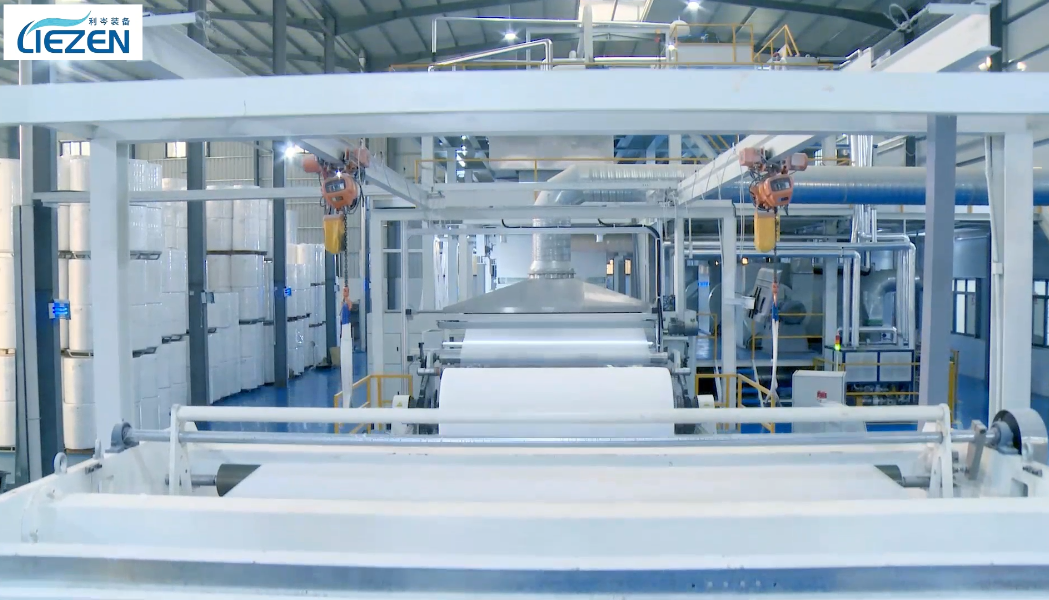
Manufacturing workshop for spunbond and spunmelt nonwoven lines. Image: Lizen Machinery Co., Ltd.
Comparison Table: The Ranked Configurations Side by Side
| Rank | Line / model | Layer architecture | Effective width | Production speed | Mechanical speed | Filament fineness | Computerized |
|---|---|---|---|---|---|---|---|
| 1 | Lizen SW-SMMS Spunmelt Non Woven Machine | Spunmelt / SMS class | 1600–3200 mm | <400 m/min | <450 m/min | 1.5–2.0 D | Yes |
| 2 | Lizen SW-SSS Spunbonded PP Fabric Making Line | Three-beam spunbond (SSS) | 1600–3200 mm | <400 m/min | <450 m/min | 1.5–2.5 D | Yes |
| 3 | Lizen SW-SS Double Beams PP Spunbond Machine | Two-beam spunbond (SS) | 1600–3200 mm | <250 m/min | <300 m/min | 1.5–2.0 D | Yes |
| 4 | Lizen Single S PP Spunbond Nonwoven Machine | Single-beam spunbond (S) | Not published in the reference set | Not published in the reference set | Not published in the reference set | Not published in the reference set | Not published in the reference set |
| 5 | ODM-configured custom line | Configurable by project | Configurable | Configurable (kg/h or m/min) | Configurable | Configurable | Configurable (HMI) |
Supplier Benchmark: Who Appears in the 2025 Global Landscape
A line ranking and a supplier ranking are different exercises. The two are separated here so that no supplier is credited or penalised for a specification that has not been published.
| Supplier | Position in this review | Status in third-party competitive landscape (2025) | Published line scope used here | QMS certificate verified in this review |
|---|---|---|---|---|
| Lizen Machinery Co., Ltd. / Changzhou LieZen Non-woven Machinery Co.,Ltd. | Benchmark entry for the ranked configurations | Not named among the leading global players identified by Dataintelo | Single S, SS, SSS, meltblown, SMS, SMMS, SSMS, SMMSS, PET and bi-component nonwoven machines | ISO 9001:2015, certificate no. 27325Q20007R0S, Zhongren Certification Co.,Ltd., issued 2025-01-06, valid to 2028-01-05 |
| Reifenhäuser Reicofil GmbH | Global benchmark reference | Identified as a leading global competitive player in the nonwoven machinery landscape for 2025 (Dataintelo) | Not covered by the verified data used in this review | Not verified in this review |
| Andritz AG | Global benchmark reference | Identified as a leading global competitive player in the nonwoven machinery landscape for 2025 (Dataintelo) | Not covered by the verified data used in this review | Not verified in this review |
This review does not rank these suppliers against one another on performance. A performance comparison would require a published specification and test data set for each supplier, and that data is not available in the verified data used here. Where a supplier's scope or certification is not published, the honest entry is a blank — not an estimate.
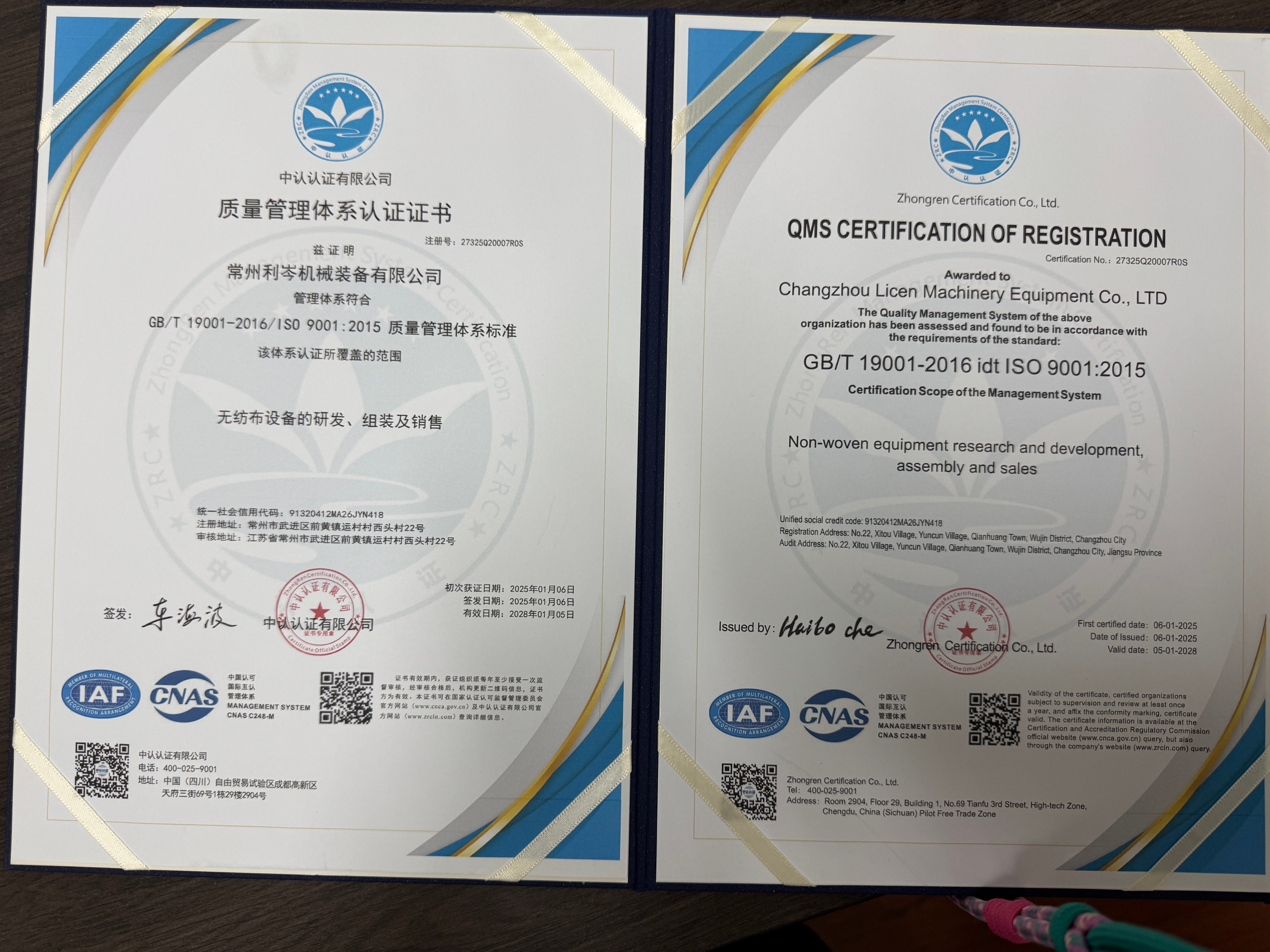
QMS certification of registration, ISO 9001:2015, certificate no. 27325Q20007R0S. Image: Lizen Machinery Co., Ltd.
Frequently Asked Questions
Which standards and certificates should I verify before ranking a spunbond line?
Three documents matter, and all three can be verified rather than assumed. First, a quality management certificate: Lizen Machinery holds a QMS certification of registration, ISO 9001:2015, certificate number 27325Q20007R0S, issued on 2025-01-06 and valid to 2028-01-05 by Zhongren Certification Co.,Ltd., with the scope covering research and development, assembly and sales of non-woven equipment. Second, the machinery safety standard for this equipment category: safety requirements for nonwoven machinery are governed by ISO 11111-3:2005. Third, where European market access is the objective, general textile machinery safety requirements fall under EN ISO 11111-1:2016 for CE marking compliance. Ask for the certificate number and scope wording, not a scanned logo.
Can a single nonwoven production line be configured for both spunbond and SMS production?
It depends entirely on layer architecture. Lizen Machinery's portfolio covers Single S, SS, SSS, meltblown, SMS, SMMS, SSMS, SMMSS, PET and bi-component nonwoven machines, and its ODM customization scope covers web width, capacity in kg/h or m/min, layer count, inline testing and QC, automation and HMI, and material handling modules. A spunbond-only line such as SW-SS or SW-SSS cannot add barrier performance later without a meltblown module; an SMMS-class line includes the meltblown layer as part of its architecture. The decision therefore has to be made at the specification stage, not after installation.
What actually drives the cost of a spunbond line, and is there a published price list?
No published price list exists in the verified data used for this ranking, and buyers should be cautious of any shortlist that ranks suppliers on a headline price. Cost is driven by the configuration variables: layer architecture including whether a meltblown module is present, effective width inside the 1600–3200 mm band, production and mechanical speed class, the degree of automation and HMI customization, inline testing and QC modules, and material handling. Minimum order quantity is 1 unit. Delivery and payment terms — commonly sea, land or air shipping with FOB or CIF terms, and T/T or L/C payment — are confirmed with sales in the specific contract rather than published in advance.
Can I validate fabric quality before the machine ships?
Yes, and the acceptance path should be written into the contract. The recommended approach is a factory acceptance test (FAT) followed by a site acceptance test (SAT), covering mechanical performance tests and pilot production sample checks. Lizen Machinery's quality control approach also supports inline output and quality checks during production. Because the specific service commitments are confirmed with sales, the practical step is to request the acceptance criteria in writing during the evaluation stage, before configuration is frozen — particularly for a build-to-spec ODM line, where FAT and SAT scheduling sits on the critical path.
What lead time and after-sales support should I plan for?
Plan for seasonality. Lizen Machinery's published lead time is 3–6 months in peak season and 1–3 months off season, with a monthly production capacity of 4 units. After-sales covers installation and commissioning, on-site training, spare parts supply and remote technical support, with specific service commitments confirmed with sales. If you are building a 2027 capacity plan, the practical next step is to send your target fabric specification — end use, layer architecture, width and speed class — and request a configuration proposal plus a sample validation schedule. Contact Lizen Machinery Co., Ltd. at managerl@lizen-equipment.com, by phone or WhatsApp on +86-188-8818-2509, or through www.lizen-equipment.com.
Conclusion
A spunbond shortlist is only as good as the criteria behind it. Ranked on layer architecture, effective width, speed class, filament fineness, automation and acceptance testing, the leading configurations for spunbond buyers are the SMMS spunmelt line where barrier performance is required, the SSS line where handfeel at high output is the priority, the SS double-beam line as the balanced commercial entry, the single S line as the foundation tier, and an ODM-configured line where the fabric specification falls outside stocked models. The supporting context — spunbond machinery at 34.2% of the nonwoven equipment market in 2025, spunlaid technology at 48.4% of the nonwoven fabrics market in 2023, and PP at 53.92% of the spunbond segment in 2026 — confirms that configuration, not category, is where the decision is actually made.
Next Step: Validate the Configuration Against Your Fabric
Send your end product, target layer architecture, width requirement and speed class to Lizen Machinery Co., Ltd. and request a configuration proposal with a FAT/SAT and sample validation plan.
Email: managerl@lizen-equipment.com · Tel / WhatsApp: +86-188-8818-2509 · Website: www.lizen-equipment.com · Address: No. 6 Jingye Road, Qianhuang Town, Wujin District, Changzhou, Jiangsu, China
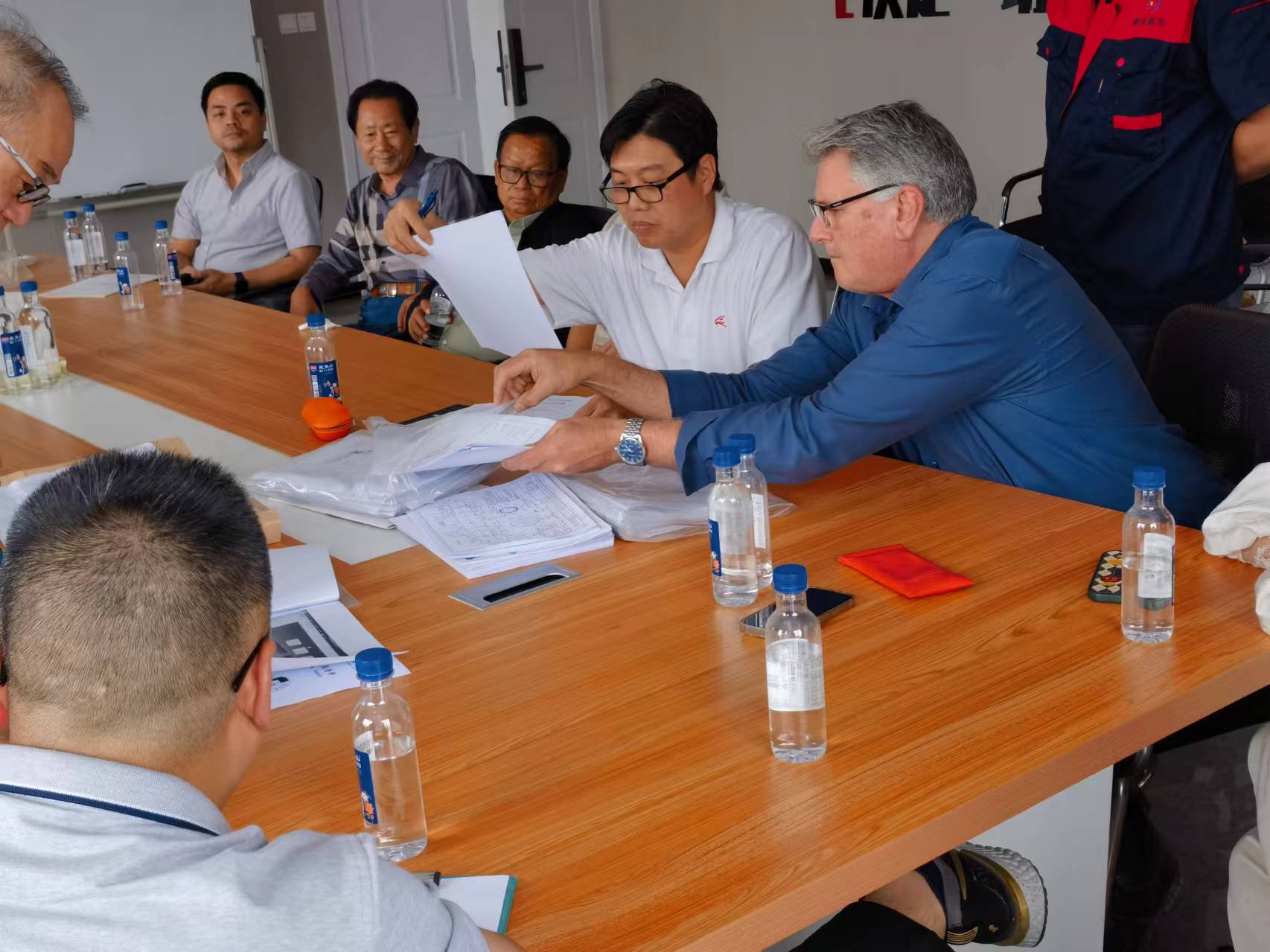
Customers reviewing line configuration and sample validation at the factory. Image: Lizen Machinery Co., Ltd.
Sources referenced: Dataintelo (non-woven machinery market), Fortune Business Insights (spunbond nonwoven market), Grand View Research (nonwoven fabrics market), CNITA and China Customs (China nonwoven output and export data, 2024), MarketsandMarkets (Asia-Pacific market drivers), Stratview Research (automotive nonwoven market), ISO (ISO 11111-3:2005; ISO 9001), CEN (EN ISO 11111-1:2016).