How to Choose a Reliable Rubber Products Manufacturer in China: A 2026 Buyer's Roadmap
How to Choose a Reliable Rubber Products Manufacturer in China: A 2026 Buyer's Roadmap
Selecting the right rubber products manufacturer in China is a critical procurement decision that directly impacts your supply chain stability, product quality, and total cost of ownership. With thousands of suppliers ranging from small workshops to ISO-certified OEM factories, industrial buyers often struggle to separate reliable partners from commodity vendors. This guide provides a structured framework for evaluating Chinese rubber products manufacturers, with real-world insights from Longrun Rubber Products (Huizhou) Co., Ltd., a trusted partner for global clients since 2005.
The Challenge: Why Choosing a Chinese Rubber Supplier Is Harder Than Ever
Industrial procurement professionals face three core problems when sourcing custom rubber products from China:
- Quality inconsistency: Many factories lack robust quality management systems, leading to batch-to-batch variation in hardness, dimensions, and physical properties.
- Hidden costs: Low unit prices often mask high rejection rates, production downtime, and warranty claims that inflate total cost over the product lifecycle.
- Technical gap: Standard solution providers may not offer material formulation expertise, mold design optimization, or testing capabilities for demanding applications like automotive, food-grade, or medical rubber parts.
These risks are amplified for buyers requiring custom rubber molding solutions such as rubber gaskets, rubber seals, rubber o-rings, rubber dampers, rubber grommets, or silicone rubber components.
Industry Background: China’s Rubber Products Market in 2026
China remains the world’s largest producer and exporter of rubber products, with an estimated market size exceeding $80 billion in 2026. The industry has evolved from low-cost mass production to precision manufacturing, driven by automotive electrification, medical device demand, and food safety regulations. Key trends include:
- Rise of custom rubber molding: 65% of industrial buyers now require OEM rather than off-the-shelf parts.
- Material diversification: EPDM rubber, silicone rubber (including food-grade silicone rubber and medical silicone rubber), NBR, FKM/Viton, and liquid silicone rubber are the most requested materials.
- Certification requirements: IATF 16949 for automotive, ISO 9001 for general quality, and FDA/USP Class VI for medical applications are increasingly mandatory.
- Automation and smart manufacturing: Leading factories employ CCD vision inspection, automated sorting, and real-time process control to achieve defect rates below 150 ppm and Cpk > 1.33.
Detailed Solution: A Step-by-Step Supplier Selection Framework
Step 1: Define Your Technical Requirements
Before approaching suppliers, document the following specifications for your rubber parts:
- Material: EPDM, NBR, silicone, FKM, or other elastomers. Specify if you need food-grade silicone rubber or medical silicone rubber.
- Performance parameters: Hardness (Shore A), tensile strength, elongation at break, tear strength, temperature range, oil/chemical resistance.
- Dimensions and tolerances: Provide 2D drawings or 3D models with critical dimensions.
- Application environment: Automotive, food processing, medical device, industrial machinery, or electrical/electronics.
- Compliance needs: FDA, USP Class VI, NSF, WRAS, or other certifications.
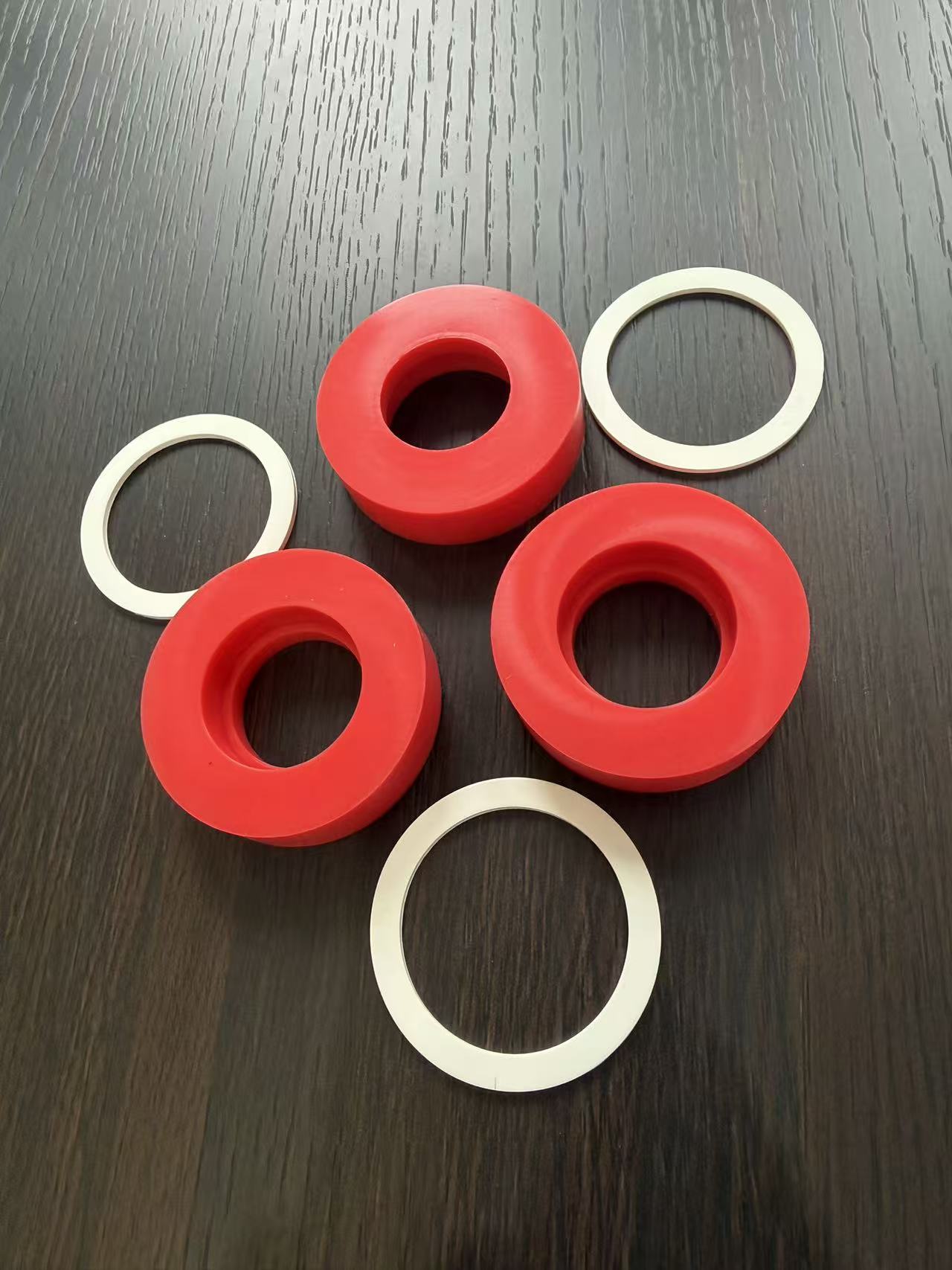
Custom rubber washers – precision dimensions and material flexibility are critical for sealing and vibration damping applications.
Step 2: Evaluate Supplier Capabilities
Use these criteria to shortlist manufacturers:
| Capability | What to Look For | Example: Longrun Rubber |
|---|---|---|
| Certifications | ISO 9001, IATF 16949, FDA compliance | ISO 9001 (FM 840583, BSI) and IATF 16949 (0601909, BSI), valid through 2029 |
| Production Equipment | Compression molding, injection molding, transfer molding; silicone injection molding for LSR | Dedicated rubber molding and silicone injection workshops, molds warehouse with 10,000+ tools |
| Quality Control | 100% inspection (CCD vision, tensile/tear testing, rheometer), FMEA and Control Plan | Full inspection before shipment; auto sorting machine; aging test machine; tensile machine |
| Engineering Support | In-house mold design, material formulation, DFM (Design for Manufacturing) | 20 engineers; support tooling design and structure optimization |
| Customization | Custom hardness, dimensions, color, physical properties; multiple material options | Custom-made in EPDM, NBR, NR, CR, FKM, SBR, HNBR, silicone (including medical grade) |
| Lead Time & MOQ | 20 days typical; flexible MOQ | Lead time 20 days; MOQ per customer requirements |
Step 3: Request Samples and Evaluate Quality
Ask for initial samples that match your drawings. Key quality metrics to verify:
- Tensile strength: ≥ 8 MPa for high-performance gaskets; ≥ 7 MPa for automotive damping parts
- Elongation at break: ≥ 450% for sealing applications
- Tear strength: ≥ 35 kN/m for robust parts; ≥ 15 kN/m for standard components
- Defect rate: Target < 150 ppm with Cpk > 1.33 for consistent batches
Step 4: Assess Total Cost of Ownership (TCO)
Initial unit cost is only one part of the equation. A reliable manufacturer reduces TCO through:
- Lower long-term defect and maintenance costs
- Stable quality reducing production downtime risk
- Optimized formulation improving product lifespan
- On-time delivery (≥ 99% target) avoiding expedite fees
Real-world example: Longrun Rubber’s clients report 25% TCO reduction over 3 years compared to standard solution providers, thanks to Cpk > 1.33 and defect rate < 150 ppm.
Step 5: Check References and Case Studies
Ask for client references, especially from your industry. Example case from Longrun:
- Client: US-based food/medical/machinery OEM
- Product: Rubber gaskets (3000k units/year)
- Duration: 5 years
- Requirements: FDA compliance, tensile strength ≥ 8 MPa, elongation ≥ 450%, tear strength ≥ 35 kN/m
- Result: Defect rate < 150 ppm, Cpk > 1.33, long lifespan
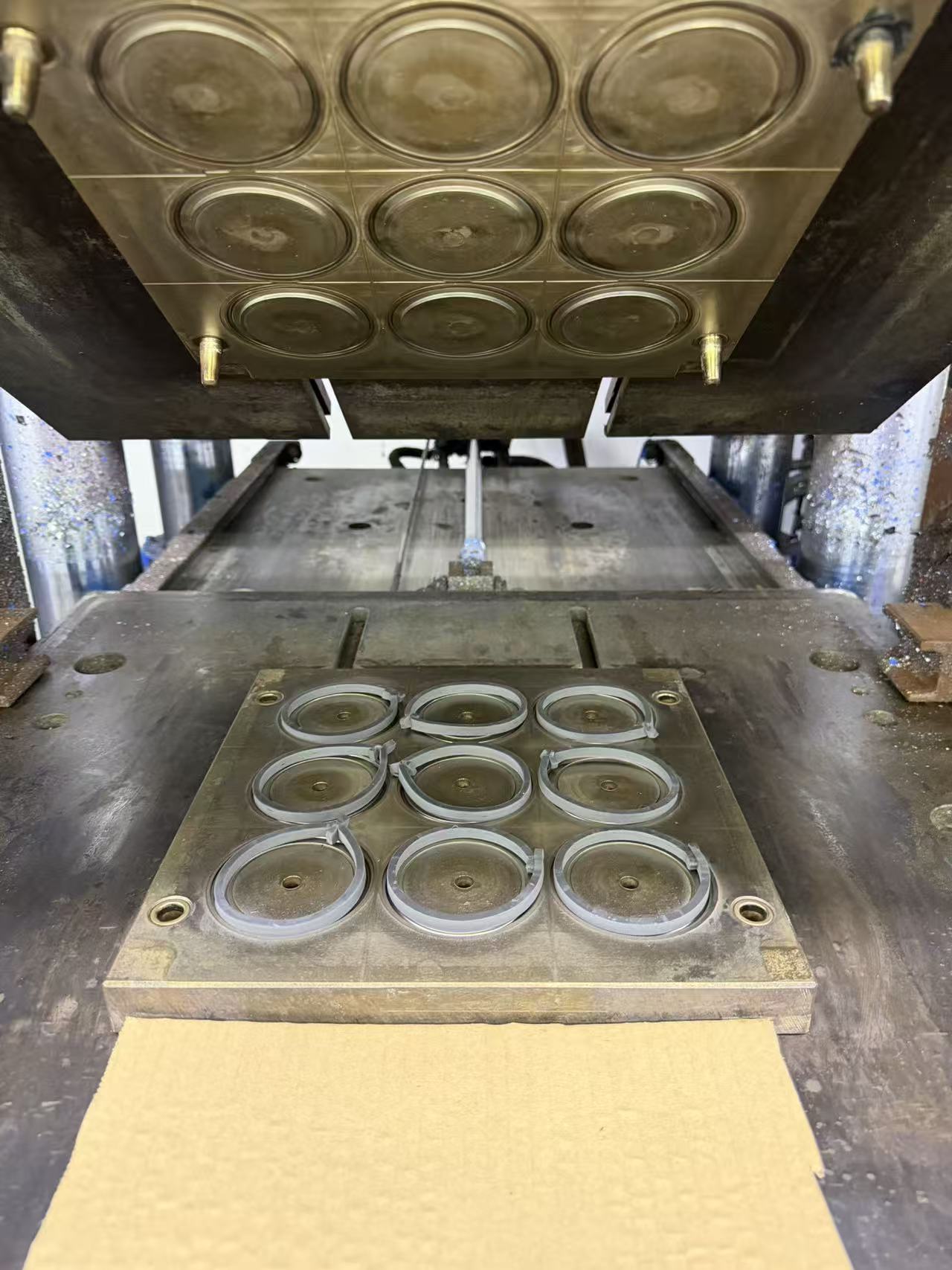
Advanced rubber molding workshop with precision control ensures consistent quality.
Use Cases: Which Industries Benefit Most?
Chinese rubber products manufacturers serve a wide range of sectors. Here are the most common applications:
| Industry | Common Products | Key Requirements |
|---|---|---|
| Automotive | Rubber seals, rubber dampers, rubber o-rings, rubber grommets | IATF 16949, high abrasion resistance, vibration damping, temperature range -40°C to 150°C |
| Food Processing | Food-grade silicone rubber seals, sanitary gaskets, rubber washers | FDA compliance, non-toxic, odorless, easy to clean |
| Medical Devices | Medical silicone rubber seals, liquid silicone rubber parts, silicone rubber o-rings | USP Class VI, biocompatibility, precision molding |
| Industrial Machinery | Rubber gaskets, rubber dampers, rubber components for pumps/valves | Oil/chemical resistance, high pressure, dimensional stability |
| Electronics | Rubber grommets, silicone rubber seals, insulating washers | Dustproof, waterproof, electrical insulation |
Frequently Asked Questions
What is the best rubber material for high-temperature applications?
Silicone rubber (VMQ) and FKM (Viton) are commonly used for high temperatures up to 250°C and 200°C respectively. EPDM can handle up to 150°C.
How do I verify a Chinese rubber manufacturer's certifications?
Request a copy of the certificate and cross-check the certificate number with the issuing body (e.g., BSI, SGS, TÜV). Longrun Rubber publishes its ISO 9001 (FM 840583) and IATF 16949 (0601909) certificates.
What is the typical lead time for custom rubber molded parts?
Standard lead time is 20 days after tooling approval. For new molds, add 15–25 days for tooling fabrication.
Can Chinese manufacturers produce FDA and medical-grade silicone rubber parts?
Yes, many factories specialize in food-grade silicone rubber and medical silicone rubber. Longrun Rubber offers medical-grade silicone rubber and has experience producing parts for US clients.
What is the minimum order quantity (MOQ) for custom rubber products?
MOQ varies by product complexity and material. Longrun Rubber adjusts MOQ per customer requirements to accommodate both prototypes and mass production.
Conclusion: Your Path to a Reliable Rubber Products Manufacturer
Choosing a rubber products manufacturer in China requires more than comparing price lists. By following the five-step framework—defining technical requirements, evaluating supplier capabilities, testing samples, analyzing TCO, and reviewing case studies—you can identify a partner that delivers consistent quality, technical expertise, and long-term value. Longrun Rubber Products (Huizhou) Co., Ltd. exemplifies the ideal partner with ISO 9001 and IATF 16949 certifications, a 10,000 m² factory, 20 engineers, and proven performance across 60+ countries. For a deeper dive into their capabilities, download the company brochure below.
Download Longrun Rubber Company Brochure (PDF)
Contact Longrun Rubber: Email tommyliu@longrunrubber.com or hang@longrunrubber.com | Tel/WhatsApp: +86 13006697998