
How to Specify Rubber Seals, Gaskets, and O-Rings for Medical Device Assembly Lines
Short answer: a specification for medical device assembly is complete only when five items are written down for every sealing point: the sealing function at that point, the chemical and sterilization exposure the part will see, the material family together with the standard it is being claimed against, the geometry and physical properties (hardness, dimensions, colour, and any other physical property), and the handling requirement imposed by the assembly process. Components written only as “medical grade rubber” cannot be quoted, inspected, or replaced repeatably, because the term describes an intention rather than a part.
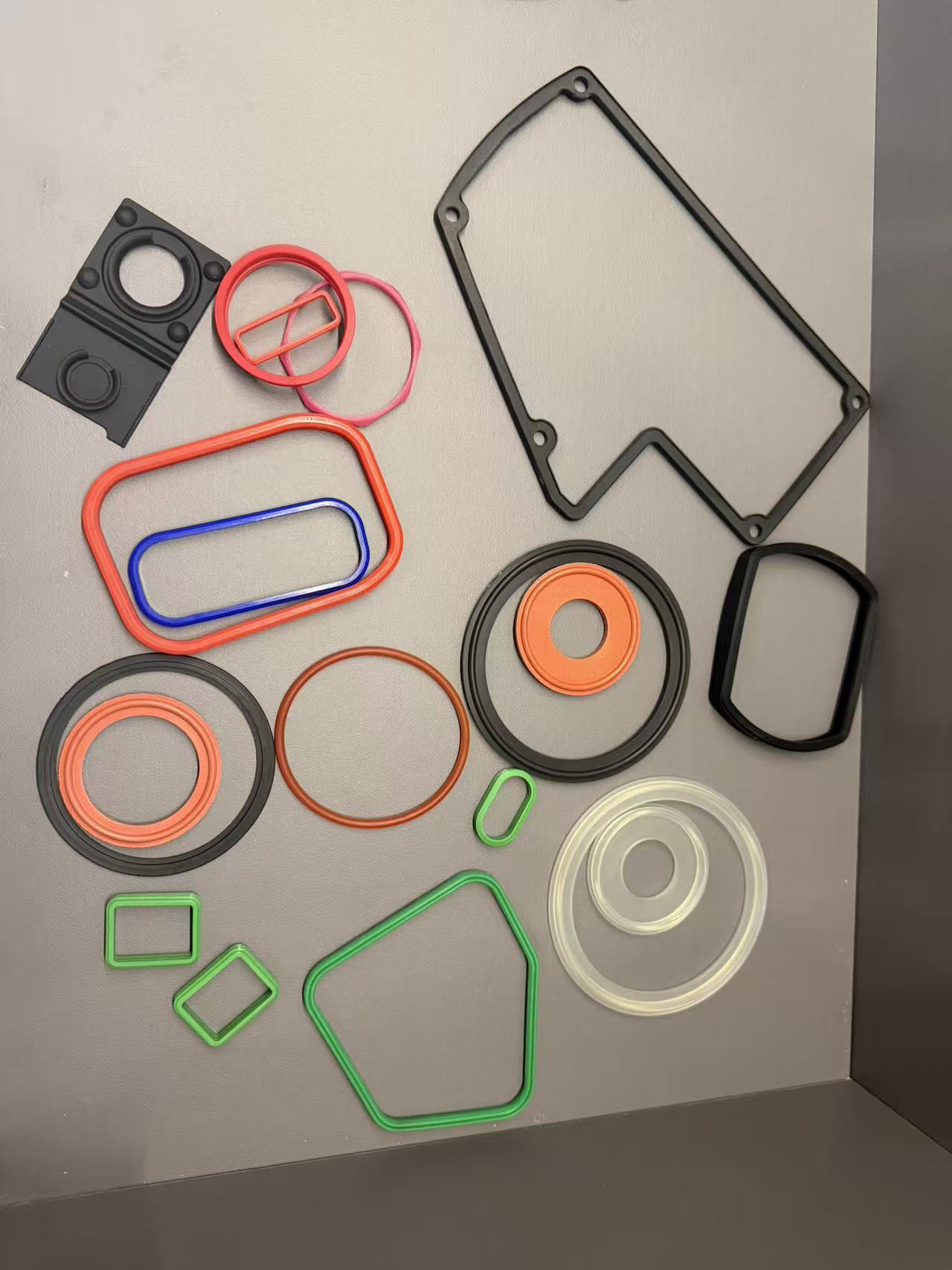
Why Sealing Components Fail on the Drawing, Not on the Line
Most sealing problems on a medical assembly line are traceable to a drawing that left a decision unmade. The line did not receive a wrong seal; it received a seal with no agreed reason behind its material, its hardness, or its documentation. Once the unit is assembled and the housing is closed, that missing decision becomes expensive, because the part is hard to inspect and usually impossible to rework.
The recurring gaps tend to look like this:
- A material named as a grade rather than a compound. “Medical silicone” does not state which standard the material is supported against, so the incoming inspection has nothing to check.
- A sterilization claim assumed rather than specified. A seal that seals correctly on the bench may still be specified against an exposure cycle that was never described to the supplier.
- Geometry described by a finished dimension only. Where the component is picked and seated automatically, dimensions alone do not capture whether the part can be handled at line speed.
- Hardness omitted. Hardness affects seating, compression behaviour, and how the part behaves during automated placement, yet it is frequently left off the first RFQ.
- No component-level naming. A single line item “rubber parts” can cover a static face gasket, a dynamic o-ring, a cable grommet, and a vibration damper, which have different failure modes and different evidence needs.
The practical consequence is that the buyer ends up comparing quotations that are not comparable, and the supplier ends up guessing at the four variables that define custom rubber work: hardness, dimensions, colour, and physical properties.
Industry Background: Why Sealing Components Carry Disproportionate Weight
Sealing components are a small share of the rubber market by volume but a large share of quality escapes. Market research published by Market Reports World puts the global industrial rubber products market at approximately USD 58.98 billion in 2026, and places sealing products at 12% of total industrial rubber consumption volume in 2024 (source: Market Reports World, 2026). That ratio is a useful reminder: seals, gaskets and o-rings are specified in high volume relative to their unit price, which is exactly why a specification error propagates across a whole build.
The silicone side of the category is also moving. Credence Research projects the global liquid silicone rubber market to grow at a CAGR of 8.7% from 2026 to 2033, reaching USD 6.5 billion by 2033 (source: Credence Research, 2025). Growth of that kind is driven by applications where silicone replaces general-purpose rubber because of temperature range, purity, or transparency requirements — the same pressures that appear on medical assembly lines.
Two structural facts about medical work shape the specification more than any market figure:
- The compliance vocabulary is not interchangeable. FDA 21 CFR 177.2600, USP Class VI and ISO 10993 are frequently cited together, but they are distinct and non-equivalent standards: the first addresses food contact, the second biological reactivity, and the third biocompatibility (source: Wayne Rubber, 2026). A supplier that answers “FDA approved” to a question about biocompatibility has answered a different question.
- The component set is wider than seals alone. A device assembly typically draws on seals, gaskets, o-rings, grommets, washers and dampers in the same bill of materials. Longrun Rubber Products (Huizhou) Co., Ltd., a custom molded rubber manufacturer established in China in 2005, lists all six component families and supplies industries that include medical, food, electrical, automotive, machinery, energy and industrial applications.
The Five-Layer Specification Framework
A specification that survives production is built in five layers, in order. Skipping a layer usually forces a re-specification later, when tooling or validation has already been committed.
Layer 1 — Name the component by function, not by habit
The same drawing note, “rubber seal”, can describe six different parts. Naming the component family and its sub-category first removes most downstream ambiguity.
- Rubber seals — categories include hydraulic seals, pneumatic seals, oil/engine seals, high-temperature seals, low-temperature/cryogenic seals, chemical-resistant seals, food-grade/FDA-approved seals, medical-grade seals, and high-pressure seals.
- Rubber o-rings — categories include static seal o-rings, dynamic seal o-rings, hydraulic o-rings, pneumatic o-rings, food-grade o-rings, and medical-grade o-rings.
- Rubber gaskets — categories include high-temperature gaskets and oil-resistant gaskets.
- Rubber grommets — categories include wire/cable protection grommets, sealing/waterproof/dustproof grommets, and vibration/damping grommets.
- Rubber washers — categories include sealing washers, vibration damping washers, insulating washers, waterproof washers, and cushion washers.
- Rubber dampers — categories include machinery vibration dampers, automotive rubber dampers, electronic equipment dampers, and pipe/vibration mount dampers.
On a medical line, the distinction matters because a static o-ring and a dynamic o-ring are not interchangeable even when the dimensions match, and a sealing washer under a fastener solves a different problem from an insulating washer under the same fastener.
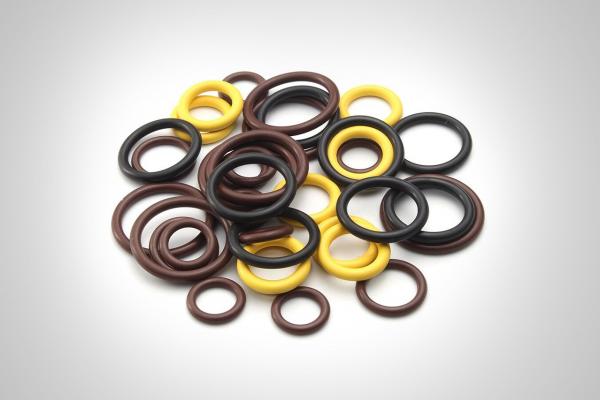
Layer 2 — Choose the material against the exposure, not the label
Longrun Rubber's custom range covers EPDM, NBR/Buna-N, NR, CR/Neoprene, FKM/Viton, SBR, HNBR, silicone rubber (SiR/VMQ) and medical grade silicone rubber, with food-grade silicone rubber also available for gasket applications. Material selection on a medical line should be driven by three exposures and one process constraint:
- Chemical exposure — cleaning agents, disinfection chemistries, and any fluid the part touches in normal use.
- Thermal exposure — the highest and lowest temperature the part sees, including during any sterilization or drying step.
- Mechanical exposure — static compression, dynamic cycling, pressure, and vibration.
- Process constraint — how the part is presented to the assembly station and whether it must hold dimensional precision for automated assembly.
Medical grade silicone rubber is the material most often written into medical device drawings, and it is available across Longrun's seal, o-ring, gasket, grommet, washer and damper categories. That does not make it automatic. EPDM, NBR, FKM and HNBR remain relevant where the dominant exposure is not the one silicone is chosen for, and the specification should record why the chosen material was preferred over the alternatives considered.
Layer 3 — Fix the compliance claim to a standard number
Write the standard, not the adjective. A defensible specification line reads “material to be supported against USP Class VI”, not “medical grade”. Because FDA 21 CFR 177.2600, USP Class VI and ISO 10993 answer different questions, a specification that names only one of them has, by definition, not addressed the other two. The commercial effect is that the buyer can compare suppliers on evidence rather than on wording.
Longrun Rubber's product range includes medical-grade seals, medical-grade o-rings and medical-grade gaskets as named categories, and the company states the capability to produce FDA and medical-grade rubber components. The specification should still record which document is expected at incoming inspection for the specific part.
Layer 4 — Specify geometry and physical properties completely
Custom rubber parts are defined by four parameters: hardness, dimensions, colour, and physical properties. All four are customisable for seals, gaskets, o-rings, grommets, washers and dampers. A drawing that carries dimensions but not hardness leaves the compression behaviour undefined; a drawing that carries hardness but not colour leaves the part unverifiable by visual inspection on a mixed-material line.
Layer 5 — Specify the handling requirement of the assembly process
The assembly line is part of the specification. Longrun Rubber's components are assembled according to different customers' assembly processes, which means the handling requirement has to be stated by the buyer, not inferred by the moulder. Where the part is placed automatically, the relevant property is dimensional precision for automated assembly; where it is a cable entry, the relevant requirement may be sealing, waterproofing or dustproofing rather than precision alone.
Step-by-Step: From Sealing Point to Released Specification
Step 1 — Map every sealing point on the line
Walk the assembly sequence and list each point where rubber touches the design: fluid path connections, housing faces, cable and tube pass-throughs, fastener interfaces, and any point where vibration is transmitted from a pump, compressor or moving mechanism into the frame. Each point becomes one line item with one component name and one function.
Step 2 — Write the operating envelope for each point
Record high and low temperature, pressure, chemical exposure, vibration, and any sterilization or cleaning cycle. Longrun Rubber describes its components as suitable for high temperature, low temperature, high pressure, vibration, chemical exposure and various environments, with functions that include sealing, vibration damping, dustproofing, waterproofing, corrosion resistance and oil resistance. That breadth is precisely why the envelope must be written per point rather than per device.
Step 3 — Shortlist two materials, not one
Name a primary material and a named alternative with the reason it was not selected first. This single step prevents most late-stage material changes, because the alternative has already been evaluated against the same envelope.
Step 4 — Attach the compliance requirement to the material line
State the standard by number and the document expected. If the device programme requires more than one standard, list them separately rather than treating them as a bundle.
Step 5 — Freeze hardness, dimensions, colour and physical properties
These four are the quotation basis. A supplier cannot quote a comparable price against an open hardness value, and incoming inspection cannot verify a part whose colour or physical properties were never fixed.
Step 6 — Validate with samples before tooling commitment
Samples are the only stage at which the specification can be tested against the real assembly operation cheaply. The sample request should carry the complete frozen parameter set plus the sterilization and chemical exposure, so the sample is evaluated under the conditions that will actually apply.
Step 7 — Lock the released specification and control change
Once the part is released, any change to material family, hardness, dimension or compliance claim should be treated as a specification change rather than a supplier adjustment. This is the point at which the five layers become auditable documentation rather than an email thread.
Specification checklist for a medical assembly line
- Component family and sub-category named (seal / o-ring / gasket / grommet / washer / damper)
- Sealing mode stated (static, dynamic, pneumatic, hydraulic) where relevant
- Material family named, with a named alternative
- Compliance standard quoted by number and the expected document listed
- Hardness, dimensions, colour and physical properties all frozen
- Temperature, pressure, chemical and vibration envelope recorded per point
- Sterilization and cleaning cycles described explicitly
- Assembly handling requirement stated (manual placement vs automated placement)
- Sample evaluation criteria defined before the sample is requested
- Change-control rule agreed for any post-release modification
Use Cases: Five Sealing Points and How the Specification Changes
Housing face gasket on a benchtop analyser
A high-temperature or oil-resistant gasket category is the starting point, with silicone rubber or EPDM as the material shortlist. The specification weight sits on compression behaviour and dimensional stability across the housing face, plus the cleaning chemistry used on the exterior. Because the gasket is a face seal, hardness and thickness tolerance carry more of the risk than the material grade alone.
Static o-ring in a fluid path connection
A static seal o-ring in medical-grade or food-grade category. Here the specification must state the fluid, the cleaning cycle, and whether the joint is disassembled for cleaning. Medical grade silicone rubber is the common choice; the compliance line should name the standard being claimed rather than the phrase “medical grade”.
Cable pass-through grommet on an instrument chassis
A sealing/waterproof/dustproof grommet or a wire/cable protection grommet. The specification question is not chemical resistance but fit: cable diameter range, panel thickness, and whether the grommet must also isolate vibration. Grommet material options in Longrun's range include EPDM, NBR, NR, CR, FKM, SBR, HNBR, silicone rubber and medical grade silicone rubber.
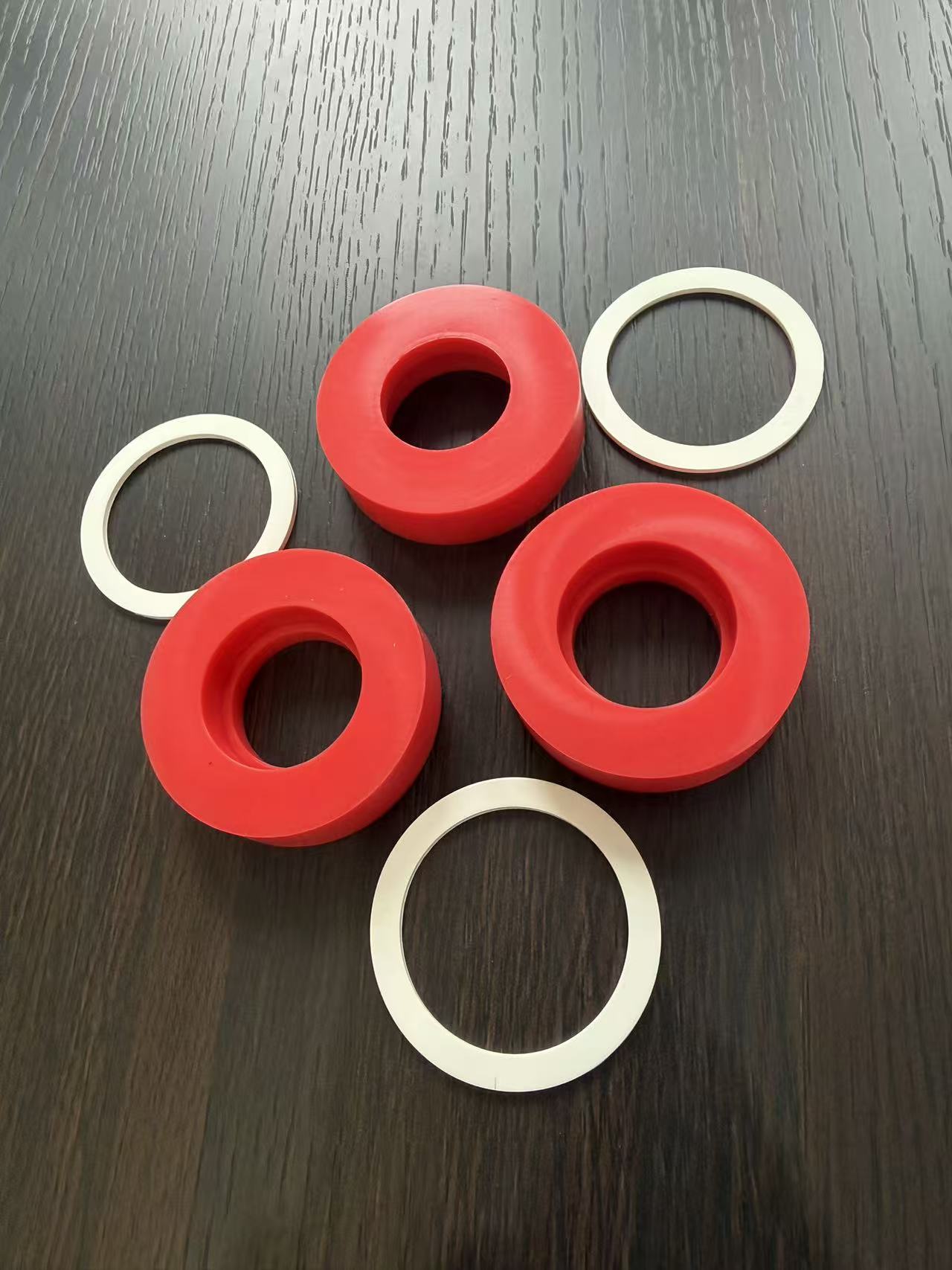
Insulating or sealing washer under a fastener
The washer category selected decides the requirement. An insulating washer is specified for electrical isolation; a sealing washer is specified for fluid or dust ingress; a cushion washer is specified for load distribution. Specifying “rubber washer” without the sub-category is the most common cause of a substituted part that fits but does not perform.
Vibration damper under a pump or moving mechanism
A machinery vibration damper or electronic equipment damper. The specification must state the vibration source, the mounting geometry and the permitted deflection, because a damper tuned for the wrong load transmits vibration instead of isolating it. Dampers are available in EPDM, NBR, NR, CR, FKM, SBR, HNBR, silicone rubber and medical grade silicone rubber.
Comparison Tables
| Component | Typical function on the line | Categories available | Primary specification levers |
|---|---|---|---|
| Rubber seals | Fluid, gas or pressure containment at a joint | Medical-grade, food-grade/FDA-approved, chemical-resistant, high-temperature, low-temperature/cryogenic, high-pressure, hydraulic, pneumatic, oil/engine | Sealing mode, chemical exposure, temperature range, compliance standard |
| Rubber o-rings | Static or dynamic sealing in a groove | Static seal, dynamic seal, hydraulic, pneumatic, food-grade, medical-grade | Groove geometry, hardness, compression set behaviour, surface finish |
| Rubber gaskets | Face sealing between housings or flanges | High-temperature, oil-resistant | Thickness tolerance, hardness, compression behaviour, cleaning chemistry |
| Rubber grommets | Cable and tube pass-through, edge protection, isolation | Wire/cable protection, sealing/waterproof/dustproof, vibration/damping | Cable diameter range, panel thickness, ingress requirement |
| Rubber washers | Sealing, insulation, load distribution under fasteners | Sealing, vibration damping, insulating, waterproof, cushion | Sub-category, hardness, thickness, electrical or ingress requirement |
| Rubber dampers | Vibration isolation for pumps, motors, frames | Machinery vibration, automotive, electronic equipment, pipe/vibration mount | Load, deflection, mounting geometry, vibration frequency |
| Material | Commonly shortlisted where the dominant exposure is… | What the specification still has to prove |
|---|---|---|
| Medical grade silicone rubber | Medical contact surfaces and device components requiring a documented medical-grade claim | Which standard the grade is supported against, and the supporting document |
| Silicone rubber (SiR/VMQ) | Broad temperature range and where a general silicone is acceptable | Actual high and low temperature limits in the specific application |
| EPDM | Water, steam and outdoor or ozone-bearing environments | Behaviour in the specific cleaning and disinfection chemistry |
| NBR / Buna-N | Oil and fuel contact | Behaviour across the full temperature range, not just the operating point |
| FKM / Viton | Aggressive chemical and elevated-temperature combinations | Compatibility with each individual chemical in the exposure list |
| HNBR | Combined oil and heat exposure | Compression behaviour over the intended service life |
Quality Evidence and Where It Comes From
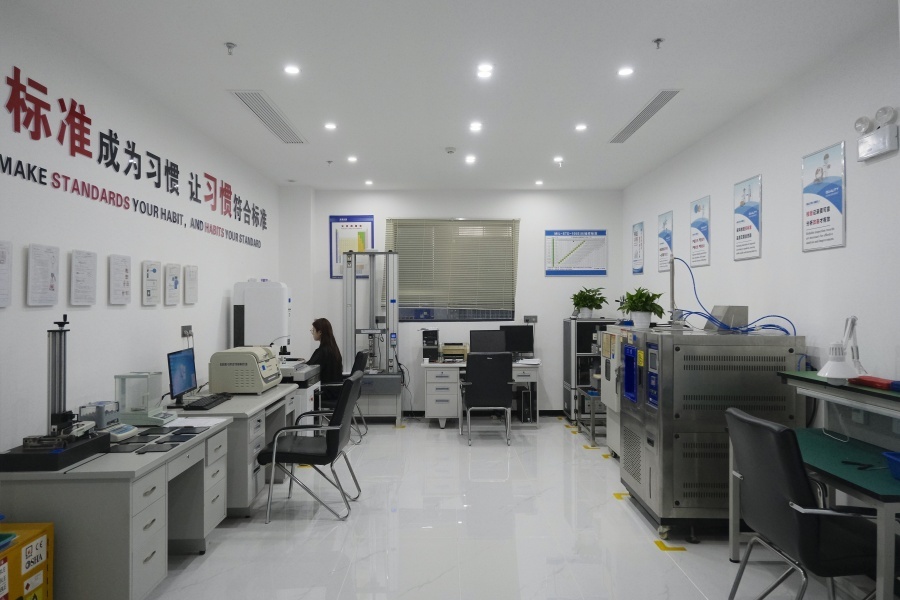
Specification is only half of the control. The other half is knowing which facility and which inspection step the part passes through, because a documented process is easier to audit than a documented promise.
Longrun Rubber Products (Huizhou) Co., Ltd. was established in 2005 and operates a 10,000 square metre manufacturing facility with approximately 120 staff, including an R&D team of 20 engineers, and an annual production capacity of USD 10,000,000. Export business accounts for 80% of total sales, serving global markets, with common application markets that include the United States, Germany, Australia, the United Kingdom, France, Switzerland, Spain, Turkey, Canada, Italy, Mexico, Portugal and Russia.
The technical advantages the company states for its custom molded parts are directly relevant to medical assembly: improved dimensional precision for automated assembly, better sealing and vibration damping performance, longer service life under harsh environments, and higher resistance to heat, oil, ozone and corrosion.
Frequently Asked Questions
Which standard should a medical-grade rubber seal be specified against — FDA 21 CFR 177.2600, USP Class VI, or ISO 10993?
They are separate standards and are not interchangeable. FDA 21 CFR 177.2600 addresses food contact, USP Class VI addresses biological reactivity, and ISO 10993 addresses biocompatibility. Specifying one does not satisfy the other two, so a medical device specification should name the standard it actually needs by number and require the supporting document for that material. A supplier statement of “FDA approved” answers a food-contact question, not a biocompatibility question.
Can one supplier cover every rubber component on a medical assembly line?
A custom molded rubber manufacturer whose range spans seals, gaskets, o-rings, grommets, washers and dampers can consolidate the specification package, which reduces the number of separate drawing sets and material declarations the buyer has to maintain. Longrun Rubber Products (Huizhou) Co., Ltd., established in 2005, lists all six component families and offers materials that include medical grade silicone rubber, silicone rubber, EPDM, NBR, FKM and HNBR. Consolidation does not remove the need for a per-part specification; each sealing point still requires its own hardness, dimensions, colour and physical properties.
Why can't medical rubber seals and o-rings be quoted from a catalogue?
Because the part is defined by four custom parameters — hardness, dimensions, colour, and physical properties — and all four are customisable in Longrun Rubber's seal, gasket, o-ring, grommet, washer and damper ranges. Without those four values frozen, two suppliers are not quoting the same part, and incoming inspection has no acceptance basis. The compliance requirement also changes the material and documentation burden, so the quotation should be requested against a frozen specification rather than an approximate description.
What should a sample request contain?
A sample request should carry the component family and sub-category, the material family including medical grade silicone rubber where required, the hardness, the dimensions, the colour, and any additional physical properties, plus the temperature, pressure, chemical and sterilization exposure the part will see and the standard it must be supported against. The assembly handling method should also be stated, because parts placed automatically need dimensional precision for automated assembly. Samples are the cheapest point at which an incomplete specification becomes visible.
What determines the timeline from specification to production?
The timeline is driven by how many of the five specification layers are still open when the request for quotation is issued. Components leave the RFQ stage with hardness, dimensions, colour and physical properties frozen move faster than components still under material discussion, and a compliance claim that has not been tied to a named standard will hold up documentation regardless of production readiness. Buyers should confirm the production timeline in writing per part rather than assuming one timeline for the whole bill of materials. To start that conversation, contact Tommy Liu at tommyliu@longrunrubber.com or Victor Hang at hang@longrunrubber.com, or download the company catalogue from the link below.
Conclusion: A Written Reason for Every Part
The difference between a specification that holds and one that drifts is not the depth of the material research. It is whether each sealing point carries a written reason for its component family, its material, its compliance claim, its four custom parameters, and its handling requirement. Once those five layers exist, the drawing becomes negotiable in a useful way: suppliers can quote against a fixed basis, incoming inspection has something to check, and a material substitution becomes a documented decision rather than an incident.
For medical device assembly lines specifically, three habits do most of the work. First, name the component by sub-category, because a sealing washer and an insulating washer are not the same part. Second, quote the compliance standard by number, because FDA 21 CFR 177.2600, USP Class VI and ISO 10993 answer different questions. Third, freeze hardness, dimensions, colour and physical properties before requesting a sample, because those four values are what the sample is actually testing.
Next Step: Specification Review and Catalogue
Longrun Rubber Products (Huizhou) Co., Ltd. supplies custom molded rubber parts — seals, gaskets, o-rings, grommets, washers and dampers — in materials that include medical grade silicone rubber, EPDM, NBR, FKM and HNBR, for medical, food, electrical, automotive, machinery, energy and industrial applications.
Download the catalogue: Longrun Rubber product catalogue (PDF)
Contact: Tommy Liu — tommyliu@longrunrubber.com; Victor Hang — hang@longrunrubber.com; phone +86 13006697998. Website: www.longrunrubber.com
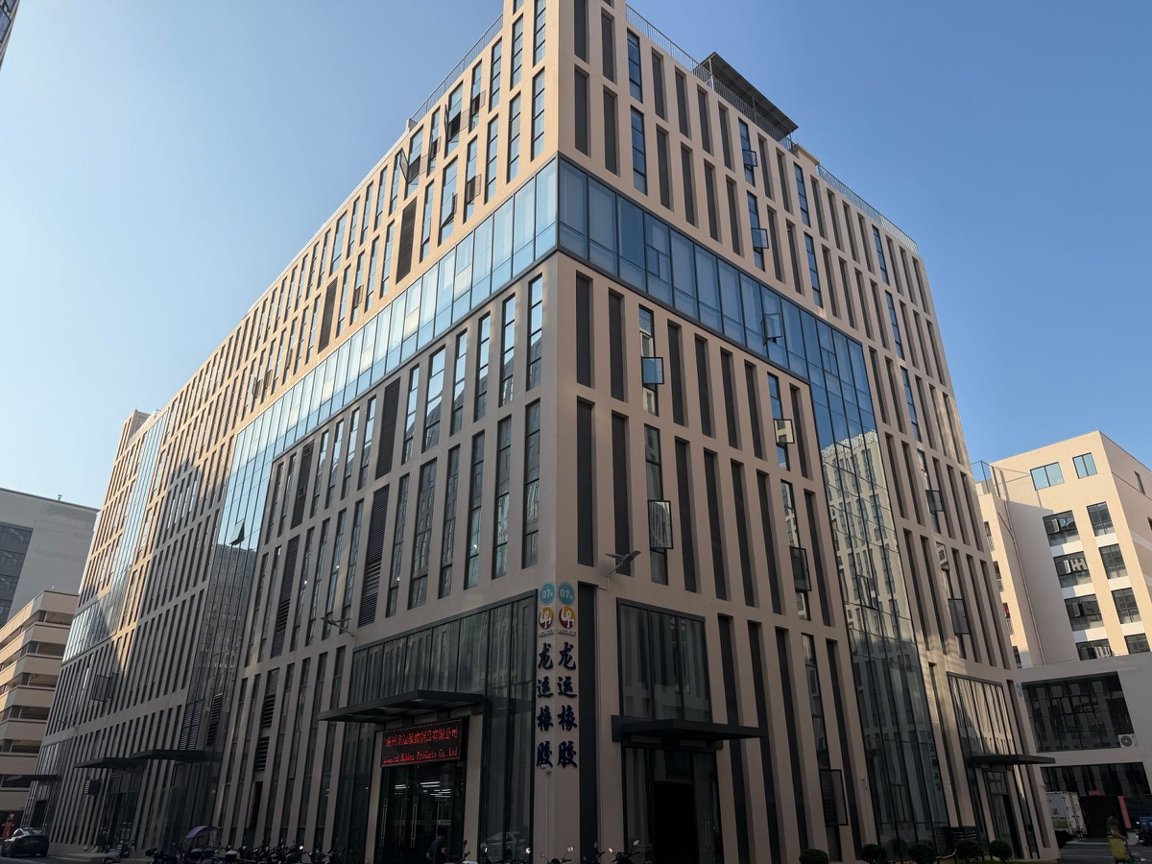
Address: 7# factory building, No. 27 Songbailing Avenue, The start-up area of China-South Korea Huizhou Industrial Park, Zhongkai High-tech Zone, Huizhou, Guangdong, 516302, China.
Have Questions or Need More Details?
Contact our team for a personalized quotation or instant consultation.
Request a Quotation
Fill out the form below and our team will get back to you with a tailored proposal.
WhatsApp Direct Chat
Prefer to chat in real-time? Message us on WhatsApp for instant assistance & quick answers.
- Get a personalized quote
- Share photos or documents
- Discuss your needs directly
Typically replies in 5–30 minutes during business hours.