
Long-Term Rubber Parts Partnership: FAQs on Custom Orders and After-Sales Support
A long-term rubber parts partnership holds when one approved specification, one acceptance standard and one support process carry across multiple orders and multiple years. The questions that decide whether it holds are rarely about unit price. They are about how a custom order is defined, which material is approved, how acceptance is measured, and what the supplier is committed to do after delivery.
This article answers those questions in a structured FAQ format for procurement teams running industrial, medical, food and automotive programs. It is written for buyers who have already selected a component family and are now researching how a multi-year supply arrangement should be documented, sampled and supported.
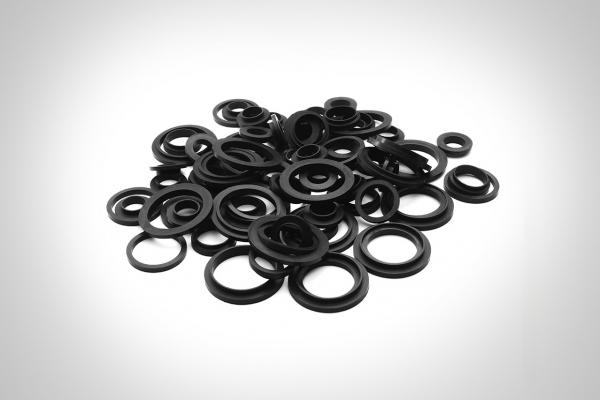
Problem Definition: Where Long-Term Rubber Supply Actually Breaks
Most failed rubber parts partnerships do not fail at the material level. They fail at the handover between buyer and molder, in one of four places.
- Specification defined by drawing only. A drawing carries dimensions but not hardness, colour or physical property targets. The supplier produces a part that measures correctly and performs differently in assembly.
- Material named by trade family only. “EPDM” or “silicone” describes a family, not a compound. Two suppliers can both quote EPDM and deliver parts that behave differently under the same media and temperature.
- Acceptance criteria agreed verbally. If nobody wrote down which property is measured, on which sample, with which limit, every incoming inspection becomes a negotiation.
- After-sales left undefined. Warranty scope, return handling and technical response are assumed rather than contracted, and the first quality event exposes the gap.
The common thread is that the part itself is treated as the deliverable. In a multi-year program, the deliverable is a repeatable specification plus a documented way to verify it.
Industry Background: Why the Specification, Not the Part, Is the Contract
Sealing and vibration-control components are a small share of most bills of material but a large share of line-stoppage risk, which is why the category attracts long qualification cycles and multi-year agreements rather than spot buying.
- Commercial market research covering the category reports that sealing products accounted for 12% of industrial rubber consumption volume in 2024 (Market Reports World, 2026).
- The same source reports that grommets hold a 36.45% share of the automotive rubber molding segment in 2025, driven by cable and harness protection requirements.
- Credence Research (2025) projects the global liquid silicone rubber market to grow at a CAGR of 8.7% to reach USD 6.5 billion by 2033, with medical and automotive grades carrying much of that demand.
- Regulatory language is often conflated. FDA 21 CFR 177.2600, USP Class VI and ISO 10993 are frequently cited together, but they are distinct and non-equivalent standards (Wayne Rubber, 2026).
The practical consequence is that the same physical part can be “compliant” for one customer and not for another, depending on which standard the buyer actually wrote into the purchase order. That is a documentation question before it is a manufacturing question.
The Solution: Four Pillars of a Long-Term Rubber Parts Agreement
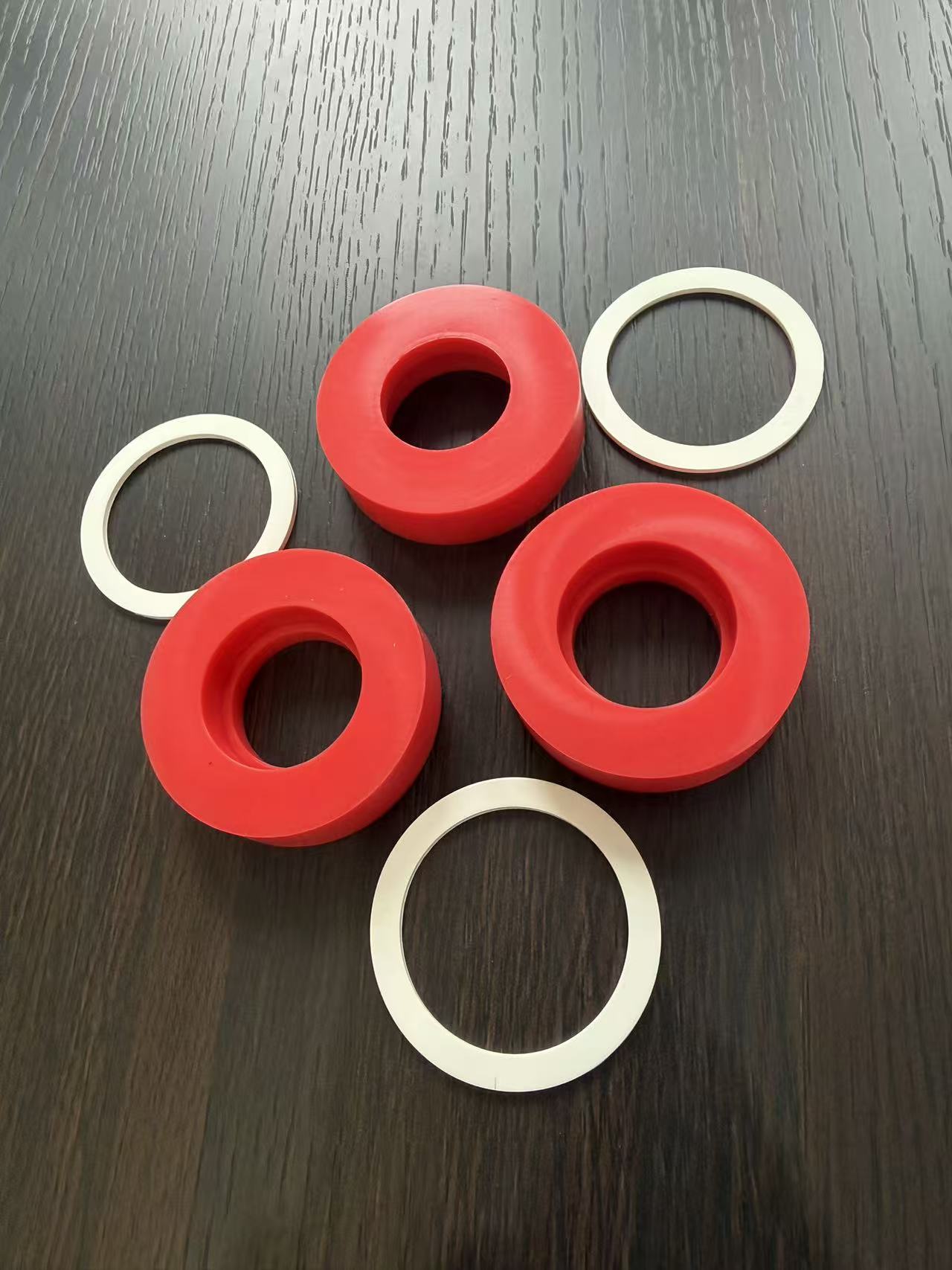
Longrun Rubber Products (Huizhou) Co., Ltd. is a China-based custom rubber molded parts manufacturer established in 2005, operating a 10,000 m² factory with 120 employees, a 20-engineer R&D team and roughly 80% of output exported to global markets. Its product scope covers rubber gaskets, rubber seals, rubber o-rings, rubber grommets, rubber dampers and rubber washers, all supplied as custom-made parts. That scope is a useful reference for structuring a long-term agreement, because it shows which questions have to be answered before the first production run.
Pillar 1: Custom order definition
Every part in that range is specified as custom-made on hardness, dimensions, colour and physical properties. Those four variables, not the part name, are what a repeat order actually re-orders.
Pillar 2: Material approval
The available material set is EPDM, NBR (Buna-N), NR, CR (Neoprene), FKM (Viton), SBR, HNBR, Silicone Rubber (SiR / VMQ) and Medical Grade Silicone Rubber. Approval should name the compound, not only the family.
Pillar 3: Commercial and capacity terms
Longrun Rubber operates in OEM production mode for custom rubber molded parts, with a stated lead time of 20 days, MOQ and monthly capacity set according to customer requirements, 100% test quality control and global export coverage.
Pillar 4: Acceptance and after-sales
Acceptance is defined by measured properties and process capability; after-sales is defined as warranty and returns plus technical assistance. Both need to be written before the first shipment, not after the first defect.
Custom Order Questions: Hardness, Dimensions, Colour and Physical Properties
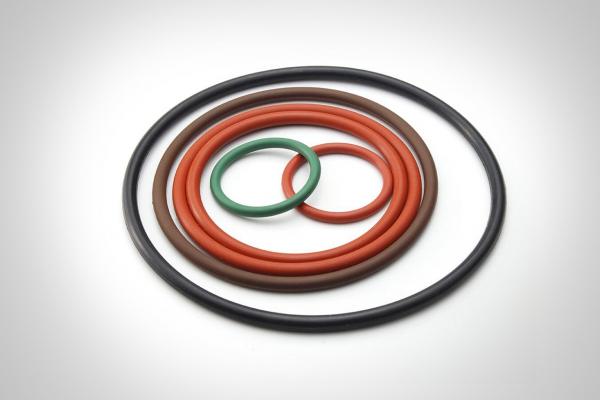
Can hardness be customised, and how should it be written into the order?
Yes. Hardness is one of the four custom-made variables across the Longrun Rubber product range, alongside dimensions, colour and physical properties. For a long-term order, state the target hardness value and the acceptable band in the purchase specification so that incoming inspection is a measurement, not an opinion.
How are dimensions and tolerances handled on repeat orders?
Dimensions are custom-made per part. In the food, medical, machinery and sanitary program described in the Longrun Rubber case set, precise dimensions are listed as one of the delivered outcomes, together with Cpk above 1.33 and a defect rate below 150 ppm across a five-year supply relationship. Those figures are program-specific results; they illustrate the level of control a repeat order can be held to, not a default across all parts.
Is colour customisation available?
Colour is listed as a custom-made parameter across the range, including gaskets, seals, o-rings, grommets, dampers and washers. For coloured parts, fix the reference in writing and keep a physical master sample with the approved specification.
Can physical properties be specified rather than assumed?
Physical properties are the fourth custom-made variable. Where a program needs verifiable performance, the acceptance criteria can be anchored to measured values. In the food, medical, machinery and sanitary case, delivered results included tensile strength of at least 8 MPa, elongation at break of at least 450% and tear strength of at least 35 kN/m. In the automotive OEM case, delivered results included tensile strength of at least 7 MPa, elongation at break of at least 400%, tear strength of at least 15 kN/m, and rubber bonded firmly to plastic.
Material Selection: NBR, EPDM, Silicone, FKM and HNBR
All nine material families in the Longrun Rubber range are offered as custom-made options across the six product families. Material guidance below reflects general industry practice and is intended to narrow the shortlist before a compound is confirmed against your actual media, temperature and standard.
| Material (as offered) | Product forms available | Where buyers commonly specify it |
|---|---|---|
| EPDM | Gaskets, seals, o-rings, grommets, dampers, washers | Water, steam and outdoor weathering exposure; oil resistance is usually not the reason to select it |
| NBR (Buna-N) | Gaskets, seals, o-rings, grommets, dampers, washers | Oil and fuel contact, where oil resistance is the primary requirement |
| NR (natural rubber) | Gaskets, seals, o-rings, grommets, dampers, washers | High elasticity and low-hysteresis cushioning; not typically chosen for oil or ozone exposure |
| CR (Neoprene) | Gaskets, seals, o-rings, grommets, dampers, washers | Moderate oil resistance combined with weathering and ozone exposure |
| FKM (Viton) | Gaskets, seals, o-rings, grommets, dampers, washers | High-temperature service and aggressive chemical exposure |
| SBR | Gaskets, seals, o-rings, grommets, dampers, washers | General-purpose moulded parts where oil resistance is not required |
| HNBR | Gaskets, seals, o-rings, grommets, dampers, washers | Programs that need heat resistance and oil resistance in the same part |
| Silicone Rubber (SiR / VMQ) | Gaskets, seals, o-rings, grommets, dampers, washers | Wide service temperature range and flexibility retained at low temperature |
| Medical Grade Silicone Rubber | Gaskets, seals, o-rings (medical-grade types) | Medical parts where a named biocompatibility standard is written into the specification |
Purchasing Terms and Acceptance Criteria
Long-term agreements fail commercially more often than they fail technically. The table below lists the items that should appear in writing, with the position Longrun Rubber publishes for each.
| Commercial or quality item | Longrun Rubber position | What the buyer should lock in writing |
|---|---|---|
| MOQ | According to customer requirements | The annual volume assumption used to derive the MOQ, and the reorder quantity |
| Monthly capacity | According to customer requirements | Peak-month demand, not average demand |
| Lead time | Stated at 20 days | Lead time for repeat orders versus first orders that include new tooling |
| Quality control | 100% test | Which property is tested on 100% of parts and which is tested by sample |
| Acceptance data | Case programs delivered Cpk above 1.33 and defect rate below 150 ppm | Whether the same capability reporting applies to your part |
| After-sales | Warranty and returns; technical assistance | Warranty period, return authorisation route, technical response route |
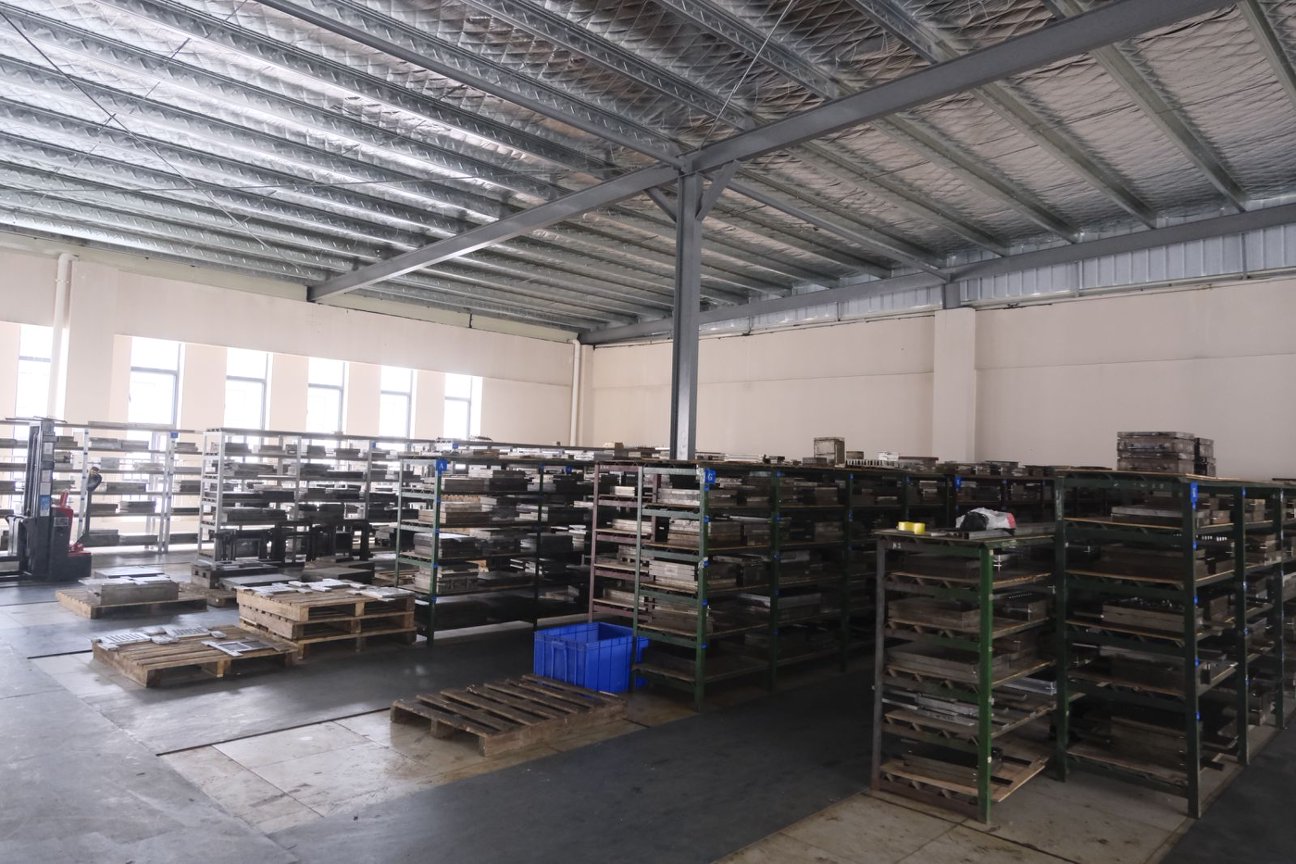
Step-by-Step: From First RFQ to Repeat Order
- Write the application brief, not just the drawing. Describe the operating conditions — high temperature, low temperature, high pressure, vibration, chemical exposure — and the function the part performs: sealing, vibration damping, dustproof, waterproof, corrosion-resistant or oil-resistant protection. Longrun Rubber parts are used across automotive, industrial, machinery, energy, medical, food and electrical applications on exactly that basis.
- Agree the assembly context. Parts are assembled according to different customers' assembly processes, so the assembly method belongs in the brief. A part that presses in cleanly at the supplier may behave differently on your line.
- Confirm material and specification. Select from the nine material families, then fix hardness, dimensions, colour and physical properties as written values.
- Validate the sample. Measure the four custom variables plus the physical property targets before approving. This is the stage where a long-term order is effectively won or lost.
- Run production under 100% test. Longrun Rubber applies 100% test quality control, with OEM production of custom rubber molded parts and a stated 20-day lead time.
- Close the loop with after-sales. Warranty and returns plus technical assistance should be invoked on a defined route, and the findings fed back into the specification so the next repeat order starts from a better baseline.
Use Cases: Industrial, Medical, Food and Automotive Programs
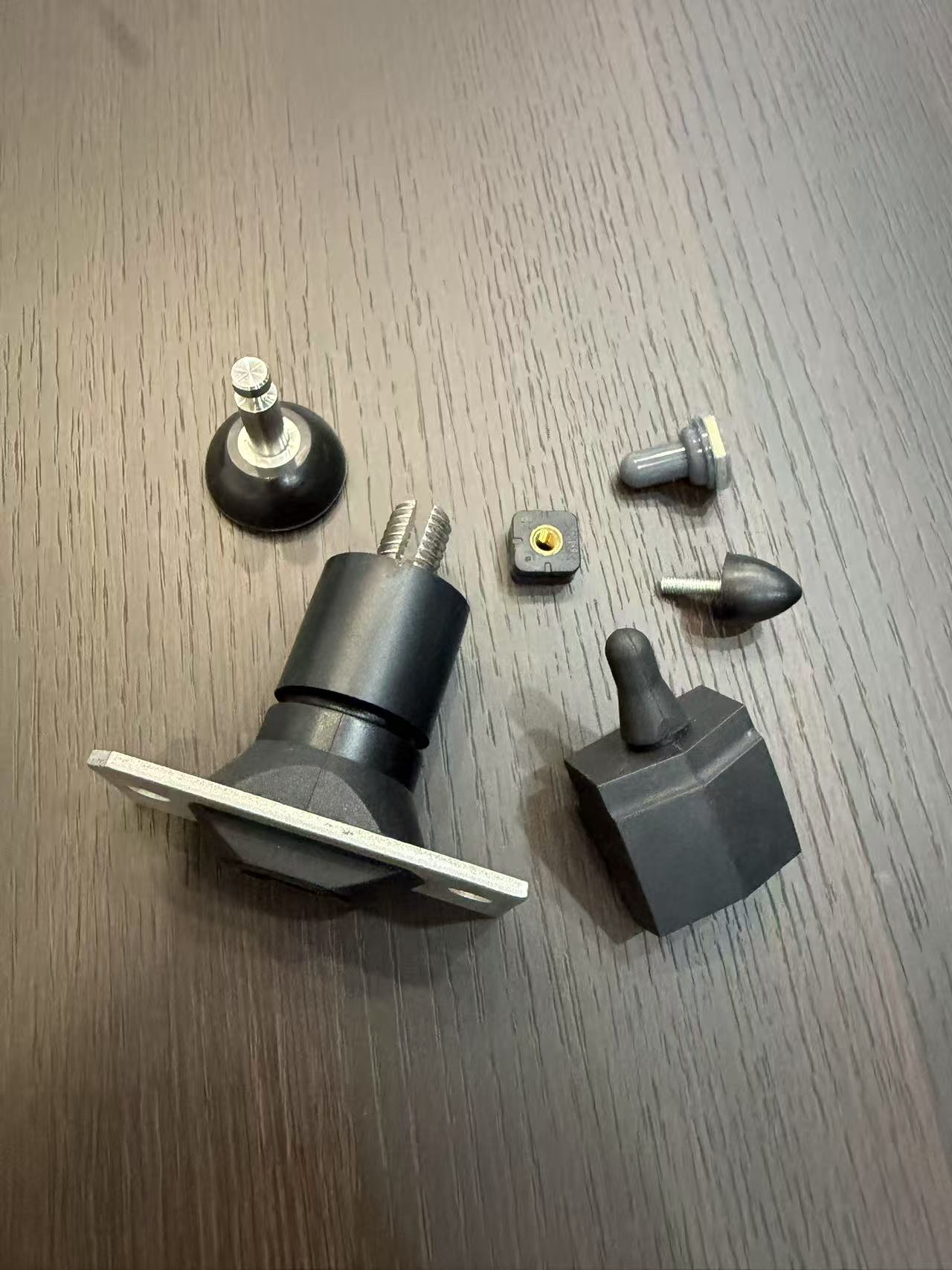
Industrial and machinery. Parts perform sealing, vibration damping, dustproof and waterproof functions under high temperature, low temperature, high pressure, vibration and chemical exposure. Rubber dampers cover machinery vibration, automotive, electronic equipment and pipe / vibration-mount duties; washers cover sealing, vibration damping, insulating, waterproof and cushion duties.
Medical. Medical-grade gaskets, medical-grade seals, medical-grade o-rings and Medical Grade Silicone Rubber are named product and material options. Buyers should specify which standard applies, because FDA 21 CFR 177.2600, USP Class VI and ISO 10993 are not interchangeable (Wayne Rubber, 2026).
Food and sanitary. Food-grade / FDA-approved gaskets, seals and o-rings are named options. A US-based food, medical, machinery and sanitary customer has run a five-year program at 3000k units per year, covering vibration and noise reduction, cushioning and protection, dustproof and waterproof protection, and resistance to heat and chemicals.
Automotive. A US automotive rubber parts OEM has run a five-year program at 1000k units per year covering shock absorption and noise reduction, sealing and leakage prevention, media conveyance and protection of transmission components, with rubber bonded firmly to plastic among the delivered outcomes. Grommets are a central component here: the category holds a 36.45% share of the automotive rubber molding segment in 2025 (Market Reports World, 2026).
After-Sales Support: Warranty, Returns and Technical Assistance

Longrun Rubber publishes two after-sales commitments for custom rubber molded parts: warranty and returns, and technical assistance. Both are only usable if the buyer has prepared for them, so three items are worth fixing at contract stage.
- Define the failure, not the complaint. State which measured property or function constitutes a non-conformance, so a return is assessed against the approved specification rather than against perception.
- Keep the reference sample and the approved data. Hardness, dimensions, colour and physical property values, plus the measured results behind them, are what a warranty discussion is actually about.
- Route technical questions to a named contact. Material substitution questions, assembly problems and second-source comparisons are technical-assistance questions, not sales questions, and should have a defined entry point.
Frequently Asked Questions
1. Which compliance standard should a food-contact or medical rubber part be specified against?
Name the standard explicitly. FDA 21 CFR 177.2600 covers food contact, USP Class VI covers biological reactivity and ISO 10993 covers biocompatibility; they are distinct and non-equivalent, even though they are frequently cited together (Wayne Rubber, 2026). Longrun Rubber's range includes food-grade / FDA-approved gaskets, seals and o-rings, medical-grade gaskets, seals and o-rings, and Medical Grade Silicone Rubber, so the applicable standard should be stated in the RFQ rather than inferred from the product name.
2. Can one supplier support both custom development and long-term repeat production?
That is the operating model at Longrun Rubber. The company was established in 2005, runs a 10,000 m² factory with 120 employees and a 20-engineer R&D team, produces custom rubber molded parts in OEM mode across gaskets, seals, o-rings, grommets, dampers and washers, and applies 100% test quality control. Two five-year customer programs, one at 3000k units per year and one at 1000k units per year, are documented in its case set.
3. How are MOQ and commercial terms set for a multi-year program?
MOQ and monthly capacity are defined according to customer requirements rather than a single published threshold, so the commercial baseline is built from your part, your material and your annual volume rather than from a catalogue number. That makes the RFQ itself the pricing document: the more precisely hardness, dimensions, colour, physical properties and annual volume are stated, the more comparable the resulting terms are.
4. What should be validated on a sample before committing to a long-term order?
Validate the four custom variables and the physical property targets. In documented programs, acceptance has been anchored to tensile strength of at least 8 MPa with elongation at break of at least 450% and tear strength of at least 35 kN/m for food, medical, machinery and sanitary parts, and to tensile strength of at least 7 MPa with elongation at break of at least 400% and tear strength of at least 15 kN/m for automotive parts, alongside Cpk above 1.33 and a defect rate below 150 ppm. Sample approval is the point at which those figures become your specification.
5. What lead time should be planned for repeat orders?
Longrun Rubber's stated lead time is 20 days, with MOQ and monthly capacity set according to customer requirements. For planning purposes, separate the first order from the repeat order: the first order carries specification review and sample approval, while a repeat order against an unchanged approved specification is the case the 20-day figure describes. If your program runs to a fixed production calendar, share the peak-month demand at RFQ stage so capacity is confirmed against the peak rather than the average. A sample request or quotation is the fastest way to convert these questions into a dated plan — see the contact details below.
Conclusion
A long-term rubber parts partnership is a documentation exercise before it is a manufacturing one. The parts themselves — gaskets, seals, o-rings, grommets, dampers and washers — are custom-made on hardness, dimensions, colour and physical properties. What makes them repeatable across years is agreement on the compound, the measured acceptance criteria, the commercial terms and the after-sales route.
For buyers in the research and evaluation stage, the practical next step is to convert an application brief into a specified RFQ: operating conditions, assembly method, material family, the four custom variables and the standard the part must meet. Everything else — MOQ, capacity, lead time, warranty and technical support — follows from that document.
Request a Sample or Quotation
Send your drawing, operating conditions and annual volume to the Longrun Rubber team, and specify the four custom variables you need quoted: hardness, dimensions, colour and physical properties.
Email: tommyliu@longrunrubber.com / hang@longrunrubber.com | Tel / WhatsApp: +86 13006697998
Download the company and product catalogue: Longrun Rubber Products Catalogue (PDF)
Have Questions or Need More Details?
Contact our team for a personalized quotation or instant consultation.
Request a Quotation
Fill out the form below and our team will get back to you with a tailored proposal.
WhatsApp Direct Chat
Prefer to chat in real-time? Message us on WhatsApp for instant assistance & quick answers.
- Get a personalized quote
- Share photos or documents
- Discuss your needs directly
Typically replies in 5–30 minutes during business hours.