
Rubber O-Ring Materials: A Technical Guide to Static vs Dynamic Sealing Performance and Parameters
An O-ring is often the cheapest item on the bill of materials and the one that decides whether a hydraulic line, a pneumatic actuator, a food-processing pump or a medical device stays sealed. Most O-ring problems reported by buyers are not molding defects — they are specification defects: a compound chosen for a stationary joint gets reused in a moving one, or a sanitary line is sealed with a material that was never selected for that duty.
This guide explains how to select rubber O-ring materials by sealing mode rather than by catalogue size alone. It compares NBR/Buna-N, EPDM and silicone rubber behavior in hydraulic, pneumatic, food-grade and medical-grade contexts, and shows where custom hardness, dimensions, color and physical properties are fixed. Longrun Rubber Products (Huizhou) Co., Ltd. is a custom rubber molded parts manufacturer established in China in 2005, and its O-ring range is organized into six declared categories: Static Seal O-Ring, Dynamic Seal O-Ring, Hydraulic O-Ring, Pneumatic O-Ring, Food-grade O-Ring and Medical-grade O-Ring.
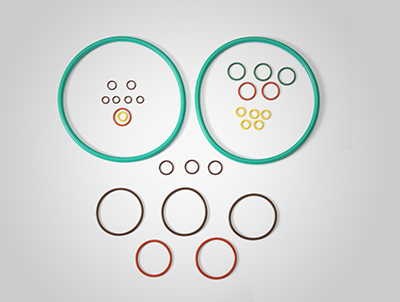
Custom rubber O-rings — static seal, dynamic seal, hydraulic, pneumatic, food-grade and medical-grade categories, all available as custom-made hardness, dimensions, color and physical properties.
Problem Definition: Why One Compound Cannot Cover Every O-Ring Position
Buyers frequently approach O-ring sourcing as a dimensional problem: measure the groove, match the cross-section, order the same material the previous supplier used. That approach works until the sealing position changes. A flange cover held under constant compression and a piston rod cycling in and out place the same polymer under two different stress patterns, and the failure mode that the buyer should be managing is different in each case.
What changes between a static and a dynamic position
- Relative motion. In static sealing the O-ring is compressed and stays in place. In dynamic sealing the ring or the mating surface moves, so friction, abrasion and heat generation enter the specification.
- Primary failure risk. Static positions fail mainly through compression set, chemical attack, extrusion under pressure or poor groove fit. Dynamic positions fail mainly through wear, extrusion into the clearance gap and surface damage.
- Media and environment. Longrun Rubber's application records describe the same component family working under high temperature, low temperature, high pressure, vibration, chemical exposure and varied environments, providing sealing, vibration damping, dustproof, waterproof, corrosion-resistant and oil-resistant protection. Which of those conditions dominates is what decides the material.
- Parameter definition. Hardness, dimensions, color and physical properties are all custom-made at Longrun Rubber, so the buyer and the manufacturer must agree on the required values rather than selecting from a fixed list.
Where specification errors show up in practice
The clearest signal is an inconsistency between the O-ring category ordered and the sealing position described. Longrun Rubber separates Static Seal and Dynamic Seal O-rings as distinct catalogue entries, and separates Hydraulic from Pneumatic O-rings, because the requirement sets differ. When a purchaser treats those categories as interchangeable labels and orders purely by size, the supplier has no way to flag that the material shortlist should have been rebuilt — and the cost of that gap usually appears later, as leakage, premature replacement or an unplanned line stop rather than as an incoming inspection rejection.
Industry Background: A Larger and More Regulated Sealing Market
Rubber sealing demand is broad and, according to published market research, still expanding. Zion Market Research valued the global industrial rubber product market at USD 28.28 billion in 2024 and projects it to reach USD 45.19 billion by 2034. Within that, materials that matter directly to O-ring selection are growing at different rates. Market Research Future estimated the EPDM rubber market at USD 10.54 billion in 2024, driven significantly by the automotive and construction sectors. Acumen Research and Consulting estimated the global liquid silicone rubber (LSR) market at USD 2.9 billion in 2024, with a projected CAGR of 9.6% through 2033, and Grand View Research reported that the automotive segment alone held a 34.1% revenue share of the LSR market in 2023. On the medical side, Market Research Future valued medical grade silicone rubber at USD 7.95 billion in 2024, with expectations of USD 14.2 billion by 2035.
Two caveats are worth carrying into any procurement discussion. First, industrial rubber market estimates vary widely depending on scope: Zion Market Research reports USD 28.28 billion for 2024, while other published figures such as USD 51.82 billion (2025, Fortune Business Insights) and USD 129.0 billion (2025, Future Market Insights) reflect different inclusion rules — most notably whether tire products are counted alongside non-tire industrial rubber products. Second, supply is heavily concentrated: major global players in the synthetic rubber market include Sinopec, Arlanxeo and ExxonMobil, and China exports approximately EUR 4.01 billion in rubber products to the European Union annually, which means material availability and traceability questions are routine rather than exceptional for importers.
Regulatory expectations are equally concrete. ASTM D2000 is the primary standard classification system for rubber products in automotive and industrial applications; ISO 3302-1 provides dimensional tolerances for molded, extruded and calendared rubber products; and FDA 21 CFR 177.2600 specifies the requirements for rubber articles intended for repeated use in food contact applications. For an O-ring buyer, these three references define the minimum vocabulary of a specification: how the material is called out, how the dimensions are toleranced, and how the food-contact claim is substantiated.
Detailed Solution: Selecting O-Ring Materials by Sealing Mode
Longrun Rubber produces custom rubber O-rings from a declared material range: EPDM, NBR/Buna-N, natural rubber (NR), CR/Neoprene, FKM/Viton, SBR, HNBR, Silicone Rubber (SiR/VMQ) and Medical Grade Silicone Rubber. The following notes describe how buyers typically pair those materials with sealing duty. They are qualitative selection guidance, not measured performance limits — final values are confirmed against the project specification and sample validation.
NBR / Buna-N
Nitrile, also written Buna-N, is the customary starting point where petroleum-based oils, greases and hydraulic fluids are the dominant media. It is commonly specified for hydraulic O-rings, oil-resistant seals and oil-resistant gaskets in static joints, and it performs in dynamic duty where the motion is moderate and the media is oil-based. Nitrile is generally not the preferred choice where prolonged ozone exposure and direct weathering dominate the environment.
EPDM
EPDM is usually chosen for water, steam, washdown and outdoor exposure, where its weathering, ozone and ultraviolet profile is the reason it is specified. It fits static seals on outdoor equipment, water and glycol circuits, and many sanitary and industrial applications. Where petroleum-based oil is the primary medium, EPDM is generally not the first option — the same property profile that makes it strong against weather makes it a weaker fit for oil-dominated service.
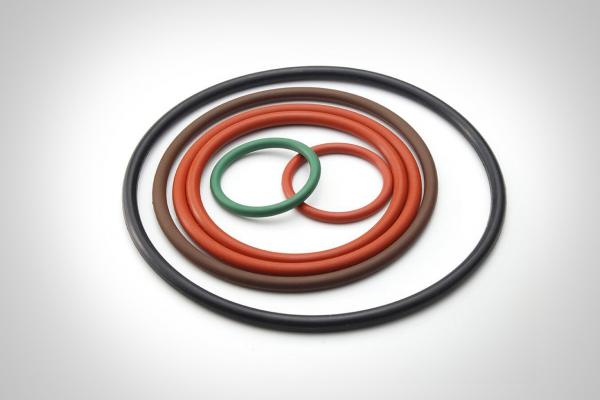
Material family is the first decision: EPDM, NBR/Buna-N, silicone rubber and other compounds are produced to order rather than stocked as a single standard compound.
Silicone Rubber (SiR / VMQ) and Medical Grade Silicone Rubber
Silicone rubber is used where temperature flexibility and clean-material characteristics matter more than oil resistance. It supports food-grade and medical-grade O-ring categories, and Longrun Rubber lists Medical Grade Silicone Rubber as a distinct material alongside the general-purpose Silicone Rubber (SiR/VMQ) grade. Growth in this group is visible in the data: the liquid silicone rubber market was estimated at USD 2.9 billion in 2024 with a projected CAGR of 9.6% through 2033, and medical grade silicone rubber is projected to move from USD 7.95 billion in 2024 to USD 14.2 billion by 2035. For a static seal in a food-contact or medical device assembly, silicone is a frequent shortlist entry; for a dynamic seal, the abrasion profile of the specific application must be reviewed before the compound is frozen.
FKM / Viton and HNBR
FKM/Viton and HNBR enter the shortlist when the media is aggressive, the operating heat is high, or both. HNBR is generally selected where the nitrile service window is not sufficient but a nitrile-family material is still preferred, and FKM/Viton is commonly paired with chemical-resistant and high-temperature seal programs. In dynamic positions these materials are evaluated together with hardness and dimensional control, because a chemically capable compound still has to survive contact motion.
CR / Neoprene, NR and SBR
CR/Neoprene, natural rubber (NR) and SBR cover general industrial sealing and damping duty. Neoprene is used where a moderate balance of oil and weather resistance is required; natural rubber is widely used for vibration damping and general gaskets; SBR serves general-purpose components. In O-ring programs these are usually specified for lower-severity static positions and for cushioning or protection functions rather than for high-duty dynamic sealing.
Parameters: hardness, dimensions, color and physical properties
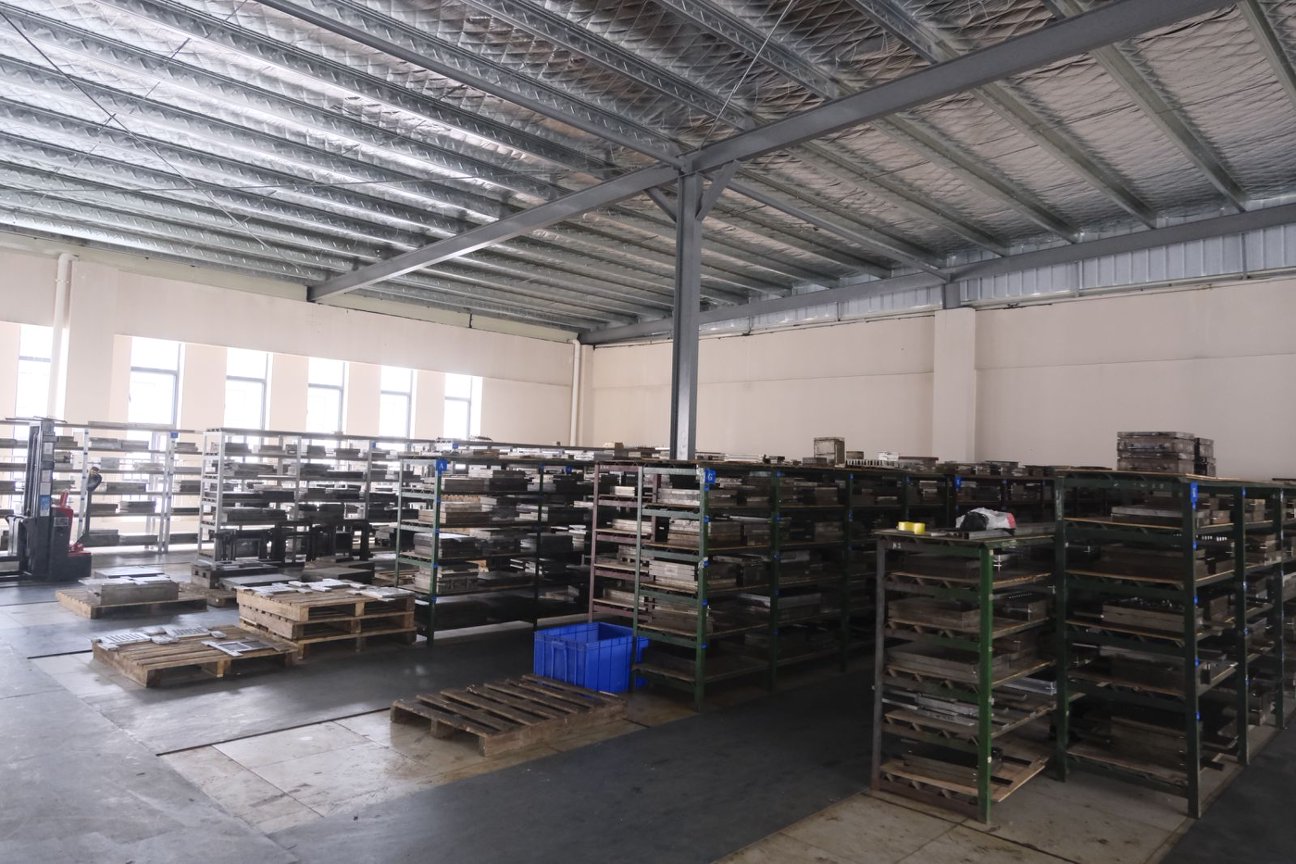
Because hardness, dimensions, color and physical properties are custom-made, the mold and tooling program is part of the O-ring specification, not an afterthought.
- Hardness. Configured to the project rather than fixed. A static face seal and a dynamic rod seal in the same assembly may require different hardness values, and the value must be stated on the drawing before quoting.
- Dimensions. Since ISO 3302-1 defines dimensional tolerances for molded rubber products, the tolerance class — not only the nominal size — should be agreed. Precision dimensions are a documented outcome in Longrun Rubber's case records.
- Color. Custom color is available and is often used as a visual identifier for material grade or for a specific production line.
- Physical properties. Tensile strength, elongation at break and tear strength are the properties most often written into custom rubber molding specifications; Longrun Rubber's case records report tensile strength of at least 8 MPa, elongation at break of at least 450% and tear strength of at least 35 kN/m on a sanitary sealing program, and tensile strength of at least 7 MPa, elongation of at least 400% and tear strength of at least 15 kN/m on an automotive rubber parts program.
- Material callout. ASTM D2000 provides the classification language that lets two suppliers quote against the same compound description instead of two incompatible internal codes.
- Compliance. For repeated food contact, FDA 21 CFR 177.2600 is the reference point; medical-grade duty is served through the Medical Grade Silicone Rubber material and the Medical-grade O-Ring category.
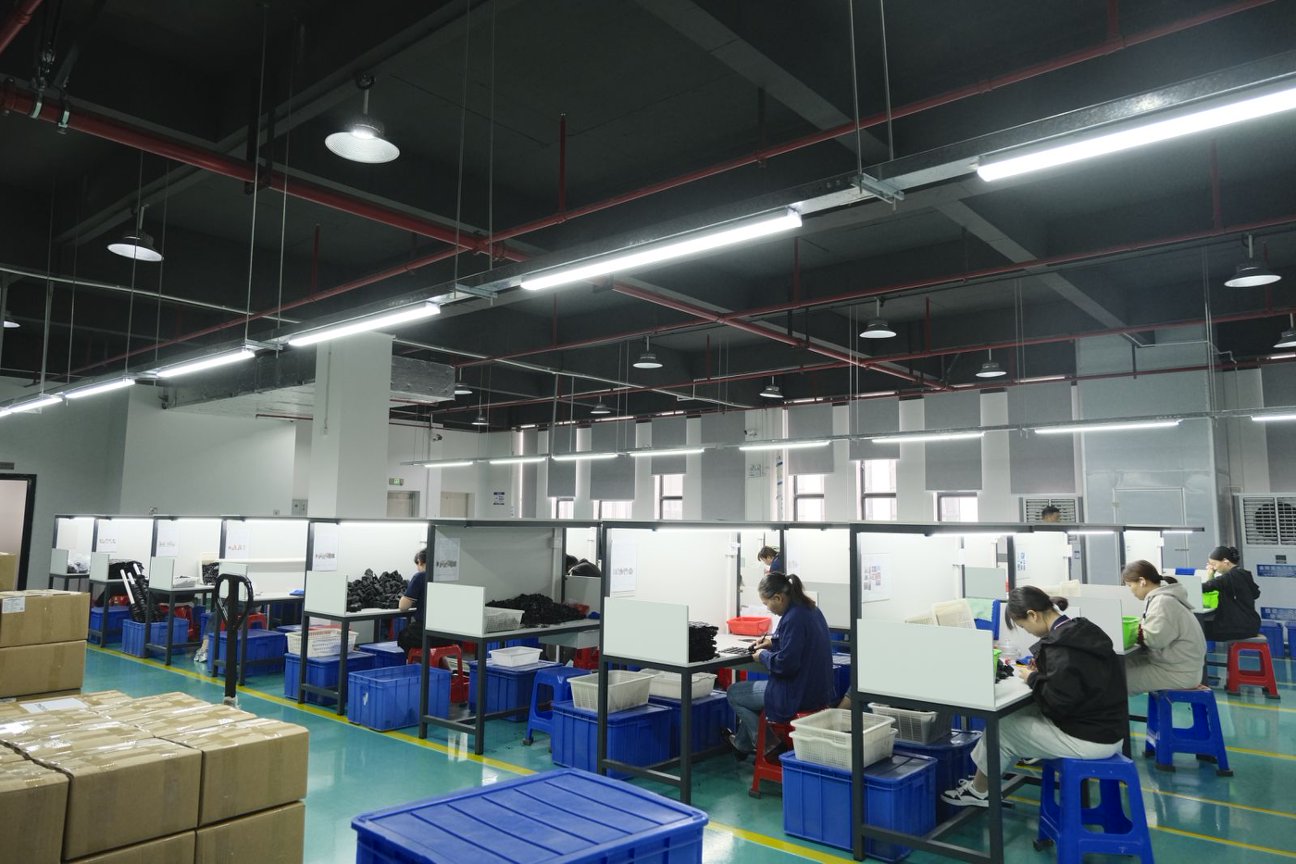
Process inspection: Longrun Rubber applies 100% testing, which is how dimensional and property targets are held after the specification is locked.
Step-by-Step Breakdown: A Seven-Step O-Ring Selection Workflow
- Classify the sealing mode first. Decide whether the position is a Static Seal O-Ring, a Dynamic Seal O-Ring, a Hydraulic O-Ring, a Pneumatic O-Ring, a Food-grade O-Ring or a Medical-grade O-Ring. This single classification determines which questions come next.
- Characterize the service environment. Record high temperature, low temperature, high pressure, vibration and chemical exposure for the position, and note whether oil resistance, water resistance, dustproofing or corrosion resistance is the dominant function.
- Build a material shortlist of two or three compounds. Start from NBR/Buna-N for oil-dominated duty, EPDM for water, weather and sanitary duty, silicone or medical grade silicone rubber for temperature-flexible and medical or food contact duty, and FKM/Viton or HNBR where aggressive media and elevated heat are present.
- Fix hardness, dimensions, color and physical properties. Provide the drawing with nominal sizes, the required hardness and the target physical properties so that both parties are pricing the same part.
- Agree the standards framework. Reference ASTM D2000 for the material classification, ISO 3302-1 for molded dimensional tolerances and FDA 21 CFR 177.2600 where repeated food contact applies. For medical-grade duty, specify the Medical Grade Silicone Rubber route.
- Validate on a sample before mass production. Test the candidate compound in the real sealing mode and the real media; confirm dimensions against the agreed tolerance class; review inspection records. Longrun Rubber's stated quality control approach is 100% testing.
- Lock production and support terms. Confirm the OEM production mode, the material batch declarations, the warranty and returns arrangement and the technical assistance channel before releasing the first production order.
Use Cases: Static and Dynamic Programs in Practice
1. Hydraulic static joint on industrial equipment
A flanged joint or end cap under constant compression is a static sealing position. The priorities are compression set resistance, oil resistance and dimensional fit. The natural shortlist is a nitrile-based O-ring — a Hydraulic O-ring or Static Seal O-ring category — and the specification conversation focuses on hardness, groove fit and the tolerance class rather than on wear behavior.
2. Pneumatic dynamic seal in a repeated-motion actuator
An element that cycles continuously introduces relative motion, so abrasion behavior, friction and extrusion control move to the top of the requirement list. The correct catalogue entry is the Dynamic Seal O-ring or Pneumatic O-ring category, and the material decision is reviewed together with hardness and surface condition, since a compound that seals perfectly in a static joint may still wear prematurely when it is asked to move.
3. Sanitary food and medical sealing program (reference case)
Longrun Rubber's case record for a US customer in the food, medical, machinery and sanitary segment describes a molded rubber gasket program running 3,000k units per year over a five-year relationship. The stated function set covers vibration and noise reduction, cushioning and protection, dustproof and waterproof protection, and resistance to heat and chemicals. Reported results include tensile strength of at least 8 MPa, elongation at break of at least 450% and tear strength of at least 35 kN/m, with a process capability above Cpk 1.33 and a defect rate below 150 ppm. Although the part in this record is a gasket rather than an O-ring, it shows the level at which a sealing specification should be defined when food-grade or medical-grade compliance is in scope.
4. Automotive rubber-to-plastic dynamic part (reference case)
A second US program — an automotive rubber parts OEM — runs 1,000k units per year over five years. Its stated applications are shock absorption and noise reduction, sealing and leakage prevention, conveying media, and protection of transmission components. Reported material results are tensile strength of at least 7 MPa, elongation at break of at least 400% and tear strength of at least 15 kN/m, with Cpk above 1.33, a defect rate below 150 ppm, precise dimensions and firm rubber-to-plastic bonding. For buyers, the transferable lesson is that abrasion and bonding performance are specified and verified numerically, not assumed from the material name alone.
Comparison: Static vs Dynamic Requirements and a Material Shortlist
The first table isolates the specification differences between the two sealing modes. It is a decision framework, not a performance rating.
| Specification dimension | Static sealing O-ring | Dynamic sealing O-ring |
|---|---|---|
| Relative motion in service | None after installation | Continuous or intermittent movement |
| Design question to answer | Does the material resist the media and hold its shape over time? | Does the material resist the media and survive contact motion? |
| Main risk to control | Compression set, chemical attack, extrusion under pressure, poor groove fit | Abrasion, friction heat, extrusion into the clearance, contact surface damage |
| Material emphasis | Media compatibility and environment resistance first | Abrasion and wear profile together with media compatibility |
| Hardness and dimension sensitivity | Fit and compression are the governing factors | Fit, compression and surface condition all matter |
| Longrun Rubber catalogue category | Static Seal O-Ring (also Hydraulic, Food-grade, Medical-grade) | Dynamic Seal O-Ring (also Hydraulic, Pneumatic) |
| Validation focus before mass production | Media exposure, dimensional conformance, property test results | Media exposure, dimensional conformance, property results and wear behavior |
The second table maps the declared material range to typical sealing duty. Every material listed is available as a custom-made option with configurable hardness, dimensions, color and physical properties.
| Material (as listed in the custom range) | Sealing contexts buyers commonly pair it with | Static or dynamic emphasis | Buyer note |
|---|---|---|---|
| NBR / Buna-N | Hydraulic O-rings, oil-resistant seals and gaskets | Both; most often static | Usual starting point where petroleum-based oil is the dominant media; generally not preferred for prolonged ozone and UV exposure |
| EPDM | Water, washdown, outdoor and sanitary static seals | Mainly static | Chosen for weathering, ozone and UV resistance; generally not the first option where petroleum-based oil dominates |
| Silicone Rubber (SiR / VMQ) | Food-grade O-rings, general industrial seals | Both | Temperature-flexible and clean-material oriented; available as liquid silicone rubber molded parts |
| Medical Grade Silicone Rubber | Medical-grade O-rings and seals | Both | The declared material for medical-grade duty; specify it explicitly rather than assuming it from a general silicone grade |
| FKM / Viton | Chemical-resistant and high-temperature seals | Mostly static; dynamic where heat and chemicals dominate | Shortlisted when aggressive media and elevated heat occur together |
| HNBR | Hydraulic and high-temperature gaskets and seals | Both | Generally selected when the nitrile service window is no longer sufficient |
| CR / Neoprene | General industrial seals, gaskets and grommets | Both | Moderate balance of oil and weather resistance for general duty |
| NR (natural rubber) | Damping and general-purpose gaskets | Static and general duty | Widely used where vibration damping is the primary function |
| SBR | General-purpose rubber components | Static and general duty | General-purpose elastomer for standard sealing and protection parts |
FAQ
Which standards matter when I specify a rubber O-ring for food or medical contact?
Three references cover most buyer questions. ASTM D2000 is the primary classification system for rubber products in automotive and industrial applications and provides the material callout language. ISO 3302-1 provides dimensional tolerances for molded rubber products, which is what a drawing should reference for size control. FDA 21 CFR 177.2600 specifies the requirements for rubber articles intended for repeated use in food contact applications and is the reference point for a food-grade O-ring or seal. Medical-grade duty is addressed through the Medical Grade Silicone Rubber material and the Medical-grade O-Ring category. In practice, the compliance file should be requested together with the sample, not after the production order.
Can one supplier cover both static and dynamic O-rings with custom hardness and dimensions?
Longrun Rubber Products (Huizhou) Co., Ltd. lists six O-ring categories — Static Seal O-Ring, Dynamic Seal O-Ring, Hydraulic O-Ring, Pneumatic O-Ring, Food-grade O-Ring and Medical-grade O-Ring — all produced as custom-made parts with configurable hardness, dimensions, color and physical properties. The declared material range covers EPDM, NBR/Buna-N, NR, CR/Neoprene, FKM/Viton, SBR, HNBR, Silicone Rubber (SiR/VMQ) and Medical Grade Silicone Rubber. Production runs in OEM mode with 100% testing, and the company operates a 10,000 m² factory in Huizhou, Guangdong with 120 employees, including a 20-engineer technical team.
What actually drives the cost of a custom rubber O-ring?
A custom O-ring is quoted per project once the specification is fixed, so cost is driven by the specification rather than by a public price list. The main drivers are the selected material family, the configured hardness, dimensions, color and physical properties, the tolerance class applied to the drawing, whether new tooling is required for the dimension, the order quantity, and the validation and documentation scope requested. Minimum order quantity at Longrun Rubber is set according to customer requirements, which allows a pilot quantity to be structured before a full production commitment.
How should I validate an O-ring material before mass production?
Validation should mirror the real sealing mode. Run the candidate compound in the actual static or dynamic position, with the actual media and environment, and confirm dimensional conformance against the agreed tolerance class under ISO 3302-1. Confirm the material callout under ASTM D2000, and where food contact applies, review the FDA 21 CFR 177.2600 basis. Ask for property test results and process data: Longrun Rubber's case records report Cpk above 1.33 and defect rates below 150 ppm on long-running programs, supported by 100% testing.
What lead time and after-sales support should I plan for?
Longrun Rubber's stated production lead time is 20 days, with export markets described as global and an export ratio of 80%. After-sales support covers warranty and returns along with technical assistance, which matters for sealing parts because a leakage question is usually resolved by reviewing the material, the groove and the assembly process together rather than by replacing the part alone. If you are evaluating an O-ring program for a static or dynamic application, the practical next step is to send the drawing, the sealing mode and the media list and request a sample and quotation against that specification — contact tommyliu@longrunrubber.com or hang@longrunrubber.com, or reach the team on WhatsApp at +86 13006697998.
Conclusion: Fix the Sealing Mode Before You Fix the Material
O-ring selection is a sequence, not a single choice. Classify the position as static or dynamic, describe the environment in terms of temperature, pressure, vibration and chemical exposure, shortlist two or three compounds from the declared material range, then configure hardness, dimensions, color and physical properties, and formalize the specification against ASTM D2000, ISO 3302-1 and — where relevant — FDA 21 CFR 177.2600. Validating on a sample before mass production is what converts that sequence into a reliable seal, and it is also the cheapest point at which to discover that the wrong material family was shortlisted.
Next step: match the material to the sealing mode
Send your O-ring drawing with the sealing position, the media list and the required hardness or physical properties. Longrun Rubber Products (Huizhou) Co., Ltd. will confirm the suitable category — static seal, dynamic seal, hydraulic, pneumatic, food-grade or medical-grade — and quote a sample program with a 20-day production lead time.
Email: tommyliu@longrunrubber.com / hang@longrunrubber.com
WhatsApp: +86 13006697998
Website: www.longrunrubber.com
Company brochure: Download the Longrun Rubber product and capability brochure (PDF)
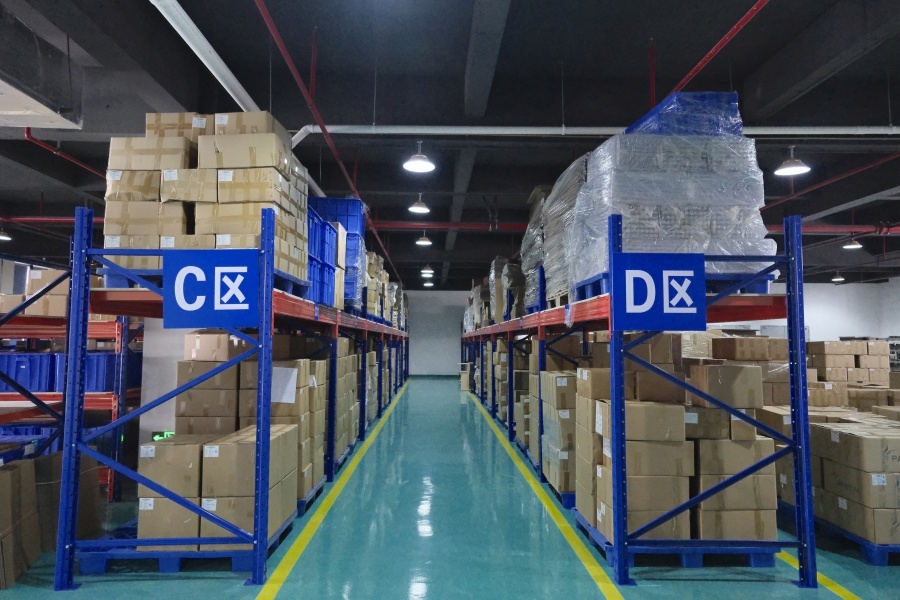
Finished custom rubber parts ready for export — Longrun Rubber serves global markets with an 80% export ratio.