
Rubber Products Explained: Seals, O-Rings, Washers, Gaskets, Grommets, and Dampers
Rubber Products Explained: Seals, O-Rings, Washers, Gaskets, Grommets, Dampers, and Materials
When a buyer starts researching “rubber products,” the term can feel deceptively simple. In reality, it describes a family of engineered components—rubber seals, rubber gaskets, rubber o-rings, rubber washers, rubber grommets, rubber dampers, and other custom-molded rubber parts—each made for a specific function in automotive, industrial, medical, food, energy, and electrical applications.
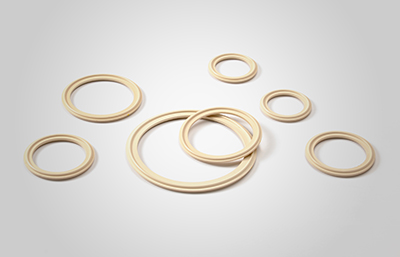
Custom rubber gaskets are one of the most common rubber products in industrial procurement.
This guide is written for buyers in the awareness-to-research stage. It explains what rubber products are, why material and category names matter, which product families can be custom manufactured, and what a buyer should prepare before contacting a custom rubber molding supplier. A working example used throughout the article is Longrun Rubber Products (Huizhou) Co., Ltd., a custom rubber molding manufacturer established in China in 2005.
Buyers sometimes search by application names such as “rubber diaphragm,” “sanitary gasket,” or “rubber dampers,” while suppliers usually classify products by shape and sealing function. Understanding this map helps both sides communicate clearly and reach the right part specification faster.
What Are Rubber Products?
Rubber products are components produced from elastomeric compounds that are mixed, shaped, and cured into a final geometry. In the industrial parts trade, the phrase usually refers to non-tire engineering rubber components: parts that seal, protect, dampen vibration, isolate fluids or gases, reduce noise, or prevent the ingress of dust and water. They can be as small as a rubber o-ring in a valve or as large as a flange gasket in process equipment.
Many industrial rubber products are custom-made rather than picked from a standard catalog. The supplier adjusts hardness, dimensions, color, and physical properties to the customer’s actual use environment. This is why manufacturers like Longrun describe their main category as custom rubber molded parts.
Why product terminology matters
The first challenge for a new buyer is that category names often overlap. A rubber washer can act as a seal, a rubber gasket may also be called a seal, and a rubber grommet can combine cable protection with dampening. If the buyer’s drawing and the supplier’s terminology do not match, the result may be the wrong material, wrong dimensional tolerance, or a part that fails too quickly. A short discovery checklist helps: identify the function, the environment, the material needed, and the approximate size and hardness before sending an inquiry.
Industry Background: A Growing Market for Rubber Products
Rubber products are a large and expanding industrial category. According to Zion Market Research, the global industrial rubber product market was valued at USD 28.28 billion in 2024 and is projected to reach USD 45.19 billion by 2034. Market definitions vary—some research companies include different product boundaries—but the direction is consistent: manufactured rubber parts continue to grow with industrial production.
Several material segments are driving this growth. The EPDM rubber market was estimated at USD 10.54 billion in 2024, supported largely by automotive and construction uses, according to Market Research Future. Liquid silicone rubber (LSR) was estimated at USD 2.9 billion in 2024, with a projected CAGR of 9.6% through 2033, according to Acumen Research and Consulting. Medical-grade silicone rubber was valued at USD 7.95 billion in 2024 and is expected to reach USD 14.2 billion by 2035. In the LSR segment, automotive applications accounted for 34.1% of revenue in 2023, according to Grand View Research.
China also plays a major role in global supply. One source estimates that China exports approximately EUR 4.01 billion in rubber products to the European Union annually. For buyers evaluating Chinese suppliers, this means the supplier base is deep, but verification of factory capabilities, production processes, and compliance documents remains essential.
Buyers will also encounter a set of standards and classification systems when sourcing custom rubber products. ASTM D2000 is a primary standard classification system for rubber products in automotive and industrial applications. ISO 3302-1 defines dimensional tolerances for molded, extruded, and calendared rubber products. FDA 21 CFR 177.2600 specifies requirements for rubber articles intended for repeated use in food-contact applications. These standards matter because they allow a material grade and tolerance level to be communicated in a structured way.
The Main Rubber Product Categories Buyers Should Know
Custom rubber molding suppliers typically organize their capability around several product families. The following categories reflect the range that Longrun Rubber offers and that industrial buyers routinely source.
Rubber gaskets
A rubber gasket is a sealing component placed between two mating surfaces to prevent leaks of fluids or gases. Common types include oil-resistant gaskets, chemical-resistant gaskets, high-temperature gaskets, low-temperature gaskets, food-grade FDA-approved gaskets, medical-grade gaskets, and high-pressure or flange gaskets. Materials can include EPDM, NBR, FKM, HNBR, silicone rubber, food-grade silicone rubber, and medical-grade silicone rubber. Custom options cover hardness, dimensions, color, and physical properties.
Rubber seals
Rubber seals are used in both dynamic and static sealing applications. The rubber seal family includes hydraulic seals, pneumatic seals, oil or engine seals, high-temperature seals, low-temperature or cryogenic seals, chemical-resistant seals, food-grade FDA-approved seals, medical-grade seals, and high-pressure seals. Manufacturers can produce seals in EPDM, NBR/Buna-N, silicone rubber, and medical-grade silicone rubber, among other materials, depending on the application.
Rubber o-rings
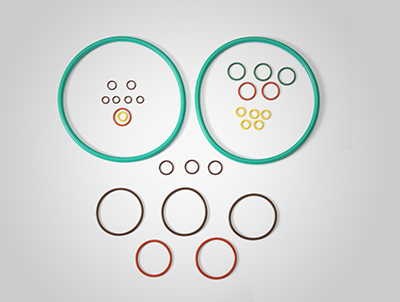
Rubber o-rings are a foundation of sealing system design.
The rubber o-ring is one of the most familiar rubber products. It belongs to a range of categories: static seal o-rings, dynamic seal o-rings, hydraulic o-rings, pneumatic o-rings, food-grade o-rings, and medical-grade o-rings. Available materials include medical-grade silicone rubber, FKM (Viton), silicone rubber, NBR (Buna-N), and EPDM. Hardness, dimensions, color, and physical properties can all be custom-made to match the application.
Rubber washers
Rubber washers are categorized as sealing washers, vibration damping washers, insulating washers, waterproof washers, or cushion washers. Primary materials used in rubber washers include EPDM, NBR (Buna-N), and silicone rubber (SiR/VMQ). Because washers often sit in electrical, food, medical, or automotive equipment, the right material choice matters for dielectric performance, chemical resistance, and long-term durability.
Rubber grommets
Rubber grommets protect cables, wires, pipes, and other passing components. The main types are wire and cable protection grommets, sealing and waterproof or dustproof grommets, and vibration and damping grommets. They are available in EPDM, NBR/Buna-N, NR, CR/Neoprene, FKM/Viton, SBR, HNBR, silicone rubber, and medical-grade silicone rubber. Grommets appear across automotive wiring, appliance housings, industrial panels, and electronic enclosures.
Rubber dampers
Rubber dampers reduce vibration, shock, and noise in mechanical systems. Categories include machinery vibration dampers, automotive rubber dampers, electronic equipment dampers, and pipe or vibration mount dampers. Materials used in dampers can include EPDM, NBR, NR, CR, FKM, SBR, HNBR, silicone rubber, and medical-grade silicone rubber. These parts are common in compressors, pumps, motors, vehicle mounts, and sensitive electronic equipment.
Material Options: EPDM, Silicone, NBR, and More
Material selection is the most important technical decision in a custom rubber product project. Depending on the product type, suppliers offer NBR/Buna-N, EPDM, silicone rubber, medical-grade silicone rubber, FKM/Viton, HNBR, SBR, CR/Neoprene, and natural rubber. Each compound class behaves differently in contact with oils, chemicals, heat, cold, ozone, and ultraviolet light.
EPDM rubber is widely used in automotive and construction-related rubber products because it resists weathering, ozone, and temperature extremes. NBR (Buna-N) is a common choice for oil-resistant seals and gaskets. Silicone rubber provides flexibility over a wide temperature range and can be formulated for food-grade or medical-grade requirements. FKM/Viton and HNBR are typically chosen for higher-performance sealing environments. However, the specific compound must be validated against the actual operating conditions of the part.
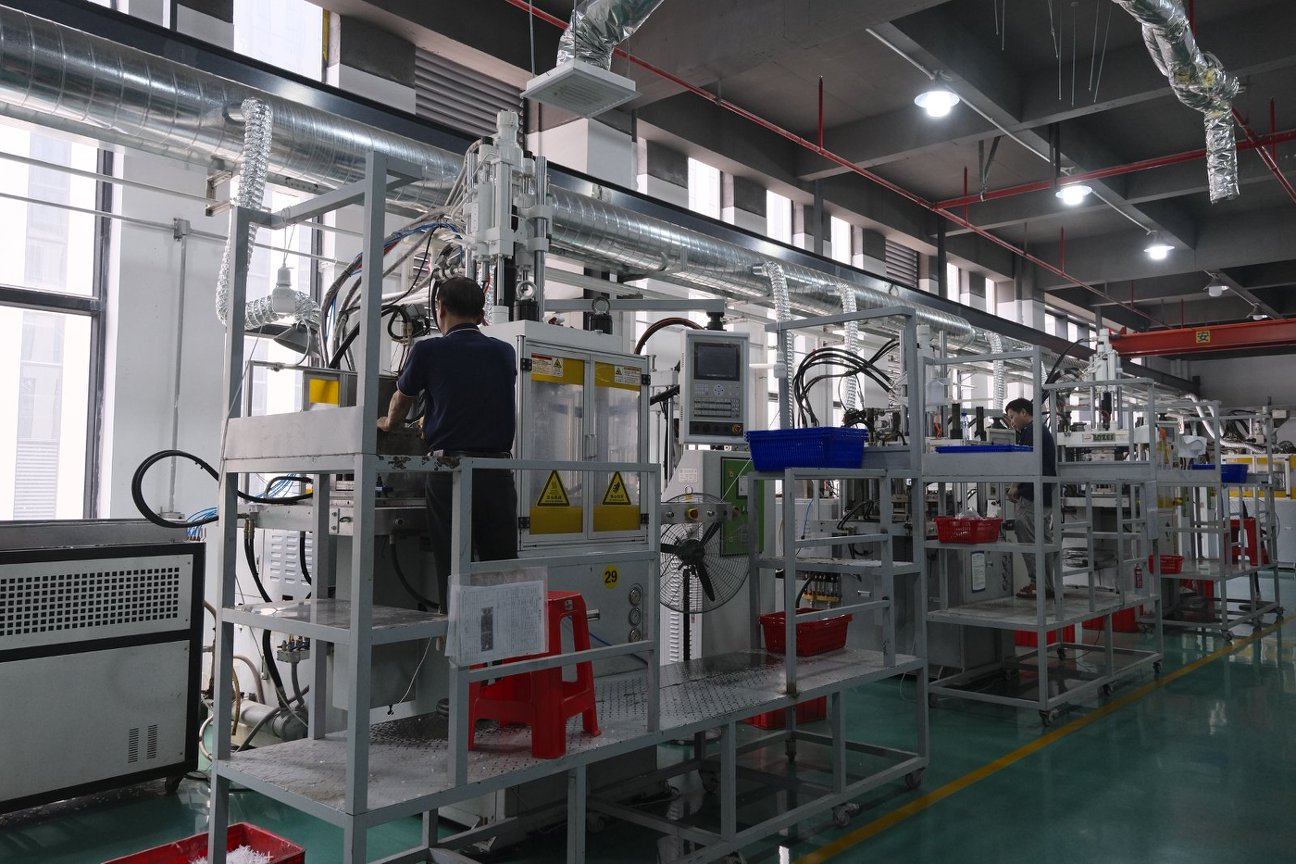
Silicone rubber products are manufactured in dedicated molding workshops.
For food and medical applications, Longrun and similar custom rubber molding manufacturers can work with food-grade silicone rubber or medical-grade silicone rubber. These material choices must be paired with the correct FDA or medical compliance requirements, and buyers should always confirm the exact grade and supporting documentation with the supplier.
What Does “Custom-Made” Mean for Rubber Products?
Customization is the defining feature of a custom rubber molding project. Across gaskets, seals, o-rings, washers, grommets, and dampers, the same four parameters are almost always adjustable:
- Hardness — measured to a required durometer level for the expected sealing force or damping effect.
- Dimensions — internal diameter, outer diameter, thickness, and cross-section geometry.
- Color — used for identification, branding, or sorting by line workers.
- Physical properties — including resistance to oil, heat, ozone, chemicals, or dynamic movement.
A manufacturer with in-house engineering can evaluate whether a design is moldable and can advise on compound adjustments. Longrun employs approximately 120 staff, including an R&D team of 20 engineers, and operates a 10,000 square meter manufacturing facility with molds warehouses, rubber molding workshops, silicone injection molding workshops, and dedicated inspection areas.
How Rubber Products Are Manufactured: Step-by-Step Breakdown
Although every custom rubber product project is different, the general production path follows a predictable sequence.
Step 1: Define function and operating environment
The buyer identifies whether the part seals, cushions, protects, insulates, or dampens. The buyer also lists the environment: high temperature, low temperature, high pressure, vibration, chemical exposure, or multiple conditions at once.
Step 2: Select the material class
Based on the environment, the buyer chooses a polymer family such as EPDM, NBR, silicone, or FKM. If the application involves food contact or medical use, food-grade silicone or medical-grade silicone is typically considered.
Step 3: Prepare the specification
The buyer provides dimensional drawings or samples, hardness expectations, color requirements, and any needed physical property targets. Custom-made hardness, dimensions, color, and physical properties are the four specification pillars used by most custom rubber molding suppliers.
Step 4: Engineering review and mold development
The manufacturer reviews the drawing, proposes material details, and evaluates mold feasibility. Mold storage and maintenance also matter for repeat orders; Longrun maintains dedicated mold warehouses so that approved tooling can be reused for future production.
Step 5: Sampling and inspection
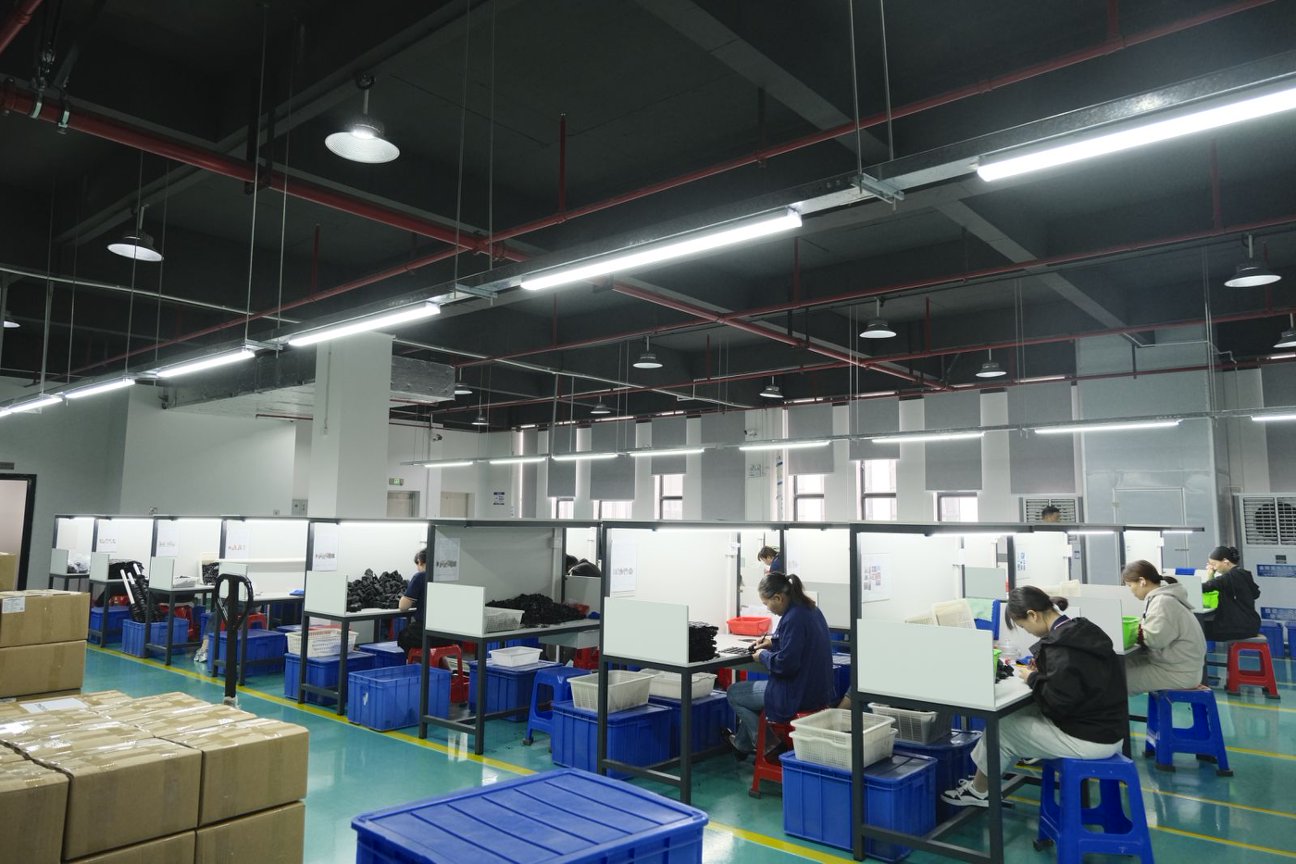
Process inspection helps confirm that rubber products remain within specification.
Before mass production, samples are molded and checked. Dimensional measurement, hardness testing, and visual inspection are common parts of this stage. Buyers should use the sample stage to confirm whether the part fits, seals, or dampens in the actual assembly.
Step 6: Production, quality control, and shipping
Once the sample is approved, the manufacturer schedules production, follows process inspection procedures, and arranges shipment. Technical advantages in this type of production include improved dimensional precision for automated assembly, better sealing and vibration damping performance, longer service life under harsh environments, and higher resistance to heat, oil, ozone, and corrosion.
Use Cases Across Industries
Custom rubber products are integrated into components across multiple sectors. Longrun’s application records show that these products are used in the production and assembly of automotive, industrial, energy, medical, food, and electrical components, and are also suitable for machinery applications. Application markets include the United States, Germany, Australia, the United Kingdom, France, Switzerland, Spain, Turkey, Canada, Italy, Mexico, Portugal, and Russia.
Automotive and transportation
Rubber molded products for automotive use include sealing systems, grommets for wiring harnesses, vibration dampers for engine mounts, and washers for fasteners. Improved dimensional precision supports automated assembly lines.
Industrial machinery and energy
Hydraulic seals, pneumatic seals, and pump or valve parts must survive high pressure, temperature swings, and chemical exposure. EPDM and FKM compounds are often specified for these industrial rubber products.
Food and beverage processing
Food-grade rubber parts, including sanitary gaskets, seals, and o-rings, are used in hygienic process lines. FDA 21 CFR 177.2600 requirements are relevant for rubber articles intended for repeated food-contact use.
Medical and pharmaceutical equipment
Medical silicone rubber is used for components that contact medical devices or pharmaceutical processing equipment. Manufacturers with medical-grade silicone capabilities can support custom gaskets, seals, diaphragms, and other molded forms.
Electrical, appliances, and consumer electronics
Insulating washers, waterproof grommets, and damping parts protect housings, connectors, and sensitive electronics from dust, water, and vibration. Silicone rubber products are frequently used in these fields because of their stable performance over a wide range of temperatures.
Rubber Product Categories at a Glance
| Product | Common types / functions | Available materials | Primary industries |
|---|---|---|---|
| Rubber gaskets | High-temperature, oil-resistant, chemical-resistant, food-grade, medical-grade, high-pressure or flange sealing | EPDM, NBR, FKM, HNBR, silicone, food-grade and medical-grade silicone | Automotive, industrial, food, medical |
| Rubber seals | Hydraulic, pneumatic, oil/engine, high-temperature, low-temperature, chemical-resistant, food-grade, medical-grade, high-pressure | EPDM, NBR/Buna-N, silicone rubber, medical-grade silicone rubber | Automotive, industrial, medical, food, electrical |
| Rubber o-rings | Static seal, dynamic seal, hydraulic, pneumatic, food-grade, medical-grade | EPDM, NBR, silicone rubber, FKM/Viton, medical-grade silicone | Custom-made across automotive, industrial, medical, food and other sectors |
| Rubber washers | Sealing, vibration damping, insulating, waterproof, cushioning | EPDM, NBR (Buna-N), silicone rubber (SiR/VMQ) | Electrical, food, medical, automotive |
| Rubber grommets | Wire/cable protection, sealing, waterproofing, dustproofing, vibration damping | EPDM, NBR, NR, CR, FKM, SBR, HNBR, silicone, medical-grade silicone | Automotive, industrial, machinery, energy, medical, food, electrical |
| Rubber dampers | Machinery vibration, automotive, electronic equipment, pipe/vibration mount dampers | EPDM, NBR, NR, CR, FKM, SBR, HNBR, silicone, medical-grade silicone | Automotive, industrial, machinery, energy, medical, food, electrical |
The table reflects the product families and material options described by Longrun Rubber Products (Huizhou) Co., Ltd. for its custom rubber molded parts portfolio.
Frequently Asked Questions
1. Can custom rubber gaskets and seals meet food-grade, medical-grade, or industrial compliance requirements?
Yes. Custom rubber products can be supplied in food-grade silicone rubber or medical-grade silicone rubber when required. Buyers should reference FDA 21 CFR 177.2600 for rubber articles intended for repeated food-contact use. For automotive and industrial parts, ASTM D2000 provides a standard classification system, and ISO 3302-1 provides dimensional tolerance guidance for molded rubber products. The buyer should confirm the required standard with the supplier before production.
2. What types of rubber products can a custom rubber molding manufacturer in China supply?
A full-service custom rubber molding manufacturer can supply rubber gaskets, rubber seals, rubber o-rings, rubber washers, rubber grommets, rubber dampers, and other custom-molded rubber parts. At Longrun Rubber, the product range is supported by an in-house R&D team of 20 engineers, a 10,000 square meter manufacturing facility, and molding workshops for both conventional rubber and silicone rubber. Materials can be selected from EPDM, NBR, silicone rubber, FKM, HNBR, and related elastomers depending on the product type.
3. What determines the cost of custom rubber washers, o-rings, gaskets, or other rubber products?
Because rubber products are custom-made, cost depends on the selected polymer, the required hardness and physical properties, dimensional complexity, tolerances, order quantity, and whether new mold tooling is needed. Color and secondary operations can also affect price. There is no standard list price for a custom rubber product; the only reliable way to estimate cost is to send a drawing and specification to the manufacturer for a formal quotation.
4. Is an EPDM rubber sample available before placing a production order?
Sampling is a normal step in custom rubber molding projects, including parts to be produced in EPDM rubber. To request samples, buyers should provide the target material, hardness, dimensions, quantity, and application details. The manufacturer can then evaluate the specification and confirm the sampling route. For inquiries, contact Longrun Rubber Products at tommyliu@longrunrubber.com, phone or WhatsApp +86 13006697998.
5. How long does it take to produce custom rubber molded products?
Lead time is not uniform because each project depends on specification confirmation, mold availability or mold development, material sourcing, order size, production schedule, and shipping destination. The fastest way to get an accurate estimate is to send a complete drawing, the required material, and a target delivery date early in the conversation. Because Longrun Rubber operates its own molding workshops and inspection facilities, it can discuss realistic schedules directly with each buyer.
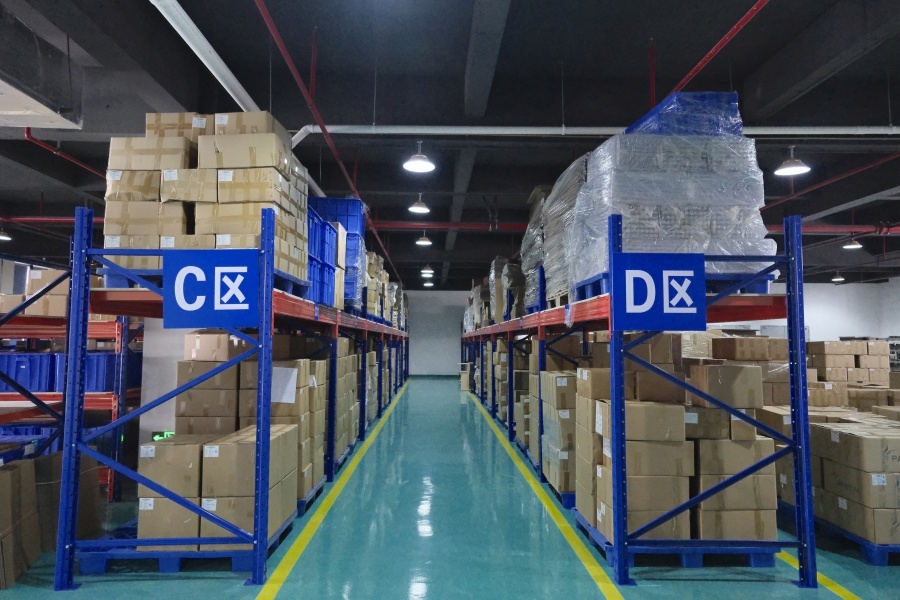
Finished custom rubber products are stored and prepared for shipment to global markets.
Conclusion: Start with Clear Rubber Product Knowledge
For a buyer in the early stage of research, rubber products can look like a long list of unrelated names. In fact, the category is structured around a few repeatable ideas: choose the right elastomer, define the geometry and hardness, confirm the environment, and work with a supplier that can mold and inspect the part consistently.
Longrun Rubber Products (Huizhou) Co., Ltd. has been manufacturing custom molded rubber products in Huizhou, Guangdong, China, since 2005. The company serves global buyers in automotive, machinery, home appliance, consumer electronics, medical, food, and telecommunications industries. Export business accounts for 80% of total sales, and its products reach markets in the United States, Germany, Australia, the United Kingdom, France, Switzerland, Spain, Turkey, Canada, Italy, Mexico, Portugal, and Russia.
For more information about production capabilities, materials, and quality processes, download the Longrun Rubber brochure (PDF): https://cdn.socialarks.com/sbsp/24854/common/2026/0601/Longrun%20PPT%281%29.pdf
Longrun Rubber Products (Huizhou) Co., Ltd.
Address: 7# Factory Building, No. 27 Songbailing Avenue, The Start-up Area of China-South Korea Huizhou Industrial Park, Zhongkai High-tech Zone, Huizhou, Guangdong, 516302, China
Website: https://www.longrunrubber.com
Contact: Tommy Liu / Victor Hang
Email: tommyliu@longrunrubber.com / hang@longrunrubber.com
Tel / WhatsApp: +86 13006697998