Rubber Washers vs Grommets: How to Choose the Right Component for Your Application
Rubber Washers vs Grommets: How to Choose the Right Component for Your Application
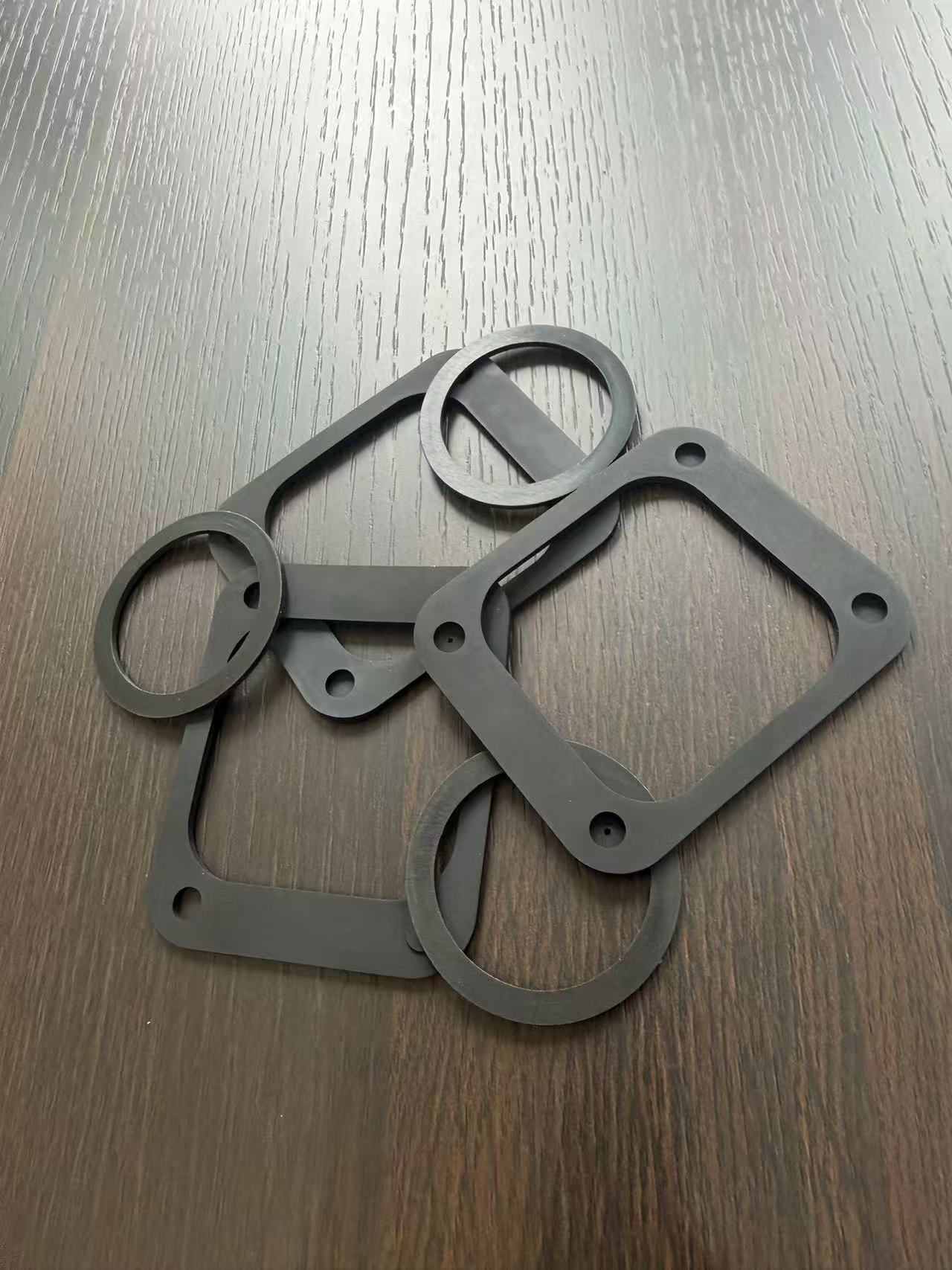
Short answer: a rubber washer is a flat component placed between two surfaces — under a fastener, between a flange pair, or inside a moving joint — where it distributes load, seals, insulates, or cushions. A rubber grommet has a central bore and is seated inside a hole in a panel or housing so that a cable, hose, tube, or shaft can pass through it, where it protects the passing element, seals the opening, and isolates vibration.
Specify a washer when the risk is a loose joint, a leak between two flat faces, or vibration travelling through a bolted connection. Specify a grommet when the risk is a chafed cable, a damaged harness, moisture entering through a panel opening, or vibration crossing a panel wall. When both risks exist on the same assembly, the technically correct answer is usually two parts rather than one compromise.
Problem Definition: Why Washers and Grommets Get Mixed Up in the Same RFQ
Both components are small, round, and rubber, and both are frequently quoted by the same supplier. That surface similarity is exactly where the mistake starts. A buyer who needs a cable-protection grommet may issue a drawing for a flat washer because the outside diameter looks comparable, while a buyer who needs a sealing washer may accept a grommet because the supplier already has the mold open.
The two parts work on different axes, and that is the cleanest way to separate them. A washer works in the axial direction: it is compressed between two surfaces, and its performance depends on bearing area, compression behavior, and hardness. A grommet works in the radial direction: it is retained by a hole, and its performance depends on bore size, wall thickness, and how well it grips both the panel and the element passing through it.
Three failure patterns appear repeatedly when the wrong component is used:
- Insufficient bearing area. A grommet placed under a bolt head or nut cannot spread load across the joint. The rubber deforms unevenly, torque retention drops, and the connection may loosen or leak.
- Exposed hole edges. A flat washer placed where a cable passes through a panel does not line the hole. The panel edge keeps abrading the cable jacket, and a flat washer cannot seal around a moving cable.
- Mismatched sealing logic. A washer seals between two flat faces; a grommet seals around a passing element and against the hole wall. Asking one part to perform the other’s sealing function usually creates a leak path that only shows up after thermal cycling or vibration.
Compliance adds a second layer of risk. Components intended for repeated contact with food must be made from compounds that meet FDA 21 CFR 177.2600, and automotive customers expect a quality system built to IATF 16949. Dimensional expectations should be written against a defined tolerance class — ISO 3302-1 provides dimensional tolerances for molded, extruded, and calendared rubber products — rather than a verbal “same as last time”. Both constraints are decided at the drawing stage, not at incoming inspection.
Industry Background: Why Component-Level Constraints Matter More Than Ever
Demand for molded rubber components keeps expanding, and the growth is concentrated in applications where the part is small but the constraints are strict. The global industrial rubber product market was valued at USD 28.28 billion in 2024 and is projected to reach USD 45.19 billion by 2034, according to Zion Market Research.
Material-level data tells a similar story. Market Research Future estimates the EPDM rubber market at USD 10.54 billion in 2024, driven significantly by the automotive and construction sectors, and values the medical grade silicone rubber market at USD 7.95 billion in 2024, with expectations to reach USD 14.2 billion by 2035. Acumen Research and Consulting estimates the liquid silicone rubber (LSR) market at USD 2.9 billion in 2024 with a projected CAGR of 9.6% through 2033, while Grand View Research reports that the automotive segment dominated the LSR market in 2023 with a 34.1% revenue share.
Alongside that demand, the technical framework around these parts has become more explicit. ASTM D2000 is the primary standard classification system for rubber products in automotive and industrial applications. ISO 3302-1 covers dimensional tolerances. FDA 21 CFR 177.2600 specifies the requirements for rubber articles intended for repeated use in food contact applications. For a buyer, these three references answer three different questions: what the compound must be, how much dimensional variation is acceptable, and whether the part may touch food.
The practical meaning for a washer-versus-grommet decision is direct: the component choice defines the function, and the standards define whether that function is repeatable. A part that fits but is classified incorrectly can pass incoming inspection and still fail in the field.
Detailed Solution: Washer and Grommet Categories, Materials, and Documented Constraints
The five rubber washer categories buyers actually specify
Longrun Rubber Products (Huizhou) Co.,Ltd., a custom rubber molded parts manufacturer established in China in 2005, organizes its rubber washer range (product code 3743) into five functional types rather than by shape alone:
- Sealing washer — closes the gap between two flat mating surfaces, including flange and joint interfaces.
- Vibration damping washer — reduces transmission of vibration and structure-borne noise through a fastened joint.
- Insulating washer — separates metallic parts electrically inside a bolted connection.
- Waterproof washer — resists water ingress at the interface it covers.
- Cushion washer — absorbs compression and protects fragile or coated surfaces from direct contact.
Every type is custom-made to the buyer’s requirements for hardness, dimensions, color, and physical properties. The listed industries for the washer range are automotive, industrial, machinery, energy, medical, food, and electrical.
The three rubber grommet categories
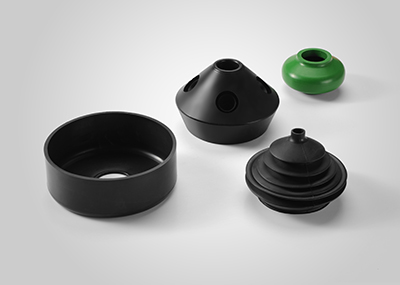
The rubber grommet range (product code 3740) is organized around the risk the part controls, not around its outline: wire and cable protection grommets, sealing / waterproof / dustproof grommets, and vibration or damping grommets. The same customization logic applies — hardness, dimensions, color, and physical properties are made to order — and the listed industries are identical to those of the washer range: automotive, industrial, machinery, energy, medical, food, and electrical.
That overlap is deliberate on the supply side. A single molded rubber platform can produce a washer and a grommet from the same compound batch, which matters when both parts sit on the same assembly and must age at the same rate.
Material choice sets the constraint boundary
The compound family is the largest single constraint in a washer or grommet specification, because it fixes temperature behavior, chemical exposure limits, and regulatory eligibility at the same time. Both the washer range and the grommet range are available in EPDM, NBR (Buna-N), NR, CR (Neoprene), FKM (Viton), SBR, HNBR, silicone rubber (SiR / VMQ), and medical grade silicone rubber.
In practice, the shortlist usually narrows quickly:
- EPDM is commonly specified for outdoor and weather-exposed assemblies where ozone and ultraviolet exposure are continuous.
- NBR / Buna-N is commonly selected where oil and fuel contact is the dominant requirement.
- Silicone rubber (SiR / VMQ) and medical grade silicone rubber are chosen for wide high and low temperature service and for medical or food-contact positions.
- FKM (Viton) and HNBR correspond to the chemical-resistant gasket category — for example, FKM gaskets and HNBR gaskets are both classified as chemical-resistant gaskets.
- NR, CR (Neoprene), and SBR remain general-purpose options where resilience, cost, and availability drive the decision.
Longrun Rubber Products describes its molded rubber portfolio as combining high abrasion resistance, high tensile strength, excellent elongation, high corrosion resistance, ozone and ultraviolet resistance, compression resistance, and resistance to both high and low temperatures, with suitability for dynamic and static sealing applications. The company exports 80% of its output to global markets, and its parts are used in automotive, machinery, home appliance, consumer electronics, medical, food, and telecommunication applications.
Specification note: for any washer or grommet, hardness, dimensions, color, and physical properties are custom-made rather than catalog-fixed. That is an advantage in fit and a risk in documentation — if the drawing does not state a tolerance class, two suppliers can deliver parts that both “meet the drawing” and still do not interchange.
Documentation constraints: what to ask for before the RFQ closes
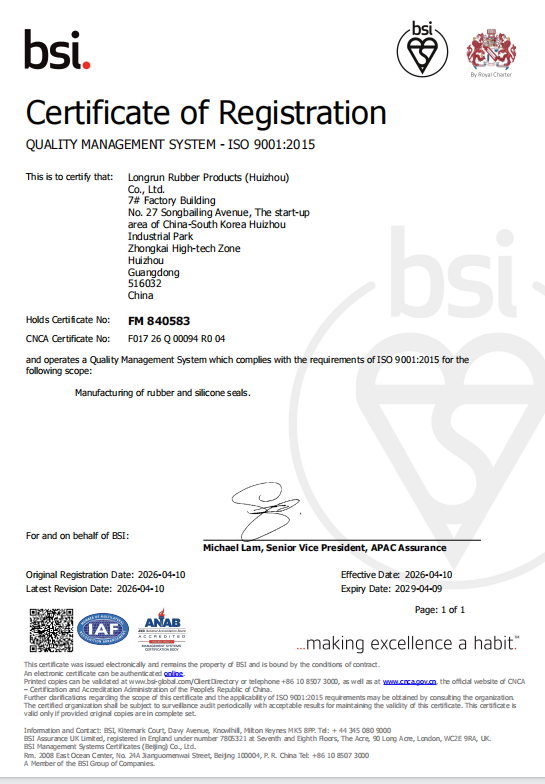
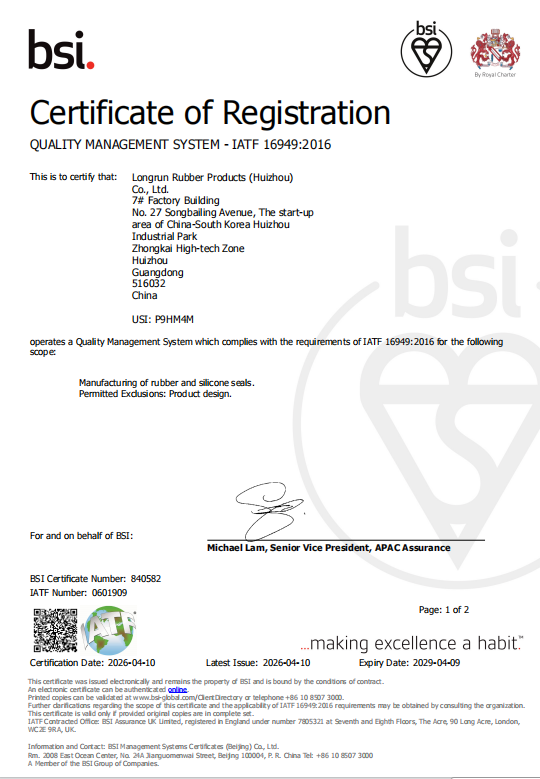
Certification turns the washer-versus-grommet choice into a procurement constraint rather than a pure design detail. Longrun Rubber Products (Huizhou) Co.,Ltd. holds ISO 9001:2015 certification number FM 840583 and IATF 16949:2016 certification number 0601909, both issued by BSI and both applicable to the global market. The scope of both certificates is the manufacturing of rubber and silicone seals. Both were issued on 2026-04-10 and expire on 2029-04-09.
For the component itself, the applicable references are ASTM D2000 for rubber classification in automotive and industrial applications, ISO 3302-1 for dimensional tolerances of molded rubber products, and FDA 21 CFR 177.2600 for rubber articles intended for repeated use in food contact. Buyers sourcing medical or food-contact washers and grommets should confirm that the compound — not only the supplier’s quality system — matches the requirement.
Step-by-Step Breakdown: A Seven-Step Selection Sequence
Washer or grommet is a functional question, and it can be resolved before any supplier quote is compared. The sequence below keeps the decision tied to verifiable requirements instead of habit.
Step 1 — Name the interface
State plainly what the part touches. Two flat surfaces meeting under compression point to a washer. A hole in a panel or housing with an element passing through it points to a grommet.
Step 2 — Confirm the load path and the motion
Identify whether the joint is static or dynamic and whether vibration enters the assembly. Vibration damping washers and vibration damping grommets address the same problem at two different locations, so the load path decides which one is placed where.
Step 3 — Define the environment and media
Temperature range, water, dust, chemicals, and ultraviolet exposure all narrow the compound list before dimensions are discussed.
Step 4 — Select the compound family
Choose from EPDM, NBR (Buna-N), NR, CR (Neoprene), FKM (Viton), SBR, HNBR, silicone rubber (SiR / VMQ), or medical grade silicone rubber, based on Step 3. Where chemical exposure dominates, FKM and HNBR are the compounds behind the chemical-resistant gasket category.
Step 5 — Fix the dimensional and hardness requirements
Because hardness, dimensions, color, and physical properties are custom-made, the specification must state them numerically and reference a tolerance framework such as ISO 3302-1 for molded rubber products.
Step 6 — Match compliance to the end market
Automotive programs expect an IATF 16949:2016 quality system; food-contact positions require compounds meeting FDA 21 CFR 177.2600; broad industrial classification follows ASTM D2000.
Step 7 — Validate, then release to production
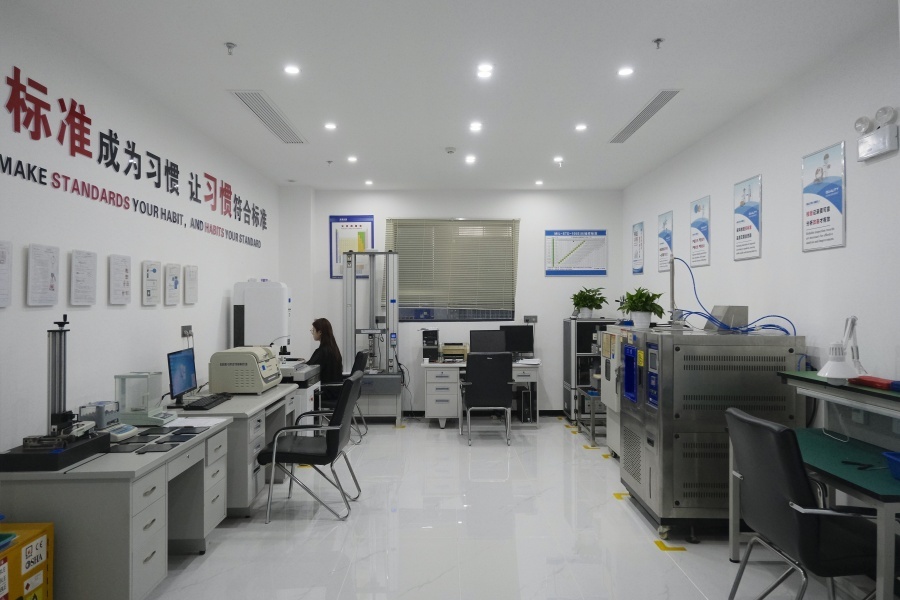
Confirm hardness, dimensions, color, and physical properties against the approved specification before volume release. Production is supported by 100% test, and the documented manufacturing result for these component types includes Cpk greater than 1.33 and a defect rate lower than 150 ppm, with 99% on-time delivery performance.
Use Cases: Industrial, Automotive, and Medical Applications
Industrial machinery and energy
Machinery vibration dampers, pipe and vibration mount dampers, sealing washers, and waterproof washers handle the load and sealing side of industrial assemblies. On the same equipment, wire and cable protection grommets and sealing / waterproof / dustproof grommets protect control and power cabling as it passes through enclosures. The working conditions listed for these parts include high temperature, low temperature, high pressure, vibration, chemical exposure, and other environments, with functions covering sealing, vibration damping, dustproof and waterproof protection, corrosion resistance, and oil resistance.
Automotive
An automotive rubber parts OEM program in the United States is documented at 1000k units per year over a five-year duration, covering shock absorption and noise reduction, sealing and leakage prevention, conveying media, and protection of transmission components. Recorded results include tensile strength ≥ 7 MPa, elongation at break ≥ 400%, and tear strength ≥ 15 kN/m, with Cpk > 1.33, defect rate < 150 ppm, precise dimensions, and rubber bonding firmly to plastic. In this type of assembly, vibration damping washers and rubber dampers manage the bolted and mounted interfaces, while cable protection grommets manage harness routing through body panels.
Why this matters for selection: automotive programs are where the cost of choosing the wrong part is highest, because a washer specified as a grommet (or the reverse) usually surfaces only at validation, after tooling has been cut.
Medical and food-contact
Medical grade silicone rubber and food-grade positions require the compound, the cleaning regime, and the documentation to align. A documented food, medical, machinery, and sanitary program in the United States runs at 3000k units per year over five years, covering vibration and noise reduction, cushioning and protection, dustproof and waterproof protection, and resistance to heat and chemicals. Recorded results include tensile strength ≥ 8 MPa, elongation at break ≥ 450%, and tear strength ≥ 35 kN/m, with a long lifespan, Cpk > 1.33, defect rate < 150 ppm, and precise dimensions. For food-contact positions, the governing reference is FDA 21 CFR 177.2600.
Comparison Table: Rubber Washers vs Rubber Grommets
| Decision factor | Rubber washers (product code 3743) | Rubber grommets (product code 3740) |
|---|---|---|
| Primary function | Load distribution, sealing between two flat faces, insulation, cushioning, vibration damping | Edge protection for an opening, sealing around a passing element, vibration damping |
| Direction of function | Axial — compressed between two surfaces | Radial — retained by a hole in a panel or housing |
| Documented types | Sealing washer, vibration damping washer, insulating washer, waterproof washer, cushion washer | Wire / cable protection grommet, sealing / waterproof / dustproof grommet, vibration / damping grommet |
| What passes through it | A fastener, bolt, or shaft passes through the center hole; the part stays flat against both surfaces | A cable, hose, tube, or shaft passes through the bore as the part lines the opening |
| Material options | EPDM, NBR (Buna-N), NR, CR (Neoprene), FKM (Viton), SBR, HNBR, silicone rubber (SiR / VMQ), medical grade silicone rubber | Same compound list as the washer range |
| Customization parameters | Hardness, dimensions, color, physical properties | Hardness, dimensions, color, physical properties |
| Listed industries | Automotive, industrial, machinery, energy, medical, food, electrical | Automotive, industrial, machinery, energy, medical, food, electrical |
| Relevant standards | ASTM D2000 classification; ISO 3302-1 tolerances; FDA 21 CFR 177.2600 for food contact; supplier ISO 9001:2015 / IATF 16949:2016 | Same reference set as the washer range |
| Select it when | The risk is a loose bolted joint, leakage between two flat surfaces, electrical contact between metal parts, or vibration through a fastened connection | The risk is a cut or abraded cable, a leak around a cable entry, dust or water ingress through an opening, or vibration crossing a panel wall |
FAQ: Rubber Washers and Grommets
What certifications should a rubber washer or grommet supplier be able to document?
At supplier level, the two documents most often requested are ISO 9001:2015 and IATF 16949:2016 with a scope covering rubber and silicone seals. Longrun Rubber Products (Huizhou) Co.,Ltd. holds ISO 9001:2015 certificate number FM 840583 and IATF 16949:2016 certificate number 0601909, both issued by BSI, both applicable to the global market, both issued on 2026-04-10 and valid until 2029-04-09. At component level, ASTM D2000 is the primary standard classification system for rubber products in automotive and industrial applications, ISO 3302-1 provides dimensional tolerances for molded rubber products, and FDA 21 CFR 177.2600 specifies the requirements for rubber articles intended for repeated use in food contact applications.
Can a single manufacturer supply both rubber washers and rubber grommets in the same order?
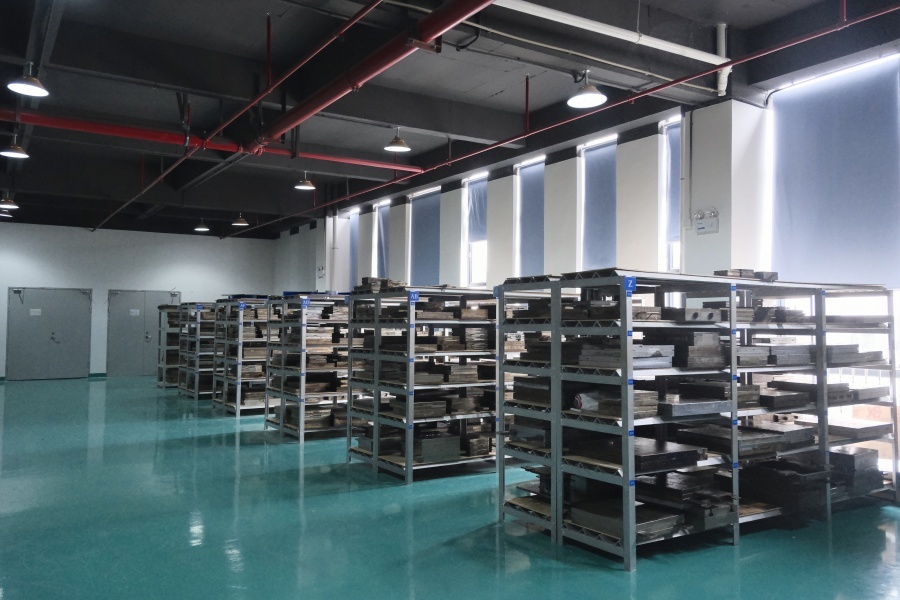
Yes, when the supplier runs both ranges on the same molding and inspection platform. Longrun Rubber Products (Huizhou) Co.,Ltd. produces a washer range covering five types (sealing, vibration damping, insulating, waterproof, cushion) and a grommet range covering three types (wire / cable protection, sealing / waterproof / dustproof, vibration / damping). Both ranges are custom-made for hardness, dimensions, color, and physical properties in EPDM, NBR (Buna-N), NR, CR (Neoprene), FKM (Viton), SBR, HNBR, silicone rubber (SiR / VMQ), and medical grade silicone rubber, under an OEM production mode with 100% test. The company operates a 10,000 m² facility with 120 employees and an R&D team of 20 engineers, and exports 80% of its output to global markets.
What drives the cost of a custom rubber washer or grommet?
Cost tracks four specification decisions rather than the shape of the part: the compound family (EPDM and NBR sit in different cost positions from FKM, HNBR, or medical grade silicone rubber), the part type and geometry, the dimensional and hardness requirements together with the inspection regime behind them, and the compliance documentation required by the end market. Because hardness, dimensions, color, and physical properties are custom-made, and because both MOQ and monthly capacity are set according to customer requirements rather than published tiers, the commercial structure is negotiated per project. The avoidable cost is redesign: a washer specified where a grommet was required usually means new tooling and a second validation cycle.
How should a buyer validate washers or grommets before mass production?
Validation starts from an agreed specification, because these parts are custom-made for hardness, dimensions, color, and physical properties — there is no universal catalog tolerance to fall back on. The approved specification should name the compound, the hardness, the critical dimensions with a tolerance class, and any food-contact or automotive requirement. First-article verification then confirms the part against that specification before volume release. Once in production, the documented performance benchmark for molded rubber components of this type is Cpk greater than 1.33 and a defect rate lower than 150 ppm, supported by 100% test and 99% on-time delivery performance.
What lead time should be planned for a custom washer or grommet order?
The documented production lead time for custom rubber molded parts is 20 days, with monthly capacity and MOQ set according to customer requirements. Buyers should therefore plan for the sampling and approval stage ahead of that window rather than inside it, particularly when a food-contact compound meeting FDA 21 CFR 177.2600 or an automotive part requiring IATF 16949:2016 traceability is involved. To review the full component range and capability set before requesting a quote, you can download the Longrun Rubber product brochure (PDF) or send your drawing and application conditions to tommyliu@longrunrubber.com / hang@longrunrubber.com for a specification review.
Conclusion
Rubber washers and rubber grommets are not interchangeable, and the difference is functional rather than visual. A washer works axially between two surfaces, where it distributes load, seals, insulates, or cushions. A grommet works radially inside an opening, where it protects a passing cable, hose, tube, or shaft and seals or damps the hole itself.
The selection logic that holds up under audit is short: name the interface, confirm the load path and motion, define the environment, choose the compound from the available list (EPDM, NBR, NR, CR, FKM, SBR, HNBR, silicone rubber, medical grade silicone rubber), fix hardness and dimensions against a tolerance framework such as ISO 3302-1, match compliance to the end market through ASTM D2000, FDA 21 CFR 177.2600, and a supplier quality system certified to ISO 9001:2015 and IATF 16949:2016, and validate before volume release.
Longrun Rubber Products (Huizhou) Co.,Ltd. has manufactured custom molded rubber parts in China since 2005 and supplies both washer and grommet ranges in the same compound families, under ISO 9001:2015 certificate FM 840583 and IATF 16949:2016 certificate 0601909 issued by BSI, with a documented production lead time of 20 days.
Next step
Send your application conditions — media, temperature, motion, and the compliance standard your market requires — and the team will confirm whether a washer, a grommet, or both belong in the assembly, then return a specification-based quotation.
Download the Longrun Rubber product brochure (PDF) | www.longrunrubber.com | Email: tommyliu@longrunrubber.com / hang@longrunrubber.com | WhatsApp: +86 13006697998