
Specifying Rubber O-Rings for Static and Dynamic Sealing: A Technical Guide
A rubber O-ring specification is not a size plus a material name. It is a written set of decisions about service media, temperature, motion, hardness, dimensions, tolerances, physical properties, compliance documentation, and inspection rules — and the order in which those decisions are made matters as much as the decisions themselves. Static sealing and dynamic sealing share most of that list, but they weight it differently, which is why the same drawing can perform reliably in a bolted flange and fail on a reciprocating rod.
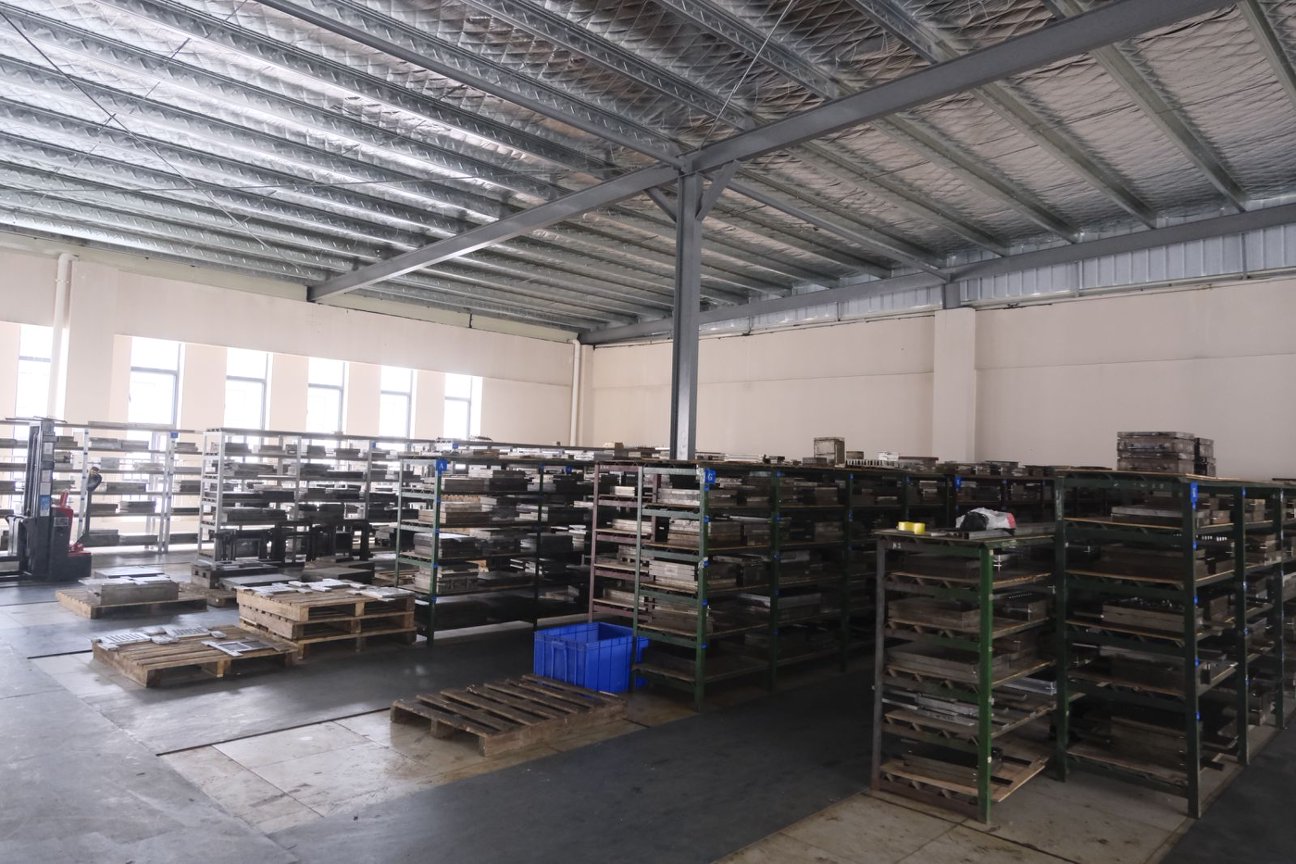
This guide sets out a practical order of decisions for engineers and buyers who are writing or reviewing an O-ring specification, and explains where a custom molder adds engineering value before the tool is cut. It uses the product and process facts of Longrun Rubber Products (Huizhou) Co.,Ltd., a China-based custom rubber molder founded in 2005 that operates a 10,000 m² factory with 120 employees and a 20-engineer technical team, and supplies custom molded rubber parts — including O-rings, seals, gaskets, washers, dampers, and grommets — to automotive, machinery, home appliance, consumer electronics, medical, food, and telecommunication customers, with roughly 80% of output exported.
The commercial weight behind that small component is easy to underestimate. Sealing products accounted for 12% of total industrial rubber consumption volume in 2024, according to Market Reports World, a share of tonnage that carries a disproportionate share of leak, warranty, and downtime risk.
Problem Definition: Most Sealing Failures Start in the Specification
When an O-ring leaks in service or is rejected at inspection, the first question is usually about the rubber compound. In practice the specification is the more frequent origin of the failure: it named a material family without a compound, a dimension without a tolerance, an appearance requirement without an acceptance rule, or a motion type that was never stated at all.
Longrun Rubber's production control documentation names three molded defect classes that are managed on every run: short shot or insufficient filling; bubbling, air bubbles, or blistering; and under-cure or incomplete cure. Each of these is the manufacturing symptom of something the specification left open, not a random act of the material.
- Short shot points back to geometry and flow: cross-section, wall thickness, and whether the drawing gives the molder room to place the gate and vent the cavity.
- Bubbling points back to compound condition and tool design: material preparation, degassing, and venting are decided by the formulation and the mold, both of which should be discussed before quoting.
- Under-cure points back to how cure is defined: without stated physical property targets, inspection cannot distinguish a fully cured part from a nearly cured one.
Two further gaps appear repeatedly in real procurement files. The specification does not say whether the seal is static or dynamic, so hardness and surface requirements are inherited from an unrelated project. And it does not say which compliance standard applies, so the supplier substitutes whichever certificate is closest to hand.
Industry Background: Tighter Sealing Requirements Across Four Industries
Liquid silicone rubber is one of the faster-moving material categories in sealing. Credence Research projects the global LSR market to grow at a CAGR of 8.7% to reach USD 6.5 billion by 2033, with medical and automotive grades carrying much of that focus. Tighter tolerance, cleaner parts, and documented material identity are now normal expectations rather than premium options.
Compliance language has tightened at the same time. FDA 21 CFR 177.2600, USP Class VI, and ISO 10993 are frequently cited together on O-ring datasheets, but they are not interchangeable: as Wayne Rubber notes in its industry guidance, the first addresses food contact, the second biological reactivity, and the third biocompatibility. A specification that asks for a medical-grade O-ring without naming which of these applies hands the decision to the molder.
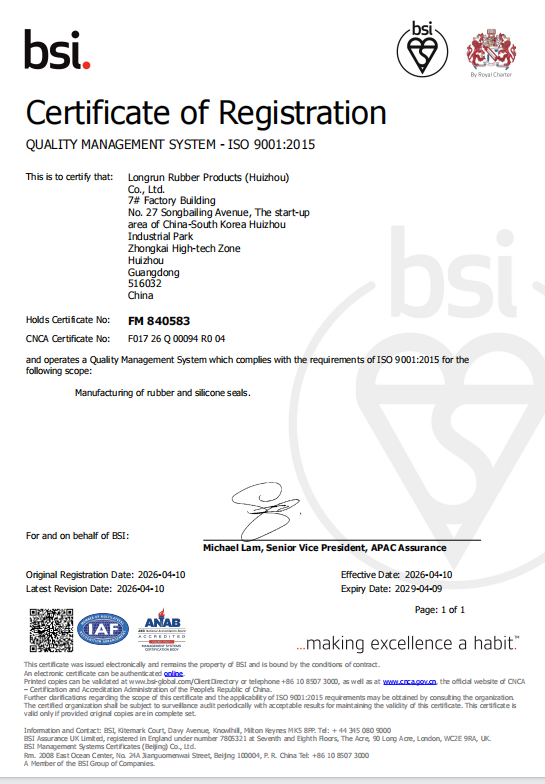
The supplier side has to be able to answer those questions. Longrun Rubber works to ISO 9001 and IATF 16949 quality management systems and is capable of producing FDA and medical-grade rubber components, with a material range that covers NBR, CR, EPDM, SBR, FKM, NR, HNBR, silicone, and fluorosilicone. That breadth matters because a molder that only stocks one or two compounds will quietly steer every specification toward them.
The Detailed Solution: A Four-Layer Specification Model
A specification that survives production and service is built in four layers, in this order: material family, motion type, geometry and hardness, then verification and compliance. Skipping forward is the most common reason a technically correct drawing produces an unreliable part.
Layer 1: Choose the material family by media, temperature, and industry requirement
Material selection is a media decision before it is a price decision. The families below cover most industrial O-ring work, and each has a defined comfort zone that should be checked against the compound datasheet the supplier provides — not against a generic material chart.
| Material family | Where it is normally specified | What the specification should confirm |
|---|---|---|
| NBR (Buna-N) | Petroleum-based oils, greases, and fuels in general industrial, hydraulic, and pneumatic equipment | Compound grade and oil resistance, plus compression set target |
| EPDM | Water, steam, outdoor weathering, ozone and UV exposure, and many appliance and machinery seals | Weathering requirement and confirmation that petroleum oils are absent from the media |
| Silicone rubber | Wide temperature flexibility, food-contact and medical parts, and clean applications where oil resistance is not the driver | Grade (food-grade or medical-grade silicone) and the compliance standard it must meet |
| FKM | Aggressive chemicals, fuels, and higher-heat service where NBR would degrade | Chemical identity of the media, since FKM grades differ in resistance |
| HNBR | Combined heat and oil exposure in automotive and industrial sealing | Heat and oil duty stated together, not as separate requirements |
| Medical-grade silicone and LSR | Medical devices, diagnostics, and food-contact parts requiring documented material identity | Which standard applies and which documents ship with each batch |
Longrun Rubber provides material and compound formulation support based on the application environment and performance requirements, which means the compound can be adjusted rather than selected from a fixed catalogue. For an O-ring, that is the difference between matching the drawing and matching the service condition.
Layer 2: State whether the seal is static or dynamic
Static sealing holds a seal compressed in place: a flange, a cover, a connector body, a housing joint. The specification concentrates on compression set, media and thermal ageing, and the stability of the housing that holds the seal. Dynamic sealing introduces relative movement between the O-ring and a mating surface, in a hydraulic or pneumatic cylinder, a rotary joint, or a reciprocating rod. Here the specification also has to account for abrasion, friction behaviour, dimensional precision, and surface condition of the mating part.
The materials Longrun Rubber produces are described as suitable for both dynamic and static sealing applications, and the profile lists abrasion resistance, tensile strength, elongation, compression resistance, corrosion resistance, ozone and ultraviolet resistance, flame resistance, high and low temperature resistance, and electrical insulation or conductivity. That breadth is useful only if the specification tells the supplier which of those properties actually governs the part.
Layer 3: Fix geometry, hardness, colour, and physical properties
This is the layer where most drawings are incomplete. A usable O-ring specification defines:
- Hardness as a durometer value on an agreed scale, because hardness drives both squeeze behaviour and abrasion resistance.
- Dimensions — inside diameter and cross-section — each with a tolerance and a measurement method.
- Colour, which is routinely specified for part identification and visual inspection, and matters most where food or medical assemblies are visually checked.
- Physical property targets such as tensile strength, elongation, compression set, and hardness retention after ageing, each tied to the test that proves it.
- Surface condition, cleanliness, and packaging, since a dimensionally correct O-ring can still be rejected for flash or contamination.
Layer 4: Define verification, compliance documents, and acceptance criteria
The last layer converts the specification into something a quality team can enforce. Longrun Rubber inspects all products with 100% CCD automated vision inspection and controls key process positions with qualified personnel trained on the relevant procedures, working to FMEA and a control plan. The commercial quality commitments reported alongside that process are a Cpk above 1.33 and a defect rate lower than 150 ppm. On the acceptance side, the criteria used for orders are a pre-shipment test or a third-party inspection, usually appointed by the client.

Step-by-Step Breakdown: Writing the Specification in Eight Passes
- Write the service envelope. List every medium the seal will contact, including cleaning agents and lubricants, plus the temperature range, pressure or vacuum, cycle count, and whether the part will be sterilised or washed down. Media lists are usually the shortest part of a specification and the longest part of a failure investigation.
- Classify the seal. State static or dynamic, and add the sub-type: flange, cover, connector, hydraulic, pneumatic, reciprocating, or rotary. This single line changes the hardness, surface, and property targets that follow.
- Choose the material family, then the compound. Use Layer 1 as the shortlist, then ask the molder to confirm the compound against the media list. This is where custom formulation support earns its place, because a borderline media combination is often solved by a compound adjustment rather than a material change.
- Fix geometry and hardness with tolerances. Define inside diameter, cross-section, and durometer value, each with a tolerance and a measurement method. Add colour and any orientation or identification marking.
- Set physical property targets. Name the properties that govern the application — compression set for static service, abrasion and tear behaviour for dynamic service — and the test that will demonstrate each one.
- Name the compliance standard and the documents. Specify FDA 21 CFR 177.2600, USP Class VI, or ISO 10993 by name where relevant, and list the documents that must ship with each batch. Longrun Rubber holds ISO 9001 and IATF 16949 certification and produces FDA and medical-grade components, which makes this a documented conversation rather than a promise.
- Validate with samples and first-article inspection. Approve the part against every line of the specification before the production tool is released, using the agreed acceptance route of pre-shipment test or client-appointed third-party inspection. Correcting a compound at sample stage is a revision; correcting it after ramp-up is a programme event.
- Lock the production and supply plan. Record the tooling ownership, the inspection plan, the packaging, and the replenishment logic. Longrun Rubber provides engineering support for tooling design and structure optimisation, states a typical production lead time of 20 days from order confirmation to shipment, and sets monthly production capacity according to customer requirements.

Use Cases: Where the Same O-Ring Specification Changes Shape
- Automotive. Heat, oil, fuel, and vibration dominate, which pushes specifications toward HNBR and FKM and makes IATF 16949 documentation part of the package rather than an extra. Longrun Rubber's project experience covers automotive OEM work alongside machinery, food, medical, and general industrial programmes.
- Hydraulic and pneumatic equipment. These are dynamic applications by definition, so abrasion resistance, compression resistance, and dimensional precision move from desirable to mandatory, and the mating surface condition belongs in the specification.
- Food and beverage processing. Food-grade silicone and EPDM are the usual starting point, and the specification should name the food-contact standard explicitly, together with the cleaning and washdown chemistry the seal will meet.
- Medical devices and diagnostics. Medical-grade silicone and LSR parts require the applicable standard to be named — USP Class VI and ISO 10993 answer different questions — and require batch documentation to be defined at the quotation stage.
- Industrial machinery, appliances, electronics, and telecom. EPDM for weathering and ozone exposure, silicone for temperature flexibility, and NBR for lubricated mechanisms; the specification emphasis shifts to compression set and long installed life rather than to motion.
Comparison Tables: Static vs Dynamic Emphasis, and Supplier Capability
The first table shows how the same specification items are weighted differently by motion type. The second sets out Longrun Rubber's position against the standard rubber solution provider baseline that the company itself uses for comparison.
| Specification element | Static sealing | Dynamic sealing |
|---|---|---|
| Motion at the seal | No relative movement after assembly; compression is set once | Continuous or intermittent relative movement against a mating surface |
| Dominant degradation mode | Compression set, media attack, thermal ageing | Abrasion and friction effects acting together with compression set |
| Material emphasis | Media compatibility, low compression set, temperature resistance | Abrasion resistance, tear strength, dimensional stability under motion |
| Geometry emphasis | Housing and flange stability, correct squeeze for the groove | Roundness, clearance control, and mating surface condition |
| Property data to request | Compression set, hardness, tensile strength, elongation | Hardness, tensile strength, elongation, tear and abrasion behaviour |
| Documents to request | Compound datasheet, compliance certificate | Compound datasheet, compliance certificate, dimensional report per batch |
| Comparison point | Longrun Rubber Products (Huizhou) Co.,Ltd. | Why it matters when specifying an O-ring |
|---|---|---|
| Sourcing model | One-stop OEM/ODM rubber solution | Compound, tooling, molding, and inspection are coordinated instead of split across vendors |
| Quality management | Certified to IATF 16949 and ISO 9001 | Supports automotive and industrial documentation requirements |
| Compound support | Material and compound formulation support based on application environment and performance requirements | Allows the compound to be tuned to the media list rather than chosen from a catalogue |
| Engineering support | Tooling design and structure optimisation support | Resolves short shot and venting risks before the tool is cut |
| Medical and food capability | Capable of producing FDA and medical-grade rubber components | Keeps regulated programmes inside one qualified supply chain |
| Process performance | Cpk above 1.33; defect rate lower than 150 ppm; 99% on-time delivery | Gives the acceptance criteria a measurable production baseline |
| Track record | Customers in over 60 countries; 3000+ customised projects developed | Indicates breadth of specification types already handled |
| Cost profile | Initial unit cost comparable, with total ownership cost reduced by 25% over 3 years as reported by the company | Reframes the decision from piece price to failure and downtime cost |
Long-Term Supply: What the Specification Needs After Approval
An approved O-ring specification is the beginning of a supply relationship, not the end of a project. Three elements determine whether that relationship holds: capacity that can be scaled without renegotiating the specification, batch-to-batch consistency that keeps the acceptance criteria meaningful, and support that responds when a line is down.
On the first, Longrun Rubber sets monthly production capacity according to customer requirements, so a programme is scaled against actual demand rather than fixed in advance, with a typical production lead time of 20 days. On the second, the company reports stable batch consistency for OEM projects, full inspection before shipment, and a defect rate lower than 150 ppm. On the third, it provides fast technical response and engineering support with professional after-sales service available around the clock. For a buyer in the execution stage, those three commitments are what convert a technical document into a reliable supply plan.

FAQ: Specifying Rubber O-Rings
Which compliance standard should an O-ring specification name for food-contact or medical use?
Name the specific standard your market requires, because FDA 21 CFR 177.2600, USP Class VI, and ISO 10993 are separate requirements rather than interchangeable labels: FDA 21 CFR 177.2600 addresses food contact, USP Class VI addresses biological reactivity, and ISO 10993 addresses biocompatibility. Longrun Rubber works to ISO 9001 and IATF 16949 quality management systems and is capable of producing FDA and medical-grade rubber components, so the specification should state the target standard and the documents you expect with each batch.
Can a molder adjust the compound and the tooling to match a new O-ring specification?
Yes, when the supplier holds both compound and tooling capability in house. Longrun Rubber provides material and compound formulation support based on the application environment and performance requirements, and offers engineering support for tooling design and structure optimisation. Its production control addresses short shot, bubbling, and under-cure through FMEA and a control plan, with 100% CCD automated vision inspection, a Cpk above 1.33, and a defect rate lower than 150 ppm.
How are the MOQ and unit price of a custom O-ring determined?
Both vary by product. Longrun Rubber states that MOQ and unit price vary for each product, and that monthly production capacity is determined according to customer requirements. Delivery terms are EXW or FOB Shenzhen, and payment terms are full payment after receipt of goods, so the commercial envelope is confirmed together with the technical specification rather than before it.
What acceptance criteria should be written into the sample and pre-shipment stage?
The acceptance criteria used for Longrun Rubber orders are a pre-shipment test or a third-party inspection, usually appointed by the client. For a new O-ring, that inspection should be tied to the specification items — dimensions and tolerances, hardness, physical property targets, colour, and compliance documents — and confirmed at first-article stage before the production tool is released.
What is the typical production lead time for a custom O-ring order, and how is repeat supply handled?
Typical production lead time is 20 days from order confirmation to shipment. Monthly production capacity is determined according to customer requirements, which is how a long-term programme is scaled rather than fixed in advance. Longrun Rubber reports 99% on-time delivery, stable batch consistency for OEM projects, full inspection before shipment, and after-sales technical support available around the clock. To start, send the drawing and service conditions with a sample or quote request to tommyliu@longrunrubber.com.
Conclusion: Specify the Decisions, Not Just the Part
An O-ring that performs in static and dynamic sealing is the output of a specification that answered five questions in order: what media and temperature the seal will meet, whether it moves, which material family and compound follow from that, which dimensions, hardness, and physical properties must be measured, and which compliance documents and acceptance criteria will prove it. Each of those is a decision a buyer or designer can make deliberately, and each is a decision that will otherwise be made by default somewhere in the supply chain.
Longrun Rubber Products (Huizhou) Co.,Ltd. supports that process from compound formulation and tooling design through 100% CCD inspection, ISO 9001 and IATF 16949 quality management, and a 20-day typical production lead time, with monthly capacity planned against customer requirements. If you are at the execution stage and need a part that matches a written specification rather than a catalogue description, the next step is a sample and a quote built on your drawing and service conditions.
Request a Sample or Quote for Your O-Ring Specification
Send the drawing, media list, temperature range, static or dynamic classification, and the compliance standard you need. Longrun Rubber will confirm the compound, tooling approach, MOQ, and lead time against those inputs.
Email: tommyliu@longrunrubber.com or hang@longrunrubber.com · Tel / WhatsApp: +86 13006697998 · WhatsApp: Start a WhatsApp conversation
Website: www.longrunrubber.com · Capability brochure: Download the Longrun Rubber product and capability brochure (PDF)

Have Questions or Need More Details?
Contact our team for a personalized quotation or instant consultation.
Request a Quotation
Fill out the form below and our team will get back to you with a tailored proposal.
WhatsApp Direct Chat
Prefer to chat in real-time? Message us on WhatsApp for instant assistance & quick answers.
- Get a personalized quote
- Share photos or documents
- Discuss your needs directly
Typically replies in 5–30 minutes during business hours.