
Supplier Evaluation Checklist for Custom Rubber Parts: Materials and Production Flexibility
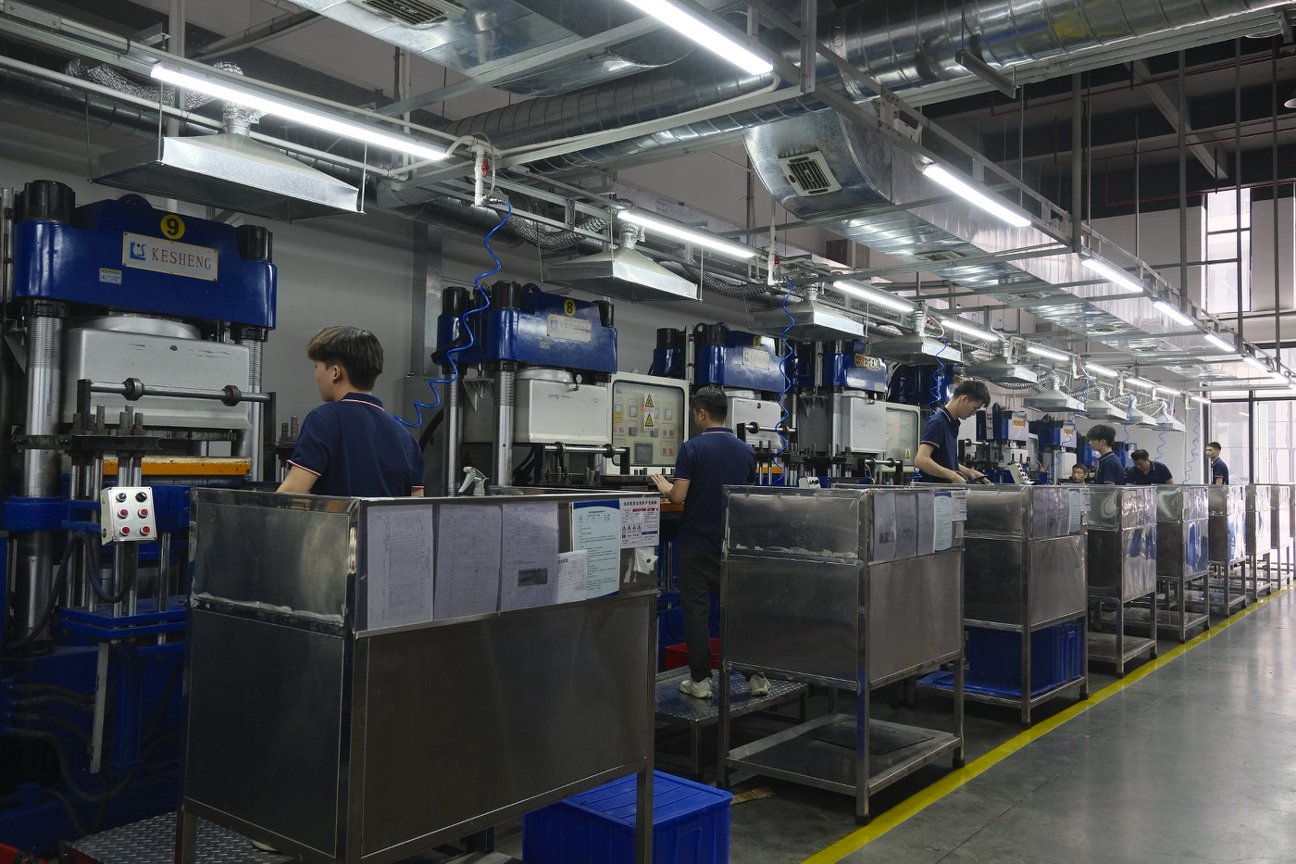
Rubber molding workshop — where compound selection, tooling and process control meet in the same building.
A supplier evaluation for custom rubber parts comes down to two verifiable questions: can this factory actually formulate and run the compound your application needs, and can it hold that compound stable across your hardness, dimensions, colour and volume ramp? Price, lead time and sample speed sit downstream of those two answers.
This checklist converts both questions into documents a buyer can request, read and score during the Decision stage — before tooling is released and before the first article is approved. Every capability statement below is tied to a documented supplier fact, and every evaluation criterion is written so that it can be applied to any candidate factory, not just the one used as the worked example.
What this checklist verifies:
- Compound coverage and depth, not a list of polymer names
- Physical property evidence, including which test equipment produced it
- Flexibility in hardness, dimension, colour and secondary properties
- Process control strong enough to prevent short shot, blistering and under-cure
- Certification scope that actually covers your part and end market
- Total cost structure behind the quoted unit price
Why “EPDM” and “custom” are the weakest line items in a rubber part quote
Custom rubber parts rarely fail because a supplier could not mould rubber at all. They fail because the material on the drawing was treated as a single word instead of a controlled formulation, and because “custom” was accepted as a description of a workshop rather than a description of a capability.
Three specific gaps open up at the comparison stage.
Material-name equivalence. NBR on one quotation is not identical to NBR on another. Compound formulation, cure system, filler loading and hardness all shift the same base polymer into different performance envelopes. A supplier that states it works with NBR, EPDM and silicone has told you it can purchase those polymers. It has not told you it can formulate them to your media, your continuous temperature, or your dynamic duty cycle.
Flexibility without proof. “Custom rubber molding” usually means the supplier owns a mould shop. It does not mean the supplier can move hardness without cutting a new tool, hold tolerance on a thin section, keep a colour target across production batches, or add a secondary property — flame resistance, conductivity, low compression set — without destabilising the rest of the compound. These are engineering and process questions, and they have to be asked explicitly.
Failure modes that surface after tooling release. Short shot or insufficient filling, bubbling and blistering, and under-cure or incomplete cure are process-window problems. None of them is fixed by renegotiating unit price. They are addressed through FMEA, a Control Plan, trained personnel at key positions and in-line inspection. If those documents do not exist before the award, they will not appear after it.
The Decision-stage consequence is straightforward: the cost of choosing the wrong supplier is tooling, requalification and line downtime. The delta between two unit prices is usually the smallest number in the comparison.
What the 2026 rubber components market expects from a supplier
Industrial rubber is a broad, mature category, and the public information about it is widely available. That is precisely why supplier differentiation no longer sits in the material categories themselves — it sits in formulation depth, verification data and process control, which are exactly the areas a checklist can test.
- Sealing is a structural share of demand, not an accessory. Sealing products accounted for 12% of total industrial rubber consumption volume in 2024, according to Market Reports World. Gaskets, seals, O-rings and washers are a core category that buyers compare directly.
- Automotive demand concentrates in protective components. Grommets held a 36.45% share of the automotive rubber molding segment in 2025, per the same source, consistent with cable and harness protection requirements across vehicle platforms.
- Silicone is shifting toward liquid silicone rubber. The global liquid silicone rubber market is projected to grow at a CAGR of 8.7% to reach USD 6.5 billion by 2033, according to Credence Research, with medical and automotive grade LSR driving much of that movement. Buyers evaluating silicone capability should ask specifically about LSR rather than silicone in general.
- Compliance is fragmented, not a single stamp. FDA 21 CFR 177.2600 for food contact, USP Class VI for biological reactivity and ISO 10993 for biocompatibility are frequently cited together, but they are distinct and not equivalent standards, as Wayne Rubber notes. A supplier can hold evidence for one and not the others.
- Trade classification has to be mapped before landed cost is comparable. Rubber and articles thereof fall under HS Chapter 40 in the UN Comtrade classification, which includes synthetic EPDM rubber in primary forms and articles of hard rubber. Importers comparing quotations across regions need the subheading identified before the numbers mean anything.
Read together, these points describe a market where material names are public knowledge and therefore weak differentiators. The evaluation has to move one level down, into the compound, the tool and the control plan.
The six-block supplier evaluation checklist
Longrun Rubber Products (Huizhou) Co., Ltd. is a custom molded rubber parts manufacturer established in China in 2005, operating with 120 employees including 20 engineers and exporting roughly 80% of output to global markets. Its documented product scope covers rubber seals, gaskets, O-rings, washers, dampers and grommets, used across automotive, machinery, home appliance, consumer electronics, medical, food and telecommunication applications. That profile makes it a useful worked example for each block of the checklist — not because every buyer should shortlist it, but because each block can be scored against documented evidence.
Block 1 — Compound portfolio: breadth matters less than depth
Documented compound coverage at Longrun Rubber includes NBR, CR, EPDM, SBR, FKM, NR, HNBR, silicone and fluorosilicone, plus medical-grade liquid silicone rubber, with compound formulation adjusted to the application environment and performance requirement. That spread is meaningful because it maps onto the four demand clusters behind most custom part enquiries: oil resistance (NBR, HNBR), weathering and water or steam service (EPDM, CR), high temperature and chemical exposure (FKM, HNBR), and food or medical-adjacent silicones.
Request: a compound data sheet per material, not a material list. Accept criterion: the supplier can name the base polymer, the hardness range offered for that compound, the cure system, and the property data it holds on file.
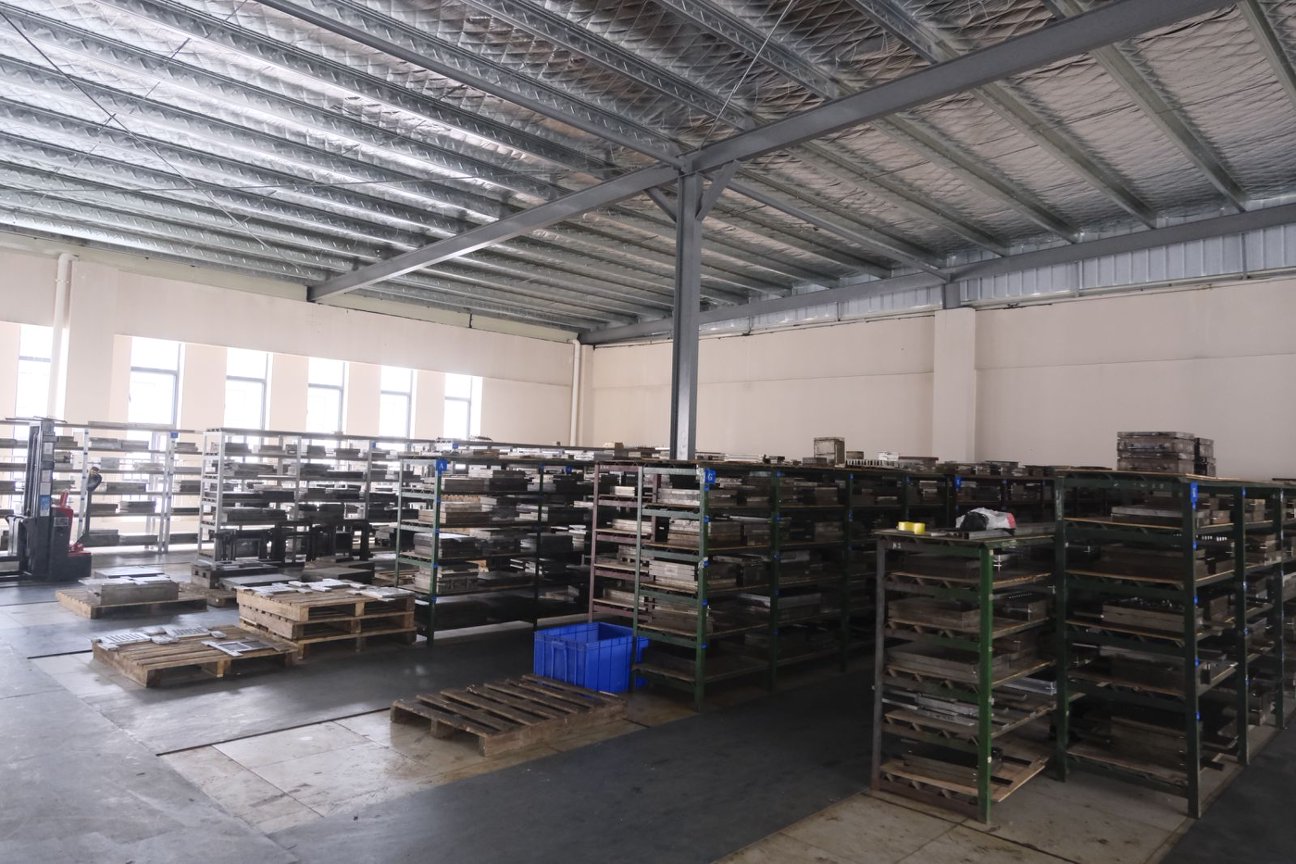
Mould warehouse — tooling ownership is the physical basis of any claim about production flexibility.
Block 2 — Physical property verification with named evidence
Longrun Rubber documents product characteristics including high abrasion resistance, high tensile strength, elongation, corrosion resistance, ozone and ultraviolet resistance, flame resistance, compression resistance, high and low temperature resistance, and insulation or conductivity, suitable for both dynamic and static sealing applications. These are the properties a buyer should demand evidence for — and evidence means a test method plus the equipment that produced the number, not an adjective on a datasheet.
Request: tensile and elongation data, compression set, ozone or UV exposure results, and the temperature range actually tested. A walkthrough showing a rheometer, tensile machine and aging test machine is a reasonable verification step; Longrun Rubber operates this equipment within its inspection and processing inspection functions.
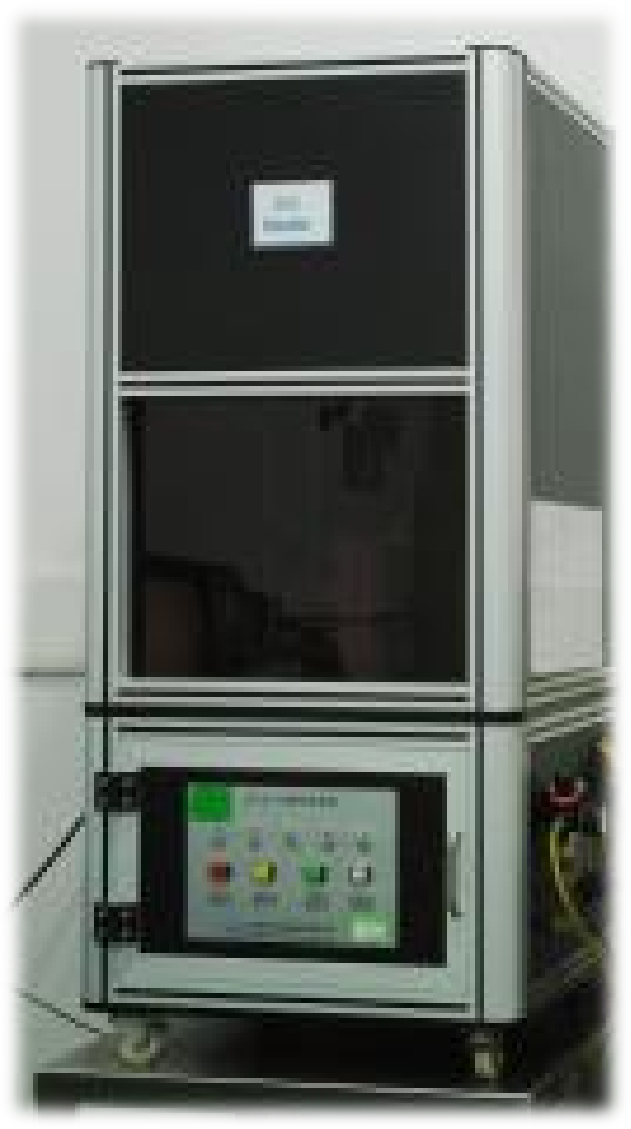
Rheometer — cure behaviour is verified before the compound reaches a production press.
Block 3 — Hardness, dimension and colour flexibility
Where a part is defined by hardness and tolerance, flexibility is a tooling and process question rather than a sales question. Longrun Rubber documents engineering support for tooling design and structure optimisation, which is the practical lever for adjusting a part without starting the tool over, and cites improved dimensional precision for automated assembly as one of the resulting efficiency outcomes.
Request: the hardness range available in Shore A, the tolerance held on your tightest dimension, whether a hardness change requires a new mould, the colour matching method and batch-to-batch colour control approach, and how many samples are needed to confirm capability. Accept criterion: a specific answer for each, with the point at which a change becomes a new tool clearly stated.
Block 4 — Process control and defect prevention
The three failure modes that most often hit custom rubber parts — short shot or insufficient filling, bubbling and blistering, and under-cure — are controlled through FMEA and a Control Plan rather than through final sorting. Longrun Rubber's stated measures are qualified personnel at key positions, systematic training for all quality-related staff before assignment, and 100% CCD automated vision inspection, with full inspection before shipment. Documented quality metrics are a process capability of Cpk above 1.33 and a defect rate below 150 ppm.
Request: FMEA and Control Plan extracts for a comparable part, the inspection plan, and the actual Cpk calculation behind a similar dimension. Accept criterion: documents that reference your part family, not a generic quality manual.
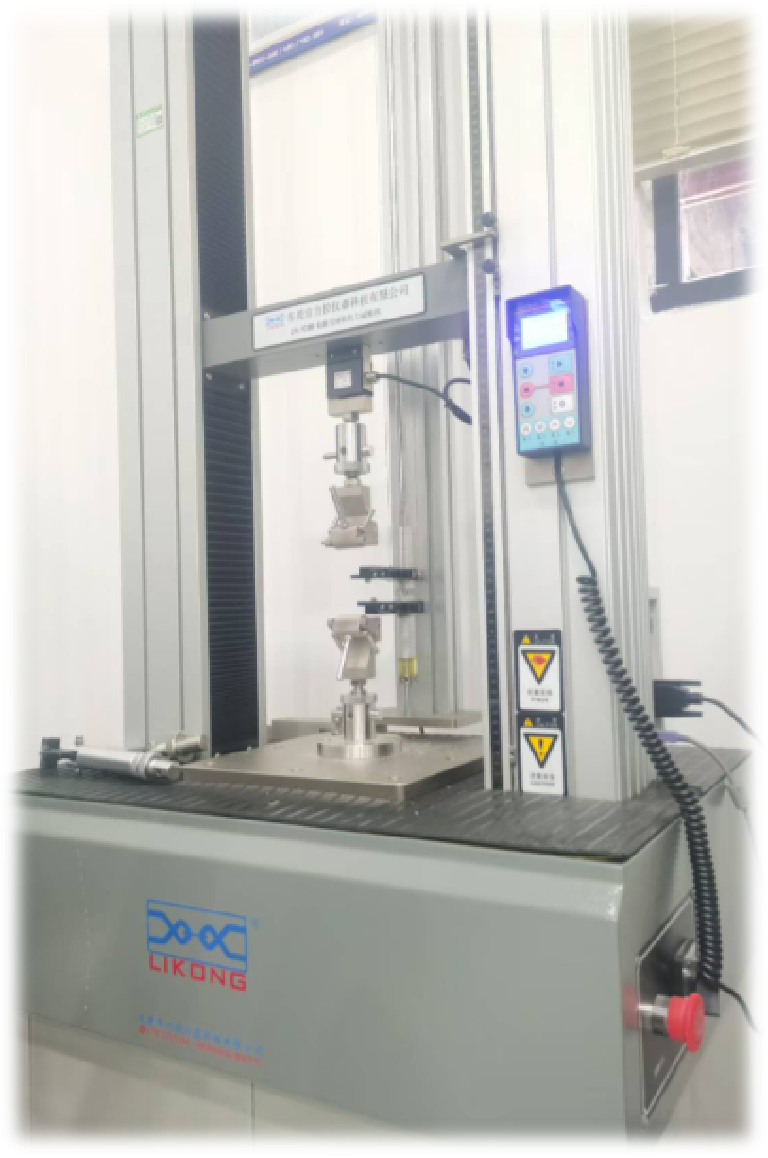
Tensile machine — mechanical property data should be traceable to equipment, not to a supplier brochure.
Block 5 — Certification scope, not certification logos
Longrun Rubber is certified to ISO 9001 and IATF 16949 quality management systems and states the capability to produce FDA and medical-grade rubber components. The distinction between these matters at evaluation: IATF 16949 supports automotive programmes, ISO 9001 supports general industrial supply, and a food or medical claim needs the specific standard named — FDA 21 CFR 177.2600, USP Class VI, ISO 10993 or an equivalent — rather than a generic “FDA approved” line.
Request: certificate numbers and validity dates, the certified scope, and a written statement of which standard applies to your part's end use. Accept criterion: the certificate is in the supplier's own name and its scope covers the process your part actually goes through.
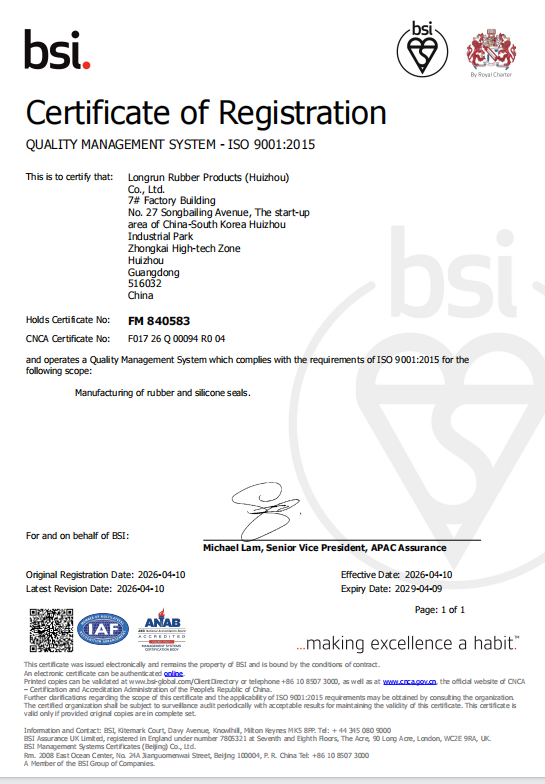
ISO 9001 certification — scope and validity matter more than the logo on a homepage.
Block 6 — Commercial structure and total cost
Longrun Rubber's documented comparison states that initial unit cost is the same as standard rubber solution providers, while total cost of ownership is reduced by 25% over three years through lower defect and maintenance cost, stable quality and optimised formulation. Whether or not a buyer accepts the figure at face value, the structure of the claim is the right one: equal unit price plus a lower defect rate plus longer service life is the only comparison that survives contact with production.
Request: the defect and maintenance assumptions behind any total-cost claim, and a landed-cost breakdown that separates tooling, unit price, freight and incoming inspection. Accept criterion: a number you can audit, not a percentage presented without a basis.
A seven-step evaluation sequence, from RFQ to batch lock
The six blocks describe what to check. The sequence below describes the order in which to check it, so that each step produces information the next step depends on.
Step 1 — Define the service environment before shortlisting
Write down the media, continuous temperature, dynamic or static duty, and whether the part is safety-related. This determines which of NBR, EPDM, FKM, HNBR or silicone is even admissible, and it prevents a supplier from quoting a material that wins on price and fails in service.
Step 2 — Send an RFQ that asks for compound data, not polymer names
Include hardness, tolerance, colour, expected annual volume and the single property that matters most. A response that names only a polymer family, with no hardness range and no property sheet, has not answered the question — regardless of how fast it arrived.
Step 3 — Verify the test equipment behind the data
Tensile data from a supplier that owns a tensile machine and an aging chamber is a different class of evidence from a datasheet copied from a polymer producer. Rheometer and aging test capability are standard checks; ask for a photograph or a short video walkthrough of the inspection area.
Step 4 — Test the flexibility claim with a change request
Ask what happens if hardness moves by five Shore A, or if a wall thickness changes by a small margin. If every answer is “new tool”, flexibility is nominal. Engineering support for tooling design and structure optimisation is the capability that changes the answer, and it should be demonstrable on a comparable part.
Step 5 — Confirm colour and secondary property control
Colour masterbatch control, flame resistance, conductivity or low compression set are compound-level changes, not cosmetic ones. Ask how the change is validated, whether it re-triggers sample approval, and how batch-to-batch consistency is documented for OEM programmes.
Step 6 — Review process control documents before awarding
FMEA, Control Plan, inspection plan and the Cpk figure for a comparable dimension. A 100% CCD automated vision inspection step and full inspection before shipment are concrete, checkable commitments — treat them as evidence to be verified rather than as copy to be believed.
Step 7 — Approve on samples, then lock batch consistency
Sample approval proves the design; batch consistency proves the supplier. Longrun Rubber documents stable batch consistency for OEM projects, 99% on-time delivery and after-sales service available 24/7 — three commitments that become meaningful only after the sample stage has been passed.
Where this checklist changes the answer: four application profiles
Automotive components — grommets, dampers and seals
Automotive programmes make certification scope the gating item. IATF 16949 is the expected quality management system, and grommets alone represent 36.45% of the automotive rubber molding segment in 2025, which means protective and pass-through components deserve as much evaluation attention as functional seals. Ask for Cpk on a comparable dimension and the defect rate commitment before discussing unit price.
Food processing and medical devices — sanitary gaskets and silicone seals
Here the checklist reorders itself. The first question is not material availability but which standard applies: FDA 21 CFR 177.2600, USP Class VI and ISO 10993 are not interchangeable, and a supplier holding one is not automatically holding the others. Longrun Rubber states the capability to produce FDA and medical-grade rubber components and documents medical-grade liquid silicone rubber among its compound coverage — so the evaluation should focus on which specific standard is evidenced for your part.
Industrial machinery — dampers, diaphragms and dynamic seals
For vibration control and dynamic sealing, compression set, ozone and UV resistance, and temperature range carry more weight than hardness alone. Longrun Rubber documents compression resistance, ozone and ultraviolet ray resistance, and suitability for both dynamic and static sealing applications, which are the properties to demand test evidence for in this profile.
Electronics and appliances — grommets, washers and precision mouldings
Precision and electrical behaviour dominate. Dimensional precision for automated assembly and insulation or conductivity are the documented characteristics that matter here, and both depend on tooling and compound control rather than on the polymer family chosen.
Material verification matrix
The table below pairs the compounds documented in Longrun Rubber's portfolio with the application drivers they are commonly selected for, and the document a buyer should request before accepting any of them.
| Compound | Commonly selected for | Document to request |
|---|---|---|
| NBR | Oil and fuel contact, general industrial sealing | Compound data sheet with hardness range and compression set |
| EPDM | Water, steam and outdoor exposure; ozone and UV resistance | Ozone/UV exposure results and temperature range tested |
| FKM | High temperature and aggressive chemical exposure | Temperature and media resistance data with test method |
| HNBR | Combined heat and oil duty in machinery and automotive | Tensile, elongation and heat-aging results |
| Silicone | Wide temperature range, food and medical-adjacent parts | Standard evidence (FDA 21 CFR 177.2600, USP Class VI or ISO 10993) for the specific grade |
| Medical-grade LSR | Precision medical and automotive silicone components | Grade identification plus the applicable biocompatibility standard |
| CR, SBR, NR, fluorosilicone | Weathering, general-purpose moulding, high elasticity, specialty sealing | Formulation note explaining why the grade fits the application |
Supplier capability benchmark: what to require and what is documented
The second table converts the checklist into a scoring sheet. Column two states the requirement any candidate should meet; column three records the position documented by Longrun Rubber, so the sheet can be used as a reference point rather than an abstract rubric.
| Evaluation dimension | What to require in the RFQ | Longrun Rubber documented position |
|---|---|---|
| Quality management system | Certificate in supplier's name, current validity, scope covering the process | Certified to ISO 9001 and IATF 16949 |
| Process capability | Cpk calculation on a comparable dimension | Cpk above 1.33 |
| Defect performance | Committed defect rate with measurement method | Defect rate below 150 ppm |
| On-time delivery | Historical performance and the metric definition | 99% on-time delivery |
| Inspection method | In-line versus final inspection, automation level | 100% CCD automated vision inspection; full inspection before shipment |
| Compound formulation | Formulation adjusted per application environment | Different material and compound formulation support based on application environments and performance requirements |
| Engineering support | Tooling design and structure optimisation capability | Engineering support for tooling design and structure optimisation |
| Food and medical capability | Named standard for the specific grade | Capable of producing FDA and medical-grade rubber components; medical-grade LSR documented |
| Commercial model | Total cost breakdown, not unit price alone | Initial unit cost equal to standard rubber solution providers; total cost of ownership reduced by 25% over three years through lower defect and maintenance cost, stable quality and optimised formulation |
| Track record | Comparable programmes and export experience | Customers served in over 60 countries; 3000+ customised projects developed; experience across automotive, machinery, food, medical and industrial OEM projects |
Frequently asked questions
Compare automotive rubber parts manufacturers for IATF 16949 certification.
Check the certificate rather than the logo. Confirm that the IATF 16949 certificate is issued in the supplier's own name, is currently valid, and covers the processes your part actually goes through. IATF 16949 is an automotive quality management system requirement, and ISO 9001 — which covers general industrial supply — is not a substitute for it. Longrun Rubber is certified to both ISO 9001 and IATF 16949, states a process capability target of Cpk above 1.33 and a defect rate below 150 ppm, and runs 100% CCD automated vision inspection with full inspection before shipment.
Which custom rubber molding factory offers more material options?
Compare documented compound coverage rather than generic material names. Longrun Rubber's documented coverage includes NBR, CR, EPDM, SBR, FKM, NR, HNBR, silicone and fluorosilicone, plus medical-grade liquid silicone rubber, with compound formulation adjusted to the application environment and performance requirement. Before treating a longer material list as an advantage, ask each candidate for the hardness range, property data and cure system behind each compound — a breadth claim without depth data does not translate into application fit.
Which rubber damper company is more cost-effective for large orders?
Cost-effectiveness at volume is a total cost question, not a unit price question. Longrun Rubber's documented comparison states that initial unit cost is the same as standard rubber solution providers while total cost of ownership is reduced by 25% over three years, through lower defect and maintenance cost, stable quality and optimised formulation. For dampers specifically, ask how many defect parts per million the supplier commits to and how batch consistency is maintained, because rework and line stoppage typically outweigh the per-unit difference on a large order.
Can you provide samples for testing?
Sample approval should happen before tooling release, not after. Longrun Rubber provides samples for testing, carries out full inspection before shipment, and documents stable batch consistency for OEM projects — the sample proves the design, while the batch data proves the process. Testing should cover the property that matters most in your application, such as compression set, tensile strength, temperature range or media resistance, and not fit alone. Sample requests and quotations can be sent to tommyliu@longrunrubber.com or hang@longrunrubber.com.
Compare custom rubber parts suppliers for quick lead times.
Lead time is a tooling question first and a moulding question second. Ask whether moulds are held and maintained in-house, how long tooling design and structure optimisation takes, and what on-time delivery performance the supplier commits to. Longrun Rubber documents 99% on-time delivery, in-house mould storage and engineering support for tooling design and structure optimisation. The earlier hardness, tolerance and colour are settled in the RFQ, the less rework lands in the schedule — so if lead time is the deciding factor, send the drawing and target date to +86 13006697998 on WhatsApp and settle those three points first.
Conclusion: score the compound and the control plan, not the brochure
Custom rubber parts suppliers look similar on a quotation because the material categories are public knowledge and the process vocabulary is shared. They diverge in three places a buyer can actually test: whether the compound is formulated for the application rather than selected from a catalogue, whether tooling and engineering support allow hardness, dimension and colour to move without starting over, and whether FMEA, Control Plan and inspection data exist before the award.
Applied in sequence, this checklist produces a shortlist that can be defended internally — each candidate scored on certificate scope, property evidence, flexibility proof, process control and total cost, in that order. Longrun Rubber, established in 2005 and serving automotive, machinery, food, medical and industrial OEM programmes across more than 60 countries, is one supplier that can be scored against every line of it.
Next step: put the checklist in front of a real part
Send your drawing, target hardness and annual volume, and Longrun Rubber will respond with the compound recommendation, available hardness range, tolerance position and sample plan — the four items this checklist asks for first.
Email: tommyliu@longrunrubber.com / hang@longrunrubber.com | WhatsApp: +86 13006697998 | Website: www.longrunrubber.com
Download the full capability brochure: Longrun Rubber Product & Capability Overview (PDF)

General office, Longrun Rubber Products (Huizhou) Co., Ltd. — sample and quotation requests are handled by the engineering and sales team directly.
Have Questions or Need More Details?
Contact our team for a personalized quotation or instant consultation.
Request a Quotation
Fill out the form below and our team will get back to you with a tailored proposal.
WhatsApp Direct Chat
Prefer to chat in real-time? Message us on WhatsApp for instant assistance & quick answers.
- Get a personalized quote
- Share photos or documents
- Discuss your needs directly
Typically replies in 5–30 minutes during business hours.