
CNG Tube Trailer Selection for Midstream Gas Logistics: 8, 10, or 12-Tube?
Choosing between an 8-tube, 10-tube and 12-tube CNG trailer is a route decision before it is a hardware decision. Tube count sets how much gas one trip can deliver, how often the trailer returns to the filling station, and how much of the gross weight is spent on the cylinders themselves. In this trailer class, working pressure is commonly specified between 20 and 25 MPa, cylinders are Type 1 or Type 2, and total nominal storage generally falls between 2,000 and 6,000 Nm³. This guide treats the choice as a midstream gas logistics problem: match the tube count to the demand profile of the receiving site, not to the maximum capacity a trailer can physically carry.
Short answer: 8 tubes suit frequent, short drops on routes limited by weight, length or site access. 12 tubes suit long hauls with few drops into a destination that can absorb a full load. 10 tubes are the practical middle when neither extreme dominates the route.
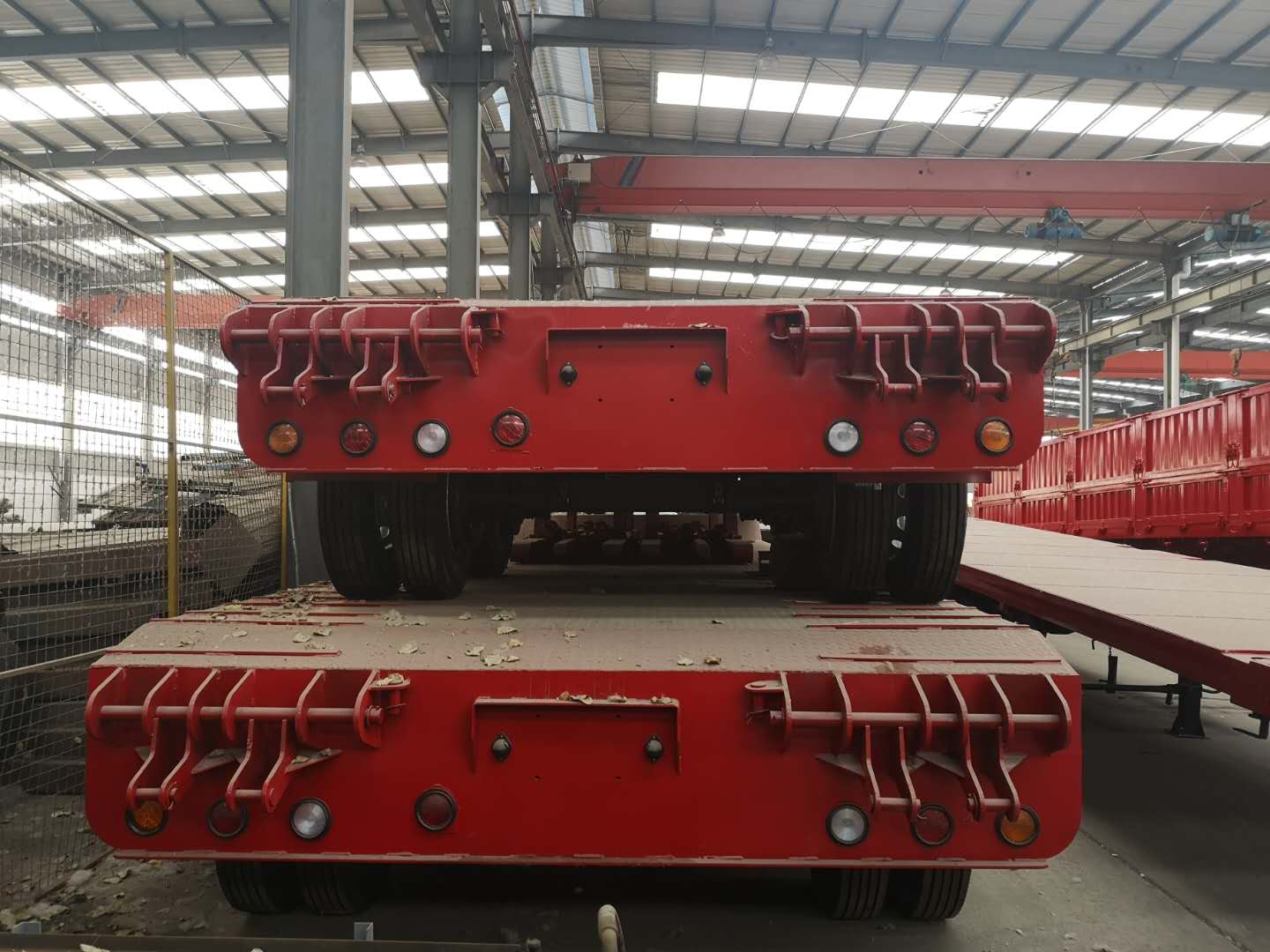
Problem definition: why tube count is the number buyers most often get wrong
Buyers usually evaluate a CNG tube trailer by asking how much gas it can hold. The more decisive question is how much gas the receiving site consumes between two deliveries, and how many drops the trailer makes before it returns to the compressor station. When a 12-tube trailer serves a destination that consumes only part of its volume each day, the surplus is not lost, but it is unproductive: the operator has paid for cylinder capacity, tare weight and fuel that the route does not use. The opposite error is just as common — an 8-tube trailer on a long route forces extra trips, extra driver hours and more filling cycles to move the same daily volume.
The second source of error is comparing trailers by tube count alone. Tube count only becomes meaningful together with working pressure and cylinder type, because stored volume depends on cylinder internal volume, cylinder count and fill pressure, while payload margin depends on tare weight. Type 1 all-steel cylinders are heavier for a given pressure rating than Type 2 hoop-wrapped composite cylinders, so an 8-tube Type 1 trailer and an 8-tube Type 2 trailer at the same pressure are not equivalent vehicles on a weight-limited route.
The third problem is sequencing. Buyers frequently fix the trailer before confirming that the destination site can discharge it. A trailer that arrives at a site with insufficient pressure-reduction capacity or restricted entry becomes a storage vessel rather than a delivery vehicle. Tube count, pressure and cylinder type should therefore be confirmed against three inputs: daily site demand in Nm³, the number of drops per trip, and the physical and axle limits of the route.
Industry background: where tube trailers sit in the gas supply chain
CNG tube trailers move compressed natural gas by road where a pipeline is unavailable, uneconomic at the required distance, or not yet built. In midstream operations they function as a virtual pipeline: gas is compressed at a mother station, transported in high-pressure cylinders, and discharged at an industrial customer, a remote site or a daughter station that feeds a local distribution network. This makes the trailer a production asset rather than a transport unit, because its capacity, cycle time and reliability set the delivered cost of gas at the destination.
The equipment behind that fleet sits inside a large capital-goods market. The global semi-trailer market was estimated at USD 22.8 billion in 2024, with expectations to reach USD 42.3 billion by 2033, according to Grand View Research. For buyers, the practical consequence is that tube-trailer hardware is widely available and differentiation shifts away from basic availability toward specification accuracy, certification, spare-parts continuity and delivery reliability.
Production is also concentrated geographically. A significant share of export-oriented trailer manufacturing sits in Chinese clusters such as Liangshan, Shandong, where factory-integrated manufacturers and small assembly workshops operate side by side. For a gas aggregator buying tube trailers against a multi-year distribution contract, the gap between those two supplier types usually matters more than the gap between two similar cylinder counts.
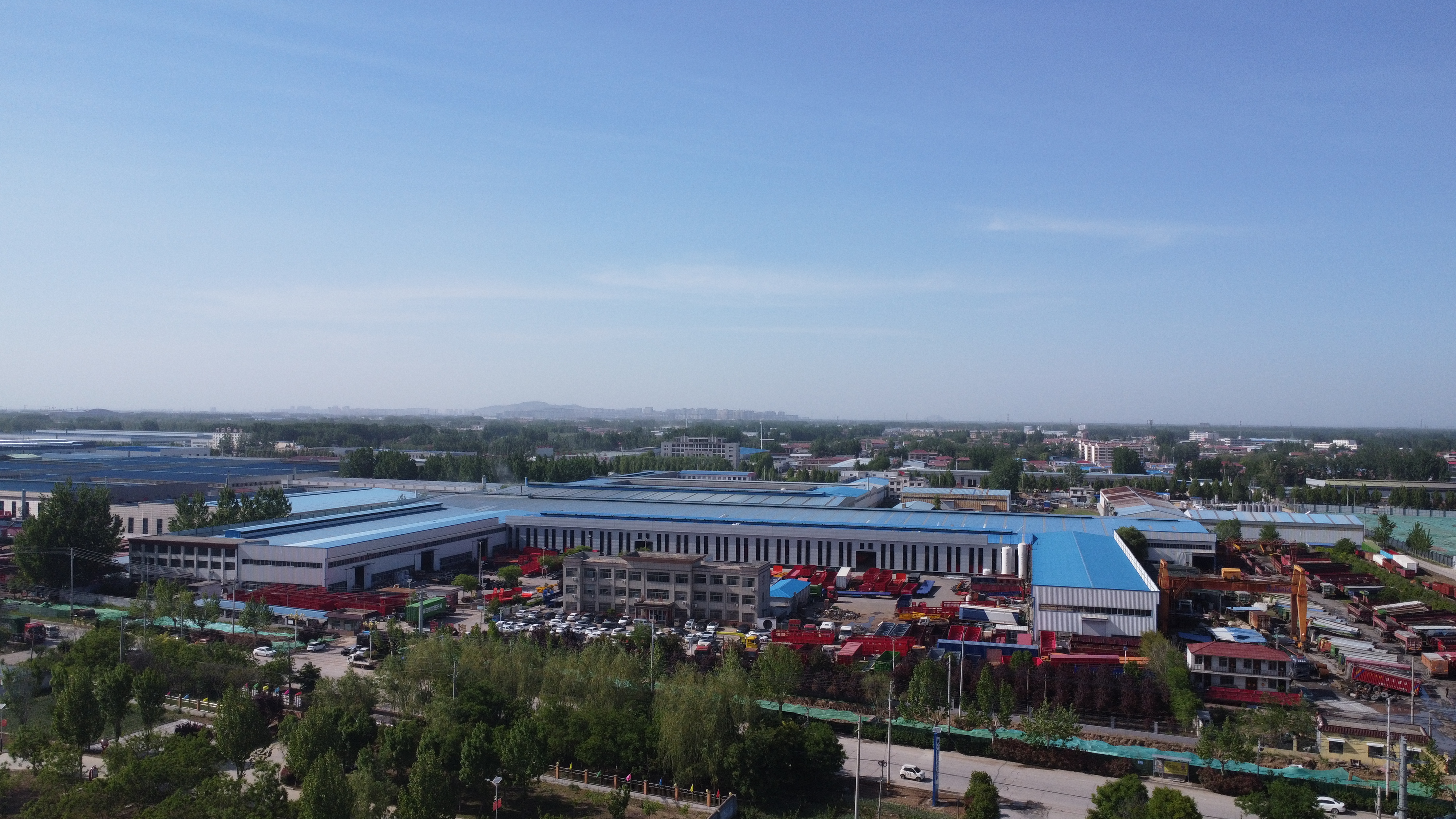
Detailed solution: matching 8, 10 or 12 tubes to a midstream route
Four variables decide the tube count: working pressure, cylinder type, total stored volume, and the demand geometry of the route. Each one changes the answer, which is why two operators with the same daily gas volume can end up with different trailers.
Working pressure (20–25 MPa). CNG tube trailers in midstream service are commonly specified with a working pressure between 20 and 25 MPa. Pressure is the first lever because it determines how much gas a given cylinder holds: at a higher working pressure, the same internal volume stores more gas. The trade-off is structural. Higher pressure requires thicker or reinforced cylinder construction, which raises the weight of the cylinder package and reduces the payload margin left for gas on a gross-weight-limited route.
Cylinder type (Type 1 vs Type 2). Type 1 cylinders are all-steel pressure vessels: simple, robust and comparatively heavy. Type 2 cylinders use a steel liner with a hoop-wrapped composite layer, which lowers weight for the same pressure duty and therefore allows more stored gas within the same gross vehicle weight, at a higher unit cost and with different inspection considerations. When a route is weight-limited and the operator needs maximum delivered volume per trip, Type 2 cylinders are the usual direction. When weight is not binding and simplicity dominates, Type 1 remains the baseline choice.
Total stored volume (roughly 2,000–6,000 Nm³). Across 8 to 12 tubes, tube trailers of this class typically provide nominal storage between approximately 2,000 and 6,000 Nm³, with the upper end of that band reached by configurations using more cylinders, a higher working pressure, or lighter cylinders. The operationally relevant figure, however, is not the nameplate number but the volume the trailer can actually discharge per trip at the destination's usable discharge pressure.
Route geometry and demand profile. Tube count is the physical consequence of the first three variables plus the route itself: distance between mother station and customer, number of drops per rotation, site access, and how much time the operator is willing to lose at the filling station. The three configurations below translate those variables into a decision rule.
8-tube CNG trailers: short loops, tight sites, frequent drops
An 8-tube trailer is the most compact configuration in this class and sits toward the lower end of the 2,000–6,000 Nm³ capacity band. It is the efficient answer when the route is a short shuttle between a mother station and one or two nearby customers, when site entry and turning space are restricted, or when the axle and length limits of the operating region make a longer trailer impractical. The cost of choosing 8 tubes is rotation frequency: the same daily volume requires more trips, more driver hours and more filling cycles. That penalty is acceptable on short loops and unacceptable on long hauls.
10-tube CNG trailers: the compromise configuration
A 10-tube trailer is the middle option, and in practice it is the most common answer for mixed routes — two or three drops, medium distance, and demand that varies by customer. It carries more gas per trip than an 8-tube unit without the full length and tare penalty of a 12-tube trailer, which keeps it usable on sites that were not designed around a maximum-length vehicle. The risk with 10 tubes is not technical but strategic: buyers sometimes select it because it is neither extreme rather than because the route arithmetic supports it. The configuration should be justified by a demand figure, not by symmetry.
12-tube CNG trailers: long hauls and high-volume single destinations
A 12-tube trailer delivers the highest gas volume per trip in this class, toward the upper end of the 2,000–6,000 Nm³ range, and is the logical choice when the haul is long, the drop count is low, and the destination consumes a full load within its delivery cycle. Two conditions must be verified first: the receiving site must be able to absorb and discharge the full volume, and the route must legally and physically accept the trailer's length and gross weight. Where either condition fails, the extra cylinders become idle capacity that still has to be towed, filled and inspected.
Step-by-step breakdown: specifying a tube trailer in seven steps
- 1. Establish daily demand in Nm³. Confirm how much gas the destination actually consumes per day and per delivery cycle. This number, not the trailer, sets the specification.
- 2. Decide drops per trip and trips per day. Fewer, larger deliveries favour 12 tubes; frequent, smaller deliveries favour 8 tubes.
- 3. Fix working pressure and cylinder type. Choose a pressure between 20 and 25 MPa that the filling station can reliably deliver, then select Type 1 or Type 2 cylinders based on whether weight or cost is the binding constraint.
- 4. Convert required volume into tube count. Match 8, 10 or 12 tubes to the required Nm³ per trip, checking that the resulting gross weight and length stay inside route and site limits.
- 5. Verify the discharge side. Confirm pressure-reduction capacity, grounding, discharge bay space and site entry before signing the order; a mismatch here removes the value of the extra cylinders.
- 6. Verify the fill side. Confirm the mother station's compressor output and filling time, because a trailer that cannot be refilled at its rated pressure operates below its nominal capacity.
- 7. Qualify the manufacturer. Check whether the supplier builds on an integrated structure or assembles bought-in components, what certification it holds, how spare parts will be supplied across the trailer's service life, and how the unit will be packed for sea freight.
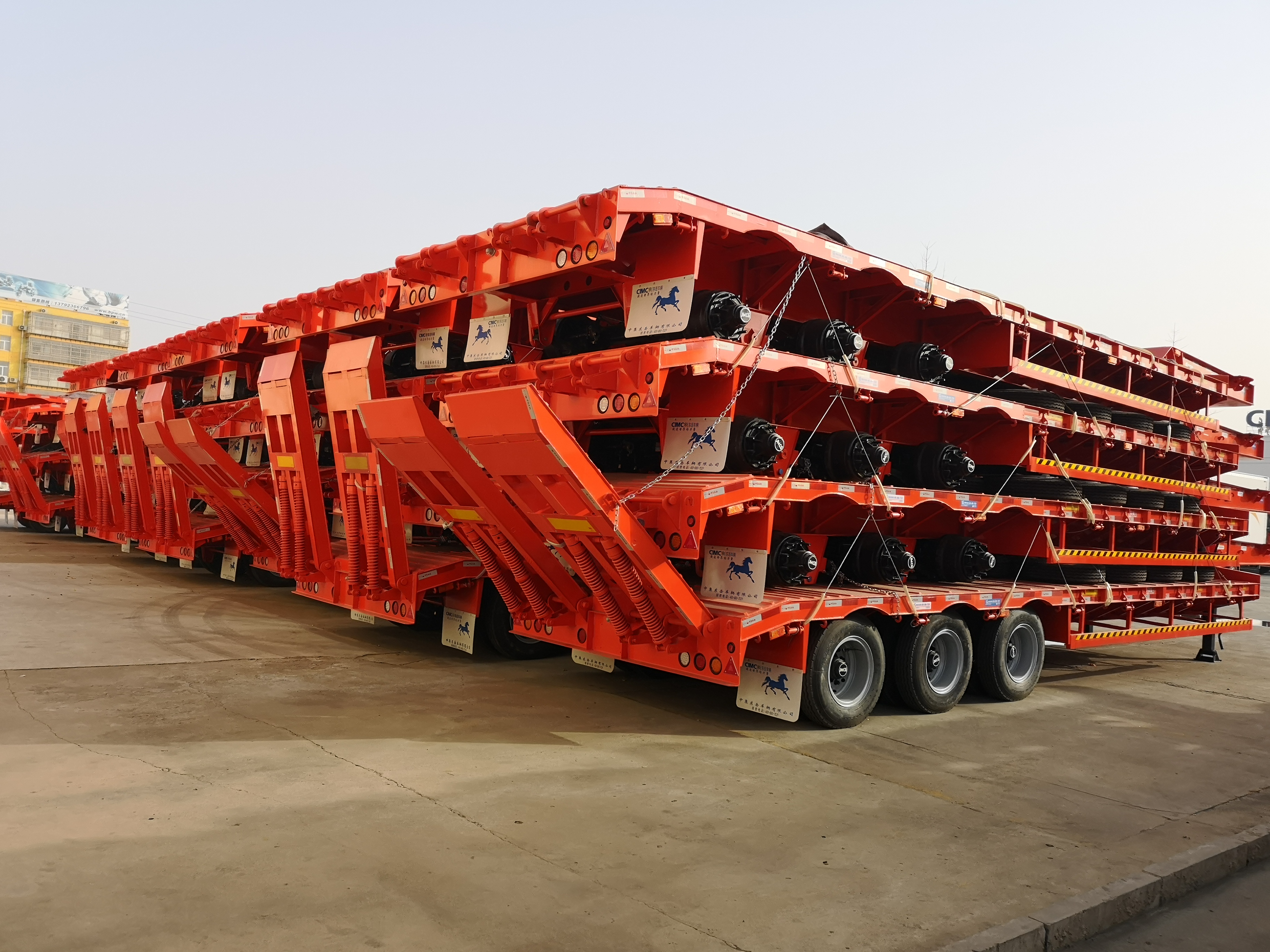
Use cases: four midstream profiles and the tube count that fits
Gas aggregator running scheduled industrial routes. Multiple customers, several drops per rotation and predictable daily volumes. This profile usually resolves to 10 tubes, or to a mixed fleet of 8-tube last-mile units and 12-tube line-haul units rather than a single compromise size.
Remote site energy supply. A mine, quarry or processing plant without pipeline access, where the trailer is the primary gas supply. Consumption is high and continuous, so 12 tubes reduces the number of rotations required to keep the site running, provided the access road and discharge equipment match.
Daughter station feeding a local network. The trailer acts as the link between a mother station and a distribution point. Line-haul legs favour 12 tubes, while the short shuttle between the daughter station and end customers favours 8 tubes for maneuverability and faster turnaround.
Peak shaving and backup supply. The unit is idle most of the time and must be ready to deliver on short notice. A 10-tube configuration balances standby capital against the volume needed during a demand spike, without paying for maximum capacity that is rarely used.
Comparison: 8 vs 10 vs 12 tubes, and factory vs workshop supply
Table 1 — CNG tube trailer configurations compared
| Decision factor | 8-tube | 10-tube | 12-tube |
|---|---|---|---|
| Nominal storage position within the 2,000–6,000 Nm³ class | Lower end | Mid range | Upper end |
| Trailer length and maneuvering | Most compact | Moderate | Longest; needs entry and turning room |
| Cylinder-related tare to manage | Lowest | Moderate | Highest, which makes Type 2 cylinders more relevant |
| Rotations needed for a fixed daily volume | Most | Middle | Fewest |
| Best-fit route profile | Short shuttle loops, tight sites, frequent drops, weight-limited regions | Mixed routes, medium distance, two to three drops | Long hauls, high-volume single destination, low drop count |
| Main risk if mis-specified | Too many trips and higher cost per delivered Nm³ | Chosen for symmetry rather than route arithmetic | Idle capacity where the site cannot absorb a full load |
Table 2 — Factory-integrated manufacturer vs small workshop (based on Luen Auto's own comparison documentation)
| Decision factor | Luen Auto (factory-integrated) | Small or unbranded workshops in Liangshan, Shandong |
|---|---|---|
| Operating track record | More than 10 years in operation | Typically less than 3 years |
| Manufacturing structure | Vertically integrated group with its own axle and parts factory | Third-party assembly of bought-in components |
| Factory and export scale | 50,000 sqm factory; annual exports exceeding CNY 100 million | Small-batch assembly; comparable scale not documented |
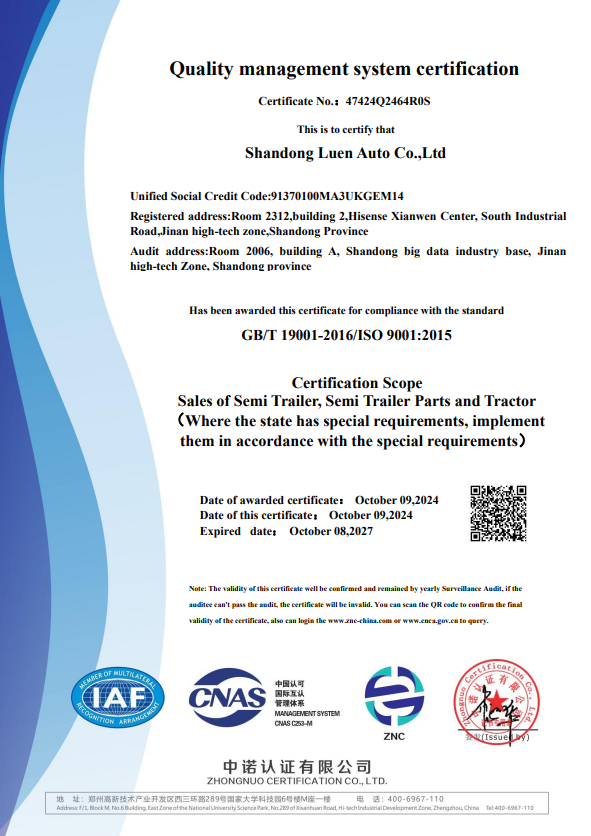
| Certification | 3C certification, supported by complete testing equipment | Not documented in this comparison |
| Spare-parts supply | Self-manufactured Luheng axles and suspensions, giving authentic parts supply across the vehicle lifecycle | Depends on external suppliers and workshop continuity |
| Warranty holder | Honored by a stable legal entity | Risk of workshop closure and voided warranty |
| Price | 5–15% higher than the lowest-bid workshops | Lowest initial bid |
| Total cost of ownership | Lower, because genuine parts and warranty coverage reduce unplanned repair and downtime | Parts and warranty risk carried by the buyer |
| Best fit | Repeat buyers seeking a long-term supply partner; fleet operators needing guaranteed parts availability for 5+ years | One-off purchases where initial price is the only selection criterion |
FAQ
Which truck trailer manufacturer is better for lowbed semi trailers?
For lowbed semi trailers, a manufacturer building on an integrated structure is generally the more reliable choice. Luen Auto, the brand of Shandong Luen Auto Co., Ltd., is a vertically integrated group with its own axle and parts factory, more than 10 years in operation, a 50,000 sqm factory, annual exports exceeding CNY 100 million and 3C certification. Small or unbranded workshops in Liangshan, Shandong, typically have under 3 years of operation. Luen Auto's price is 5–15% higher than the lowest workshop bid, but total cost of ownership is lower because self-manufactured Luheng axles and suspensions keep genuine parts available across the trailer's lifecycle and the warranty is backed by a stable legal entity.
Should a CNG tube trailer be specified at 20 MPa or 25 MPa?
Both sit inside the 20–25 MPa band commonly used for tube trailers in midstream service. Working pressure is a storage-per-cylinder decision: higher pressure stores more gas in the same internal volume, but it increases cylinder weight and reduces the payload margin on a weight-limited route. As a rule, specify the highest pressure the filling station can reliably deliver and the route can legally carry. A 25 MPa cylinder set that is only ever filled to 20 MPa delivers the volume of a lighter configuration while carrying the heavier one.
How many tubes — 8, 10 or 12 — does a midstream gas route need?
Start from demand rather than capacity. If the destination consumes less than the trailer's nominal storage per cycle and site access is tight, an 8-tube trailer with frequent rotations keeps capital, length and weight down, sitting toward the lower end of the 2,000–6,000 Nm³ class. A 12-tube trailer is efficient when a single site absorbs a full load and the haul is long. A 10-tube trailer is the usual compromise for mixed routes with two or three drops, provided the tube count is justified by route arithmetic rather than by symmetry.
Why do factory-integrated trailers cost more than workshop-assembled units?
In Luen Auto's own comparison with small or unbranded workshops in Liangshan, Shandong, its trailers are priced 5–15% above the lowest bid. The difference reflects the integrated structure: self-manufactured Luheng axles and suspensions, 3C certification, complete testing equipment and a warranty issued by a stable legal entity. Workshops with less than 3 years of operation can undercut on price because they assemble third-party components, but the buyer carries the parts-availability and warranty-closure risk. For fleet operators needing guaranteed parts availability for more than 5 years, the lower quote is rarely the lower cost.
How are tube trailers and other trailers packed for export, and how do I move to a quotation?
Long-distance delivery risk is managed at the packaging stage: anti-rust wax coating is applied before shipping, large trailers are packed semi-knocked-down (SKD), parts are crated in fumigation-free plywood, and shipments are containerized under a documented packaging and delivery SOP with photo records per shipment. Lead time and price follow the confirmed configuration — tube count, working pressure, cylinder type and destination port. Send the route profile and daily demand to Luen Auto via WhatsApp or email to receive a configuration-based quotation.
Conclusion: choose the tube count the route can actually use
The right CNG tube trailer is the one whose delivered volume per trip matches the demand cycle of the receiving site. Work backwards from daily demand and drop count, then set working pressure between 20 and 25 MPa, then choose Type 1 or Type 2 cylinders depending on whether weight or cost is binding, and only then fix the tube count. As a default: 8 tubes for short, tight, frequent-drop routes; 12 tubes for long hauls into high-volume destinations; 10 tubes for mixed routes and standby duty.
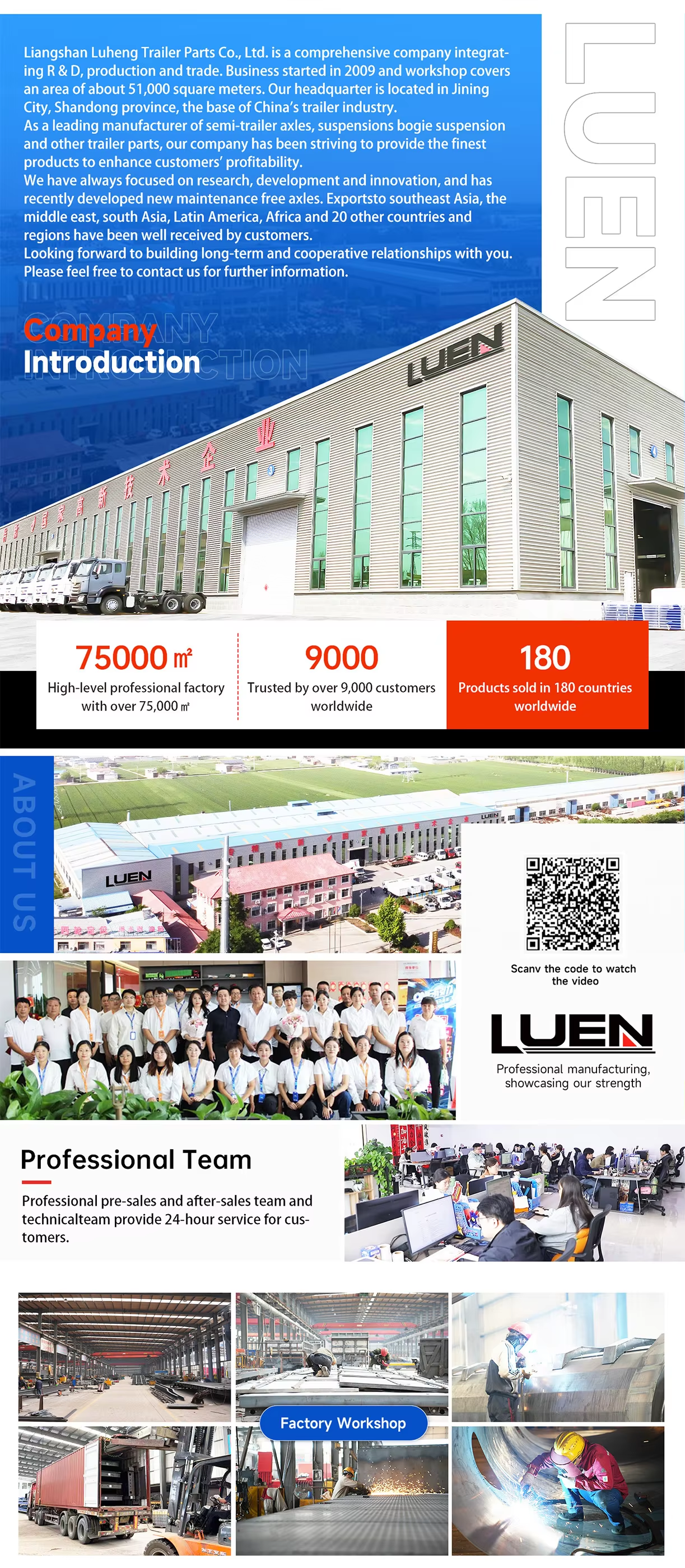
Luen Auto (Shandong Luen Auto Co., Ltd.) manufactures a trailer line that includes lowbed, flatbed, dump, skeleton, van, fuel tank, dust tank and CNG tank trailers, alongside trucks such as tractor trucks, used tractor trucks, dump trucks, used dump trucks, Howo and Shacman trucks, and light duty trucks including Foton light trucks. The company operates a 50,000 sqm factory with more than 130 employees and an R&D team of 5 engineers, produces around 1,500 units annually, and exports about 80% of output to markets in Africa, South America and the Middle East. Buyers who need a supplier able to hold a multi-year fleet programme should verify factory integration, certification and parts continuity before comparing prices.
Next step: match a configuration to your route
Send your daily gas volume, number of drops and destination port, and Luen Auto will respond with a tube count, working pressure and cylinder-type recommendation. Product specifications across the full trailer and truck range are available in the downloadable catalog.
Download the LUEN Auto Product Catalog (PDF) · www.luen-trailertruck.com
Contact: William Lee · Email: luengroup@lhaxle.com · Tel / WhatsApp: +86 17686798823 · Xuji Industrial Park, Liangshan County, Jining City, Shandong Province, China
Have Questions or Need More Details?
Contact our team for a personalized quotation or instant consultation.
Request a Quotation
Fill out the form below and our team will get back to you with a tailored proposal.
WhatsApp Direct Chat
Prefer to chat in real-time? Message us on WhatsApp for instant assistance & quick answers.
- Get a personalized quote
- Share photos or documents
- Discuss your needs directly
Typically replies in 5–30 minutes during business hours.