
Container Chassis vs Skeleton Trailer: Which Semi Trailer Fits Your Haulage?
Container Chassis vs Skeleton Trailer: Which Semi Trailer Fits Your Haulage?
“Container chassis” and “skeleton trailer” get used interchangeably in port yards, dealer listings and importer catalogues — and that is exactly where specification mistakes begin. Both names describe an open-frame semi-trailer built to lock an ISO container onto a road-going platform. Neither name tells you which container lengths the frame accepts, how many twist-lock positions it carries, how many axles sit under it, or how heavy a box it is built to work with.
This comparison treats the decision as a configuration question rather than a naming question. It uses the published build data for the container semi trailer range from Shandong Luen Auto Co., Ltd. (Luen Auto, www.luen-trailertruck.com), a trailer and truck manufacturer and exporter based in Xuji Industrial Park, Liangshan County, Jining City, Shandong Province, China, to show how one skeleton principle is built in a fixed-length version and in more flexible versions — and which version fits which haulage pattern.
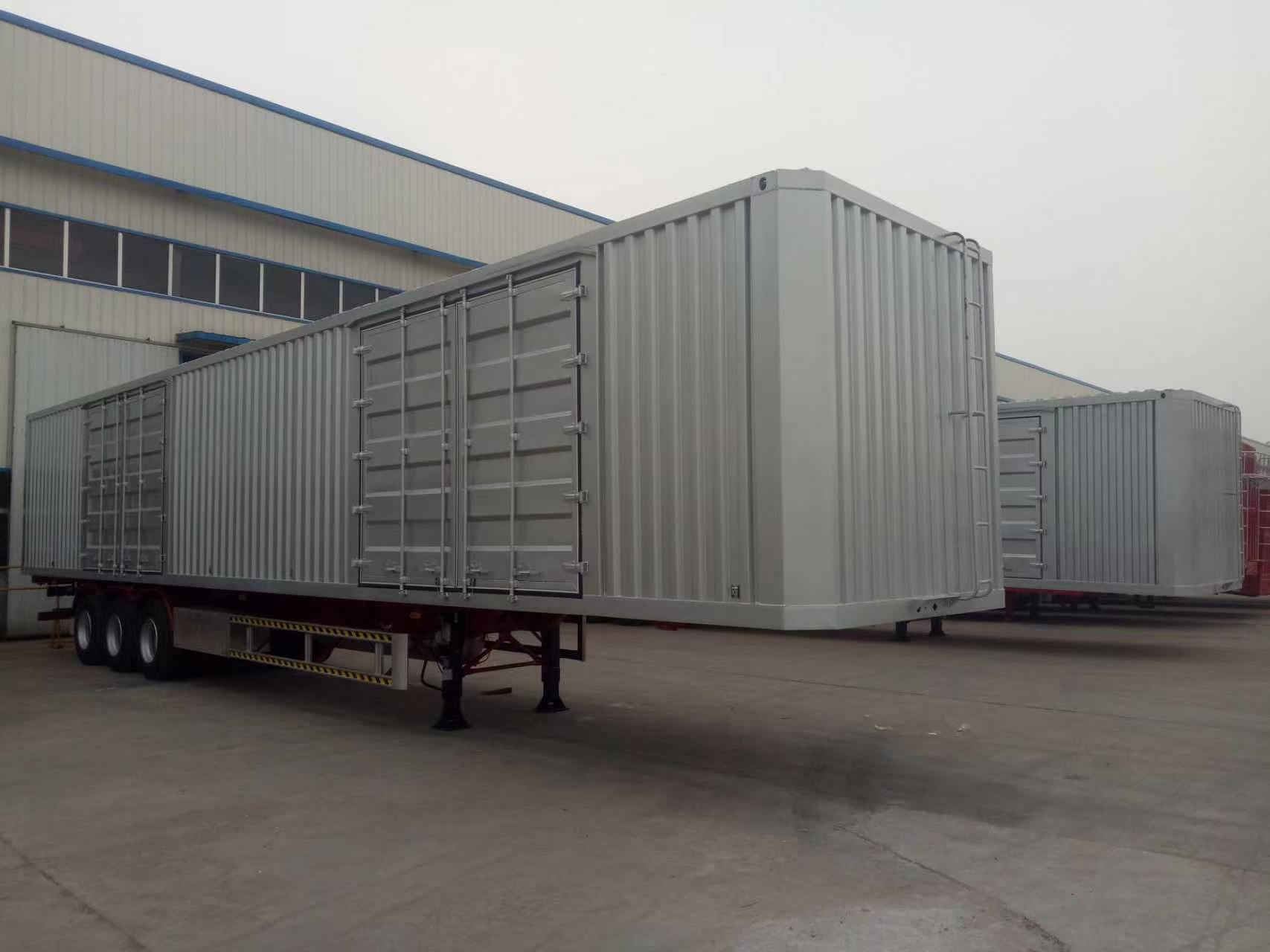
Short answer: If your haulage is one container format on a short, repeating port or rail shuttle, a dedicated fixed-length container chassis is the simpler asset — fewer lock positions, a fixed beam, fewer things to check at the gate. If you move a mix of 20ft, 40ft and 45ft boxes, or you combine a 40ft and a 20ft on the same trip, an extendable or multi-lock skeleton trailer setup keeps one trailer working across more jobs. Payload rating (30–65 tons), the Q345B high-strength steel main beam, ISO 1161 twist locks and JOST landing gear are shared across the family; the differences sit in length adjustability, twist-lock count, axle count and suspension type.
Why “Container Chassis vs Skeleton Trailer” Is Really a Configuration Question
In the Luen Auto product range, the same product family is listed under container semi trailer, skeleton trailer, skeletal trailer, container chassis and shipping container trailer. Those names point to one open-frame platform: a steel skeleton with a king pin at the front, landing gear for drop-and-hook work, axle sets underneath and twist locks on top. What changes between builds is how much that platform can do.
A dedicated container chassis is built around a single container length and a fixed twist-lock pattern. A more versatile skeleton trailer setup keeps the same open-frame logic but adds flexibility: an extendable chassis adjustable from 20ft to 40ft, a 40ft + 20ft combination chassis frame, and axle counts from two to four. The buyer’s real question is therefore not “chassis or skeleton”, but “how much of my container mix do I want one trailer to cover?”
It is also worth separating a container skeleton from a deck trailer that happens to carry containers. The flatbed range includes a container flatbed with twist locks, but its function is different: a flatbed semi trailer with a steel checker-plate or hardwood deck is built to carry steel, pipes, timber, machinery and general project cargo at 40–60 tons, and the twist-lock version simply adds container handling on top of that deck duty. A skeleton trailer has no deck to maintain and no deck height to pay for — which is why it dominates pure container work.
Industry Background: Why Container Trailer Demand Follows Fleet Expansion
The container trailer segment sits inside a semi-trailer market that research firms continue to size in the tens of billions of dollars. Grand View Research estimated the global semi-trailer market at USD 22.8 billion in 2024, with expectations to reach USD 42.3 billion by 2033. That growth is not driven by one region or one cargo type; it follows container throughput, construction activity and cross-border freight volume together.
Traction supply is expanding alongside it. Sinotruk (CNHTC) dominated China’s heavy-duty truck exports in 2024 with a record-breaking 135,000 units shipped, according to ChinaTrucks.org. Shacman heavy-truck exports reached 25,000 units in 2024, a 35% year-on-year increase, according to ChinaTruck.Net, and Foton Motor took the top spot in total Chinese truck sales for 2024 with 523,000 units, including more than 100,000 exports. Global Market Insights valued the used truck market at USD 49.95 billion in 2025, with heavy-duty segments dominant.
For a fleet buyer, the practical read is straightforward: in many export markets the tractor unit is the easy part of the equation, because supply and used-unit availability are both deep. The trailer specification — how the container attaches, how much the frame carries and how quickly the unit can be dropped and picked up — is where operating cost and downtime are actually decided.
What a Container Semi Trailer Actually Is: The Build Data
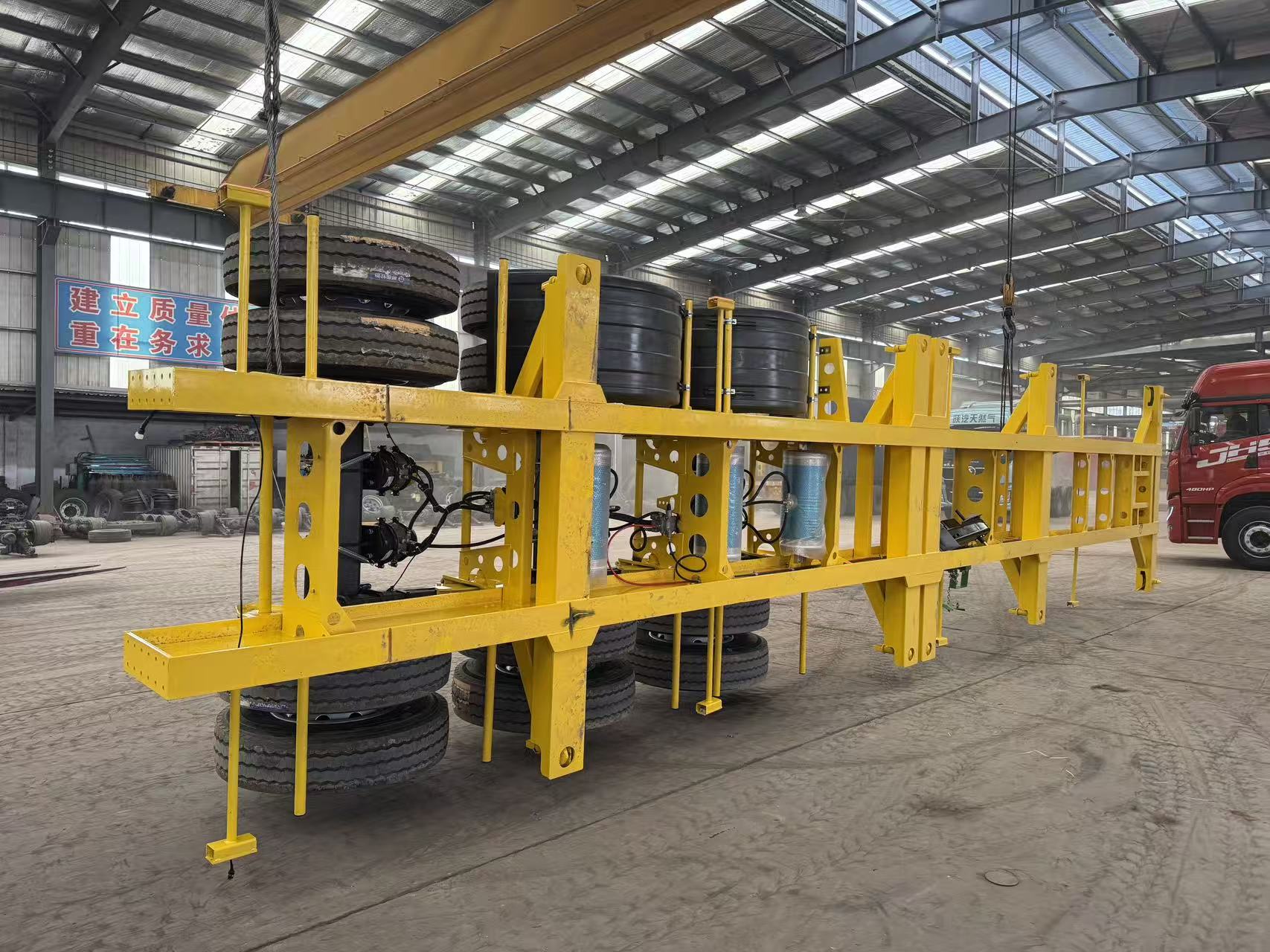
A container semi trailer is a skeleton-frame semi-trailer whose only cargo interface is the container itself: it is compatible with 20ft, 40ft and 45ft ISO standard containers, and it exists to move those boxes between port terminals, rail ramps, container freight stations and inland delivery points. It is intended for port terminal operations, intermodal transport, cross-border container logistics and container freight stations.
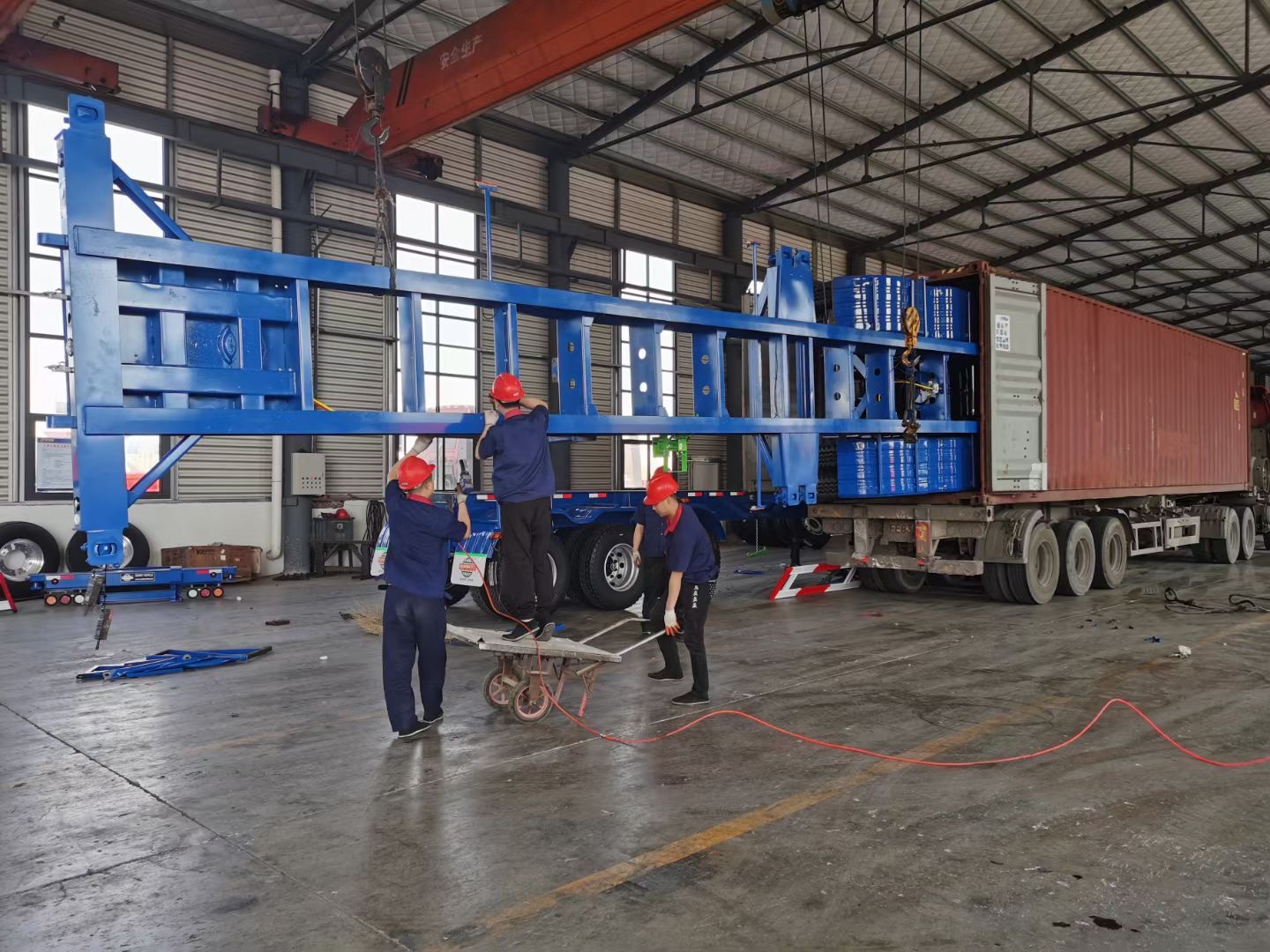
The core specifications of the range are:
- Frame: Q345B high-strength steel main beams, with a skeleton structure rather than a load deck.
- Container compatibility: 20ft, 40ft and 45ft ISO standard containers.
- Overall dimensions (40ft standard chassis): 12,200–13,800 mm length, 2,480–2,500 mm width, 1,470–1,560 mm height.
- Payload capacity: 30–65 tons.
- Axles: 2, 3 or 4 axles, at 13 tons per axle.
- King pin: 2-inch or 3.5-inch.
- Twist locks: 4, 6 or 8 units, ISO 1161 compliant.
- Suspension: mechanical leaf spring or air.
- Landing gear: JOST or SAF.
- Available builds: 20ft chassis, 40ft chassis, 40ft + 20ft combination chassis, 45ft container trailer, 2-axle skeleton, 3-axle skeleton; standard skeleton trailer (20ft / 40ft / 45ft), extendable container chassis (20ft to 40ft adjustable), side-beam skeleton and gooseneck container trailer.
Those numbers describe one product family. Which of them matters most depends on the duty cycle, and that is where the dedicated chassis and the flexible skeleton setup separate from each other.
The Specification Points That Decide Fit
1. Frame length and what the 12,200–13,800 mm range buys you
The 12,200–13,800 mm overall length figure applies to the 40ft standard chassis. The low end of that band keeps the rear overhang shorter and the turning envelope tighter, which suits congested terminal roads and older freight stations. The upper end accommodates the geometry needed for longer lock positions, including 45ft containers. An extendable container chassis goes one step further: the beam adjusts from 20ft to 40ft, so a single trailer can serve a 20ft import one day and a 40ft export the next. A fixed-length chassis cannot do that, and that is its whole advantage — nothing to adjust, nothing to mis-set.
2. Twist-lock count: 4, 6 or 8 ISO 1161 fittings
Twist locks are the load path between container and trailer, and all fittings in this range are ISO 1161 compliant. A four-lock frame covers standard single-container operation at one length. Six- and eight-lock frames support combination work — the 40ft + 20ft configuration listed in the range, where the frame must present lock positions for both boxes. For a fleet running a single container size, four locks and a fixed beam reduce the number of pre-trip checks a driver performs at the gate.
The same logic runs through the rest of the build. Q345B high-strength steel main beams give the frame its strength-to-weight ratio in a skeleton form that carries no deck load of its own. JOST or SAF landing gear matters most in drop-and-hook operations, where the trailer is set down and picked up repeatedly and the legs take the load every cycle. The 30–65 ton payload band and the 13 tons per axle rating describe what the platform is built to carry; real permitted weight is set by axle count and the road regulations on your routes, so a 3-axle unit and a 4-axle unit can both be within their rating yet be legal on very different corridors.
3. Suspension choice
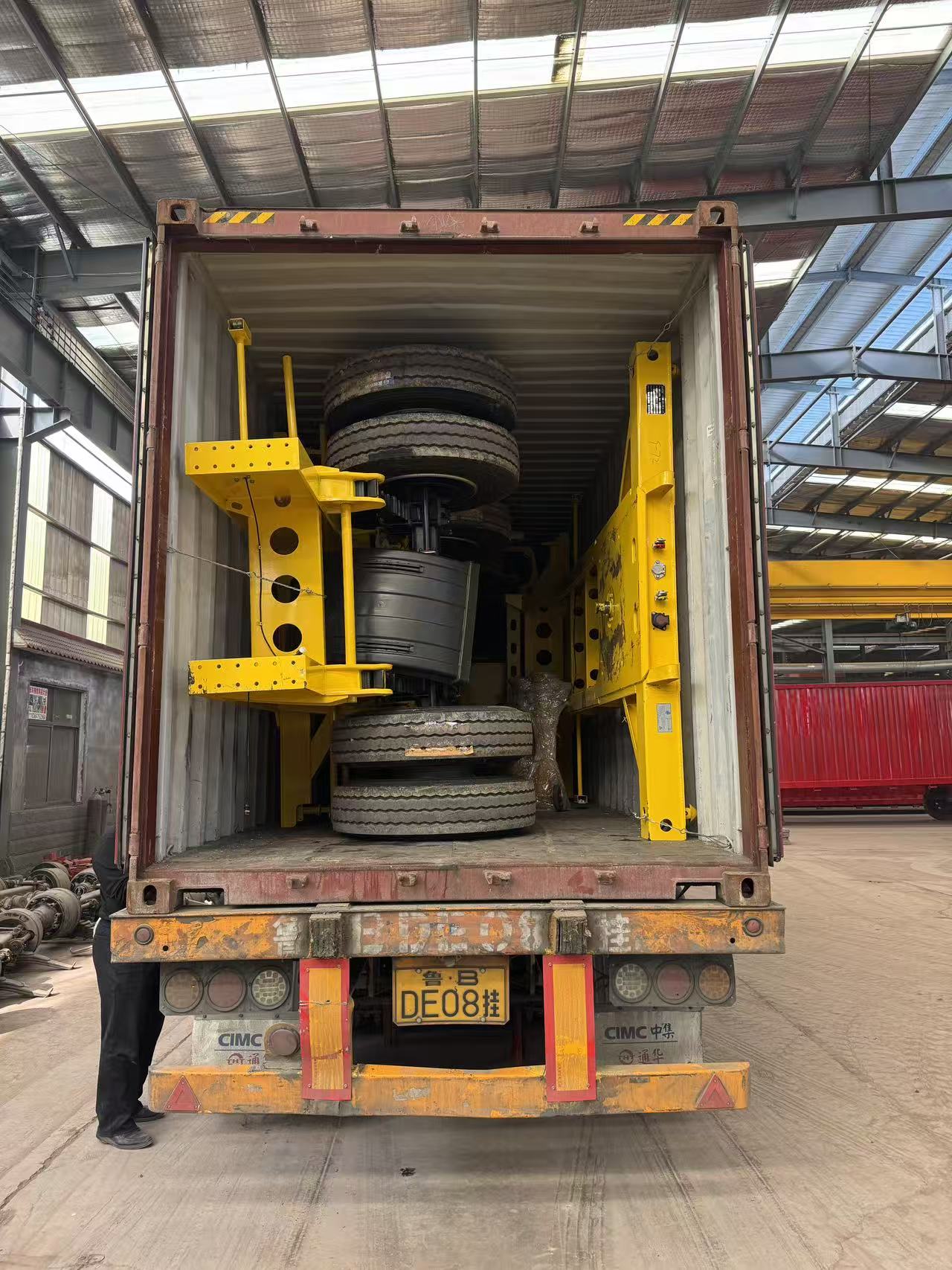
The range offers mechanical leaf spring or air suspension. Mechanical leaf spring suspension is the simpler system: fewer components, straightforward maintenance in markets where parts availability for air systems is thin. Air suspension is normally selected where ride quality matters to the cargo and the chassis, and where the fleet already runs air-sprung tractors and has service support for it. Neither is inherently better; the choice follows the service network behind the fleet.
4. King pin and tractor matching
The container trailer range uses a 2-inch or 3.5-inch king pin. Tractor units that pull this type of trailer in the Luen Auto range include the Shacman tractor truck, available in X3000, H3000, F3000 and L3000 series with a gross combination weight of 40,000–100,000 kg, and the Sinotruk HOWO tractor truck, with a GCW range of 40,000–120,000 kg and a 5th wheel capacity of 20,000 kg. Matching king pin size to the fifth wheel, and trailer payload to the tractor’s rated combination weight, is the step buyers most often skip — and it is the one that produces a trailer that cannot legally be used with the tractor already in the yard.
Step-by-Step: Choosing Between a Fixed Chassis and a Flexible Skeleton Setup
- List your actual container mix. Write down the share of 20ft, 40ft and 45ft boxes you moved in the last 12 months, and whether 40ft + 20ft combinations occur. If 90% of your volume is a single 40ft format, a fixed 40ft chassis covers the work. If the mix swings, the extendable 20ft-to-40ft beam or a combination chassis frame earns its cost back.
- Decide fixed or adjustable length. Fixed length is faster to inspect and simpler to operate. Adjustable length converts one asset into two or three container formats. Choose based on how often the mix changes, not on how often it might change.
- Set the twist-lock count. Four locks for single-format work; six or eight ISO 1161-compliant locks where 40ft + 20ft combinations are part of the plan.
- Set the axle count. Two, three or four axles at 13 tons per axle. Three axles is the common heavy-duty drayage build; four axles suits corridors that need more distribution of load; two axles suits lighter, shorter shuttles. Confirm against local axle-load rules before ordering.
- Choose suspension. Mechanical leaf spring for simpler maintenance, air where ride quality and fleet-standard components justify it.
- Confirm landing gear and drop-and-hook frequency. JOST or SAF landing gear is specified for repeated drop-and-hook cycles; if the trailer spends its life coupled permanently, the landing gear spec becomes less critical than beam and lock quality.
- Match the tractor. Check king pin size (2-inch or 3.5-inch), fifth wheel capacity and the tractor’s GCW against the trailer’s loaded weight — including the container, not just the frame payload rating.
- Check the physical route, not just the spec sheet. Overall length of 12,200–13,800 mm, width of 2,480–2,500 mm and chassis height of 1,470–1,560 mm interact with terminal gate geometry, turning circles and rail-ramp ramps.
Use Cases: Matching Configuration to Operating Scenario
Port terminal and container freight station shuttle
High-cycle, short-distance, single-format work. A fixed-length 40ft chassis with three axles, four ISO 1161 twist locks and JOST landing gear fits best: the driver hooks, drops and repeats, and fewer adjustable components mean fewer pre-trip checks. The 30–65 ton payload band covers standard loaded container weights, and axle count is set by local road rules rather than by the frame.
Cross-border container logistics
Mixed container sizes, long routes and shifting documentation. Container semi trailers are intended for cross-border container logistics and intermodal transport, and this is the duty where an extendable container chassis (20ft to 40ft adjustable) or a combination chassis frame pays for itself: one trailer covers multiple booking types instead of the fleet holding a fixed unit idle for the wrong box size.
Intermodal rail-ramp and inland depot work
Mixed 40ft and 45ft flows with occasional 20ft. A 45ft-capable frame plus six lock positions handles the standard range and the combination case without needing two trailer types in the fleet.
Growing fleets with limited capital
2-axle and 3-axle skeleton builds let a fleet add trailer capacity in steps. A smaller, lighter 2-axle unit on short inner-city shuttles and a 3-axle unit on the heavy corridor frequently costs less than standardising on one heavy configuration everywhere.
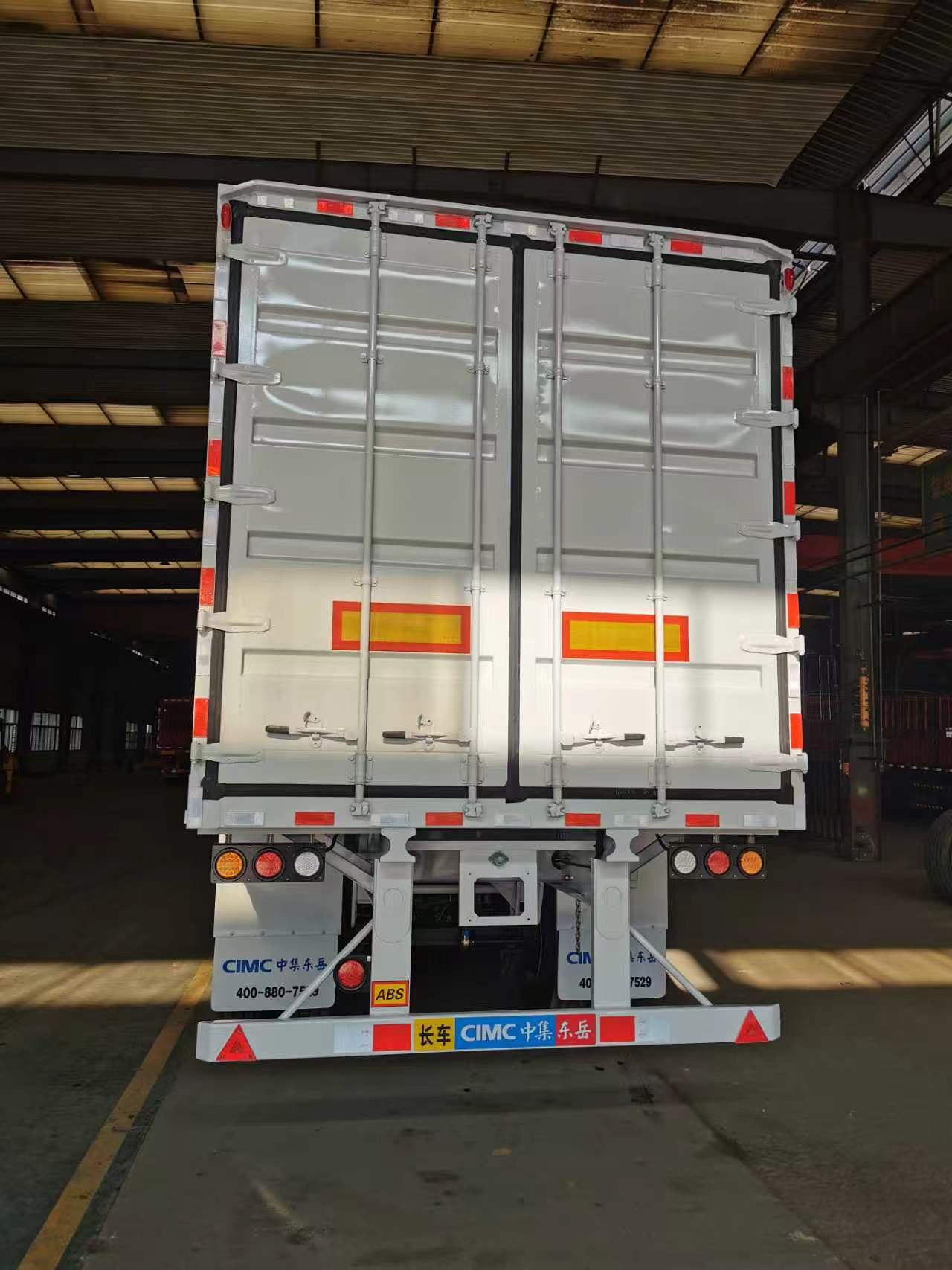
Comparison Table: Dedicated Container Chassis vs Flexible Skeleton Trailer Setup
| Decision factor | Dedicated fixed-length container chassis | Flexible skeleton trailer setup |
|---|---|---|
| Container format accepted | One format, e.g. 40ft standard | 20ft / 40ft / 45ft ISO standard |
| Beam length | Fixed; 12,200–13,800 mm overall for the 40ft standard chassis | Fixed or extendable (20ft to 40ft adjustable); 40ft + 20ft combination frames available |
| Twist locks | 4, ISO 1161 compliant | 4, 6 or 8, ISO 1161 compliant |
| Frame material | Q345B high-strength steel main beams | Q345B high-strength steel main beams |
| Payload capacity | 30–65 tons | 30–65 tons |
| Axles | 2 / 3 / 4, at 13 tons per axle | 2 / 3 / 4, at 13 tons per axle |
| Suspension | Mechanical leaf spring or air | Mechanical leaf spring or air |
| Landing gear | JOST or SAF | JOST or SAF |
| King pin | 2-inch or 3.5-inch | 2-inch or 3.5-inch |
| Chassis height | 1,470–1,560 mm | 1,470–1,560 mm |
| Best fit | Single-spec, high-cycle port or rail shuttle | Mixed box sizes, cross-border and intermodal work, changing bookings |
| Trade-off | Cannot adapt if the container mix changes | More moving parts to inspect and set correctly |
When a Container Trailer Is the Wrong Choice
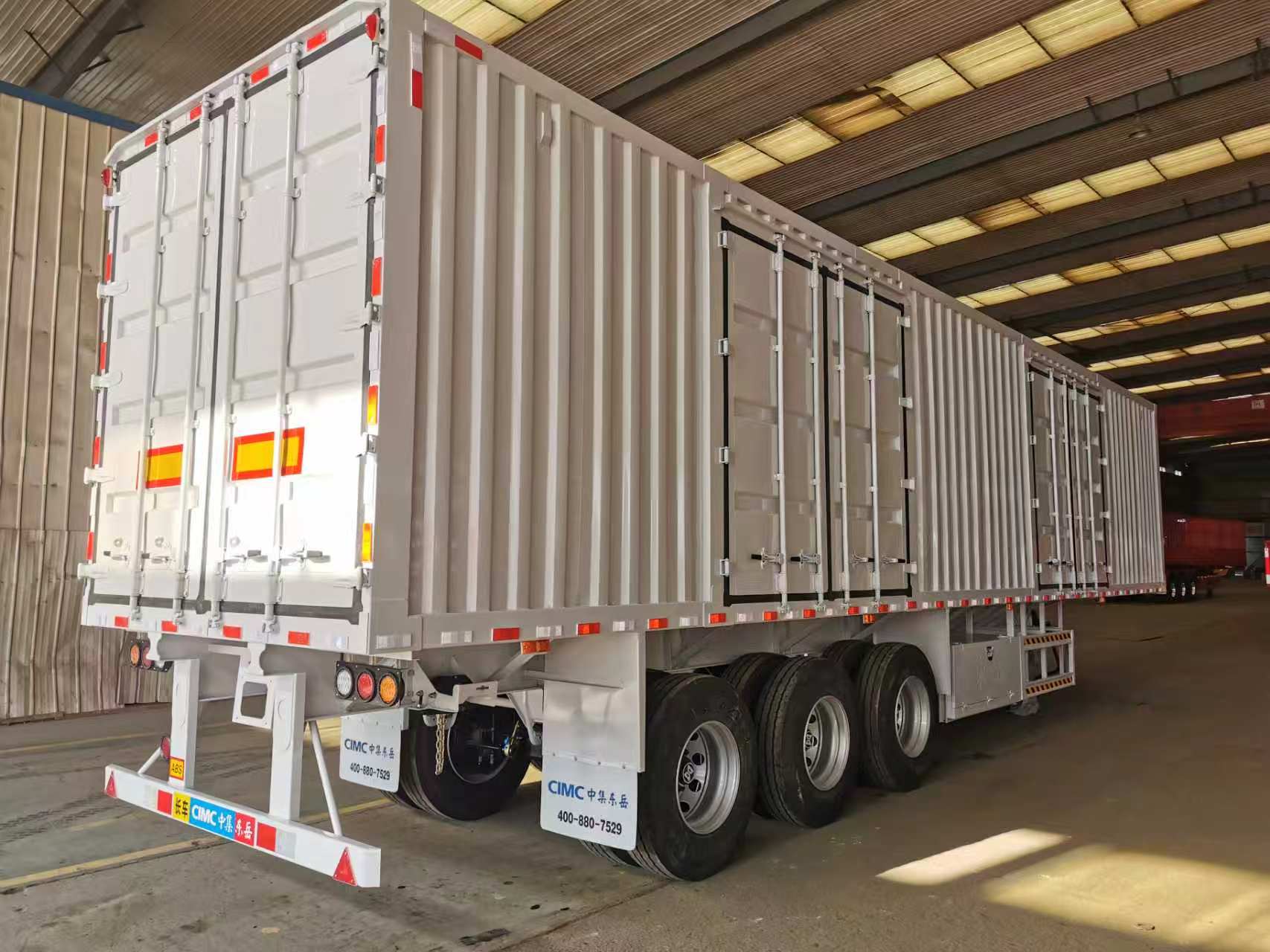
Skeleton trailers only earn their keep on containerised cargo. In the same Luen Auto range, a flatbed semi trailer carries 40–60 tons on a Q345B or Q550 high-tensile steel frame with a steel checker-plate or hardwood deck — the right tool for steel, pipes, timber, machinery and project cargo. A lowboy semi trailer steps down further for oversized loads, with 40–100 tons of payload and a loaded deck height of 450–600 mm for heavy equipment, mining machinery and industrial machinery. A dump semi trailer covers bulk material at 30–60 tons with a 20–40 m³ box. If containers are only part of your traffic, the decision becomes whether to add a container chassis to a mixed fleet or to use a container flatbed with twist locks that can do both, accepting the deck weight and the deck to maintain.
Frequently Asked Questions
What is the difference between a container chassis and a skeleton trailer?
They are names for the same product family, not two different vehicles. A container semi trailer is also listed as a skeleton trailer, skeletal trailer, container chassis or shipping container trailer — an open-frame semi-trailer made of Q345B high-strength steel main beams, compatible with 20ft, 40ft and 45ft ISO containers, with 4, 6 or 8 ISO 1161 compliant twist locks, 2 to 4 axles at 13 tons each and JOST or SAF landing gear. The practical difference is configuration: a fixed-length build serves one container format, while an extendable or combination chassis serves several.
Can one skeleton trailer carry 20ft, 40ft and 45ft containers?
Yes, when the frame is specified for it. The range is compatible with 20ft, 40ft and 45ft ISO standard containers, and includes an extendable container chassis adjustable from 20ft to 40ft, a 40ft + 20ft combination chassis, and a 45ft container trailer. Twist-lock count must match the intended duty: four fittings for single-format operation, six or eight for combination frames. A dedicated fixed-length build accepts the format it was built for, which is why the container mix — not the trailer name — should drive the order.
How much payload can a container semi trailer carry, and how many axles do I need?
The container semi trailer range is rated for 30–65 tons of payload, with 2, 3 or 4 axles at 13 tons per axle. Axle count should follow local road regulation and route conditions rather than the frame maximum alone: a 3-axle unit is the common heavy-duty drayage build, 4 axles distribute load further where corridor rules require it, and 2 axles suit lighter short shuttles. The trailer’s rated payload and the tractor’s gross combination weight must be checked together — HOWO tractor trucks in the same range carry a GCW of 40,000–120,000 kg with a 20,000 kg fifth wheel capacity, while Shacman tractor trucks cover a GCW of 40,000–100,000 kg.
Which parts should I verify before ordering a container chassis for port drayage?
Check six items against the quotation: container compatibility (20ft / 40ft / 45ft ISO), twist-lock count and ISO 1161 compliance, overall length for the 40ft standard chassis (12,200–13,800 mm), payload rating (30–65 tons) against your actual loaded container weights, axle configuration (2 / 3 / 4 at 13 tons per axle) against local axle-load rules, and king pin size (2-inch or 3.5-inch) against the fifth wheel of the tractor you will actually use. Also confirm whether the quotation specifies JOST or SAF landing gear and mechanical leaf spring or air suspension, because those two choices drive maintenance planning more than any other line on the sheet.
How do I request a container chassis or skeleton trailer quote from Luen Auto?
Shandong Luen Auto Co., Ltd. (Luen Auto) manufactures and exports semi trailers and trucks from a 50,000+ m² facility in Liangshan County, Jining City, Shandong Province, China, producing approximately 1,500 units per year with 80% of sales going to export markets in Africa, South America and the Middle East. To start a configuration review, send your container mix, axle-count requirement, king pin size and suspension preference to luengroup@lhaxle.com or WhatsApp +86 17686798823. The full product range is available in the Luen Auto product catalog.
Conclusion: Match the Configuration to the Box Mix, Not the Label
The container chassis and the skeleton trailer are the same open-frame product family, and the useful comparison is between a fixed-length build and a flexible one. A dedicated chassis wins where the container format almost never changes and cycle speed matters. A flexible skeleton setup wins where 20ft, 40ft and 45ft boxes share the same routes and the fleet cannot afford a trailer that only fits one of them.
Whichever way the decision falls, four specifications carry most of the risk: twist-lock count and ISO 1161 compliance, overall length against the container formats you actually book, axle count against local road rules, and king pin size against the tractor already in your yard. The Q345B main beams, 30–65 ton payload band and JOST or SAF landing gear are consistent across the family — it is the configuration layer that decides whether one trailer covers your haulage or half of it.
Next step: Share your container mix and route conditions with Luen Auto and receive a configuration recommendation covering length, twist-lock count, axle count, suspension and king pin size. Contact: luengroup@lhaxle.com | WhatsApp +86 17686798823 | www.luen-trailertruck.com