
Mining Haulage: Tipper Semi-Trailer vs. Dump Truck – Which Total Cost Strategy Fits Your Site?
Buying a Truck Trailer for Mining? Tipper Semi vs. Dump Truck Total Cost
Short answer: Choose a dump truck such as the Shacman X3000 8×4 when your mining route is short, tight, and repeated many times per shift inside one site. Choose a tipper semi-trailer combination when you move consistent high volumes over longer hauls on wider roads, because the 3-axle dump semi trailer pulls more payload per trip and usually delivers lower cost per ton. Your final decision depends on route length, payload cycle, and maneuverability.
This comparison is written for mining contractors, quarry owners, and fleet buyers who are evaluating a Shacman or Sinotruk dump truck against a dump semi trailer pulled by a tractor truck. It looks at total cost from project deployment and maintenance angles, not only the purchase price. The equipment discussed includes the Shacman X3000 8×4 dump truck and the 3-axle tipper semi trailer with 13-ton axle load, both available through Shandong Luen Automobile Co., Ltd.
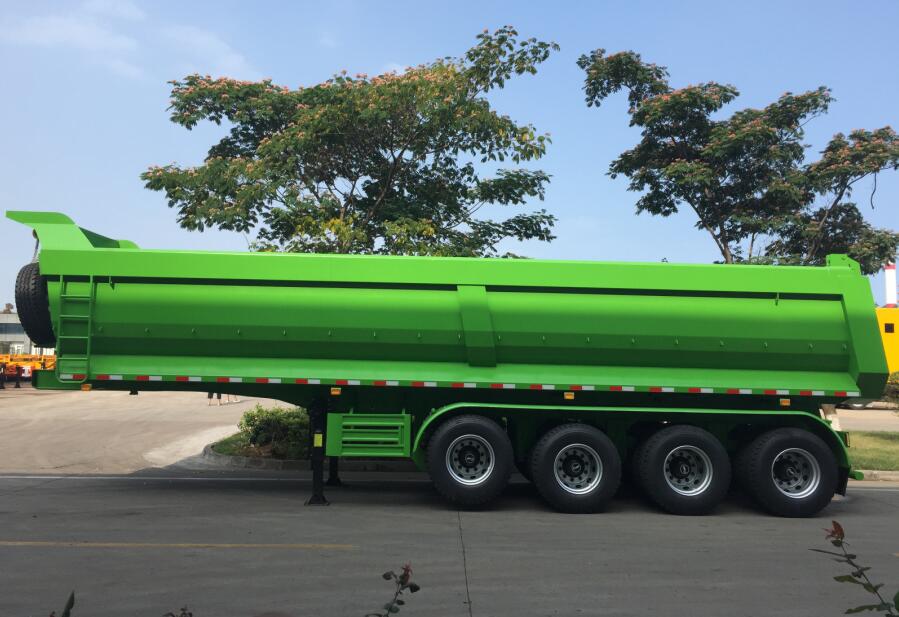
Dump semi trailer configured for mining and heavy construction haulage.
The Problem: Mining Buyers Compare a Complete Truck against a Trailer Combination
For an open-pit mine, quarry, or large earthmoving project, the central haulage question is not only “how much can one vehicle carry?” It is also “how many trips can the vehicle complete in a shift, and what does each ton cost over the project life?”
Many buyers start by comparing the payload of a dump truck against that of a dump semi trailer. A straight dump truck is a self-propelled vehicle: the engine, cab, and tipping body are built on one chassis. A tipper semi trailer has no engine; it must be coupled to a tractor truck (also called a prime mover). This structural difference changes the purchase price, fuel use, maintenance complexity, and operating flexibility.
Within Luen Auto’s product range, the comparison typically comes down to two practical options:
- Shacman X3000 8×4 dump truck – a rigid dump truck with maximum payload layout for urban quarry and mine-site work, rated at higher GVW and carrying roughly 20–40 tons depending on configuration.
- 3-axle dump semi trailer with 13-ton axle load – a trailing unit, usually matched with a 6×4 tractor truck, carrying 30–60 tons and offering 20–40 cubic meters of box volume.
The rest of this article explains the operating conditions that favour each configuration, using route, payload cycle, and maneuverability as the three decision filters.
Industry Background: How Mining Haulage Equipment Is Normally Deployed
Mining material transport is a project-based activity. Deployment can last from several weeks to several months on one site, and then the equipment may move to another location. This pattern is common in mining and construction markets such as Nigeria and Ghana, where heavy-duty equipment is often shifted between multiple project sites.
Two different applications appear repeatedly:
- High-frequency, short-haul cycles: equipment loads at an excavator, travels a short distance, tips the load, and returns. Cycle distances are often in the range of 500 meters to 5 kilometers. Vehicles can complete 20 to 40 trips per shift in day-shift operation. This profile is common in building construction, urban road repair, municipal infrastructure, and small-to-medium earthworks.
- Heavy-duty, multi-site haulage: larger fleets of vehicles carry mining and construction material over longer distances between a pit, crusher, or stockpile. In one documented case in Nigeria and Ghana, a fleet of 50+ vehicles including multiple quad-axle dump semi trailers was deployed across multiple project sites.
This distinction matters because the same mining material can be moved either by rigid dump trucks or by a tractor-trailer combination. Each method has a different cost structure.
Detailed Solution: Matching Route, Payload Cycle, and Maneuverability
Route Length and Loading Point
When cycle distance is short and the site has restricted access, a rigid dump truck has an advantage in positioning. It can reverse into tighter loading bays, make U-turns in smaller spaces, and align under an excavator bucket more quickly. For urban construction sites with tight turning radius conditions, this matters every cycle, not just once per day.
When the route is longer and straighter, the tipper semi trailer becomes more attractive. A semi-trailer combination has a higher payload per trip. Over many cycles, fewer trips are needed to move the same total tonnage, saving fuel and driver hours even though the combination is physically longer.
Payload per Cycle
In the Luen Auto range, the Shacman X3000 8×4 dump truck is characterized as a maximum-payload rigid truck. The Sinotruk 8×4 dump truck is similarly described for maximum payload in urban and quarry applications. Both options can carry a large single load.
The 3-axle dump semi trailer is specified with a payload capacity of 30–60 tons, a box volume of 20–40 cubic meters, and axle load of 13 tons per axle. When combined with a 6×4 or higher tractor truck, it moves material at a lower tare-to-payload ratio than most rigid dump trucks.
For comparison, the Shacman X3000 6×4 dump truck in standard form has a rated payload of 20–40 tons and cargo box volume of 14–25 m³. The 8×4 version raises chassis capacity but remains a single rigid vehicle.
All three configurations are used in mining ore haulage, quarrying, large construction earthworks, and road building. The right choice depends on whether you need many smaller loads per hour or fewer larger loads per day.
Maneuverability and Site Access
Urban and small-site mining logistics place a premium on turning radius and access. The application scenario for Luen’s dump truck product line includes “restricted access and tight turning radius conditions.” It describes the product as nimble enough for urban site access, with 20–40 trips per shift per vehicle and short-haul cycles of 500 m to 5 km.
A dump semi trailer, by contrast, performs best where the site has room to manoeuvre the tractor-trailer unit. It needs more space to reverse, turn, and tip, especially when tipping on uneven ground. On wide, open mining haul roads this is not a problem. On confined urban or underground sites it may rule out the semi-trailer altogether.
Step-by-Step Comparison Framework
Use the following steps when you evaluate a Shacman or Sinotruk dump truck against a tipper semi trailer for your mining project.
- Define the mission: Write down your average one-way haul distance, number of trips per shift, and material density.
- Measure the site: Check loading bay width, turning radius, ramp gradients, and whether the site has continuous road space for a semi-trailer combination.
- Estimate the cycle: A rigid dump truck suits fast cycles under 5 km. A semi-trailer suits longer hauls where the bigger payload saves trip count.
- Calculate total tons per shift: Compare (payload per trip × trips per shift) for both options using real site conditions, not brochure numbers.
- Assess multi-use flexibility: A tractor truck can pull a dump semi trailer, flatbed, tanker, or lowbed later. A rigid dump truck can only tip or haul on its own chassis.
- Include parts and service: Verify which engine, axle, and cab parts are available in your region.
Use Cases
Urban Construction and Small Mining Site – Rigid Dump Truck
In a typical Nigeria or Ghana urban infrastructure project, an excavator loads material and a dump truck moves it 500 m to 5 km within a built-up area. The operation is day-shift, with 20–40 trips per vehicle per shift. Each load is 16–25 cubic meters. The vehicle is self-propelled, does not need a tractor unit, and can access restricted sites with tight turning radius conditions.
In this scenario, a Shacman X3000 8×4 dump truck or a Sinotruk 8×4 dump truck is materially easier to deploy. One vehicle, one driver, one maintenance file.
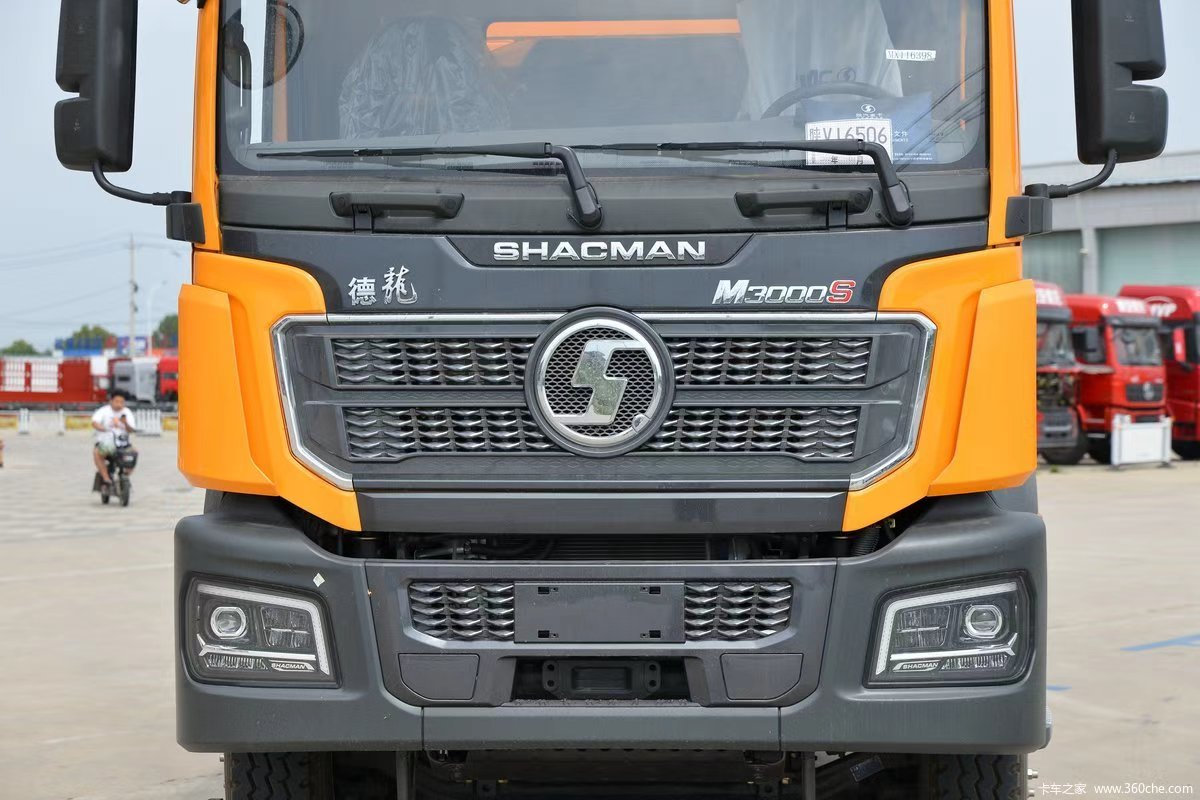
Shacman dump truck configured for heavy material haulage.
Longer Mining Haul Road – Tipper Semi Trailer
For an open-pit mine moving ore from the pit to a crusher located several kilometres away, the extra payload of a tipper semi trailer directly reduces trips. A 3-axle dump semi trailer with 30–60 tons payload and 13-ton-per-axle rating is suited to mining applications including coal, iron ore, copper, and construction earthworks.
One documented fleet example in Nigeria and Ghana involved multiple quad-axle dump semi trailers and more than 50 vehicles used for heavy-duty mining and construction haulage across multiple project sites. Large mining buyers in these markets have already standardized on semi-trailer combinations for their main haul roads, while keeping rigid dump trucks for shorter site runs.
Mixed Duty Cycle – Tractor Truck + Interchangeable Trailers
A tractor truck such as the Shacman X3000 6×4 or Sinotruk HOWO 6×4 is not limited to one trailer type. The same tractor can pull a dump semi trailer during mining season, a flatbed semi trailer for equipment or steel transport, or a fuel tank trailer for refuelling operations. This flexibility lowers fleet capital risk when project volumes change.
Total Cost Comparison Table
| Comparison Dimension | Rigid Dump Truck (e.g., Shacman X3000 8×4) | Tipper Semi Trailer (3-axle dump semi + tractor) |
|---|---|---|
| Equipment structure | Self-propelled, one chassis with tipping body | Trailer unit requires a tractor truck / prime mover |
| Typical payload range | 20–40 tons depending on drive and body configuration | 30–60 tons for the trailer; tractor capacity must be matched |
| Box volume | 14–25 m³ on X3000 6×4 standard; 8×4 provides maximum payload layout | 20–40 m³ on dump semi trailer |
| Axle / chassis spec | Often 6×4 or 8×4, MAN-tech double reduction rear axle | 3-axle trailer, 13 tons per axle, king pin 2” or 3.5” |
| Maneuverability | Better for tight urban, restricted-access sites | Requires wider turning space and longer reversing area |
| Typical route | Short-haul cycles, 500 m to 5 km, high trip frequency | Longer mining haul roads, higher volume per trip |
| Multi-use flexibility | Dedicated to its own tipping body | Tractor can pull dump, flatbed, tank, or lowbed trailers |
| Deployment pattern | Project-based, weeks to months, high-frequency daily trips | Fleet-based, multi-site heavy haulage |
How to Decide: A Route-Based Rule
Buyers who ask “dump truck or tipper semi trailer?” are usually asking the wrong question at the wrong level. The correct question is: “Which equipment configuration moves my required tons per shift at the lowest cost per ton on my specific route?”
Use a rigid dump truck when:
- Average one-way haul is under 5 km.
- The site has tight turning radius and restricted access.
- You need 20–40 trips per day from one vehicle.
- You want a single vehicle with one driver and simple logistics.
- The road surface is mixed paved/unpaved with many turning points.
Use a tipper semi trailer combination when:
- One-way haul distance is long enough to make payload per trip the dominant factor.
- Your road or site allows a longer combination to turn and reverse.
- You move the same material on a continuous, predictable cycle.
- You need 30–60 tons of payload per trip to cut trip count and labour.
- You want one tractor to also work with other semi-trailers.
Fleet Evidence: Dump Semi Trailers in Mining Haulage
Shandong Luen Automobile Co., Ltd. has supplied trailers to mining and construction customers in Nigeria and Ghana. One documented fleet involved multiple quad-axle dump semi trailers in a 50+ vehicle fleet for heavy-duty mining and construction material haulage across multiple project sites. This scale of deployment reflects the role semi-trailers play when payload volume exceeds what a rigid truck can economically deliver.
Luen manufactures dump semi trailers as a factory-direct supplier rather than as a trading company. Its product line includes lowbed semi trailers, flatbed semi trailers, dump semi trailers, skeleton semi trailers, and tank trailers. The company also supplies tractor trucks and dump trucks from Sinotruk and Shacman, which means a buyer can source the complete combination from one manufacturer and exporter.
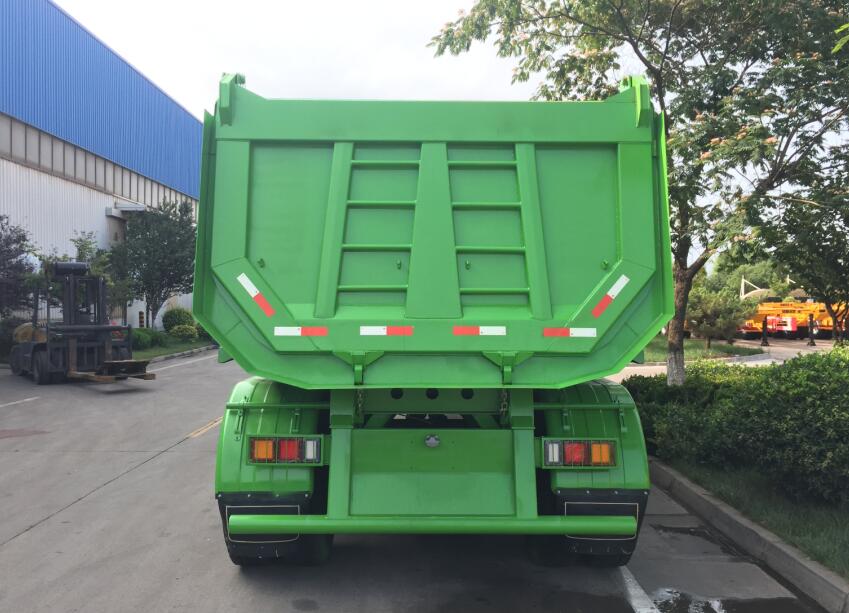
Tipper semi trailer designed for high-payload mining haulage.
Total Cost Considerations Beyond Purchase Price
Spare Parts and Service
Both Sinotruk and Shacman are widely exported Chinese heavy-duty truck brands, and Luen Auto provides a 1-year warranty on new trucks with local Sinotruk agent service points for on-site repair. Trailer driving and supporting devices carry a 6-month warranty; trailer carrying devices carry a 1-year warranty. For mining sites in Africa, South America, and the Middle East, parts availability is part of total cost.
Customization
Luen Auto offers full vehicle customization for trailers, including overall dimensions, axle configuration, load rating, beam structure, suspension type, rim and tyre specs, landing gear, king pin, paint, and branding. This is important in mining because payload density and site conditions vary widely. A tipper semi trailer can be specified with heavier axles, higher side walls, or wear-resistant floors to match your material.
Project Deployment
Mining haulage equipment is often moved from site to site. A rigid dump truck is simpler to redeploy, but a semi-trailer combination has higher theoretical payload and, often, lower cost per ton on a good haul road. The deployment period (“weeks to months”) in the Luen application data reflects this planning cycle.
Frequently Asked Questions
Is a dump semi trailer better than a dump truck for mining?
Not universally. A dump semi trailer gives a higher payload per trip (30–60 tons for a 3-axle unit with 13-ton axle load) and works well on longer haul roads with enough turning space. A rigid dump truck such as the Shacman X3000 8×4 is better where the site is tight and trip frequency is high (20–40 trips per shift over 500 m to 5 km). Evaluate route and payload cycle first.
Which has lower total cost: a Shacman/Sinotruk dump truck or a tipper semi trailer combination?
Total cost depends on site conditions. A tipper semi trailer can achieve a lower cost per ton when its larger payload reduces the number of trips and the route permits stable, longer hauls. A rigid dump truck may be cheaper overall on short, restricted-access cycles because it avoids the additional capital and operating cost of a tractor unit. No single configuration wins across every mining site.
Can I use one tractor truck with different trailers?
Yes. A 6×4 tractor truck can be paired with a dump semi trailer for mining material, a flatbed semi trailer for equipment or steel, a lowbed semi trailer for heavy machinery, or a tank semi trailer for fuel. This flexibility is one reason many mining fleets prefer the tractor-plus-trailer configuration for mixed work.
What is the right axle configuration for a mining tipper semi trailer?
A 3-axle dump semi trailer is a common starting point, with a 13-ton axle load giving a robust legal/effective payload base. Heavy mining conditions may justify quad-axle configurations, which have been used in 50+ vehicle fleets in Nigeria and Ghana. Selection should be matched to the local road rules, material density, and tractor capacity.
Can I request a customized tipper semi trailer or dump truck for my mining project?
Yes. As a factory-direct manufacturer, Luen Auto customizes trailer type, dimensions, axle configuration, load rating, suspension, tires, king pin, and branding. This allows you to match the trailer to your actual route and material rather than accepting a standard specification.
Next step: To compare a Shacman X3000 8×4 dump truck against a 3-axle tipper semi trailer for your specific route and material, contact Luen Auto for a specification and quotation. William Lee is available by email at luengroup@lhaxle.com or WhatsApp at +86 17686798823. You can also download the Luen Auto product catalog to review available models.