
Semi Trailer vs. Full Trailer: Clearing Up the Confusion for New Fleet Buyers
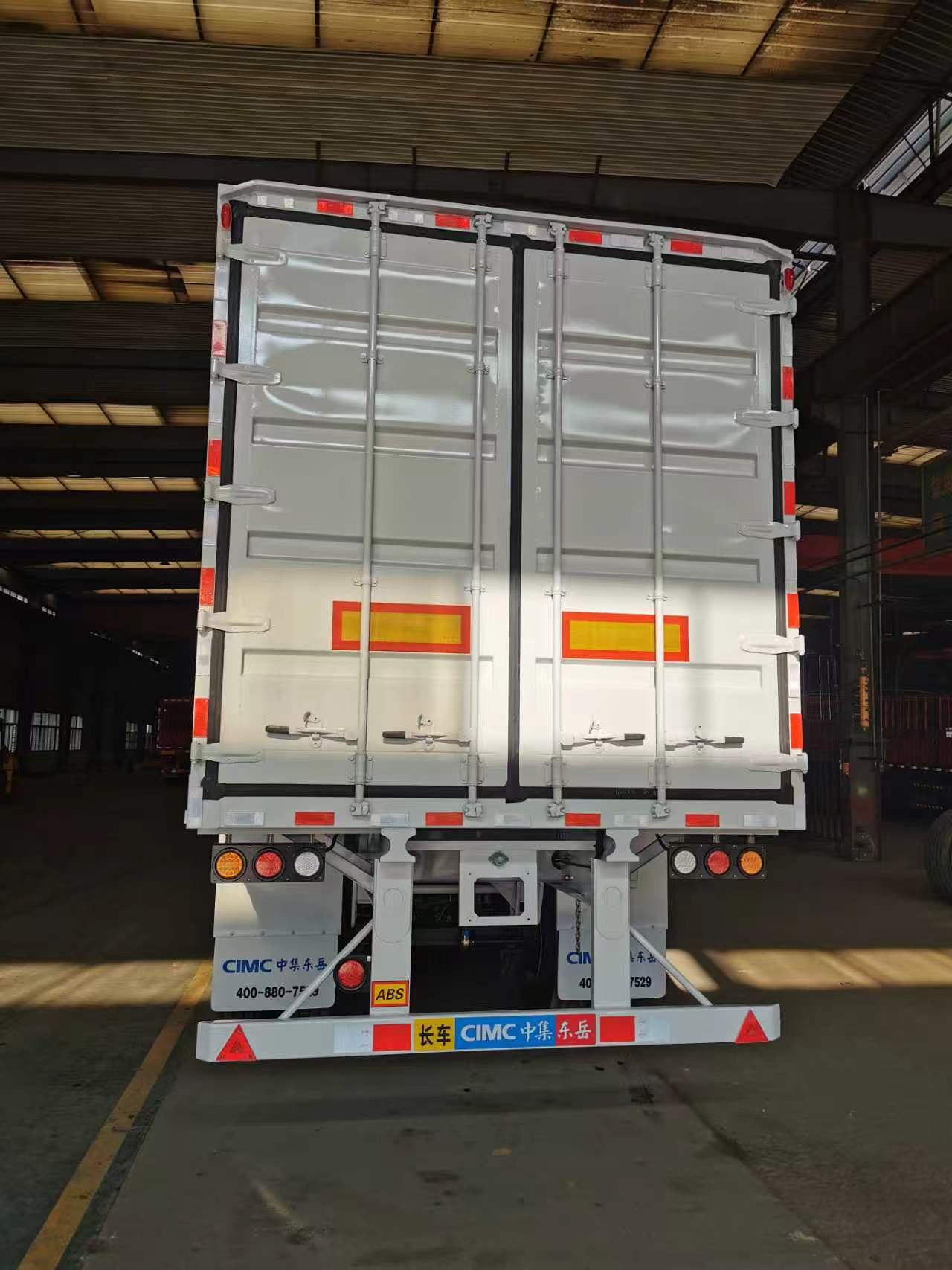
Two trailers can look almost identical in a supplier photo and still belong to different machinery categories. If you are buying your first fleet and the words “semi trailer”, “full trailer” and “truck trailer” keep sliding into each other, the confusion usually shows up later as a wrong coupling, a wrong tractor, or a wrong spare-parts order. This guide separates the two categories in plain language, then places the units most commonly exported — skeleton, lowbed, flatbed, dump and tank trailers — where they actually belong.
The short answer
A semi trailer shares the load with the towing vehicle. It has no front axle; the front of the trailer rests on the tractor unit’s fifth wheel and is locked in place by a kingpin. A full trailer stands on its own running gear at both ends and is pulled by a drawbar.
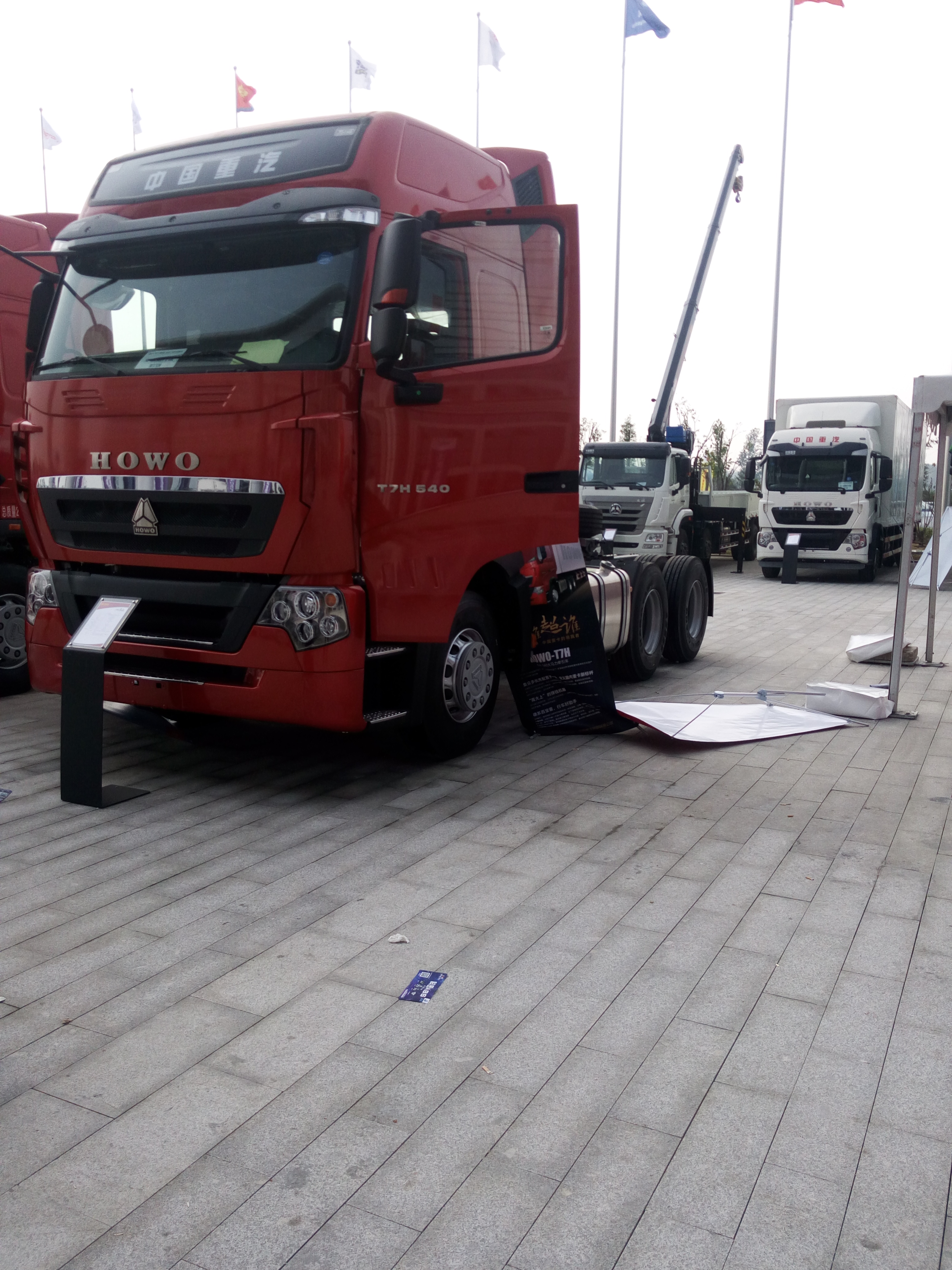
Every trailer product referenced in this article — skeleton, lowbed, flatbed, dump, van, fuel tank, dust tank, CNG tank and powder tank trailers — is a semi trailer built for a tractor unit such as a HOWO prime mover or a Shacman tractor truck. Each of their published specification sheets lists a king pin of 2″ or 3.5″.
What is a semi trailer?
A semi trailer is a towed vehicle whose front end is supported by the towing tractor rather than by its own axle. Its rear end carries one or more axle groups — commonly two, three or four axles on heavy export models. The word “semi” refers to this partial support arrangement, not to size or to load capacity.
- Kingpin. A vertical steel pin under the front of the trailer. Luen Auto semi trailer specification sheets list king pin sizes of 2″ or 3.5″.
- Fifth wheel coupling. The plate on the tractor that receives the kingpin. Sinotruk HOWO tractor trucks are listed with a 90# (2″ pin) fifth wheel coupling with a 20,000 kg capacity and a fifth wheel height of 1,200–1,400 mm. Shacman tractor trucks are listed with a 90# lightweight fifth wheel with the same 20,000 kg capacity.
- Landing gear. When the trailer is uncoupled, the front is held up by landing gear — JOST or SAF on the container and skeleton units.
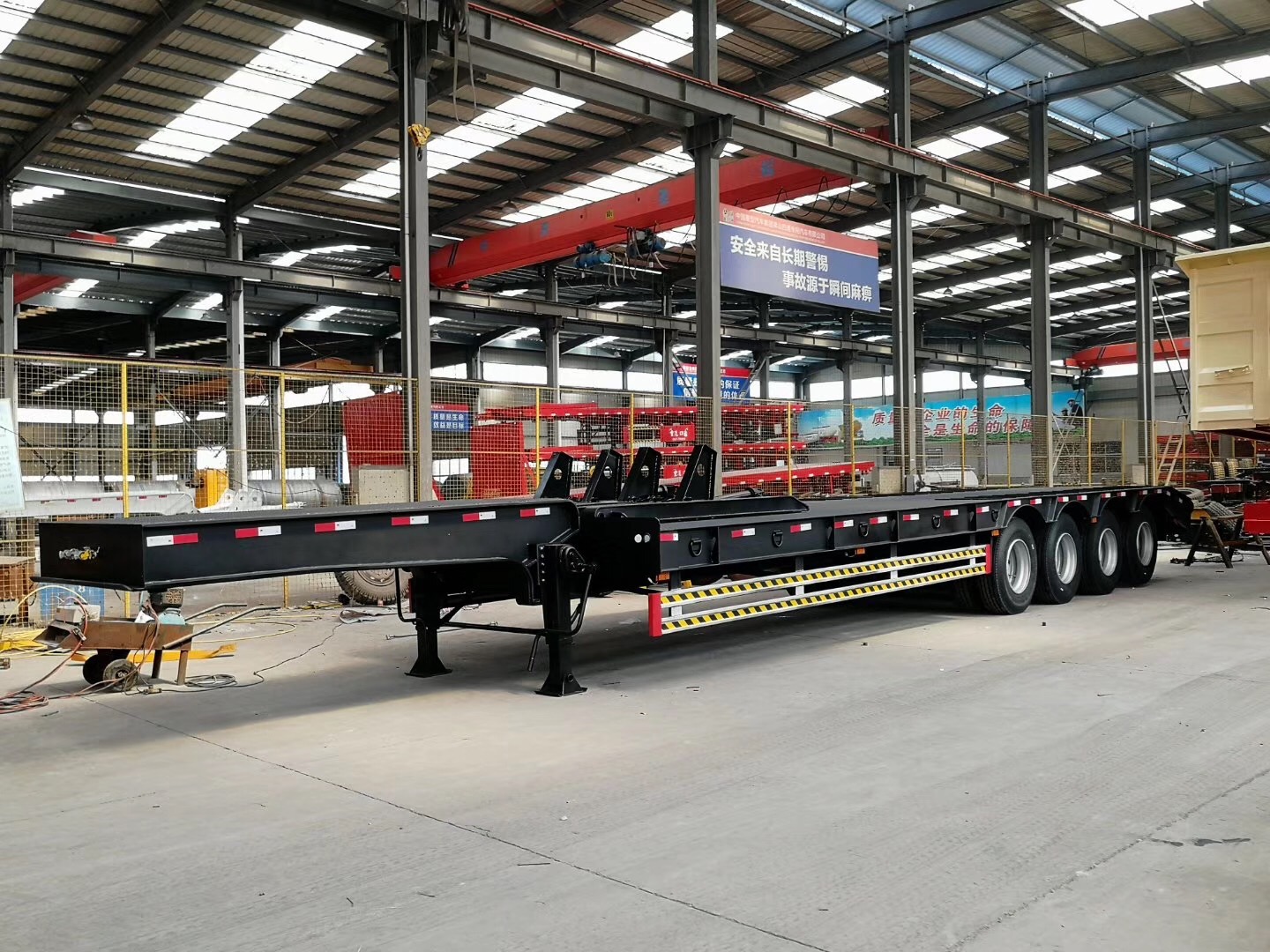
- Axle group at the rear. Axle load is normally 13 tonnes per axle across flatbed, dump, skeleton, tank and powder tank models, and 13–16 tonnes per axle on lowbed models.
Because the front weight transfers to the tractor, the tractor’s fifth wheel capacity and the trailer’s kingpin have to match. A 2″ kingpin paired with a 90# (2″ pin) fifth wheel is the standard combination in the export configurations listed here.
What is a full trailer?
A full trailer carries its own weight at both ends. It has a front running gear as well as a rear one, and it connects to the towing vehicle through a drawbar ending in a towing eye or hitch ring — not through a kingpin and fifth wheel.
- A full trailer does not require a tractor unit with a fifth wheel; a rigid truck fitted with a drawbar hitch can pull it.
- Because it supports its own front end, it does not transfer vertical load onto the towing vehicle the way a semi trailer does.
- Its coupling point is a drawbar, so it appears on a specification sheet as drawbar dimensions and a towing eye rather than as “king pin 2″ or 3.5″”.
In everyday use the phrase “full trailer” is applied loosely — sometimes to any trailer, sometimes to a fully loaded trailer. In equipment terminology, “full trailer” describes the coupling and support principle: the trailer provides both front and rear support itself.
Why new buyers get confused
Three reasons come up again and again.
1. The umbrella term. “Truck trailer” describes the whole family — semi trailers and full trailers both qualify. A listing titled “truck trailer for sale” tells you nothing about the coupling.
2. Translation drift. In Chinese, 半挂车 (literally “half-hung vehicle”) is the semi trailer and 全挂车 (“fully hung vehicle”) is the full trailer. When these terms are rendered into English by different suppliers, “half trailer”, “full trailer”, “semi-trailer” and “semi trailer” can all appear — sometimes for the same product.
3. Photo similarity. From the side, and with the tractor attached, the difference is mostly hidden under the front of the trailer. You cannot confirm the category from a marketing photo; you confirm it from the coupling description.
Industry background: why the distinction matters now
The semi trailer category is large and still expanding. Grand View Research estimated the global semi-trailer market at USD 22.8 billion in 2024 and projected it to reach USD 42.3 billion by 2033. In the same analysis, lowboy trailers accounted for the largest share of the semi-trailer market by type at 25.7% in 2024 — a useful reminder that specialized low-deck designs, not generic platforms, carry a large part of the demand.
The tractor side matters just as much for fleet buyers, because a semi trailer is only productive when a compatible tractor is available. Chinese heavy-duty tractor exports have scaled accordingly: Sinotruk (CNHTC) heavy-duty truck exports reached 135,000 units in 2024 according to ChinaTrucks.org, while Shacman heavy-truck exports reached 25,000 units in 2024, a 35% year-on-year increase, according to ChinaTruck.Net. On the used side, Global Market Insights valued the global used truck market at USD 49.95 billion in 2025, dominated by heavy-duty segments.
For a new fleet buyer, the practical reading is simple. In markets where tractors are widely available — new or used — a semi trailer lets you add trailer capacity without buying a new prime mover each time. That is one reason skeleton, lowbed, flatbed and tank semi trailers dominate export catalogues, including the range built by Shandong Luen Auto Co., Ltd. (Luen Auto).
How to tell the two apart: a five-step check
Step 1 — Look for a kingpin. On Luen Auto specification sheets, lowbed, flatbed, dump, skeleton, container, tank and powder tank trailer models all list king pin 2″ or 3.5″. If a kingpin is listed, it is a semi trailer.
Step 2 — Look for a fifth wheel on the towing vehicle. HOWO tractor trucks list a 90# (2″ pin) fifth wheel coupling with 20,000 kg capacity; Shacman tractor trucks list a 90# lightweight fifth wheel with 20,000 kg capacity. No fifth wheel, no semi trailer.
Step 3 — Count the axle groups. A semi trailer has one axle group, at the rear — two, three or four axles on the models referenced here. A full trailer has running gear at both ends.
Step 4 — Check how it stands when parked. A parked semi trailer rests on its landing gear and rear axles. A parked full trailer stands on its own front and rear axles.
Step 5 — Check the front connection drawing. Fifth wheel plus kingpin equals semi trailer. Drawbar plus towing eye equals full trailer.
Three referenced semi trailers and why they qualify
Skeleton (container) semi trailer
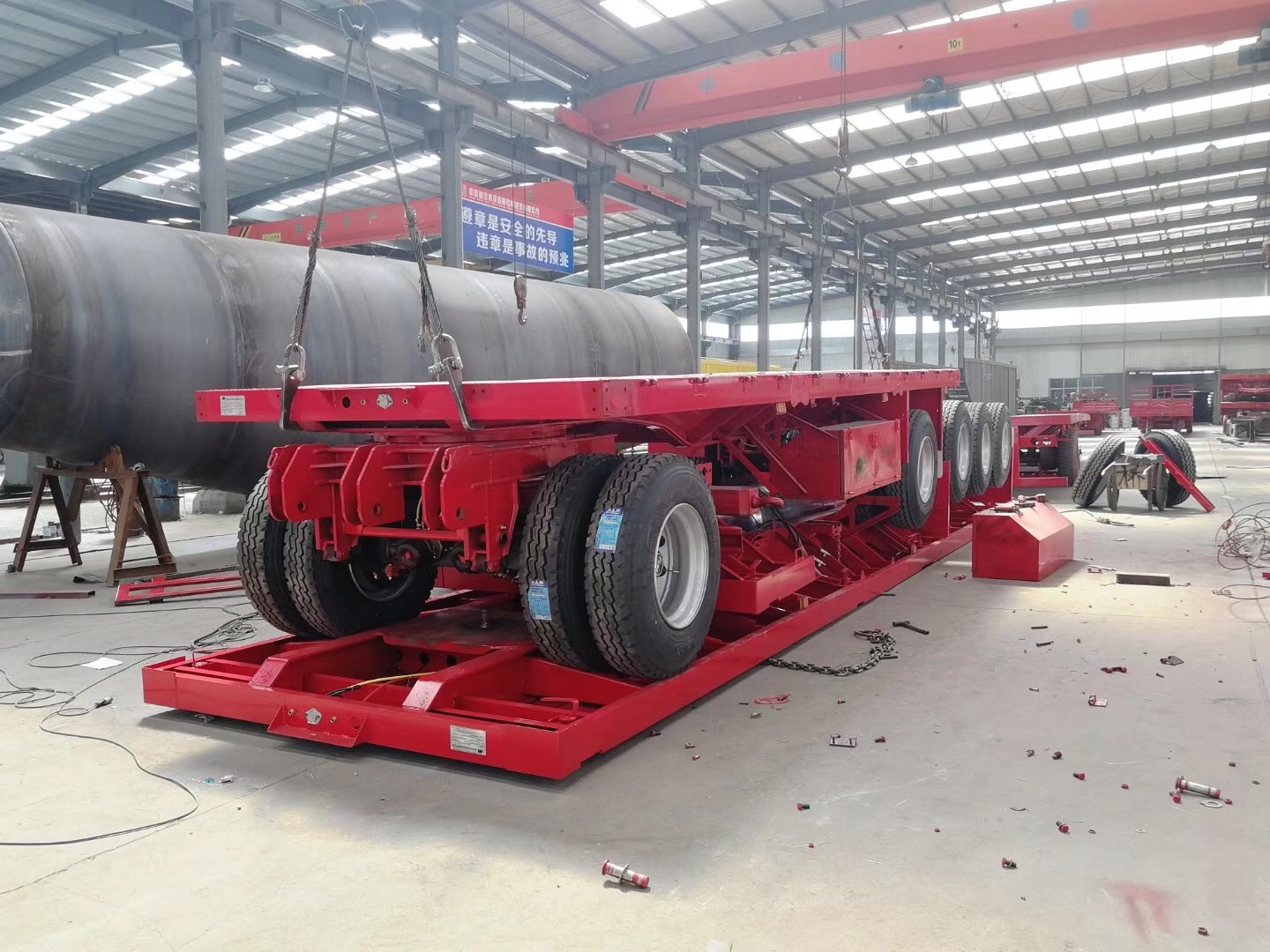
Container compatibility covers 20 ft, 40 ft and 45 ft ISO standard units. Payload is 30–65 tonnes; the standard 40 ft unit measures 12,200–13,800 mm long and 1,470–1,560 mm high. Axle configurations run from 2 to 4 axles at 13 tonnes per axle, with 4, 6 or 8 twist locks compliant with ISO 1161. Landing gear is JOST or SAF, main beams are Q345B high-strength steel, and the king pin is 2″ or 3.5″. Its only load path to the road at the front is the tractor’s fifth wheel.
Lowbed semi trailer
Payload capacity is 40–100 tonnes, with a loaded deck height of 450–600 mm (18–24 inches) and overall length of 11,000–18,000 mm. Overall width runs from 2,480 to 3,000 mm, maximum legal load height is up to 3.5 m, axle load is 13–16 tonnes per axle, and neck height is 1,200–1,400 mm. Goosenecks are offered as fixed or hydraulic detachable, with box-section high-strength steel main beams in Q550/Q690 and HG785D quenched-and-tempered steel. King pin: 2″ or 3.5″. A lowbed that cannot be attached to a fifth wheel cannot move at all.
Flatbed semi trailer
Overall length is 12,500–16,000 mm (13,000 mm standard) and width 2,480–2,500 mm, with a deck height of 1,250–1,550 mm. Payload capacity is 40–60 tonnes across 2 or 3 axles at 13 tonnes per axle. Tie-down rings are placed every 500 mm, and the deck is steel checker plate or hardwood. The frame is I-beam or H-beam in Q345B or Q550 steel, and the king pin is 2″ or 3.5″. Variants include step-deck (drop-deck), extendable, side-wall and container flatbed with twist locks.
The same principle covers the rest of the range: dump semi trailer (30–60 tonnes payload, 20–40 m³ box volume, 45–50° tipping angle, optional HARDOX wear-resistant floor), fuel tank semi trailer (20,000–50,000 L, 1–6 compartments), dust/powder tank semi trailer (32–60 m³) and CNG tube trailer (20–25 MPa working pressure, 8 to 20 tubes, 2,000–6,000 Nm³ gas capacity). Every one of them couples to a tractor by kingpin.
What the tractor unit has to provide
Because the front of a semi trailer is carried by the tractor, the tractor specification is half of the purchase decision.
- Sinotruk HOWO tractor trucks. 336–540 HP, GCW 40,000–120,000 kg, fifth wheel coupling 90# (2″ pin) with 20,000 kg capacity and a coupling height of 1,200–1,400 mm.
- Shacman tractor trucks. 270–550 HP, GCW 40,000–100,000 kg, 90# lightweight fifth wheel with 20,000 kg capacity. Right-hand-drive variants are available for East and South Africa and Southeast Asia.
- Used tractor trucks. Also part of the export range for buyers who want to reduce entry cost while keeping the same fifth wheel interface.
A practical rule for first-time buyers: match the trailer kingpin (2″ or 3.5″) to the tractor fifth wheel, then confirm that the tractor’s allowable combination weight covers the trailer payload you plan to run.
Matching the trailer to the project, not to the label
Step 1 — Define the cargo. Containers point to skeleton/container chassis; excavators, bulldozers and cranes point to lowbed; steel, pipes, timber and project cargo point to flatbed; ore, coal and sand point to dump semi trailer; liquids point to fuel tank; powders point to dust/powder tank; compressed gas points to CNG tube trailer.
Step 2 — Define the connection you already own. If your fleet runs tractor units with fifth wheels, stay with semi trailers. If your towing vehicles are rigid trucks with drawbar hitches, a semi trailer is not compatible with them.
Step 3 — Match payload and axle configuration. Lowbed 40–100 t; flatbed 40–60 t; skeleton 30–65 t; dump 30–60 t — all at 13 tonnes per axle, rising to 13–16 tonnes per axle on lowbed. Confirm axle count against local road limits before ordering.
Step 4 — Check the site. Deck height (450–600 mm on lowbed, 1,250–1,550 mm on flatbed) determines what you can load and how you load it. Overall length of 11,000–18,000 mm affects turning, parking and ramp access.
Step 5 — Check support after delivery. Luen Auto trailer warranty covers 1 year on trailer carrying devices and 6 months on driving and supporting devices, while new trucks carry a 1-year warranty with local Sinotruk agent service points for on-site repair.
Scenario: where a semi trailer fits, and where it does not
Semi trailers are not the answer to every haulage question. In the urban construction and local infrastructure projects documented for Nigeria and Ghana, the working unit is a self-propelled dump truck rather than a towed vehicle: it operates on construction sites with restricted access and tight turning radius, over mixed paved and unpaved surfaces, with short-haul cycles of 500 m to 5 km. Each load carries 16 to 25 cubic metres, and each vehicle completes 20 to 40 trips per shift in day-shift operation, across project-based deployments lasting weeks to months. There is no tractor unit and no kingpin anywhere in that configuration.
The same markets show the opposite pattern in heavy haulage. A documented case for Nigeria and Ghana covers quad axle dump semi trailers used for heavy-duty mining and construction material haulage across multiple project sites, with a fleet of more than 50 vehicles. The customer moved from buying parts to full trailer procurement after testing quality at component level first, and the trailers were customized with a quad axle configuration to suit local heavy-load mining conditions. Recorded service life is 10–15 years, described as comparable to entry-level European trailer brands at 40–60% lower purchase cost.
Same region, same broad industry — two different answers. One project needs a self-propelled vehicle; the other needs a semi trailer paired with tractors. That is the practical reason the semi trailer vs. full trailer question should be settled before you shortlist a supplier, not after the first delivery.
Comparison table: semi trailer vs. full trailer
| Comparison point | Semi trailer | Full trailer |
|---|---|---|
| How it attaches | Kingpin on the trailer locks into the tractor’s fifth wheel coupling | Drawbar ending in a towing eye or hitch ring connects to the towing vehicle |
| Front support | None of its own — front load is carried by the tractor unit | Carries its own front running gear |
| Axle position | Rear axle group only, plus landing gear for parking | Running gear at both front and rear |
| How it appears on a spec sheet | “King pin: 2″ or 3.5″” | Drawbar dimensions and towing eye specification |
| Towing vehicle | Tractor unit with a fifth wheel, e.g. HO WO or Shacman prime mover | Rigid truck or tractor fitted with a drawbar hitch |
| Examples in the referenced range | Skeleton, lowbed, flatbed, dump, van, fuel tank, dust tank, CNG tank and powder tank semi trailers | Not part of the referenced product list in this article |
| When uncoupled | Landing gear (JOST or SAF on container units) supports the front | Front axle and drawbar support the unit |
Referenced semi trailer types at a glance
| Trailer type | Key specification | Coupling | Typical cargo |
|---|---|---|---|
| Skeleton / container semi trailer | 20/40/45 ft ISO; payload 30–65 t; 2–4 axles at 13 t each; 4/6/8 ISO 1161 twist locks | King pin 2″ or 3.5″ | ISO containers, port and intermodal work |
| Lowbed semi trailer | Payload 40–100 t; deck height 450–600 mm; length 11,000–18,000 mm; axle load 13–16 t | King pin 2″ or 3.5″; fixed or hydraulic detachable gooseneck | Excavators, bulldozers, cranes, wind components |
| Flatbed semi trailer | Length 12,500–16,000 mm; deck height 1,250–1,550 mm; payload 40–60 t; 2–3 axles | King pin 2″ or 3.5″ | Steel, pipes, timber, project cargo |
| Dump semi trailer | Payload 30–60 t; box 20–40 m³; tipping angle 45–50° | King pin 2″ or 3.5″ | Ore, coal, sand and gravel |
| Tank semi trailers | Fuel 20,000–50,000 L; powder/dust 32–60 m³; CNG 20–25 MPa | King pin 2″ or 3.5″ | Liquids, powders, compressed gas |
What to confirm before you request a quote
- Coupling match: trailer kingpin 2″ or 3.5″ against your tractor’s fifth wheel, e.g. 90# (2″ pin) with 20,000 kg capacity.
- Payload and axle load: confirm the rating you need against 13 t per axle (13–16 t for lowbed).
- Material grade: Q345B for standard frames, Q550/Q690 and HG785D for heavy lowbed beams, optional HARDOX wear plate for dump floors.
- Deck height and overall length: these decide which loads physically fit and where the trailer can operate.
- Order terms: MOQ is 1 unit for standard models, with flexible MOQ for trial orders and sample evaluation; standard lead time is 30–45 days, with custom orders negotiated based on specification complexity.
- Quality and compliance: products hold CCC mandatory certification, and every unit is inspected before shipment with in-house load testing, brake performance testing and dimensional verification.
About Luen Auto
Shandong Luen Auto Co., Ltd. (Luen Auto) is a manufacturer and exporter of semi trailers and trucks based in Xuji Industrial Park, Liangshan County, Jining City, Shandong Province, China, and a subsidiary of Luen Group. Founded in 2020, the company operates a factory covering more than 50,000 m² with 130+ employees, an annual output of 1,500 units, a 5-engineer R&D team and an export ratio of about 80%; annual exports exceed USD 30 million.
Main markets are Africa, South America and the Middle East, with shipments to Nigeria, Ghana, Tanzania, Kenya and Mozambique; Indonesia and the Philippines; Kazakhstan; Saudi Arabia and the UAE; Ecuador and Peru; and Pakistan. Production is factory-direct rather than workshop assembly, with OEM customization covering trailer type, overall dimensions, axle configuration, load rating, beam structure, suspension type, rims and tires, landing gear, kingpin, paint and coating, and branding.
FAQ
Certification requirements are set by the market and the cargo, not by whether the trailer is coupled by kingpin or drawbar. In Europe, transporting dangerous goods in fuel and tank trailers requires ADR certification under the ADR Agreement. In the United States, the Department of Transportation requires annual safety inspections for trailers with a GVWR over 10,001 lbs under 49 CFR 396.17. For its own products, Luen Auto states that trailer products hold CCC mandatory certification and that 100% of units are inspected before shipment using in-house load testing, brake performance testing and dimensional verification. Always confirm the compliance route for your destination market before ordering, because the paperwork follows the cargo and the country, not the coupling.
Yes, within the published range. Luen Auto lowbed semi trailers are produced with payload capacity of 40–100 tonnes, loaded deck height of 450–600 mm, overall length of 11,000–18,000 mm, overall width of 2,480–3,000 mm and neck height of 1,200–1,400 mm, with a fixed or hydraulic detachable gooseneck and a king pin of 2″ or 3.5″. OEM customization covers trailer type, dimensions, axle configuration, load rating, beam structure, suspension, rims and tires, landing gear, kingpin, coating and branding, so the practical starting point for a quotation is the dimensions and weight of the machine you intend to move.
Price follows specification, not category labels. The variables that move cost most are axle count and axle rating (13 t versus 13–16 t per axle), steel grade (Q345B standard frames versus Q550/Q690 and HG785D on heavy lowbed beams), optional HARDOX wear-resistant flooring on dump bodies, hydraulic versus fixed gooseneck on a lowbed, materials on tank trailers (carbon steel, aluminium or stainless steel), and tube count on CNG tube trailers. Lifecycle cost matters as well: in the documented Nigeria/Ghana fleet case, Luen Auto units recorded a service life of 10–15 years, comparable to entry-level European trailer brands at 40–60% lower purchase cost. A minimum order of 1 unit on standard models also keeps the cost of validating a new supplier low.
Yes. Luen Auto sets MOQ at 1 unit for standard models and offers flexible MOQ for trial orders and sample evaluation, with standard lead time of 30–45 days; custom orders are negotiated based on specification complexity. Trailer warranty covers 1 year on carrying devices and 6 months on driving and supporting devices, while new trucks carry a 1-year warranty with local Sinotruk agent service points for on-site repair.
Send three things: the cargo you intend to move, the towing vehicle you already own or plan to buy (including its fifth wheel type), and the market you are operating in. That is enough to confirm whether a semi trailer is the right category at all, and if it is, which of the skeleton, lowbed, flatbed, dump, tank or CNG models fits. You can reach the Luen Auto export team through William Lee at luengroup@lhaxle.com or WhatsApp/Tel +86 17686798823, and the full range — including tractor trucks, dump trucks and light duty trucks — is listed in the downloadable product catalogue below.
Conclusion
A semi trailer and a full trailer are different machines with different jobs. The semi trailer has no front axle: its front rests on the tractor’s fifth wheel and is locked by a kingpin of 2″ or 3.5″, while a full trailer carries its own front running gear and is pulled by a drawbar. If your planning starts from a tractor fleet, the semi trailer is the category you are looking at — and the reference products in this article, from skeleton and lowbed to flatbed, dump and tank trailers, all sit in that category.
Settle the coupling question first, then match payload, deck height and axle configuration to the project. That order of decisions prevents the most expensive mistake a new fleet buyer can make: buying the wrong category of trailer for the tractor already parked in the yard.
Email: luengroup@lhaxle.com | WhatsApp / Tel: +86 17686798823 | Website: https://www.luen-trailertruck.com
Download the product catalogue (PDF)Have Questions or Need More Details?
Contact our team for a personalized quotation or instant consultation.
Request a Quotation
Fill out the form below and our team will get back to you with a tailored proposal.
WhatsApp Direct Chat
Prefer to chat in real-time? Message us on WhatsApp for instant assistance & quick answers.
- Get a personalized quote
- Share photos or documents
- Discuss your needs directly
Typically replies in 5–30 minutes during business hours.