Top 6 China Flatbed Semi Trailers for 2026 Projects: Standard, Step Deck, Extendable
Top 6 China Flatbed Semi Trailers for 2026 Projects: Standard, Step Deck, Extendable
Six flatbed configurations cover almost every 2026 project-cargo profile now moving through Chinese export trailer plants: the standard 40 ft flatbed, the 45 ft long-deck flatbed, the step-deck (drop-deck) flatbed, the extendable flatbed, the side-wall flatbed and the container flatbed with twist locks. This guide ranks those six by configuration suitability for 2026 project work — steel and pipe logistics, machinery and plant moves, timber and agriculture, and container or breakbulk interchange — rather than by brand.
All dimensional and material figures below come from one published flatbed semi trailer platform specification set: overall length 12,500–16,000 mm (standard 13,000 mm), overall width 2,480–2,500 mm, deck height 1,250–1,550 mm, payload capacity 40–60 tons, 2 or 3 axles at 13 tons axle load, king pin 2" or 3.5", tie-down rings every 500 mm, and a frame built in Q345B or Q550 high-tensile steel. Because the six entries belong to the same platform family, they can be compared on one measurement basis — which is exactly what a Decision-to-Execution buyer needs before releasing an order.
Why “flatbed semi trailer” is the wrong starting point for a 2026 spec
A flatbed semi trailer is an open-deck platform trailer: cargo rests on a flat loading surface and is secured with tie-downs instead of being enclosed by a body, a tank shell or a tipping box. That definition is stable across the category. What is not stable is the deck geometry.
The term “flatbed” hides at least five different loading surfaces, and they are not interchangeable on a live project. The predictable failure modes look like this:
- Over-length cargo on a fixed standard deck. Pipes, beams and fabricated sections either overhang beyond an acceptable envelope or have to be re-rigged at the load-out yard after the trailer has arrived.
- Tall plant items on a deck that is too high once coupled. Route clearance becomes a permit problem before the cargo moves a kilometre, because deck height (1,250–1,550 mm) plus cargo height plus coupling height is what defines the transport envelope.
- Loose or bundled cargo on a plain open deck. Bagged materials, palletized goods and timber rely entirely on lashing quality when there is no side containment.
- Container moves on a flatbed without twist locks. The box is lashed instead of locked, which most terminals will not accept.
- Cargo that is taller than it is long, booked onto a flatbed at all. When cargo height becomes the dominant constraint, the correct family is usually the lowbed, whose published figures are a loaded deck height of 450–600 mm and a payload of 40–100 tons.
That is why the ranking below ranks configurations, and why the first question in a flatbed enquiry should be “which deck?” rather than “which brand?”
Where the flatbed segment sits in the 2026 trailer market
Two market signals frame 2026 flatbed planning.
First, the underlying category is expanding. Grand View Research estimated the global semi-trailer market at USD 22.8 billion in 2024 and projected USD 42.3 billion by 2033. Other research houses publish different numbers for overlapping years — Fact.MR put the 2025 market at USD 24.2 billion, while Market Research Future put 2024 at USD 31.2 billion — because they include different mixes of light-duty and heavy-duty sub-categories. A buyer who needs a market figure for a board paper should note that divergence rather than quote a single number as settled.
Second, heavy-haulage demand currently leads the category. Grand View Research placed lowboy trailers as the largest type segment of the semi-trailer market in 2024 with a 25.7% share, which indicates that the trailer market is being driven by heavy equipment movement. Flatbeds sit directly behind that layer: they carry the fabricated steel, pipe, timber, machinery and wind components that projects consume before and around the heavy lifts.
The tractor side of the combination is being renewed on the same cycle. ChinaTrucks.org recorded Sinotruk heavy-duty truck exports of 135,000 units in 2024, and ChinaTruck.Net recorded Shacman heavy-truck exports of 25,000 units in 2024, a 35% year-on-year increase. Foton led total Chinese truck sales for 2024 with 523,000 units, including more than 100,000 exports, again per ChinaTrucks.org. For a flatbed buyer the practical meaning is simple: a flatbed is only half of a working combination, and the tractor fleets that will pull it in Africa, the Middle East, South America and Central Asia are being replaced now.
How these six configurations were ranked
The ranking applies five configuration criteria consistently across the six entries. It does not compare manufacturers.
- Deck length coverage — how much of the family’s 12,500–16,000 mm overall length range the configuration actually uses in normal service.
- Payload fit — position inside the 40–60 ton payload band, and axle configuration (2 or 3 axles, 13 tons axle load per axle).
- Loading pattern — whether cargo is craned onto the deck, side-loaded, end-loaded or driven on.
- Cargo restraint — tie-down rings every 500 mm, deck surface (steel checker plate or hardwood), and any side containment.
- Execution fit — how much site-level rework the configuration forces at load-out, and how easily it can be standardized across a fleet.
Flatbed platform specification snapshot
- Overall length: 12,500–16,000 mm (standard 13,000 mm)
- Overall width: 2,480–2,500 mm
- Deck height: 1,250–1,550 mm
- Payload capacity: 40–60 tons
- Axles: 2 or 3, at 13 tons axle load
- Frame: I-beam or H-beam in Q345B / Q550 high-tensile steel
- Floor: steel checker plate or hardwood
- Suspension: mechanical or air | King pin: 2" or 3.5"
- Tie-down rings: every 500 mm
- Configuration types: standard flatbed, step-deck (drop-deck), extendable, side-wall, container flatbed with twist locks
The Top 6 flatbed semi trailer configurations for 2026 projects
#1 — Standard 3-axle 40 ft flatbed
The standard 3-axle 40 ft flatbed is the volume configuration of the family and the safest starting point for a mixed 2026 cargo list. It is published at a 13,000 mm standard overall length inside the 12,500–16,000 mm platform range, 2,480–2,500 mm width, 1,250–1,550 mm deck height and 40–60 tons payload, with a Q345B or Q550 high-tensile steel frame in I-beam or H-beam, a steel checker plate or hardwood floor, mechanical or air suspension, and tie-down rings every 500 mm.
It ranks first because it matches the widest set of project cargo: construction material logistics (steel, pipes, timber), machinery transport, agriculture and general project cargo. It accepts crane loading, side loading and end loading without adaptation, and it is the easiest configuration to standardize across a mixed fleet because the lashing plan and the spares list stay the same from unit to unit.
Watch-out: it offers no length flexibility and no side containment. If a meaningful share of the fleet’s work is over-length or loose bulk, another entry in this list will pay back faster than a fourth standard deck.
#2 — 45 ft long-deck flatbed
The 45 ft flatbed uses the same deck architecture taken to the longer end of the platform. It is published as a 3-axle 45 ft flatbed, which means it consumes more of the 12,500–16,000 mm overall length envelope than the standard unit while keeping the same 2,480–2,500 mm width, 40–60 ton payload band and 13 tons per axle load rating.
It ranks second because it converts directly into fewer loads per project on long, light-to-medium cargo — the classic economics of long steel, pipe strings and structural timber. Where the cargo mix is length-driven rather than density-driven, the extra metres of deck remove trips rather than adding cost per trip.
Watch-out: a longer deck changes the turning envelope and shifts how payload is distributed across the 13 tons per axle limit. Load planning, not deck length alone, decides whether a 45 ft unit is faster or slower on a constrained site.
#3 — Step-deck (drop-deck) flatbed
The step-deck — also published as the drop-deck flatbed — is the configuration to choose when cargo height, not cargo length, is the binding constraint. The deck steps down between the gooseneck and the rear deck, so tall, non-overheight plant items sit lower in the transport envelope than they would on a straight platform of the same family.
Application fit: machinery transport, project cargo with height sensitivity, and plant items that must stay below local clearance limits along the route. It carries the family’s standard payload of 40–60 tons, 2 or 3 axles at 13 tons axle load, and the same Q345B/Q550 frame and checker-plate or hardwood deck options.
Watch-out: a stepped deck is a shaped loading surface, not a universal one. Long, flat cargo that sits perfectly on a straight 40 ft deck may need re-chocking in the lower well, and that well has a fixed footprint.
#4 — Extendable flatbed
The extendable flatbed is the length-flexible member of the family. It is the configuration to specify when the project cargo list contains over-length items — pipe strings, structural beams, fabricated sections, wind energy components — that cannot be split into shorter pieces without adding joints, welds or cost.
It ranks fourth overall because it wins fewer tenders than a standard deck but wins them decisively: for the subset of 2026 projects with over-length cargo, no other flatbed entry in this list can substitute. Payload, axle rating, frame material and restraint scheme remain inside the family standard of 40–60 tons, 13 tons per axle and Q345B/Q550 steel.
Watch-out: over-length loads move the discussion into route and permit territory, which is market-specific and cannot be settled by the trailer specification alone. Run the transport study before the trailer order, not after.
#5 — Side-wall flatbed
The side-wall flatbed adds containment to the open-platform concept: the deck keeps flatbed crane and side-loading access at the top of the load, while the walled section stops bagged, bundled or palletized cargo from spreading across the deck during transit.
Application fit: agriculture, timber and palletized construction materials — cargo types that behave as semi-loose loads on a plain open deck and depend on load shift control rather than on lashing density alone.
Watch-out: side walls add tare weight and physically limit side-loading by crane inside the walled section. Fleets that also carry long steel should treat a side-wall unit as a specialization rather than a replacement for a straight deck.
#6 — Container flatbed with twist locks
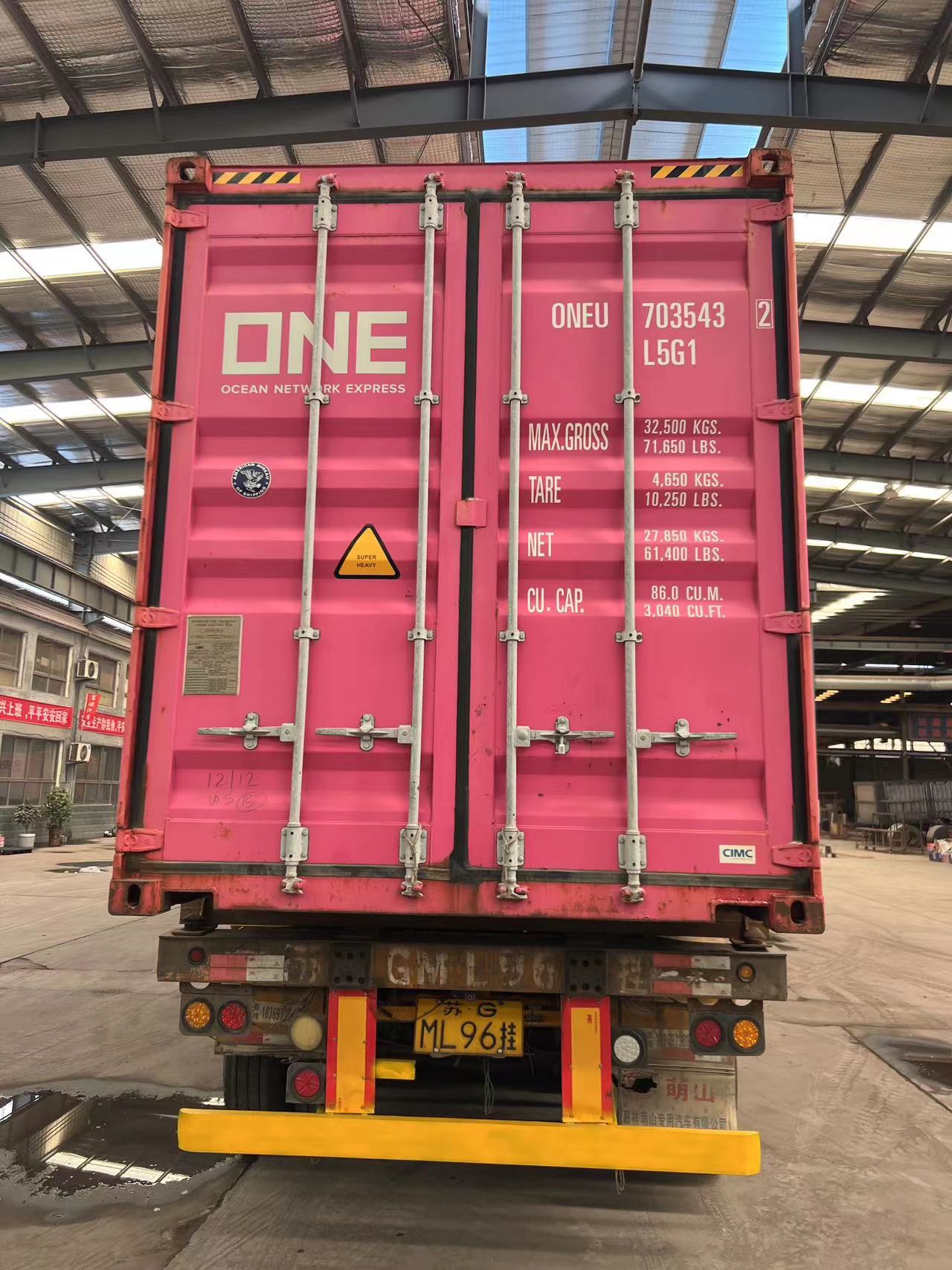
The container flatbed with twist locks turns a flatbed into a dual-purpose unit: open-deck breakbulk and project cargo when the locks are stowed, and 20 ft, 40 ft or 45 ft ISO containers when they are in use. The flatbed family is published with this configuration as a listed type alongside the standard, step-deck, extendable and side-wall options.
It ranks sixth only because pure container work is better served by a dedicated chassis. The skeleton range published alongside the flatbed family is built specifically for that duty: 20 ft / 40 ft / 45 ft ISO compatibility, 4, 6 or 8 twist locks to ISO 1161, payload 30–65 tons, 2, 3 or 4 axles at 13 tons axle load, 12,200–13,800 mm overall length for a standard 40 ft chassis, 1,470–1,560 mm overall height, JOST or SAF landing gear and Q345B steel main beams.
Watch-out: dual-purpose decks rarely match a purpose-built chassis on tare weight or on container-handling cycle time. Buy a flatbed with twist locks for mixed cargo flows; buy the skeleton chassis when containers are the commodity.
Matching the flatbed to the tractor unit
Configurations only work if the combination closes correctly, and two interfaces decide that: the king pin and the fifth wheel.
The flatbed platform is published with a 2" or 3.5" king pin. On the tractor side, the HOWO range uses a 90# fifth wheel with a 2" pin, a 20,000 kg fifth wheel capacity and a fifth wheel height of 1,200–1,400 mm; Shacman publishes a 90# lightweight fifth wheel with the same 20,000 kg capacity. Tractor power in the current export line-up runs from 336 HP to 540 HP across HOWO models, including the HOWO A7 6×4 371 HP, HOWO TX 6×4 420 HP and 480 HP, HOWO NX 6×4 400 HP and HOWO T7H 6×4 540 HP, and from 270 HP to 550 HP across Shacman models, including the X3000 6×4 380 HP and 420 HP, the H3000 6×4 385 HP and 430 HP, the F3000 6×4 375 HP and the L3000 4×2 340 HP. Published gross combination weights for these units range from 40,000 kg to 120,000 kg.
The execution rule that follows is simple: confirm deck height, king pin size and fifth wheel height as one combination calculation before the trailer is built. That single calculation prevents the most expensive category of flatbed mistake — a trailer that is technically correct and physically unusable with the fleet’s tractors.
Fleets that prefer one supplier for both halves of the combination can source them together. Luen Auto supplies trailers including flatbed, lowbed, dump, tank, container and skeleton semi-trailers, and trucks including tractor units, used tractor units, dump trucks, used dump trucks, HOWO and Shacman units, and light-duty trucks.
Step-by-step: from project cargo list to flatbed order
Seven steps, in the order that avoids rework at the load-out yard.
- Measure the cargo, not the project. Record maximum single-piece length, width, height and weight for every item on the list. The trailer decision follows those numbers, not the project name.
- Screen for over-height cargo first. If the tallest item cannot be reduced, check whether the lowbed family — loaded deck height 450–600 mm, payload 40–100 tons — is the correct family before continuing with a flatbed.
- Match length to the 12,500–16,000 mm range. Cargo that fits a 13,000 mm standard deck rarely justifies an extendable unit. Cargo that fits no fixed deck should not be forced onto one.
- Confirm payload and axle count. Position the load inside the 40–60 ton band and choose 2 or 3 axles at 13 tons axle load. Axle count is a legal and route question as much as an engineering one.
- Specify deck surface and restraint. Steel checker plate or hardwood floor, plus tie-down rings every 500 mm, should be chosen against the actual lashing plan rather than copied from a previous order.
- Close the interfaces. Confirm the 2" or 3.5" king pin against a 90# fifth wheel with a 20,000 kg capacity, and select mechanical or air suspension against the road profile and load cycle.
- Lock the execution package. For export orders that means a pre-shipment test, a packing method that survives ocean freight, and documentation agreed before production rather than after.
Use cases: where each configuration earns its keep
- Steel and pipe distribution. A 45 ft long-deck flatbed reduces load count on long product; tie-down rings every 500 mm keep the lashing plan identical across the fleet, which shortens driver training and pre-trip checks.
- Machinery and plant relocation. The step-deck flatbed lowers the transport envelope for height-sensitive machinery; the standard 3-axle 40 ft flatbed handles the same cargo when route clearance allows.
- Wind energy and over-length components. Only the extendable flatbed covers over-length sections without adding joints. Route and permit planning runs in parallel with the trailer specification.
- Agriculture and palletized materials. The side-wall flatbed provides containment on an open deck while preserving crane access from above.
- Port and intermodal flows. The container flatbed with twist locks handles mixed breakbulk and ISO container work; the dedicated skeleton chassis handles pure container volumes with 30–65 ton payload and 4, 6 or 8 ISO 1161 twist locks.
Configuration comparison table
| Rank | Configuration | Published model / type | Overall length | Payload & axles | Best-fit cargo | Main watch-out |
|---|---|---|---|---|---|---|
| 1 | Standard 3-axle 40 ft flatbed | 3-axle 40ft flatbed / Standard flatbed | 12,500–16,000 mm (standard 13,000 mm) | 40–60 tons; 2 or 3 axles, 13 t/axle | Steel, pipes, timber, machinery, agriculture, general project cargo | No length flexibility, no side containment |
| 2 | 45 ft long-deck flatbed | 3-axle 45ft flatbed | Within the 12,500–16,000 mm platform range | 40–60 tons; 3 axles, 13 t/axle | Long steel, pipe strings, structural timber | Longer turning envelope; axle load distribution |
| 3 | Step-deck (drop-deck) flatbed | drop-deck flatbed / Step-deck (drop-deck) flatbed | Platform range; deck height 1,250–1,550 mm | 40–60 tons; 2 or 3 axles, 13 t/axle | Tall machinery and plant items on height-limited routes | Shaped deck well limits long, uniform cargo |
| 4 | Extendable flatbed | Extendable flatbed | Uses the upper part of the 12,500–16,000 mm range | 40–60 tons; 2 or 3 axles, 13 t/axle | Over-length pipes, beams, fabricated sections, wind components | Route and permit planning is market-specific |
| 5 | Side-wall flatbed | Side-wall flatbed | Within the platform range | 40–60 tons; 2 or 3 axles, 13 t/axle | Bagged, bundled and palletized cargo; agriculture; timber | Added tare weight; limited side crane access |
| 6 | Container flatbed with twist locks | Container flatbed (with twist locks) | Within the platform range | 40–60 tons; 2 or 3 axles, 13 t/axle | Mixed breakbulk and 20 ft / 40 ft / 45 ft ISO containers | Less efficient than a dedicated chassis for pure container work |
| Ref. | Dedicated container chassis (skeleton) | 20ft / 40ft / 45ft container chassis | 12,200–13,800 mm (40 ft standard) | 30–65 tons; 2, 3 or 4 axles, 13 t/axle | Pure container volumes, port and intermodal flows | 4 / 6 / 8 ISO 1161 twist locks; JOST or SAF landing gear |
Buying the flatbed as a five-year asset, not a one-off order
For repeat project buyers the trailer decision recurs every time a fleet is renewed, resold or re-deployed, which is why configuration discipline and supply-partner discipline belong in the same document. Four factors separate a long-term flatbed programme from a series of one-off purchases.
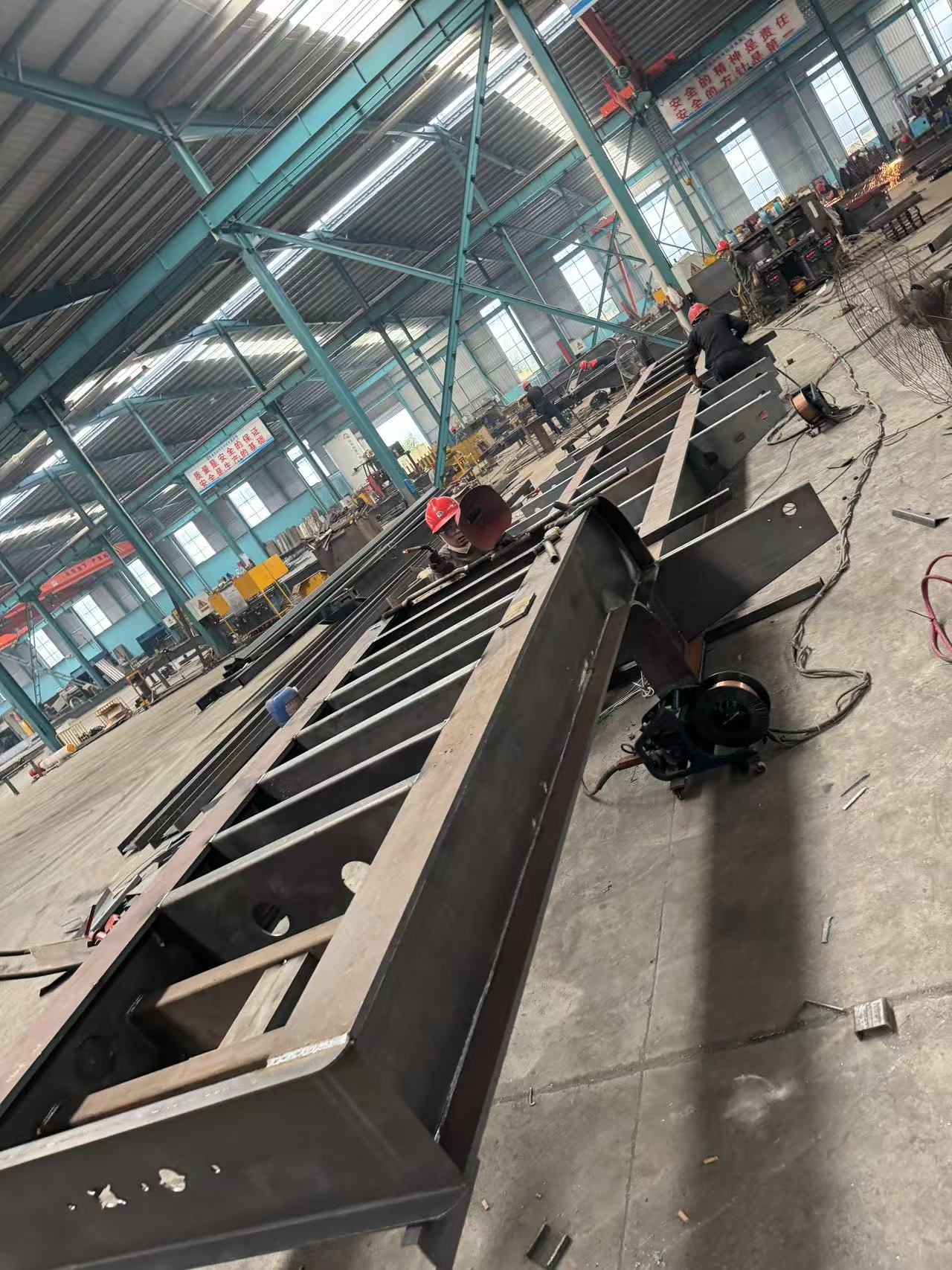
Parts that stay available. Running gear and suspension take the wear on every load cycle. Luen Auto manufactures axles and suspensions in-house through Luheng Trailer Parts Co., Ltd., part of the same group as Shandong Luen Auto Co., Ltd., rather than buying them in order by order. For a fleet that intends to keep a trailer for five years or more, in-house running gear means parts availability does not depend on a third party’s product lifecycle.
A supplier that will still be there. Shandong Luen Auto Co., Ltd., founded in 2020, operates a factory covering more than 50,000 m² with an annual output of 1,500 units and an R&D team of five engineers, within a group that also includes Longheng International Trade Co., Ltd. and Luxinda Machinery Co., Ltd. Export accounts for roughly 80% of output, with annual exports exceeding USD 30,000,000 and established markets in Africa, Southeast Asia, Central Asia, the Middle East and Latin America. The company’s own comparison against small assembly workshops is explicit about the trade-off: a 5–15% price premium over the lowest bid, offset by genuine parts and warranty coverage honoured by a stable legal entity, with 3C certification and testing equipment behind batch consistency.
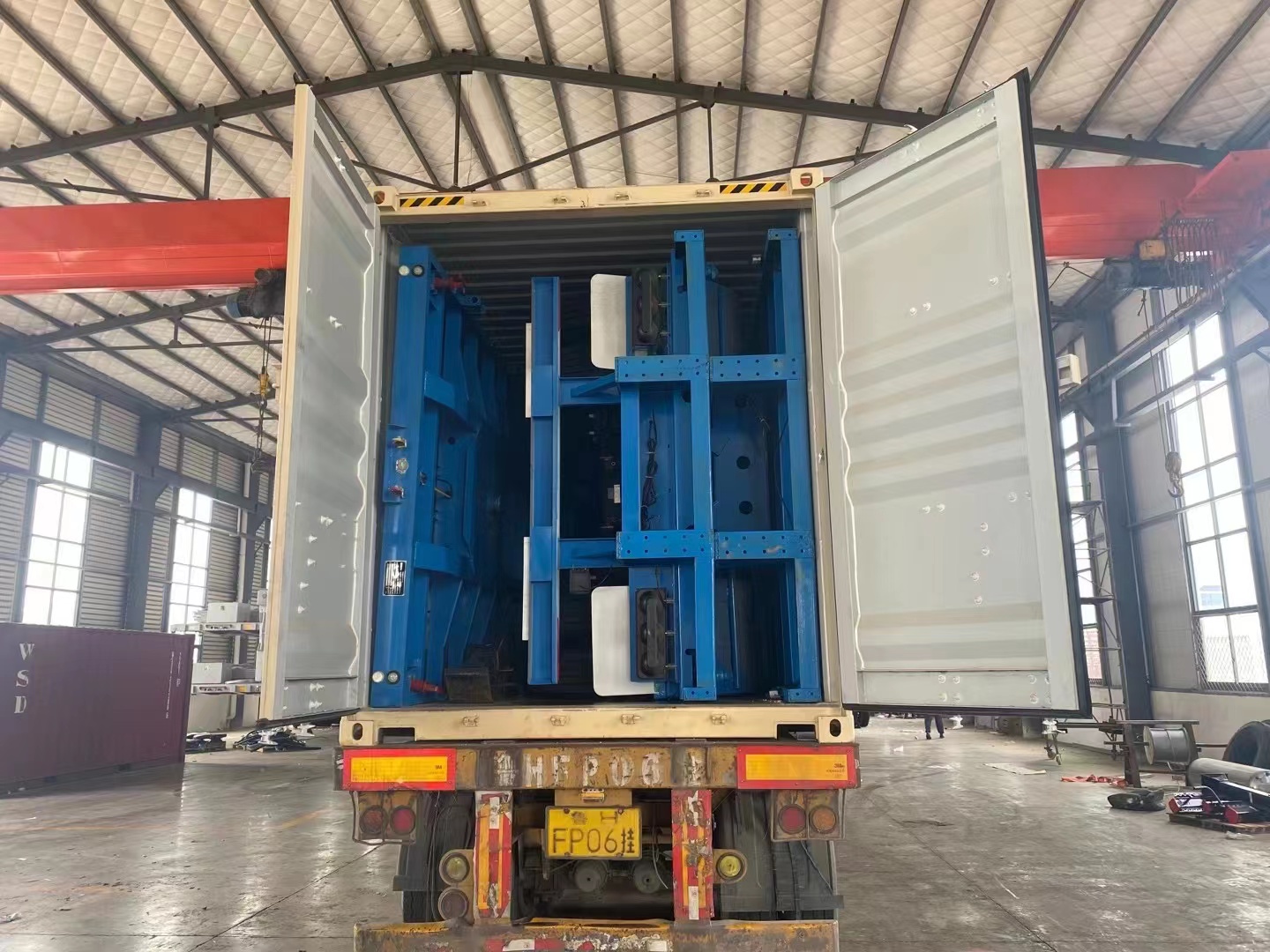
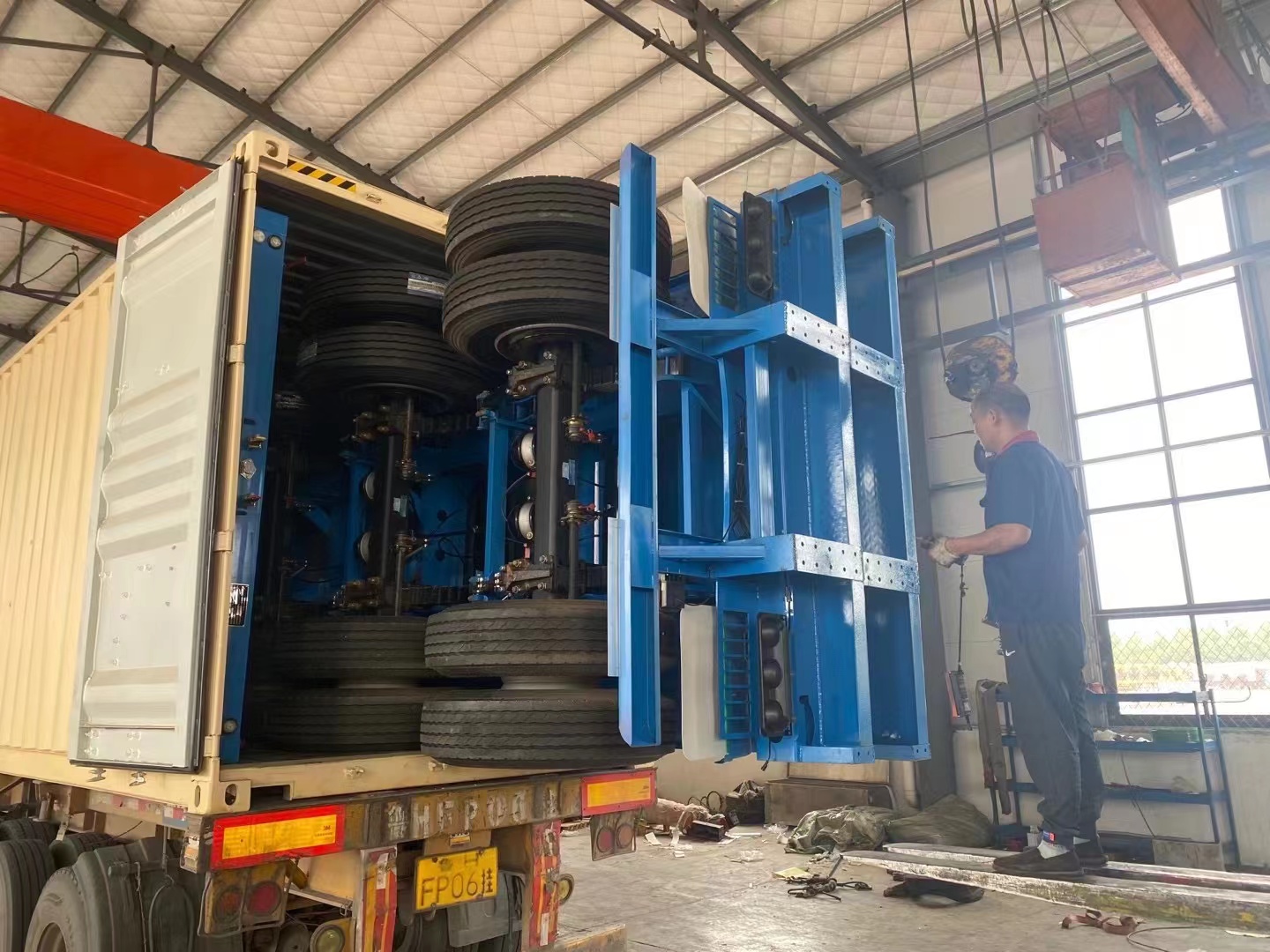
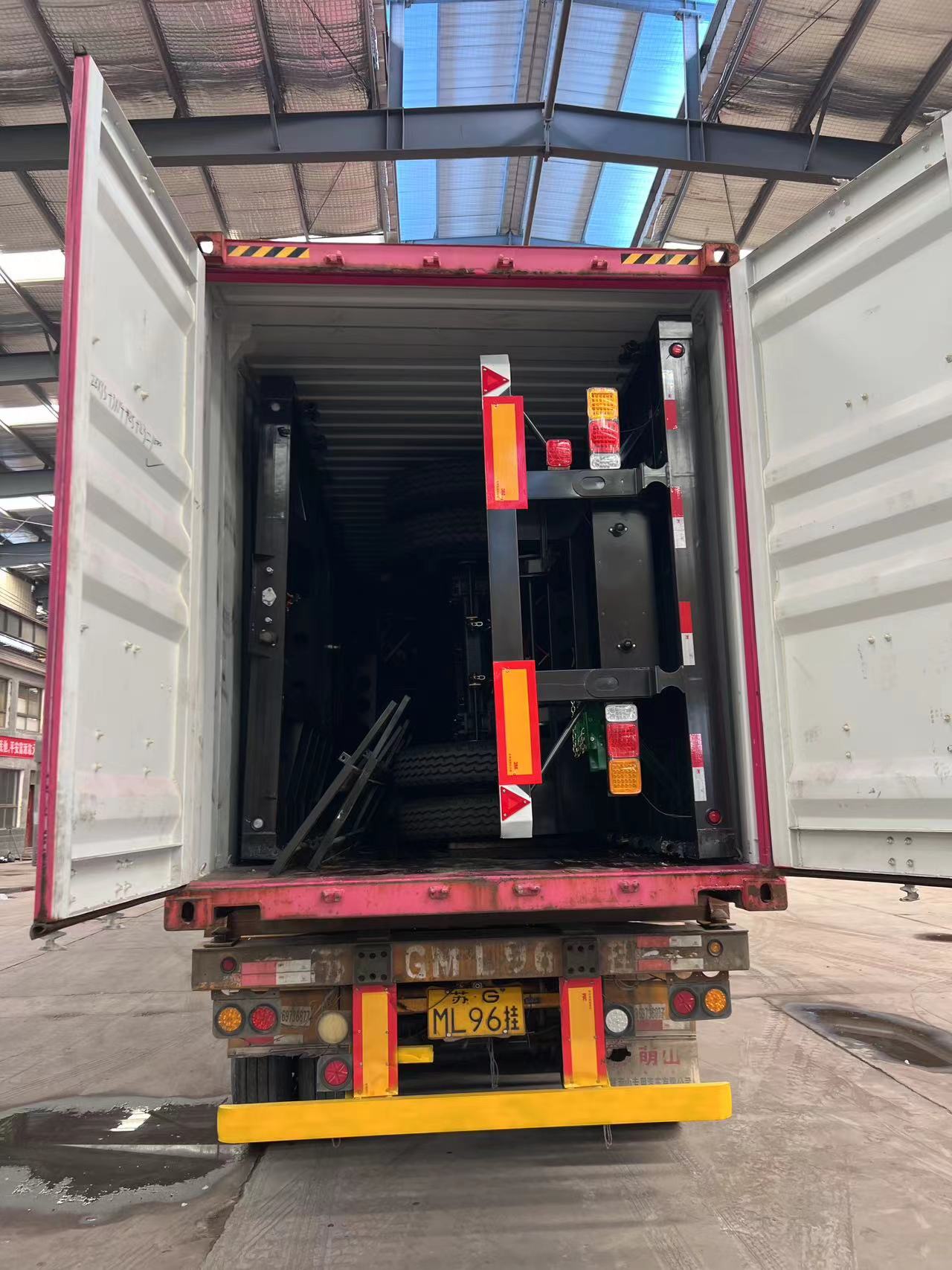
Execution that does not depend on the buyer. Export packing follows a documented standard operating procedure rather than improvisation: an anti-rust wax coating applied before shipping, semi-knocked-down (SKD) packing for large trailers, fumigation-free plywood crates for parts, and photo records for every shipment. Damage found on arrival is a project delay rather than a shipping dispute, so the packing method is part of the delivery schedule — not a logistics detail.
Terms that work for a first order and a tenth order. Minimum order quantity is one unit, delivery is FOB or CIF, acceptance is a pre-shipment test, and payment terms are TT 30/70. That structure lets a fleet validate a single configuration on a real project before standardizing a renewal programme around it.
FAQ: flatbed selection and long-term supply
- What should a buyer verify in a long-term semi trailer supply partner in China?
- Verify four things, in this order. First, the manufacturing base: does the supplier operate its own factory rather than assemble on someone else’s line? Shandong Luen Auto Co., Ltd., for example, runs a factory of more than 50,000 m² with an annual output of 1,500 units, a five-engineer R&D team, and 80% of output exported. Second, parts control: axles and suspensions manufactured in-house through Luheng Trailer Parts Co., Ltd. remain available for the trailer’s service life, whereas bought-in running gear depends on a third party’s production plans. Third, certification and testing: 3C certification and testing equipment behind batch-to-batch consistency. Fourth, execution evidence: export packing that follows a documented SOP with anti-rust wax coating, SKD packing for large trailers and photo records per shipment. A supplier that cannot demonstrate all four is a transactional vendor, not a long-term partner.
- Can one flatbed configuration cover a whole fleet’s project work?
- Usually not, and standardizing on the wrong one is expensive. A 3-axle 40 ft standard flatbed covers the broadest cargo mix — construction materials, machinery, agriculture and general project cargo — at a 13,000 mm standard length, 2,480–2,500 mm width, 1,250–1,550 mm deck height and 40–60 tons payload. A fleet with a recurring over-length share should base its renewal on a 45 ft long-deck or extendable unit instead, and a fleet moving tall plant items should build in step-deck capacity. The practical approach is to standardize on one primary deck, then hold the interfaces constant across every unit — king pin 2" or 3.5", mechanical or air suspension, tie-down rings every 500 mm — so lashing plans and spare parts stay common across the fleet.
- Why does a factory-integrated flatbed supplier cost more than a lowest-bid workshop quote?
- The gap is real: Luen Auto’s own supplier comparison puts it at 5–15% on unit price. The offsetting factors are parts and warranty. Self-manufactured axles and suspensions through Luheng Trailer Parts Co., Ltd. mean authentic parts for the trailer’s entire service life, and warranty claims are handled by a stable legal entity rather than by a workshop whose continuity is uncertain. On a five-year fleet calculation the relevant number is not purchase price but the cost and delay of an unplanned parts search in the middle of a project.
- What are the order terms for a flatbed semi trailer?
- Minimum order quantity is one unit. Delivery is FOB or CIF, acceptance is a pre-shipment test, and payment terms are TT 30/70. Because the configuration range is wide — 2 or 3 axles, 2" or 3.5" king pin, mechanical or air suspension, checker-plate or hardwood deck, with twist locks or without — the specification should be frozen before the pre-shipment test, so that acceptance verifies the trailer that was ordered rather than the trailer that happened to be built.
- How is a flatbed semi trailer protected during ocean freight, and what is the next step?
- Packaging follows a documented delivery SOP: an anti-rust wax coating before shipping, semi-knocked-down (SKD) packing for large trailers, fumigation-free plywood crates for parts, and photo records for each shipment, so that condition on arrival can be traced back to condition at loading. Buyers planning a 2026 project can download the Luen Auto product catalog, or send the cargo list — maximum length, width, height and weight of the largest items, plus the tractor’s fifth wheel size — to luengroup@lhaxle.com or WhatsApp +86 17686798823 for a configuration recommendation.
Conclusion
The 2026 flatbed decision is a configuration decision before it is a purchase decision. Ranked by suitability rather than by brand, the six entries fall into a clear order: the standard 3-axle 40 ft flatbed first for the broadest cargo match, the 45 ft long-deck flatbed for length-driven cargo, the step-deck for height-limited plant items, the extendable flatbed for over-length project cargo, the side-wall flatbed for containment on loose and palletized loads, and the container flatbed with twist locks for mixed breakbulk and ISO container flows — with the dedicated skeleton chassis as the more efficient tool when containers are the commodity.
Everything in this ranking sits inside one published platform envelope: 12,500–16,000 mm overall length, 2,480–2,500 mm width, 40–60 tons payload, 13 tons per axle load, a Q345B or Q550 high-tensile steel frame, and tie-down rings every 500 mm. That is what allows the specification conversation to stay short and technical, and it is also why the configuration choice — not the supplier’s brand name — is the decision that determines whether a 2026 project moves on schedule.
Next step for 2026 project planning
Shandong Luen Auto Co., Ltd. (Luen Auto) manufactures and exports flatbed, lowbed, dump, tank, container and skeleton semi-trailers, together with tractor units and trucks, from a factory of more than 50,000 m² in Liangshan County, Jining City, Shandong Province — serving buyers in Africa, Southeast Asia, Central Asia, the Middle East and Latin America.
Download the Luen Auto Product Catalog (PDF)
Contact: William Lee | Email: luengroup@lhaxle.com | Tel / WhatsApp: +86 17686798823 | Website: www.luen-trailertruck.com
Address: Xuji Industrial Park, Liangshan County, Jining City, Shandong Province, China.