
Top 7 Truck Trailer Types Ranked for Mining, Construction, and Bulk Cargo

Seven trailer families cover almost all mining, construction and bulk cargo work, and they are not interchangeable. Ranked by payload, deck or tank dimensions and application fit, the lowbed semi trailer is the strongest choice for heavy equipment, the dump semi trailer for mining and construction bulk material, and the skeleton container trailer for port drayage. The powder tank, fuel tank, flatbed and CNG tube trailers complete the list for cement, petroleum, project cargo and off-grid gas respectively.
The sequence below is a fit ranking, not a quality ranking. Each trailer is scored on three things only: how much it carries (payload or volume), what its critical dimension allows, and how closely that matches the job it repeats every day.
How This Ranking Was Built
Payload alone does not decide a trailer category. A 60-ton flatbed and a 60-ton dump semi trailer carry the same weight but move completely different materials, load through different interfaces, and unload into different receiving equipment. The ranking therefore weights three criteria equally: payload or capacity, the dimension that constrains the job (deck height, box volume, container length, tank volume, working pressure), and the application it is built for.
Why Trailer Selection Goes Wrong Before the Quote
Most trailer problems are decided before a single supplier is contacted. Buyers compare what is visible on a quotation — axle count, tyre size, paint, price — while the failure points sit in geometry and material handling.
- Payload density is ignored. A trailer rated for heavy tonnage may still cube out in one load of low-density material, or overload its axles with a dense load that fits inside the box.
- Deck height is treated as a detail. On heavy equipment moves, the loaded deck height decides whether the combination clears bridges and overhead structures on the route.
- The loading interface is assumed. Equipment that cannot be driven onto a trailer needs ramps or a crane; powder that cannot be tipped needs pneumatic discharge; a container that arrives without twist locks cannot be secured.
- The fleet is bought as one type. Mixed operations — a mine that also hauls cement and fuel — need more than one trailer category, and buying a single type to cover everything usually means compromising on all of them.
- Payload capacity40–100 tons
- Deck height (loaded)450–600 mm
- Overall length11,000–18,000 mm
- Overall width2,480–3,000 mm
- Maximum legal load heightup to 3.5 m
- Axle load13–16 tons per axle
- GooseneckFixed or hydraulic detachable (RGN)
- Main beamBox-section high-strength steel (Q550 / Q690, HG785D)
- Payload capacity30–60 tons
- Box volume20–40 m³
- Box typeU-shape or rectangular
- Axle configuration2 / 3 / 4 axles
- Floor thickness8–12 mm wear-resistant steel, HARDOX optional
- Tipping angle45–50°
- Hydraulic cylinderHYVA front-mounted or telescopic
- Overall length9,000–12,500 mm
- Payload30–65 tons
- Container compatibility20 ft, 40 ft and 45 ft ISO standard
- Twist locks4 / 6 / 8 fittings, ISO 1161 compliant
- Axles2 / 3 / 4, rated 13 tons per axle
- Overall height1,470–1,560 mm
- Overall length12,200–13,800 mm (40 ft standard)
- FrameQ345B steel main beams
- Capacity range32–60 m³
- Typical configurationsThree-axle 40 m³, 50 m³ and 60 m³
- Discharge methodPneumatic, through onboard pipework
- Body optionSteel or aluminium alloy tanker
- Payload28,000–35,000 kg
- Compartment optionsSingle compartment or multi-compartment with 3–6 bins
- Product variantsFuel, chemical liquid, edible oil, water
- Typical configurationThree-axle tank semi trailer
- Payload capacity40–60 tons
- Overall length12,500–16,000 mm (13,000 mm standard)
- Deck height1,250–1,550 mm
- Tie-down ringsSpaced every 500 mm
- FrameI-beam or H-beam
- Deck surfaceSteel checker plate or hardwood
- Working pressure20–25 MPa (200–250 bar)
- Gas capacity2,000–6,000 Nm³
- Tube count8 / 10 / 12 / 16 / 20
- Tube diameter406–559 mm
- Total water volume3,000–8,000 L
- Cylinder material37Mn seamless steel or chrome-moly steel
- GVW40,000–42,000 kg, three axles
- Calculate payload density, not payload weight. Divide the material weight by its loose volume. Dense material such as iron ore reaches the axle limit long before the box is full; low-density material cubes out long before the tonnage is reached. This single calculation decides whether the dump trailer box should be shallow or deep.
- Fix the dimensional envelope. Confirm the loaded deck height, overall length and width against the actual route, including bridge clearances. On a lowbed this is the difference between a 450 mm and a 600 mm loaded deck.
- Match the loading and unloading interface. Decide how the cargo arrives and leaves — ramp, crane, tipper, pneumatic line, pump, or container spreader — and choose the category that already includes it.
- Set axles, suspension and frame grade. Axle count (2, 3 or 4), axle load rating, suspension type and steel grade all change both durability and the legal load the combination can legally carry.
- Qualify the manufacturer against the specification. Confirm that the supplier builds the category in-house, can customise dimensions and axle configuration, and inspects every unit before shipment.
None of these errors appear on a quotation. They appear in the third week of operation, when the trailer is already on site and the route has already been fixed.
What Mining, Construction and Bulk Cargo Actually Demand
Mining haulage usually combines two different jobs on the same site: relocating machinery that is too large to drive on public roads, and moving extracted material from the pit to a stockpile or processing point. Construction adds a third pattern — inbound materials such as steel, pipe and timber that arrive as rigid loads rather than loose material. Bulk cargo adds a fourth — cement, fuel and compressed gas that require a container designed for the product, not just a load bed.
Because these patterns rarely appear alone, fleet buyers increasingly source several trailer types from a single manufacturer rather than assembling a mixed fleet from unrelated workshops. That approach only works when the supplier actually builds each category in-house.
Shandong Luen Auto Co., Ltd. (Luen Auto) is a Chinese trailer and special-purpose vehicle manufacturer based at Xuji Industrial Park, Liangshan County, Jining City, Shandong Province, founded in 2020. It operates a factory of more than 50,000 m² with 130+ employees, five engineers and an annual output of 1,500 units, and exports roughly 80% of production to Africa, South America and the Middle East. Its product range covers all seven trailer categories ranked below, together with tractor trucks, dump trucks and light duty trucks.
The Top 7 Truck Trailer Types, Ranked
Rank 1 Lowbed Semi Trailer — Heavy Equipment and Mining Machinery
The lowbed semi trailer ranks first because it is the only category on this list that carries the machine doing the work rather than the material it produces. Without it, an excavator or bulldozer either drives to site on its own tracks or does not arrive at all.
The 450–600 mm loaded deck height is the number that matters commercially. It is what allows a tall machine to travel under structures that a standard flatbed deck at 1,250–1,550 mm would not clear. Configuration options include fixed gooseneck, detachable or removable gooseneck, hydraulic detachable gooseneck, and pull-out extendable beams for longer loads.
The limitation is handling at both ends. A lowbed needs either a loading ramp or a crane, and an oversized load usually requires route permission. The trailer also returns empty after delivery, which raises the cost per move compared with a trailer that can carry a paying load in both directions. Where machinery relocation is infrequent, that cost is still lower than dismantling equipment.

Rank 2 Dump Semi Trailer — Mining and Construction Bulk Haulage
Second place belongs to the trailer that moves the material itself. The dump semi trailer — also called a tipper semi trailer — carries loose material in a tipping box and discharges it by gravity, which removes the need for a separate unloading machine at the receiving point.
Its natural applications are coal, iron ore, copper, quarry stone, construction earthworks, road infrastructure and sand and gravel. The trade-off is site condition: tipping requires stable, level ground, and wet or sticky material can bridge inside the box instead of discharging cleanly. Floor thickness and steel grade are the two specification choices that most affect service life in abrasive mining duty.
A construction and mining fleet operator in Nigeria and Ghana, running more than 50 vehicles, moved from buying trailer parts to full trailer procurement with four-axle dump semi trailers specified for local heavy-load mining conditions. The reported service life of 10–15 years is comparable to entry-level European trailer brands, at 40–60% lower purchase cost.
Rank 3 Skeleton / Container Semi Trailer — Port Drayage and Intermodal
Third place goes to the trailer with the highest throughput per hour in a port. The skeleton semi trailer, also sold as a container chassis or skeletal trailer, carries nothing but the container itself, secured by twist locks at fixed ISO positions.
Two variants cover most operations: a fixed chassis for a single container length, and an extendable chassis adjustable between 20 ft and 40 ft. The limitation is scope. The trailer only earns its payload when the container is heavy; empty and light containers leave most of the 30–65 ton capacity unused, and the design has no application outside containerised cargo. Twist lock maintenance is the main recurring inspection point, because it is the only thing holding the container to the chassis.
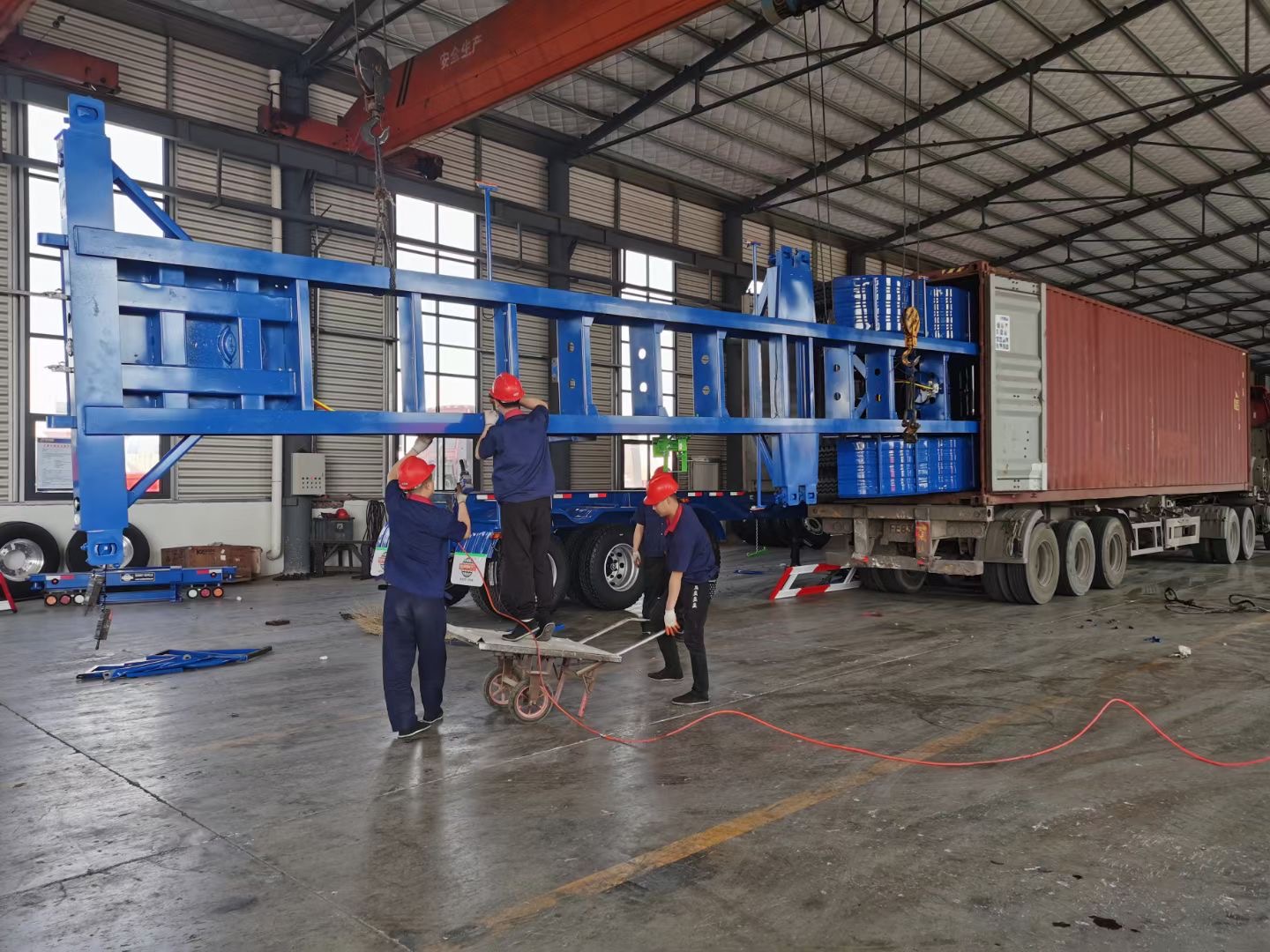
Rank 4 Powder Tank Semi Trailer — Cement and Dry Bulk
Rank four is the first trailer on the list built around a product rather than a load shape. The powder tank semi trailer, also called a bulk cement tanker or pneumatic dry bulk trailer, carries cement, fly ash and similar powders in a sealed vessel and discharges them pneumatically through pipework.
Volume, not tonnage, is the buying number here, and it is chosen against the density of the powder being carried rather than against the trailer's own weight rating. The constraint is at the destination: pneumatic discharge needs air supply and a receiving silo or transfer point, so the trailer is only as useful as the discharge infrastructure at the end of the route. Empty return legs are normal, which is why powder tankers are usually scheduled in dedicated shuttle loops rather than general haulage.
Rank 5 Fuel Tank Semi Trailer — Petroleum and Liquid Bulk
The fuel tank semi trailer ranks fifth because it solves a problem no dry trailer can: moving liquid in bulk while keeping different products separated in the same vehicle.
Compartment count is the specification decision that changes the commercial model. A single-compartment tanker delivers one product per trip; a multi-compartment unit can deliver several products to several customers on one route, which matters for distributors serving scattered retail or industrial points. The cost of that flexibility is cleaning and changeover time between products, plus the regulatory load that comes with hazardous liquid transport. Tankers also carry the highest consequence of a specification error, which is why product compatibility should be confirmed before compartment layout is fixed.
Rank 6 Flatbed Semi Trailer — Construction Materials and Project Cargo
Sixth place is the most flexible trailer on the list and, for that reason, the easiest to over-use. The flatbed semi trailer carries rigid cargo on an open deck with tie-down points along the length.
Its applications are steel, pipe, timber, machinery, agriculture and project cargo, with step-deck and extendable variants covering taller or longer loads. The limitation is that a flatbed provides no containment. Every load must be secured by the operator, weather exposure affects both cargo and deck, and loads that need side walls or a tipping function belong on a different trailer entirely. Using a flatbed as a general-purpose substitute is the most common route to load damage and roadside incidents.

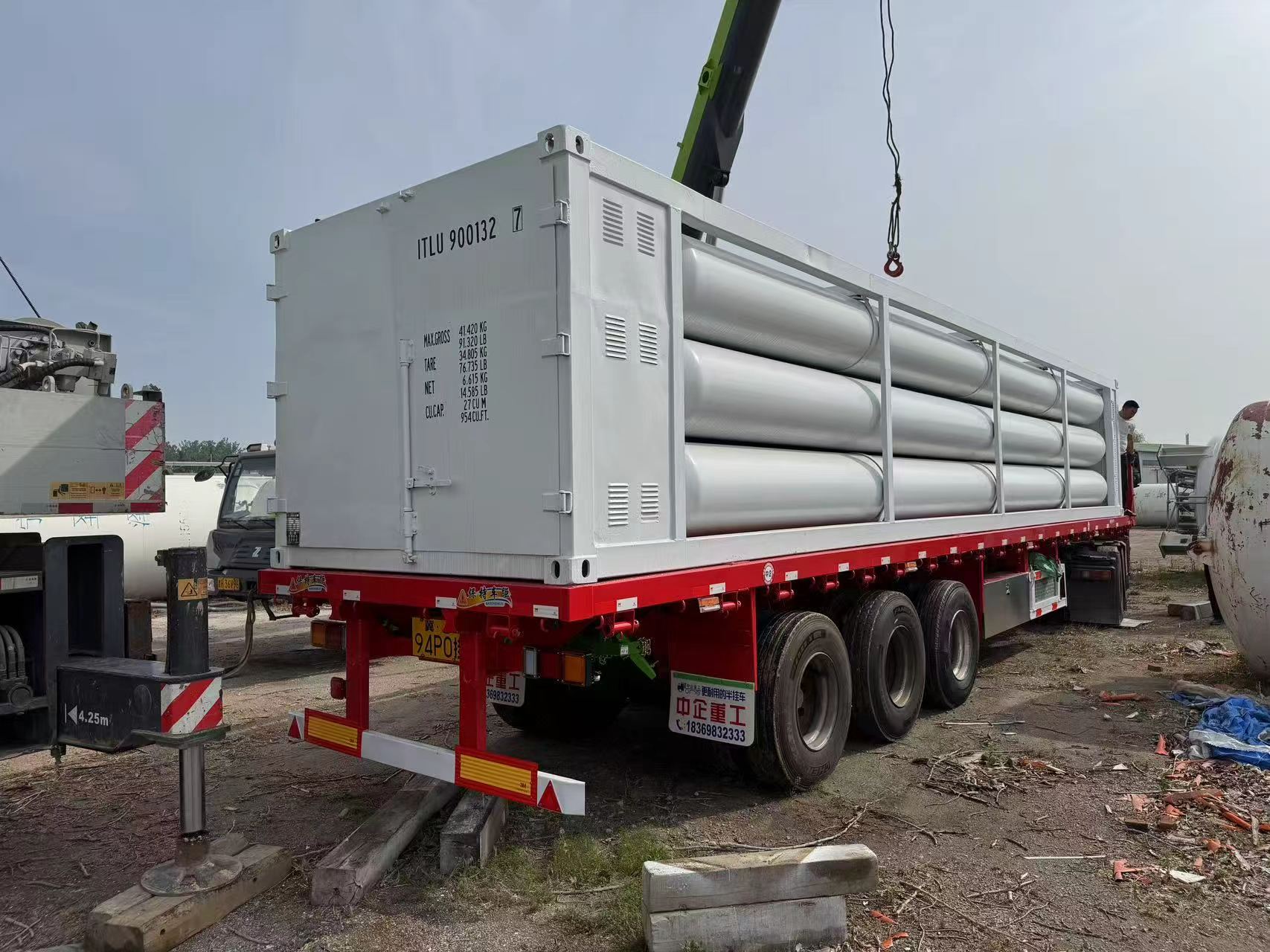
Rank 7 CNG Tube Trailer — Off-Grid Gas Distribution
Last place is not the weakest trailer; it is the most specialised. The CNG tube trailer transports compressed natural gas in high-pressure cylinders mounted on a trailer frame, replacing a pipeline where no pipeline exists.
Its applications are off-grid natural gas distribution, mother-daughter station logistics, industrial gas supply, remote community gas and gas-fired power generation. Safety equipment is part of the specification, not an option: pressure relief valves, emergency shutoff and an earthing reel are standard expectations. The reason it sits at rank 7 is scope, not capability — a CNG tube trailer needs a filling station at one end and a receiving station at the other, so it only makes sense in markets where the gas network is missing.
Step-by-Step: Applying the Ranking to a Real Project
Where Each Trailer Type Earns Its Place: Project Scenarios
Heavy equipment relocation. An excavator or crane moves between two sites. The lowbed's 450–600 mm deck height keeps the combination within the height limit, and a detachable gooseneck removes the need for a crane at the loading end.
Open-pit and quarry haulage. Loose material moves from pit to stockpile. A dump semi trailer with 20–40 m³ of box volume and a 45–50° tipping angle discharges without a dedicated unloading machine.
Port and intermodal transfer. Containers move between terminal and warehouse. A skeleton trailer with ISO 1161 twist locks and 30–65 ton payload handles the full container weight range without a load bed.
Cement and dry bulk distribution. A powder tank semi trailer in the 32–60 m³ range keeps the product sealed from loading point to silo and discharges pneumatically at the far end.
Petroleum distribution. A fuel tank semi trailer with 28,000–35,000 kg payload and three to six compartments delivers multiple products on one route to scattered customers.
Off-grid gas distribution. A CNG tube trailer carrying 2,000–6,000 Nm³ at 20–25 MPa supplies industrial or residential demand where a pipeline has not been built.
Comparison Table: Payload, Dimension and Application
| Rank | Trailer Type | Payload / Capacity | Key Dimension | Primary Application |
|---|---|---|---|---|
| 1 | Lowbed semi trailer | 40–100 tons | Deck height 450–600 mm loaded; length 11,000–18,000 mm | Heavy equipment, mining machinery relocation, oversized project cargo |
| 2 | Dump semi trailer | 30–60 tons; 20–40 m³ | Tipping angle 45–50°; length 9,000–12,500 mm | Coal, iron ore, quarry stone, earthworks, sand and gravel |
| 3 | Skeleton / container semi trailer | 30–65 tons | 20 / 40 / 45 ft ISO; height 1,470–1,560 mm | Port drayage, intermodal transport, container freight stations |
| 4 | Powder tank semi trailer | 32–60 m³ | Three-axle 40 / 50 / 60 m³ configurations | Cement, fly ash and pneumatic dry bulk distribution |
| 5 | Fuel tank semi trailer | 28,000–35,000 kg | Single or multi-compartment with 3–6 bins | Fuel, chemical liquid, edible oil and water delivery |
| 6 | Flatbed semi trailer | 40–60 tons | Length 12,500–16,000 mm; deck 1,250–1,550 mm | Steel, pipe, timber, machinery, agriculture and project cargo |
| 7 | CNG tube trailer | 2,000–6,000 Nm³ | Working pressure 20–25 MPa; GVW 40,000–42,000 kg | Off-grid gas distribution, mother-daughter station logistics, industrial gas supply |
FAQ
What should a lowbed semi trailer manufacturer for heavy equipment transport be able to prove?
The manufacturer should be able to state the payload range (40–100 tons), the loaded deck height (450–600 mm), the main beam steel grade (Q550 / Q690 or HG785D box-section), and the gooseneck options offered. On the compliance side, look for China Compulsory Certification (CCC) and for documented 100% factory inspection before shipment, covering load testing, brake performance testing and dimensional verification.
Can a single supplier cover all seven trailer types in this ranking?
Only if the supplier manufactures the full range rather than reselling. Luen Auto builds lowbed, flatbed, dump, skeleton, van, fuel tank, powder tank and CNG tank semi trailers in a factory of more than 50,000 m² with 130+ employees and an annual output of 1,500 units. Customisation covers trailer type, overall dimensions, axle configuration, load rating, beam structure, suspension type, rim and tyre specification, landing gear, kingpin, coating and branding.
Which specification choices change the build scope and cost of a trailer most?
Five decisions move the scope furthest: axle count and rating (2, 3 or 4 axles, 13–16 tons per axle), frame or main beam steel grade (Q345B versus Q550 / Q690), floor thickness on dump trailers (8–12 mm wear-resistant steel, with HARDOX as an option), suspension type (mechanical leaf spring versus air), and the number of compartments on a tank trailer or tubes on a CNG trailer. Each one changes material content and build time, so quoting two trailers with different specifications as if they were the same product is misleading.
Can a buyer order one unit before committing to a fleet?
Yes. Minimum order quantity is one unit for standard models, with flexible MOQ for trial orders and sample evaluation. A single-unit trial is the practical way to verify build quality, deck height and axle configuration on a real route before placing a fleet order.
How long does a mixed trailer order take, and what happens after delivery?
Standard configurations run 30–45 days, while custom orders are scheduled according to specification complexity. Warranty terms are one year on new trucks with local Sinotruk agent service points for on-site repair, six months on trailer driving and supporting devices, and one year on trailer carrying devices. Buyers evaluating a mixed fleet can download the Luen Auto product catalog and send the route, material and payload details for a specification-based quotation.
Conclusion
The correct trailer type is decided by what is being carried, how it is loaded and unloaded, and which dimension limits the route. For heavy equipment that is the lowbed semi trailer at 40–100 tons and 450–600 mm deck height; for mining and construction bulk material it is the dump semi trailer at 30–60 tons and 20–40 m³; for port drayage it is the skeleton trailer at 30–65 tons across 20, 40 and 45 ft containers. Powder tank (32–60 m³), fuel tank (28,000–35,000 kg), flatbed (40–60 tons) and CNG tube (2,000–6,000 Nm³ at 20–25 MPa) trailers handle the remaining four jobs, and each of them fails on site when it is asked to do one of the others.
For buyers assembling a mixed fleet for a mining, construction or bulk cargo project, the practical next step is to specify the route and material first, then confirm which categories the manufacturer actually builds in-house.
Specifying a mixed trailer fleet?
Luen Auto manufactures lowbed, flatbed, dump, skeleton, fuel tank, powder tank and CNG tank semi trailers from a single factory, with one-unit MOQ for standard models and 30–45 day lead time on standard configurations.
Catalog: LUEN Auto Product Catalog (PDF)
Website: www.luen-trailertruck.com
Email: luengroup@lhaxle.com · Tel / WhatsApp: +86 17686798823 · Contact: William Lee
Address: Xuji Industrial Park, Liangshan County, Jining City, Shandong Province, China
Have Questions or Need More Details?
Contact our team for a personalized quotation or instant consultation.
Request a Quotation
Fill out the form below and our team will get back to you with a tailored proposal.
WhatsApp Direct Chat
Prefer to chat in real-time? Message us on WhatsApp for instant assistance & quick answers.
- Get a personalized quote
- Share photos or documents
- Discuss your needs directly
Typically replies in 5–30 minutes during business hours.