
Truck Trailer Delivery Assurance: Build Evidence Before Ordering
Delivery assurance is usually discussed as a schedule question: will the truck trailer arrive on time? Most disputes between a fleet buyer and a supplier are actually about identity. The unit that arrives cannot be connected to the material grade, the component set and the axle configuration that were agreed, because nothing in the shipment documentation links the quotation to the build.
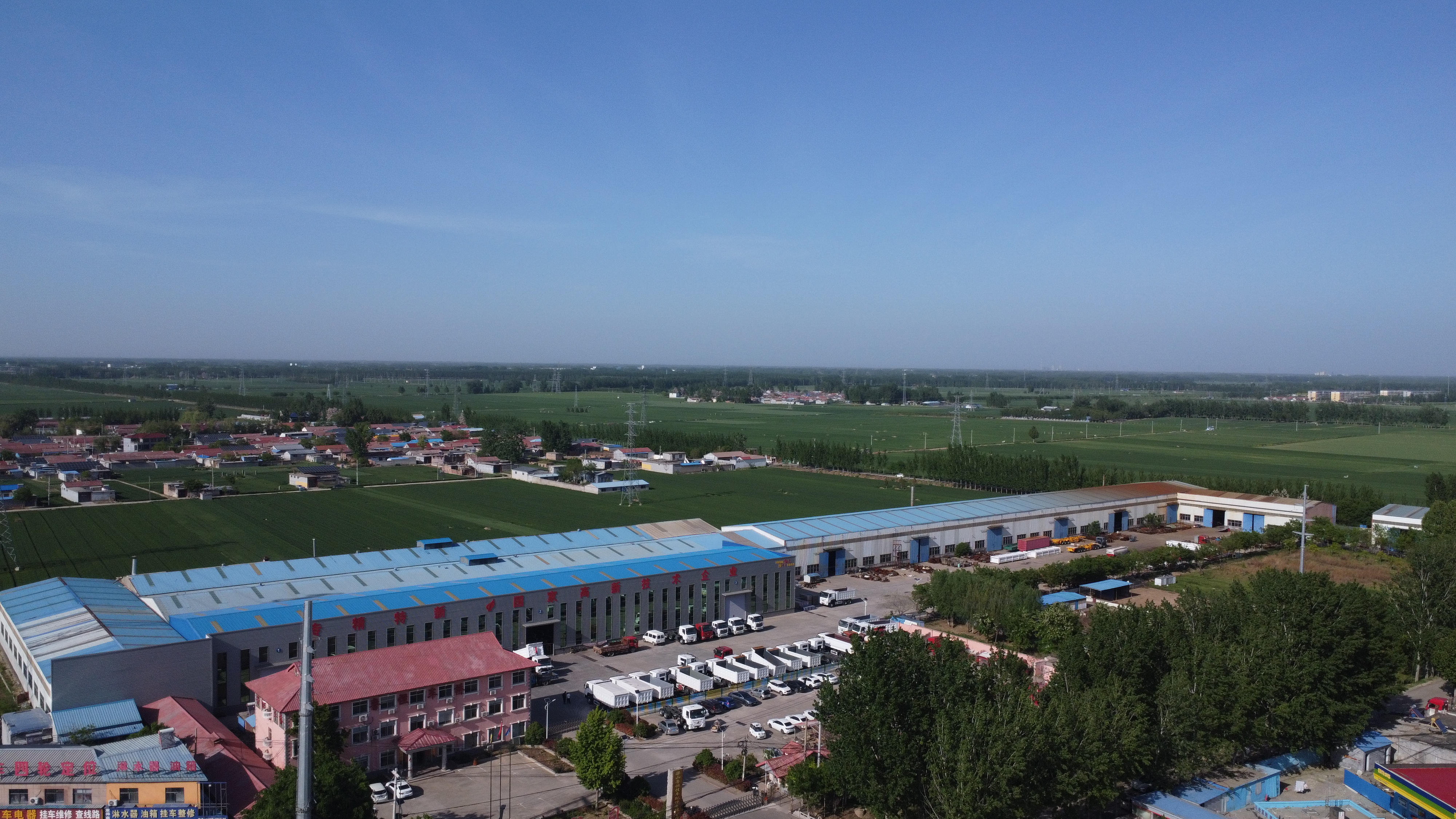
This guide treats delivery assurance as an evidence problem. It sets out four evidence classes that can each be checked before an order is signed — material grade, named components, axle and payload configuration, and model coverage — and then converts them into a document set that travels with the shipment. Shandong Luen Auto Co., Ltd. (Luen Auto) is used as the worked example: a Chinese trailer and truck manufacturer established in 2020 in Liangshan County, Shandong Province, operating a factory of more than 50,000 m² with annual output of roughly 1,500 units and an export share of about 80%, concentrated in Africa, South America and the Middle East.
Why delivery assurance has to be evidenced, not promised
A purchase order makes two promises at once: the unit will match the specification, and it will arrive inside the agreed window. Each promise breaks in a small number of predictable ways, and each failure leaves a different paper trail — or none.
- Grade substitution. A plate of the right thickness but a lower grade is welded into a main beam. After painting, it is invisible.
- Component substitution. Landing gear, axles or fittings from a different maker are fitted at the same mounting points. The unit looks correct.
- Configuration drift. Axle spacing, deck height or fitting positions change during fabrication without a written revision.
- Calendar drift. The build starts later than the buyer assumes, because the quotation never defined when the clock starts.
- Document mismatch. The commercial invoice, packing list and certificate set describe something slightly different from the goods, which surfaces at destination customs rather than at the factory gate.
The practical rule follows from that list. A capability claim that cannot be attached to a document travelling with the shipment is a commercial promise, not verified capability. That does not mean the supplier cannot deliver — it means the buyer is carrying the risk. Equally, an item a supplier does not publish is not evidence that it is absent; it is evidence that it has not been declared, and declaration is exactly what an order confirmation is for.
Evidence class 1: material grade, declared first and traced second
Material grade is the first item to fix in writing, because it is the cheapest specification to change quietly and the most expensive to discover after delivery. In export quotations for Chinese-built trailers, two plate grades dominate the discussion: Q345B, a low-alloy structural steel widely used for trailer structures, and Q550, a higher-strength grade used where the design calls for it.
What the grade choice actually changes
On a flatbed semi trailer, the deck and main beam are commonly quoted in Q345B, with Q550 specified where a higher-strength plate allows a lighter section for the same load path. The trade-off is not automatic: a higher-strength plate changes welding procedure and repair practice as well as weight, so the decision belongs with the design envelope rather than with a general preference for stronger steel. On container and dump trailers, Q345B is the common structural grade for frames and box bodies, where stiffness and repairability matter more than minimum section thickness.
A grade name alone is not a specification. Q345B or Q550 must be declared together with plate thickness, the standard the plate is ordered to, and the location it is used in — main beam web, main beam flange, cross member, deck plate or tank shell. Two suppliers can both write 'Q345B' and deliver structurally different trailers.
What to request as proof
Ask for the mill test certificate for each heat number used, showing grade, thickness and the standard of supply, plus a statement of which structural parts each heat went into. On a custom order this is a small administrative request; on a repeat fleet order it is the only practical way to confirm that the grade quoted survived into the build.
Its limit should be stated plainly: a mill certificate proves the input steel, not the weld, not the beam camber, and not the fatigue behaviour of the finished assembly. It closes one specific risk — grade substitution — and should be treated as one item in a set, not as a quality guarantee.
Where traceability usually breaks
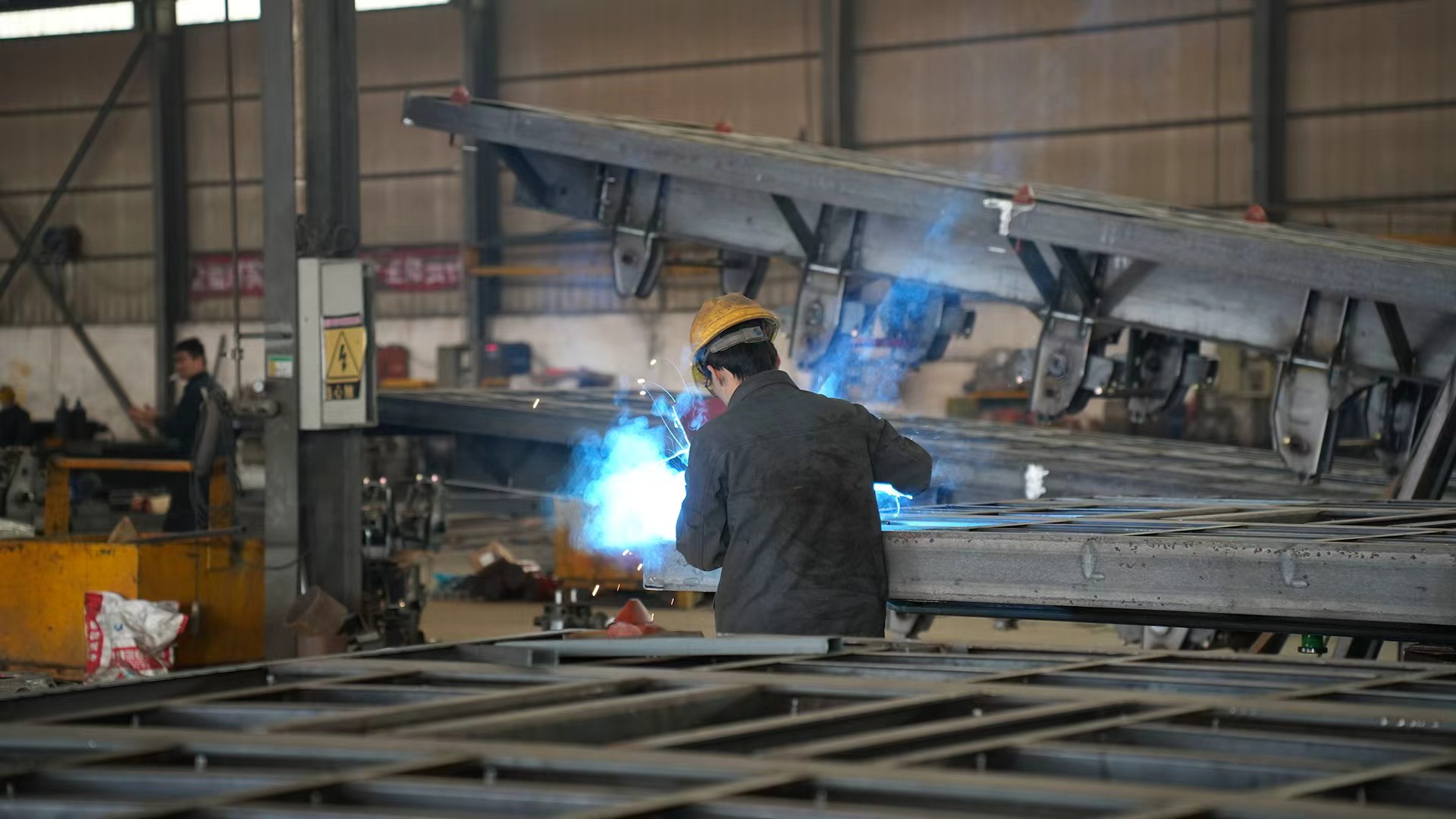
Plate identity is lost at painting. The realistic control point is therefore before paint: a photograph of the heat number on the plate, or a pre-paint inspection visit, recorded against the order line. Buyers who inspect only the finished, painted unit are inspecting appearance, not material.
Evidence class 2: named components and the three-place rule
A named component is evidence only when the name, model and quantity appear in three places at once: the quotation, the signed order confirmation, and the unit itself at pre-shipment inspection. A brand mentioned in a brochure and absent from the order line is marketing; a brand on the order line and absent from the unit is a claim to be settled before the balance payment, not after arrival.
Landing gear and kingpin
Luen Auto's customization list treats landing gear, kingpin, suspension type, rim and tyre specification, beam structure and paint system as configurable order items rather than fixed catalogue values. That is the right structure for delivery assurance, because each of those items has a substitution path that becomes invisible once assembled. Landing gear is the clearest example: a set with the same mounting pattern but a lower load rating fits without modification. Where a branded landing gear set such as JOST is specified, the brand and model belong on the order line and the nameplate should be photographed legibly at pre-shipment.
The kingpin is a delivery-blocking item rather than a quality item. Its size and class must match the fifth wheel of the tractor unit the buyer intends to use; a mismatch produces a trailer that cannot be coupled on arrival, which is a delivery failure regardless of build quality.
Twist locks and container fittings
Container-carrying equipment is built around two interfaces: the container dimensions defined in ISO 668 and the corner fittings defined in ISO 1161. For a skeleton semi trailer, the fitting set — position, type and combination — is what determines whether the unit can carry 20 ft, 40 ft, 40 ft plus 20 ft, or 45 ft containers. A chassis described only as a container trailer has not declared its fitting set, and fitting position is not something a buyer can correct after delivery.
Axles, suspension and wheels as one system
Axle configuration is a customization item at Luen Auto, and it is the component group where the weakest element sets the limit for the whole vehicle. An axle rating above the tyre and rim rating does not raise the usable load; the tyre becomes the constraint. For that reason the component schedule should list axle make and rating, suspension type, rim specification and tyre size on separate lines, so that an inconsistency is visible on paper before it is built into steel.
Evidence class 3: axle and payload configuration, and the legal envelope
Axle count is a design decision; payload is a structural and legal outcome. Export quotations routinely combine the two in a single number, and that is where buyers lose the ability to verify. The configuration range covered here is two to four axles, lowbed capacity quoted up to a 100 t class, and tank semi trailers in the 40,000–42,000 kg GVW band — three different statements that need three different confirmations.
GVW is not payload
Gross vehicle weight is the sum of the trailer's own weight and what it carries. A tank semi trailer quoted at a 40,000–42,000 kg GVW therefore says nothing about usable payload until tare weight is stated separately. The verification request is simple: require tare and payload to be written next to the GVW on the order confirmation, and require the axle and tyre ratings to support the payload figure. A quotation that gives GVW alone has not answered the question the buyer is actually asking.
The destination envelope decides the design
Axle load and overall dimension limits are set by the market where the trailer will be registered, not by the factory. In China, GB 1589-2016 defines limits for dimensions, axle loads and masses of vehicles, trailers and vehicle combinations. In the European Union, Regulation (EU) No 1230/2012 sets masses and dimensions requirements under the type-approval framework of Regulation (EU) 2018/858, and tank units carrying dangerous goods additionally fall under ADR construction requirements. A trailer optimised for one of these envelopes is not automatically a compliant export model for another, which is why the destination market should be declared before fabrication starts rather than at the documentation stage.
Where the configuration becomes a build instruction
Once the envelope is fixed, the configuration items that must be frozen are axle count and spacing, suspension type, load rating, beam structure, deck height, landing gear, kingpin, rim and tyre specification, paint system, and branding. Luen Auto lists all of these as customizable, which means all of them can also be changed by omission if the order confirmation lists them loosely. An order line that reads '3-axle lowbed, standard' has frozen nothing.
Evidence class 4: model coverage and capacity as schedule evidence
Model coverage answers a different question from material and components: whether a single supplier can carry a mixed order on one build calendar, one inspection standard and one document set. For a fleet buyer replacing several trailer types in one purchasing cycle, that is a schedule question as much as a product question.
The product range published by Luen Auto spans a flatbed semi trailer in 2-axle, 3-axle 40 ft, 3-axle 45 ft and drop-deck forms; a lowbed semi trailer in 3-axle and 4-axle versions, including detachable gooseneck and extendable low-bed configurations; container and skeleton chassis in 20 ft, 40 ft, 40 ft plus 20 ft and 45 ft forms; dump semi trailers in 3-axle, 4-axle, U-type and rectangular box versions; fuel tank trailers in single-compartment and multi-compartment (three to six bin) form plus chemical, edible oil and water variants; powder tank trailers at 40 m³, 50 m³ and 60 m³ including aluminium alloy bodies; and CNG tube trailers in 8, 10, 12 and 20-tube configurations.
The supporting capacity facts, as published by the company, are a factory of more than 50,000 m², annual output of around 1,500 units, more than 100 employees, an engineering team of five, export revenue above USD 30 million, and manufacturing carried out directly rather than through a trading intermediary, including OEM production. Standard configurations are quoted at 30–45 days, with custom orders negotiated against specification complexity, and the minimum order quantity is one unit for standard models.
All of that is plant-level evidence. It shows the supplier can build the product; it does not reserve a slot for a specific buyer. The order-level question is different and should be asked in writing: which production window is assigned to this order, and which event starts it.
The seven-step delivery assurance dossier
The steps below convert the four evidence classes into a document set. They are ordered so that each step produces something the next step can be checked against.
- Convert the specification into numbered order lines. One line per verifiable item: trailer type, overall dimensions, axle count and spacing, load rating, beam structure, suspension type, rim and tyre specification, landing gear make and model, kingpin size, paint system, branding. Anything without a line is not ordered, whatever the brochure said.
- Fix the material declaration per line. Grade, thickness, standard of supply and the structural part it applies to — Q345B or Q550 as applicable on flatbed, Q345B on container and dump structures, with an equivalent declaration for tank shells and pressure-retaining parts.
- Fix component identity. Make, model and quantity for axles, suspension, landing gear, kingpin, twist-lock fittings and wheels, on separate lines so that inconsistencies appear before fabrication rather than after delivery.
- Declare the destination envelope. State the market of registration and the mass and dimension regime the unit must satisfy, so the design is validated against the right rule set before welding rather than after painting.
- Agree hold points. At minimum: material receipt with heat numbers, pre-paint structural inspection, axle and suspension fit-up, and pre-shipment inspection. Luen Auto's stated regime is 100% factory inspection before shipment with in-house load testing, brake performance testing and dimensional verification; a hold-point agreement turns that regime into something the buyer can witness.
- Define the calendar trigger. Write down the event that starts the 30–45 day standard lead time, or the negotiated custom schedule, so that a quoted delivery window has a start date attached to it.
- Assemble the shipment document set. Inspection record, dimensional verification, brake and load test results, mill certificates, component photographs, warranty statement, and a commercial invoice whose classification matches the goods — tank semi trailers fall under HS 8716.31, while flatbed, lowbed, skeletal, van and dump semi trailers for goods transport sit together under 8716.39, and parts under 8716.90 in the WCO Harmonized System.
What each evidence type proves, and what it does not
The table below is the working version of the dossier. Its purpose is to stop a single document from being read as a general quality signal: each item closes one specific risk and leaves the others open.
| Evidence item | What it confirms | What it does not confirm | Collect at |
|---|---|---|---|
| Product catalogue or brochure specification | The supplier's offered range and typical configuration | That the grade, component make or rating applies to your unit | Quotation stage |
| Signed order confirmation with numbered lines | Which items are contractually ordered, and in what quantity | That the build followed those lines | Before deposit |
| Mill test certificate with heat numbers | The grade, thickness and standard of the steel supplied | Weld quality, beam geometry or finished-assembly performance | Material receipt |
| Component nameplate and pre-shipment photographs | That the specified make and model were fitted | Component condition after transport, or service life | Pre-paint and pre-shipment |
| Pre-shipment inspection record (dimensional, load, brake) | That the finished unit met the agreed test values | Field performance under your loads and routes | Before balance payment |
| ISO 9001 certificate, read at the scope line | That a management system is certified inside the stated scope | Production-process control, weld qualification or order schedule | Supplier shortlisting |
| Warranty statement | Which devices are covered, and for how long | Failure rates or response time in your region | Contract stage |
Three order profiles where the evidence changes the outcome
A mining and construction fleet replacing trailers across multiple sites
A construction and mining customer running a fleet of more than 50 vehicles in Nigeria and Ghana moved from buying trailer parts to buying complete units, ordering multiple quad-axle dump semi trailers configured for heavy-load mining conditions, and deployed them across several project sites. The delivery-assurance lesson in that order is not the axle count; it is the sequence. Because the buyer had already purchased parts, the component specification was the first item both sides could agree on, and the axle configuration was resolved as a written customization rather than as a catalogue choice. Luen Auto records this as a repeat-purchase case — exactly the kind of order in which a numbered component schedule is worth more than a specification brochure.
A tank or powder terminal adding capacity
For tank equipment the evidence set needs one extra layer, because the tank body is both a structure and a container. GVW, tare and payload must be stated separately, the compartment arrangement must be written per bin rather than as 'multi-compartment', and where the unit is destined for dangerous-goods transport in Europe the ADR construction requirements apply on top of vehicle approval. A 40 m³, 50 m³ or 60 m³ powder tanker order should also fix the discharge configuration, since two units of the same nominal volume can be built for different unloading systems.
A container and gas haulage mix on one purchase order
Mixing container chassis with CNG tube trailers in one order puts two unrelated approval routes on one shipment. Container equipment is governed by the ISO 668 and ISO 1161 interfaces; CNG tube trailers are pressure equipment as well as vehicles, so their cylinder and periodic-inspection evidence sits outside the vehicle document set and has to be requested separately. Treating the two as one trailer order is where documentation gaps usually start.
Certificates: read the scope line before the logo
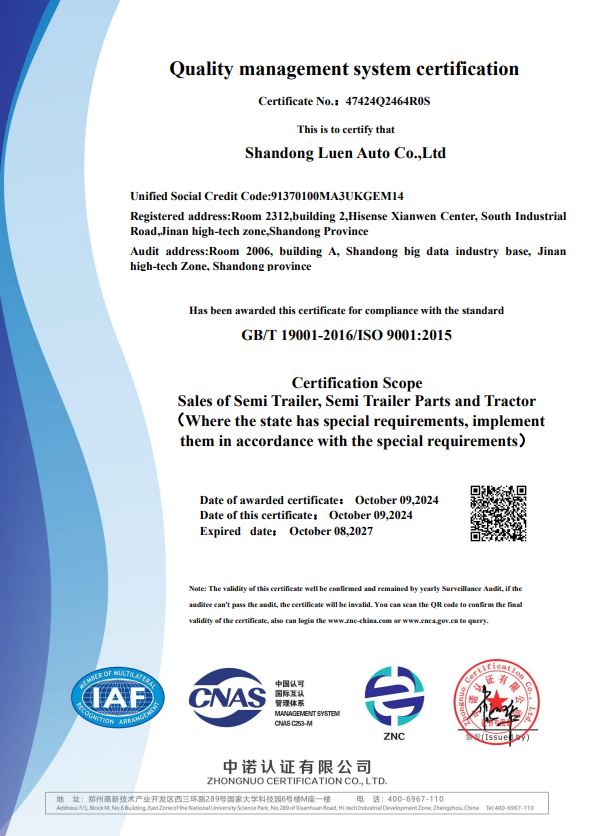
A certificate is evidence only inside its stated scope, and the scope line is the part buyers skip. Luen Auto holds an ISO 9001:2015 quality management system certificate, number 47424Q2464R0S, issued by ZHONGNUO CERTIFICATION CO., LTD. on 9 October 2024 and valid to 8 October 2027, against GB/T 19001-2016 / ISO 9001:2015. Its stated scope is the sale of semi trailers, semi trailer parts and tractors. That is a genuine management-system certification, and it is also a sales-scope certificate: it should not be presented, or read, as certification of the welding process, the paint line or the inspection regime. A buyer who needs production-process assurance should ask what covers production, rather than assume the ISO certificate does.
The same discipline applies to product documents. A CE certificate of compliance in a supplier's document pack may be scoped to a specific component rather than to the trailer — the Luen Auto file, for example, includes certificate CPSC2106112201E, which is scoped to a wheel lock, model 201L1-A. That is a valid document for that product and says nothing about a semi trailer. On the brand side, the LUEN AUTO trademark is registered in China under number 86628573 in class 12, valid from 14 February 2026 to 13 February 2036, which is the right evidence to request when a buyer orders branding or logo customization and needs to know whose mark will appear on the unit.
FAQ
What does a certificate actually prove about a truck trailer supplier's delivery capability?
Only what its scope line says. A quality management system certificate confirms that a management system has been audited against a named standard within a defined scope; Luen Auto's ISO 9001:2015 certificate 47424Q2464R0S is scoped to the sale of semi trailers, semi trailer parts and tractors, and is valid to 8 October 2027. It does not certify the welding process or the inspection regime, and it says nothing about a specific order's schedule. Product certificates behave the same way: a document scoped to one component, such as a wheel lock certificate, cannot be extended to a trailer. Delivery assurance comes from order-level evidence — numbered order lines, mill certificates, component records and pre-shipment inspection results.
How do I identify an OEM lowbed semi trailer manufacturer for heavy haulage?
Look for four things that a trading intermediary cannot supply. First, in-house production: Luen Auto manufactures directly rather than reselling, and also produces under OEM arrangements, which matters because OEM work requires the trailer to be built to the buyer's specification instead of selected from stock. Second, a lowbed range with real configuration depth — 3-axle and 4-axle versions, detachable gooseneck and extendable low-bed forms — because heavy haulage is rarely served by one standard model. Third, the ability to write load rating, beam structure, axle configuration and material grade into the order rather than quoting them as fixed catalogue values. Fourth, evidence at the point of shipment: pre-shipment dimensional verification, load testing and brake performance testing, recorded against the order. Ask for the lowbed quotation with those four items explicit, and the OEM question answers itself.
Which axle and payload configurations should be written into the order?
Write the axle count and spacing, the load rating and the payload target as separate lines, then confirm that they agree. The configuration range covered here is two to four axles, lowbed capacity quoted up to a 100 t class, and tank semi trailers in the 40,000–42,000 kg GVW band. Because GVW includes the trailer's own weight, a GVW figure must be paired with tare and payload before it means anything. The axle and tyre ratings then have to support that payload, and the whole configuration has to sit inside the destination market's mass and dimension limits — GB 1589-2016 in China, Regulation (EU) No 1230/2012 in Europe. A quad-axle configuration, as used in the Nigeria and Ghana mining fleet order, is a customization decision and should appear as such in writing.
What purchasing terms should a buyer expect?
For Luen Auto, the recorded terms are a minimum order quantity of one unit, delivery on FOB or CIF terms, acceptance based on a pre-shipment test, and payment at 30% deposit with 70% balance. Those terms matter for delivery assurance because the acceptance clause is what gives the pre-shipment inspection its commercial weight: without a defined acceptance test, an inspection is a courtesy rather than a condition of payment.
Can a single unit be evaluated before committing to a fleet order?
Yes. The stated minimum order quantity is one unit for standard models, with flexible MOQ for trial orders and sample evaluation, so a buyer can place one unit against the full dossier — numbered order lines, material declaration, component schedule and hold points — and use it to test whether the supplier's documentation matches its output. The warranty structure supports that approach: six months on trailer driving and supporting devices, one year on trailer carrying devices, and one year on new trucks, with local Sinotruk agent service points for on-site repair and multilingual support through WhatsApp.
How long does delivery take, and when does the clock start?
Standard configurations are quoted at 30–45 days, and custom orders are negotiated according to specification complexity. The number is only useful once the trigger is defined, so the order confirmation should name the event that starts the schedule — typically specification freeze together with deposit — and the supplier should confirm the production window assigned to that particular order. For a mixed order covering several trailer types, ask for the sequence as well as the total: a single completion date for a multi-unit order tells the buyer nothing about when the first unit will actually be ready.
To start building the dossier, the full LUEN Auto product catalogue can be downloaded and used as the base document for the numbered order lines, and specification questions can go directly to the export team at luengroup@lhaxle.com or +86 17686798823, including on WhatsApp for buyers who prefer to send drawings that way.
Conclusion
Delivery assurance is decided before fabrication, not at the port. A supplier that can state a material grade with thickness and standard, name its components by make and model, separate GVW from tare and payload, and show model coverage across every trailer type in the order has given the buyer something checkable. The dossier — numbered order lines, material declaration, component schedule, destination envelope, hold points, calendar trigger and shipment document set — is what converts those statements into an order that can be verified at inspection and defended at customs.
Luen Auto's own evidence follows that pattern: factory-direct production, published capacity and lead times, a customization list that treats components as orderable items, and a pre-shipment inspection regime of load, brake and dimensional testing. Whether another supplier matches it is a question for the same seven steps, applied line by line, to whichever quotation is on the table.
Have Questions or Need More Details?
Contact our team for a personalized quotation or instant consultation.
Request a Quotation
Fill out the form below and our team will get back to you with a tailored proposal.
WhatsApp Direct Chat
Prefer to chat in real-time? Message us on WhatsApp for instant assistance & quick answers.
- Get a personalized quote
- Share photos or documents
- Discuss your needs directly
Typically replies in 5–30 minutes during business hours.