
Truck Trailer Export Compliance: Axle Load and Certification Guide for US, EU, Australia
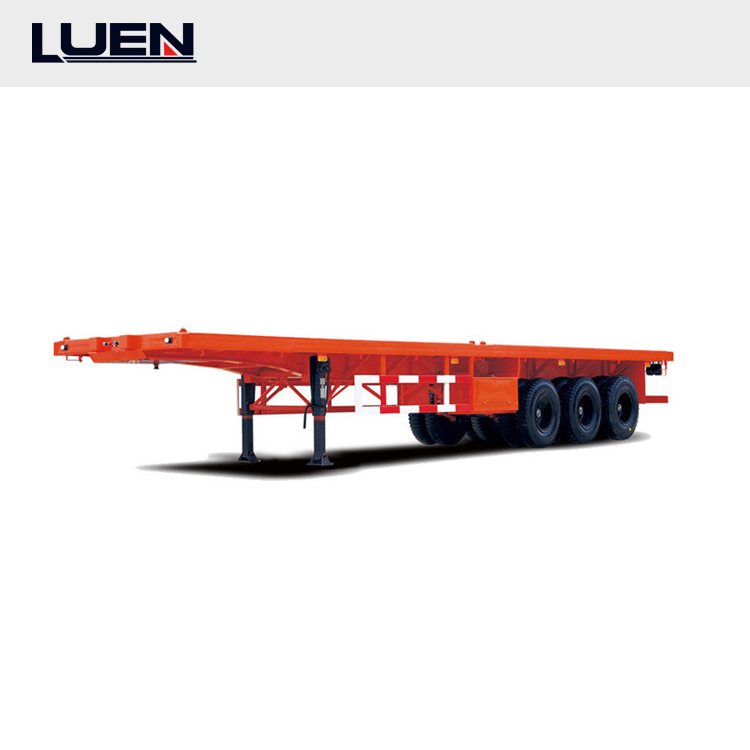
Three specification numbers decide most export technical reviews for semi-trailers: per-axle load rating, overall dimensional envelope, and the gross vehicle weight (GVW) the combination is designed to carry. In the trailer range manufactured by Shandong Luen Automobile Co., Ltd. — Luen Auto — the standard baseline is a 13-ton per-axle rating, an overall width of 2,480–2,500 mm, and a GVW band of 40,000–42,000 kg on tank, powder-tank and CNG-tube configurations.
This guide is written for importers, fleet buyers and project engineers sourcing truck trailers for the United States, the European Union or Australia. It does not quote national directives, because those change and they differ in detail. It focuses on the parameters that stay constant and on the conformity evidence a factory can actually provide.
The working argument is simple: match axle load and dimensions to the destination before the trailer type is chosen. Reversing that order is the most common reason an export trailer arrives technically sound as a product but difficult to register and operate.
Problem Definition: Why Export Compliance Is Not a Single Certificate
Export compliance is usually described as one certificate. In a trailer purchase it is three separate questions, and three different parties answer them.
- Road-load legality — whether the trailer's axle load, GVW and overall dimensions fit the road-mass and dimension rules of the market where it will be registered. These limits are set nationally or regionally and differ between markets; there is no single global axle-load figure.
- Build conformity — whether the trailer was manufactured and inspected against a documented standard. Luen Auto trailers hold CCC (China Compulsory Certification), and every unit is inspected at the factory before shipment.
- Registration and in-service compliance — importing, registering and keeping the trailer legal afterwards. That obligation sits with the buyer and operator, not with the factory.
The distinction that produces the most expensive mistakes is between a design rating and a legal allowance. A trailer rated at 13 tons per axle is engineered to carry that axle load. Whether 13 tons per axle is permitted on a given route depends on local road-mass rules and on how the load is distributed between the tractor unit and the trailer axles.
A second mistake is sequencing. Buyers often choose a trailer body first — flatbed, lowbed, dump, skeleton — and ask about axle load afterwards. On an export order the axle-load ceiling has to be fixed first, because it determines axle count, beam structure and sometimes the trailer type itself.
Industry Background: Cross-Border Trailer Volume and a New First Question
The market these orders sit inside is large and still expanding. The global semi-trailer market was estimated at USD 22.8 billion in 2024, with expectations to reach USD 42.3 billion by 2033, and lowboy trailers accounted for the largest share of that market at 25.7% in 2024 (Grand View Research).
Supply has moved with the demand. Sinotruk (CNHTC) heavy-duty truck exports reached 135,000 units in 2024, and Shacman heavy-truck exports reached 25,000 units in the same year, a 35% year-on-year increase, according to third-party export data. Every additional tractor unit exported creates demand for a matching trailer, and every new destination market brings its own road-mass and dimension expectations.
That is the practical background for this guide. A trailer specification designed for one market — for example a 3-axle configuration at 13 tons per axle — may need four axles, a different deck height or a shorter overall length before it can be registered somewhere else. Buyers who discover that after production pay for it twice: once in rework and once in delay.
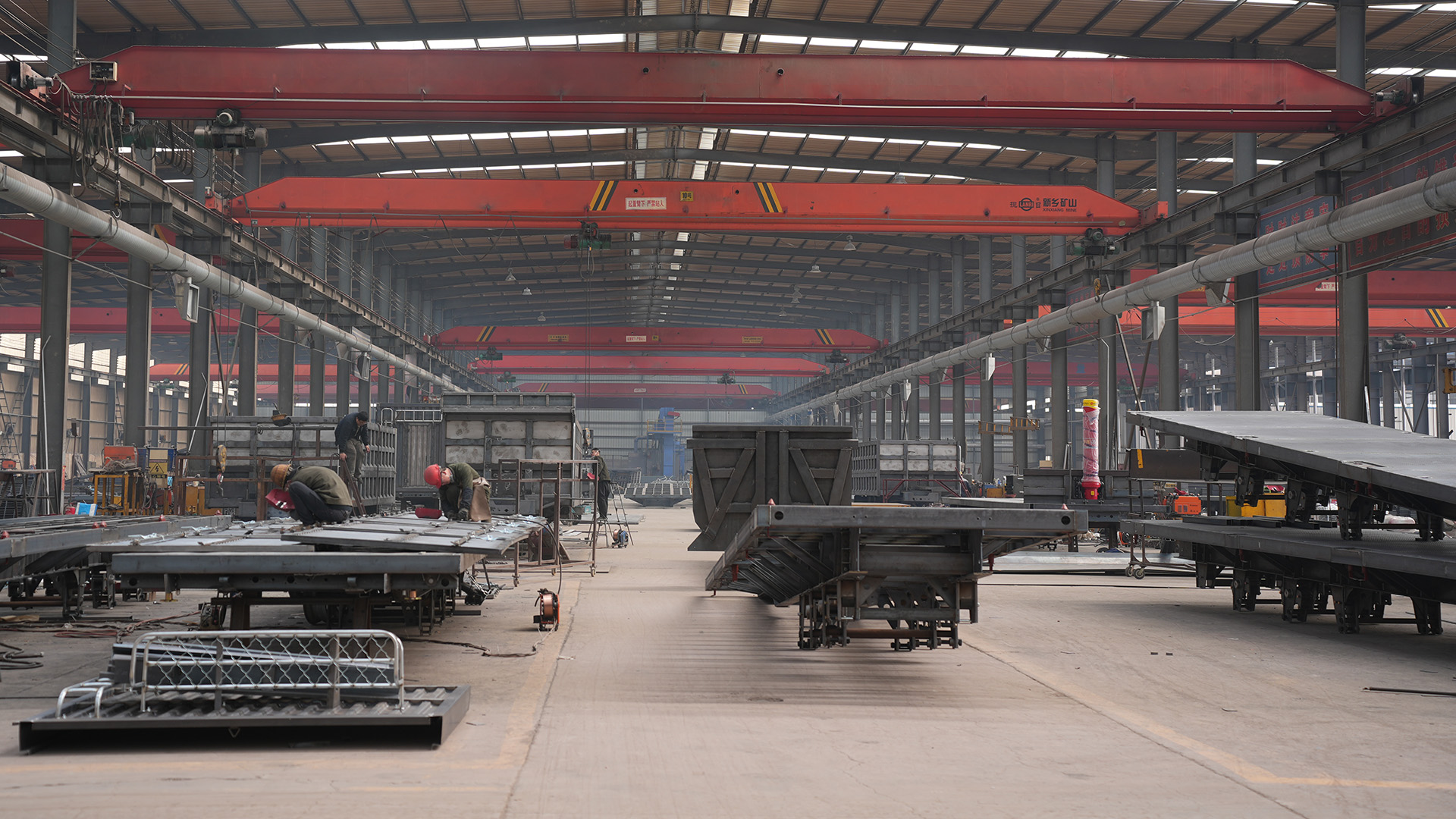
Luen Auto manufactures in Liangshan County, Jining City, Shandong Province. The company was founded in 2020 and operates a factory of more than 50,000 m² with annual output of around 1,500 units and roughly 80% of production exported. Its main markets are Africa, South America and the Middle East, with shipments also reaching Southeast Asia, Central Asia and Latin America.
The Luen Auto Build Baseline: Axle Load, Dimensions and GVW
The trailer range is specified around a small number of load, dimension and material parameters. These are exactly what a technical review asks about, so they are worth stating precisely.
Per-Axle Load Baseline
The standard axle-load rating across the Luen Auto trailer range is 13 tons per axle. Flatbed semi trailers, skeleton (container chassis) trailers, dump semi trailers, fuel tank trailers, dust and powder tank trailers, and CNG tank trailers are all built around that figure. Heavy-haulage lowbed semi trailers are rated 13–16 tons per axle, because they spread higher payloads across more axles rather than increasing the load on each one.
The arithmetic matters more than the number. Payload capacity is distributed over axle count: a 3-axle skeleton trailer at 13 tons per axle is designed for a payload range of 30–65 tons, while a lowbed at 13–16 tons per axle spans 40–100 tons. Where a destination market allows less mass per axle, the correct response is usually more axles or a lower payload target — not a trailer that merely looks lighter.
Dimensional Envelope
Overall width is 2,480–2,500 mm across most trailer types, with lowbed trailers available up to 3,000 mm. Overall length varies by type: flatbed semi trailers run 12,500–16,000 mm with 13,000 mm as the standard; container and skeleton trailers run 12,200–13,800 mm for the 40 ft standard; lowbed trailers run 11,000–18,000 mm; dump semi trailers run 9,000–12,500 mm; and tank trailers run 11,000–12,500 mm.
Height parameters matter as much as length. Flatbed deck height is 1,250–1,550 mm. Lowbed deck height is 450–600 mm loaded, with a maximum legal load height of up to 3.5 m, which is what allows tall equipment to pass under overhead restrictions. Powder tank trailers stand 3,900–4,200 mm overall, and skeleton trailers sit at 1,470–1,560 mm. Market-specific height and length rules are precisely the constraint that has to be checked before the beam layout is fixed.
Gross Vehicle Weight and Payload Bands
A GVW of 40,000–42,000 kg applies to the liquid and gas configurations: fuel tank trailers, powder tank trailers and CNG tube trailers, each running three axles at 13 tons. Payload ranges by type are 28,000–35,000 kg for tank trailers, 25,000–35,000 kg for powder tank trailers, 30–65 tons for container and skeleton trailers, 30–60 tons for dump semi trailers, 40–60 tons for flatbed trailers, and 40–100 tons for lowbed trailers.
On combination vehicles, the tractor unit sets the upper limit. The 5th wheel capacity of the Sinotruk HOWO and Shacman tractor trucks in the range is 20,000 kg, with rated gross combination weights of 40,000–120,000 kg and 40,000–100,000 kg respectively. A trailer that is compliant by itself can still create an overloaded combination if the tractor rating is left out of the calculation.
Frame Material and Load-Bearing Components
Q345B high-strength steel is the standard main-beam material for flatbed, skeleton, dump and bulk-powder trailer frames. Lowbed trailers move up to Q550 / Q690 and HG785D quenched-and-tempered steel for the higher stress of heavy-haulage duty. Dump trailer floors use 8–12 mm wear-resistant steel with HARDOX available as an option, and the tipping angle is 45–50°.
Component specification belongs in the same conversation: kingpins are 2-inch or 3.5-inch; container chassis use 4, 6 or 8 ISO 1161-compliant twist locks; landing gear is JOST or SAF; suspension is mechanical leaf spring or air; and dump trailers use HYVA or telescopic hydraulic cylinders. These are the items an inspecting buyer can check against the specification sheet on arrival.
Certification and Factory Inspection
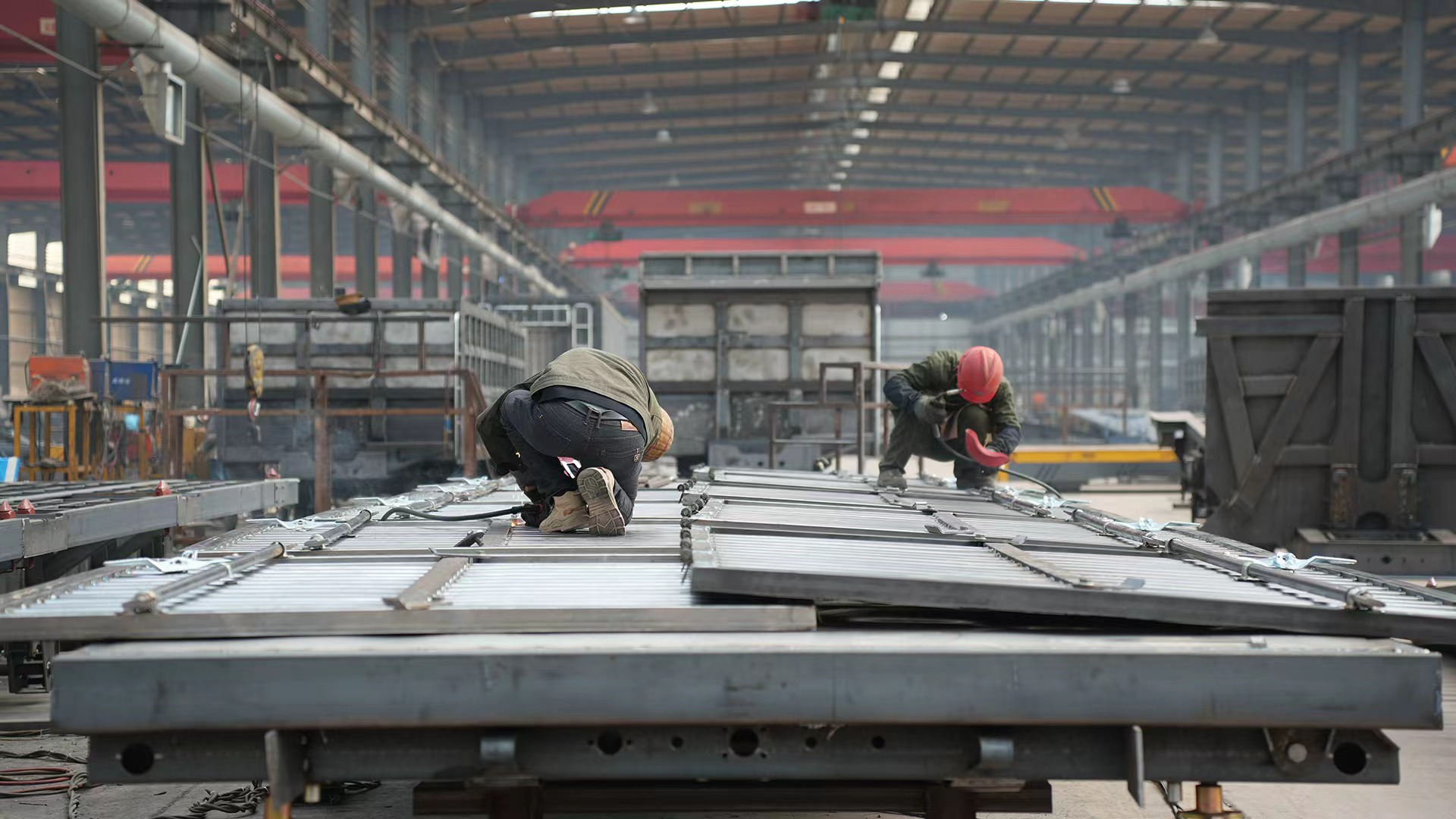
Luen Auto products hold CCC (China Compulsory Certification), the mandatory Chinese product certification. Every trailer is inspected 100% at the factory before shipment, using in-house testing equipment for load testing, brake performance testing and dimensional verification.
The scope should be stated honestly. Manufacturing conformity evidence documents how the trailer was built and tested. It does not replace registration, road-use approval or periodic inspection in the destination market, and those obligations remain with the importer or operator. Buyers in the United States, the European Union and Australia should plan the destination-side process as a separate workstream with its own timeline.
Customization as a Compliance Tool
Because axle-mass and dimension rules are market-specific, customization is normally part of the order rather than an exception. Luen Auto customizes trailer type, overall dimensions, axle configuration, load rating, beam structure, suspension type, rim and tire specifications, landing gear, kingpin, paint or coating, and branding or logo.
Step-by-Step: Six Checks Before You Confirm an Export Trailer Order
The sequence below keeps compliance work in front of commercial commitment, which is where it is cheapest to handle.
Step 1 — Set the Axle-Load Ceiling Before Choosing a Trailer Type
Write down the mass per axle the destination route allows, then divide the intended payload across the axle count to see whether it fits. If the payload cannot be carried inside that ceiling, the answer is a different configuration — often a 4-axle lowbed at 13–16 tons per axle instead of a 3-axle unit at 13 tons per axle.
Step 2 — Lock the Dimensional Envelope
Confirm overall width (2,480–2,500 mm standard, up to 3,000 mm on lowbed), overall length by trailer type, deck height and loaded height. Length and width are the two dimensions that are hardest to change once the main beams are welded, so they should be agreed before production starts.
Step 3 — Reconcile GVW, Axle Count and Payload
Tank, powder and CNG configurations are built to a 40,000–42,000 kg GVW with three 13-ton axles. Compare that against the tractor unit's 20,000 kg 5th wheel capacity and its rated gross combination weight before confirming the payload target, because the combination — not the trailer alone — is what road authorities assess.
Step 4 — Match Frame Material to the Duty Cycle
Q345B covers standard flatbed, skeleton, dump and bulk-powder duty. Heavy-haulage lowbed work calls for Q550 / Q690 or HG785D steel. On dump trailers, an 8–12 mm floor with optional wear-resistant steel is the difference between a body that survives abrasive ore and one that does not.
Step 5 — Collect the Conformity and Inspection Evidence
Ask for the CCC certification and the pre-shipment inspection record covering load testing, brake performance testing and dimensional verification. Treat that file as the factory-side evidence pack; destination-market approval is a separate step with separate documents.
Step 6 — Validate on One Unit Before the Fleet Order
Standard models have an MOQ of 1 unit and trial orders are accepted, so a single trailer can validate the specification and the import paperwork in-country before a fleet commitment. Standard lead time is 30–45 days, with custom configurations negotiated according to specification complexity.
Use Cases: Where Axle Load and Dimensions Actually Decide the Order
Axle-load and dimension limits do not decide purchases in the abstract. They decide them in specific operating conditions.
Urban Construction and Local Infrastructure — Nigeria and Ghana
In this scenario a dump truck works as a self-propelled unit for high-frequency short-haul material transport on construction sites, carrying 16–25 cubic meters per load and completing 20–40 trips per shift per vehicle. The operating environment is restricted-access urban sites with tight turning radius, mixed paved and unpaved surfaces, and short-haul cycles of 500 m to 5 km, with project-based deployment lasting weeks to months. It suits building construction, urban road repair, municipal infrastructure and small-to-medium earthworks. Here the compliance question is axle loading under frequent partial loads on roads with urban mass restrictions — not the theoretical maximum GVW.
Heavy-Duty Mining and Construction Haulage — Quad-Axle Dump Semi Trailers
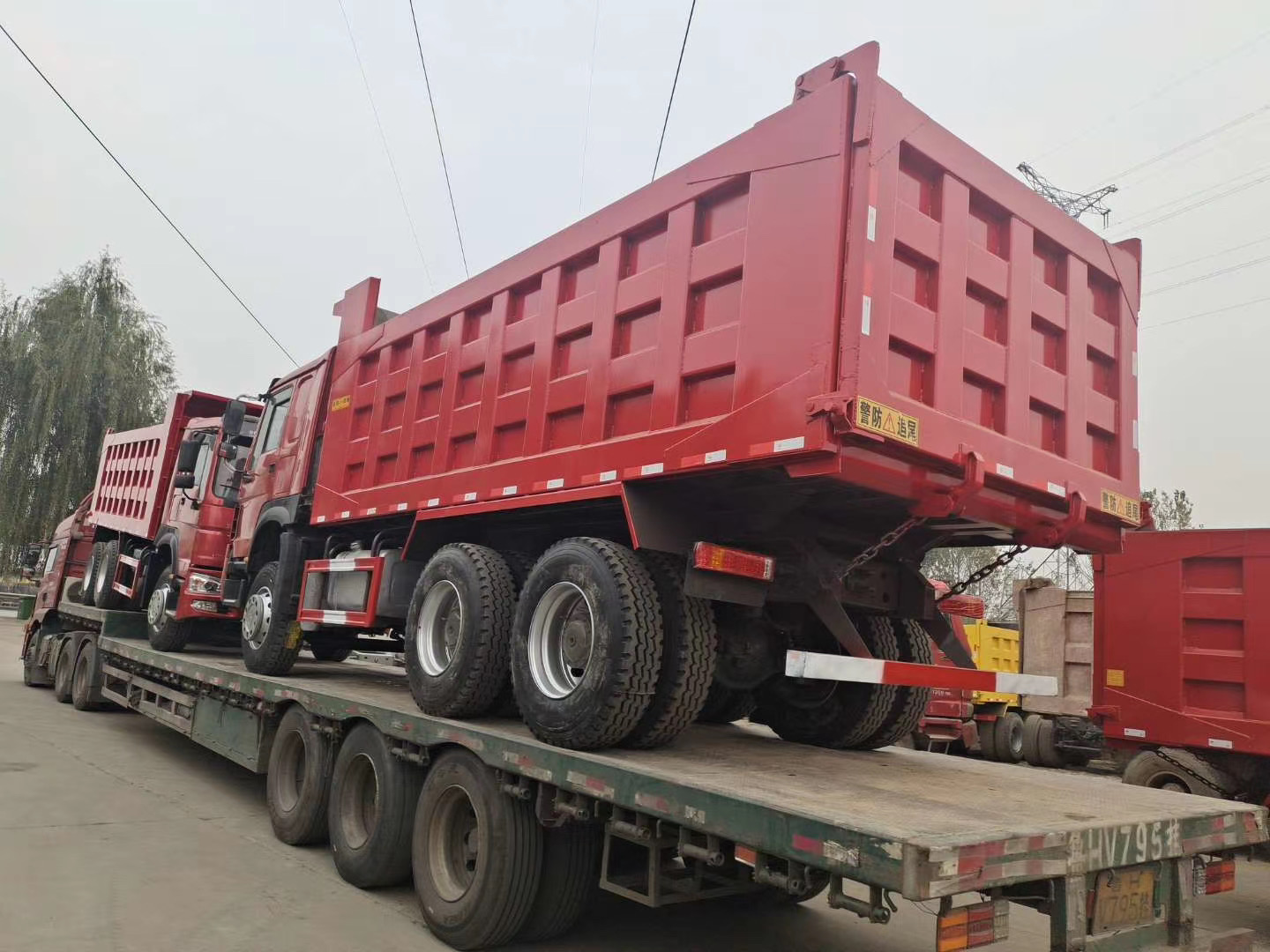
A construction and mining customer operating a fleet of more than 50 vehicles uses multiple quad-axle dump semi trailers for heavy-duty mining and construction material haulage across several project sites. The customer first purchased parts, then moved to complete trailers. The quad-axle layout is the compliance-relevant decision: distributing mining payload across four axles instead of three is what makes the configuration workable under heavy-load conditions.
Container and Intermodal Haulage
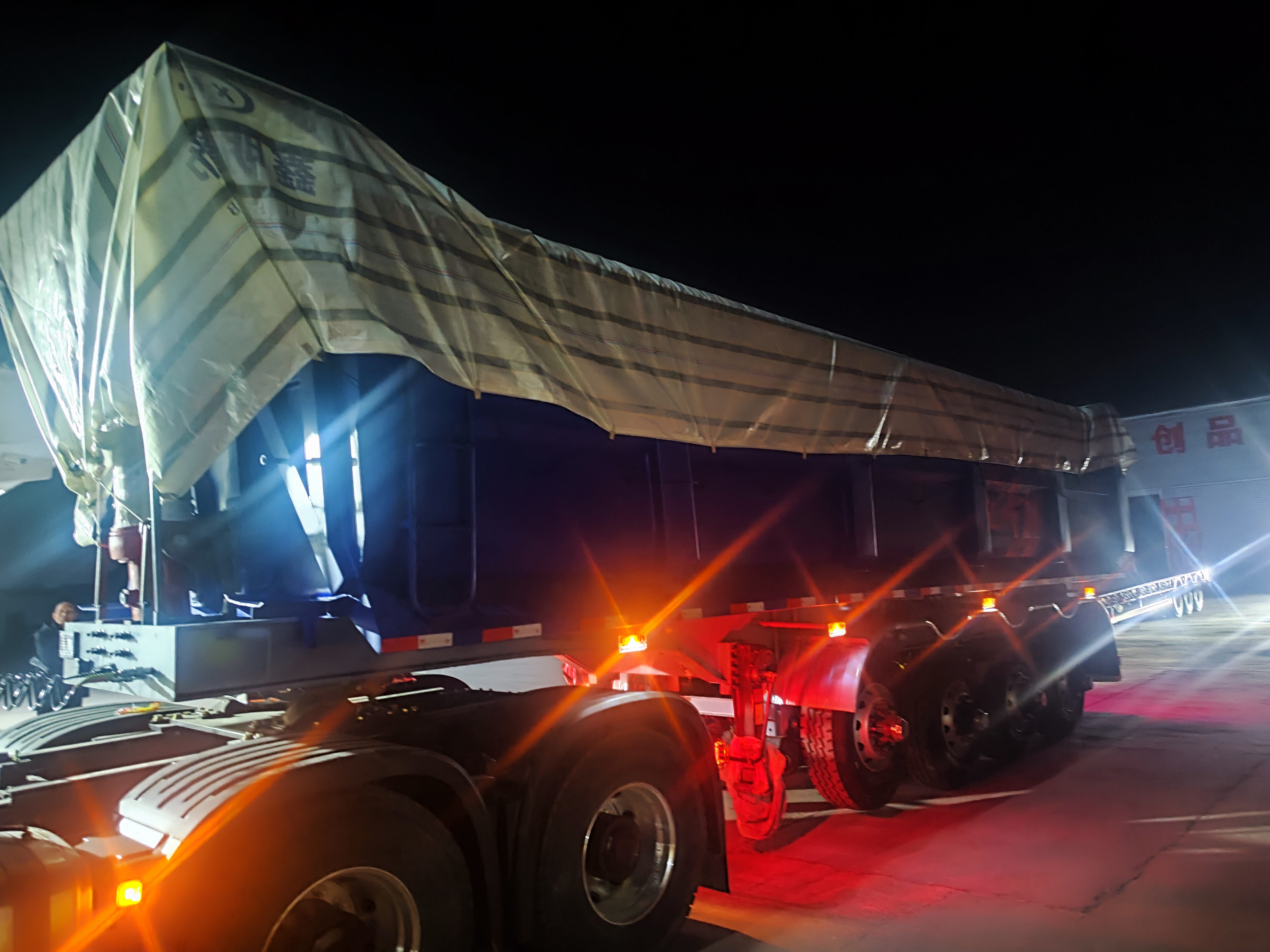
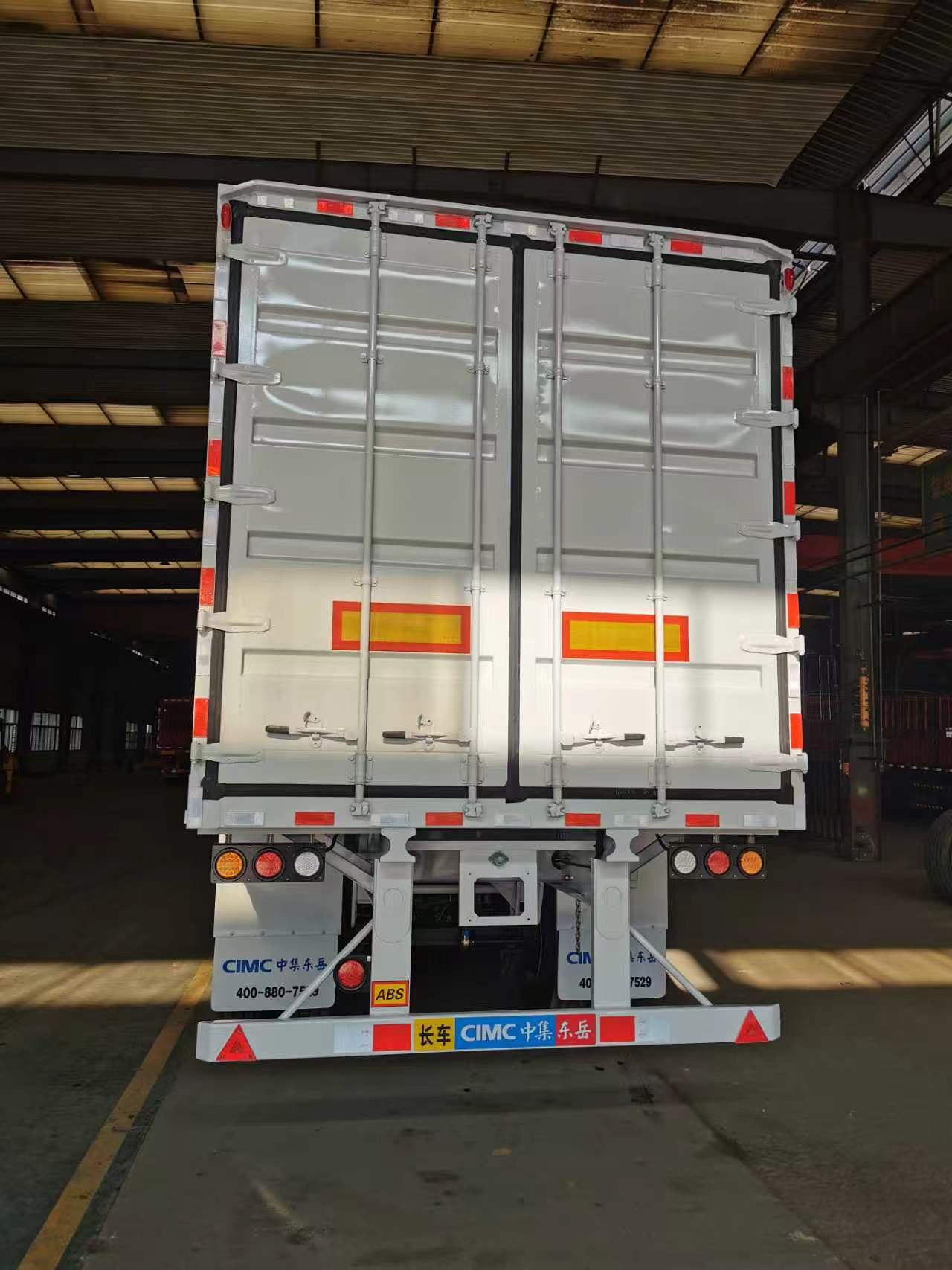
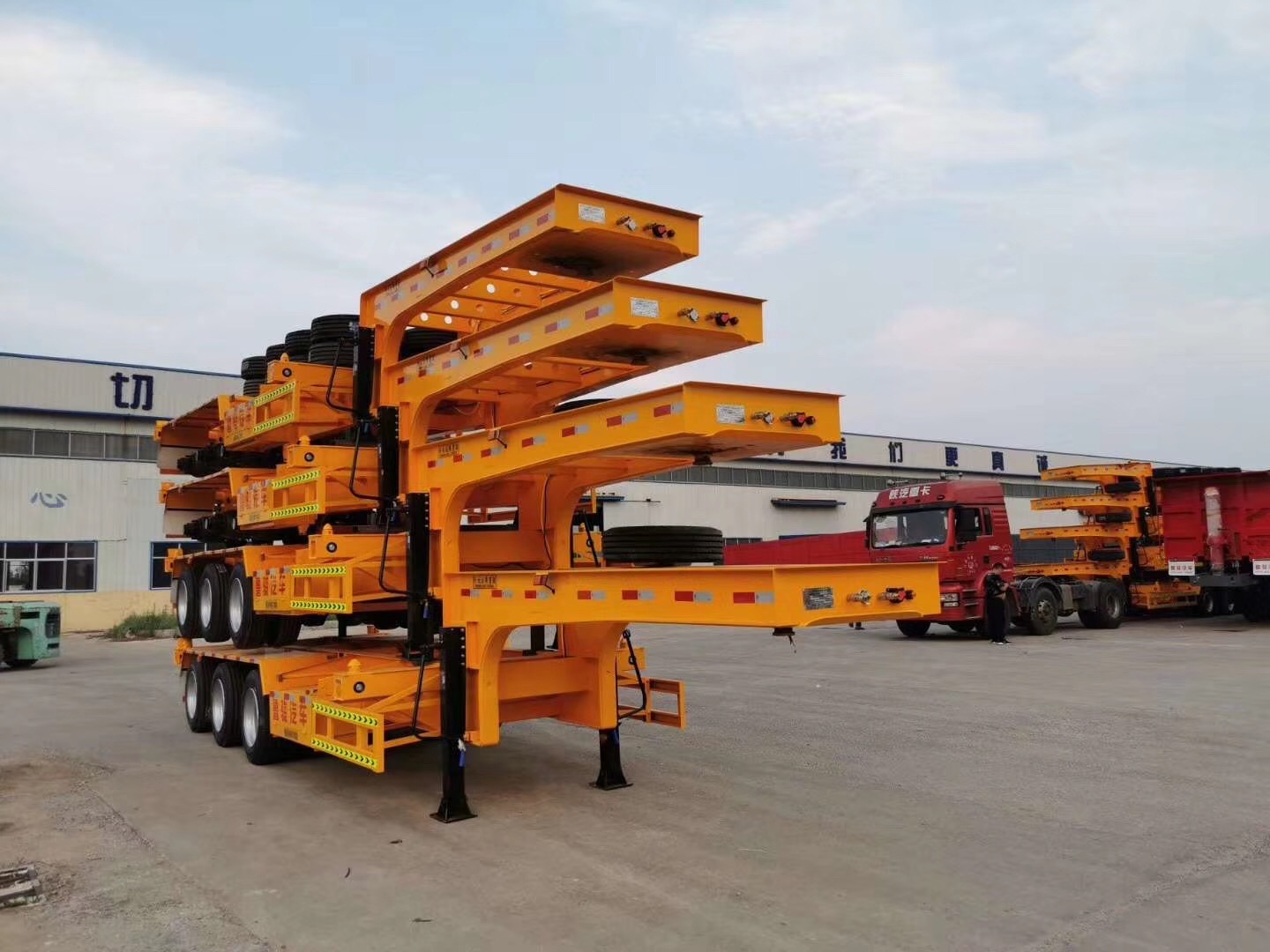
Skeleton and container chassis configurations carry 30–65 tons and use 4, 6 or 8 ISO 1161-compliant twist locks. The binding constraints here are dimensional rather than load-related: an overall length of 12,200–13,800 mm for the 40 ft standard and an overall height of 1,470–1,560 mm, because terminal handling systems and route clearances are fixed by the port and the road network rather than by the trailer.
Heavy Equipment Transport — Lowbed Semi Trailers
Lowbed semi trailers are built for 40–100 tons of payload with a loaded deck height of 450–600 mm and 13–16 tons per axle across 3 or 4 axles; detachable gooseneck versions allow front loading. For excavators, bulldozers, cranes and wind turbine components, the per-axle calculation is effectively the whole approval question, because the load is concentrated and the deck height decides whether the machine clears overhead restrictions.
Comparison Table: Trailer Types Against Compliance-Relevant Parameters
| Trailer type | Axle configuration | Axle load | Payload / capacity | Overall length | Standard frame material |
|---|---|---|---|---|---|
| Flatbed semi trailer | 2 or 3 axles | 13 t per axle | 40–60 t | 12,500–16,000 mm (standard 13,000 mm) | Q345B / Q550 high-tensile steel |
| Skeleton / container semi trailer | 2, 3 or 4 axles | 13 t per axle | 30–65 t | 12,200–13,800 mm (40 ft standard) | Q345B main beams; JOST / SAF landing gear |
| Dump (tipper) semi trailer | 2, 3 or 4 axles | 13 t per axle | 30–60 t | 9,000–12,500 mm | Q345B; 8–12 mm wear-resistant floor |
| Lowbed semi trailer | 3 or 4 axles | 13–16 t per axle | 40–100 t | 11,000–18,000 mm | Q550 / Q690; HG785D quenched and tempered |
| Fuel tank semi trailer | 3 axles | 13 t per axle | 28,000–35,000 kg; GVW 40,000–42,000 kg | 11,000–12,500 mm | Carbon steel Q235B / Q345B; aluminium or stainless options |
| Dust / powder tank semi trailer | 3 axles | 13 t per axle | 25,000–35,000 kg; GVW 40,000–42,000 kg | 11,000–12,500 mm | Q345B carbon steel / 5083 aluminium |
| CNG tank trailer | 3 axles | 13 t per axle | GVW 40,000–42,000 kg | 12,500–13,500 mm | 37Mn seamless steel cylinders; Q345B frame |
All values are Luen Auto specification ranges for standard configurations. Axle load is a design rating and must be checked against the road-mass rules of the destination market before the order is finalised. GVW is stated for the configurations where the range defines it.
FAQ: Truck Trailer Export Compliance and Axle Load Questions
Is a 13-ton per-axle trailer automatically legal in the United States, the European Union or Australia?
No. The 13 tons per axle used across Luen Auto flatbed, skeleton, dump, tank, dust and powder tank, and CNG tube trailers is a design and structural rating, not a road-use permit. Whether that axle load is allowed depends on the road-mass rules of the market where the trailer is registered, and those rules differ between jurisdictions. Lowbed configurations are rated 13–16 tons per axle. The practical step is to confirm the destination axle-mass ceiling first, then match axle count and payload to it before production.
What certification and inspection documentation comes with an exported trailer?
Luen Auto products hold CCC (China Compulsory Certification), the mandatory Chinese product certification, and every trailer is inspected 100% at the factory before shipment. In-house testing equipment is used for load testing, brake performance testing and dimensional verification. That evidence documents how the trailer was built and checked; it does not replace registration, road-use approval or periodic inspection in the destination market, which remain the importer's and operator's responsibility.
Can axle load, dimensions and GVW be customized for a specific export market?
Yes. Customization covers trailer type, overall dimensions, axle configuration, load rating, beam structure, suspension type, rim and tire specifications, landing gear, kingpin, paint or coating, and branding. The standard reference points are a 2,480–2,500 mm overall width, 13 tons per axle, and a 40,000–42,000 kg GVW band on tank, powder and CNG configurations. On combination vehicles, the tractor unit should also be checked against a 20,000 kg 5th wheel capacity and its rated gross combination weight.
What should I look for in a lowbed semi trailer manufacturer for heavy equipment transport?
Start with the per-axle rating and the deck geometry, because those two decide what the trailer can legally carry. Luen Auto lowbed semi trailers are specified at 40–100 tons payload, 13–16 tons per axle across 3 or 4 axles, a loaded deck height of 450–600 mm, an overall length of 11,000–18,000 mm, and a maximum legal load height of up to 3.5 m, with fixed gooseneck or hydraulic detachable gooseneck options. Frame steel moves up to Q550 / Q690 and HG785D quenched-and-tempered grades for this duty. For excavators, bulldozers, cranes and other oversized project cargo, check those figures against the destination axle-mass and height limits before ordering.
Can I validate a trailer on a sample unit before a fleet order, and how long does delivery take?
Yes. The MOQ is 1 unit for standard models, and flexible MOQ is offered for trial orders and sample evaluation, so one trailer can validate the specification and the import paperwork before a fleet commitment. Standard lead time is 30–45 days, and custom orders are negotiated according to specification complexity; factory capacity of up to 300 units per month supports fleet-scale orders. To start, request a specification review, a quotation or a sample unit through the contact details below.
Conclusion: Fix the Ceiling, Then Choose the Trailer
Axle load, dimensions and conformity evidence are the three variables that decide whether an exported truck trailer works in the market it was ordered for. The method is consistent: establish the destination axle-mass and dimensional ceiling, choose axle count and trailer type to fit it, match frame material to the duty cycle, collect the factory conformity and inspection file, and validate one unit before committing a fleet.
Shandong Luen Automobile Co., Ltd. (Luen Auto) builds lowbed, flatbed, dump, skeleton, van, fuel tank, dust and powder tank, and CNG tube semi trailers, and supplies tractor trucks, dump trucks and light-duty trucks for export from a factory of more than 50,000 m² in Liangshan County, Jining City, Shandong Province. The standard trailer baseline is 13 tons per axle, with 3-axle tank and gas configurations built to a 40,000–42,000 kg GVW.
Need an axle-load and dimensional review for your market?
Share the axle-mass and dimension limits of your destination and the payload you need to move. Luen Auto customizes trailer type, dimensions, axle configuration, load rating, beam structure, suspension, rims and tires, landing gear, kingpin, coating and branding. Standard models: MOQ 1 unit. Standard lead time: 30–45 days.
Download the full range here: LUEN Auto Product Catalog (PDF)
Contact: William Lee — Email: luengroup@lhaxle.com — Tel / WhatsApp: +86 17686798823 — Website: luen-trailertruck.com
Have Questions or Need More Details?
Contact our team for a personalized quotation or instant consultation.
Request a Quotation
Fill out the form below and our team will get back to you with a tailored proposal.
WhatsApp Direct Chat
Prefer to chat in real-time? Message us on WhatsApp for instant assistance & quick answers.
- Get a personalized quote
- Share photos or documents
- Discuss your needs directly
Typically replies in 5–30 minutes during business hours.