
Truck Trailer Specs Decoded: Axle Load, Deck Height, Tank Volume and Pressure Ratings
A truck trailer spec sheet is not a sales document. It is a compressed engineering record, and four figures on it decide whether a trailer will actually work on your route: axle load, deck height, tank volume and pressure rating. Payload, GVW, overall length and steel grade all resolve back to those four.
Most procurement errors do not come from choosing the wrong trailer type. They come from reading a correct number under the wrong condition. A lowbed semi trailer listed at 40–100 tons payload and a 450–600 mm loaded deck height is not making two independent claims — both depend on axle configuration, tare weight and suspension setting at rated load. Read separately, the sheet looks generous. Read together, it constrains the load.
This guide decodes the four spec families across heavy-haulage, flatbed, container and tank equipment, then connects them to the material grades — Q345B, Q550, 5083 aluminum and 37Mn steel — that determine what a trailer can carry over a five- to ten-year duty cycle in mining, port, construction and energy work.
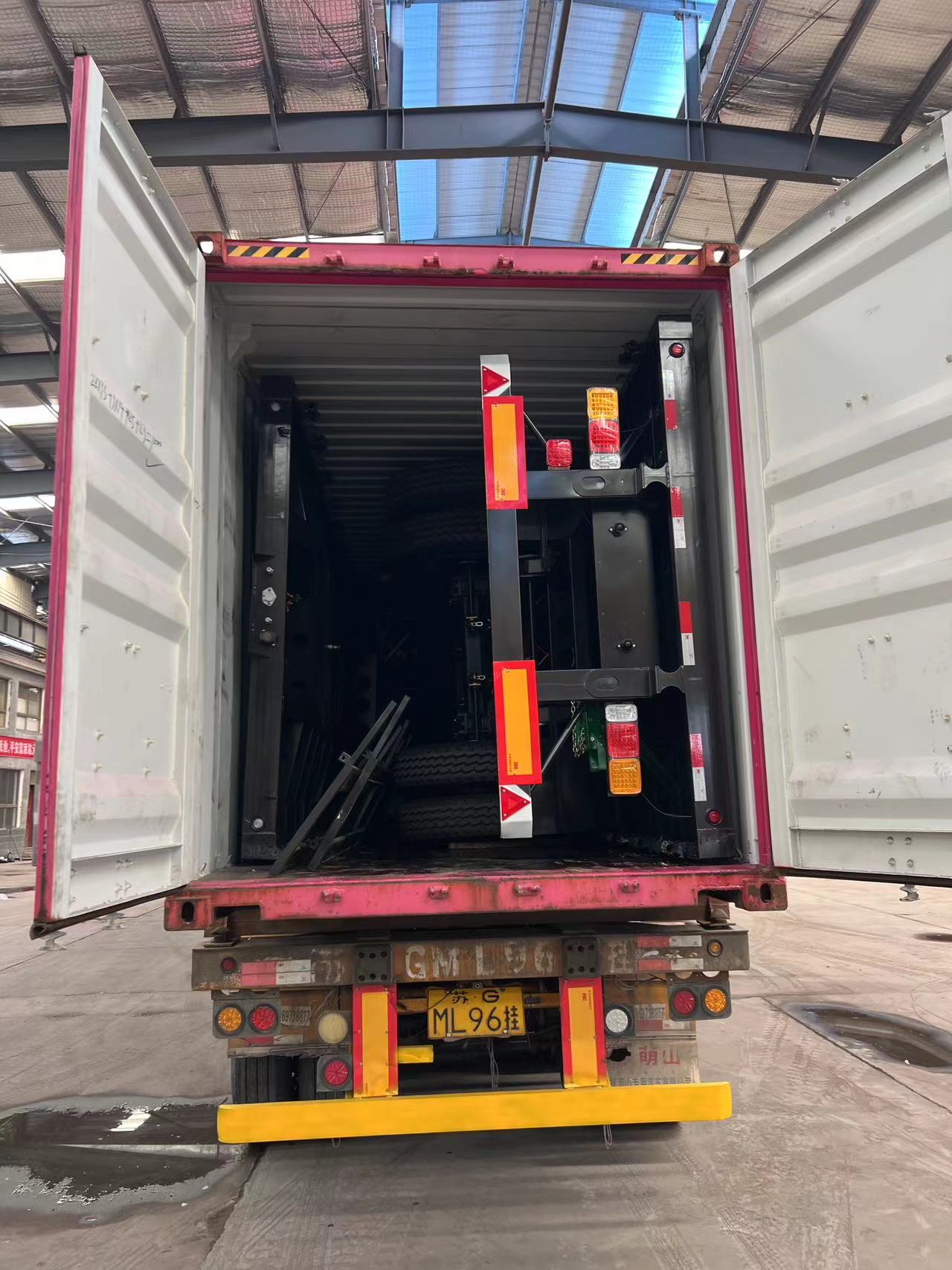
Deck height and overall length are the two flatbed figures that must be tested against a real route and terminal, not against a yard.
Problem Definition: Why Spec Sheets Get Misread
Three failure patterns account for most specification disputes between trailer buyers and trailer factories.
- Payload quoted without tare and axle count. Payload is not a property of a trailer in isolation; it is rated GVW minus tare weight, distributed across a specific number of axles. A 65-ton payload claim on a four-axle skeleton semi trailer and a 65-ton claim on a three-axle unit are different engineering statements, and only one of them may be legal on the receiving road network.
- Deck height quoted without a load condition. Lowbed semi trailers are commonly specified in the 450–600 mm loaded deck height range. That figure is measured with the suspension compressed at rated load. The unloaded height is higher. A route survey built on the unloaded figure can fail at the first bridge, conveyor or overhead line.
- Volume and pressure quoted without a basis. A dust tank trailer rated at 32–60 m³ of geometric volume does not discharge 60 m³ of material per trip. A CNG tank trailer rated at 2,000–6,000 Nm³ is quoting normalized gas volume at reference conditions, not the water capacity of its tubes in litres — and 20–25 MPa is a working pressure, not a test pressure.
The operating rule: every figure on a trailer spec sheet is valid only under the condition stated next to it. If the condition is missing, the number cannot be used as a procurement criterion.
Industry Background: Why Specification Literacy Now Decides Supplier Selection
The global semi-trailer market was estimated at USD 22.8 billion in 2024, with expectations to reach USD 42.3 billion by 2033, according to Grand View Research. Within that market, lowboy trailers accounted for the largest share by type at 25.7% in 2024 — heavy-haulage equipment remains the volume core of the category.
Published estimates diverge, however. Research firms include or exclude light-duty and specialized sub-categories differently, so a single market-size figure should be read as a range anchor rather than a precise measurement. The same discipline applies when reading a trailer spec sheet: a number without its basis is an anchor, not an answer.
Two regulatory layers sit on top of the commercial numbers. In Europe, transport of dangerous goods in fuel and tank trailers requires ADR certification under the ADR Agreement. In the United States, the Department of Transportation mandates annual safety inspections for trailers with a GVWR above 10,001 lbs under 49 CFR 396.17, administered by FMCSA. A trailer can meet every commercial spec on the sheet and still fail the regulatory envelope that applies where it will actually operate.
That is why specification review has moved upstream in the buying process. For repeat fleet buyers and distributors, the question is no longer only what a trailer carries, but under what conditions each claim is valid and whether the supplier can document it.
Detailed Solution: Reading Axle Load, Deck Height, Tank Volume and Pressure Rating
1. Axle load and payload: the legality number that comes before the capability number
Axle load is the vertical force transmitted to the road through a single axle group. Payload is rated GVW minus tare. Capability is set by structure and axles; legality is set by the road. A trailer that can physically carry a load but distributes it above the permitted axle load will be stopped at a weighbridge regardless of its structural rating.
Verified specification ranges in current production:
- Lowbed semi trailer: 40–100 tons payload, with a loaded deck height of 450–600 mm.
- Container / skeleton semi trailer: 30–65 tons payload.
- Tank semi trailer: 28,000–35,000 kg payload at 40,000–42,000 kg GVW.
Reading rule: compare payload claims only at equal axle count and equal tare. Where two trailers share a GVW but differ in material grade, the lighter build carries more payload — which is why Q550 high-strength steel changes the commercial position of a trailer even when the outer dimensions are identical.
2. Deck height and overall dimensions: the numbers a route survey must use
A flatbed semi trailer is typically specified at 12,500–16,000 mm overall length with a deck height of 1,250–1,550 mm. A lowbed semi trailer sits far lower, at 450–600 mm loaded deck height.
Deck height drives three separate decisions: overhead clearance on the route, ramp or loading angle at the site, and center of gravity for the cargo. On a lowbed, a 450–600 mm loaded deck height is what makes tall, heavy indivisible loads transportable at all; the same load on a flatbed at 1,250–1,550 mm deck height can exceed height limits before it approaches weight limits.
Overall length matters equally at the terminal. A flatbed at 12,500–16,000 mm must be checked against turning circles, weighbridge platform length and container-yard lane widths — not only against public road regulations.

Flatbed deck height of 1,250–1,550 mm and length of 12,500–16,000 mm are route constraints before they are build options.
3. Tank volume and gas capacity: geometric volume, usable volume and normalized gas
Volume figures on tank equipment are not interchangeable across product types.
- Dust tank trailer (powder/dry bulk): 32–60 m³.
- Fuel tank trailer: 28,000–35,000 kg payload at 40,000–42,000 kg GVW.
- CNG tank trailer: 2,000–6,000 Nm³ at 20–25 MPa working pressure.
For dry bulk, the 32–60 m³ figure is geometric shell volume. Usable discharge volume is lower, because aeration, slope angle and residual heel reduce what actually leaves the tank per trip. For liquid tank trailers, payload is expressed in kilograms precisely because litres vary with density — a 40,000–42,000 kg GVW tank trailer hauling a denser product reaches its mass limit before its volume limit.
For CNG tube trailers, the capacity unit is Nm³ — normal cubic metres at reference conditions. It is not the water capacity of the tubes. Two tube trailers with identical tube counts can quote different Nm³ figures depending on working pressure and reference conditions, so the 2,000–6,000 Nm³ range must always be read together with the 20–25 MPa rating printed beside it.
4. Pressure ratings: working pressure, test pressure and what the document proves
On a CNG tube trailer, 20–25 MPa is the working pressure at which the vessel is rated to operate continuously. Test pressure is a separate, higher verification value applied during manufacture and periodic inspection. Confusing the two is a documentation error with safety consequences: a buyer who specifies 25 MPa without stating whether the figure refers to working or test pressure has not specified the vessel at all.
Pressure capability is a material property as much as a design property — which is why 37Mn steel, a seamless pressure-vessel steel, is the material basis for high-pressure gas tubes rather than a general structural grade.
5. Material selection: how Q345B, Q550, 5083 aluminum and 37Mn steel change the answer
| Material | Typical role | What it changes in the spec sheet |
|---|---|---|
| Q345B | Structural steel for main beams and frames | Baseline weldability and toughness with predictable tare; general heavy-haulage, lowbed and chassis work. |
| Q550 | High-strength structural steel | Higher strength-to-weight allows thinner sections and lower tare, raising payload at a fixed GVW; requires controlled welding and qualified procedures. |
| 5083 aluminum | Aluminum-magnesium alloy for tank shells and weight-sensitive bodies | Low density raises payload at a given GVW and improves corrosion resistance for many cargoes; it is not a substitute for abrasion-resistant steel in high-impact duty. |
| 37Mn steel | Seamless pressure-vessel steel | Enables the 20–25 MPa working pressure range of CNG tube trailers; specification is inseparable from pressure rating and inspection documentation. |
Material grade moves payload, durability and pressure capability — not only unit cost.
Mapping the four grades to industry duty cycles is the final step of spec reading. In mining, abrasion and impact dominate, so Q345B and Q550 structural grades carry lowbed and tipper chassis work, while 5083 aluminum is the wrong answer where rock impact is routine. In port operations, dimensional standardization dominates: skeleton and container trailers at 30–65 tons payload, and flatbeds where out-of-gauge cargo must move. In construction, deck height and overall length dominate: a flatbed at 12,500–16,000 mm and 1,250–1,550 mm deck height for standard plant, a lowbed where the 450–600 mm loaded deck height is required for tall machinery. In energy logistics, pressure and volume dominate: dust tank trailers at 32–60 m³, fuel tank trailers at 28,000–35,000 kg payload within a 40,000–42,000 kg GVW, and CNG tube trailers at 2,000–6,000 Nm³ at 20–25 MPa.
Step-by-Step Breakdown: How to Read a Trailer Spec Sheet in Seven Passes
- Establish rated GVW and tare first. Every payload claim must be reproducible as GVW minus tare. If the sheet gives only payload, request tare before comparing suppliers.
- Convert payload to axle load. Divide the rated load across the specified axle groups and compare the result with the axle limits of the destination market, not the manufacturing country.
- Read deck height with its load condition. Confirm whether 450–600 mm (lowbed) or 1,250–1,550 mm (flatbed) is the loaded or unloaded figure, and at what suspension setting it was measured.
- Check overall dimensions against the actual site. A flatbed length of 12,500–16,000 mm must be tested against turning radius, weighbridge length and yard lane width.
- Confirm the volume basis. For a 32–60 m³ dust tank trailer, ask for usable discharge volume; for a 2,000–6,000 Nm³ CNG tank trailer, ask for tube count and water capacity alongside the Nm³ figure.
- Separate working pressure from test pressure. A 20–25 MPa rating should be stated explicitly as working pressure, with the test regime and inspection interval documented separately.
- Match material grade to the duty cycle. Q345B for general structural work, Q550 where tare reduction converts into payload, 5083 aluminum for weight-sensitive and corrosion-driven tank duty, 37Mn steel for high-pressure gas vessels.
Verification pass: what to ask the factory after the numbers check out
Specification review ends where commercial verification begins. Confirm minimum order quantity, delivery terms, acceptance criteria and payment terms in writing — for Luen Auto these are MOQ 1 unit, FOB or CIF delivery, a pre-shipment test as the acceptance criterion, and TT 30/70 payment terms. The pre-shipment test is the point at which deck height, axle load distribution, tank volume and pressure documentation are confirmed before the unit leaves the factory.
For export orders, confirm the packaging regime as well: anti-rust wax coating applied before shipping, semi-knocked-down (SKD) packing for large trailers, fumigation-free plywood crates for parts, and a documented packaging and delivery SOP with photo records per shipment. These measures address the most common cause of specification failure after the spec sheet has been agreed — transport damage during ocean freight or long-distance logistics.

Pre-shipment test and photo records per shipment convert a spec sheet into a verifiable delivery.
Use Cases: Matching the Four Spec Families to Four Industries
Mining
Lowbed semi trailers at 40–100 tons payload with 450–600 mm loaded deck height move excavators, dozers and crusher modules on site roads where overhead clearance is tight. Abrasion and impact dominate material choice: Q345B and Q550 structural grades are the default, and deck plate thickness matters more than cosmetic finish.
Port and container terminals
Container and skeleton semi trailers at 30–65 tons payload are governed by dimensional standardization — twist-lock positions, lane width and weighbridge length — rather than by deck height. Flatbed units at 12,500–16,000 mm length handle out-of-gauge and project cargo that cannot enter a container frame.
Construction
Flatbed semi trailers at 1,250–1,550 mm deck height and 12,500–16,000 mm length cover standard plant and materials. Where machinery is tall or indivisible, a lowbed at 450–600 mm loaded deck height is the only configuration that keeps the combination inside height limits.
Energy and gas logistics
Dust tank trailers at 32–60 m³ move cement, fly ash and mineral powder; usable discharge volume, not shell volume, sets the real trips per day. Fuel tank trailers at 28,000–35,000 kg payload within a 40,000–42,000 kg GVW sit inside a mass envelope set by axle limits. CNG tube trailers at 2,000–6,000 Nm³ and 20–25 MPa working pressure are specified by tube count, pressure rating and material grade together, because 37Mn steel vessels are the enabling component.
Comparison: Specification Envelope by Truck Trailer Type
| Trailer type | Payload / capacity | Key dimension | Material consideration | Primary application |
|---|---|---|---|---|
| Lowbed semi trailer | 40–100 tons | 450–600 mm loaded deck height | Q345B / Q550 structural | Mining, heavy plant, indivisible loads |
| Flatbed semi trailer | General cargo on rated GVW | 12,500–16,000 mm length; 1,250–1,550 mm deck height | Q345B / Q550 structural | Construction, project and out-of-gauge cargo |
| Skeleton / container semi trailer | 30–65 tons | Container twist-lock geometry | Q345B / Q550 structural | Port and container haulage |
| Fuel tank trailer | 28,000–35,000 kg at 40,000–42,000 kg GVW | Volume set by product density | 5083 aluminum or steel shell | Liquid fuel and chemical distribution |
| Dust tank trailer | 32–60 m³ | Geometric shell volume | Steel shell with aeration system | Cement, fly ash, mineral powder |
| CNG tank trailer | 2,000–6,000 Nm³ | 20–25 MPa working pressure | 37Mn seamless pressure-vessel steel | Midstream and downstream gas logistics |
Envelope ranges are the starting point for a specification review, not a substitute for a route and duty-cycle check.
Comparison: Factory-Integrated Build vs Unbranded Workshop Assembly
Shandong Luen Automobile Co., Ltd. (Luen Auto) is a trailer and truck manufacturer based in Xuji Industrial Park, Liangshan County, Jining City, Shandong Province, China. It operates a factory covering more than 50,000 m² with 130+ employees and an annual output of 1,500 units, exports approximately 80% of production to Africa, South America and the Middle East, and builds lowbed, flatbed, dump, skeleton and van semi trailers alongside fuel, dust and CNG tank trailers, tractor trucks and light-duty trucks. Product information is published at luen-trailertruck.com.
| Criterion | Luen Auto (factory-integrated) | Small or unbranded workshops in Liangshan, Shandong |
|---|---|---|
| Supply structure | Vertically integrated group with its own axle and parts factory | Third-party component assembly |
| Certification | 3C certified, with complete testing equipment | Quality varies batch to batch |
| Parts continuity | Self-manufactured Luheng axles and suspensions, supporting authentic parts supply across the trailer lifecycle | Third-party parts sourcing with discontinuation risk |
| Warranty | Honored by a stable legal entity | Risk of workshop closure and warranty void |
| Price position | 5–15% above the lowest-bid workshop, with lower total cost of ownership through genuine parts and warranty coverage | Lowest bid at the invoice stage |
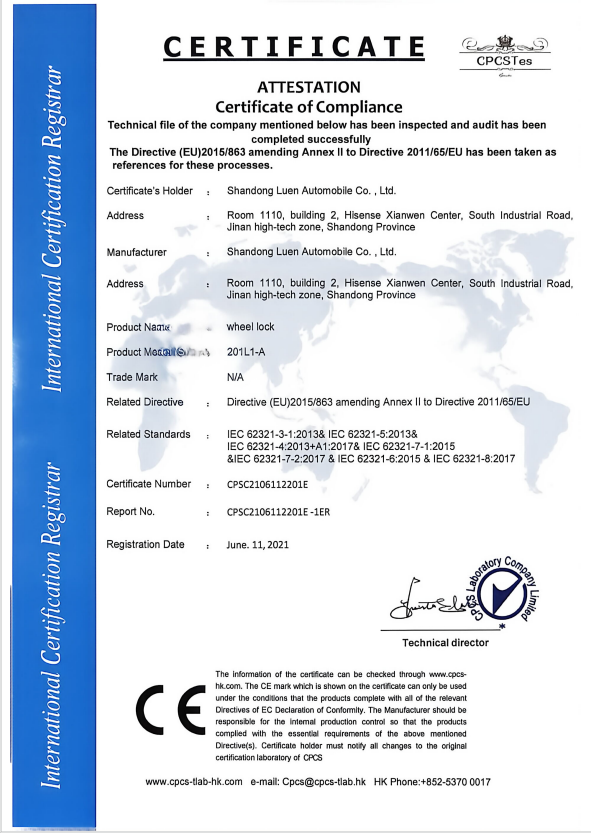
Certification documentation is part of the specification package — it should be requested at the same time as the spec sheet.
FAQ
What compliance checks should be confirmed before a trailer spec sheet is accepted?
Match the spec sheet against the regulation where the trailer will operate, not where it was built. In Europe, transport of dangerous goods in fuel and tank trailers requires ADR certification under the ADR Agreement. In the United States, trailers with a GVWR above 10,001 lbs require annual safety inspection under 49 CFR 396.17, administered by FMCSA. Then confirm that axle loads derived from rated payload and tare fall within the destination market's axle limits, and that any gas trailer specification states 20–25 MPa explicitly as working pressure rather than test pressure.
How do Q345B, Q550, 5083 aluminum and 37Mn steel affect what a truck trailer can actually carry?
Q345B is a general structural steel used for main beams and frames, with predictable weldability and tare. Q550 is a higher-strength structural steel: thinner sections can lower tare and therefore raise payload at a fixed GVW, but it requires controlled welding procedures. 5083 aluminum reduces body weight and improves corrosion resistance in tank service, but is not an abrasion-resistant substitute for rock and scrap duty. 37Mn steel is a seamless pressure-vessel steel used for CNG tube trailers operating at 20–25 MPa. Material choice therefore moves payload, durability and pressure capability — not only unit cost.
How much more should a buyer expect to pay for a factory-integrated trailer than for a low-bid workshop build?
The price position quoted for a vertically integrated manufacturer such as Luen Auto is 5–15% above the lowest-bid workshop in the same region. That difference is attributable to parts continuity from self-manufactured Luheng axles and suspensions, warranty honored by a stable legal entity, and batch consistency supported by 3C certification and complete testing equipment. For a fleet calculated over a five- to ten-year service life, the 5–15% should be weighed against parts availability and total cost of ownership rather than against the invoice alone.
What are the minimum order quantity, payment terms and acceptance criteria for a first trailer order?
For Luen Auto, MOQ is 1 unit, delivery terms are FOB or CIF, the acceptance criterion is a pre-shipment test, and payment terms are TT 30/70. For a first order, the pre-shipment test is the practical checkpoint: it is where deck height, axle load distribution, tank volume and pressure documentation are confirmed before shipment, and it should be supported by photo records per shipment under the documented packaging and delivery SOP.
How do you choose a long-term lowbed semi trailer supply partner in China?
Long-term supply rests on four verifiable conditions rather than on price. First, parts continuity: a manufacturer that builds its own axles and suspensions — Luen Auto's Luheng axle brand, for example — can supply authentic components across the trailer's service life instead of third-party parts that may be discontinued. Second, warranty held by a stable legal entity, which protects the buyer if a workshop closes. Third, documented export packaging: anti-rust wax coating before shipping, semi-knocked-down (SKD) packing for large trailers, fumigation-free plywood crates for parts, and photo records per shipment. Fourth, consistent batch quality supported by 3C certification and complete testing equipment. Buyers evaluating a long-term lowbed supply partner can review current specifications and request a documentation review through luen-trailertruck.com.
Conclusion
Four figures carry most of the risk in a truck trailer purchase. Axle load determines whether the payload is legal. Deck height determines whether the route and the site accept the trailer at all. Tank volume determines how many real trips a duty cycle produces once usable discharge is separated from geometric volume. Pressure rating determines whether a gas trailer's documentation is complete or ambiguous.
Material grade sits underneath all four. Q345B and Q550 structural steel set what the chassis can do at a given tare; 5083 aluminum trades abrasion resistance for weight and corrosion performance; 37Mn steel makes 20–25 MPa working pressure achievable in the first place. A spec sheet that separates these layers is a purchasing instrument. One that blends them is a sales document.
The disciplined reading order is fixed: rated GVW and tare, then axle load, then deck height with its load condition, then overall dimensions against the site, then volume basis, then working pressure against test pressure, then material against duty cycle. Confirmed in that order, a trailer specification becomes something a factory can be held to — and something a fleet can plan around for years rather than for one delivery.
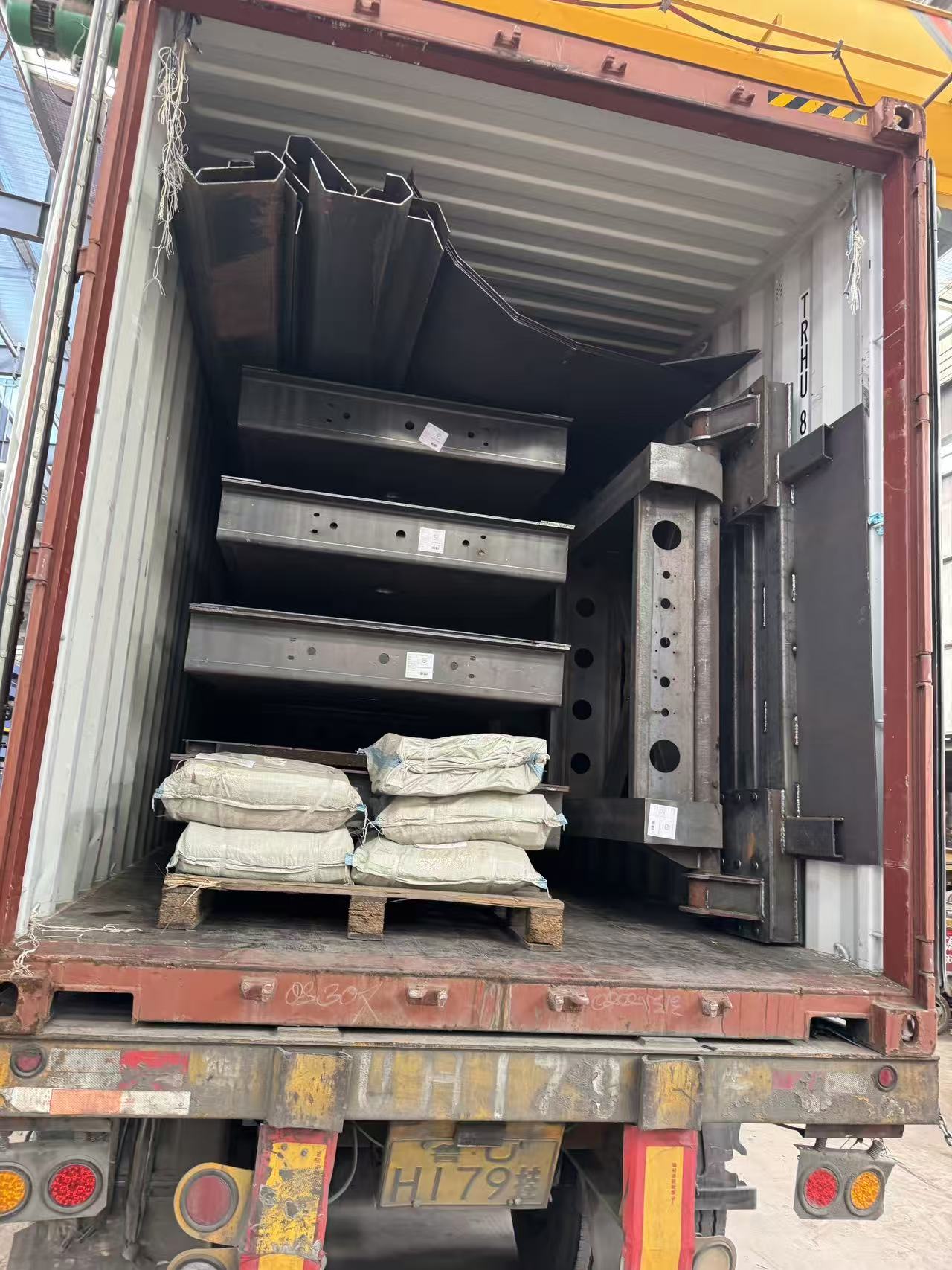
From agreed specification to shipped unit: documented packaging, photo records and pre-shipment testing close the gap.
Next Step: Review the Specification Before You Commit
Luen Auto publishes its full trailer and truck range in the current product catalog, including lowbed, flatbed, dump, skeleton and van semi trailers and fuel, dust and CNG tank trailers.
Download the catalog: LUEN Auto Product Catalog (PDF)
Request a spec review or quotation:
William Lee — luengroup@lhaxle.com
Tel / WhatsApp: +86 17686798823 — start a WhatsApp inquiry
Xuji Industrial Park, Liangshan County, Jining City, Shandong Province, China
Have Questions or Need More Details?
Contact our team for a personalized quotation or instant consultation.
Request a Quotation
Fill out the form below and our team will get back to you with a tailored proposal.
WhatsApp Direct Chat
Prefer to chat in real-time? Message us on WhatsApp for instant assistance & quick answers.
- Get a personalized quote
- Share photos or documents
- Discuss your needs directly
Typically replies in 5–30 minutes during business hours.