Edge Wave in Thin Coils: Fixing Inconsistent Feed with Precision Leveling
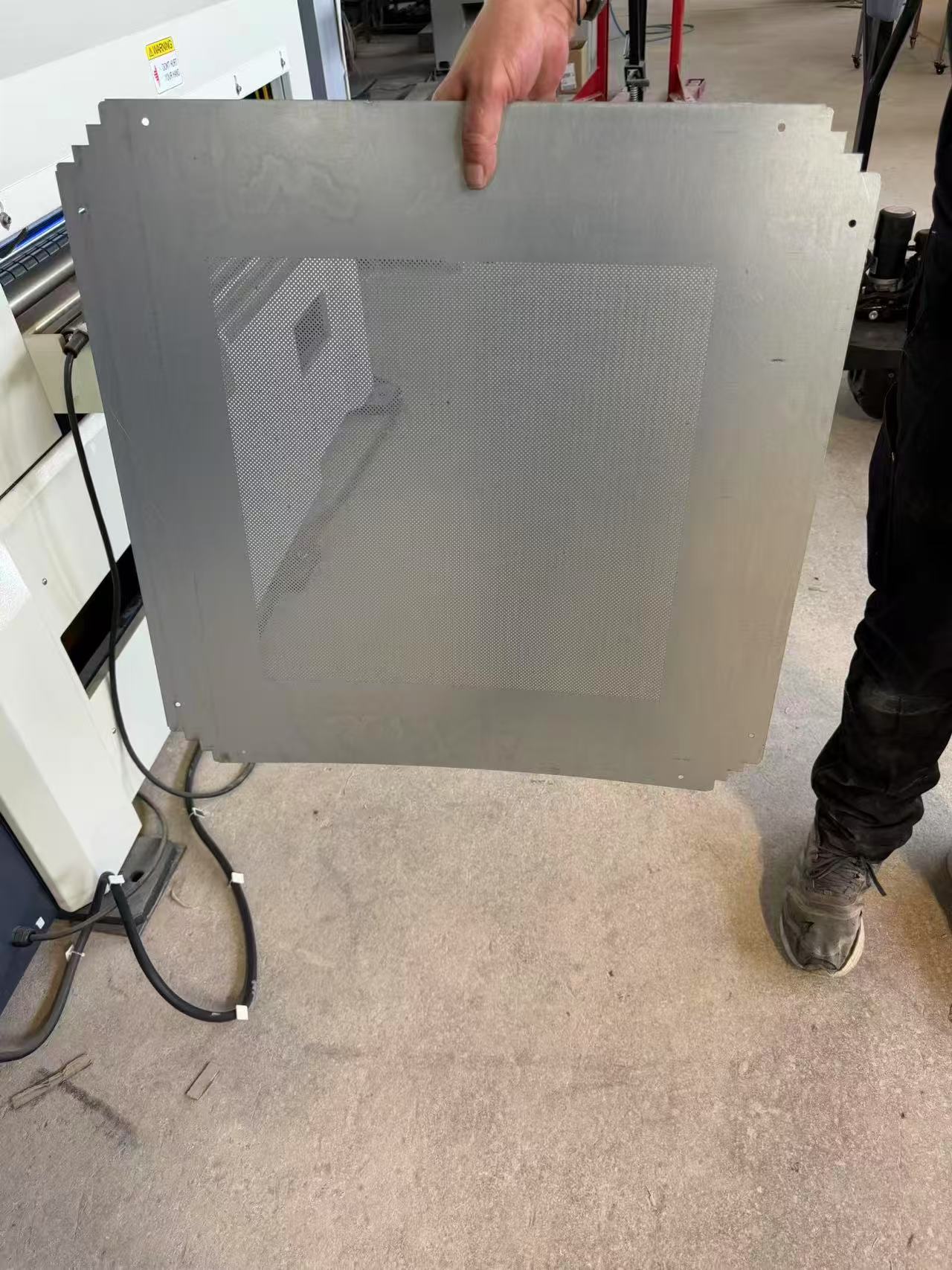
The short answer: when a thin-gauge stamping line feeds inconsistently, the root cause is usually a flatness problem upstream of the feed rolls, not a fault in the feed rolls themselves. Edge wave — surplus strip length at one or both edges that buckles out of plane — has to be removed before the material reaches the die. The dependable way to remove it is a two-stage leveling sequence: a Two-high Leveler / Rough Leveler takes out the gross shape error, then a CNC Leveler finishes with tight-tolerance passes that stabilise feed length.
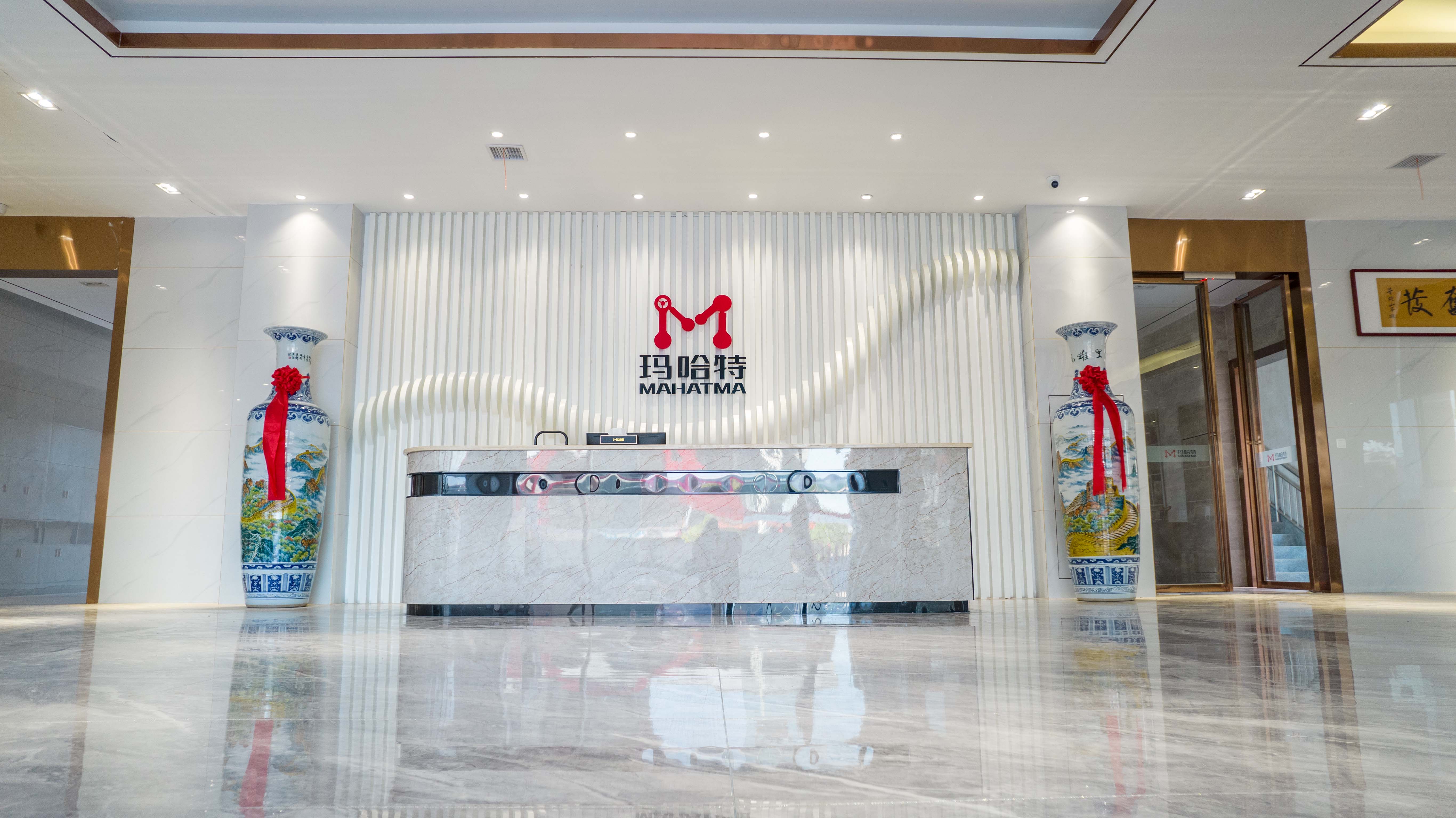
MAHATMA Leveler is the leveling equipment brand of Guangdong MAHATMA Intelligent Equipment Co., Ltd., a manufacturer headquartered in Dongguan, Guangdong Province, China, that designs and builds sheet metal leveling machines, CNC leveling machines, hydraulic leveling machines, straightening machines, cut-to-length lines and uncoiling leveling lines. Both stages described in this article sit inside that product range, which matters in practice: the rough pass and the precision pass can be specified as one coordinated package instead of being assembled from two suppliers who have never seen each other's machine.
What Edge Wave Actually Does to a Feed Line
Edge wave is a flatness defect in which the strip edge is longer, in the rolling direction, than the strip centre. The extra length has nowhere to go, so it buckles out of plane as a repeating wave along one or both edges. A coil can measure perfectly flat across the middle and still be unusable, because the defect lives in the outer 20–50 mm of width — exactly the band that carries the strip through guides, feed rolls and the die.
Thin-gauge material amplifies the problem for a simple structural reason: bending stiffness falls sharply as thickness decreases, so a small length differential at the edge produces a visible wave on 0.5 mm strip that would be invisible on 5 mm plate. The same edge-extension percentage that a plate leveler can absorb as a light crown becomes a clearly visible wave on thin coil.
The feed consequence follows from that geometry. A wavy edge does not present a constant path length to the feed rolls. As the strip passes through the roll nip the wave is temporarily flattened, storing length; as the strip exits, the wave re-forms and releases that length. The result is a feed stroke that varies from cycle to cycle, material that drifts laterally against the guides, and a die that receives the blank slightly off position. On progressive tooling the symptom usually appears first as pilot pin wear, uneven burr height on one side, or intermittent misfeeds that disappear when the operator slows the line down.
Why Thin Coils Arrive With Edge Wave
Edge wave is created before the coil reaches the stamping plant, and it is frequently amplified by handling inside the plant. Cold rolling introduces differential elongation between the strip centre and edges. Slitting adds its own contribution: knife clearance, knife condition and tension distribution between the slitter and the recoiler all influence how evenly the strip is rewound, and a poorly tensioned rewind can convert a marginal shape into a rejected coil. Uncoiling then imposes a further set of bending and straightening events at the coil car, peeler and entry pinch rolls.
This is why the problem is structural rather than occasional. The equipment market reflects how widely the industry has moved toward controlled, repeatable processing. CNC technology accounted for 85.7% of the machine tools market in 2025, according to Grand View Research, and the global metal forming equipment market — the category that contains leveling machines — was valued at USD 45.8 billion in 2025 by Dataintelo, with Asia Pacific holding a 42.5% revenue share. Downstream demand is concentrated in sectors that are sensitive to flatness: Fortune Business Insights puts the automotive segment at 41.37% of the sheet metal processing equipment market in 2026.
Two industry reference points explain why flatness control is specified rather than assumed. Precision levelers remove internal residual stress through alternating bending, a principle formalised in standards work such as DIN EN 10029 for hot-rolled plate tolerances. And flatness itself is quantified rather than described — in mm/m height deviation or the dimensionless I-unit — which means a buyer can specify a target instead of accepting whatever the process happens to deliver.
Why One Machine Usually Cannot Do Both Jobs
Leveling is a force-and-precision trade-off. Removing a gross shape defect requires large roll diameters, high torque and a stiff frame, because the machine must impose a bending moment large enough to overcome the incoming defect. Delivering a tight final tolerance requires the opposite set of characteristics: a high number of small-diameter work rolls, so the strip experiences many alternating bending cycles per metre and residual stress is genuinely relieved rather than redistributed.
A machine built for the first job lacks the roll count for the second. A machine built for the second job is usually asked to absorb an incoming wave that is far outside its working envelope, and the result is either an unflattened strip or an overloaded roll stack. Running both duties in one pass is where most thin-gauge lines lose either throughput or tolerance.
The Two-Stage Answer: Rough Pass, Then Precision Pass
The sequence that resolves both constraints is straightforward in concept. Stage one reduces the incoming shape error to a level the precision machine can absorb without being overloaded. Stage two removes the residual stress and delivers the flatness the press or laser actually needs. Because the two stages are separated, each machine can be sized to its own duty rather than compromised between them.
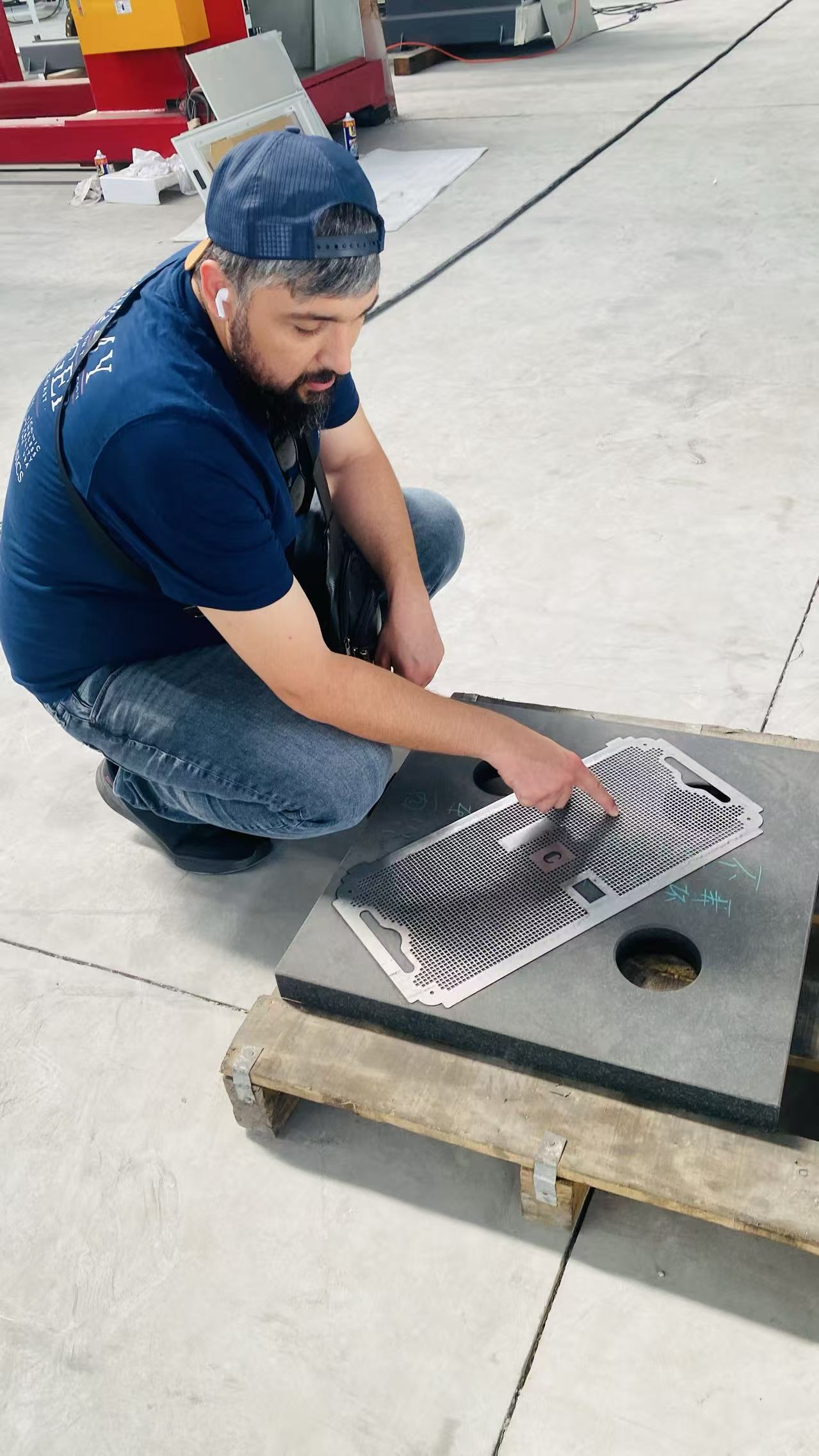
Stage 1 — Two-high Leveler / Rough Leveler (VST Series)
The Two-high Leveler / Rough Leveler is the entry stage. Its job is to convert a coil with gross edge wave, coil set and crossbow into strip that is dimensionally stable enough to be presented to a precision machine. It is deliberately built with fewer, larger rolls and heavier structure, because the work is dominated by bending moment rather than by fine roll-gap resolution.
For thin-gauge work, the relevant model in the MAHATMA range is the VST42 Series: width 200–800 mm, rated thickness 0.4–3.0 mm, maximum 6.0 mm, 19 rolls, line speed 0–10 m/min. Wider strip moves to the VST70 Series (width 400–1300 mm, rated 1.0–6.0 mm, maximum 10.0 mm, 13 rolls), with the VST90 and VST120 Series covering progressively heavier sections up to a rated 10.0 mm and a maximum of 20.0 mm at widths to 1400 mm.
What the rough pass should not be asked to do is deliver the final print tolerance. Its roll count and roll diameter are sized for force, and the number of alternating bending cycles it can apply in a single pass is limited. Treating the rough leveler as the finishing machine is the most common specification error on thin-gauge lines: the visible wave disappears, the strip looks acceptable on the floor, and the residual stress reasserts itself after blanking or laser cutting.
Stage 2 — CNC Leveler and CNC Leveler / Servo Leveler (MHTM and MHTW Series)
The precision pass is where flatness and feed stability are actually created. The CNC Leveler range applies a high roll count with CNC-controlled roll gap and roll position, so the bending curve can be set precisely and repeated exactly on the next coil rather than re-found by trial and error.
For thin material the relevant models are the MHTM10 and MHTM15 Series — width 200–300 mm and 200–600 mm respectively, rated thickness from 0.03 mm and 0.08 mm, 25 rolls each — and the MHTM20 and MHTM30 Series, which cover the mainstream stamping band with 23 and 21 rolls, widths to 1300 mm and 1600 mm, and rated thickness of 0.3–1.2 mm and 0.5–2.0 mm.
Where the thinnest gauges dominate, the CNC Leveler / Servo Leveler range is the more specialised option. The MHTW15 Series runs 33 rolls over a 300–600 mm width at a rated 0.08–1.0 mm, and the MHTW20 and MHTW30 Series carry 23 rolls across 1300 mm and 1600 mm widths at rated thicknesses of 0.3–1.2 mm and 0.5–2.0 mm. The higher roll count is the point: more rolls mean more alternating bending cycles and more complete stress relief in a single pass, which is precisely what prevents a flattened edge from springing back after the die.
Roll material is a specification choice rather than a fixed item. MAHATMA builds work rolls in materials including Cr12MoV and SKD11, selected against the strip being processed. Roll width, roll diameter, rated thickness range, control system integration and automated loading or unloading are all configured per order, which allows the precision stage to be matched to the rough stage instead of being bought as a catalogue item.
Why the Sequence Holds Up in Production
A two-stage sequence survives production pressure because each stage has one job and one setting. The rough pass runs at a fixed setting for the coil family being processed; the precision pass runs a stored recipe. When a new coil arrives with a different yield strength, the operator adjusts the precision recipe, not the whole line. That separation is also what makes the arrangement compatible with automated lines: the CNC stage stores and recalls parameters instead of depending on operator feel.
MAHATMA verifies the finished machine rather than the drawing. Quality control includes laser 3D online flatness detection, ultrasonic flaw detection on rollers, hardness uniformity testing, and a full-load trial run before shipment. Those checks matter most on thin-gauge machines, where a hardness variation across the roll face or an internal roll defect shows up as a periodic marking on 0.5 mm strip long before it becomes visible on thicker material.
Step-by-Step: Setting Up a Two-Stage Sequence
The engineering sequence below is the practical order of work, from material data to a running line. It is written for a stamping or laser-blanking operation moving from evaluation into execution.
Step 1 — Characterise the coil, not the catalogue
Record the thickness minimum and maximum, the width range, the material grade and yield strength, the incoming flatness condition, and the flatness target expressed in mm/m or I-units. Leveling force depends on thickness and yield strength together, so a rated thickness taken from a table is a starting point, not a conclusion. Material grade and target should travel with the enquiry.
Step 2 — Size the rough pass to the incoming defect
Select the rough leveler so that the worst incoming coil still falls inside its working range — not the average coil. On thin-gauge strip the VST42 Series covers a rated 0.4–3.0 mm at widths to 800 mm; wider or heavier strip moves up the VST range. The objective at this stage is a stable, wave-free-enough strip, not a tolerance certificate.
Step 3 — Size the precision pass to the target
Select the CNC or servo-CNC model by thickness band, width and roll count. Thin material benefits from the higher roll counts in the MHTM15, MHTM20 and MHTW15 to MHTW30 models. If the strip is a mirror-finish or coated surface, roll diameter and surface condition become a constraint in their own right, and the supplier should be told before the roll set is fixed.
Step 4 — Establish and store the recipe
Set roll gap, roll inclination and line speed on the precision machine, verify flatness, then store the verified setting as a recipe. Recipe storage is what converts a one-off success into repeatable output, and it is the reason a CNC stage is worth having in a high-mix plant.
Step 5 — Verify with measurement, then hand off to the line
Confirm flatness with measurement — laser 3D online inspection where the machine is so equipped, or offline measurement of cut samples — and only then release the strip to the press or laser. If the leveler is being integrated into an uncoiling leveling line, cut-to-length line or flying shear line, confirm the interface at this stage: line speed, loop control and discharge sequencing all affect whether the flatness achieved in the leveler survives to the end of the line.
Step 6 — Control the rolls as a maintained asset
Roll condition determines whether the flatness achieved at commissioning is still achievable a year later. Roll inspection records, cleanliness discipline and hardness verification belong in the maintenance plan from day one, particularly on thin-gauge machines where roll marking transfers directly to the part surface.
Where the Two-Stage Sequence Pays Off
The arrangement is not universal, but the applications where it earns its place share a common trait: the material is thin enough that residual stress, not visible shape, is the limiting factor.
- Progressive and transfer stamping of thin-gauge parts. Feed length becomes consistent once the edge wave is removed, which protects pilot pins, guides and die clearance. Automotive work is the largest single demand pool here — 41.37% of sheet metal processing equipment demand in 2026, per Fortune Business Insights.
- Laser cutting and laser blanking. A wavy edge changes the effective focus height and disturbs nesting accuracy across the sheet. Flattening before the laser is cheaper than sorting scrap afterwards, and pre-cutting flattening is the standard reason thin-gauge shops buy a precision leveler at all.
- Uncoiling leveling lines and cut-to-length lines. Where the leveler is part of a line, the rough stage protects the precision stage from overload and the precision stage protects the line's accuracy claim. MAHATMA builds the surrounding line equipment as well — the UC-2x2000 Slitting Line for 0.3–2.0 mm material at widths to 1800 mm, the TD-2x2000 Cut-to-Length Line for 0.2–2 mm, and the MF-3 Flying Shear Line for 0.3–3.0 mm — so the leveling stages can be specified together with the line they feed.
- Thin precision sheet for electronics, medical devices and appliance panels. Here the MHTW15 Series with 33 rolls over a 300–600 mm width at a rated 0.08–1.0 mm is the relevant class of machine, because the requirement is stress relief at very low thickness rather than force.
Machine Comparison: Rough Pass and Precision Pass Options
The table below lists the models relevant to thin and medium-gauge strip, using published machine specifications only. Reading it as a two-column decision — rough stage on the left, precision stage on the right — is the intended use.
| Stage | MAHATMA series | Rated thickness | Max thickness | Width range | Rolls | Role in the sequence |
|---|---|---|---|---|---|---|
| Rough | Two-high Leveler / Rough Leveler — VST42 Series | 0.4–3.0 mm | 6.0 mm | 200–800 mm | 19 | Removes gross edge wave, coil set and crossbow on thin strip |
| Rough | Two-high Leveler / Rough Leveler — VST70 Series | 1.0–6.0 mm | 10.0 mm | 400–1300 mm | 13 | Wider strip, heavier incoming shape error |
| Precision | CNC Leveler — MHTM15 Series | 0.08–1.0 mm | 2.0 mm | 200–600 mm | 25 | High roll count for very thin, narrow strip |
| Precision | CNC Leveler — MHTM20 Series | 0.3–1.2 mm | 3.0 mm | 400–1300 mm | 23 | Mainstream thin-gauge stamping band |
| Precision | CNC Leveler — MHTM30 Series | 0.5–2.0 mm | 4.0 mm | 400–1600 mm | 21 | Wider thin-gauge strip, higher throughput |
| Precision | CNC Leveler / Servo Leveler — MHTW15 Series | 0.08–1.0 mm | 2.0 mm | 300–600 mm | 33 | Maximum alternating bending cycles at the thinnest gauges |
| Precision | CNC Leveler / Servo Leveler — MHTW30 Series | 0.5–2.0 mm | 4.0 mm | 400–1600 mm | 23 | Servo-CNC precision pass for wider thin strip |
All models listed run at a line speed of 0–10 m/min. The practical selection question is not which machine is stronger, but where the boundary sits between the incoming defect and the target tolerance — and that boundary is set by roll count and roll diameter, not by tonnage alone.
What to Specify Before You Place an Order
Thin-gauge leveling projects fail on specification gaps more often than on machine capability. The following inputs should be settled before a machine configuration is fixed:
- Thickness minimum and maximum, and the yield strength of each material in the mix — leveling force is a function of both.
- Strip width range, and whether the line must handle the full coil width or a trimmed width.
- Incoming flatness condition and the target expressed in mm/m or I-units, not as a verbal description.
- Surface requirements — mirror-finish, coated or sensitive surfaces constrain roll diameter and roll surface condition.
- Line context: standalone machine, or a stage inside an uncoiling leveling line, cut-to-length line or flying shear line, with the interface and line speed stated.
- Control and data requirements: CNC recipe storage as standard, MES/ERP integration and automated loading or unloading where the plant is moving that way.
- Destination grid and compliance requirements, confirmed at order rather than on arrival.
On the compliance side, MAHATMA holds a Machinery Directive Attestation of Conformity — certificate M.2025.206.C113032, issued by UDEM International Certification Auditing Training Centre, valid from 16 January 2025 to 15 January 2030, assessed against EN ISO 12100:2010, EN ISO 16090-1:2020, EN ISO 16090-1:2022, EN ISO 16092-2:2020 and EN 60204-1:2018, covering hydraulic precision leveling machines for the European market. The quality management system is certified to GB/T19001-2016 / ISO 9001:2015 under certificate 62825Q9729R0M, issued by Zhongtian Hongtu International Certification Co., Ltd., valid from 27 May 2025 to 26 May 2028, with a scope covering the design and assembly of high-precision leveling machines, uncoiler laser blanking lines and automatic shearing lines. Buyers should always confirm which declaration applies to the specific model and destination before final payment.

FAQ
1. Does a leveling machine for thin-gauge coil need CE marking to enter the EU, and what documentation should I request?
Yes. Industrial machinery placed on the EU market must carry CE marking, and the buyer should receive the supporting documentation rather than a logo on the nameplate. MAHATMA holds a Machinery Directive Attestation of Conformity, certificate number M.2025.206.C113032, issued by UDEM International Certification Auditing Training Centre Industry and Trade Inc., valid from 16 January 2025 to 15 January 2030. The assessment standards listed on the certificate are EN ISO 12100:2010, EN ISO 16090-1:2020, EN ISO 16090-1:2022, EN ISO 16092-2:2020 and EN 60204-1:2018, and the stated scope is hydraulic precision leveling machines. Separately, the company's quality management system is certified to GB/T19001-2016 / ISO 9001:2015 under certificate 62825Q9729R0M, valid from 27 May 2025 to 26 May 2028. Because certification scope is model-specific, confirm the applicable declaration for the exact machine and destination market before final payment.
2. What flatness can a precision leveler realistically hold on thin sheet?
Precision configurations reach flatness down to ±0.05 mm, and typical production results sit in the 0.05–0.20 mm/m² range, depending on the machine, the material and the incoming coil condition. Flatness is normally quantified in mm/m height deviation or in the dimensionless I-unit, which is why a target should be written that way rather than described as flat. Achievable flatness depends on material grade, thickness and the original coil condition, so the result should be confirmed on the buyer's own material before an order is placed. MAHATMA runs a free sample test: 1–2 metres of material or representative parts are leveled on the recommended machine, and a written flatness report with process parameters and a video of the run is returned within days.
3. What are the commercial terms — minimum order quantity, delivery terms and payment?
Minimum order quantity is 1 unit. Delivery terms are FOB, CIF or DAP, depending on the destination and the buyer's preference. Payment terms are 30% deposit with 70% final payment, and goods are dispatched after the balance is settled. Acceptance is based on a pre-shipment test, so the machine is verified at the factory before it is crated — which is the point at which flatness, running behaviour and control settings can still be corrected without a service visit.
4. Can I test my own coil on the machine before committing to a purchase?
Yes, and the sample test is free. Send 1–2 metres of material, or representative finished parts, together with the material grade, thickness range and the flatness target you need to hit. MAHATMA levels the material on the recommended machine and returns a written test report with measured flatness data, the process parameters used, and a video of the leveling run. The test should use the worst-condition material in the coil family, not the best, because the purpose is to establish the limit of the machine rather than to confirm a favourable sample. The buyer covers shipping of the material; the test itself and the resulting machine proposal carry no charge.
5. What is the lead time, and how is the machine verified before it ships?
Standard lead time is 45 days, supported by a monthly production capacity of 50 units. Before shipment, each machine goes through laser 3D online flatness detection, ultrasonic flaw detection on the rollers, hardness uniformity testing, and a full-load trial run. Export documentation includes the Declaration of Conformity where applicable, electrical and hydraulic schematics, English operating and maintenance manuals, the spare parts list, the factory test report and the warranty terms. After installation, support runs through 24/7 global technical assistance, overseas engineers available for commissioning, regional spare parts warehouses and free operator training — the practical details that determine whether a two-stage sequence still holds tolerance in year three.
Send the coil, not the question
A two-stage sequence is only worth specifying against real material data. Send 1–2 metres of your thinnest and worst-condition coil with your thickness range, width, material grade and flatness target, and MAHATMA will return a measured flatness report, the recommended rough-plus-precision configuration, and a machine proposal — without charge.
Download the full MAHATMA product brochure (PDF) or review the full machine range at leveling-mht.com.
Contact: Jack · Email mhtg@gdmht.com · Tel / WhatsApp +86 173-4062-1852
Mahatma Industrial Park, No. 3, Southwest Jiaying 1st Street, Shijie Town, Dongguan City, Guangdong Province, China
Conclusion
Inconsistent feed on a thin-gauge line is usually a flatness symptom, and edge wave is the most common cause. The defect is created upstream — in rolling, slitting and rewinding — and it survives because a single leveling machine is being asked to do two incompatible jobs at once. A Two-high Leveler / Rough Leveler supplies the bending moment to remove gross shape error; a CNC Leveler or CNC Leveler / Servo Leveler supplies the alternating bending cycles and repeatable settings that relieve residual stress and stabilise feed length.
For a buyer at the evaluation-to-execution stage, the sequence to follow is unglamorous and effective: measure the real incoming flatness, size the rough pass to the worst coil, size the precision pass by roll count and target tolerance rather than by tonnage, store the verified recipe, and confirm the result with a sample test on your own material. Get those five steps right and the feed problem stops being a feed problem — which is the only outcome the press, the laser and the die shop will notice.
Have Questions or Need More Details?
Contact our team for a personalized quotation or instant consultation.
Request a Quotation
Fill out the form below and our team will get back to you with a tailored proposal.
WhatsApp Direct Chat
Prefer to chat in real-time? Message us on WhatsApp for instant assistance & quick answers.
- Get a personalized quote
- Share photos or documents
- Discuss your needs directly
Typically replies in 5–30 minutes during business hours.