Leveling Machine Application Guide for Service Centers: Slitting, Cut-to-Length, and Laser Blanking
Short answer: a service center should select a leveling machine by the line it will sit in, not by the flatness figure printed on a brochure. Slitting lines call for levelers with small-diameter, dense rolls that protect narrow strip surfaces; cut-to-length lines call for stable, repeatable roll gap control across the full thickness band running ahead of the shear; laser blanking lines call for genuine internal stress relief, because a blank that looks flat on the stack can distort after the laser cuts it. MAHATMA Leveler builds four architectures that map onto these workflows — two-high/rough, four-high/plate, CNC/servo, and hydraulic — and the right one is the architecture whose envelope matches your coil, your measurable flatness target, and your integration requirements such as MES/ERP.
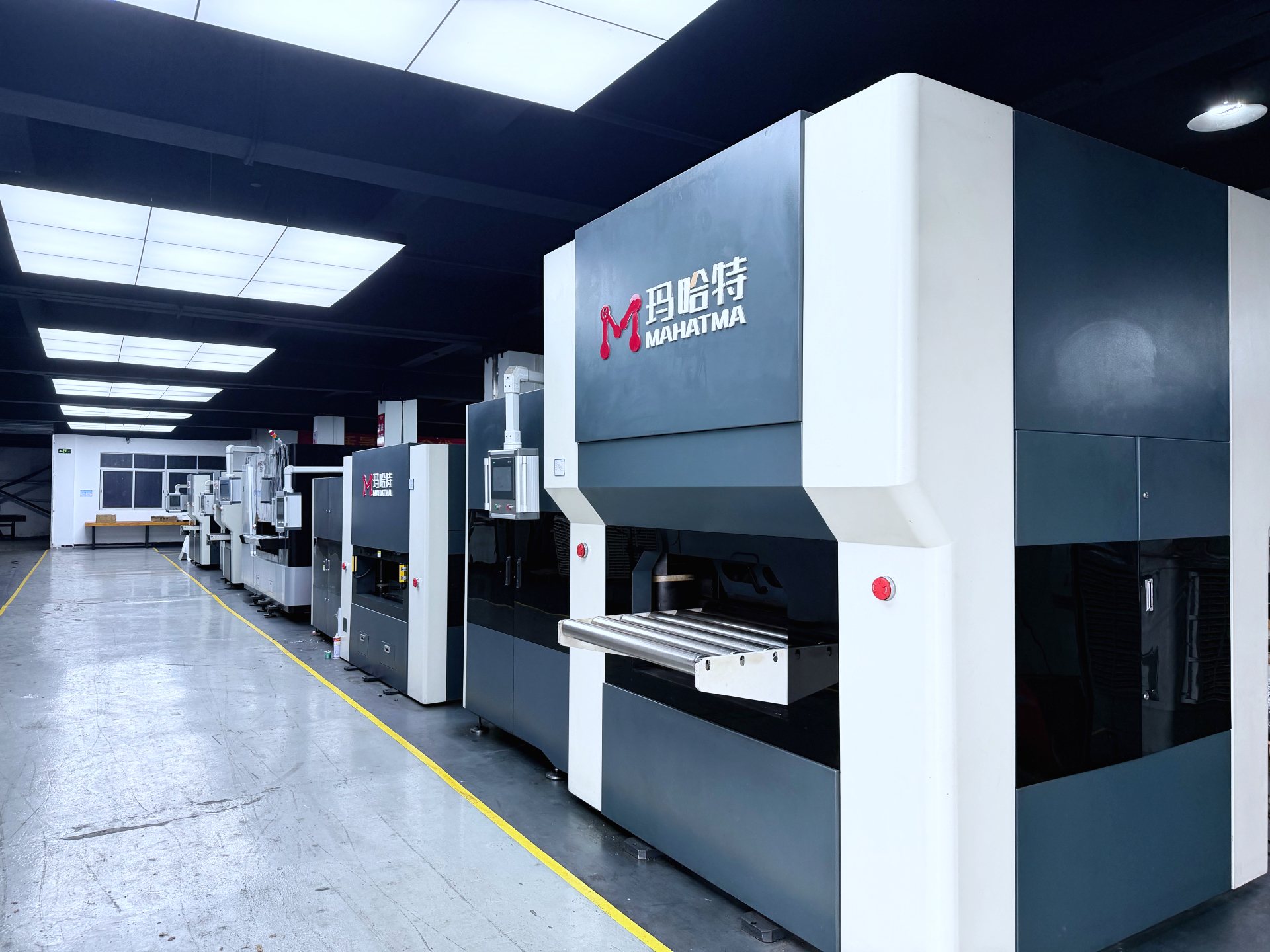
MAHATMA product demonstration area — leveling machines configured for service center line workflows.
Guangdong MAHATMA Intelligent Equipment Co., Ltd. (MAHATMA Leveler) is a Dongguan-based manufacturer founded in 2008 that designs and builds sheet metal leveling machines, CNC leveling machines, hydraulic leveling machines, straightening machines, cut-to-length equipment, and uncoiling-leveling-slitting and uncoiling-leveling-flying-shear lines. Its equipment is exported to over 100 countries and regions, supported by 28 overseas marketing and service networks. More at leveling-mht.com.
Why service center leveler projects go wrong at the selection stage
Most disappointing leveler installations are not badly built machines. They are machines specified against the wrong reference point. Six issues account for most of the mismatch:
- A flatness figure is used instead of a line function. A service center that buys a precision leveler without deciding whether the sheet must stay flat after laser cutting or simply look flat after shearing may pay for precision it cannot use — or skip the stress relief it actually needs.
- Rated capacity is read off a mild-steel baseline. Published thickness ranges are commonly rated on Q235 / 235 MPa material. High-strength steel, stainless, aluminum and titanium change the leveling force required, so the rated range has to be recalculated rather than copied.
- One machine is expected to cover thin and thick. A machine optimized for thick plate cannot level thin sheet precisely, and the reverse is equally true. A very wide envelope usually resolves into either the model with the best overlap or a two-machine plan.
- Narrow slitted strip is treated like wide sheet. Strip produced on a slitting line is more surface-sensitive; small-diameter dense rolls are used to prevent surface indentation, and a dust removal system may be required where surface quality matters.
- Changeover time is left out of the calculation. In a high-mix service center, setup time — not nominal line speed — decides real output.
- Integration is discussed after the purchase order. Part envelope, takt target and the existing line layout need to be on the table early if MES/ERP interfaces and automation modules such as loading carts, conveyors, robots, vision inspection or AGVs are in scope.
Industry background: where the line investment is coming from
The demand behind leveler upgrades is not speculative. Several published figures frame the market that service centers are investing into:
- The global metal forming equipment market, which includes leveling and roll forming machines, is valued at USD 45.8 billion in 2025 (Dataintelo), and the metal forming machine tools market is projected to reach USD 64.85 billion by 2034 at a CAGR of 9.60% (Fortune Business Insights).
- Asia Pacific dominates metal forming equipment with a 42.5% revenue share in 2025 (Dataintelo), and the region's sheet metal processing equipment market generated USD 18.36 billion in 2025 (Fortune Business Insights).
- The cut-to-length line system market was estimated at USD 3.42 billion in 2024 (Market Research Future), while the cut-to-length machine market is projected to grow from USD 4.28 billion in 2026 to USD 5.94 billion by 2032 at a CAGR of 5.52% (ReportLinker).
- Automotive accounts for 41.37% of the sheet metal processing equipment market in 2026, and CNC technology represented 85.7% of the machine tools market in 2025 (Grand View Research) — the control layer, not just the roll stack, is now the differentiator.
- China's exports of metalworking machine parts increased 20.6% year-on-year in June 2026, with major destinations including Japan, Russia, USA, India and Vietnam (OEC).
How to read market numbers: published estimates vary with scope. The cut-to-length line system market has been reported at both USD 3.42 billion (Market Research Future) and USD 2.8 billion (Verified Market Research), and metal forming growth forecasts range from 9.60% (Fortune Business Insights) to 5.2% (Dataintelo). Treat these as directional planning inputs, not as a single definitive figure.
On the technical side, precision leveling rests on alternating bending to eradicate internal residual stress, referenced against DIN EN 10029 for hot-rolled steel plate tolerances, with flatness quantified either as a dimensionless I-unit or as mm/m height deviation. For 0.6–4 mm plate run under continuous 24/7 load, heavy-duty leveling machines often use HRC60–64 hardened rollers to prevent deformation. These are the standard references a service center should use when converting a verbal flatness requirement into a number a supplier can be held to.
Matching the leveler architecture to the line
The four MAHATMA architectures are not four grades of the same machine. They solve different combinations of thickness, force, roll count and control, and each has a defined place in a service center.
1. Two-high / rough leveler (entry tier)
Entry-level 2/4-high machines are aimed at small workshops: simple structure, small footprint and easy maintenance, positioned in the economic tier. They fit small and medium sheet metal shops, hardware production, small-batch or low-frequency processing, and budget-limited workshops where the flatness target is modest and the material mix is narrow.
2. Four-high / plate leveler (VSH series)
The VSH four-high family covers the entry-to-general segment with multi-roll structures. Documented examples: VSH42 (width 400–800 mm, rated thickness 0.6–3.0 mm, max 5.0 mm, 19 rolls), VSH50 (width 400–1000 mm, rated 0.8–3.5 mm, max 6.0 mm, 19 rolls), VSH60 (width 400–800 mm, rated 1.0–6.0 mm, max 10.0 mm, 15 rolls) and VSH80 (width 400–800 mm, rated 2.0–8.0 mm, max 14.0 mm, 15 rolls). All run at 0–10 m/min and handle carbon steel, stainless steel, aluminum, copper and general metals. This is the architecture most commonly paired with a cut-to-length line in a small or medium shop where automation is minimal.
3. CNC / servo leveler (MHTW and MHTM series)
Servo-CNC levelers carry the precision and flexibility load. Documented ranges: MHTW15 (width 300–600 mm, rated 0.08–1.0 mm, max 2.0 mm, 33 rolls), MHTW50 (width 400–1600 mm, rated 0.8–4.0 mm, max 8.0 mm, 23 rolls), MHTW100 (width 600–2100 mm, rated 3.0–12.0 mm, max 20.0 mm, 19 rolls), MHTM10 (width 200–300 mm, rated 0.03–0.6 mm, max 1.0 mm, 25 rolls), MHTM50 (width 400–1700 mm, rated 0.8–4.0 mm, max 8.0 mm, 19 rolls) and MHTM200 (width 1000–3200 mm, rated 8.0–30.0 mm, max 40.0 mm, 19 rolls). Typical applications: precision sheet metal, 3C electronics, automotive, home appliances, new energy, laser cutting and medical devices.
4. Hydraulic leveler (MHTR series)
The MHTR servo-hydraulic family runs from MHTR30 (width 600–2100 mm, rated 0.5–3.0 mm, max 5.0 mm, 23 rolls) to MHTR400 (width 1300–4000 mm, rated 20.0–100.0 mm, max 120.0 mm, 9 rolls), with MHTR100 (width 600–3200 mm, rated 3.0–12.0 mm, max 30.0 mm, 15/19 rolls) as a mid-range example. Hydraulic drive maintains force under load variation, which is why this architecture is used for thick plate, high-strength steel and heavy structural work where welding deformation has to be removed before assembly.
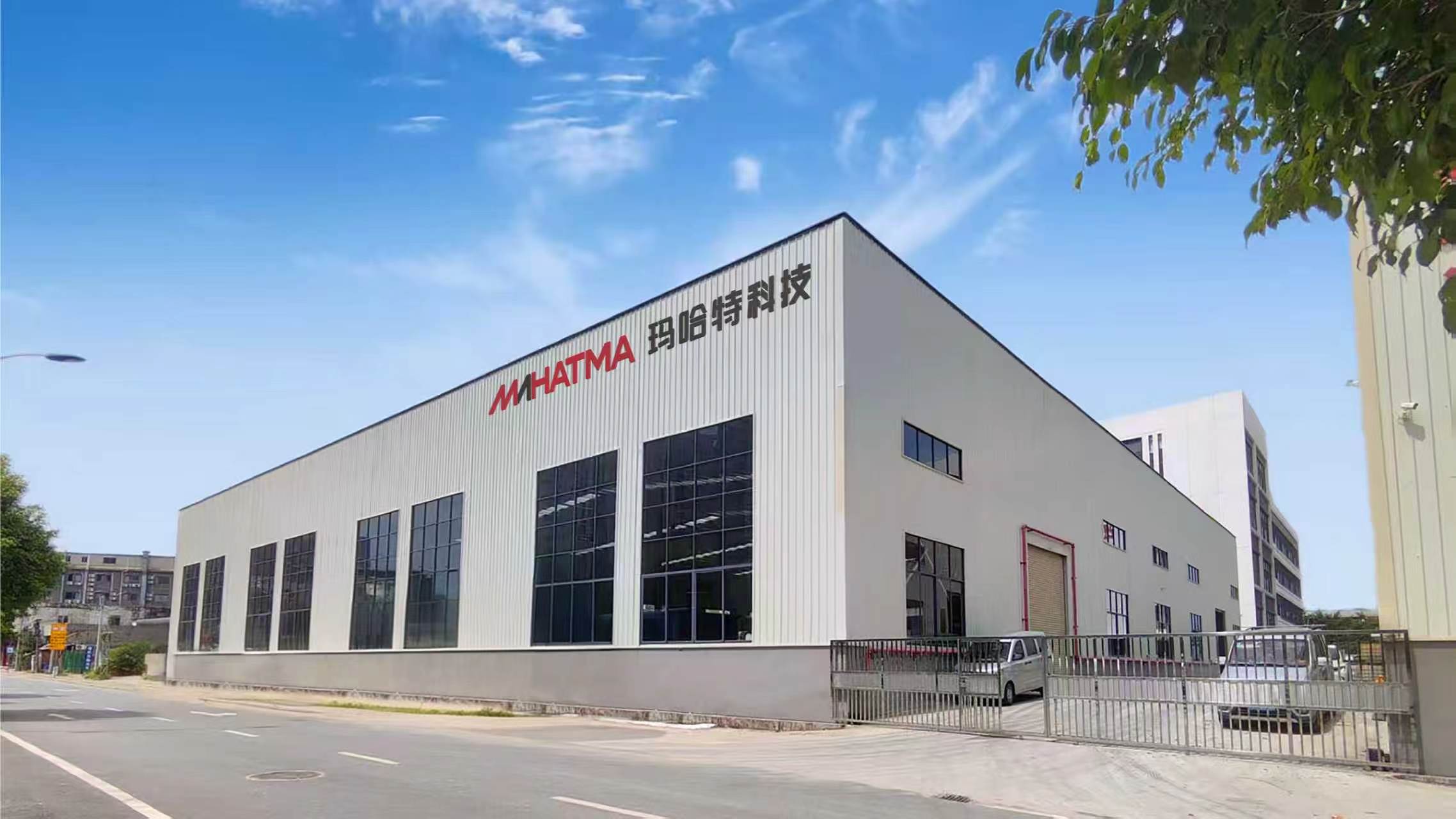
Mahatma Guangzhou manufacturing plant — line assembly and factory acceptance testing of leveling equipment.
What the control layer changes
Roll count and thickness range are only half of the decision. On MAHATMA's closed-loop servo platform, the system automatically identifies material thickness and adjusts roller gaps in real time using patented dynamic roll gap compensation, whereas traditional machines rely on manual adjustment. The documented performance gap against traditional mechanical and standard semi-automatic levelers is:
- Leveling flatness accuracy of ±0.01 mm versus a typical ±0.05 mm baseline;
- Setup / changeover time reduced from 30 minutes to 2 minutes;
- Stress elimination rate up to 96%, with welding defect rate reduced by 50%;
- Material scrap reduced from 5% to under 1%;
- Roughly 90% labor savings on machine adjustment and 30% higher overall production efficiency;
- Unplanned downtime reduced by 70% through predictive maintenance alerts;
- All-servo motor drive consuming 50%–70% less energy than traditional hydraulic systems, with dynamic power regulation under light load or idle conditions.
The operator layer matters for service centers running a mixed order book: a 15-inch multi-touch smart OS with one-key parameter setting and remote cloud diagnostics removes the dependence on a single experienced setup operator.
Line-by-line mapping
Slitting line (uncoiling — leveling — slitting). The leveler sits before the slitter, so it must deliver strip that is both straight and surface-clean. Where mark-free surfaces matter, small-diameter dense rolls are specified to prevent surface indentation, and a dust removal system may be required. Narrow, thin strip in the 0.03–1.2 mm band is normally handled by dense-roll CNC machines such as MHTW15 or the MHTM10–MHTM20 range.
Cut-to-length line. Here the leveler must deliver consistent thickness and flatness ahead of the shear; any residual curvature or stress carried into the shear shows up as length and squareness variation. Sheet and plate from 0.6–8.0 mm are handled by four-high VSH models, thin-to-medium gauges by MHTM/MHTW CNC models, and 3.0–100 mm plate by the MHTR hydraulic family. For 0.6–4 mm plate run continuously, HRC60–64 hardened rollers are specified to prevent deformation under load.
Laser blanking line. The requirement changes from surface flatness to genuine stress relief, because residual stress releases when the laser removes material and the blank distorts after cutting. That is why roll count and machine structure matter more than the cosmetic appearance of the coil: MAHATMA CNC models store proven stress-relief recipes, and MES/ERP connectivity is a standard feature of MAHATMA blanking lines, covering production data, traceability and order scheduling. Coil feeding, leveling, conveying and stacking modules can be engineered around an existing laser cutter rather than replacing it.
A six-step selection workflow for service centers
- Fix the line and the interface point. Decide whether the leveler is feeding a slitter, a shear, or a laser, and where coil feed, loop and threading sit. The physical interface usually constrains the machine more than the flatness spec does.
- Lock the material envelope. Record material types and grades, thickness minimum and maximum, width, and the required surface quality. Model ratings based on Q235 / 235 MPa have to be recalculated for high-strength steel, aluminum or titanium.
- Convert the flatness target into a measurable number. Express it in I-unit or mm/m, or against DIN EN 10029 tolerances for plate. A verbal target such as "very flat" cannot be tested or verified.
- Match architecture and roll configuration. Use roll count, roll diameter, drive type and control as the shortlist criteria, and check that the rated thickness band overlaps your production range rather than merely touching it.
- Define the data and automation layer early. Provide part envelope, takt target and current line layout so the integration plan — MES/ERP interfaces, loading carts, conveyors, robots, vision inspection, AGV — can be engineered from real inputs. The upgrade path is modular: a service center can start with a leveler and add feeding and stacking automation later, which is exactly how Zhucheng Group moved to a fully automated line.
- Verify on your own material before committing. This is the step that removes the largest purchase risk, and it is free.
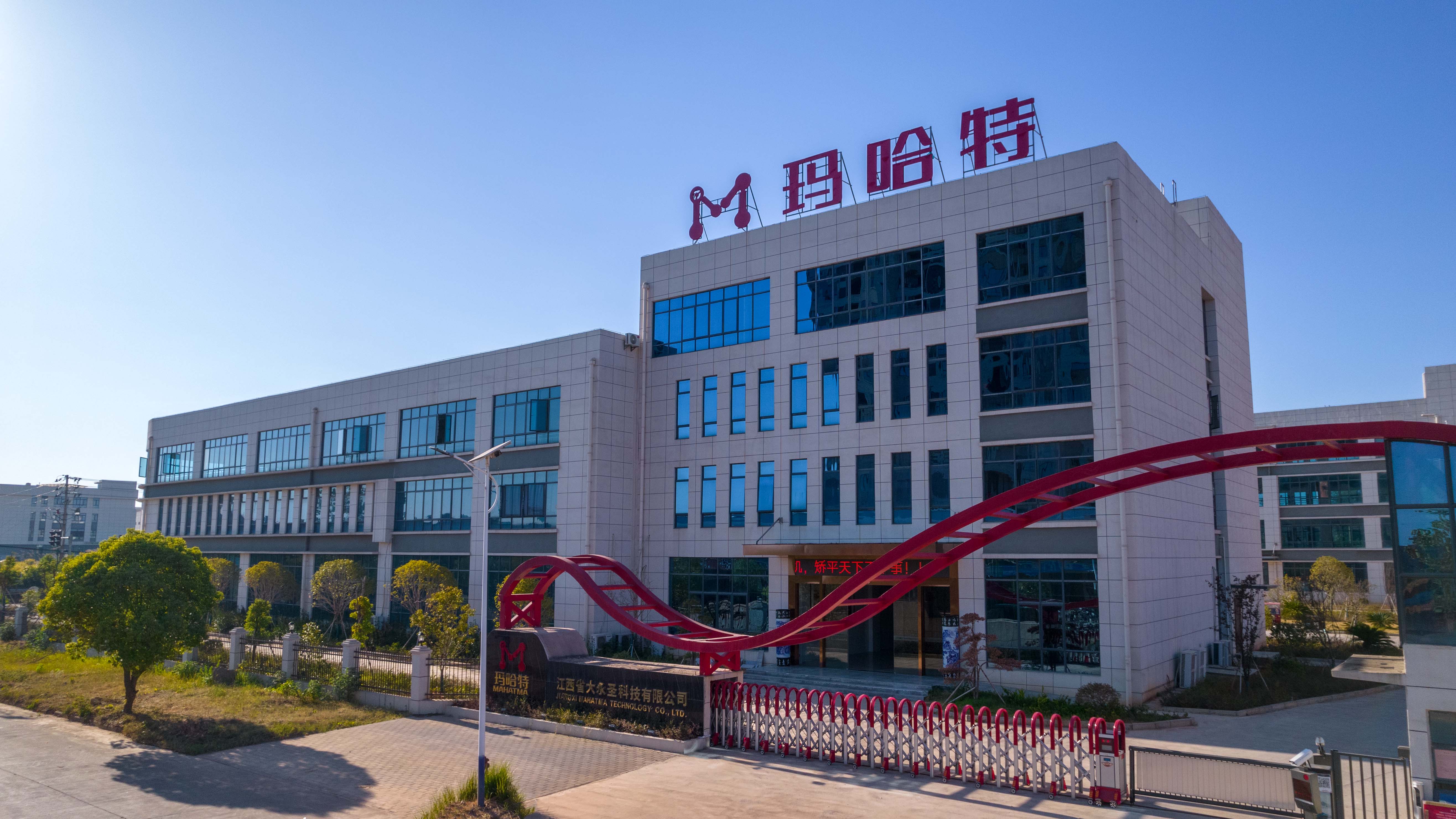
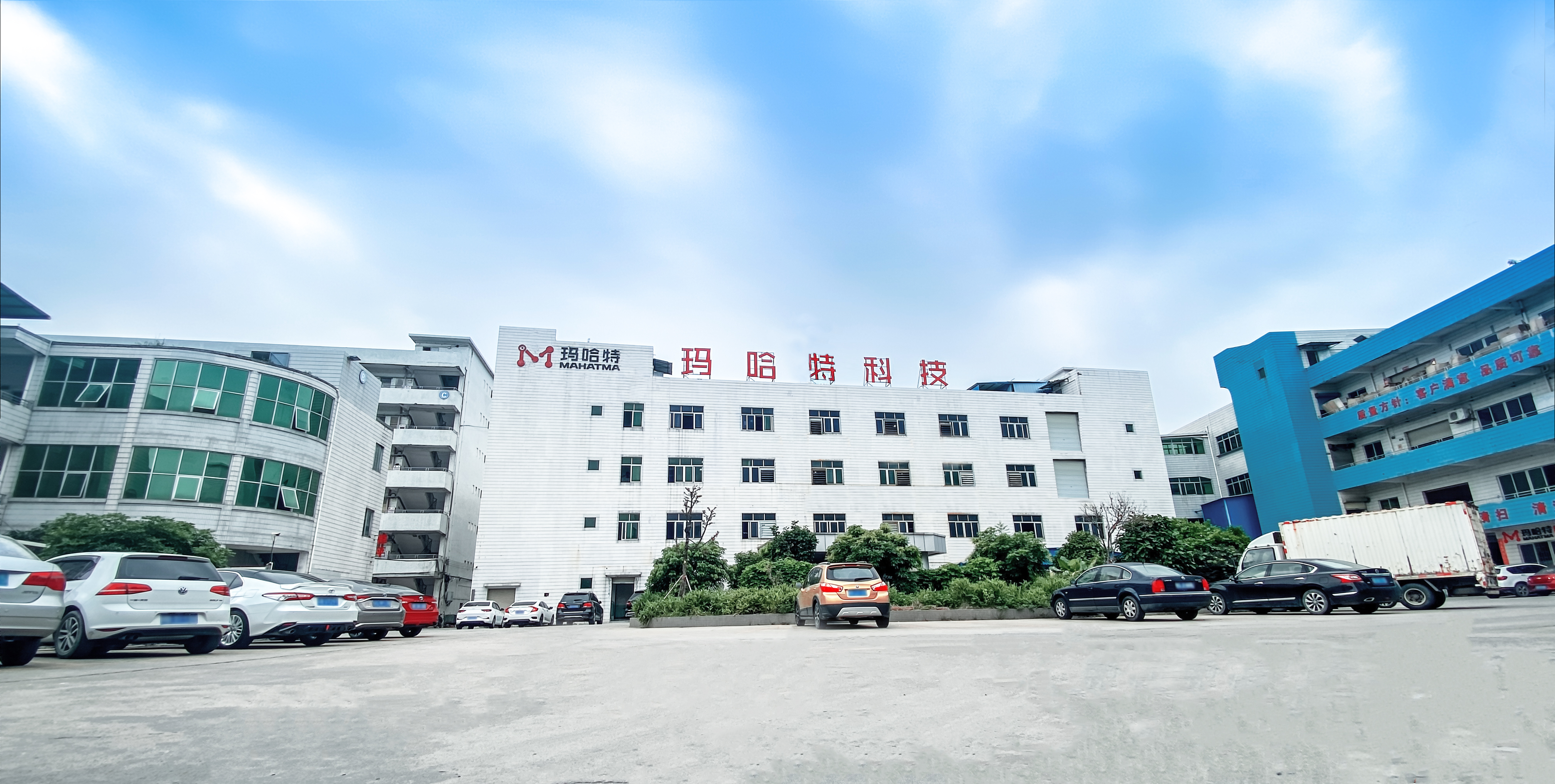
The Mahatma Jiangxi Intelligent Technology Co., Ltd. production base supports the manufacturing capacity behind line-level projects.
Use cases: how the mapping plays out in practice
A steel service center running a cut-to-length line for 4–12 mm plate
The correct starting point is a hydraulic MHTR configuration such as the MHTR100 (3.0–12.0 mm rated, up to 30.0 mm max, 15/19 rolls) rather than a thin-gauge CNC machine, because the plate has to leave the leveler flat enough for downstream shearing and assembly. Where the same center also runs thin material for a separate customer base, a second machine is usually more economical than one compromise machine.
A precision sheet metal and laser blanking service center at 0.5–3 mm
Here the driver is stress relief ahead of the laser, not cosmetics. CNC/servo machines in the MHTW30–MHTW50 class (0.5–4.0 mm rated, 23 rolls) deliver the stored stress-relief recipes and the 2-minute changeover that make a high-mix order book workable, and MES/ERP connectivity keeps traceability intact. A Jiangsu NEV parts manufacturer measured roughly 45% capacity gain after this type of upgrade.
A coil processor leveling narrow slitted strip
Surface protection dominates. Small-diameter dense rolls prevent indentation on aluminum, copper and stainless strip, and 33-roll configurations such as MHTW15 are used where thin, narrow material needs high roll density across a 300–600 mm width.
A heavy fabrication service center handling up to 100 mm
Thick plate leveling is a force problem. The MHTR260–MHTR400 range covers rated thickness from 10.0 mm up to 100.0 mm with 9–11 rolls, driven by servo-hydraulic systems that hold constant force as plate thickness and yield strength vary. The purpose is to eliminate internal stress before welding, not just to improve appearance.
Comparison table: MAHATMA leveler architectures
All figures below are published series specifications. Final sizing depends on material grade, width and flatness target, and should be confirmed by a sample test.
| Architecture | Example series | Rated thickness (mm) | Max (mm) | Rolls | Width (mm) | Typical service center fit |
|---|---|---|---|---|---|---|
| Two-high / rough (entry 2/4-high) | Entry 2/4-high tier | Model-dependent (four-high models in this class run 0.6–8.0) | Up to 14.0 on 15–19 roll models | 15–19 | 400–1000 | Small workshops, low-frequency processing, budget-limited shops |
| Four-high / plate leveler | VSH42, VSH50, VSH60, VSH80 | 0.6–8.0 | 5.0–14.0 | 15–19 | 400–1000 | Cut-to-length and general sheet work with minimal automation |
| CNC / servo leveler (servo-CNC) | MHTW15 – MHTW100 | 0.08–12.0 | 2.0–20.0 | 19–33 | 300–2100 | Laser blanking lines, precision sheet, high-mix production |
| CNC leveler (intelligent CNC) | MHTM10 – MHTM200 | 0.03–30.0 | 1.0–40.0 | 15/19–25 | 200–3200 | Thin-to-medium sheet, cabinets, auto parts, laser blanking |
| Hydraulic leveler | MHTR30 – MHTR400 | 0.5–100.0 | 5.0–120.0 | 9–23 | 600–4000 | Plate and heavy plate on cut-to-length lines, high-strength steel |
Decision rule: if the flatness requirement survives downstream processing (laser cutting, welding, forming), the deciding factor is roll count and stress-relief capability. If the requirement only has to look right at the exit of the leveler, roll density and surface protection dominate. Most service center specification errors come from mixing these two situations.
FAQ
Do MAHATMA machines have CE certification, and can they be exported to the EU and US?
Yes. MAHATMA has held CE certification and ISO 9001 since 2008, and its products also comply with ISO 12100; the company holds 230+ national patents and National High-Tech Enterprise status. CE (Machinery Directive 2006/42/EC together with the LVD and EMC directives) is mandatory for the EU — without it customs can seize the machine. For the US and Canada, specify 480V/60Hz at order and plan for NRTL field evaluation of the electrical panel under NFPA 79; for Russia and the EAEU, EAC certification applies. An export machine is supplied with the Declaration of Conformity, electrical and hydraulic schematics, English operating and maintenance manuals, a spare parts list, a factory test report and warranty terms, and export crates are ISPM 15 heat-treated and stamped. Always request the Declaration of Conformity copy before final payment.
Can the equipment integrate with my MES/ERP and my existing production line?
Yes. MAHATMA blanking lines and CNC levelers provide MES/ERP interfaces, and automation modules — loading carts, conveyors, robots, vision inspection and AGVs — are added as proven standard options. MES/ERP connectivity is standard on blanking lines and covers production data, traceability and order scheduling, so the leveler reports into the systems you already run instead of creating a data island. Feeding, leveling, conveying and stacking modules can be engineered around your existing laser cutter and floor layout, and the upgrade path is modular: a service center can start with a standalone leveler and add feeding and stacking automation later. The practical requirement is timing — provide your part envelope, takt target and current line layout early, because the integration plan is engineered from those inputs.
Which leveling machine manufacturer is better for precision sheet metal work?
"Better" depends on the envelope, not on the brand, so compare manufacturers on verifiable evidence rather than reputation. Three publicly documented reference points illustrate the different profiles. ARKU Maschinenbau GmbH was recognized among the top 500 "hidden world market leaders" in precision leveling machines for 2025 and its FlatMaster series is used for laser-cut and stamped parts. KOHLER Maschinenbau GmbH has realized over 6,700 reference projects globally in leveling technology as of late 2023. MAHATMA Leveler is a Dongguan-based manufacturer founded in 2008 with a 50,000 m² footprint, 300 employees, 26 engineers and an annual output of 500 sets, holding CE certification and ISO 12100 compliance, with 230+ patents, 28 overseas service networks and equipment running in over 100 countries and regions. For precision sheet metal specifically, ask four questions: does the rated thickness band overlap your range with margin, what flatness is published for your thickness and grade, will the supplier test your own material and issue a written report, and can the control layer store stress-relief recipes for your parts? A manufacturer that answers all four with documentation is the right shortlist candidate — regardless of which country it is headquartered in.
How do I justify the cost difference between a standard leveler and a closed-loop servo leveler?
The decision rests on total cost of ownership, not purchase price alone. The documented operating differences against traditional mechanical and standard semi-automatic levelers are: material scrap reduced from 5% to under 1%, roughly 90% labor savings on machine adjustment, 30% higher overall production efficiency, and 50%–70% lower energy consumption because an all-servo drive regulates power dynamically under light load and idle. Setup time falls from 30 minutes to 2 minutes, which matters most in high-mix order books, and unplanned downtime is reduced by 70% through predictive maintenance alerts. The initial investment is therefore higher, but the payback comes from scrap reduction, labor and changeover time rather than from the machine itself. Any cost case should be built with your own scrap rate, labor rate and changeover frequency — not with generic industry averages.
Can I test my own material on the machine before buying?
Yes, and the sample test is free. Send 1–2 meters of your material (or representative parts) with the material grade, thickness and your flatness target noted. MAHATMA levels it on the recommended machine and returns a written flatness report with measured data, the process parameters used and a video of the leveling run; your material is returned or retained as agreed. The purpose is to verify performance on your actual material rather than on brochure numbers. Two practical tips: include your flatness target in the same unit you will use for acceptance, and test your worst-condition material, not your best — a leveling machine is only proven on the material that is hardest to flatten. To start, you can send samples together with your specification and receive a matched model proposal at the same time.
Conclusion: select the line, then the leveler
For a service center, the leveling machine decision resolves into three questions in a fixed order. First, which line is it serving — slitting, cut-to-length, or laser blanking — because that determines whether the priority is narrow-strip surface protection, thickness consistency ahead of a shear, or genuine stress relief before laser cutting. Second, what is the real material envelope, recalculated against yield strength rather than read off a mild-steel rating table. Third, can the machine be verified on your own material and connected to your MES/ERP layer.
Answer those three questions and the architecture usually selects itself: four-high VSH models for general sheet in small and medium shops, CNC/servo MHTW and MHTM machines for precision sheet and laser blanking, and hydraulic MHTR machines for plate up to 100 mm. Verify before you commit, and choose the specification you can measure.
Next step: test your material before you decide.
Send 1–2 meters of your coil, your material grade, thickness range and flatness target. MAHATMA returns a written flatness report, process video and a matched machine proposal — at no test cost to you.
Email: mhtg@gdmht.com | Tel / WhatsApp: +86 173-4062-1852 | Web: leveling-mht.com
Download the full product and capability overview: MAHATMA English brochure (PDF)
Guangdong MAHATMA Intelligent Equipment Co., Ltd. — Mahatma Industrial Park, No. 3, Southwest Jiaying 1st Street, Shijie Town, Dongguan City, Guangdong Province, China.
Have Questions or Need More Details?
Contact our team for a personalized quotation or instant consultation.
Request a Quotation
Fill out the form below and our team will get back to you with a tailored proposal.
WhatsApp Direct Chat
Prefer to chat in real-time? Message us on WhatsApp for instant assistance & quick answers.
- Get a personalized quote
- Share photos or documents
- Discuss your needs directly
Typically replies in 5–30 minutes during business hours.