Leveling Machine Guide: Types, How It Works & Selection
Leveling Machine Guide: Types, How It Works & Selection
Last updated: August 2026
What Is a Leveling Machine?
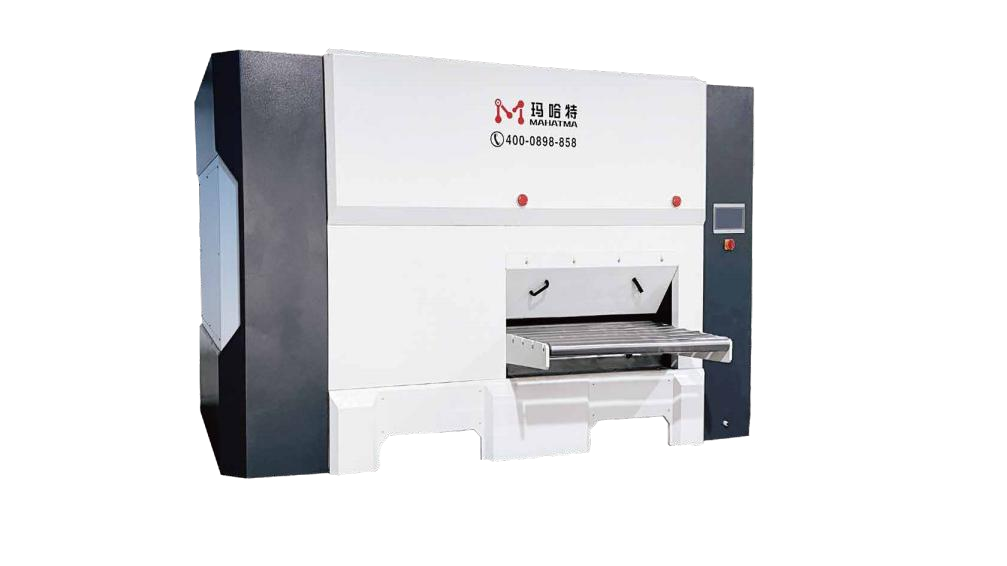
A leveling machine—also called a straightening machine, flattening machine, coil leveler, or metal leveler—is a metal processing machine that restores flatness to metal coils, sheets, and plates. The material passes through alternating work rolls that bend it repeatedly past its yield point. This removes coil set, waves, edge buckles, and internal residual stress, producing a flat and stable sheet for downstream processing.
Leveling machines are used in sheet metal fabrication, laser cutting services, automotive parts manufacturing, home appliance and elevator production, steel service centers, shipbuilding, and heavy construction. They are the standard preprocessing step before laser cutting, stamping, roll forming, shearing, and blanking whenever flatness and stress relief are required.
This guide explains what problem a leveling machine solves, how the technology works, the main machine types with real specifications, production application examples, and a step-by-step selection method for buyers at the research stage.
What Problem Does a Leveling Machine Solve?
Metal coils are wound under tension during production, so the material retains curvature—a defect called coil set. Rolling, slitting, transport, and cutting also introduce waves, buckles, camber, and locked-in residual stress. The most common flatness defects are:
- Coil set — the sheet keeps the curved shape of the coil.
- Edge waves — wavy edges caused by uneven rolling reduction.
- Center buckles — a loose, wavy center zone.
- Camber — lateral bowing along the strip length.
- Residual stress — locked-in stresses that release when the material is cut, causing parts to distort.
Flatness deviation is quantified with the dimensionless I-unit or mm/m height deviation, as used in ISO and DIN standards, including DIN EN 10029 for hot-rolled steel plates 3 mm and above.
If un-leveled material enters a laser cutter, the focus height changes with every wave and cutting accuracy drops. If it enters a stamping press, springback and part distortion appear. If it goes to welding or assembly, poor fit-up causes rework. In practice, the downstream cost of flat material defects is much larger than the cost of leveling.
Why Leveling Machines Matter: Market Background
The global metal forming equipment market—which includes leveling and roll forming machines—is valued at USD 45.8 billion in 2025, according to Dataintelo. Fortune Business Insights projects the metal forming machine tools segment to reach USD 64.85 billion by 2034 with a CAGR of 9.60%. Asia Pacific dominates the metal forming equipment market with a 42.5% revenue share in 2025, and the Asia Pacific sheet metal processing equipment market alone generated USD 18.36 billion in 2025. The automotive segment accounts for 41.37% of sheet metal processing equipment demand in 2026.
Two technology trends matter for buyers. First, CNC technology now accounts for 85.7% of the machine tools market, replacing manual roll gap adjustment with digital, recipe-based control. Second, leveling is increasingly delivered as part of complete coil processing lines—uncoiling, leveling, shearing, and slitting—rather than as standalone machines. China's exports of metalworking machine parts grew 20.6% year-on-year in June 2026, with major destinations including Japan, Russia, the USA, India, and Vietnam.
In precision leveling, European manufacturers defined the benchmark. ARKU Maschinenbau GmbH is recognized as one of the top 500 “hidden world market leaders” in precision leveling machines for 2025, and KOHLER Maschinenbau GmbH has realized over 6,700 reference projects globally in leveling technology as of late 2023. Manufacturers outside Europe have closed most of the technology gap through CNC control, servo drives, and laser-based flatness inspection.
How a Leveling Machine Works: The Core Technology
Leveling relies on the Bauschinger effect: after a metal is plastically deformed in one direction, its yield strength in the opposite direction decreases. A leveling machine passes the strip through small-diameter work rolls arranged in alternating up-down positions. Each roll bends the material past its yield point, first one way, then the other. Repeated alternating bending relaxes internal stress uniformly and leaves a flat, stable sheet.
Roll Count
More work rolls produce more alternating bend cycles and better stress relief. Precision thin-sheet levelers typically use 19 to 33 rolls. Heavy plate levelers use fewer rolls because roll diameter and available force dominate.
Roll Structure: 2-High vs 4-High vs 6-High
The number of roll layers determines how well the small work rolls resist deflection under load. A 2-high structure has only work rolls and suits basic flattening jobs at the lowest cost. A 4-high structure adds backup rolls behind the work rolls, sharply reducing deflection and improving flatness. A 6-high structure adds intermediate rolls so the work rolls are almost fully supported, eliminating unsupported gaps—the choice for mirror-finish panels and precision parts. More layers also mean more alternating bends and better stress relief.
CNC Gap Control and Recipe Memory
Material thickness, width, and yield strength change from job to job, so the roll gap must be adjusted accurately and quickly. Modern CNC levelers store parameter recipes for each material and recall them with one keypress. This reduces operator dependence and changeover time. For example, MAHATMA CNC series machines store up to 200 recipes on a 10-inch HD touch screen and include misoperation warnings.
Rigidity and Frame Design
For thick and high-strength plate, the frame, rolls, and drive system must absorb very large bending forces. Hydraulic clamping with servo-hydraulic gap control prevents frame opening under load. Heavy plate levelers are therefore specified by available force and frame rigidity, not only by roll count.
Closed-Loop Verification
Flagship leveling machines add laser 3D surface inspection with closed-loop correction. The flatness of each sheet is measured during processing and parameters are corrected in real time, holding tolerance even when the incoming coil varies.
Types of Leveling Machines: Product Family Overview
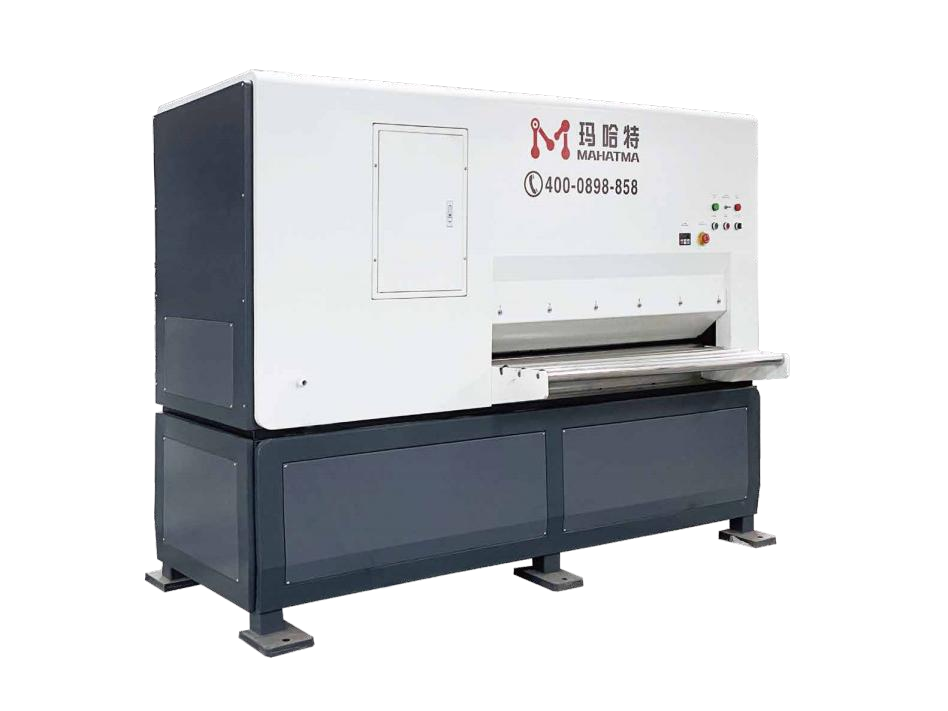
Leveling machines are grouped by thickness range, roll structure, drive technology, and automation level. The table below uses the MAHATMA product range as a reference because it covers material thickness from 0.03 mm up to 100 mm in one family.
| Series | Type / Drive | Rated Thickness | Max Thickness | Width Range | Rolls | Typical Role |
|---|---|---|---|---|---|---|
| VST90 / VST120 | Two-high rough leveler | 2.0–10.0 mm | 14.0–20.0 mm | 600–1400 mm | 13 | Thick-plate rough leveling; budget-limited workshops |
| VSH12–VSH50 | Four-high plate leveler | 0.03–3.5 mm | 1.0–6.0 mm | 200–1000 mm | 19 | Single-product thin sheet leveling; small shops |
| MHTM10–MHTM200 | Intelligent CNC leveler | 0.03–30.0 mm by model | up to 40.0 mm | 200–3200 mm | 15–25 | Laser cutting and stamping shops |
| MHTW15–MHTW100 | Intelligent servo-CNC leveler | 0.08–12.0 mm by model | up to 20.0 mm | 300–2100 mm | 19–33 | Aluminum, mirror-finish sheet, precision parts |
| MHTR30–MHTR400 | Servo hydraulic leveler | 0.5–100.0 mm by model | up to 120.0 mm | 400–4000 mm | 9–23 | Thick plate; new energy, shipbuilding, aerospace |
Note: MAHATMA model ratings are based on Q235/235 MPa material. For high-strength steel, stainless steel, aluminum, titanium, or other grades, the rated thickness range must be recalculated from the actual yield strength.
VST Series: Two-High Rough Leveler
The VST90 and VST120 series are two-layer (2-high) leveling machines with 13 rolls, rated at 2.0–8.0 mm and 3.0–10.0 mm respectively. Their simple, robust structure is easy to maintain and low in cost, which makes them suitable for thick-plate rough leveling and budget-limited workshops.
VSH Series: Four-High Plate Leveler
VSH12, VSH15, VSH32, VSH42, and VSH50 models are four-layer (4-high) machines covering 0.03–3.5 mm rated thickness with 19 rolls. Repeated bending based on the Bauschinger effect relieves internal stress. They have a small footprint and low energy consumption, which makes them ideal for single-product leveling in small and medium sheet metal shops.
MHTM Series: Intelligent CNC Levelers
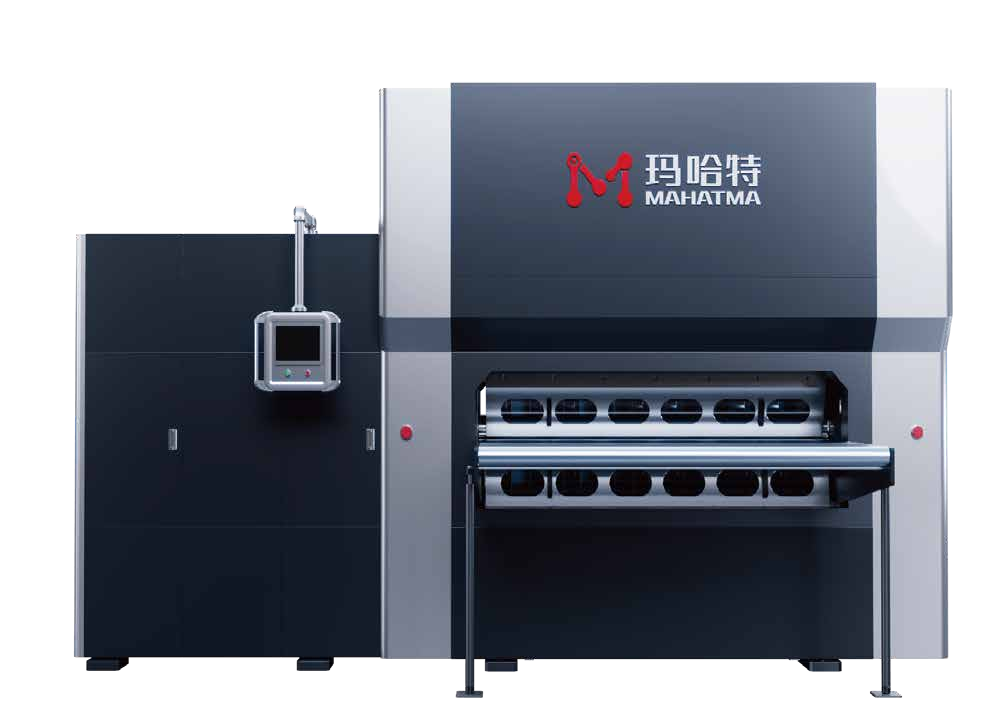
The MHTM family spans MHTM10 (0.03–0.6 mm) to MHTM200 (8.0–30.0 mm) with 15 to 25 rolls. These CNC leveling machines are the standard workhorse for laser cutting, stamping, and fabrication shops. Features include one-key CNC parameter setting, precision motor drive with 50% energy saving, a 10-inch HD touch screen with 200 recipe memory, misoperation warnings, and upstream/downstream linkage. Customization is available.
MHTW Series: Servo CNC Levelers
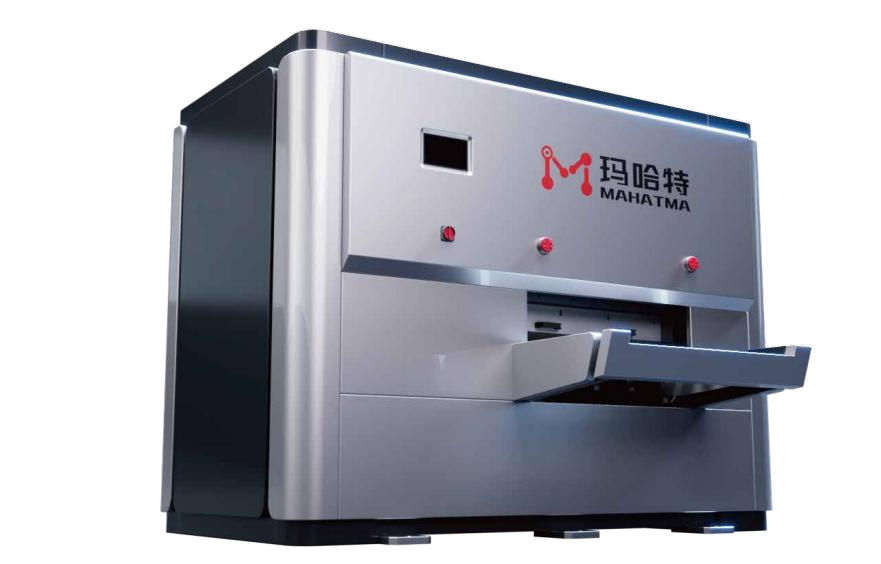
The MHTW15 to MHTW100 series are all-servo, intelligent CNC leveling machines covering 0.08–12.0 mm rated thickness with 19 to 33 rolls. They are especially suitable for aluminum alloy, copper, and mirror-finish sheet. MHTW series machines feature a patented Kunpeng structure, an automated pull-out roll-box cleaning system, a smart operating system with remote cloud control, laser 3D online inspection, and a hollow frame structure that prevents thermal deformation. They are designed for precision sheet metal, 3C electronics, automotive, new energy, laser cutting, and medical device applications.
MHTR Series: Servo Hydraulic Levelers for Thick Plate
The MHTR family—from MHTR30 (0.5–3.0 mm) to MHTR400 (20.0–100.0 mm)—combines German hydraulic and CNC technology with a mortise-tenon rigid frame and servo-hydraulic hybrid drive. Accuracy reaches micron level, up to 0.01 mm. Alloy rolls avoid surface marking, and an anti-collapse dynamic compensation system protects the machine during heavy passes. Compared with traditional hydraulic levelers, the MHTR series achieves about 70% energy saving, positioning it as an import-grade alternative for new energy, heavy industry, shipbuilding, and aerospace.
Flying Shear Line and Complete Processing Lines
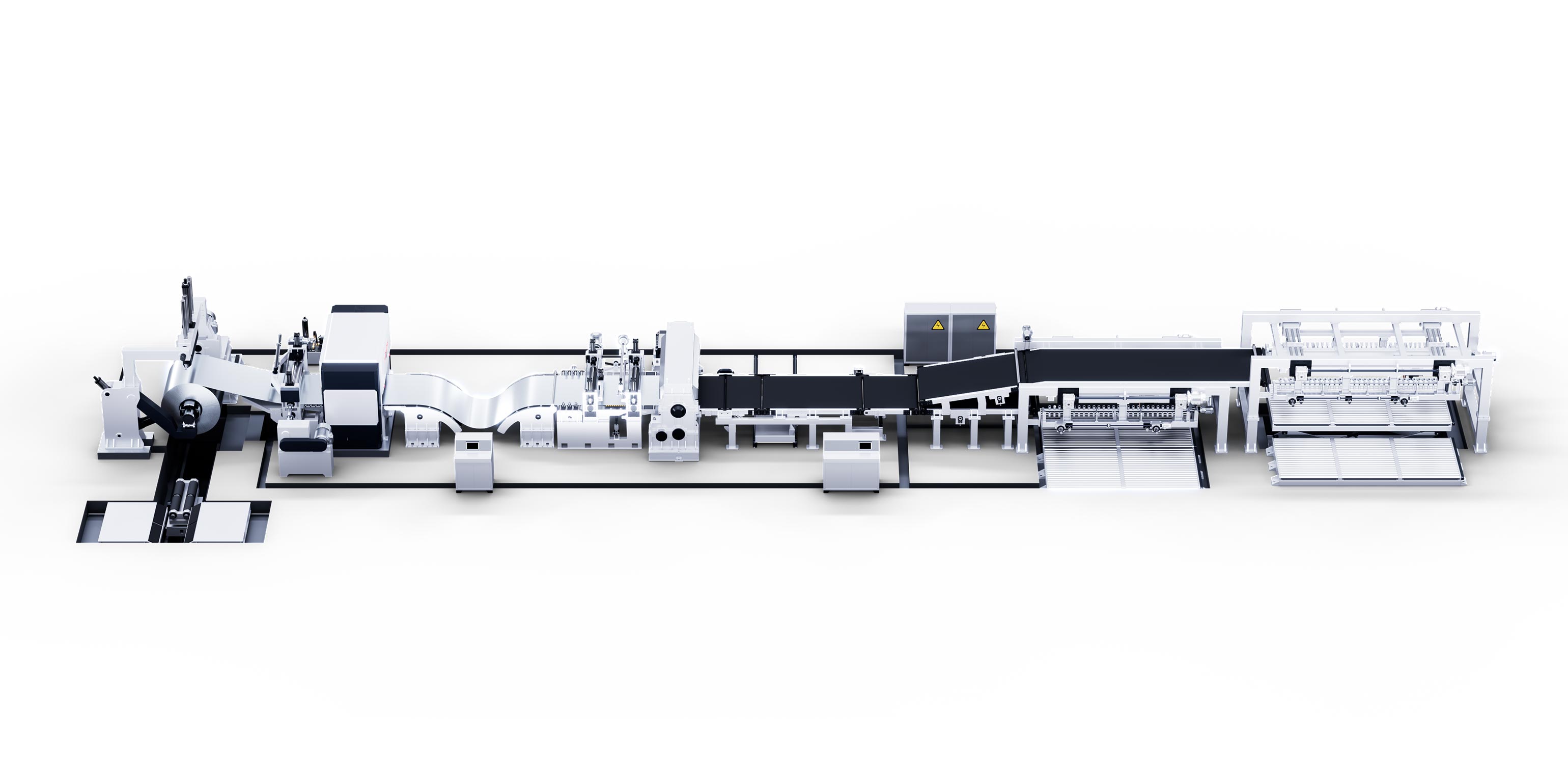
For high-volume blanking, leveling is integrated into complete coil processing lines. The MF-3 uncoiling leveling flying shear line processes 0.3–3.0 mm coils, 400–1800 mm wide, with shearing accuracy of 0.5 mm, feeding speed up to 100 m/min, and maximum coil weight of 25 tons. It is suitable for stainless steel, aluminum, and galvanized coils in home appliance manufacturing, automotive parts, elevator manufacturing, and steel service centers.
Step-by-Step: How to Choose a Leveling Machine
At the research stage, buyers can reduce risk with a structured selection process. The following logic is used for every MAHATMA inquiry:
- Define the material envelope. Write down thickness min–max, width, material grades with yield strength, and current flatness condition. Leveling force depends on thickness and yield strength, so Q235-based model ratings must be recalculated for high-strength steel, aluminum, or titanium.
- Set the flatness target. Precision series typically achieve 0.05–0.20 mm/m². High-end CNC machines can reach ±0.01 mm for thin plates. Your downstream process determines what is actually needed.
- Match the roll structure. Use 2-high for rough leveling and budget limits; 4-high for general sheet metal; 6-high or fully supported structures for mirror-finish and precision parts.
- Decide the automation level. Manual adjustment suits low-frequency use; CNC with recipe storage suits frequent material changes; servo CNC with laser 3D inspection suits precision-critical, high-volume work.
- Check compliance and power supply first, not last. Machines exported to the EU require CE marking under the Machinery Directive 2006/42/EC with a documented risk assessment per EN ISO 12100. For the USA and Canada, specify 480V/60Hz at order and plan for NRTL field evaluation of the electrical panel per NFPA 79. Confirm voltage, frequency, and phase in the purchase contract.
- Run a sample test on your own material. Send 1–2 meters of your worst-condition material to the manufacturer. A written flatness report and process video remove the biggest purchase risk before any capital commitment.
- Plan for integration. If the leveler will feed a laser cutter, press, or processing line, check data interfaces (MES/ERP), material handling automation, and layout with the supplier early.
Use Cases: Where Leveling Machines Are Applied
Laser Cutting and Stamping Pre-Processing
Automotive parts, home appliance, and elevator manufacturers process cold-rolled or stainless steel sheets that require high surface quality under continuous medium load. The leveler removes coil set and internal stress to achieve extreme flatness for stamping or laser cutting. For this duty, small-diameter dense rolls prevent surface indentation, and a dust removal system is recommended. Servo motor control with PLC parameter memory provides the precision, matching typical 0.5–6.0 mm material to MHTM30–MHTM80 or MHTW series machines.
Thick Plate Leveling for Heavy Industry
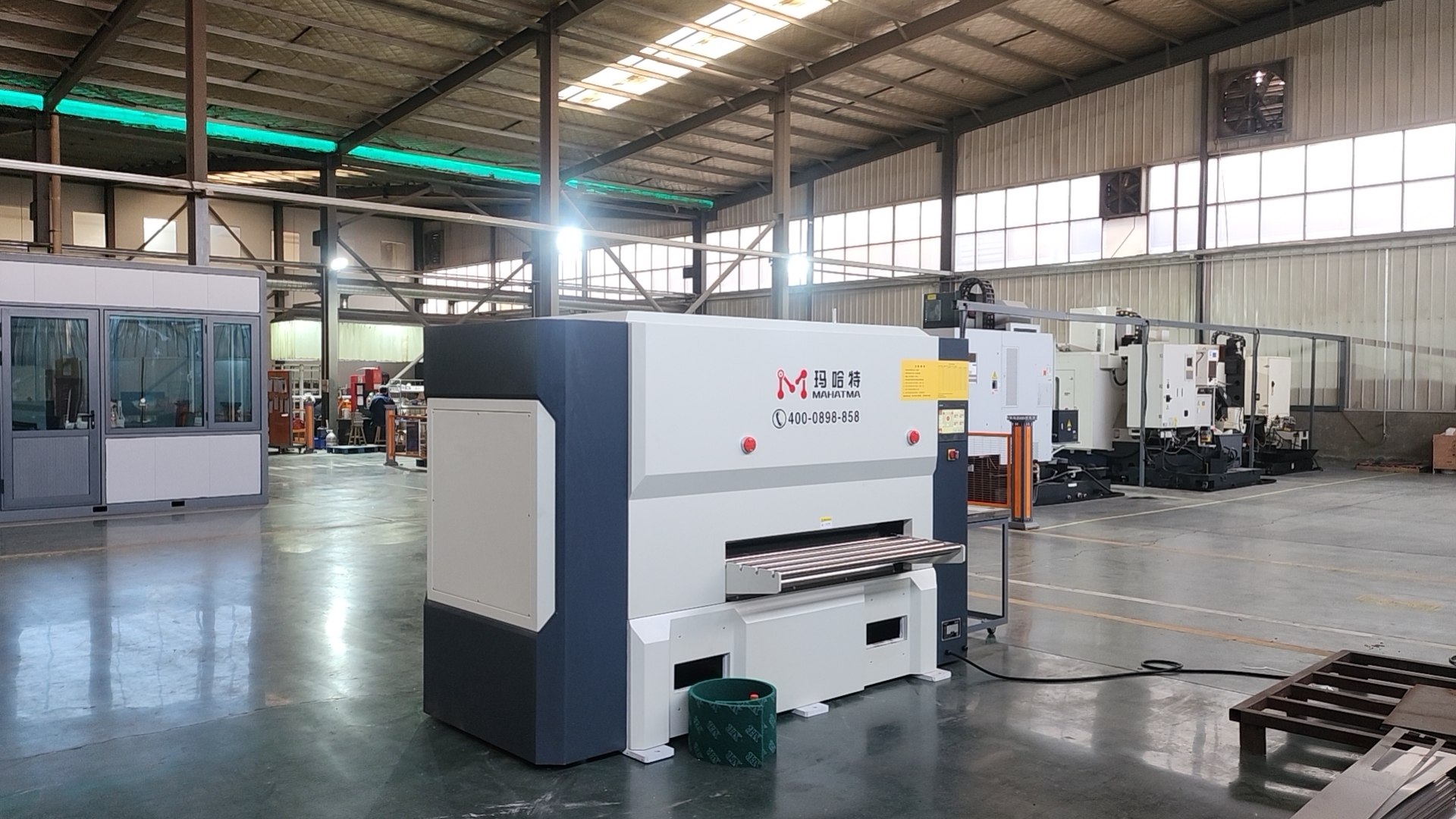
Steel structure fabrication, shipbuilding, heavy construction machinery, and bridge construction process thick carbon steel plates with high yield strength and significant welding deformation under continuous heavy load. Hydraulic drive with electric gap adjustment handles the large bending forces, and the leveler eliminates internal stress so subsequent welding and assembly stay within tolerance. Typical requirements for this machine class include ISO 9001:2015 quality management, CE marking for the EU market, noise level ≤75 dB(A), safety interlocks, emergency stops, and optional IoT connectivity for remote monitoring. Heavy series machines such as MHTR200, MHTR260, and MHTR300 cover 8.0 to 80.0 mm rated thickness with widths up to 4000 mm.
High-Volume Blanking with Flying Shear Lines
For appliance panels, elevator panels, and automotive inner panels, a flying shear line processes coils continuously without stopping the strip. The MF-3 line reaches 100 m/min feeding speed with 0.5 mm shearing accuracy, enabling rapid processing of large-volume orders while maintaining precise cut accuracy.
Comparing Suppliers: What Publicly Reported Facts Show
European premium brands built the reputation of this category, and their machines are well supported. For a global buyer, the practical difference is not only the machine itself but also service speed, spare parts availability, and total cost of ownership. The following table is based only on publicly reported facts from the sources referenced in this article.
| Criterion | MAHATMA (China) | ARKU (Germany) | KOHLER (Germany) |
|---|---|---|---|
| Public positioning | High-precision CNC, servo, and hydraulic leveling machines covering 0.03–100 mm; high-tech enterprise | Precision leveling machines; FlatMaster series used for laser-cut and stamped parts (2024) | Leveling technology provider |
| Track record | 230+ patents; CE certification and ISO 9001 held since 2008; exported to over 100 countries and regions; 28 overseas service networks | Recognized among top 500 “hidden world market leaders” in precision leveling machines (2025) | Over 6,700 reference projects realized globally as of late 2023 |
| Stated capability vs cost | Production results typically 0.05–0.20 mm/m²; verified 0.05 mm case on titanium fixtures; micron-level accuracy up to 0.01 mm on hydraulic series; 30%+ lower total cost of ownership than European premium brands | Not disclosed in the sources used | Not disclosed in the sources used |
The fairest comparison method is to test your own material. MAHATMA offers a free sample test—leveling 1–2 meters of your actual material and returning a written report plus process video—so flatness claims can be verified before purchase.
FAQ
Does a leveling machine exported to the EU need CE marking?
Yes. Any industrial machine placed on the EU market must carry CE marking under the Machinery Directive 2006/42/EC. The manufacturer must perform a documented risk assessment per EN ISO 12100, fit compliant guarding, interlocks, and emergency stops, compile a technical file, and issue an EC Declaration of Conformity. MAHATMA has held CE certification since 2008, and its machines operate in European countries including Germany, Sweden, Poland, France, Italy, and Spain. For the USA and Canada, there is no CE equivalent; local inspectors may require an NRTL (UL/ETL/CSA) field evaluation of the electrical panel per NFPA 79, and 480V/60Hz must be specified at order.
What flatness can a leveling machine actually achieve?
Precision leveling machines achieve production results of about 0.05–0.20 mm/m² on typical material. MAHATMA reports a verified case of 0.05 mm flatness on titanium fixtures, and high-end CNC hydraulic machines reach micron-level accuracy up to 0.01 mm. Final flatness depends on the material grade, thickness, and original coil condition, which is why a sample test on your own material is the reliable way to confirm a specific result.
What is the difference between 2-high, 4-high, and 6-high leveler structures?
The number of roll layers determines how well the small work rolls resist deflection under load. A 2-high structure has only work rolls and suits basic jobs at the lowest cost. A 4-high structure adds backup rolls that support the work rolls, sharply reducing deflection and improving flatness. A 6-high structure adds intermediate rolls, so the work rolls are almost fully supported and unsupported gaps are eliminated—the structure for mirror panels and high-precision parts. More layers also mean more alternating bends and better stress relief.
Can a leveling machine integrate with MES/ERP and an existing production line?
Yes. MAHATMA blanking lines and CNC levelers provide MES/ERP interfaces, and automation modules such as loading carts, conveyors, robots, vision inspection, and AGV can be added as standard options. Because MAHATMA builds integrated lines rather than standalone boxes, coil feeding, leveling, conveying, and stacking can be engineered around your existing equipment. Provide your part envelope, takt target, and current line layout early so the integration plan is designed from these inputs.
Which MAHATMA model should I choose for my material?
Send four numbers—thickness range, width, material grade (yield strength), and flatness target—and MAHATMA returns a matched model plus a free sample test. The process exists because leveling force depends on both thickness and yield strength: model ratings are based on Q235/235 MPa and must be recalculated for high-strength steel, aluminum, or titanium. As a quick map: VST/VSH series cover entry-level rough and plate leveling (0.03–10.0 mm), MHTM CNC series cover 0.03–30.0 mm for laser and stamping shops, MHTW servo series cover 0.08–12.0 mm for aluminum and mirror-finish sheet, and MHTR hydraulic series cover 0.5–100.0 mm for thick and high-strength plate.
Can I test my own material on the machine before buying?
Yes—the sample test is free. Send 1–2 meters of your material or representative parts, with the material grade, thickness, and flatness target noted. MAHATMA levels it on the recommended machine and returns a written flatness report with measured data, the process parameters used, and a video of the leveling run. This removes the biggest purchase risk because performance claims are verified on your actual material, not on brochure numbers. For the most realistic result, test your worst-condition material, not your best. To arrange a free sample test and a matched machine proposal, contact mhtg@gdmht.com or WhatsApp +86 173-4062-1852.
Conclusion
A leveling machine is the correct answer whenever flat metal matters: before laser cutting, stamping, roll forming, blanking, welding, or assembly. The right machine depends on five numbers—thickness, width, yield strength, flatness target, and production volume—plus the level of automation and compliance your market requires.
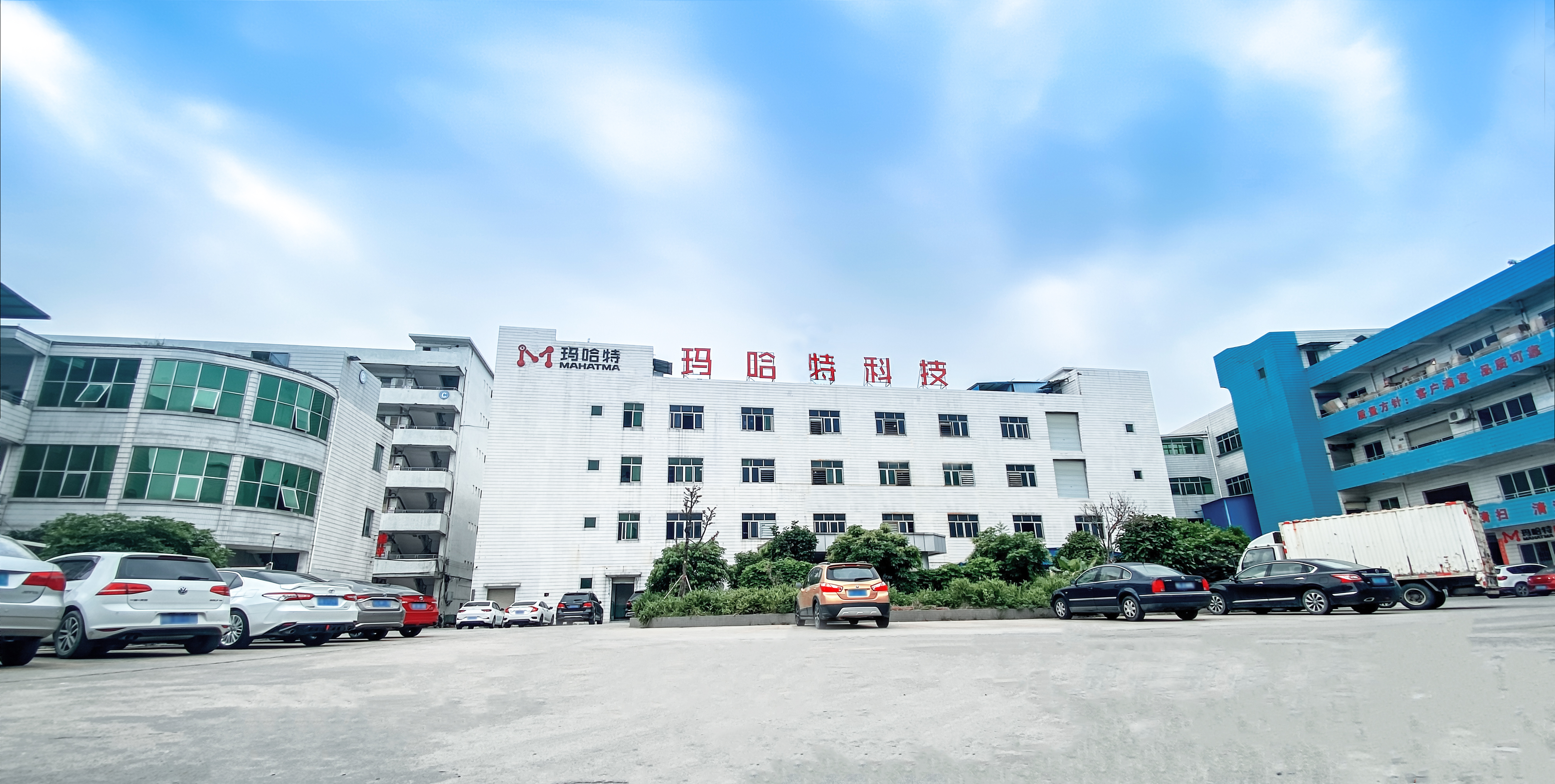
Guangdong MAHATMA Intelligent Equipment Co., Ltd. is a high-tech enterprise headquartered in Dongguan, Guangdong—known as the “World Factory”—founded in 2008, with 300 employees, a 50,000 m² facility, an R&D team of 26 engineers, and annual output of 500 sets. Its product range covers sheet metal leveling machines, CNC leveling machines, hydraulic leveling machines, straightening machines, cut-to-length lines, uncoiling leveling slitting lines, and uncoiling leveling flying shear lines, backed by over 230 patents, ISO 9001 and ISO12100 compliance, and CE certification. Equipment has been exported to over 100 countries and regions, supported by 28 overseas marketing and service networks.
Verify flatness on your own material before you buy.
Send your material for a free sample test, request a matched model proposal, or download the MAHATMA catalog.
Download Company Brochure (PDF) | WhatsApp MAHATMA | mhtg@gdmht.com
Guangdong MAHATMA Intelligent Equipment Co., Ltd. — Mahatma Industrial Park, No. 3, Southwest Jiaying 1st Street, Shijie Town, Dongguan City, Guangdong Province, China