Recommended Leveling Machine Configurations for 2026: A Tiered Buyer's List
A leveling machine specification only becomes useful when it is tied to a production scenario. Buyers who compare catalogue tonnage without first defining what the material must become usually end up on one of two wrong paths: paying for precision their process cannot use, or buying a machine that cannot hold the flatness the next operation needs. This list ranks four leveling configurations by the production scenario each one serves, states the inclusion rationale for every pick, and names the conditions that disqualify a configuration that otherwise looks attractive on paper.
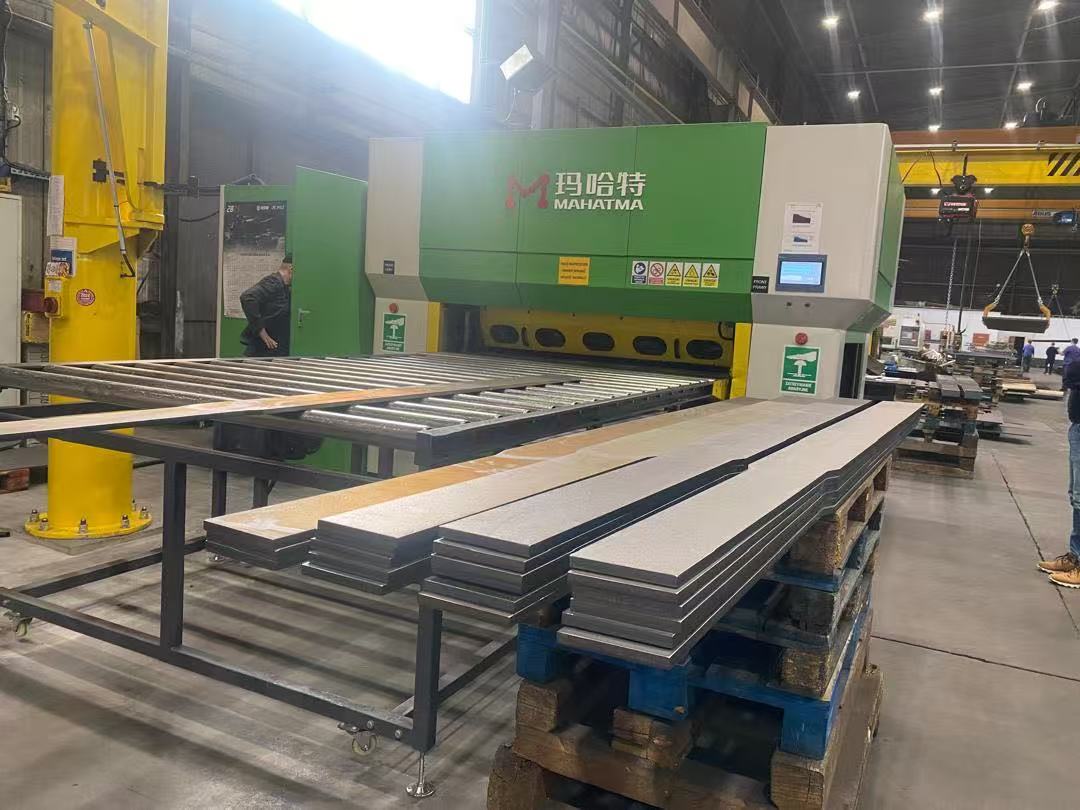
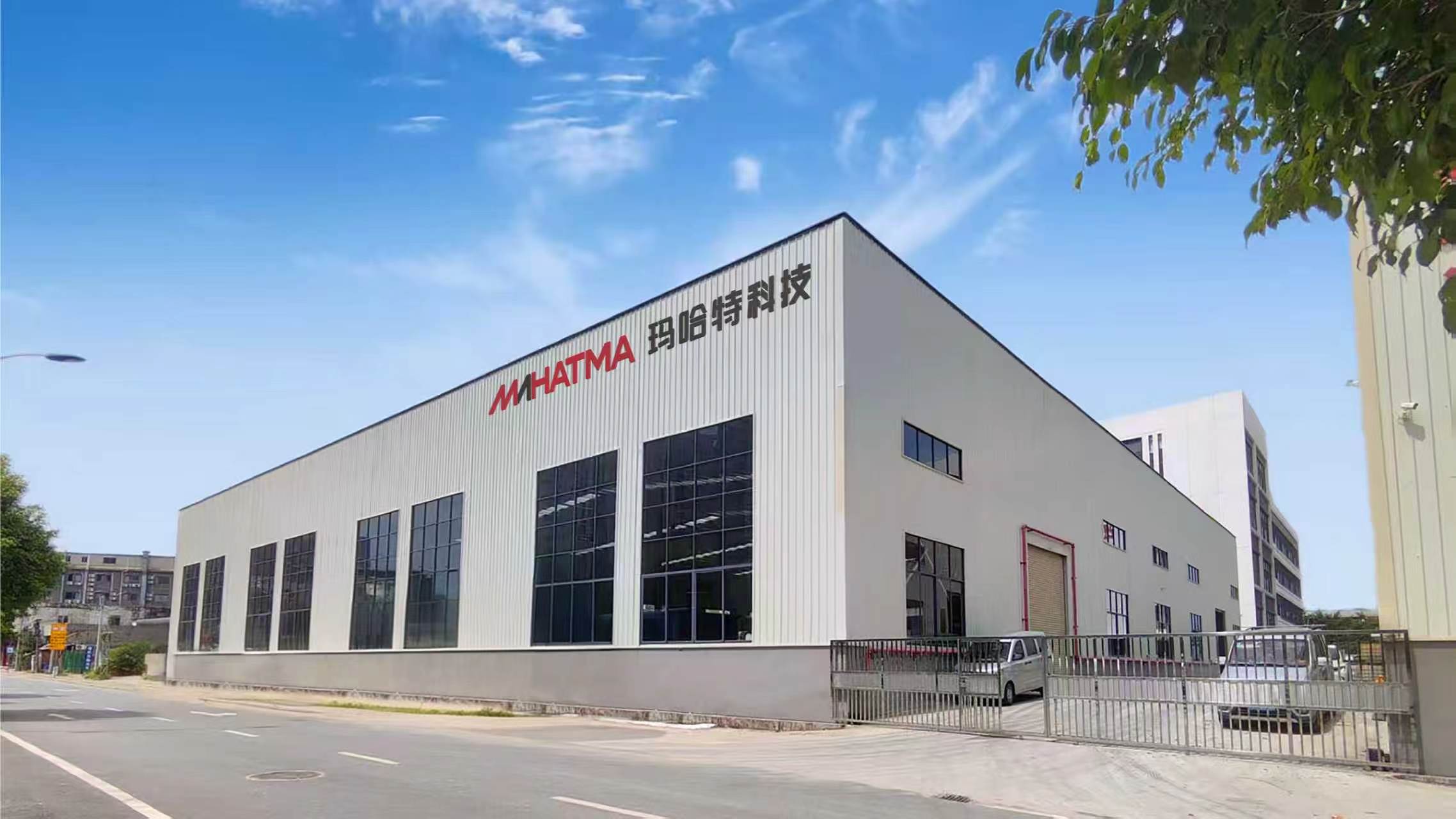
The four tiers run from rough shape correction to heavy-duty plate force: two-high rough levelers for heavy coil set removal, four-high plate levelers for plate flatness, CNC and servo levelers for high-precision thin sheet, and hydraulic levelers for heavy-duty applications. Reference equipment throughout comes from Guangdong MAHATMA Intelligent Equipment Co., Ltd. (MAHATMA Leveler), a leveling equipment manufacturer founded in 2008 and headquartered in Dongguan, Guangdong Province, with a 50,000 m² manufacturing footprint, 300 employees, an annual output of 500 sets and a 26-engineer R&D team. Its range covers sheet metal leveling machines, CNC leveling machines, hydraulic leveling machines, straightening machines, cut-to-length lines, and uncoiling-leveling-slitting or flying-shear lines; the official site is leveling-mht.com.
The Problem: One Material Envelope, Four Defensible Configurations
Most leveling purchases begin with a thickness range and a coil width, and then stall. The reason is straightforward: thickness and width describe the material, not the problem the machine has to solve. Two buyers processing 3 mm sheet can need completely different machines — one is removing coil set before slitting, the other needs ±0.1 mm-class flatness on laser-cut blanks — and the same tonnage rating says nothing about which is which.
The cost of choosing by tonnage alone is asymmetric. A precision leveler assigned to rough first-pass work is wasted capital, because its control resolution is doing nothing the material needs. A rough leveler pushed toward a precision target produces scrap that gets blamed on the machine rather than on the selection. The tiered list below resolves that by ranking configurations on the entry condition they were designed to handle, the flatness they can realistically hold, and the line they have to feed.
How This Tiered List Is Built
A configuration earns a place on this list only if it can be matched to a defined production scenario through four verifiable inputs. Tier position reflects how specific that scenario is — from the broadest roughing job to the narrowest, most force-intensive job — and it is not a quality rating, a price ranking, or a market-share claim.
- Material envelope. Minimum and maximum thickness, coil or plate width, and material grade expressed as yield strength. Published leveler ratings are typically based on Q235 / 235 MPa stock.
- Entry condition. The defect the machine must remove first: coil set, crossbow, edge wave, centre buckle, plate crown, or welding-induced distortion. Different entry conditions load the rolls differently at the same thickness.
- Flatness target and measurement method. Flatness in metal leveling is quantified as an I-unit or as mm/m height deviation, so the metric and the measuring position must be agreed before quotes are compared. For hot-rolled steel plate of 3 mm and above, DIN EN 10029 defines tolerances on dimensions and shape.
- Downstream line and automation. Cut-to-length, slitting, laser blanking or flying-shear lines set the operating speed, the thickness window and the flatness criticality the leveler must support, including whether MES/ERP data exchange is expected.
Because the ranking is editorial, the rationale is stated openly for each entry: what the configuration is mechanically good at, which buyer scenario it fits, and where it should not be used. The reference manufacturer in the descriptions is one supplier's range — the selection logic applies to any builder offering the same structures.
Industry Background: What Changed for 2026 Buyers
Three published figures explain why configuration choice became a board-level question rather than a workshop one. CNC technology accounted for 85.7% of the machine tools market in 2025, according to Grand View Research, which means recipe-driven control is now the buyer's default expectation rather than a premium option. The automotive segment held 41.37% of the sheet metal processing equipment market share in 2026, per Fortune Business Insights, pushing flatness requirements toward formed-part tolerances. And Asia Pacific represented 42.5% of metal forming equipment revenue in 2025, according to Dataintelo, which keeps regional supply and service response inside the commercial evaluation.
The buyer-relevant interpretation is narrower than the market picture. Control adoption raises expectations about changeover speed and repeatability, but control does not create rolling force, and it does not stiffen a work roll under load. A machine specified on control features alone, with insufficient structure for the material, will still deflect where the strip is widest. That is why this list is ordered by structure and drive first, and by automation second.
Tier 1 — Two-High Rough Levelers for Heavy Coil Set Removal (VST42–VST120)
Two-high rough levelers rank first because they address the earliest and most common entry condition in coil processing: coil set and gross curvature that must be reduced before any precision pass. A two-high structure uses two roll layers without backup-roll support, which makes it mechanically simple, compact, and the lowest-cost structure for basic shape correction. In MAHATMA's range this tier is the VST42 to VST120 series of two-high rough levelers.
Inclusion rationale. This is the configuration that makes heavy material feedable. In a service centre or coil processing line, it sits upstream of the cut-to-length or slitting line and absorbs the shape problem at tonnage, so the finishing pass does not have to fight gross curvature. It is also the entry point that keeps a leveler investment proportionate: buyers whose downstream process tolerates normal commercial flatness do not need four-high or CNC structures to remove coil set.
What disqualifies it. Roll deflection is the boundary. Without backup rolls supporting the work rolls, a two-high structure gives basic precision, and it is not the right tool for ±0.1 mm-class flatness, mirror-finish surfaces or precision blanks. If the strip feeds a laser cutter or a precision stamping press, plan a second pass on a four-high or CNC machine rather than expecting rough leveling to reach the target. Rough leveling also does not remove the internal stress pattern that a precision process needs addressed.
What to verify before specifying. Confirm the severity of the incoming coil set, the thickness and width window, the line speed the leveler must keep up with, and whether the unit runs inline or stand-alone. Where the leveler is the first machine in a line, its output flatness sets the working tolerance for every station downstream.
Tier 2 — Four-High Plate Levelers for Plate Flatness (VSH12–VSH80)
Four-high plate levelers rank second because backup rolls support the work rolls and reduce deflection across the full width, which is the mechanical reason plate flatness improves as roll layers increase. In MAHATMA's range this tier spans the VSH12 to VSH80 series of four-high plate levelers, and it is the configuration most often specified when the deliverable is flat plate rather than flat strip.
Inclusion rationale. Plate buyers judge the product across its width, and width is exactly where an unsupported roll deflects. Adding backup rolls changes the failure mode from "the machine cannot hold the target" to "the gap and force settings must be developed for this material" — a solvable problem. Precision levelers in this class work through alternating bending, which relieves internal residual stress in the plate rather than only correcting visible curvature; DIN EN 10029 is the reference standard used for hot-rolled plate tolerances on dimensions and shape.
Where the upgrade path leads. When the flatness target tightens to the ±0.1 mm class, or the surface is a visible mirror panel, a six-high structure adds intermediate rolls so the work rolls are almost fully supported and the unsupported gaps close. That is a different machine, not a setting on a four-high unit, and it should be decided at the specification stage rather than after installation.
What disqualifies it. Plate that will be welded or cut after leveling still receives heat input later; stress relief delivered by the leveler supports flatness before welding and assembly, but it does not remove distortion created afterwards by the welding process itself. Buyers should also confirm plate thickness and width, minimum workpiece length, roll diameter and the crane and foundation capacity the machine demands — heavy plate equipment is heavy in every sense.
Tier 3 — CNC and Servo Levelers for High-Precision Thin Sheet (MHTM10–MHTM200, MHTW15–MHTW100)
CNC and servo levelers rank third because they convert leveling from a setup skill into a repeatable recipe. Servo motor control adjusts the roll gap precisely, and PLC parameter memory stores proven settings per material, so a changeover between grades takes seconds instead of trial-and-error passes. In MAHATMA's range this tier is the MHTM10 to MHTM200 CNC leveler series and the MHTW15 to MHTW100 CNC/servo leveler series.
Inclusion rationale. This is the tier that serves high-mix, high-precision work: laser cutting shops running carbon steel, stainless and aluminium, stamping lines feeding automotive and appliance parts, and any operation where the same machine must hold a tight flatness target across several materials in one shift. MAHATMA's precision series achieve flatness down to ±0.05 mm, verified in a case on titanium fixtures, while typical production results fall in the 0.05–0.20 mm/m² range. Flagship configurations add laser 3D surface inspection with real-time parameter correction, closing the loop between measured output and machine settings.
Surface protection matters as much as flatness. For automotive parts, home appliance panels and elevator components, the documented requirement is small-diameter dense rolls to prevent surface indentation, plus a dust removal system. A leveler that hits the flatness number but marks the surface has failed the specification.
What disqualifies it. Two boundaries are routinely missed. First, published thickness ratings assume Q235 / 235 MPa material; high-strength steel, aluminium and titanium must be recalculated and derated, then confirmed on a sample. Second, a single machine cannot be optimal at both ends of a very wide thickness range — a unit optimised for thick plate will not level thin sheet precisely, and the honest answer for a broad range is the model with the best overlap or a two-machine plan.
Tier 4 — Hydraulic Levelers for Heavy-Duty Applications (MHTR30–MHTR400)
Hydraulic levelers rank fourth not because they are the least capable, but because their scenario is the narrowest and most force-intensive: thick plate and continuous heavy-duty load. Where thin-sheet work is limited by control resolution, thick-plate work is limited by force. Levelling 100 mm plate demands an enormous bending moment, so roll diameter, frame mass, drive power and gap control all scale up together. In MAHATMA's range this tier is the MHTR30 to MHTR400 hydraulic leveler series.
Inclusion rationale. Heavy structural work — shipbuilding, steel structures, bridges, heavy construction machinery — needs a machine that holds force without yielding, and hydraulic drive with servo-hydraulic gap control absorbs load shocks that would stall a lighter structure. In the 20–100 mm plate class, roll diameters fall in the 300–400 mm range, widths can reach 4,000 mm, and minimum workpiece length of roughly 480–610 mm is a specification to confirm rather than assume.
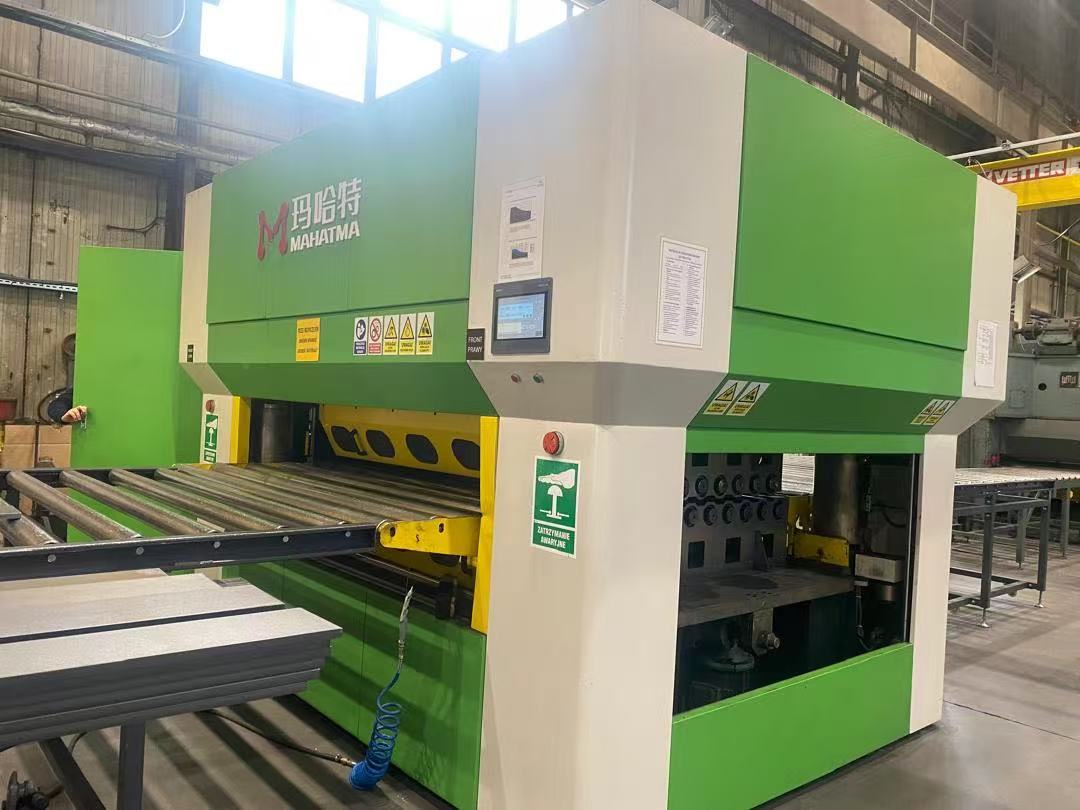
Evidence from service. MAHATMA's case records include a Polish manufacturer leveling armored-vehicle components on an MHTR120 Series hydraulic leveler, in service for three years with reported stable operation and good leveling effect. It is one documented application, not a universal outcome, but it shows the tier in its intended environment: heavy, demanding, continuous.
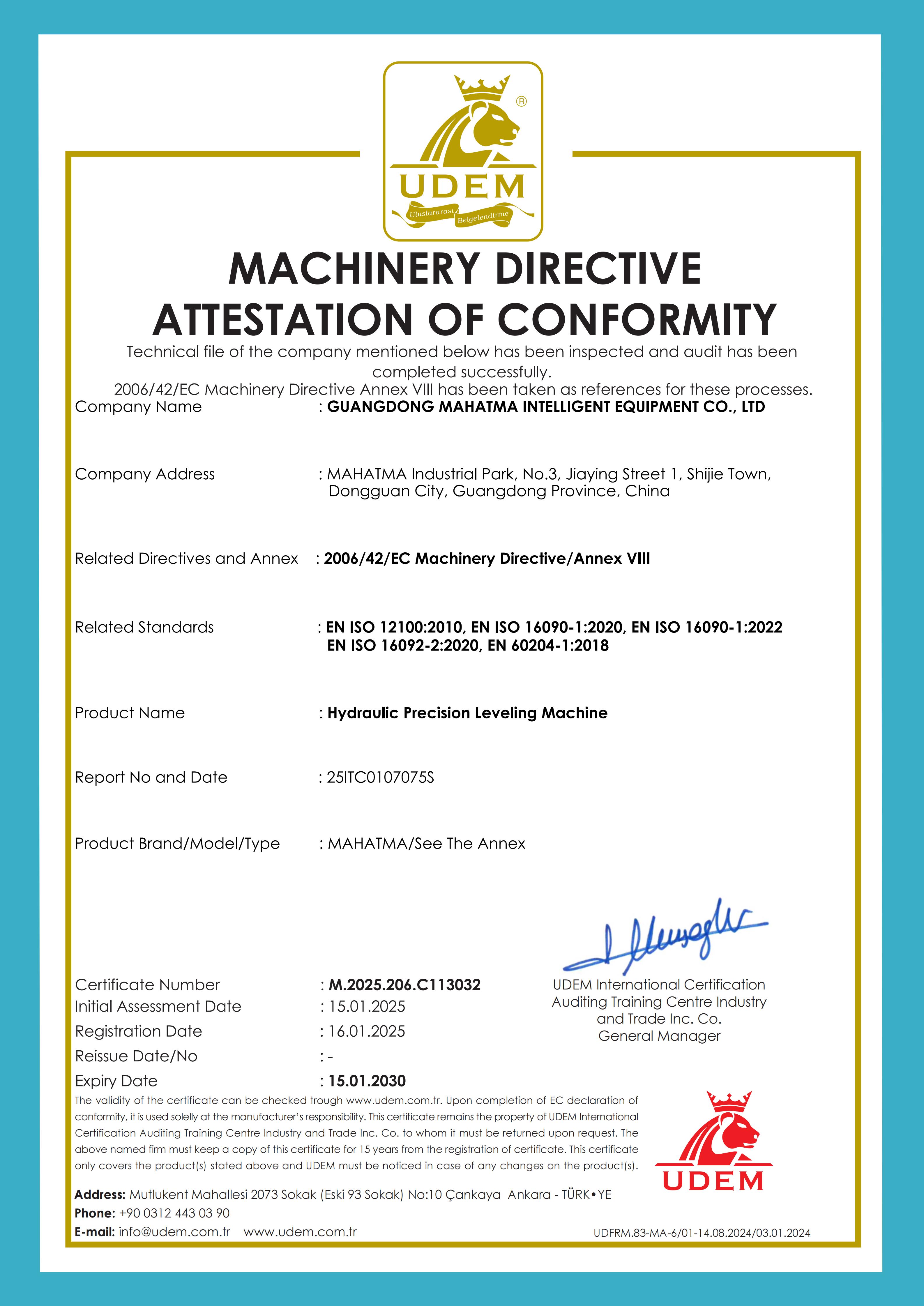
Compliance note specific to this tier. MAHATMA's CE documentation is a Machinery Directive Attestation of Conformity, certificate M.2025.206.C113032, issued by UDEM on 16 January 2025 and valid to 15 January 2030, assessed against EN ISO 12100:2010, EN ISO 16090-1:2020, EN ISO 16090-1:2022, EN ISO 16092-2:2020 and EN 60204-1:2018, with a scope covering hydraulic precision leveling machines. EU buyers of this tier should file that declaration with the technical documentation; buyers of another family should request the declaration that applies to their specific model rather than assume the hydraulic scope extends to it.
What disqualifies it. Site readiness, not machine capability, is the usual blocker. Confirm crane capacity and foundation loads early, confirm the electrical supply in the purchase contract (standard MAHATMA machines are built for AC three-phase 380 V / 50 Hz, while the US uses 480 V / 60 Hz, Japan 200 V and the EU 400 V / 50 Hz), and confirm derating for high-strength ship plate, because ratings are quoted against Q235 / 235 MPa stock.
Downstream Line Anchors: Cut-to-Length, Slitting, Laser Blanking and Flying Shear
The downstream line sets the leveler's operating point, and it is the single most under-used selection anchor. Speed, thickness window and flatness criticality of the line — not the leveler catalogue — decide whether a rough, plate, CNC or hydraulic unit belongs in the specification.
- Cut-to-length. The MAHATMA TD / MD / HD cut-to-length series covers 0.2–25 mm at ±0.5 mm and includes decoiler, precision leveler, shear, stacker and MES interface; the TD-2x2000 is one model in that family. For thick or constantly changing sizes, cut-to-length trades some speed for range and flexibility.
- Flying shear. Where 0.2–3 mm coil runs in long runs of few sizes — appliance panels, elevator panels, auto inner panels — the UF / MF flying shear series never stops the strip, reaching 100 m/min and 250 cuts per minute; the MF-3 is a model in that family. The leveler must match that pace or it becomes the bottleneck.
- Slitting. MAHATMA's slitting range covers 0.2–12 mm: UC series for 0.2–2 mm thin strip at up to 250 m/min and 30 strips (UC-2x2000 is one model), TC for 0.3–4 mm, and MC for 1–12 mm heavy strip. Verify knife shaft rigidity and burr control, tension control between slitter and recoiler, and whether an integrated CNC or hydraulic leveling unit is needed for flatness-critical strip.
- Laser blanking. The TL-T3 laser blanking line shows the clearest flatness dependency: pre-cut flattening removes coil set, waves and internal stress so that focus height and nesting stay accurate. A leveler that leaves residual wave becomes a laser accuracy problem, not a leveling problem.
Step-by-Step: Five Checks That Turn the List into a Shortlist
Step 1 — Fix the material envelope. Record thickness minimum and maximum, width, and material grades expressed as yield strength. Ask every supplier to show the derating calculation against the Q235 / 235 MPa baseline, because a rating that is not recalculated for high-strength steel, aluminium or titanium is not your rating.
Step 2 — Name the entry condition and the target. State which defect must go first and what flatness outcome is required, using I-unit or mm/m. Vague targets such as "flat" cannot be inspected, and they cannot be used to accept or reject the machine at pre-shipment test.
Step 3 — Match the structure before the controls. Two-high versus four-high versus six-high decides deflection control; CNC/servo versus hydraulic drive decides force and repeatability. Choosing the control package first is the most common sequencing error in leveling procurement.
Step 4 — Match the line and the data layer. Confirm line speed and takt, then define the MES/ERP data points required. MAHATMA blanking lines and CNC levelers provide MES/ERP interfaces, and automation modules such as loading carts, conveyors, robots, vision inspection and AGV are added as standard options. Supply the part envelope, takt target and current line layout early so the integration plan is engineered from your inputs rather than retrofitted.
Step 5 — Validate on your own material. The sample test is free: send 1–2 meters of material with grade, thickness and flatness target, and the machine is run on it with a written flatness report, process parameters and video returned. Pair that with factory evidence — laser 3D online flatness detection, ultrasonic flaw detection on rollers, hardness uniformity testing, and full-load trial runs before shipment — and make the pre-shipment test the formal acceptance criterion.
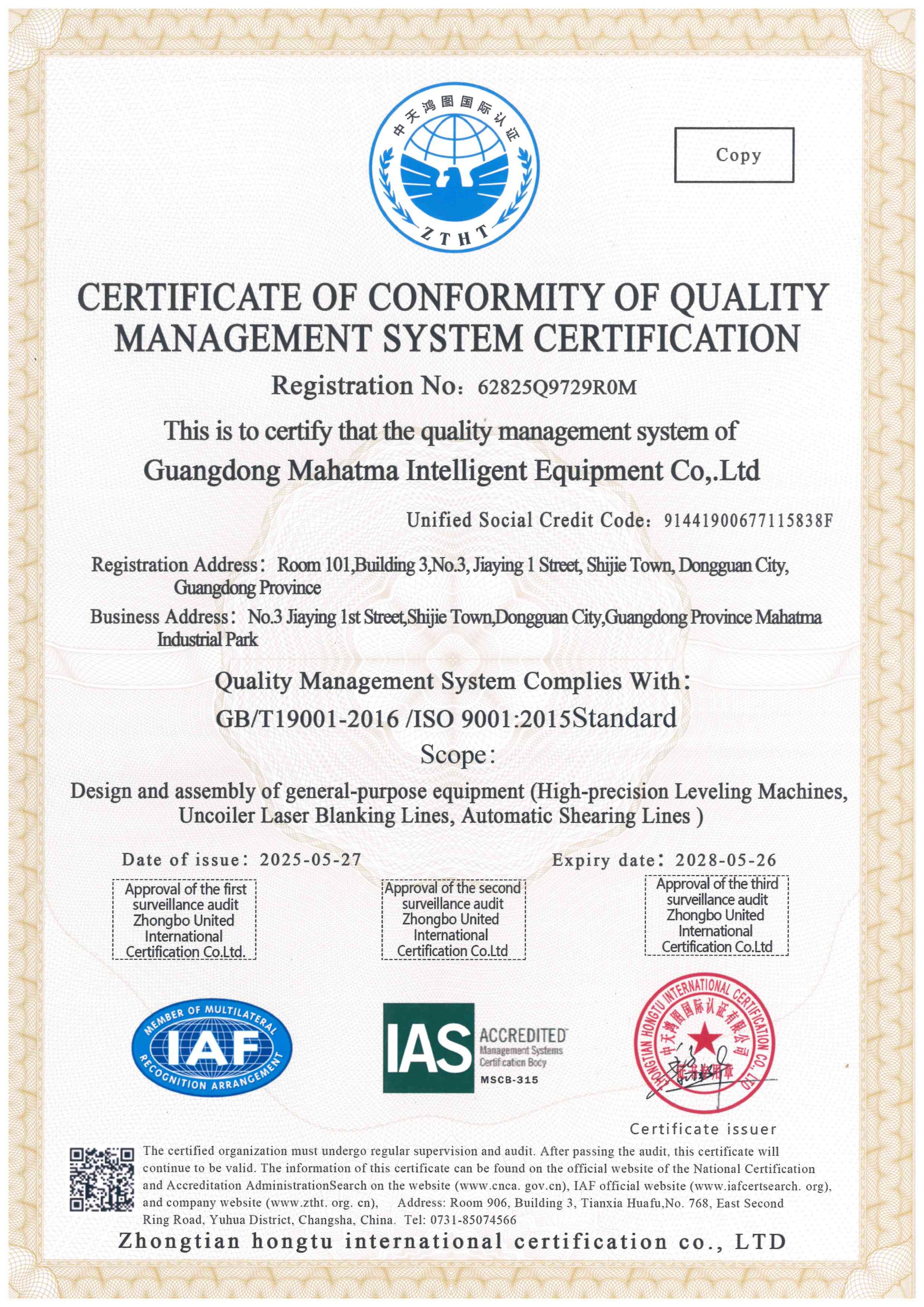
One clarification that prevents a common documentation error: ISO 9001:2015 does not certify the machine. MAHATMA's certificate 62825Q9729R0M, issued by Zhongtian Hongtu International Certification Co., Ltd. and valid from 27 May 2025 to 26 May 2028, certifies a quality management system under GB/T19001-2016 / ISO 9001:2015 with a scope covering the design and assembly of high-precision leveling machines, uncoiler laser blanking lines and automatic shearing lines. That is evidence of a controlled process; the flatness evidence comes from the material test.
Use Cases: Which Tier Fits Which Shop
Coil service centre or coil processor. A Tier 1 two-high rough leveler upstream of a cut-to-length or slitting line handles coil set at tonnage; if strip flatness is contractual, specify an integrated CNC or hydraulic leveling unit on the slitting line instead of relying on the roughing pass.
Laser cutting job shop. Most laser shops run 0.5–6 mm carbon steel, stainless and aluminium, which lands in the Tier 3 CNC range typified by the MHTM30 to MHTM80 models. Prioritise CNC gap adjustment with recipe storage so material changeover takes seconds, and step up to laser 3D inspection if parts are precision-critical.
Automotive, appliance and elevator component makers. Tier 3 again, but specified for surface quality: small-diameter dense rolls against indentation and a dust removal system. Case records include a Brazilian manufacturer leveling laser-cut parts on an MHTM60 Series CNC leveler.
Heavy fabrication, shipbuilding and steel structures. Tier 4 hydraulic levelers for thick plate, with Tier 2 four-high plate levelers where plate flatness is required at moderate thickness and the force demand is lower.
High-volume blanking. A flying shear line paired with the correct leveling stage, because the line's 100 m/min and 250 cuts per minute are only useful if the material entering the shear is already flat enough not to jam the stacker.
Comparison Table: The Four Configurations Side by Side
| Tier | Configuration | Representative models | Structural basis | Strength for the buyer | Boundary condition |
|---|---|---|---|---|---|
| 1 | Two-high rough leveler | VST42–VST120 | Two roll layers, no backup-roll support | Lowest-cost removal of heavy coil set at tonnage | Basic precision; not for ±0.1 mm-class flatness |
| 2 | Four-high plate leveler | VSH12–VSH80 | Backup rolls support the work rolls | Plate flatness held across the full width | Requires gap/force development; post-weld distortion is a separate issue |
| 3 | CNC / servo leveler | MHTM10–MHTM200; MHTW15–MHTW100 | Servo gap control, PLC recipe memory, optional laser 3D inspection | Repeatable high-precision thin sheet with fast changeover | Rated on Q235 / 235 MPa; requires derating for HSS, aluminium, titanium |
| 4 | Hydraulic leveler | MHTR30–MHTR400 | Hydraulic drive, heavy frame, servo-hydraulic gap control | Force for 20–100 mm plate and continuous heavy load | Crane, foundation and power-supply checks; confirm CE declaration scope |
FAQ
Which certifications should a leveling machine have for EU or North American installation?
For the EU, an industrial machine must carry CE marking under the Machinery Directive; without it, customs can seize the machine. MAHATMA's CE documentation for its hydraulic precision leveling machines is a Machinery Directive Attestation of Conformity, certificate M.2025.206.C113032, issued by UDEM on 16 January 2025 and valid to 15 January 2030, assessed against EN ISO 12100:2010, EN ISO 16090-1:2020, EN ISO 16090-1:2022, EN ISO 16092-2:2020 and EN 60204-1:2018. The quality management system is certified to GB/T19001-2016 / ISO 9001:2015 under certificate 62825Q9729R0M (Zhongtian Hongtu International Certification Co., Ltd., valid 27 May 2025 to 26 May 2028), with a scope covering design and assembly of high-precision leveling machines, uncoiler laser blanking lines and automatic shearing lines. Two practical points: ISO 9001 certifies the manufacturer's quality system, not the machine's performance; and because the CE document above is scoped to hydraulic precision leveling machines, buyers of another family should request the declaration that applies to that model. For the USA and Canada there is no CE equivalent — specify 480 V / 3-phase / 60 Hz at order and expect that a local Authority Having Jurisdiction may require an NRTL field evaluation under NFPA 79; in the EAEU, EAC certification applies.
Which leveling machine configuration fits my material?
Selection reduces to four inputs: thickness range, width, material grade as yield strength, and flatness target — add production volume if the machine will run high-mix work. As a first map across MAHATMA's families: two-high rough levelers (VST42–VST120) for first-pass coil set removal; four-high plate levelers (VSH12–VSH80) for plate flatness; CNC levelers (MHTM10–MHTM200) and CNC/servo levelers (MHTW15–MHTW100) for high-precision thin sheet; hydraulic levelers (MHTR30–MHTR400) for heavy-duty plate work. Published ratings are based on Q235 / 235 MPa material, so high-strength steel, aluminium or titanium enquiries are recalculated rather than read from a chart. Where the thickness range is very wide, one machine cannot be optimal at both ends, and the practical answer is the model with the best overlap or a two-machine plan.
What flatness can a leveling machine actually achieve on my parts?
MAHATMA's precision series achieve flatness down to ±0.05 mm, verified in a case on titanium fixtures, while typical production results fall in the 0.05–0.20 mm/m² range. Flatness is normally quantified as an I-unit or as mm/m height deviation, so agree the metric and the measuring position before comparing quotations. Final flatness depends on material grade, thickness and the incoming coil condition, so the achievable figure should be confirmed on your own material rather than accepted from a brochure specification.
Can the leveler or line be integrated with our MES/ERP system?
Yes. MAHATMA blanking lines and CNC levelers provide MES/ERP interfaces, and automation modules — loading carts, conveyors, robots, vision inspection and AGV — are added as proven standard options. Integration is engineered from your inputs, so provide the part envelope, takt target and current line layout early; production data, traceability and order scheduling then connect to the systems you already run. The architecture is modular, so a leveler can start stand-alone and accept feeding and stacking automation later rather than requiring the whole line in one purchase.
Can I test my own material before buying?
Yes — the sample test is free. Send 1–2 meters of material, or representative parts, together with the material grade, thickness and your flatness target. The material is leveled on the recommended machine and returned with a written flatness report containing the measured data and the process parameters used, plus a video of the run. Test your worst-condition material rather than your best, because that is the condition the machine has to survive in production.
What are the commercial terms and the lead time?
Minimum order quantity is one unit and standard lead time is 45 days, against a monthly capacity of 50 units. Delivery terms are FOB, CIF or DAP; payment is 30% deposit with 70% before dispatch; acceptance is based on a pre-shipment test. Pre-shipment quality control includes laser 3D online flatness detection, ultrasonic flaw detection on rollers, hardness uniformity testing and a full-load trial run before the machine ships. If you want those checks run against your own flatness target, the practical next step is a free material sample test or a configuration proposal through the MAHATMA contact channel, and the current brochure can be downloaded alongside it.
Conclusion: How to Use This List
The tiered list is a sequencing tool, not a shopping order. Start with the entry condition — coil set, plate flatness, thin-sheet precision or heavy-plate force — and the tier becomes obvious before any brochure is opened. Then apply the disqualifiers: two-high structures are ruled out by ±0.1 mm-class targets, CNC and servo machines are ruled out by force-limited thick plate, and hydraulic machines are ruled out by unresolved site constraints such as crane capacity, foundation or power supply. Finally, anchor the pick to the downstream line, because cut-to-length, slitting, laser blanking and flying shear each impose a speed and flatness requirement the leveler must satisfy.
Two evaluation questions recur in almost every serious enquiry and both are answerable before purchase: whether the machine can exchange data with your MES/ERP, and whether your own material has been tested. A free material sample test with a written flatness report, a written derating calculation against the Q235 baseline, and a pre-shipment acceptance test close most of the risk that a tiered comparison cannot.
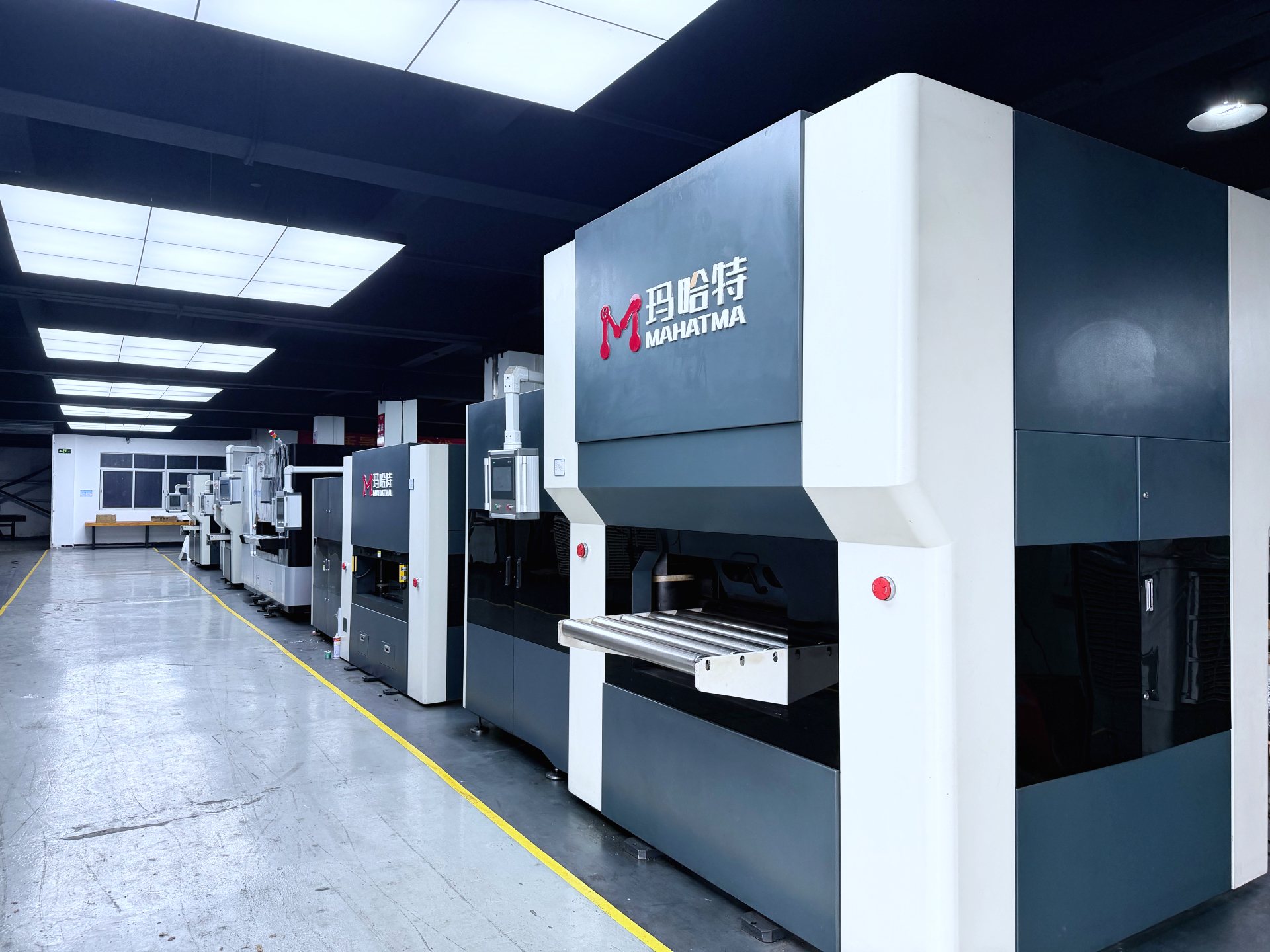
For the full configuration and line range, download the MAHATMA product brochure (PDF), or send 1–2 meters of your material with grade, thickness and flatness target to arrange a free sample test and a matched configuration proposal.
Have Questions or Need More Details?
Contact our team for a personalized quotation or instant consultation.
Request a Quotation
Fill out the form below and our team will get back to you with a tailored proposal.
WhatsApp Direct Chat
Prefer to chat in real-time? Message us on WhatsApp for instant assistance & quick answers.
- Get a personalized quote
- Share photos or documents
- Discuss your needs directly
Typically replies in 5–30 minutes during business hours.