Two-High vs Four-High Leveler: Which Belongs in Your Line?
Short answer: a two-high leveler (rough leveler) belongs where the leveler's job is first-pass flattening of heavier coil — most often standing ahead of a cut-to-length line or a slitting line. A four-high leveler (plate leveler) belongs where the job is precision plate flatness on thinner or tighter-tolerance material. The two configurations are assigned to different positions in the process; they are not ranked against each other.
Most leveler purchases go wrong at the specification stage, not at the machine stage. A buyer compares two configurations on a datasheet, sees more roll layers on one side, and concludes that the larger number wins. The machine then arrives at a line where the real deliverable was feed stability ahead of a shear — or where the flatness tolerance is measured in fractions of a millimetre per metre and the entry-tier configuration cannot hold it.
This guide treats the decision the way a process engineer would: define the station first, then the configuration. It uses documented specifications from the MAHATMA Leveler range — Guangdong MAHATMA Intelligent Equipment Co., Ltd. is a Dongguan-based leveling equipment manufacturer founded in 2008 that builds sheet metal leveling machines, CNC and hydraulic levelers, and uncoiling/leveling lines — and it closes with the two tiebreakers that decide more purchases than any datasheet row.
Why "which one is better" is the wrong first question
A leveler is specified by the deformation it has to remove and by the position it occupies in the line — not by the number of roll layers. Two failure patterns repeat across coil processors and plate shops:
- Precision bought that the part never needs. A plate-leveler configuration is specified for work that only has to be presentable for blanking. The shop then carries a tighter acceptance criterion than its product requires, and every downstream run has to defend it.
- A first-pass machine assigned to a final-flatness job. Rough flattening removes gross coil set so the line can feed and cut; it is not a substitute for the pass that produces a measured flatness result. When the tolerance is written in millimetres per metre, the roughing pass sits upstream of the answer — it is not the answer.
Neither mistake surfaces in a quotation. Both surface in rework, in rejected blanks, or in a second machine bought two years after the first.
The other source of confusion is vocabulary. Flatness in leveling is quantified either as an I-unit, the strip-processing convention, or as height deviation in mm per metre. Plate tolerances are commonly referenced to DIN EN 10029 for hot-rolled plate 3 mm and thicker. Whichever language your QC department writes its acceptance criteria in should be the language on the purchase order, because it determines what you can legitimately reject at commissioning.
Where the two configurations sit inside a coil processing line
Coil processors rarely buy a leveler as a stand-alone box. It is a station in a chain that begins at an uncoiler and ends at a shear, slitter, laser or press. The cut-to-length line system market was estimated at USD 3.42 billion in 2024 (Market Research Future), and the cut-to-length machine market is projected to move from USD 4.28 billion in 2026 to USD 5.94 billion by 2032 at a 5.52% CAGR (ReportLinker). The wider metal forming equipment category that contains leveling machines was valued at USD 45.8 billion in 2025, with Asia Pacific accounting for a 42.5% revenue share (Dataintelo). Automotive applications took 41.37% of the sheet metal processing equipment market in 2026 (Fortune Business Insights).
Those figures describe a market in which levelers are bought as part of a line decision rather than as an isolated tool — which is exactly why the position question dominates. In practice, two positions absorb most entry-tier purchases: the first-pass position immediately after uncoiling, and the finishing position where plate flatness is the product itself.
Two-high leveler / rough leveler: the first-pass station
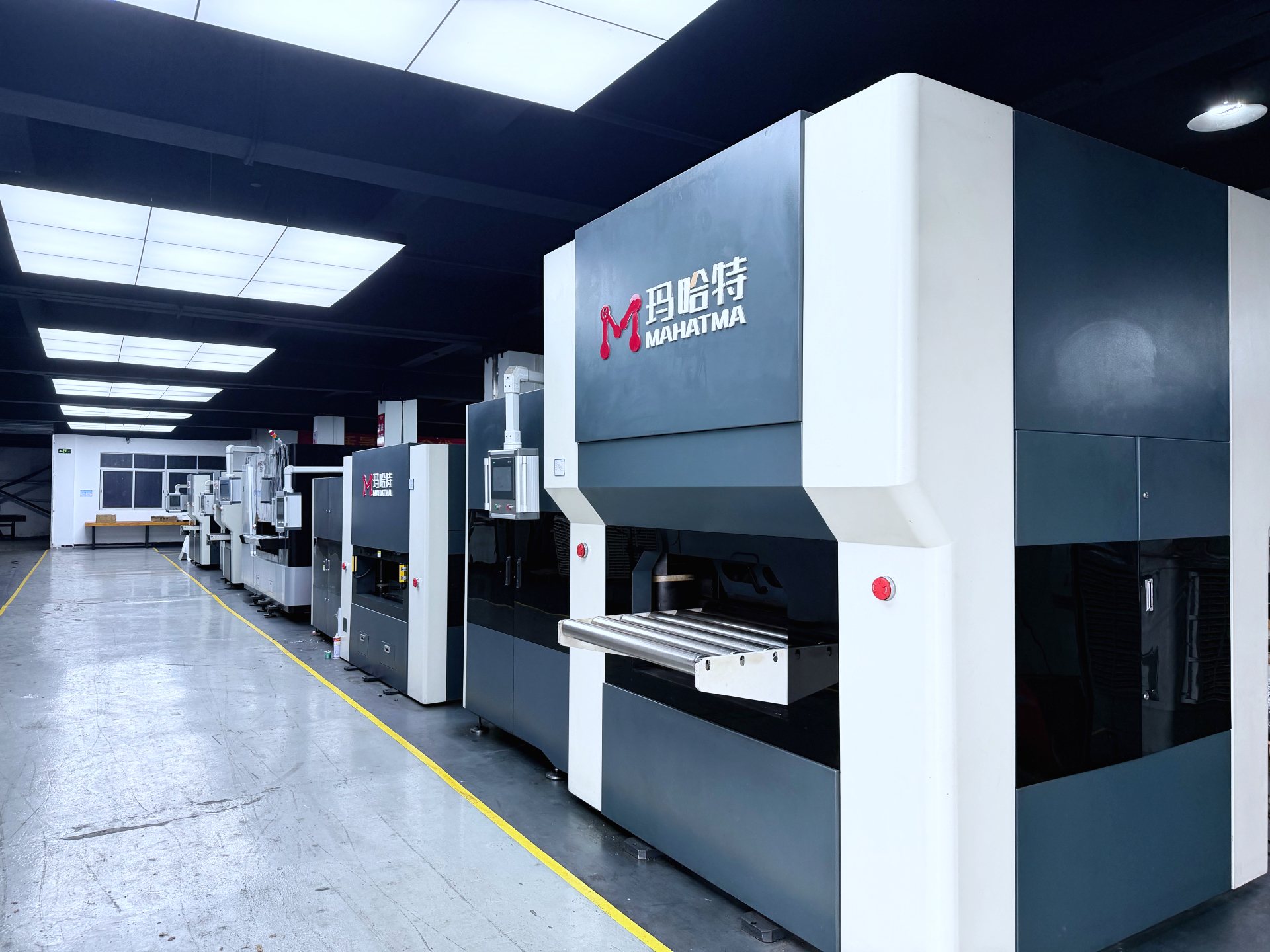
In the MAHATMA Leveler range the two-high configuration is catalogued as the Two-high Leveler / Rough Leveler, VST series, and documented as a two-layer leveling machine. Four models cover the series:
- VST42 — width 200–800 mm, rated thickness 0.4–3.0 mm, maximum 6.0 mm, 19 rolls
- VST70 — width 400–1300 mm, rated thickness 1.0–6.0 mm, maximum 10.0 mm, 13 rolls
- VST90 — width 600–1300 mm, rated thickness 2.0–8.0 mm, maximum 14.0 mm, 13 rolls
- VST120 — width 600–1400 mm, rated thickness 3.0–10.0 mm, maximum 20.0 mm, 13 rolls
All four run at 0–10 m/min and are documented for carbon steel, stainless steel, aluminium, copper and general metals. MAHATMA positions the series for small and medium sheet metal shops, hardware production, thick-plate rough leveling and budget-limited workshops.
Where it earns its place. Ahead of a cut-to-length or slitting line, where the incoming coil has to be flat enough to feed, measure and cut consistently. The gauge overlap is the practical test. MAHATMA's Cut-to-Length Line TD-2x2000 handles 0.2–2 mm at up to 50 m/min with ±0.5 mm shearing accuracy; the Slitting Line UC-2x2000 handles 0.3–2.0 mm at up to 200 m/min in 8–30 strips. The VST42, rated 0.4–3.0 mm with a 6.0 mm maximum, sits inside that band. At the heavier end the VST120, rated 3.0–10.0 mm with a 20.0 mm maximum, takes the first-pass duty that a thin-gauge line would never be asked to carry.
Where it does not belong. As the only leveling step for a plate that will be inspected against a tight flatness tolerance, and as the answer for the very thin end of the gauge range — the two-high series starts at 0.4 mm rated, while the four-high series reaches down to 0.03 mm.
Four-high leveler / plate leveler: the flatness station
The four-high configuration is catalogued as the Four-high Leveler / Plate Leveler, VSH series, and documented as a four-layer leveling machine. Eight models run from VSH12 to VSH80:
- VSH12 — 200–400 mm, rated 0.03–0.5 mm, maximum 1.0 mm, 19 rolls
- VSH15 — 200–400 mm, rated 0.08–1.0 mm, maximum 1.5 mm, 19 rolls
- VSH20 — 400–600 mm, rated 0.2–1.5 mm, maximum 2.0 mm, 19 rolls
- VSH32 — 400–800 mm, rated 0.5–2.0 mm, maximum 3.0 mm, 19 rolls
- VSH42 — 400–800 mm, rated 0.6–3.0 mm, maximum 5.0 mm, 19 rolls
- VSH50 — 400–1000 mm, rated 0.8–3.5 mm, maximum 6.0 mm, 19 rolls
- VSH60 — 400–800 mm, rated 1.0–6.0 mm, maximum 10.0 mm, 15 rolls
- VSH80 — 400–800 mm, rated 2.0–8.0 mm, maximum 14.0 mm, 15 rolls
The series runs at 0–10 m/min and is documented for carbon steel, stainless steel, aluminium, copper and general metals, with the same shop profile attached: small and medium sheet metal shops, hardware, small-batch or low-frequency processing, and budget-limited workshops.
Where it earns its place. As the flatness step. The series reaches 0.03 mm rated thickness on the VSH12 — below the bottom of the two-high range — and its upper models take plate to 8.0 mm rated with a 14.0 mm maximum on the VSH80. For a shop whose deliverable is a flat plate or a flat laser-cut blank, the four-high pass is the value-adding operation, and the roll complement (19 rolls through VSH50, 15 on VSH60 and VSH80) is part of how that pass is built.
Where it does not belong. As a substitute for a rough leveler on heavy coil — the VST120 reaches a 20.0 mm maximum against 14.0 mm on the VSH80 — or where the line constraint is feeding a shear at coil-line speed rather than producing a finished flat part.
Where both entry configurations stop
Both series carry the same documented shop profile at MAHATMA. That is the honesty check on this whole comparison: two-high versus four-high is an entry-tier decision. If your flatness target needs closed-loop correction or unmanned operation, the configuration question is no longer the relevant one and the precision families take over:
- CNC Leveler MHTM series — 0.03–30 mm rated across the family, from the MHTM10 at 0.03–0.6 mm to the MHTM200 at 8.0–30 mm; widths 200–3200 mm.
- CNC Leveler / Servo Leveler MHTW series — 0.08–12 mm rated, 300–2100 mm width, up to 33 rolls on the MHTW15.
- Hydraulic Leveler MHTR series — 0.5–100 mm rated, 400–4000 mm width; the MHTR400 is rated 20.0–100.0 mm with a 120 mm maximum.
Flatness expectations move with the family as well. MAHATMA quotes precision-series results down to ±0.05 mm, verified on titanium fixtures, with typical production output of 0.05–0.20 mm/m² — and states plainly that final flatness depends on material grade, thickness and incoming coil condition. Those figures belong to the precision families, not to the entry two-high and four-high configurations. Do not carry them across the table when you compare quotations.
A step-by-step checklist for assigning the configuration
- Write the leveler's job in one sentence. Either "this machine makes the coil feedable" or "this machine makes the plate flat." If you cannot choose between those two sentences, you are probably specifying two machines, or the wrong tier.
- Fix the material envelope. Thickness minimum and maximum, working width, and material grade with yield strength. Published rated ranges are referenced to Q235 / 235 MPa at MAHATMA; high-strength steel, aluminium and titanium derate that rating and the selection has to be recalculated.
- Quantify the flatness target and the method. I-unit or mm per metre, and for plate 3 mm and above, the DIN EN 10029 tolerance band you intend to buy against.
- Locate the station. In-line ahead of a cut-to-length or slitting line, or stand-alone in front of a press, laser or welding operation. Matched equipment around the leveler typically includes uncoilers, laser cutting machines, stamping presses and robotic arms — the leveler's exit has to suit whatever is downstream.
- Check the gauge fit against the model list. 19 rolls on the VST42, 13 on the VST70/90/120; 19 rolls on VSH12 through VSH50, 15 on VSH60 and VSH80. The roll complement and the rated thickness window should both match the job, not just one of them.
- Confirm the control architecture. PLC and MES/ERP integration, parameter memory, and whether automated loading or unloading will be added now or later.
- Run the material trial and check delivery terms. Standard lead time is 45 days, minimum order 1 unit, monthly capacity 50 units — verify all three against your installation window before the configuration is frozen.
Three line scenarios and what they call for
Scenario 1 — A thin-to-medium coil line: first pass ahead of the shear
A service centre feeding a cut-to-length line at 0.2–2 mm, or a slitting line at 0.3–2.0 mm, needs the coil to lie flat enough for accurate feeding and shearing. The deliverable is dimensional consistency at the shear, not a measured flatness certificate. A VST42 rough leveler — 0.4–3.0 mm rated, 19 rolls, 200–800 mm width — is the configuration that matches that position, with the wider VST70 covering 400–1300 mm at 1.0–6.0 mm.
Scenario 2 — A plate shop: flatness is the deliverable
A shop producing flat plate or flat laser-cut blanks is selling flatness. Here the four-high pass is the operation the customer pays for. A VSH80 — 400–800 mm width, 2.0–8.0 mm rated, 14.0 mm maximum, 15 rolls — covers plate work at moderate width, while a VSH12 at 0.03–0.5 mm rated covers the precision thin-gauge end.
Scenario 3 — The gauge range is too wide for one machine
Ranges that span thin and thick cannot be served precisely by one machine. MAHATMA's own selection guidance is explicit: a machine optimised for thick plate cannot level thin sheet precisely, and the reverse is also true. Where the range is wide, the recommendation is the model with the best overlap, or a two-machine plan — typically a rough leveler at the head of the line and a precision machine at the finishing position.
Documented installations show how the same logic plays out one tier up. A manufacturer in Poland running an MHTR120 hydraulic leveler on armoured-car work reported stable operation and good leveling effect after three years of service. A ceiling-panel producer in Saudi Arabia used an MHTR30 to solve deformation in perforated metal sheet; a ceiling-panel producer in Greece used an MHTM30 CNC leveler for the same deformation problem. In both cases the hydraulic or CNC route was chosen because the material or the tolerance demanded it — the same reasoning that decides two-high versus four-high here.
| Decision dimension | Two-high Leveler / Rough Leveler | Four-high Leveler / Plate Leveler |
|---|---|---|
| Series designation | VST series | VSH series |
| Documented configuration type | Two-layer leveling machine | Four-layer leveling machine |
| Models in range | VST42, VST70, VST90, VST120 | VSH12, VSH15, VSH20, VSH32, VSH42, VSH50, VSH60, VSH80 |
| Rated thickness spread | 0.4–3.0 mm (VST42) up to 3.0–10.0 mm (VST120) | 0.03–0.5 mm (VSH12) up to 2.0–8.0 mm (VSH80) |
| Maximum thickness by model | 6.0 / 10.0 / 14.0 / 20.0 mm | 1.0 / 1.5 / 2.0 / 3.0 / 5.0 / 6.0 / 10.0 / 14.0 mm |
| Working width | 200–800 mm (VST42) to 600–1400 mm (VST120) | 200–400 mm (VSH12/15) to 400–1000 mm (VSH50) |
| Roll count | 19 (VST42); 13 (VST70, VST90, VST120) | 19 (VSH12–VSH50); 15 (VSH60, VSH80) |
| Line speed | 0–10 m/min | 0–10 m/min |
| Documented materials | Carbon steel, stainless steel, aluminium, copper, general metals | Carbon steel, stainless steel, aluminium, copper, general metals |
| Documented shop profile | Small/medium sheet metal shops, hardware, thick-plate rough leveling, budget-limited workshops | Small/medium sheet metal shops, hardware, small-batch or low-frequency processing, budget-limited workshops |
| Role in the line | First-pass flattening ahead of cut-to-length or slitting | Precision plate flatness as the finishing step |
| If the job is… | Then the configuration is… |
|---|---|
| Coil 3.0–10.0 mm thick, first pass ahead of a heavy shear or slitting operation | VST120 (600–1400 mm width, 20.0 mm maximum, 13 rolls) |
| Coil 1.0–6.0 mm at 400–1300 mm width, feed stability is the goal | VST70 (10.0 mm maximum, 13 rolls) |
| Thin gauge 0.03–1.0 mm, small parts, flatness checked on the part | VSH12 or VSH15 (19 rolls) |
| Plate 2.0–8.0 mm at 400–800 mm, flatness is the product | VSH80 (14.0 mm maximum, 15 rolls) |
| Gauge range spanning thin and thick | Best-overlap model or a two-machine plan — one precision-tuned machine cannot cover both ends |
| Closed-loop flatness correction or unmanned operation required | Look beyond the entry tiers: MHTM CNC, MHTW servo CNC or MHTR hydraulic series |
Two tiebreakers buyers routinely skip
Tiebreaker 1 — will the machine talk to your MES/ERP and your existing line?
Ask this before the quotation, not after installation. MAHATMA blanking lines and CNC levelers provide MES/ERP interfaces for production data, traceability and order scheduling, and automation modules — loading carts, conveyors, robots, vision inspection, AGV — are added as proven standard options. The integration plan is engineered from three inputs: your part envelope, your takt target and your current line layout. A machine bought without those inputs is a machine that gets connected later, at your cost. The same logic governs the upgrade path: the architecture is modular, so a shop can start with a leveler and add feeding and stacking automation afterwards.
Tiebreaker 2 — can you run your own material before you sign?
A free sample test answers this. Send 1–2 metres of material or representative parts, with the grade, thickness and flatness target noted; the material is leveled on the recommended machine and returned with a written flatness report, the process parameters used, and a video of the run. There is no charge for the test or for the resulting machine proposal — you cover shipping of your material. Send your worst-condition material, not your best. A trial on the coil that already behaves proves nothing about the week a supplier changes.
Shortlisting suppliers for either configuration
Once the configuration is settled, the supplier question is separate, and it should be answered with references you can verify rather than accept. ARKU Maschinenbau GmbH was recognised in 2025 among the top 500 "hidden world market leaders" in precision leveling machines (WirtschaftsWoche). KOHLER Maschinenbau GmbH reports over 6,700 reference projects in leveling technology as of late 2023. MAHATMA holds 230+ patents, exports to more than 100 countries and regions, works with 28 overseas marketing and service networks, and runs a 26-engineer R&D team. None of those facts tells you which machine fits your coil — they tell you which suppliers can be checked against a track record. The fit question is still answered by the material trial.
FAQ
Do two-high and four-high levelers ship with the certifications an EU or US buyer needs?
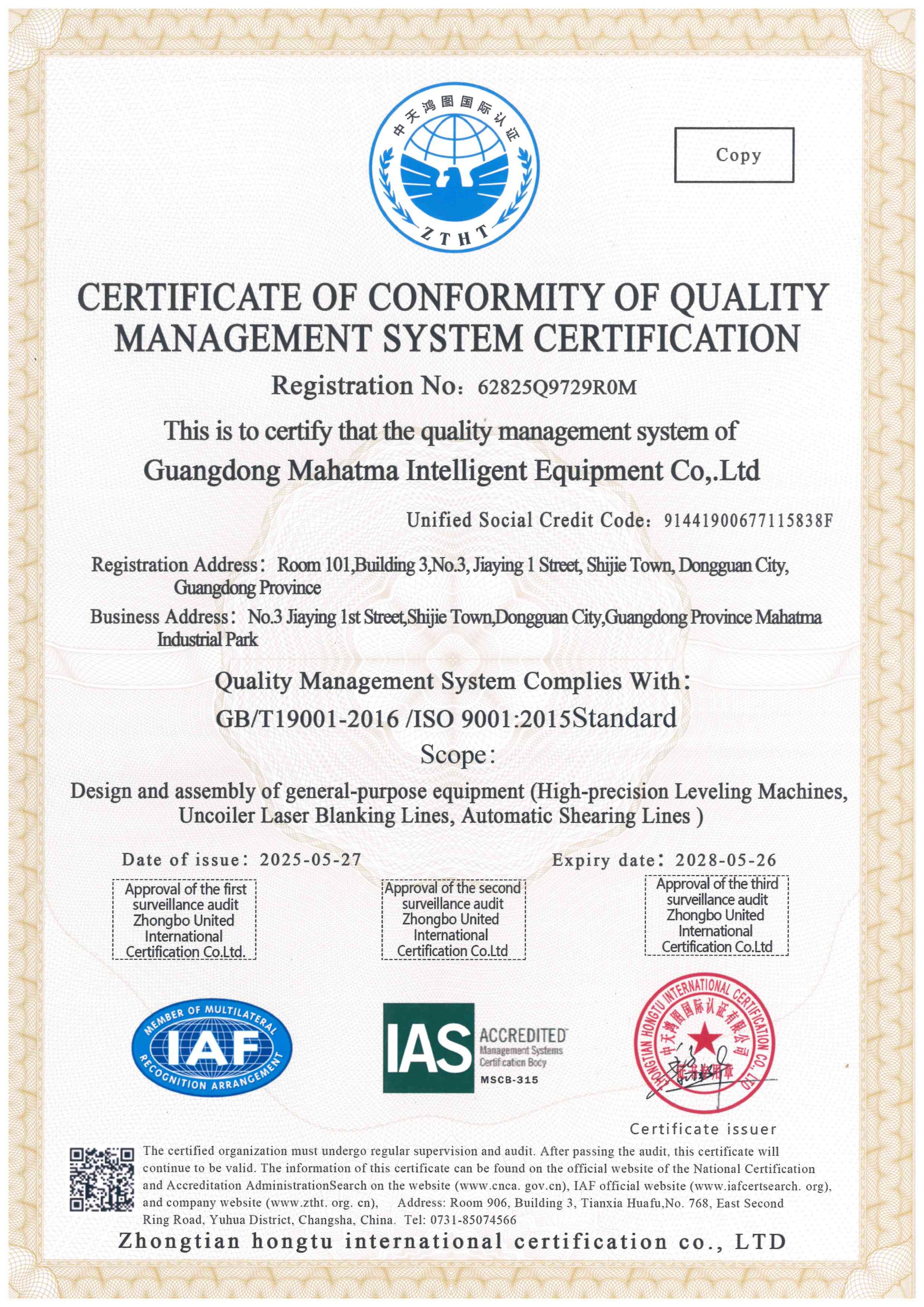
Guangdong MAHATMA Intelligent Equipment Co., Ltd. holds an ISO 9001:2015 certificate (number 62825Q9729R0M, issued 2025-05-27, valid to 2028-05-26) whose scope covers the design and assembly of high-precision leveling machines, uncoiler laser blanking lines and automatic shearing lines — that scope covers both configurations. A CE attestation of conformity is also held (M.2025.206.C113032, issued 2025-01-16, valid to 2030-01-15, scope: Hydraulic Precision Leveling Machine), issued against standards including EN ISO 12100:2010 and EN 60204-1:2018. Because CE scope is model-specific, request the Declaration of Conformity that names your exact model before final payment; for the US and Canada, specify 480V/60Hz at order.
Can one leveler handle both rough first-pass work and precision plate flatness?
Only within its rated range. MAHATMA's selection guidance is direct: a machine optimised for thick plate cannot level thin sheet precisely, and the reverse is also true; where the range is wide, the recommendation is the model with the best overlap or a two-machine plan. In practice that means deciding which job is the constraint. A VST120 rated 3.0–10.0 mm with a 20.0 mm maximum and a VSH12 rated 0.03–0.5 mm with a 1.0 mm maximum are not interchangeable, and no single entry-tier configuration covers both ends of that spread.
What drives the cost difference between a two-high and a four-high configuration?
The variables are the same ones that drive any leveler quotation: rated thickness and width envelope, roll count and roll material, control architecture and automation. MAHATMA's customisation scope names roll width and diameter, leveling thickness range, roll material (Cr12MoV or SKD11), control system integration (MES/PLC) and automated loading/unloading as the adjustable items. A wider, thicker-capacity machine with a heavier roll complement costs more than a narrow entry machine, and adding MES/ERP integration or automated handling moves the number again. Ask for the quote broken down along those lines rather than as a single figure, so the two configurations can be compared on the same basis.
Can I test my own material before committing to either configuration?
Yes, and the test is free. Send 1–2 metres of your material, or representative parts, with the grade, thickness and flatness target noted. MAHATMA levels the material on the recommended machine and returns a written flatness report with the process parameters used, plus a video of the leveling run; the test and the resulting proposal carry no charge, and you cover shipping of your material. Send your worst-condition material rather than your best — the purpose of the trial is to find the limit before the purchase order does.
What is the lead time, and can the leveler connect to our MES/ERP?
Standard lead time is 45 days, with a minimum order of 1 unit and a monthly capacity of 50 units. MES/ERP interfaces are standard on MAHATMA blanking lines and CNC levelers, and automation modules — loading carts, conveyors, robots, vision inspection, AGV — are added as proven options; supply your part envelope, takt target and current line layout early so the integration plan is engineered from real inputs. After delivery, support runs 24/7 with overseas engineers available for commissioning, regional spare parts warehouses and free operator training. To have the machine envelope checked against your coil, send the four numbers — thickness range, width, grade and flatness target — and request a quote or the catalogue.
Conclusion
The assignment resolves to one sentence you should be able to write before you request a quote: this leveler exists to make the coil feedable, or this leveler exists to make the plate flat. The first sentence points to a two-high rough leveler at the head of the line, ahead of the cut-to-length or slitting operation. The second points to a four-high plate leveler as the finishing step. Width, roll count and gauge then narrow the model within the chosen configuration — they do not choose the configuration for you.
The two tiebreakers decide the supplier rather than the machine: whether the equipment can be integrated with your MES/ERP and your existing production line, and whether the supplier will run your own material on the machine before you commit. The configuration question is engineering. The tiebreakers are risk management, and they are the part of this decision most often left until it is too late to change.
Next step: put your coil on the machine
Send 1–2 metres of your material with the grade, thickness range, width and flatness target, and MAHATMA will confirm whether the two-high or four-high configuration matches the job — or whether the gauge range calls for a precision series instead. The sample test and the resulting proposal are free.
Website: www.leveling-mht.com | Email: mhtg@gdmht.com | Tel / WhatsApp: +86 173-4062-1852
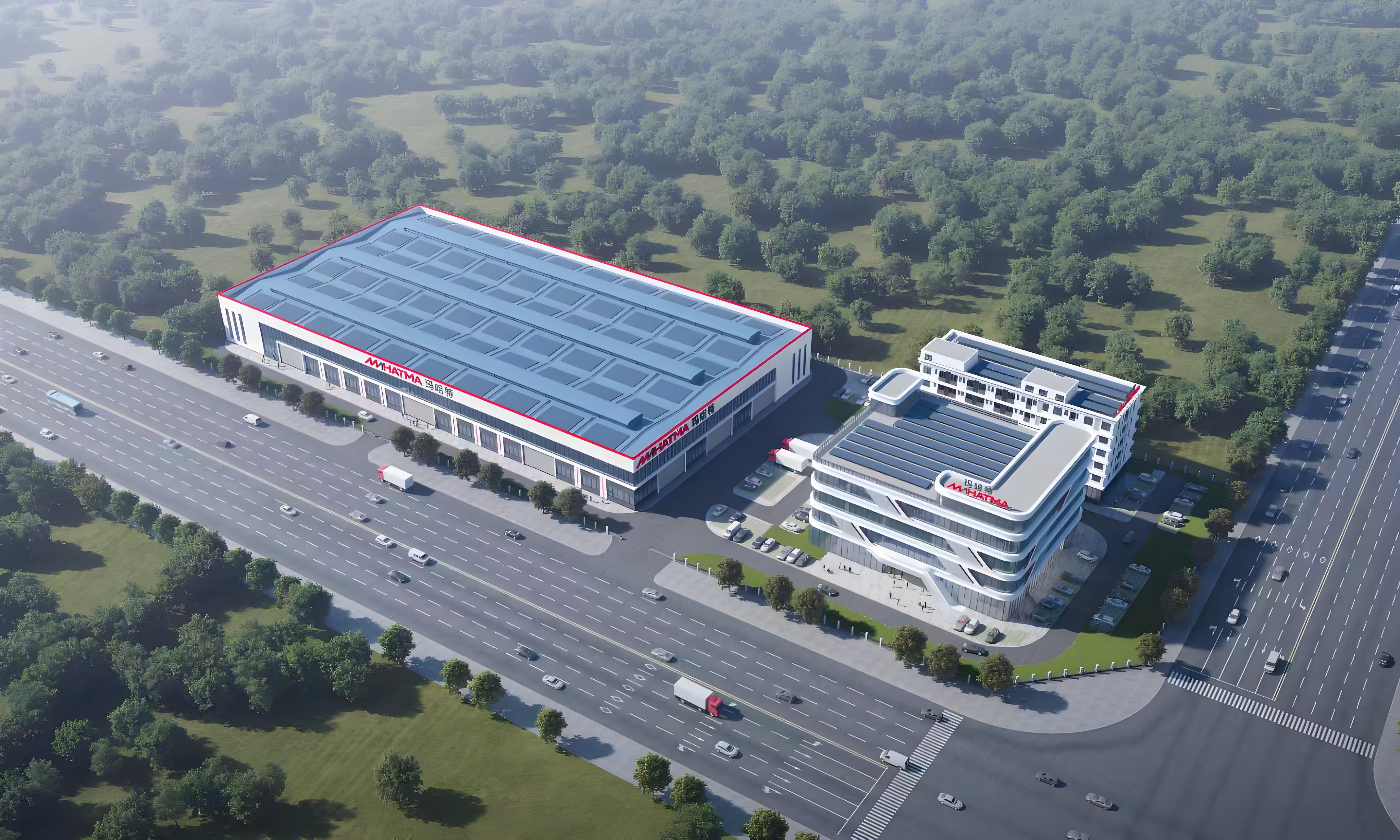
Address: Mahatma Industrial Park, No. 3, Southwest Jiaying 1st Street, Shijie Town, Dongguan City, Guangdong Province
Download the full specification catalogue: MAHATMA Leveler Brand Catalogue (English, PDF)
Have Questions or Need More Details?
Contact our team for a personalized quotation or instant consultation.
Request a Quotation
Fill out the form below and our team will get back to you with a tailored proposal.
WhatsApp Direct Chat
Prefer to chat in real-time? Message us on WhatsApp for instant assistance & quick answers.
- Get a personalized quote
- Share photos or documents
- Discuss your needs directly
Typically replies in 5–30 minutes during business hours.