Two-High vs Four-High Levelers: Roll Configuration for Coil Stock
Two-High vs Four-High Levelers: Roll Configuration for Coil Stock
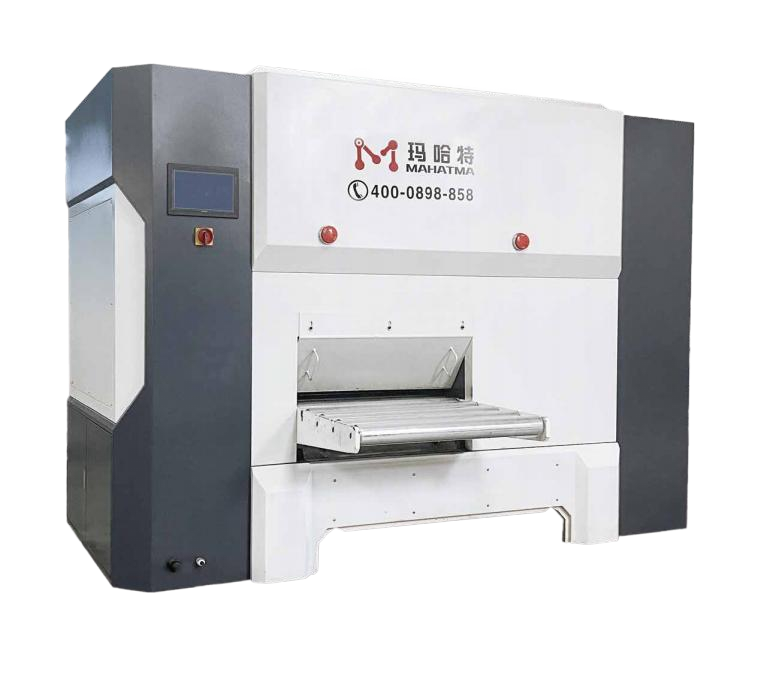
The short answer: a two-high leveler carries two layers of work rolls with nothing supporting them from behind, so it is the lowest-cost way to flatten basic stock and rough-level thick plate. A four-high leveler adds a layer of backup rolls that press against the work rolls and hold them straight under load, which sharply reduces roll deflection and raises the flatness ceiling. If your coil is thin, high-strength, or headed for laser cutting, stamping or a visible surface, the four-high configuration is usually the correct starting point.
This guide is written for buyers who are past the "what is a leveler" stage and are now specifying one. It explains what actually changes between MAHATMA's Two-high Leveler / Rough Leveler (VST42 Series) and Four-high Leveler / Plate Leveler (VSH42–VSH80 Series), how roll layers, roll count and roll diameter interact, how yield strength derates a published thickness rating, and how to run the decision in a fixed sequence instead of comparing brochures.
What the Two-High vs Four-High Decision Really Controls
Every leveler does the same physical job: it bends the strip alternately up and down across a roll stack so that the surface fibres are stretched past yield on both faces. That alternating bending, based on the Bauschinger effect, is what releases the residual stress locked into coil stock — the stress that holds coil set, edge waves and centre buckles in the material after uncoiling.
What separates a two-high machine from a four-high machine is what happens to the rolls while they are doing that work. Pushing a roll into steel generates a reaction force that tries to bow the roll away from the strip in the middle. With no support behind the work roll, the effective gap opens in the strip centre, so the flatness you set at the edges is not the flatness you get in the middle. That is the whole argument in one sentence.
Three commercial consequences follow, and all three belong in the buying decision:
- Flatness ceiling. Backup support determines how small and how consistent the roll gap stays across the full strip width. Better support means tighter and more uniform flatness on real production parts.
- Thickness and strength ceiling. Heavier and stronger stock needs more bending force, and more force means more deflection that has to be controlled rather than absorbed.
- Cost and complexity. Two-high structures are simpler and cheaper to build; four-high structures add rolls, bearings and frame stiffness, which is why the price step exists.
Where the decision goes wrong most often is at the quotation stage: a buyer compares quoted maximum thickness as if it were an absolute number, without asking which roll structure produced it and at what reference material.
Why Roll Configuration Is Now a Specification Decision
The global metal forming equipment market, which includes leveling and roll forming machines, was valued at USD 45.8 billion in 2025, with Asia Pacific taking a 42.5% revenue share (Dataintelo). Metal forming machine tools are projected to reach USD 64.85 billion by 2034 at a 9.60% CAGR (Fortune Business Insights). CNC technology already accounted for 85.7% of the machine tools market in 2025 (Grand View Research), and automotive alone represents 41.37% of sheet metal processing equipment demand in 2026 (Fortune Business Insights).
Two consequences reach the leveler specification sheet. First, levelers are increasingly bought as CNC-controlled process equipment rather than as mechanical boxes, which means the roll configuration has to be matched to a stored recipe instead of to an operator's feel. Second, cross-border supply is now routine: China's exports of metalworking machine parts rose 20.6% year on year in June 2026, with Japan, Russia, the USA, India and Vietnam among the main destinations (OEC). A roll-configuration decision is therefore also an after-sales and spare-parts decision.
Flatness itself is measured, not described. Precision leveling quantifies flatness as a height deviation in mm/m or as a dimensionless I-unit, and for hot-rolled steel plate of 3 mm and above, DIN EN 10029 defines the dimensional and shape tolerances that leveling has to satisfy. That is why a roll-configuration decision needs a numeric flatness target attached to it before the machine is specified.
How Two-High and Four-High Roll Structures Work
Roll layers, not roll count, set the flatness ceiling
The number of roll layers determines how well the small leveling rolls resist deflection under load. A two-high structure is the entry level: it suits basic jobs at the lowest cost. A four-high structure adds backup rolls that support the work rolls, sharply reducing deflection and improving flatness. A six-high structure adds intermediate rolls so the work rolls are almost fully supported, eliminating unsupported gaps — this is the configuration used for mirror panels and precision parts. More layers also mean more alternating bends and better stress relief, which is the mechanism behind every flatness claim in this article.
Roll count and roll diameter must be specified together
Roll count drives how many alternating bending cycles the strip sees as it passes through the machine. Roll diameter decides how rigid each roll is and how much bending moment it can carry before it bows. The two are traded against each other, and this is where many comparisons stop too early.
Small-diameter, closely pitched rolls deliver many bending cycles within a short machine length and are used in high-precision surface leveling, where close roll spacing helps protect surface quality; those arrangements are paired with a dust removal system to keep the strip clean. Large-diameter rolls carry far more load, which is why heavy thick-plate leveling moves to the 300–400 mm roll diameter class, supported by massive frames, high-power drives and servo-hydraulic gap control.
In MAHATMA's lineup, the VST42 Series and the VSH42 / VSH50 Series all use 19 rolls, while the VSH60 and VSH80 Series use 15 rolls. The drop in roll count as thickness rises is not a downgrade — it reflects the shift from many small bending cycles to fewer, stronger ones. For reference, the MHTM150 Series CNC leveler at 6.0–25.0 mm rated thickness is built with 15/19 rolls.
Roll hardness deserves one line in the checklist as well. Heavy-duty leveling of 0.6–4 mm plate commonly uses rollers hardened to HRC60–64 so the roll surface does not deform under continuous load — a specification point that matters if your line runs multiple shifts rather than one.
Thickness and yield strength derate the published rating
Every thickness rating on a leveler datasheet is calculated at a reference material. MAHATMA rates its models on a Q235 / 235 MPa basis. For high-strength steel, aluminum or titanium, the leveling force changes, and the capacity is recalculated rather than quoted from the catalogue. The same derating logic is applied to high-strength ship plate on heavy plate machines.
This is the step most often skipped in self-serve comparison. Two machines with identical nominal ratings can behave very differently on 700 MPa stock, because the machine that was quoted on its reference basis is now operating outside its verified envelope. The practical rule is simple: state the grade and yield strength first, then read the rating.
What MAHATMA builds in each configuration
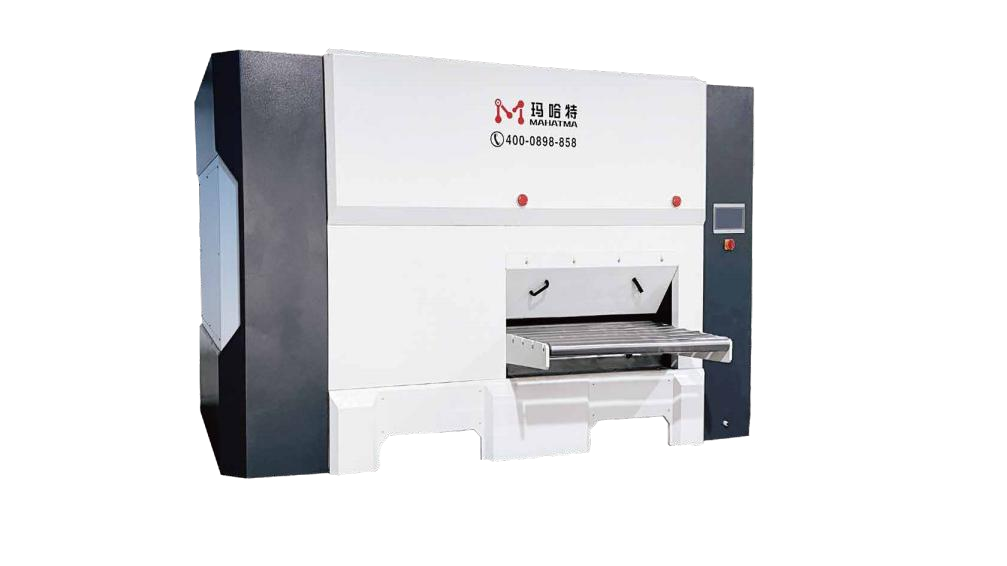
- Two-high Leveler / Rough Leveler (VST42 Series) — two-layer structure, 19 rolls, working width 200–800 mm, rated thickness 0.4–3.0 mm (maximum 6.0 mm), speed 0–10 m/min. Intended for small and medium sheet metal shops, hardware production, thick-plate rough leveling and budget-limited workshops.
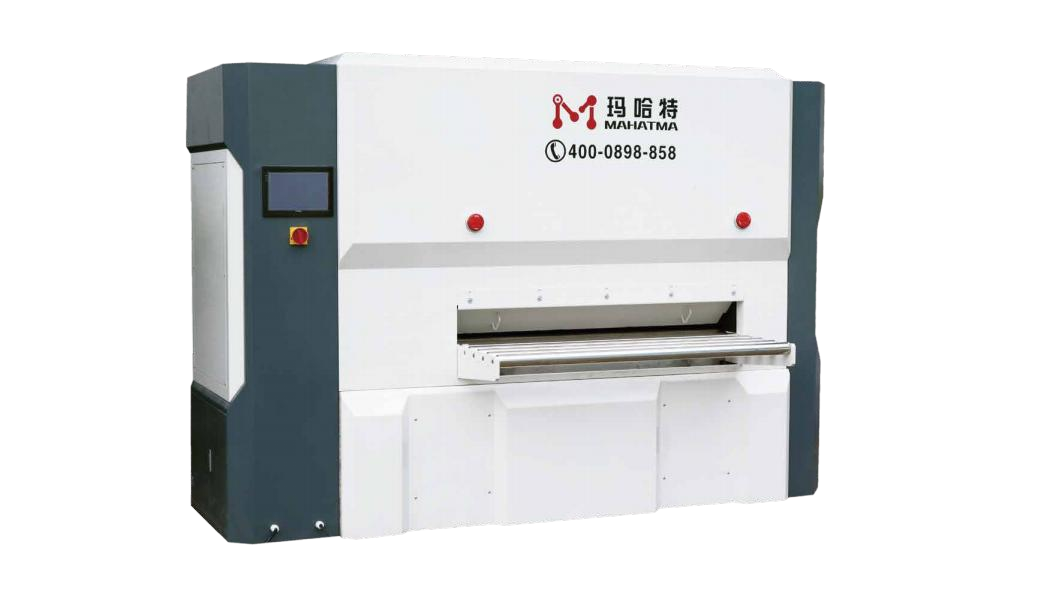
- Four-high Leveler / Plate Leveler (VSH42, VSH50, VSH60, VSH80 Series) — four-layer structure with backup roll support, 19 rolls on VSH42 and VSH50, 15 rolls on VSH60 and VSH80. Working widths 400–800 mm on VSH42/VSH60/VSH80 and 400–1,000 mm on VSH50. Rated thickness runs from 0.6–3.0 mm (VSH42) through 0.8–3.5 mm (VSH50) and 1.0–6.0 mm (VSH60) to 2.0–8.0 mm (VSH80), with maximum thickness of 5.0 mm, 6.0 mm, 10.0 mm and 14.0 mm respectively. Speed 0–10 m/min throughout.
- Higher-precision and heavier options — where the four-high ceiling is not enough, MAHATMA's CNC leveler series (MHTM) and intelligent servo-CNC series (MHTW) add servo gap control with PLC recipe memory, and the hydraulic MHTR series extends into thicker plate. Heavy plate work in shipbuilding and steel structures is served by machines in the 15–80 mm and 20–100 mm rated classes (maximum 100 mm and 120 mm).
All of these configurations run the same material families: carbon steel, stainless steel, aluminum, copper and general metals. The choice is about structure and force, not about which metals the machine can touch.
Step-by-Step: Selecting a Roll Configuration for Your Coil Stock
Run the decision in this order. Each step narrows the field before the next one starts, which prevents the usual outcome of comparing machines that were never alternatives.
- Write down the material envelope, not the average. Minimum and maximum thickness, maximum strip width, and the material family. A leveler is sized by the extreme, and one machine has to cover the full range you actually run.
- Convert the grade into leveling force. Ratings are calculated at a reference yield strength (Q235 / 235 MPa on MAHATMA models). High-strength steel, aluminum and titanium are recalculated, not estimated. If your range is wide, expect either the model with the best overlap or a two-machine plan.
- Set a numeric flatness target. Express it in mm/m² or I-units and tie it to the next process — press, laser, welding, coating. Precision series can reach flatness down to ±0.05 mm in verified cases (a 0.05 mm result on titanium fixtures), with typical production results of 0.05–0.20 mm/m², and final flatness always depends on material grade, thickness and original coil condition.
- Choose the roll layer structure. Two-high for basic leveling and thick-plate rough leveling at the lowest cost. Four-high when flatness has to hold across the width and the stock is thin, high-strength or surface-critical. Six-high only when mirror panels or precision parts justify it.
- Check roll count and roll diameter together. More rolls mean more alternating bending cycles; larger rolls mean more load capacity. Neither number is meaningful alone — read them against your thickness range and width.
- Confirm the control layer. CNC gap adjustment with stored recipes matters if you change materials often: with a full closed-loop intelligent servo control system and dynamic roll gap compensation, the machine identifies material thickness and adjusts roll gaps in real time, and MAHATMA reports setup and changeover time dropping from roughly 30 minutes to about 2 minutes compared with manual-adjustment machines.
- Verify compliance and power supply. MAHATMA has held CE certification and ISO 9001 since 2008 and builds to ISO 12100; machines are configured at the factory for the destination grid, since a standard 380V/50Hz build will not run on a 480V/60Hz US plant supply.
- Test before you commit. Send material and have the machine prove the flatness target on your own stock. This is the only step that converts a specification into evidence.
Use Cases: Which Configuration Fits Which Shop
- Budget-limited sheet metal and hardware workshop. Mixed 0.4–3.0 mm carbon steel, stainless or aluminum, flatness good enough for general fabrication and welding. This is the VST42 two-high profile: 19 rolls, 200–800 mm width, lowest entry cost, built for exactly this class of shop.
- General sheet metal shop feeding a laser or press. 0.6–3.5 mm stock where coil set and internal stress affect nesting, focus height or stamping. A four-high VSH42 or VSH50 at 19 rolls is the natural step up, because backup support keeps the gap consistent across the width.
- Thicker stock in small batches. 1.0–8.0 mm with frequent size and material changes. The VSH60 and VSH80 four-high models cover 1.0–6.0 mm and 2.0–8.0 mm rated thickness, up to 10.0 mm and 14.0 mm maximum, in the same 0–10 m/min speed band.
- Surface-critical production. Automotive parts, home appliance panels and elevator production need high surface quality under continuous medium load. These arrangements use small-diameter dense rolls to prevent surface indentation, servo motor control for precise roll gap adjustment with PLC parameter memory, and a dust removal system — with the leveler working as a stress-relief step ahead of stamping or laser cutting.
- Heavy plate in shipbuilding and steel structures. Thick carbon plate with high yield strength and welding deformation moves into a different force class: 300–400 mm roll diameters, servo-hydraulic gap control, widths up to 4,000 mm, and minimum workpiece lengths in the 480–610 mm range. Published ratings still start from Q235 / 235 MPa and are recalculated for high-strength ship plate.
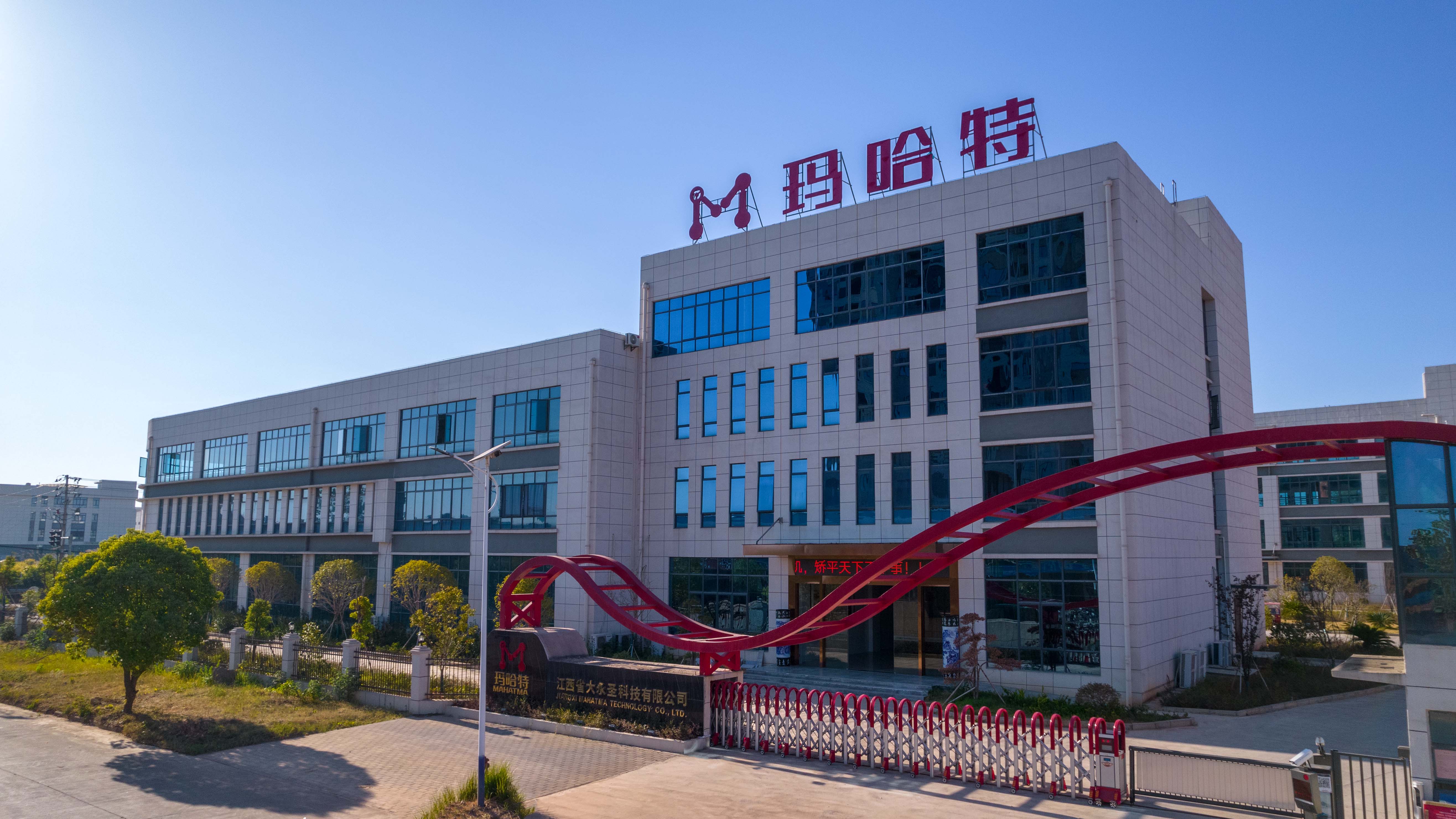
Two-High vs Four-High Leveler: Side-by-Side Comparison
The table below compares the two product categories using published MAHATMA specification data. Both configurations use the same materials and the same 0–10 m/min speed band; the difference sits in structure, thickness envelope and deflection behaviour.
| Specification | Two-high Leveler / Rough Leveler (VST42 Series) | Four-high Leveler / Plate Leveler (VSH42–VSH80 Series) |
|---|---|---|
| Roll structure | 2 roll layers — work rolls only, no backup support | 4 roll layers — work rolls plus backup rolls |
| Machine type designation | Two-layer leveling machine | Four-layer leveling machine |
| Roll count | 19 | 19 (VSH42, VSH50); 15 (VSH60, VSH80) |
| Working width | 200–800 mm | 400–800 mm (VSH42, VSH60, VSH80); 400–1,000 mm (VSH50) |
| Rated thickness | 0.4–3.0 mm | 0.6–3.0 mm (VSH42); 0.8–3.5 mm (VSH50); 1.0–6.0 mm (VSH60); 2.0–8.0 mm (VSH80) |
| Maximum thickness | 6.0 mm | 5.0 mm (VSH42); 6.0 mm (VSH50); 10.0 mm (VSH60); 14.0 mm (VSH80) |
| Speed | 0–10 m/min | 0–10 m/min |
| Materials | Carbon steel, stainless steel, aluminum, copper, general metals | Carbon steel, stainless steel, aluminum, copper, general metals |
| Deflection behaviour | Work rolls unsupported — greater gap variation toward the strip centre under load | Backup rolls support the work rolls — deflection sharply reduced and flatness improved |
| Typical application | Basic leveling and thick-plate rough leveling; small/medium sheet metal shops, hardware, budget-limited workshops | Small/medium sheet metal shops, hardware and small-batch processing where flatness matters more than first cost |
If the four-high ceiling is still not enough, the structural logic continues upward. The second table shows what each additional roll layer buys.
| Structure | Roll layers | Effect on flatness and stress relief | Typical fit |
|---|---|---|---|
| Two-high | Work rolls only | Basic precision at the lowest cost; entry level | Basic jobs, thick-plate rough leveling, budget-limited workshops |
| Four-high | Work rolls + backup rolls | Backup rolls support the work rolls, sharply reducing deflection and improving flatness | General sheet metal, thicker stock, laser and press feeding |
| Six-high | Work rolls + backup rolls + intermediate rolls | Work rolls almost fully supported; unsupported gaps eliminated; highest precision and stress relief | Mirror panels and precision parts |
FAQ
What is the real difference between 2-high, 4-high and 6-high leveler roll structures?
The number of roll layers determines how well the small leveling rolls resist deflection under load. A 2-high structure suits basic jobs at the lowest cost. A 4-high structure adds backup rolls that support the work rolls, sharply reducing deflection and improving flatness. A 6-high structure adds intermediate rolls so the work rolls are almost fully supported, eliminating unsupported gaps — the choice for mirror panels and precision parts. More layers mean more alternating bends and better stress relief. MAHATMA's Two-high Leveler / Rough Leveler (VST42 Series) and Four-high Leveler / Plate Leveler (VSH42–VSH80 Series) sit at the first two levels of that ladder.
What flatness can a leveling machine actually achieve on my parts?
MAHATMA precision series achieve flatness down to ±0.05 mm, including a verified case of 0.05 mm on titanium fixtures; typical production results run 0.05–0.20 mm/m². The mechanism is multi-roll alternating bending based on the Bauschinger effect, combined with 4-high or 6-high full-support roll structures and, on flagship models, laser 3D inspection with closed-loop correction. Final flatness depends on material grade, thickness and original coil condition, so the number should always be confirmed on your own material rather than accepted from a catalogue.
Which leveling machine manufacturer is better for precision sheet metal work?
There is no single answer, but there is a defensible way to compare. European specialists have deep track records — ARKU Maschinenbau GmbH was recognized in 2025 among Germany's top 500 hidden world market leaders in precision leveling machines, and KOHLER Maschinenbau GmbH has realized more than 6,700 reference projects in leveling technology. MAHATMA competes on comparable flatness combined with faster spare-parts support, remote diagnostics and a total cost of ownership that the company states is typically 30%+ lower than European premium machines; MAHATMA holds CE certification and ISO 9001 since 2008, works to ISO 12100, holds more than 230 patents, and its equipment has been exported to over 100 countries and regions with 28 overseas marketing and service networks. For precision sheet metal specifically, the fairest comparison is to send 1–2 m of your own material to two or three suppliers and compare the measured flatness reports, not the brochures.
What certification should I verify before signing a leveler purchase order?
For the EU, CE marking under the Machinery Directive 2006/42/EC is mandatory, and MAHATMA machines have held CE certification since 2008; ask for the Declaration of Conformity and certificate copy before final payment. ISO 9001:2015 does not certify the machine itself but the manufacturer's quality management system, so verify the certificate is current, issued by an accredited body, and covers the actual manufacturing entity rather than a trading company. For the USA and Canada there is no CE equivalent — electrical panels are commonly expected to follow NFPA 79, and a local inspector (AHJ) may require NRTL field evaluation. Voltage adaptation is also a mandatory specification, not an option: US plants run 480V/3-phase/60Hz rather than the standard 380V/50Hz, and MAHATMA configures export machines at the factory for the destination grid.
Can I test my own material on the machine before buying?
Yes, and the sample test is free. Send 1–2 meters of your material, or your typical parts, together with the material grade, thickness and your flatness target; MAHATMA levels it on the recommended machine and returns a written flatness report and a process video within days. The reasoning is straightforward: performance claims should be verified on your actual material rather than on brochure numbers, which removes the biggest purchase risk in this category. Test your worst-condition material, not your best.
Conclusion: Match the Roll Layers to the Coil, Then Verify
The two-high versus four-high decision is not a quality judgement — it is a structural match. Two-high machines such as the MAHATMA VST42 Series put two layers of work rolls on the job at the lowest cost, which is the right answer for basic leveling and thick-plate rough work. Four-high machines from the VSH42 to VSH80 Series add backup support behind the work rolls, cut deflection, and extend the usable envelope from 0.4–3.0 mm up to 2.0–8.0 mm rated thickness with maximum thickness of 14.0 mm. Above that, six-high structures and the hydraulic MHTR classes take over, with roll diameters in the 300–400 mm range for heavy plate.
The sequence that gets it right is short: define the material envelope, convert the grade to leveling force against the Q235 / 235 MPa reference, set a numeric flatness target, choose the roll layer structure, check roll count and roll diameter together, confirm the control layer and compliance, and then prove it on your own stock. Every one of those steps is decided by facts about your material — which is why the last step, the sample test, is the one that settles the purchase.
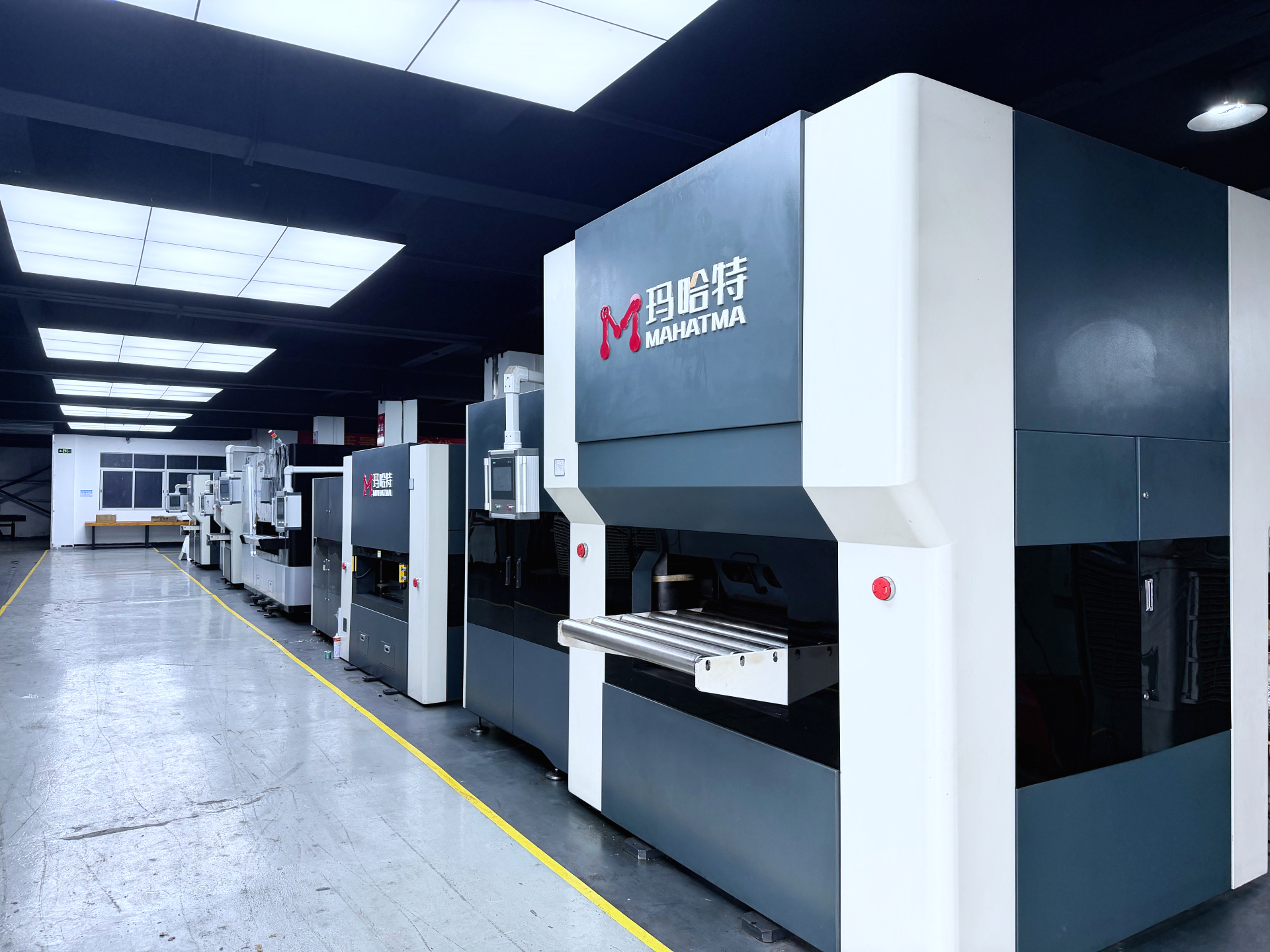
Send 1–2 Meters of Your Coil Stock and Get a Flatness Report
MAHATMA test runs the recommended two-high or four-high configuration on your own material and returns a written flatness report with the process parameters used, plus a video of the leveling run. There is no charge for the test or for the machine proposal.
Contact: Jack · Email: mhtg@gdmht.com · Tel / WhatsApp: +86 173-4062-1852
Website: www.leveling-mht.com
Company brochure (PDF): Download the MAHATMA product brochure
Guangdong MAHATMA Intelligent Equipment Co., Ltd. — founded in 2008, headquartered in Dongguan, Guangdong Province, operating a 50,000 m² facility with 300 employees, 26 R&D engineers and an annual output of 500 sets of leveling equipment.