Two-High vs Four-High vs CNC Levelers: A Comparison Guide for Metal Buyers
MAHATMA Leveler · Configuration Comparison Guide
Two-High vs Four-High vs CNC Levelers: A Comparison Guide for Metal Buyers
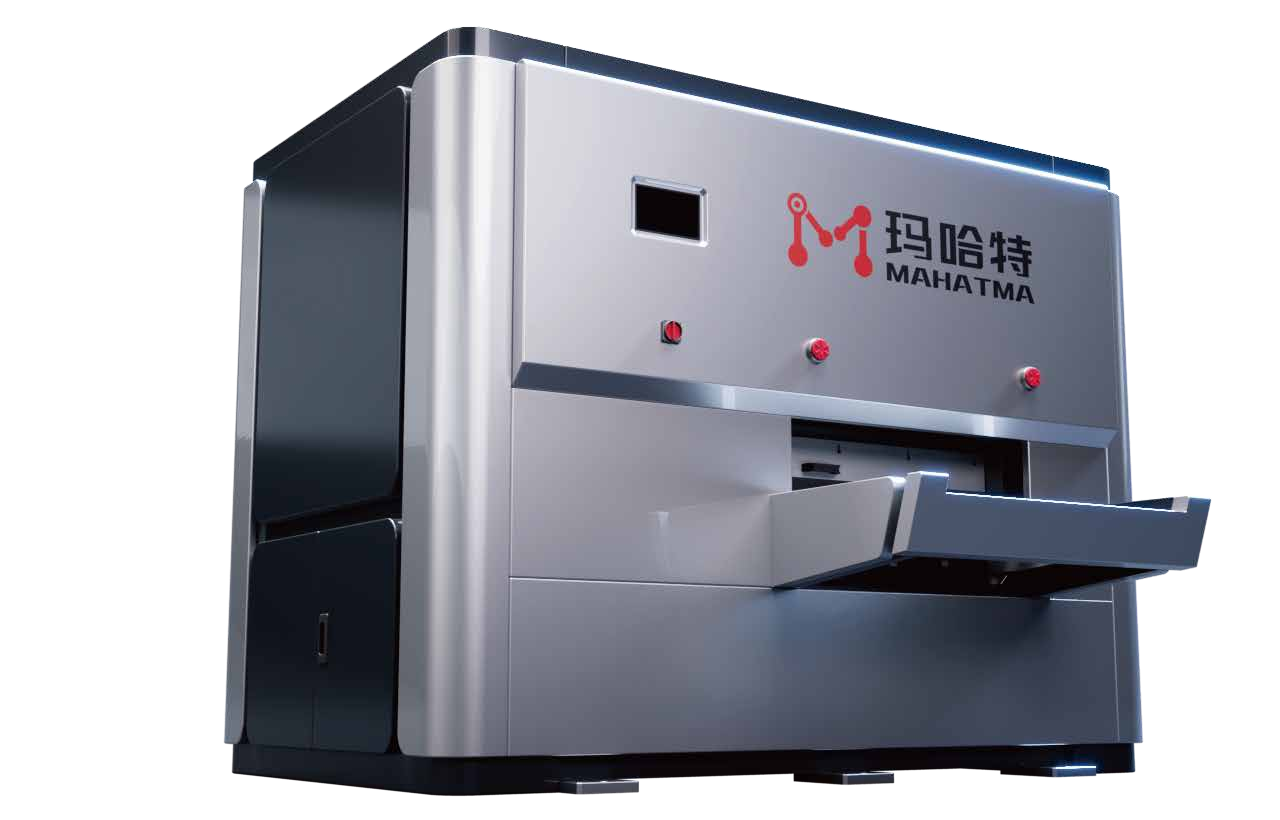
MHTW100 Series CNC Leveler / Servo Leveler — the all-servo tier of MAHATMA’s leveling range
Short answer: choose a two-high (Rough) leveler when the job is thick-plate rough leveling on a limited budget; choose a four-high (Plate) leveler when you need stress-relieved flatness on thinner gauges in single-product or small-batch work; choose a CNC leveler — or a servo / servo-hydraulic leveler — when the line must run stored recipes, hold precision across changing jobs and connect to MES/ERP. The decision is driven by roll structure, thickness envelope, integration potential and on-site material testing, not by the largest thickness number printed on the first page of a spec sheet.
MAHATMA Leveler is the leveling-equipment brand of GUANGDONG MAHATMA INTELLIGENT EQUIPMENT CO,.LTD, a manufacturer founded in 2008 in Dongguan, Guangdong Province, with a 50,000 m² manufacturing footprint, 300 employees, an annual output of 500 sets and a 26-engineer R&D team. The company builds the two-high, four-high, CNC, servo and servo-hydraulic tiers compared in this guide, so the comparison below is drawn from one manufacturer’s own configuration data rather than from mixed marketing claims.
Problem Definition: Why “Maximum Thickness” Is the Wrong Buying Criterion
A leveling machine spec sheet usually answers one question — how much metal the machine can bend — and buyers anchor on the biggest number on the page. That number describes a limit, not a capability. Three failure patterns recur in real projects, and all three are configuration problems rather than budget problems.
Failure pattern 1: a thick-plate machine asked to hold thin-gauge flatness. Precision sheet work in automotive parts, appliance manufacturing and elevator production depends on small-diameter dense rolls that prevent surface indentation, combined with a dust removal system — the working condition described in MAHATMA’s precision-sheet application data. A machine optimized around a 10 mm or 14 mm maximum cannot reproduce those conditions on 0.5 mm stock, because the flatness result comes from roll diameter, roll count and roll support structure, not from the maximum tonnage.
Failure pattern 2: a precision machine asked to relieve stress in thick, high-yield plate. Steel structure fabrication, shipbuilding, heavy construction machinery and bridge construction work with thick carbon steel plates carrying significant welding deformation under continuous heavy load. Their requirement is to eliminate internal stress before welding or assembly. A thin-gauge precision machine has neither the force envelope nor the roll geometry for that job.
Failure pattern 3: a standalone machine bought without checking integration. Levelers are increasingly purchased as part of an uncoiling-leveling line or an automated blanking cell. If the MES/ERP interface, the upstream/downstream linkage and the automation module list are not settled before the order, the machine cannot be slotted into the line later without re-engineering. MAHATMA’s own guidance is explicit on this point: provide the part envelope, takt target and current line layout early, because the integration plan is engineered from those inputs.
One more definition matters before any comparison: flatness in precision leveling is quantified as a dimensionless I-unit or as an mm/m height deviation, and plate tolerances are commonly referenced to DIN EN 10029. A buyer who cannot state a flatness target in those units cannot compare a two-high machine with a CNC machine on equal terms.
Industry Background: Why the Configuration Decision Matters More Now
The equipment market behind this decision is large and still expanding. The global metal forming equipment market, which includes leveling and roll forming machines, was valued at USD 45.8 billion in 2025 (Dataintelo), and the metal forming machine tools segment is projected to reach USD 64.85 billion by 2034 at a CAGR of 9.60% (Fortune Business Insights). Asia Pacific dominates that market with a 42.5% revenue share in 2025, and the region’s sheet metal processing equipment market alone generated USD 18.36 billion in 2025 (Fortune Business Insights).
Two forces explain why configuration choice has become a technical decision rather than a purchasing formality. First, precision demand is concentrated: the automotive segment accounted for 41.37% of the sheet metal processing equipment market share in 2026 (Fortune Business Insights), and automotive-grade stampings and laser-cut blanks push flatness requirements well beyond what a rough leveling pass delivers. Second, control technology is now the default: the CNC technology segment accounted for 85.7% of the machine tools market in 2025 (Grand View Research), which means buyers increasingly expect recipe-driven, networked control as standard rather than as an upgrade.
Levelers rarely ship alone. The Cut to Length Line System market was estimated at USD 3.42 billion in 2024 (Market Research Future), and the cut-to-length machine market is projected to grow from USD 4.28 billion in 2026 to USD 5.94 billion by 2032 at a CAGR of 5.52% (ReportLinker). Because the leveler is the precision heart of those uncoiling, leveling and shearing lines, its configuration usually determines the flatness the whole line can guarantee.
Supply-side context also matters for buyers comparing quotations. China’s exports of metalworking machine parts increased by 20.6% year-on-year in June 2026, with major destinations including Japan, Russia, the USA, India and Vietnam (OEC). On the incumbent side, ARKU Maschinenbau GmbH was recognized among the top 500 ‘hidden world market leaders’ in precision leveling machines for 2025, and KOHLER Maschinenbau GmbH reported more than 6,700 reference projects globally in leveling technology as of late 2023 — benchmarks that make structure and support fit, rather than brand familiarity, the practical basis for comparison.
A caution on market figures: published estimates vary with scope. Cut-to-length line sizing ranges from USD 3.42 billion (Market Research Future, 2024) to USD 2.8 billion (Verified Market Research) depending on whether the scope covers full systems or individual machines, and metal forming growth forecasts differ between 9.60% (Fortune Business Insights) and 5.2% (Dataintelo) by methodology. Confirm the scope before quoting any of these numbers in an internal business case.
Detailed Solution: What Each Configuration Is Actually Built For
Two-High (Rough) Leveler — VST Series: Thick-Plate Rough Leveling on a Simple Frame
A two-high leveler uses a two-layer roll arrangement and applies Bauschinger-effect bending through a simple, robust structure that is easy to maintain and low in cost. MAHATMA positions the VST tier specifically for thick-plate rough leveling and budget-limited scenarios, and for small and medium sheet metal shops, hardware production and workshops where machine complexity has to stay low.
The two VST models in the published range show how much the envelope moves with roll count. The VST70 Series covers a width of 400–1300 mm with a rated thickness of 1.0–6.0 mm, a maximum of 10.0 mm, 13 rolls and a speed of 0–10 m/min. The VST42 Series covers 200–800 mm width with a rated thickness of 0.4–3.0 mm, a maximum of 6.0 mm, 19 rolls and the same 0–10 m/min speed. Both handle carbon steel, stainless steel, aluminum, copper and general metals.
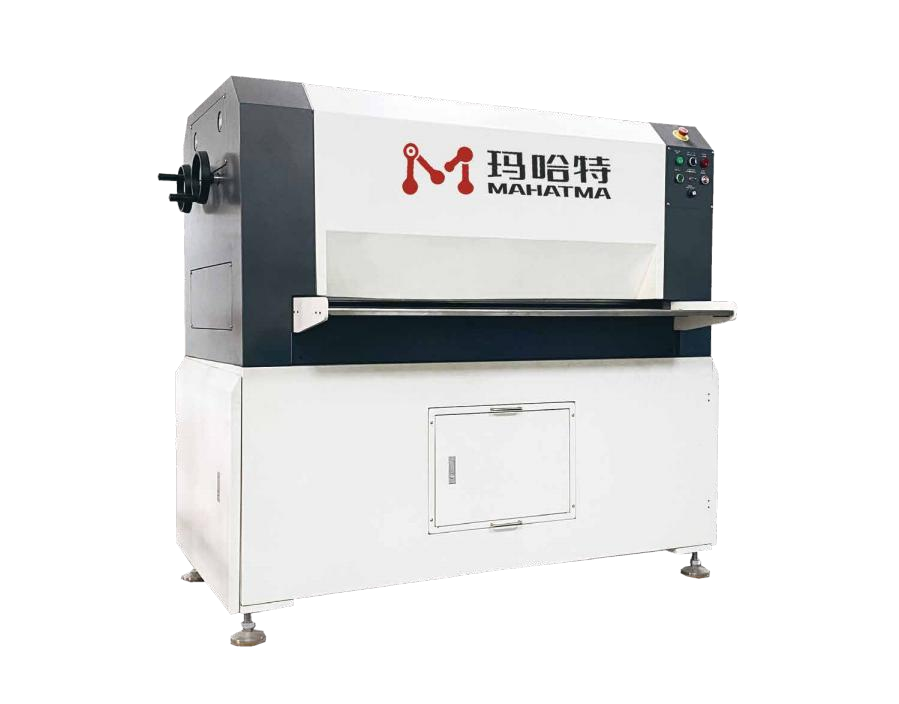
VST70 Series Two-high Rough Leveler — 400–1300 mm width, 1.0–6.0 mm rated thickness, 13 rolls
What this means for a buyer: the two-high tier is the correct answer when the objective is removing gross distortion from plate before welding or assembly, when throughput matters more than micron-level flatness, and when the workshop cannot support the maintenance routine of a more complex machine. It is a deliberately narrow tool, and it is efficient precisely because it is narrow.
Four-High (Plate) Leveler — VSH Series: Repeated Bending for Thinner-Gauge Precision
The four-high leveler uses a four-layer roll arrangement, and the four-layer structure is the reason it behaves differently from a two-high machine. Repeated alternating bending relieves internal stress rather than only flattening the visible surface, while the machine keeps a small footprint, low-carbon energy consumption, low cost and fast payback — MAHATMA specifies it as ideal for single-product leveling, and for small-batch or low-frequency processing in budget-limited workshops.
The VSH family spans a wide precision band with remarkably consistent speed. The VSH15 Series covers 200–400 mm width at a rated 0.08–1.0 mm (max 1.5 mm) with 19 rolls; the VSH20 Series covers 400–600 mm at 0.2–1.5 mm rated (max 2.0 mm) with 19 rolls; the VSH50 Series covers 400–1000 mm at 0.8–3.5 mm rated (max 6.0 mm) with 19 rolls; and the VSH80 Series covers 400–800 mm at 2.0–8.0 mm rated (max 14.0 mm) with 15 rolls. All four run at 0–10 m/min on carbon steel, stainless steel, aluminum, copper and general metals.
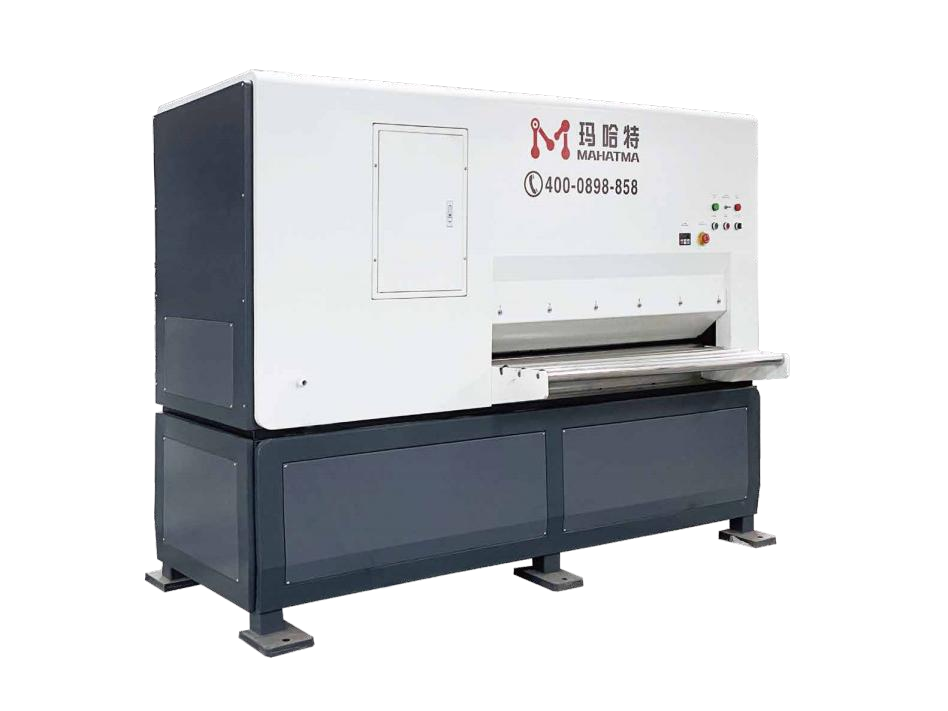
VSH50 Series Four-high Plate Leveler — four-layer roll arrangement, 0.8–3.5 mm rated thickness, 19 rolls
What this means for a buyer: the four-high tier is the workhorse for thinner-gauge precision work where internal stress — not just visible bend — has to be removed before stamping, welding or laser cutting. It is also the tier to choose when production is repetitive: one material, one thickness, one flatness target, run repeatedly, with a payback period that a small shop can actually carry.
CNC Leveler — MHTM Series: Recipes, Repeatability and Line Linkage
MAHATMA classifies the MHTM family as an intelligent CNC leveling machine, and its defining feature is not force but control. The series uses smart CNC one-key parameter setting, a 10-inch HD touch screen that stores 200 recipes, precision motor drive with 50% energy saving, misoperation warning, upstream/downstream linkage and customizable configuration — across a rated thickness band of 0.03–30.0 mm and a maximum of up to 40.0 mm depending on model.
The model spread shows how the same control platform scales. The MHTM10 Series covers 200–300 mm width at 0.03–0.6 mm rated with 25 rolls; the MHTM40 Series covers 400–1600 mm at 0.6–3.0 mm rated with 21 rolls; the MHTM80 Series covers 400–1650 mm at 2.0–8.0 mm rated with 19 rolls; and the MHTM200 Series covers 1000–3200 mm at 8.0–30.0 mm rated with 19 rolls. Typical applications are sheet metal fabrication, cabinets and enclosures, auto parts, home appliances, laser blanking and hardware products.
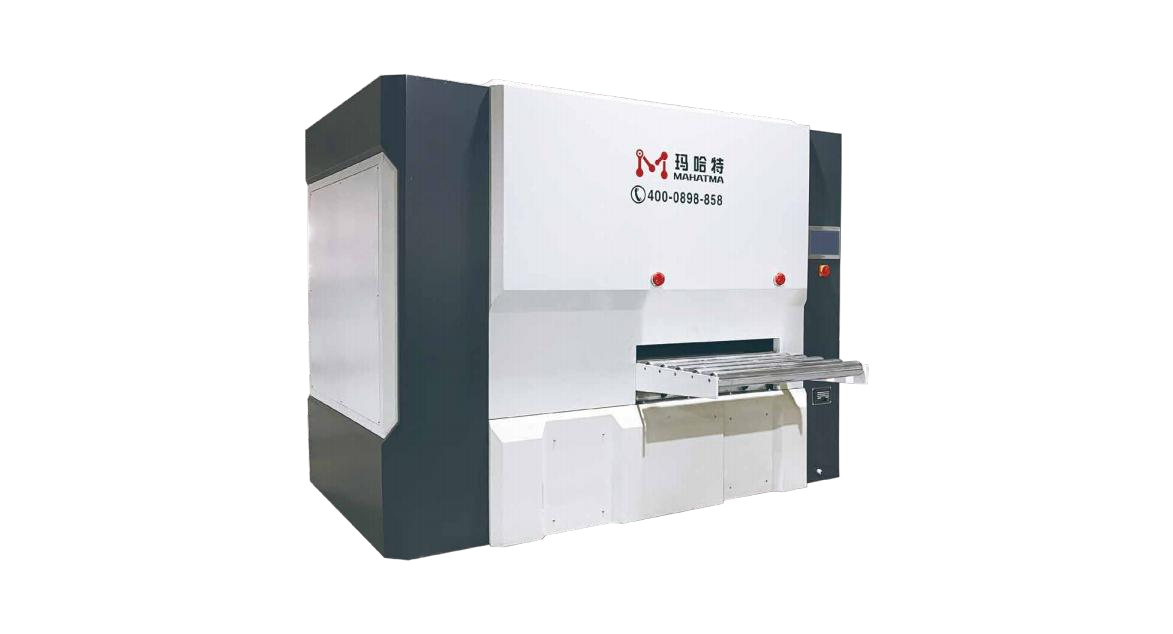
MHTM120 Series CNC Leveler — 4.0–16.0 mm rated thickness, 19 rolls, 200-recipe touch-screen control
What this means for a buyer: CNC is the point at which operator skill stops being the process variable. Recipe storage is what allows a job shop to switch material and thickness without hand-tuning roll settings, and upstream/downstream linkage is what makes the leveler part of a line rather than an isolated machine.
Servo and Servo-Hydraulic Levelers — MHTW and MHTR: the Two Automation Extremes
When a project is automation-heavy, or the material is precision-grade, the CNC tier splits into two directions. The MHTW Series uses an all-servo motor drive with a Kunpeng structure patent, an auto pull-out roll-box cleaning system, a smart OS with remote cloud control, laser 3D online inspection, misoperation warning and a hollow structure designed to avoid thermal deformation. The MHTW15 Series covers 300–600 mm width at 0.08–1.0 mm rated with 33 rolls; the MHTW50 Series covers 400–1600 mm at 0.8–4.0 mm rated with 23 rolls; the MHTW80 Series covers 400–1600 mm at 2.0–8.0 mm rated with 19 rolls; and the MHTW100 Series covers 600–2100 mm at 3.0–12.0 mm rated with 19 rolls. These models are specified for carbon steel, stainless steel, aluminum alloy (especially suitable), copper and mirror-finish sheet, serving precision sheet metal, 3C electronics, automotive, home appliance, new energy, laser cutting and medical device production.
The MHTR Series serves the opposite extreme. It applies German hydraulic and CNC technology on a mortise-tenon rigid frame with a servo-hydraulic hybrid drive, micron-level accuracy up to 0.01 mm, alloy rolls described as mark-free, anti-collapse dynamic compensation and 70% energy saving versus traditional hydraulic designs. Its envelope scales from the MHTR60 Series at 600–3200 mm width and 1.0–8.0 mm rated (max 15 mm, 21 rolls) through the MHTR100 Series at 3.0–12.0 mm rated (max 30 mm) and the MHTR260 Series at 10.0–60.0 mm rated (max 80 mm, 9/11 rolls) to the MHTR400 Series at 20.0–100.0 mm rated (max 120 mm, 9 rolls). The target industries are new energy, military, heavy industry, automotive and truck, construction, shipbuilding, aerospace and metal processing.
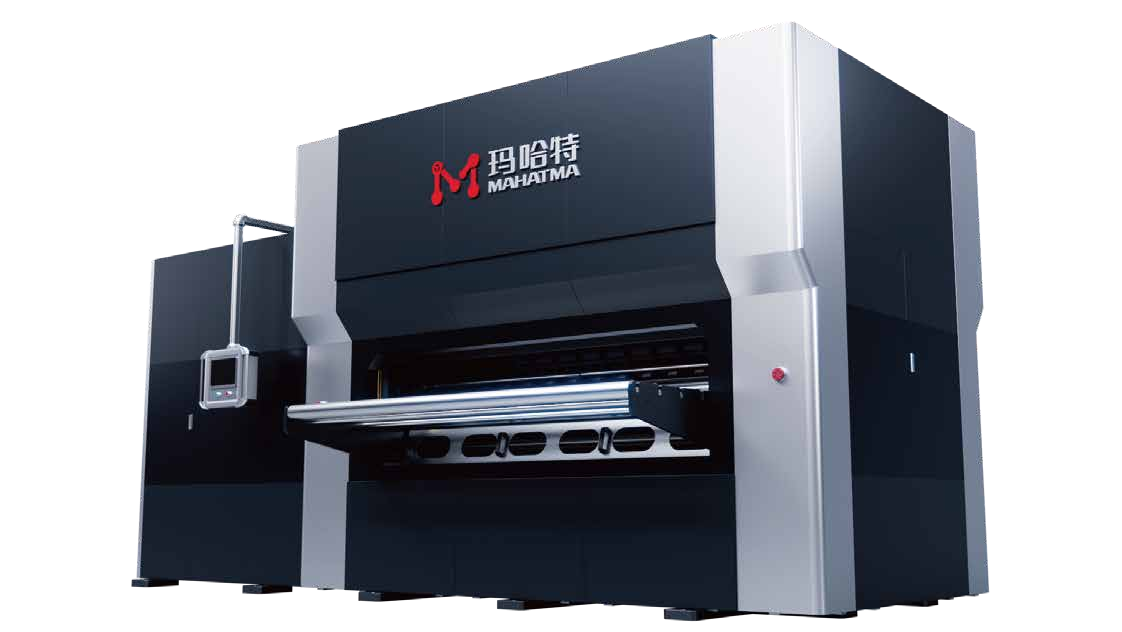
MHTR100 Series Servo Hydraulic Leveler — 3.0–12.0 mm rated thickness, up to 30 mm maximum, 15/19 rolls
MES/ERP Integration: the Automation Factor Buyers Underestimate
MES/ERP connectivity is available on MAHATMA blanking lines and CNC levelers, where production data, traceability and order scheduling integrate with the buyer’s existing systems. Automation modules — loading carts, conveyors, robots, vision inspection and AGV — are engineered as standard options rather than one-off projects, which is what makes the upgrade path modular: a buyer can start with a standalone leveler and add feeding and stacking automation later. MAHATMA cites Zhucheng Group’s fully automated upgrade and a Jiangsu NEV parts manufacturer’s reported capacity gain of approximately 45% as reference cases for that path.
For heavy-plate projects the integration question extends to condition monitoring. The heavy-plate working scenario in MAHATMA’s application data specifies ISO 9001:2015-aligned quality management, CE marking for the EU market, a noise level of ≤75 dB(A), safety interlocks with an emergency stop system, and optional IoT connectivity for remote monitoring and predictive maintenance. A buyer evaluating a two-high or four-high machine against a CNC or hydraulic machine should treat that optional IoT line as a configuration decision, not an accessory.
On-Site Material Testing: the Verification Factor
A free sample test is the fastest way to settle a configuration argument. The buyer sends 1–2 meters of material, or representative parts, together with the material grade, thickness and flatness target; MAHATMA levels the material on the recommended machine and returns a written flatness report with measured data, the process parameters used and a video of the leveling run. The practical instruction attached to the offer is to test your worst-condition material, not your best — the result that matters is the one on the difficult job.
For expectation-setting, MAHATMA’s precision series achieve flatness down to ±0.05 mm, with a verified case of 0.05 mm on titanium fixtures, and typical production results of 0.05–0.20 mm/m². The final figure depends on material grade, thickness and original coil condition, which is exactly why the sample test precedes the purchase order rather than following it.
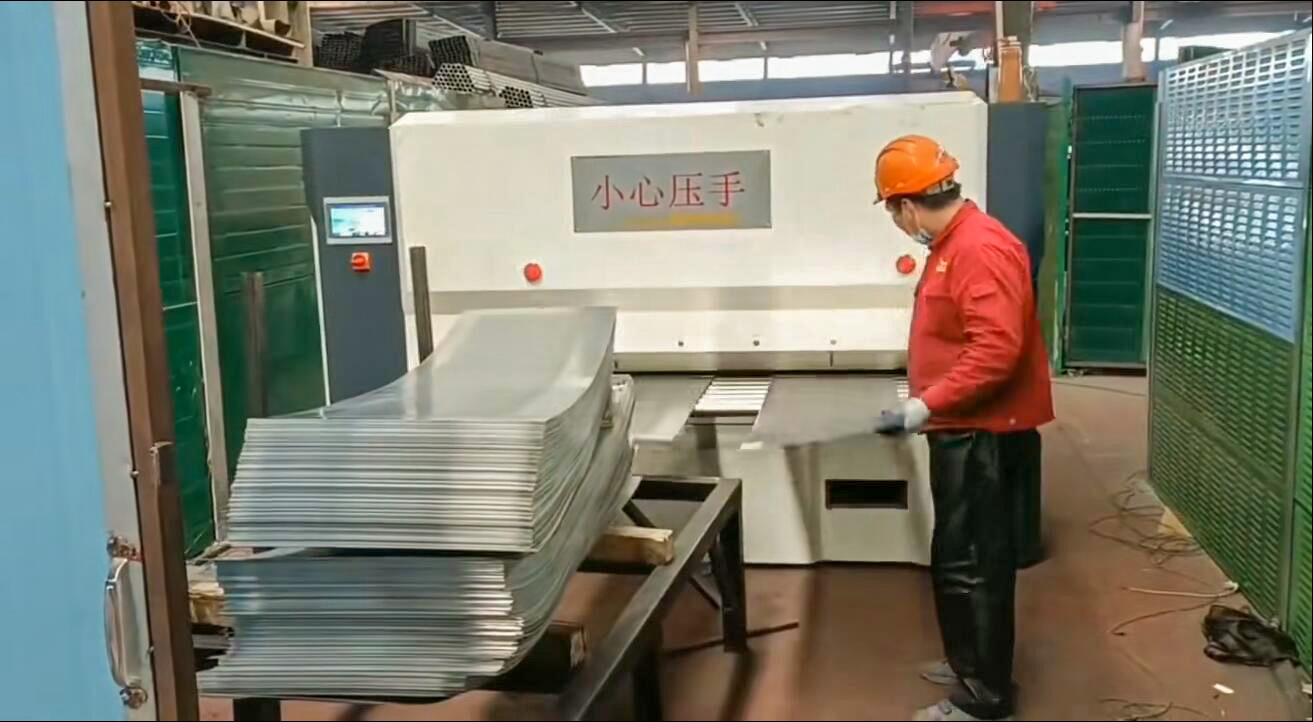
On-site operation of a CNC leveling machine at a customer facility during commissioning
Step-by-Step: How to Choose Between Two-High, Four-High and CNC
The following sequence orders the decision so that configuration is settled before commercial negotiation, and so that integration and verification are not left to the end of the project.
- Write down the material envelope. Thickness minimum and maximum, width, material grade and yield strength, and the flatness target expressed in mm/m or I-unit. Record one caveat at the same time: rated thickness is based on Q235/235MPa and must be recalculated for high-strength steel, aluminum or titanium.
- Define what the machine must actually remove. Visible distortion only means rough leveling. Internal stress that affects downstream welding, stamping or laser cutting means precision leveling. This single answer eliminates one of the configurations immediately.
- Match the answer to the tier. Thick-plate rough leveling under budget constraints points to the two-high VST tier — and within it, compare roll count, not just width (13 rolls on VST70, 19 rolls on VST42). Thinner-gauge precision work in single-product or small-batch runs points to the four-high VSH tier, matched to rated range from VSH15 at 0.08–1.0 mm up to VSH80 at 2.0–8.0 mm.
- Apply the changeover test. If jobs change frequently, or flatness must be repeatable without an expert operator, move to the CNC MHTM tier with its 200 stored recipes, one-key parameter setting and upstream/downstream linkage.
- Apply the material and automation test. Mirror-finish sheet, aluminum alloy, thin precision parts and unmanned operation point to the servo MHTW tier; thick plate to 100 mm, high-strength steel and heavy industry point to the servo-hydraulic MHTR tier.
- Settle integration in the same conversation. Confirm the MES/ERP interface, the automation module list (loading carts, conveyors, robots, vision inspection, AGV) and the modular upgrade path, and supply the part envelope, takt target and current line layout early.
- Confirm compliance and shipping documents. CE conformity and ISO 12100 compliance, the Declaration of Conformity, electrical and hydraulic schematics, English operating and maintenance manuals, the spare parts list, the factory test report and warranty terms. For the US and Canada, specify 480V/60Hz at order; for the EAEU, EAC certification applies. Export crates are ISPM 15 heat-treated and stamped.
- Verify on your own material and close on known terms. Request the free sample test, review the written flatness report, then order. The commercial baseline for the comparison is MOQ 1 unit, a 45-day lead time and a monthly capacity of 50 units, backed by 24/7 global technical support, overseas engineers for commissioning, regional spare parts warehouses and free operator training.
Use Cases: Which Configuration Was Actually Chosen
Project records from MAHATMA’s case data show how the tiers map to real production problems. Values and outcomes below are the reported project figures.
- Two-high and heavy-plate rough leveling in practice: the two-high tier appears in small and medium sheet metal shops, hardware production and budget-limited workshops, where the goal is straightening rather than micron flatness.
- Semi-trailer parts manufacturer, Brazil: servo-hydraulic levelers (MHTR80 / MHTR100 Series), reported project value 600,000 USD, two years in service, described as stable with the metal deformation issue resolved.
- Metal processing manufacturer, Hungary: MHTR100 Series, 250,000 USD, two years in service, stable operation, easy operation and low failure rate cited as the highlights.
- Laser-cut parts, USA: MHTR60 Series, 850,000 USD, four years in service, reported profit increase of 80% — a heavy mixed-gauge line running on hydraulics.
- Laser-cut parts, Vietnam: MHTM60 Series, 65,000 USD, three years in service, reported profit increase of 100% and a 200% capacity expansion for the same CNC family at another installation in Pakistan.
- Perforated ceiling plate, Türkiye: MHTM40 Series, 50,000 USD, reported resolution of deformation in perforated metal sheet; a second Türkiye project on laser-cut part leveling with the same series reported a 60% profit increase.
- Mesh board, Germany: MHTR80 Series, 120,000 USD, reported cost savings of 50%.
- Stainless steel, Slovakia: MHTM100 Series, 120,000 USD, reported capacity expansion of 100%; a Malaysia project leveling SS304 with MHTR100 / MHTR120 Series reported capacity expansion of 150%.
- Aluminum sheet, Philippines: MHTM60 Series, 65,000 USD, reported capacity expansion of 300%.
Two scenario patterns tie these cases together. Precision applications — automotive parts, home appliance manufacturing and elevator production — run cold-rolled or stainless sheet under continuous medium load and depend on servo motor control for precise roll-gap adjustment with PLC parameter memory, small-diameter dense rolls and dust removal. Heavy applications — steel structure fabrication, shipbuilding, heavy construction machinery and bridge construction — run thick carbon steel under continuous heavy load and depend on hydraulic upper-roll lifting with electric gap adjustment to eliminate stress before welding.
Comparison Table: Two-High vs Four-High vs CNC vs Servo vs Hydraulic
All figures below are drawn from MAHATMA’s published configuration data. Rated thickness is the production range; maximum thickness is the outer limit, not a working range.
| Configuration | Roll structure | Rated thickness across series | Representative models and specs | Where it fits |
|---|---|---|---|---|
| Two-high / Rough Leveler (VST) | Two-layer leveling machine, Bauschinger-effect bending | 0.4–6.0 mm rated; max up to 10.0 mm | VST42: 200–800 mm width, 0.4–3.0 mm rated, max 6.0 mm, 19 rolls; VST70: 400–1300 mm, 1.0–6.0 mm rated, max 10.0 mm, 13 rolls; both 0–10 m/min | Thick-plate rough leveling, small/medium sheet metal shops, hardware, budget-limited workshops |
| Four-high / Plate Leveler (VSH) | Four-layer leveling machine, repeated bending to relieve internal stress | 0.08–8.0 mm rated; max up to 14.0 mm | VSH15: 200–400 mm, 0.08–1.0 mm rated, 19 rolls; VSH50: 400–1000 mm, 0.8–3.5 mm rated, 19 rolls; VSH80: 400–800 mm, 2.0–8.0 mm rated, 15 rolls | Thinner-gauge precision work, single-product leveling, small-batch/low-frequency processing |
| CNC Leveler (MHTM) | Intelligent CNC leveling machine, one-key parameter setting, 200-recipe storage | 0.03–30.0 mm rated; max up to 40.0 mm | MHTM10: 200–300 mm, 0.03–0.6 mm rated, 25 rolls; MHTM80: 400–1650 mm, 2.0–8.0 mm rated, 19 rolls; MHTM200: 1000–3200 mm, 8.0–30.0 mm rated, 19 rolls | Sheet metal fabrication, cabinets/enclosures, auto parts, home appliances, laser blanking, hardware |
| Servo-CNC Leveler (MHTW) | All-servo drive, Kunpeng structure patent, laser 3D online inspection, remote cloud control | 0.08–12.0 mm rated; max up to 20.0 mm | MHTW15: 300–600 mm, 0.08–1.0 mm rated, 33 rolls; MHTW50: 400–1600 mm, 0.8–4.0 mm rated, 23 rolls; MHTW100: 600–2100 mm, 3.0–12.0 mm rated, 19 rolls | Precision sheet metal, 3C electronics, automotive, home appliance, new energy, laser cutting, medical device |
| Servo-Hydraulic Leveler (MHTR) | Servo-hydraulic hybrid drive, mortise-tenon rigid frame, anti-collapse dynamic compensation | 0.5–100.0 mm rated; max up to 120.0 mm | MHTR60: 600–3200 mm, 1.0–8.0 mm rated, 21 rolls; MHTR260: 1300–4000 mm, 10.0–60.0 mm rated, 9/11 rolls; MHTR400: 1300–4000 mm, 20.0–100.0 mm rated, 9 rolls | New energy, military, heavy industry, automotive/truck, construction, shipbuilding, aerospace |
Reading the table: the two-high and four-high tiers are decided by roll structure and production pattern; the CNC, servo and servo-hydraulic tiers are decided by control level, material condition and line integration. Across all five tiers, speed is published as 0–10 m/min and the supported materials are carbon steel, stainless steel, aluminum and copper — with aluminum alloy specifically suitable for the servo tier and high-strength steel and thick plate for the hydraulic tier.
FAQ
1. Do MAHATMA levelers carry CE certification for EU import, and what documentation ships with the machine?
MAHATMA holds European CE certification and builds its leveling machines to ISO 12100, and the equipment has been exported to more than 100 countries and regions, including the United States, Germany, Japan, South Korea and Canada, as well as markets in the Middle East, Southeast Asia and the European Union. A machine shipped for export is accompanied by the Declaration of Conformity, electrical and hydraulic schematics, English operating and maintenance manuals, a spare parts list, the factory test report and warranty terms, and export crates are ISPM 15 heat-treated and stamped to avoid customs fumigation or rejection. For the United States and Canada, specify 480V/60Hz at order; for the Russia/EAEU market, EAC certification applies. Ask for the Declaration of Conformity copy before final payment.
2. Which configuration — two-high, four-high or CNC — fits my material?
Send four numbers — thickness minimum and maximum, width, material grade (yield strength) and flatness target — and MAHATMA returns a matched model plus a free sample test. As a quick map: the two-high VST tier (rated 0.4–6.0 mm depending on model, maximum up to 10.0 mm) suits thick-plate rough leveling and budget-limited workshops; the four-high VSH tier (rated 0.08–8.0 mm across models) suits thinner-gauge precision work and single-product leveling, where repeated bending relieves internal stress; and the CNC MHTM tier (rated 0.03–30.0 mm across models) suits recipe-driven precision work with 200 stored recipes. Servo MHTW and servo-hydraulic MHTR models cover automation-heavy and thick-plate lines. One caveat applies to every rating: rated thickness is based on Q235/235MPa and must be recalculated for high-strength steel, aluminum or titanium.
3. Can a leveler integrate with my MES/ERP and existing production line?
Yes. MES/ERP interfaces are available on MAHATMA blanking lines and CNC levelers, so production data, traceability and order scheduling integrate with existing systems, and automation modules — loading carts, conveyors, robots, vision inspection and AGV — are engineered as standard options. Reference cases include Zhucheng Group’s fully automated upgrade and a Jiangsu new-energy-vehicle parts manufacturer’s reported capacity gain of approximately 45%. The practical requirement is timing: provide your part envelope, takt target and current line layout early, because the integration plan is engineered from those inputs. The upgrade path is modular — start with a leveler and add feeding and stacking automation later.
4. Can I test my own material before choosing between these configurations?
Yes, and the sample test is free. Send 1–2 meters of your material or representative parts, with the material grade, thickness and flatness target noted; MAHATMA levels the material on the recommended machine and returns a written flatness report with measured flatness data, the process parameters used and a video of the leveling run. MAHATMA’s stated reason for offering this is that performance should be verified on the buyer’s actual material rather than on brochure numbers, which is also why you should test your worst-condition material rather than your best. For expectation-setting, the precision series achieve flatness down to ±0.05 mm — a verified case reached 0.05 mm on titanium fixtures — with typical production results of 0.05–0.20 mm/m².
5. What are the MOQ, lead time and next step once a configuration is chosen?
The MOQ is 1 unit, the standard lead time is 45 days, and MAHATMA’s monthly capacity is 50 units. Customization covers roller width and diameter, leveling thickness range, roll material such as Cr12MoV or SKD11, control system integration for MES/PLC, and automated loading and unloading systems. Quality control before shipment includes laser 3D online flatness detection, ultrasonic flaw detection on rollers, hardness uniformity testing and a full-load trial run, and after-sales support covers 24/7 global technical assistance, overseas engineers for commissioning, regional spare parts warehouses and free operator training. Next step: send your material envelope and flatness target to request a configuration proposal and the free sample test, and download the English product brochure here — MAHATMA Leveler Product Brochure (PDF).
Conclusion: Match the Configuration to the Job, Then Verify It
The comparison reduces to a small number of decision rules. If you are removing gross distortion from thicker plate with a limited budget, the two-high VST tier is the right structure. If you are removing internal stress from thinner gauges in repetitive single-product or small-batch work, the four-high VSH tier is the right structure. If jobs change, flatness must be repeatable without an expert operator, or the machine has to sit inside an automated line, the CNC MHTM tier is the entry point — and if the material is mirror-finish precision stock or the plate runs to 100 mm of high-strength steel, the servo MHTW and servo-hydraulic MHTR tiers are the only configurations that cover the job.
Two factors decide whether the chosen configuration actually performs. The first is integration: MES/ERP connectivity, upstream/downstream linkage and a modular automation path have to be specified before the order, not after. The second is verification: a free on-site material test with a written flatness report and process video converts a specification argument into measured evidence on your own material. Everything else in the comparison — roll counts, rated ranges, recipes and energy figures — only becomes meaningful once those two factors are settled.
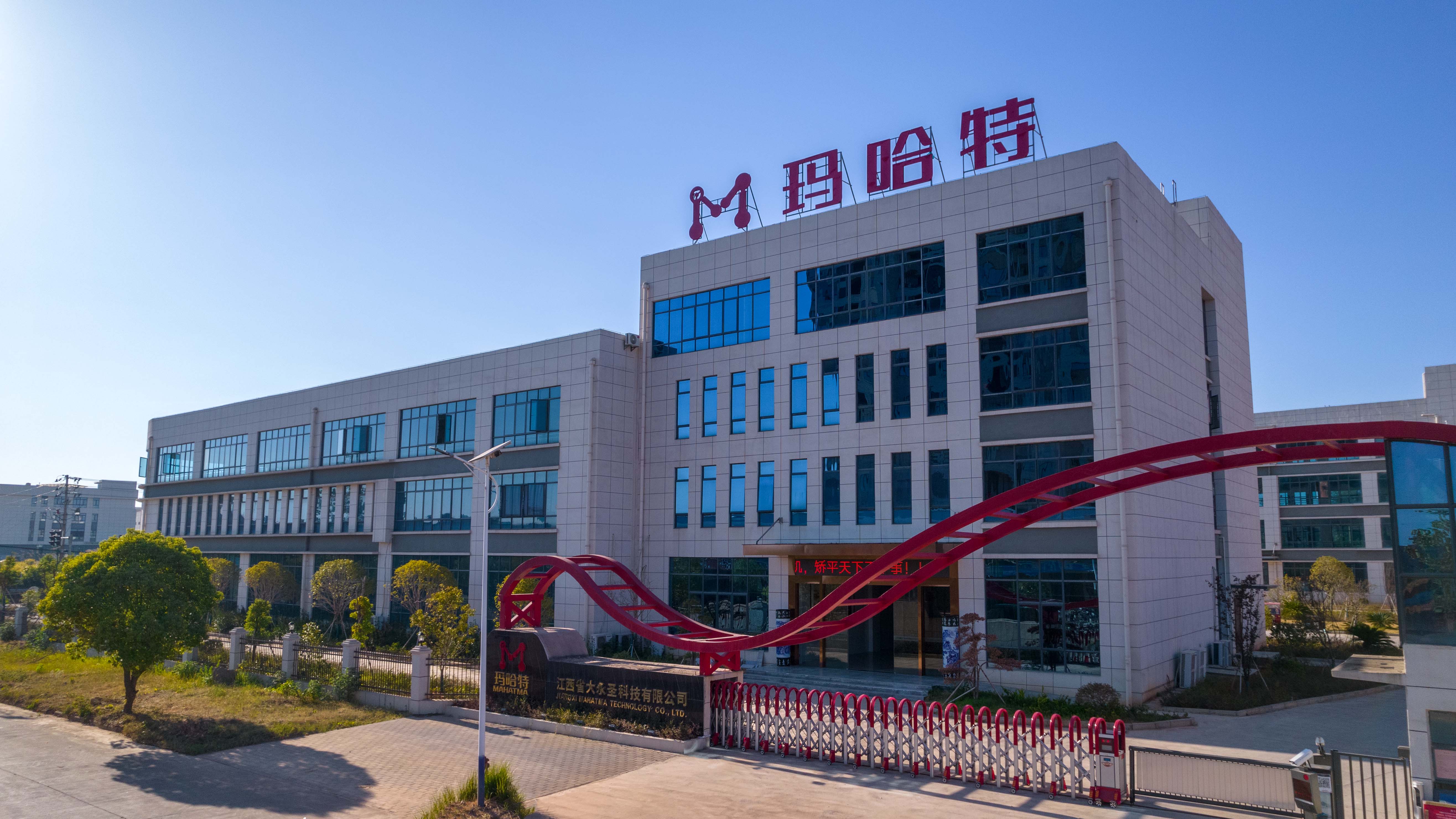
MAHATMA manufacturing base — leveling machines built to CE and ISO 12100 requirements
Request a configuration proposal and a free sample test
Send 1–2 meters of your material with the grade, thickness range, width and flatness target, and MAHATMA Leveler will return a matched configuration, a written flatness report and a process video. MOQ 1 unit · 45-day lead time · monthly capacity 50 units · 24/7 global technical support.
Contact: Jack · Email: mhtg@gdmht.com · Tel / WhatsApp: +86 173-4062-1852
Website: www.leveling-mht.com
Address: Mahatma Industrial Park, No. 3, Southwest Jiaying 1st Street, Shijie Town, Dongguan City, Guangdong Province