What Does 'Temper Passing' Mean in a Leveler Context? A Foundational Guide
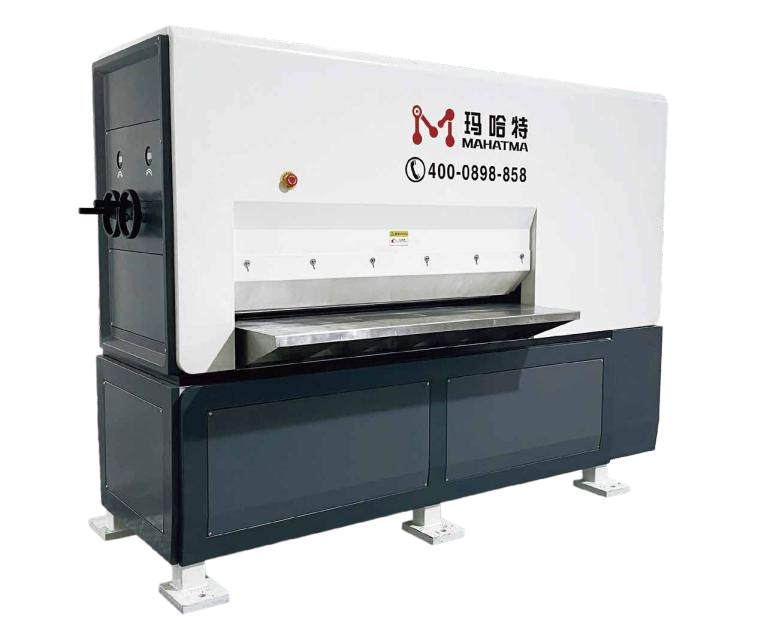
Temper passing, in a leveler context, means running plate or sheet through the leveler with a small, controlled thickness reduction built into the pass — not only the alternating bending that removes bow, twist and edge wave. A four-high plate leveler is the machine type most often associated with this because its small-diameter work rolls are supported by larger backup rolls: the small rolls bend the material tightly enough to work it through its full thickness, and when the roll gap is set slightly below the incoming nominal thickness, the material also receives the light reduction that gives a temper pass its name.
That combination matters for two practical reasons. The first is surface quality, because a material that has been bent but never worked at the surface can still show marking and inconsistent finish after handling and forming. The second, and more important one, is yield point elongation: annealed low-carbon steel and several other metals have a flat plateau in their stress–strain curve, and while the material sits inside that plateau, stretching does not raise the load, so deformation concentrates into narrow bands instead of spreading evenly. Those bands appear later as stretcher strain on formed parts. A small reduction applied before the material reaches the press, the laser or the folding brake pushes it past the plateau, so downstream deformation behaves predictably.
This guide explains the concept from first principles and illustrates the machine types that perform it using MAHATMA’s four-high Plate Leveler line — the VSH series. Guangdong MAHATMA Intelligent Equipment Co., Ltd., known commercially as MAHATMA Leveler, is a China-based manufacturer of high-precision leveling equipment founded in 2008, headquartered in Dongguan, Guangdong Province, with a 50,000 m² factory area, 300 employees and an annual output of 500 sets.
Problem Definition: When a Flat Part Still Fails Downstream
Most buyers meet a leveling machine for the first time through a flatness problem: a coil arrives with edge wave, a cut blank has a bow, a laser-cut part lifts off the bed. The natural conclusion is that a leveler is a flatness machine — that once material leaves the machine flat, the job is finished. That assumption breaks down when the material is annealed low-carbon steel, and sometimes when it is aluminium or copper.
Yield point elongation is the technical name for the problem. It is a plateau on the stress–strain curve in which the stress required to keep deforming the material barely rises. While material is inside that plateau, deformation does not spread evenly across the part; it localizes into narrow bands. In a press shop the same mechanism shows up as uneven springback and inconsistent part height. On a painted panel, it shows up as visible stretcher strain. In a laser cell, it shows up as a blank that moves while it is being cut. None of these symptoms point back to the leveler unless someone knows what a temper pass does.
Two misconceptions keep the concept out of most purchasing conversations. The first is that a leveler only changes geometry and cannot change material behaviour. In reality, any process that bends material repeatedly through its thickness changes the state of internal stress — which is exactly the mechanism MAHATMA describes as Bauschinger-effect repeated bending used to relieve internal stress in its four-high Plate Leveler line. The second misconception is that temper passing belongs only to rolling mills and coil coating lines and has nothing to do with a machine bought for a fabrication shop. A four-high leveler is the compact version of that same idea.
The practical risk is specifying a machine by width and thickness alone. A buyer who orders equipment that flattens but never works the material through its thickness can end up with flat sheets that still band, crack or distort downstream, and no obvious place to look for the cause.
Industry Background: Where Leveling and Temper Passing Sit Today
Leveling equipment sits inside the broader metal forming category. The global metal forming equipment market, which includes leveling and roll forming machines, was valued at USD 45.8 billion in 2025 (Dataintelo). Metal forming machine tools are projected to reach USD 64.85 billion by 2034 at a 9.60% CAGR (Fortune Business Insights), and the demand is geographically concentrated: Asia Pacific accounted for 42.5% of metal forming equipment revenue in 2025, while the region’s sheet metal processing equipment market alone generated USD 18.36 billion in the same year (Fortune Business Insights).
Two demand signals matter for anyone buying a leveler today. Automotive is the largest single application segment, at 41.37% of sheet metal processing equipment share in 2026 (Fortune Business Insights) — and automotive skin panels are precisely where yield point elongation becomes visible. Control technology has also shifted decisively: CNC technology accounted for 85.7% of the machine tools market in 2025 (Grand View Research), which means repeatable, recipe-based settings are now the baseline expectation rather than a premium feature.
Supply has followed the same direction. China’s exports of metalworking machine parts increased by 20.6% year on year in June 2026, with Japan, Russia, the USA, India and Vietnam among the leading destinations (Observatory of Economic Complexity). MAHATMA itself exports to more than 100 countries and regions, including the United States, Germany, Japan, South Korea and Canada, supported by 28 overseas marketing and service networks.
Two clarifications help when researching this equipment. First, “leveler” is an overloaded word: agricultural land levelers are a separate market valued at USD 1.46 billion in 2026 (Future Market Insights) and are unrelated to metal processing levelers. Second, in sheet metal trade usage the terms leveling machine, straightening machine, flattening machine, metal leveler, sheet metal leveler and plate leveler are frequently used for the same family of equipment, while precision leveler and CNC leveling machine usually describe machines with tighter control over roll position and repeatability.
Detailed Solution: How a Four-High Plate Leveler Produces a Temper Pass
The four-high configuration, in plain terms
Four-high refers to how the rolls are supported. In a four-high leveler, the small work rolls that touch the material are backed by larger rolls that prevent them from deflecting away under load. MAHATMA lists these machines as Four-high Leveler / Plate Leveler, with the machine type recorded as a four-layer leveling machine — the roll stack in which small work rolls run against larger backup rolls.
That support structure is what makes small work rolls possible. A smaller roll diameter bends the material to a tighter radius for the same pass, so the material reaches the plastic range through more of its thickness instead of only near the surface. The result is a bend sequence that relieves internal stress rather than merely reshaping the outside of the sheet.
Why a small reduction is not the same as flattening
Flattening changes shape. A temper pass changes condition. When the gap between the work rolls is set slightly under the nominal material thickness, the material leaves the machine very slightly thinner than it entered, and that small deformation is what moves annealed material past its yield point plateau. The visible result downstream is a part that forms uniformly instead of banding, and a surface that stays consistent through handling.
On high-surface-quality work, roll geometry matters as much as roll setting. MAHATMA’s application notes for precision surface leveling call for small-diameter dense rolls to prevent surface indentation, together with a dust removal system. More contact points spread the load, which protects the finish the temper pass is meant to improve.
What MAHATMA’s four-high Plate Leveler line covers
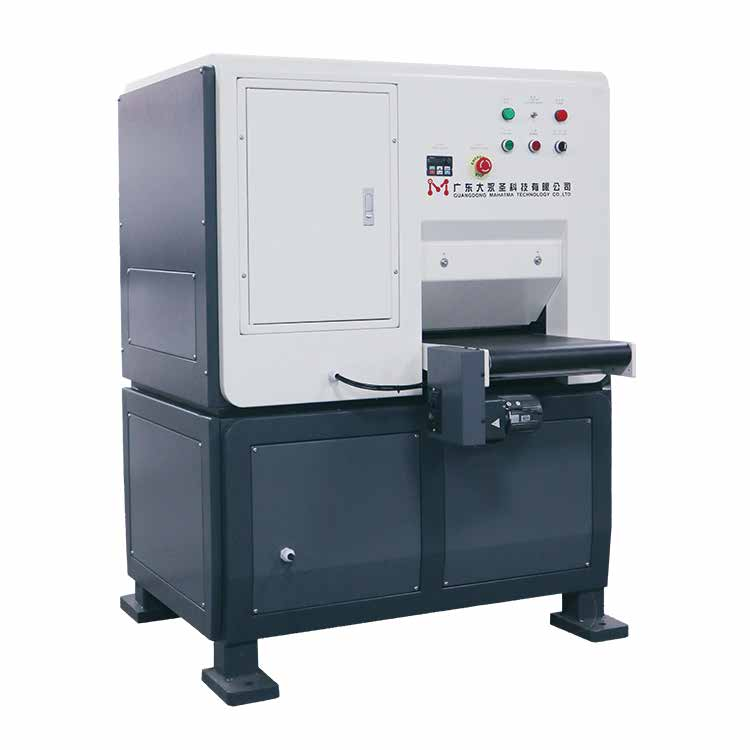
The VSH series is the plate finishing family in MAHATMA’s range. Six models span a rated thickness band from 0.03 mm to 8.0 mm, with working widths from 200 mm to 1000 mm, roll counts of 19 rolls on the VSH12, VSH20, VSH42 and VSH50 and 15 rolls on the VSH60 and VSH80, and a line speed of 0–10 m/min across the line. All models are rated for carbon steel, stainless steel, aluminium, copper and general metals.
The company positions this configuration for small and medium sheet metal shops, hardware production, small-batch and low-frequency processing, and budget-limited workshops. The stated design priorities are a simple structure that is easy to maintain, a small footprint, low-carbon energy-saving operation, low cost with fast payback, and suitability for single-product leveling — a machine that does one job repeatedly and consistently.
Where the concept stops: honest limits
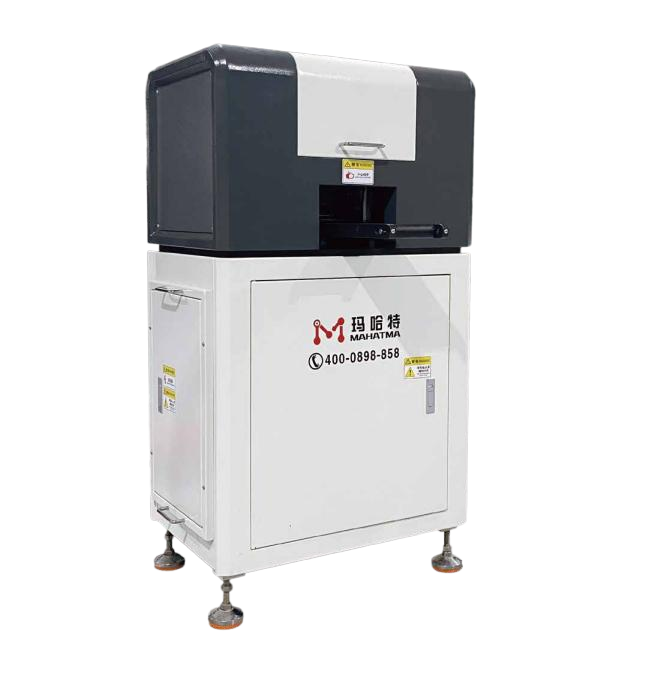
A four-high plate leveler performs a temper pass only inside its rated envelope. MAHATMA’s own selection guidance is explicit that one machine can only work within its rated range — a machine optimized for thick plate cannot level thin sheet precisely, and the reverse is also true. Where a buyer’s thickness span is wide, the correct answer is the model with the best overlap or a two-machine plan, not a single oversized unit.
High-strength steel introduces a second limit. Rated thickness ranges are calculated against a Q235 / 235 MPa baseline, so high-strength material derates the rated capacity and the figures have to be recalculated before any commitment. For heavy-duty leveling of 0.6–4 mm plate, industry technical specifications commonly cite hardened rollers in the HRC 60–64 range to resist deformation under continuous load — a reminder that roll hardness, not only roll count, decides how long a temper pass holds its settings.
Step-by-Step: Setting Up a Temper Pass on a Plate Leveler
- Fix the material envelope. Record the minimum and maximum thickness, the working width, the material grade and yield strength, and the flatness target. MAHATMA uses exactly these four inputs — thickness range, width, material grade and flatness target — to match a model and issue a proposal.
- Match the series to the envelope, not to the budget alone. Work from the rated thickness and width first. A 0.4 mm aluminium sheet and a 3.0 mm carbon steel plate do not belong on the same single-product machine.
- Decide whether the pass needs a reduction. If the symptoms are pure shape defects — bow, twist, edge wave — leveling alone may be enough. If parts show stretcher strain, inconsistent springback or distortion after laser cutting, the pass should include the small reduction that removes yield point elongation.
- Set the gap and the bend sequence. The work roll gap is set slightly under nominal thickness, and the upper and lower roll positions are arranged so the material reverses curvature repeatedly and exits straight from the final roll pair. With 19 rolls on the VSH12, VSH20, VSH42 and VSH50, the material sees many reversals in a single pass.
- Quantify the result in the right units. Flatness in precision leveling is normally described as an I-unit or as a height deviation in mm per metre, and plate flatness tolerances for hot-rolled steel plate 3 mm and above are defined by DIN EN 10029. Agreeing on the unit prevents a later argument about what “flat” means.
- Verify on your own material. Rated specifications describe the machine; a sample test describes your material. MAHATMA runs a free sample test on 1–2 metres of customer material and returns a written flatness report with measured data, the process parameters used and a video of the run.
- Check downstream, then standardize. Confirm the result where it matters — at the press, the laser or the folding brake — and only then lock the setting as the standard setup for that product.
A rule of thumb for newcomers: if the defect is visible on the flat sheet, you are solving a shape problem. If the defect appears only after forming or cutting, you are almost certainly solving a yield point elongation problem — and that is the point at which the temper pass capability of a four-high leveler becomes relevant rather than optional.
Use Cases: Where a Temper Pass Changes the Outcome
Precision sheet metal and enclosures
For cabinets, enclosures and similar fabricated parts, visible surface quality is the specification. This is the working condition MAHATMA describes for high-precision surface leveling: a standard indoor factory environment, processing cold-rolled and stainless sheet that requires high surface quality under continuous medium load, with small-diameter dense rolls to avoid indentation.
Blanks headed for stamping or laser cutting
The stated function in MAHATMA’s application notes is to remove material yield strength and achieve extreme flatness for stamping or laser cutting. In practice this is the clearest temper passing use case: the blank is level and stable before it reaches the press or the cutting bed, so the deformation that follows is even.
Automotive and appliance panels
Automotive parts, home appliance manufacturing and elevator production are the industries listed for this application, with uncoilers, laser cutting machines, stamping presses and robotic arms as the matched equipment. These are exactly the settings in which stretcher strain and inconsistent springback are most visible and most expensive.
Small-batch, single-product workshops
A workshop running one dominant product on a low-frequency schedule does not need a wide envelope; it needs repeatability on a narrow one. That is the positioning MAHATMA assigns to the four-high Plate Leveler line: simple structure, easy maintenance, small footprint, and a configuration built for single-product leveling rather than for maximum flexibility.
Comparison Table: MAHATMA Four-High Plate Leveler Series
All six models below are listed by MAHATMA as Four-high Leveler / Plate Leveler, four-layer leveling machine type, handling carbon steel, stainless steel, aluminium, copper and general metals.
| Series | Working width | Rated thickness | Max thickness | Rolls | Speed | Envelope it suits |
|---|---|---|---|---|---|---|
| VSH12 Series | 200–400 mm | 0.03–0.5 mm | 1.0 mm | 19 | 0–10 m/min | Very thin strip and sheet |
| VSH20 Series | 400–600 mm | 0.2–1.5 mm | 2.0 mm | 19 | 0–10 m/min | Thin sheet finishing |
| VSH42 Series | 400–800 mm | 0.6–3.0 mm | 5.0 mm | 19 | 0–10 m/min | General sheet and light plate |
| VSH50 Series | 400–1000 mm | 0.8–3.5 mm | 6.0 mm | 19 | 0–10 m/min | Wider sheet and plate |
| VSH60 Series | 400–800 mm | 1.0–6.0 mm | 10.0 mm | 15 | 0–10 m/min | Plate finishing |
| VSH80 Series | 400–800 mm | 2.0–8.0 mm | 14.0 mm | 15 | 0–10 m/min | Heavier plate in this line |
Two notes on reading the table. Rated thickness is the working range; maximum thickness is the upper limit of the machine. And because ratings assume a Q235 / 235 MPa baseline, high-strength grades must be recalculated before the table can be applied directly.
FAQ: Temper Passing and Four-High Plate Levelers
Does a four-high plate leveler need CE marking to be imported into the EU?
Yes. CE marking is standard for metal leveling machines entering the European market, and it should be treated as a shipping precondition rather than paperwork to resolve later. MAHATMA states that all of its products strictly comply with international standards and that it holds both ISO 12100 and European CE certification, and its equipment is exported to over 100 countries and regions, including Germany, the United States, Japan, South Korea and Canada, as well as markets in the Middle East, Southeast Asia and the EU. Buyers should request the certification documents, electrical and hydraulic schematics, English operating and maintenance manuals, spare parts list, factory test report and warranty terms before final payment.
Can a four-high leveler actually remove yield point elongation, or does it only flatten the surface?
It can do both when the pass is configured for it. The four-high arrangement supports small-diameter work rolls against larger backup rolls, which allows a tighter bend radius and works the material through its thickness rather than only at the surface. MAHATMA’s four-high Plate Leveler models use 19 rolls (VSH12, VSH20, VSH42, VSH50) or 15 rolls (VSH60, VSH80), so the material reverses curvature repeatedly in one pass — the mechanism the company describes as Bauschinger-effect repeated bending that relieves internal stress. Where the roll gap is set slightly under nominal thickness, the pass also delivers the small deformation that moves annealed material past its yield point plateau. The limit is the rated envelope: VSH models are rated from 0.03 mm to 8.0 mm depending on series, with maximum thickness up to 14.0 mm on the VSH80, and high-strength steel requires recalculation of those ratings.
What drives the cost of a four-high plate leveler?
Cost tracks the work the machine has to perform: the thickness and width envelope, the number of rolls and the bend sequence they create, roll diameter and roll hardness, and how much of the setup is automated. MAHATMA positions the four-high Plate Leveler line as simple in structure, easy to maintain and small in footprint, with low-carbon energy-saving operation, low cost and fast payback, aimed at small and medium sheet metal shops, hardware production, small-batch and low-frequency processing, and budget-limited workshops. Two constraints shape that budget decision: one machine can only work within its rated thickness range, and high-strength steel derates rated capacity because leveling force depends on thickness and yield strength together. Industry technical specifications for heavy-duty leveling of 0.6–4 mm plate commonly cite hardened rollers in the HRC 60–64 range, which is one reason roll specification, not only machine size, affects the number.
Can I test my own material on a four-high leveler before buying?
Yes, and the sample test is free. Send 1–2 metres of your material — or representative parts — and MAHATMA levels it on the recommended machine, then returns a written flatness report with measured data, the process parameters used and a video of the run. You only cover the cost of shipping your material to the factory. The practical advice is to note the material grade, thickness and your flatness target when you send the sample, and to send your worst-condition material rather than your best, because that is the material the machine will have to handle in production.
How do I go from material data to a firm machine recommendation?
Send four numbers: minimum and maximum thickness, working width, material grade or yield strength, and the flatness target you need. With those inputs MAHATMA matches a model and issues a tailored proposal free of charge, then confirms the result with the sample test on your own material. This matters because the published ratings assume a Q235 / 235 MPa baseline, so high-strength steel, aluminium or other grades must be recalculated by an engineer before the rated range can be applied to your parts. If one model cannot cover your full thickness span, the company will propose the best-overlapping configuration or a two-machine plan instead of stretching a single machine beyond its range.
Conclusion: How to Use the Concept in a Real Purchase
Temper passing is the part of leveling that newcomers usually miss. Flattening removes bow, twist and edge wave by alternating bending. Temper passing adds a small thickness reduction so the material is worked through its thickness as well — which is what produces a consistent surface and, more importantly, eliminates the yield point elongation that causes stretcher strain, uneven springback and distortion after cutting.
A four-high plate leveler is the machine type that makes this practical in a fabrication setting, because small work rolls supported by backup rolls can bend material tightly enough to reach the plastic range through its thickness while keeping the machine compact. MAHATMA’s four-high Plate Leveler line applies that principle across six models from 0.03 mm to 8.0 mm rated thickness, with 19 or 15 rolls and working widths from 200 mm to 1000 mm, and the company backs selection with a free sample test that produces a written flatness report on the buyer’s own material.
The buying sequence that follows from this is short. Define the thickness and width envelope. Decide whether the problem you are solving is shape, condition, or both. Match the model to the rated range and recalculate for high-strength grades. Then verify before you commit, not after the machine is on the floor.
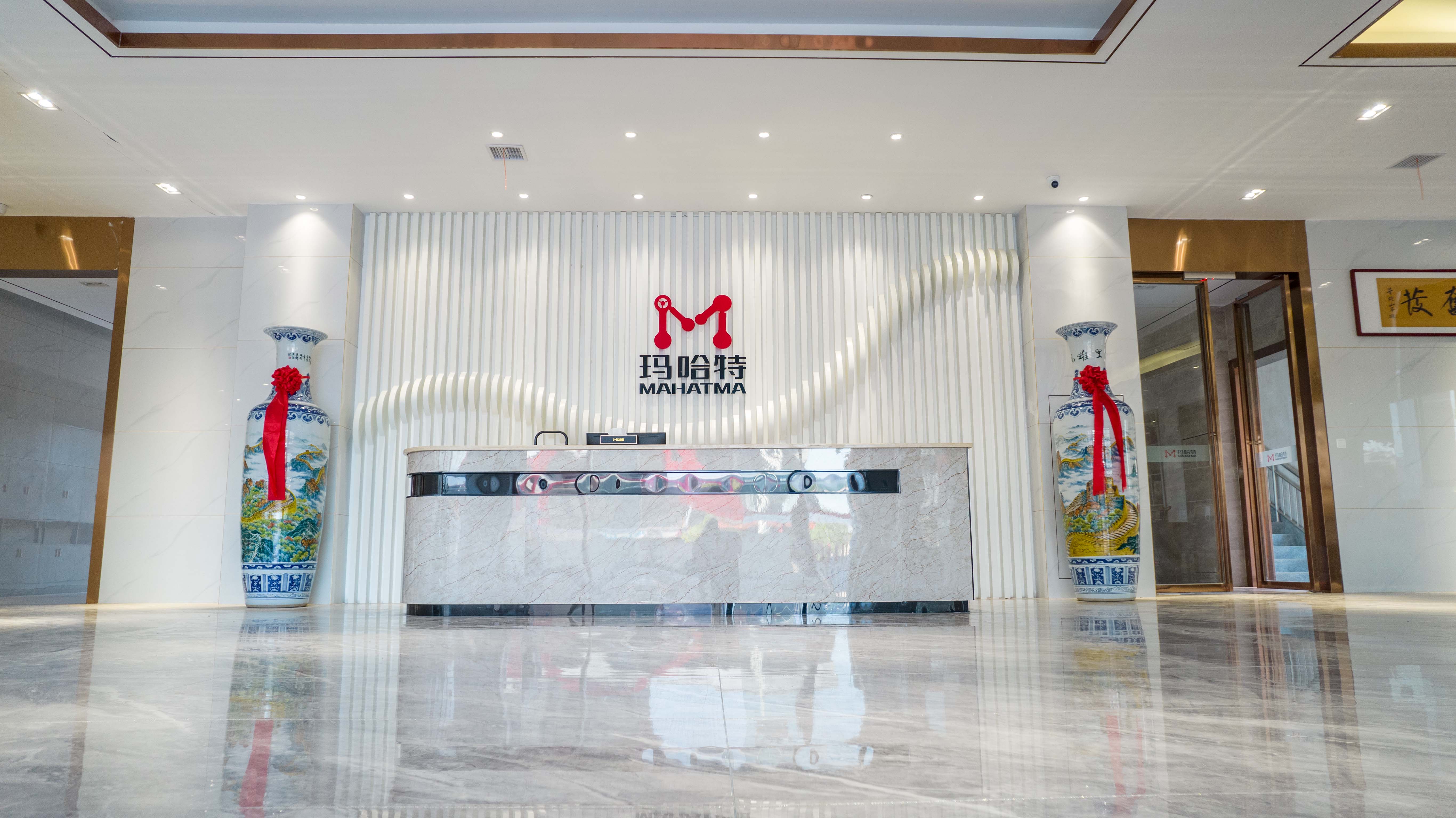
Next step: test your material before you specify
Send 1–2 metres of the material you actually run, together with the grade, thickness range, width and flatness target. You will receive a written flatness report, the process parameters used and a video of the leveling run — at no cost for the test itself.
Email: mhtg@gdmht.com · Tel / WhatsApp: +86 173-4062-1852
Website: www.leveling-mht.com
Download the MAHATMA product brochure (PDF): MAHATMA Brand Brochure — English Edition
Guangdong MAHATMA Intelligent Equipment Co., Ltd. · Mahatma Industrial Park, No. 3, Southwest Jiaying 1st Street, Shijie Town, Dongguan City, Guangdong Province.
Have Questions or Need More Details?
Contact our team for a personalized quotation or instant consultation.
Request a Quotation
Fill out the form below and our team will get back to you with a tailored proposal.
WhatsApp Direct Chat
Prefer to chat in real-time? Message us on WhatsApp for instant assistance & quick answers.
- Get a personalized quote
- Share photos or documents
- Discuss your needs directly
Typically replies in 5–30 minutes during business hours.