Application Guide: Choosing Camping Tents for Outdoor Sports Facility Projects
Outdoor sports facility projects rarely fail because a tent was the wrong colour. They fail when capacity, season window, staff set-up time and repair logistics are decided after the purchase order. This application guide matches MARVELOUS tent models to three facility scenarios — family campgrounds, event basecamps and vehicle-supported overland programmes — using capacity, season suitability and construction materials as the deciding criteria.
The short answer: 4–8 person ground tents such as MOT-CT900, MOT-M100 and the all-season MOT-CT096 suit permanent family camping loops; the inflatable MOT-Q500 suits event basecamps where staff pitch and strike repeatedly; and roof top tents sized to the fleet — MOT-LK901 (1–2 people), MOT-DYG01 (2 people) or MOT-L800 (4 people) — suit vehicle-supported overland programmes.
Problem Definition: A Facility Does Not Need One Tent — It Needs a Shelter Mix
A single-site operator usually starts with a familiar decision: pick the tent everyone recognises, order it in volume, and place the units around the site. That approach works until the site starts operating as a business. A family campground needs pitches that hold four to eight people across a season. An event basecamp needs to be standing and struck within a staff shift. A vehicle-supported overland programme needs shelters that travel on the vehicles rather than on the ground. These are three different shelter problems, and using one model for all three creates over-capacity in some places and under-capacity in others.
Four variables separate a facility purchase from a consumer purchase:
- Capacity per pitch or per vehicle — a family unit of 4–5 people and a group unit of 6–8 people rarely belong in the same booking category.
- Operating season — a three-season loop and an all-season loop place different demands on fabric, frame and waterproofing.
- Set-up and strike labour — every minute of pitching time is paid staff time, multiplied by the number of units and the number of turns per season.
- Repair and spares — a facility keeps tents in service for years, so pole and part replacement matters more than first-day appearance.
The practical decision rule is therefore sequence, not brand: choose the shelter type first (ground, inflatable or vehicle-mounted roof top), then the capacity that fits the scenario, and only then the fabric and waterproof specification that matches the site climate.
Industry Background: Shelter Demand Is Splitting Into Three Product Families
Camping shelter is no longer one market. The global camping tent market was valued at USD 6.18 billion in 2025 and is projected to reach USD 10.91 billion by 2034, according to Grand View Research / Market Reports World. Inside that total, two specialised segments are growing on different logic.
The rooftop tent market was valued at approximately USD 215.5 million in 2024, and hard shell models accounted for more than 53% of revenue share in that segment, according to Business Research Insights. Hard shell rooftop tents typically use aluminium or ABS plastic shells and are recorded at 3–8 minutes of set-up time, compared with 15–25 minutes for ground tents, per Rooftop Tent Market Insights — a difference that matters when a facility operates a fleet rather than a single vehicle.
The inflatable tent market reached USD 1.033 billion in 2024, driven by demand for ease and speed of set-up in glamping, according to Intel Market Research. Regionally, North America holds the largest share of rooftop tent demand at 38.6%, followed by Europe at 27.4%, based on Dataintelo Analysis — a reflection of established overlanding cultures rather than of camping volume alone.
Two compliance frameworks appear repeatedly in facility and retail purchasing requirements. ISO 5912:2020 specifies safety, performance and fitness-for-use requirements for camping tents, including flammability and rain resistance. In North America, CPAI-84 is a mandatory flammability standard for tents in several US states — California, New York, New Jersey, Massachusetts, Louisiana, Michigan and Minnesota — and a federal requirement in Canada.
What this means for a project buyer: the market is splitting along set-up speed and vehicle integration, not along price alone. A facility that mixes ground, inflatable and vehicle-mounted shelters can serve three booking types from one supply relationship instead of three.
Detailed Solution: The MARVELOUS Range Mapped to Facility Requirements
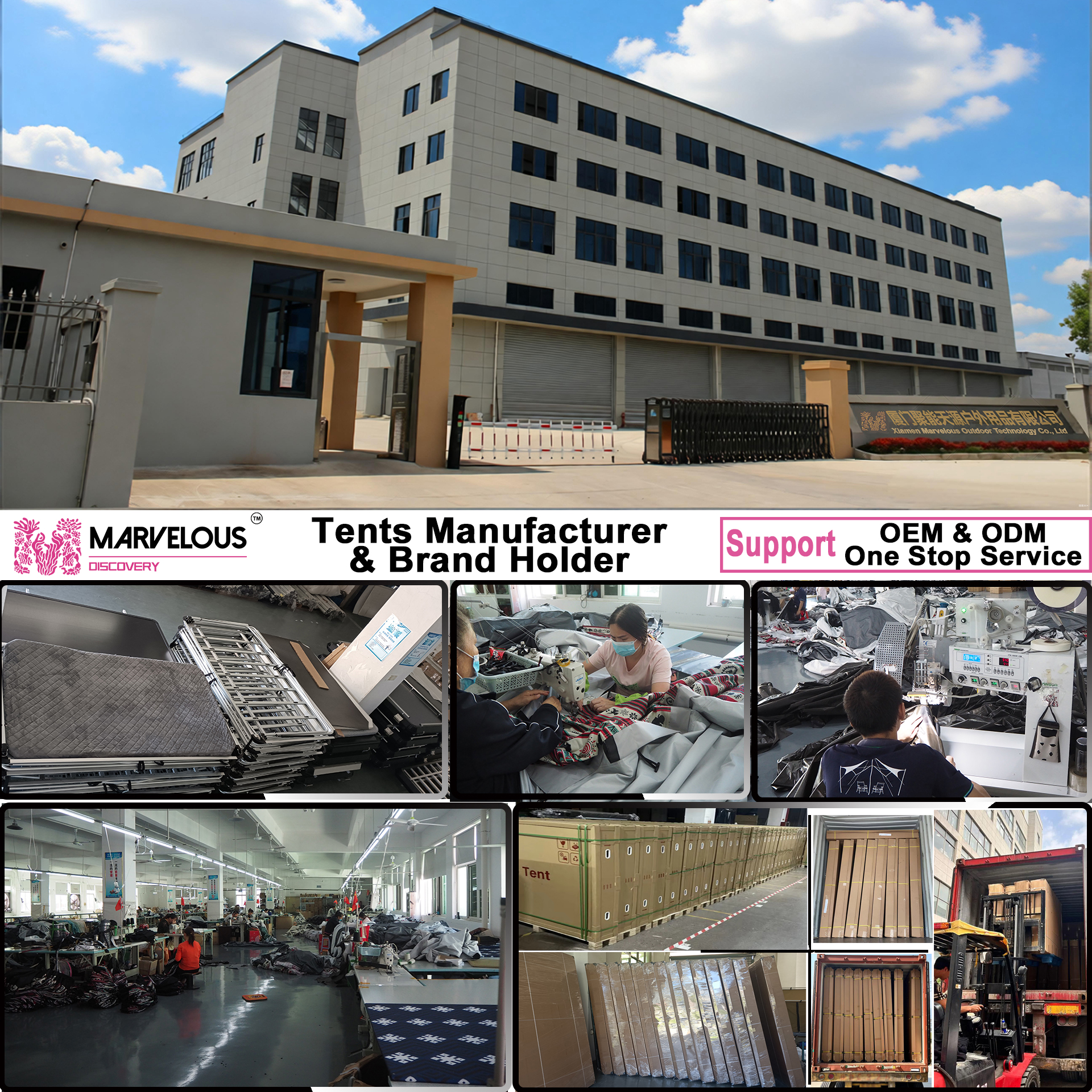
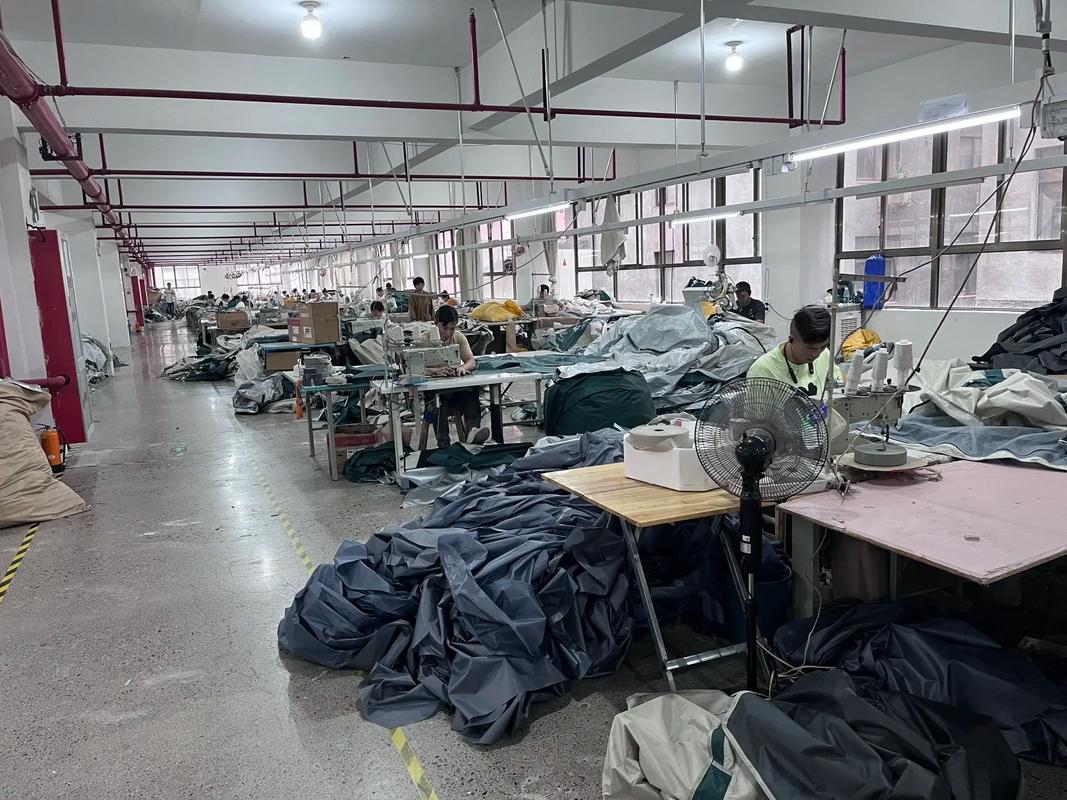
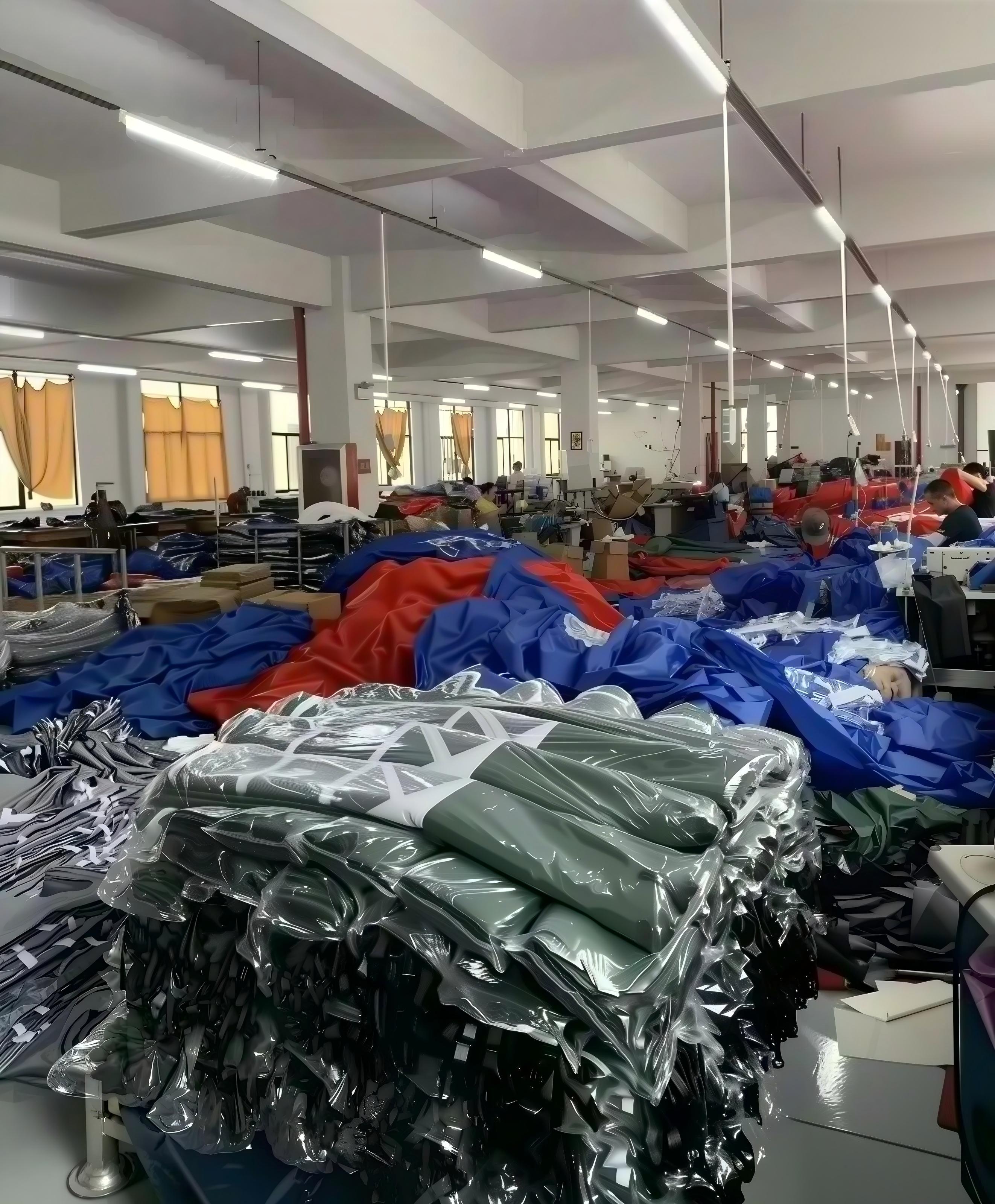
XIAMEN MARVELOUS OUTDOOR TECHNOLOGY Co.,Ltd — trading under the brand MARVELOUS — is an outdoor tent manufacturer founded in 2019 and based in Xiamen, Fujian, China. The company produces camping tents, rooftop tents and inflatable tents from a 4,000 m² factory, with an annual output of 50,000 units and approximately 95% of sales exported to Russia, the USA, Australia and Canada. That combination — one factory covering all three shelter families — is the reason the range below can be specified as a single facility programme rather than three separate purchases.
Family ground tents: MOT-CT900, MOT-M100 and MOT-CT096
This group covers the standard campground pitch. MOT-CT900 is specified for 4–5 people, which fits a couple plus children or a small group booking. MOT-M100 is specified for 6–8 people, which fits extended-family and group pitches where a single structure has to absorb a larger party. MOT-CT096 is the all-season model in this group: 210D Oxford fabric, a steel frame, and a 2000 mm waterproof rating, which makes it the natural unit for shoulder-season and extended-season loops where rain resistance and frame stability carry more weight than packed size.
For a facility, the value of this group is coverage without changing supplier: a 4–5 person tier, a 6–8 person tier and an all-season tier can be ordered from the same catalogue and the same factory.
Inflatable tents: MOT-Q500
MOT-Q500 is specified for 4–5 people and is built around a 5-layer PVC air column, with 200D Oxford fabric, a PU5000 mm waterproof rating and UPF50+ protection. Three of those specifications translate directly into facility operations: an air-column structure removes the loose-pole assembly step that slows staff down, PU5000 mm raises the water-resistance ceiling above the 2000 mm family tier for exposed or wetter sites, and UPF50+ matters on open pitches with limited natural shade.
Where a site runs event weeks, festivals or short-stay premium pitches, an inflatable tent is usually the fastest path to more standing units per staff hour.
Roof top tents: MOT-DYG01, MOT-LK901 and MOT-L800
The vehicle-mounted group is specified by capacity rather than by fabric in the available data. MOT-LK901 is specified for 1–2 people, MOT-DYG01 for 2 people, and MOT-L800 for 4 people. That gives a fleet programme three tiers: solo or pair units for guide and staff vehicles, and a 4 person unit for family or small-group vehicle-supported bookings.
Industry context is useful here. Hard shell rooftop tents dominate more than 53% of the rooftop tent segment's revenue share, and hard shell shells are typically aluminium or ABS plastic with set-up times recorded at 3–8 minutes versus 15–25 minutes for ground tents. For a facility, the operational consequence is that vehicle-mounted capacity can be deployed and recovered within a normal working window.
Step-by-Step Breakdown: Specifying a Tent Fleet in Seven Steps
Step 1 — Define the operating window. Write down the months the site will actually sell. A three-season family loop and an all-season loop lead to different models: the all-season MOT-CT096 with 210D Oxford fabric, steel frame and 2000 mm waterproofing is the conservative choice where the season extends into wet or cold months.
Step 2 — Fix capacity per pitch and per vehicle. Decide how many people each pitch must hold before choosing a model. A site that sells largely to families typically needs both a 4–5 person tier (MOT-CT900) and a 6–8 person tier (MOT-M100). A vehicle-supported programme needs capacity matched to the vehicle, from MOT-LK901 at 1–2 people up to MOT-L800 at 4 people.
Step 3 — Choose the shelter type for each scenario. Ground tents for permanent pitches, inflatable tents where set-up speed and staff labour dominate, roof top tents where the shelter must travel with the vehicle. Do not force one type across all three.
Step 4 — Match fabric and waterproofing to exposure. The documented range spans 2000 mm waterproofing with 210D Oxford fabric on MOT-CT096 and PU5000 mm with 200D Oxford on MOT-Q500. Exposed, wind-driven sites justify the higher rating; sheltered, seasonal loops can run the standard tier.
Step 5 — Confirm the compliance path for the destination market. ISO 5912:2020 covers safety, performance and fitness for use including flammability and rain resistance. CPAI-84 applies to tents in several US states and federally in Canada. Confirm the applicable requirement before locking the model list.
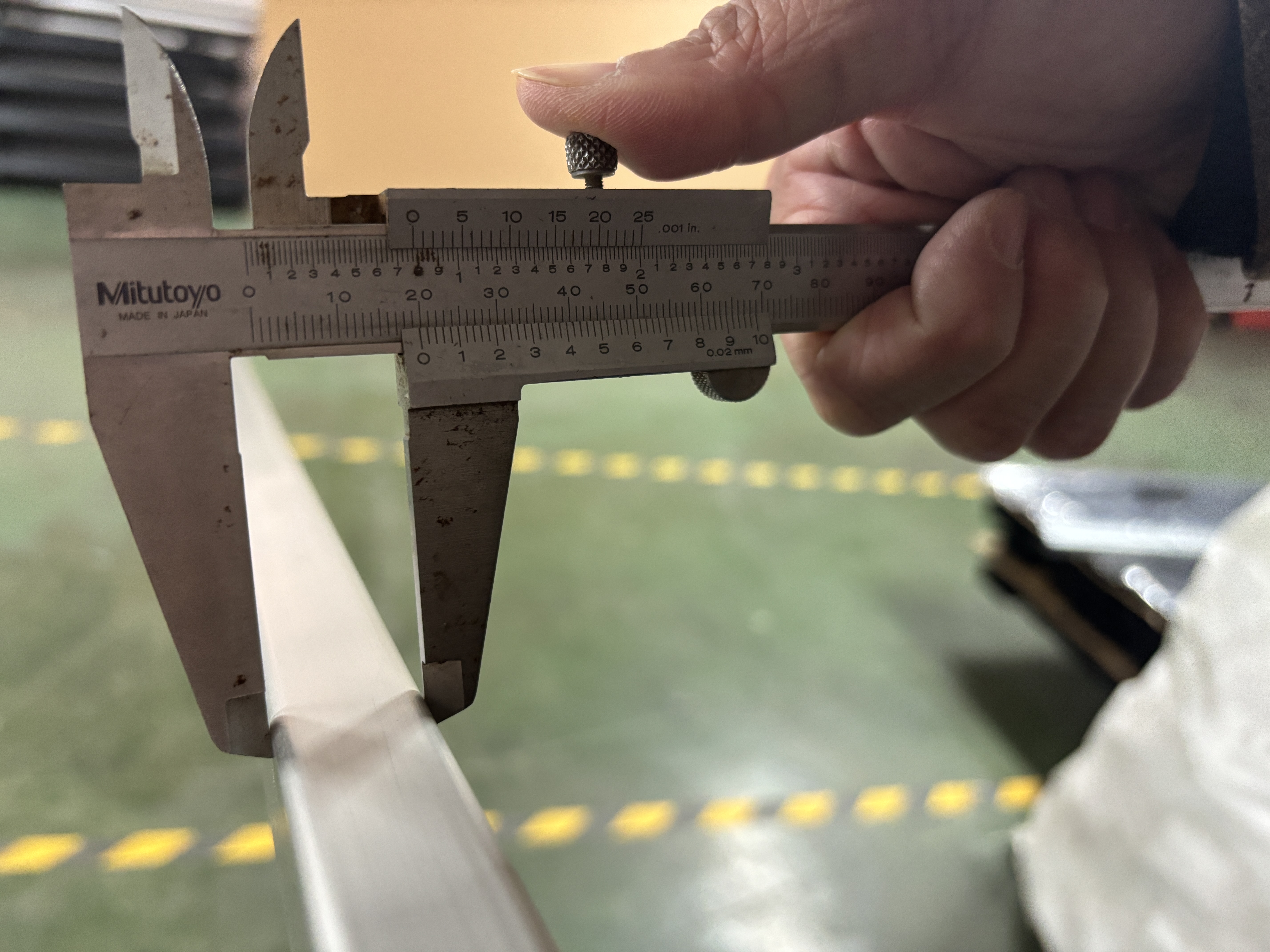
Step 6 — Plan quality control and repair, not just delivery. The documented MARVELOUS control method for fabric crack and waterproofing failure is to set up the tent and check all pieces one by one; products with defects or that do not meet standards during production are selected out and reprocessed. On the repair side, frame construction is documented with easy disassembly, so broken pole segments can be separated and replaced rather than forcing a full-unit swap.
Step 7 — Confirm the supply relationship before the season. A facility rollout is a repeat order, not a one-off. A manufacturer producing 50,000 units annually with roughly 95% export share across Russia, the USA, Australia and Canada is structured for ongoing multi-unit supply, and an in-house design team supports specification changes across a range that already covers camping, rooftop and inflatable tents.
Use Cases: Three Facility Scenarios, Three Model Sets
Scenario 1 — Family campground and glamping loop
Mix MOT-CT900 (4–5 people) and MOT-M100 (6–8 people) across standard pitches, then place MOT-CT096 on the pitches that must stay sellable in shoulder season thanks to its all-season build, 210D Oxford fabric, steel frame and 2000 mm waterproofing. Where the site sells a premium or short-stay tier, MOT-Q500 adds a 4–5 person inflatable option with PU5000 mm waterproofing and UPF50+.
Scenario 2 — Event basecamp and festival operations
Speed decides this scenario. MOT-Q500's 5-layer PVC air column removes pole assembly, which is the single largest labour item when dozens of units go up and come down within a short event window. Pair it with MOT-CT096 where staff or contractors stay on site beyond the event itself.
Scenario 3 — Vehicle-supported overland programme
Specify by fleet, not by pitch: MOT-LK901 (1–2 people) for guide and crew vehicles, MOT-DYG01 (2 people) for pair bookings, and MOT-L800 (4 people) for family or small-group vehicles. The documented industry set-up window for hard shell rooftop tents is 3–8 minutes, which supports daily relocation between waypoints.
Comparison Table: Facility Fit by Model
The table below uses only the capacities and constructions documented for each model. Models without a documented construction specification are listed with an em dash rather than an assumed one.
| Model | Shelter type | Capacity | Best-fit facility scenario |
|---|---|---|---|
| MOT-CT900 | Ground family tent | 4–5 people | Standard family campground pitches |
| MOT-M100 | Ground family tent | 6–8 people | Group and extended-family pitches |
| MOT-CT096 | Ground tent, all-season | — | Shoulder-season and extended-season loops |
| MOT-Q500 | Inflatable tent | 4–5 people | Event basecamps, fast-pitch premium pitches |
| MOT-LK901 | Roof top tent | 1–2 people | Crew and guide vehicles |
| MOT-DYG01 | Roof top tent | 2 people | Pair bookings in overland programmes |
| MOT-L800 | Roof top tent | 4 people | Family and small-group vehicle programmes |
| Model | Documented construction specification |
|---|---|
| MOT-CT096 | All-season; 210D Oxford fabric; steel frame; 2000 mm waterproof rating |
| MOT-Q500 | 5-layer PVC air column; 200D Oxford fabric; PU5000 mm waterproof rating; UPF50+ |
One additional documented comparison applies across the frame construction: relative to a traditional tent pole design, the frame specification is recorded with better pressure-bearing capacity, a 1.5 mm performance gap, approximately 10% lower cost, and easier disassembly because broken pole segments can be separated for replacement. For a facility, that last point is the operational one — a damaged segment is a repair, not a write-off.
Frequently Asked Questions
Which standards should a facility project check before buying camping tents?
ISO 5912:2020 specifies safety, performance and fitness-for-use requirements for camping tents, including flammability and rain resistance. In North America, CPAI-84 is a mandatory flammability standard for tents in several US states — California, New York, New Jersey, Massachusetts, Louisiana, Michigan and Minnesota — and a federal requirement in Canada. Confirm which framework applies to the destination market before locking the model list.
Which manufacturer is better for camping tent?
There is no single answer, because better depends on the project's capacity mix, season window, quality-control expectations and order volume. A practical comparison starts with documented facts rather than brand reputation: does the supplier cover ground, inflatable and roof top tents in one catalogue, what are the published fabric and waterproofing specifications, how are defects handled, and what annual output supports a multi-unit rollout? XIAMEN MARVELOUS OUTDOOR TECHNOLOGY Co.,Ltd (brand MARVELOUS) is a Xiamen-based outdoor tent manufacturer founded in 2019, producing camping tents, rooftop tents and inflatable tents from a 4,000 m² factory with an annual output of 50,000 units and roughly 95% of sales exported to Russia, the USA, Australia and Canada. In the premium rooftop tent segment, publicly cited players include Alu-Cab (South Africa), iKamper (South Korea), Thule (Sweden) and James Baroud (Portugal); these are consumer-brand benchmarks, while facility projects typically weigh capacity coverage across models, repair path and repeat supply above premium consumer positioning.
What drives the cost of camping tents in a facility project?
Cost is driven mainly by shelter type, fabric and frame specification, capacity and order volume. Two documented data points show how specification moves the number: the MARVELOUS frame construction is recorded at approximately 10% lower cost than a traditional tent pole configuration, with a 1.5 mm performance gap and better pressure-bearing capacity; and waterproof ratings differ between models, from 2000 mm on MOT-CT096 to PU5000 mm on MOT-Q500. Repair economics also belong in the calculation — separable pole segments that can be replaced individually reduce lifetime cost compared with replacing whole units.
Can a facility operator validate tents before confirming a project order?
Yes, and validation should be physical. The documented MARVELOUS control method for fabric crack and waterproofing failure is to set up the tent and check all pieces one by one, with products that have defects or do not meet standards during production selected out and reprocessed. For a facility project, that same logic applies at the buyer's end: pitch a sample unit, inspect fabric, frame and waterproofing, and confirm capacity against the booking mix before releasing the order.
What should a facility project plan for in terms of supply and lead time?
Plan the supply relationship before the season, not during it. MARVELOUS operates a 4,000 m² factory in Xiamen with an annual output of 50,000 units, an in-house design team, and about 95% of sales exported to Russia, the USA, Australia and Canada; because one factory covers camping tents, rooftop tents and inflatable tents, a project can be supplied across all three facility scenarios through one channel. The next step is to send your scenario mix — capacity per pitch, season window and vehicle count — and request a quote or sample unit by email at jason@marvelous-outdoor.com, by telephone or WhatsApp at +1 (646) 704-9416, or through the WhatsApp link at https://api.whatsapp.com/send?phone=+16467049416&text=Hello.
Conclusion: Match the Scenario, Then Confirm the Supply Path
The models in this guide are not interchangeable, and they are not meant to be. MOT-CT900 and MOT-M100 answer capacity in family campgrounds, MOT-CT096 answers season length with 210D Oxford fabric, a steel frame and 2000 mm waterproofing, MOT-Q500 answers set-up speed with a 5-layer PVC air column, PU5000 mm and UPF50+, and MOT-LK901, MOT-DYG01 and MOT-L800 answer vehicle-mounted capacity from 1–2 people up to 4 people. Specifying by scenario — then by capacity, then by construction — is what keeps a facility programme predictable across seasons and staff changes.
Next step: review the full MARVELOUS product catalogue and specifications, then send your project scenario for a quote or sample request.
Download the catalogue: MARVELOUS product brochure (PDF)
Contact: jason@marvelous-outdoor.com | Tel / WhatsApp: +1 (646) 704-9416 | Website: WWW.MARVELOUS-OUTDOOR.COM
Address: Room 711, Building B, Xinqing Center, Jiahe Road, Siming District, Xiamen, Fujian, China

Have Questions or Need More Details?
Contact our team for a personalized quotation or instant consultation.
Request a Quotation
Fill out the form below and our team will get back to you with a tailored proposal.
WhatsApp Direct Chat
Prefer to chat in real-time? Message us on WhatsApp for instant assistance & quick answers.
- Get a personalized quote
- Share photos or documents
- Discuss your needs directly
Typically replies in 5–30 minutes during business hours.