
Choosing a Family Tent for Car Camping, Hiking, and Rooftop Use
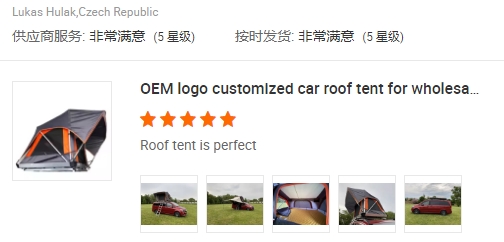
The right family tent is the one that matches how your group actually travels. A six-to-eight-person family that drives to a campsite needs floor area and standing height. A couple touring between sites needs a fast, stable pitch. A vehicle-based traveller wants the sleeping platform lifted off the ground entirely. In practice this means choosing between three different tent structures — a spacious ground tent, an inflatable (air) tent, or a hard shell rooftop tent — rather than choosing between three versions of the same product.
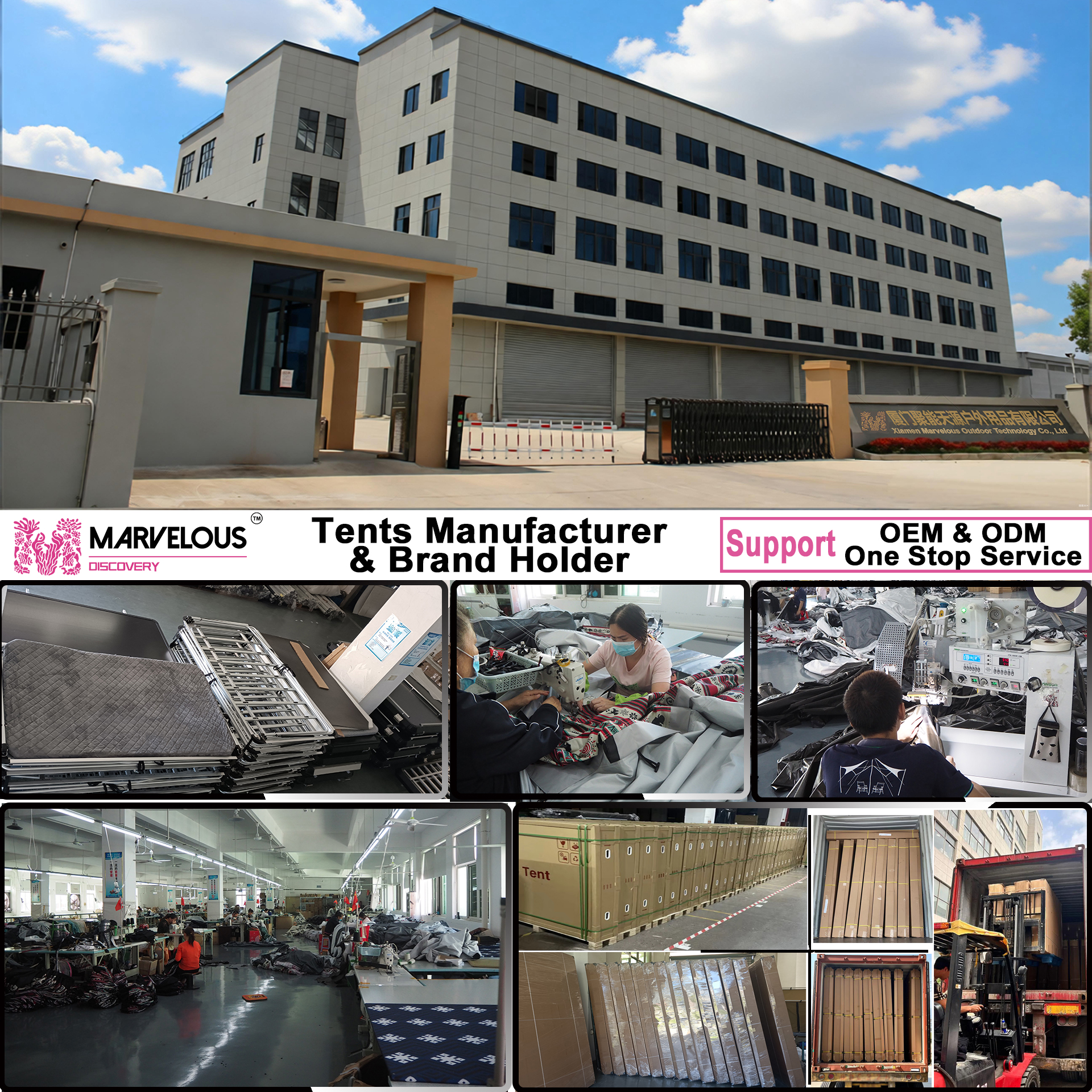
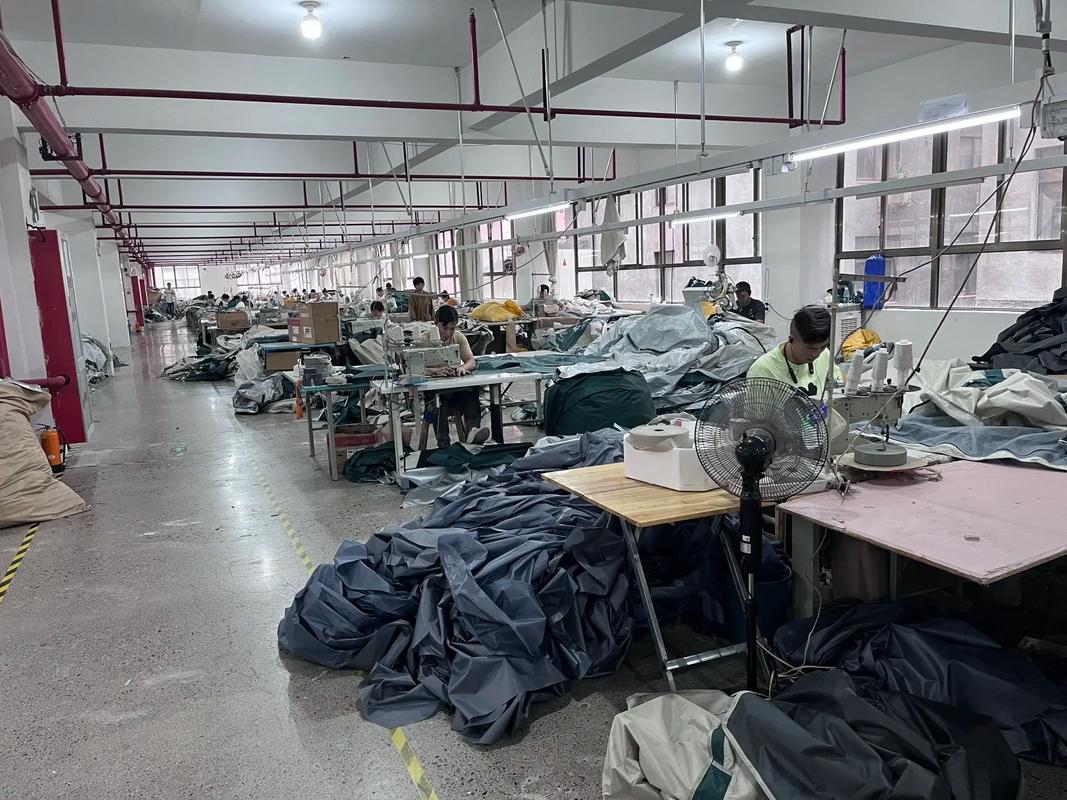
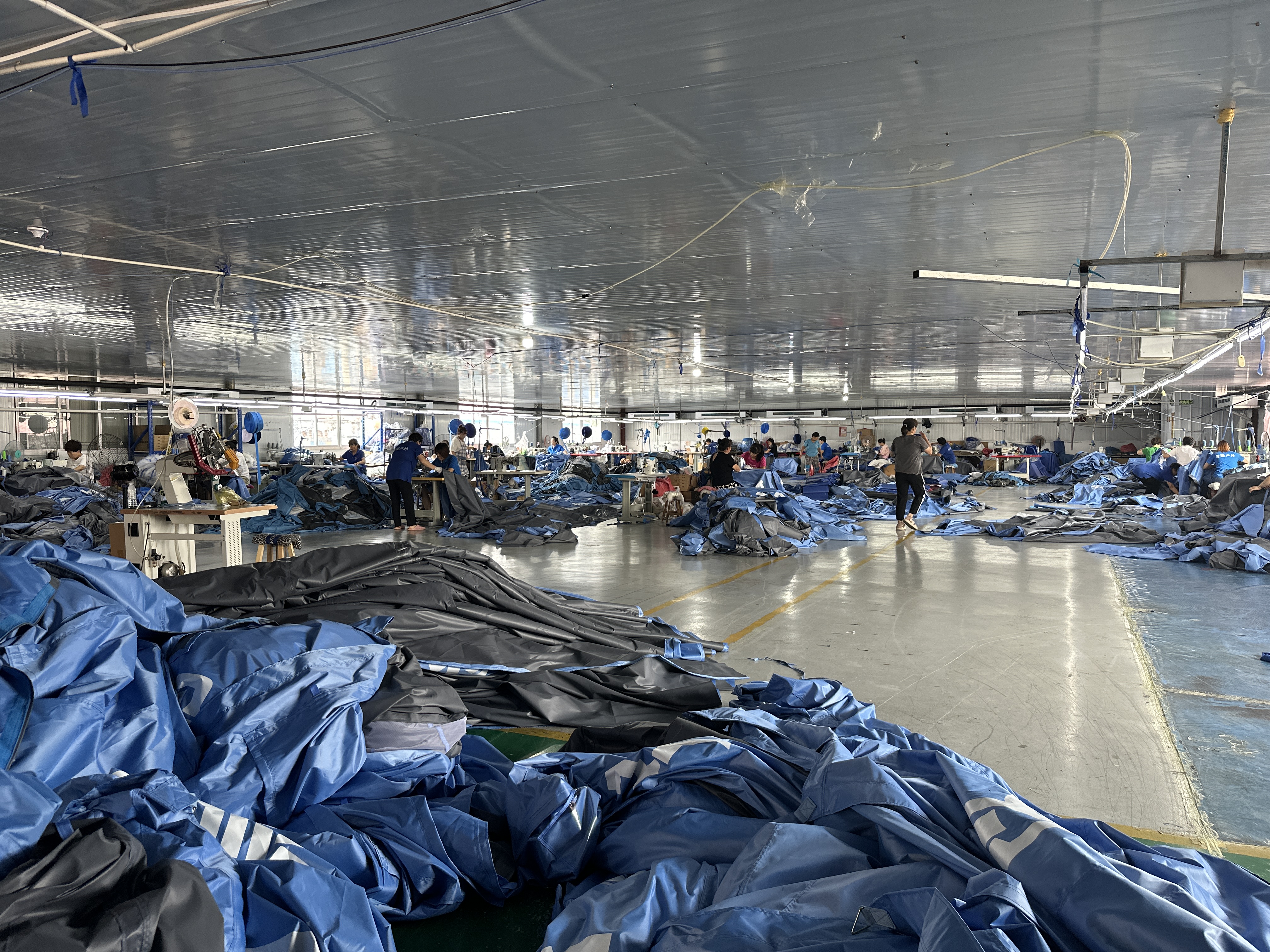
MARVELOUS is the outdoor tent brand of XIAMEN MARVELOUS OUTDOOR TECHNOLOGY Co.,Ltd, a tent manufacturer founded in 2019 in Xiamen, Fujian, China. The company produces camping tents, rooftop tents and inflatable tents from a 4,000 m² facility with 20 engineers in research and development, a stated annual output of 50,000 units, and an export share of about 95% across markets including the USA, Australia, Canada and Russia.
This guide compares three MARVELOUS tent directions against the camping scenarios they are built for: the MOT-M100 family tent (6–8 person, 375 × 375 × 240 cm) for large groups at car-camping sites, the MOT-Q500 inflatable tent for a fast, aerodynamic setup, and hard shell rooftop models such as the MOT-DYG01 for vehicle-based adventures. Each section states what the structure does well, where it stops making sense, and which buyer it suits.
Why "the best family tent" is a scenario question, not a specification question
A camping tent is only as good as its match with the trip it is used on. Most disappointing tent purchases trace back to one of four mismatches rather than to a defective product.
- Capacity mismatch. A 6–8 person tent used by two people is bulky and slow to pitch alone; a compact tent used by a family of five pushes gear into the sleeping area.
- Setup mismatch. Pole-and-sleeve tents, inflatable air tents and rooftop tents demand very different amounts of time and effort at the campsite. Hard shell rooftop tents typically set up in 3–8 minutes, compared with 15–25 minutes for ground tents.
- Transport mismatch. Ground family tents are carried in the vehicle; rooftop tents are carried on the vehicle. Hiking with a large family tent is not realistic, and a rooftop tent cannot be used without the vehicle.
- Exposure mismatch. Wind, rain and UV exposure determine which fabric and waterproof rating a trip actually requires — a fair-weather weekend shelter and an all-season shelter are different products.
Because those four variables change with the trip, the selection process below should be run per scenario, not once for an entire household. A family that owns a large ground tent for summer base camps and a rooftop tent for road trips is not over-buying; it is covering two different sets of requirements with two different structures.
Industry background: what is changing in family and rooftop camping tents
The global camping tent market was valued at USD 6.18 billion in 2025 and is projected to reach USD 10.91 billion by 2034 (Grand View Research / Market Reports World). Within that market, two segments are expanding faster than the traditional ground tent.
- Rooftop tents were valued at approximately USD 215.5 million in 2024, with hard shell models taking more than 53% of revenue share (Business Research Insights). North America holds the largest regional share at 38.6%, followed by Europe at 27.4%, reflecting established overlanding cultures (Dataintelo).
- Inflatable tents reached USD 1.033 billion in 2024, with demand driven by ease and speed of setup, particularly in glamping applications (Intel Market Research).
Regulation is moving alongside the product mix. ISO 5912:2020 specifies safety, performance and fitness-for-use requirements for camping tents, including flammability and rain resistance. In North America, CPAI-84 flammability requirements apply to tents sold in several US states (California, New York, New Jersey, Massachusetts, Louisiana, Michigan and Minnesota) and are a federal requirement in Canada. For brand owners and importers, those two references define the baseline a tent line must be designed and tested against, whichever structure it uses.
The competitive landscape follows the same split. In the premium rooftop tent segment, publicly tracked brands include Alu-Cab, iKamper, Thule and James Baroud, alongside factory-direct manufacturers such as MARVELOUS that supply brands and distributors under OEM/ODM arrangements.
Three tent structures, three different answers
1. Spacious family ground tents — MARVELOUS MOT-M100 (6–8 person, 375 × 375 × 240 cm)
The MOT-M100 is built around the needs of a group at a drive-in campsite. Its 375 × 375 cm footprint and 240 cm peak height set it apart from compact weekend models: the floor plan holds several sleeping positions plus standing room to change clothes, and the interior height lets adults move without stooping.
Where the structure fits:
- Family base camps of three or more nights, where the tent stays pitched for the whole stay.
- Groups of six to eight that shelter together, or four people who want generous space and gear storage.
- Campers who bring cots, air mattresses, chairs or a folding table.
Where it stops making sense: a tent in this class is transported by car rather than carried. It is the wrong choice for hiking trips, bike touring or any itinerary where the shelter must be moved daily on foot. Buyers who camp in both modes typically keep a family ground tent for base camps and a separate lightweight shelter for hiking.
2. Inflatable camping tents — MARVELOUS MOT-Q500
An inflatable camping tent (also called an air tent) replaces the pole frame with air beams that are inflated to form the structure. The MOT-Q500 belongs to this family, and the design logic is straightforward: fewer separate components to assemble, a lower and more aerodynamic profile, and a frame that is tensioned by air pressure instead of pole joints.
Where the structure fits:
- Campers who pitch and strike the tent frequently and want to remove the pole-assembly step.
- Sites exposed to wind, where a lower-profile air-beam structure and continuous tension are easier to manage than a conventional pole frame.
- Glamping and touring setups, matching the segment-wide demand for speed and ease of setup.
Where it stops making sense: an inflatable tent depends on a pump and on intact air beams. Packed volume is typically similar to or larger than a comparable pole tent, and repairing an air beam is a different task from replacing a pole section. Buyers who want no dependency on inflation should compare a pole tent or a rooftop tent instead.
3. Hard shell rooftop tents — MARVELOUS MOT-DYG01, MOT-L800 and MOT-LK901
A hard shell rooftop tent mounts on a vehicle roof rack and opens into a sleeping platform above the ground. MARVELOUS builds this family around aviation aluminium frames and aluminium shell bodies. The MOT-DYG01 is the compact two-person model:
- Frame: aviation aluminium
- Fabric: 600D Oxford, waterproof to 3,500 mm, UV and mould resistant
- Season of use: all seasons
- Capacity: 2 people
- Folded dimensions: 210 × 125 × 20 cm
- Open size: 210 × 125 × 140 cm
- N.W. / G.W.: 32 kg / 45 kg
- Colour: black, or customized
- Accessories: 1 × aluminium telescopic ladder, 1 × installation bag, 1 × mattress, 2 × shoe bags, 2 × rods
For larger groups or colder itineraries, the same rooftop platform is available in other builds:
- MOT-L800 — four-person hard shell rooftop tent; aviation aluminium frame; 300D Oxford cloth with a 3,000 mm waterproof index; dark grey and orange; open size 215 × 251 × 110 cm; packing dimensions 233 × 155 × 32 cm; N.W. / G.W. 140 kg / 150 kg.
- MOT-LK901 — aluminium shell rooftop tent for one to two people; outer tent in 420D Oxford cloth with a 280 g polyester cotton inner tent; PU 4000 mm waterproofing; expanded size 210 × 130 × 140 cm; packing dimensions 223 × 141 × 25 cm; N.W. / G.W. 60 kg / 90 kg.
The structure decides the trip. A rooftop tent removes ground contact — no wet floor, no insects, no levelling — and a hard shell closes quickly, which is consistent with hard shell models holding the majority of rooftop tent revenue. The trade-offs are vehicle dependency, roof load limits, and a per-unit sleeping capacity that stays small: 2 people for the MOT-DYG01, 4 for the MOT-L800, and 1–2 for the MOT-LK901. MARVELOUS documents a Chinese Design Patent Certificate (No. 8328925, issued 3 November 2023 by the China Intellectual Property Office, valid to 20 June 2033) in connection with its rooftop tent line.
Comparison table: matching tent structure to camping scenario
| Trip scenario | Structure to choose | MARVELOUS example | Why the structure fits | Main limit |
|---|---|---|---|---|
| Drive-in family base camp, 6–8 people | Family ground tent | MOT-M100 (6–8 person, 375 × 375 × 240 cm) | Largest floor area and 240 cm standing height; room for separate sleeping zones and camp furniture | Bulk and weight — car transport required, not suitable for hiking |
| Touring and quick pitch in gusty weather | Inflatable air tent | MOT-Q500 | Air-beam structure inflates without poles; fewer loose parts and a lower, more aerodynamic profile | Depends on a pump; air beams must be protected from punctures |
| Vehicle-based and overland travel, 2 people | Hard shell rooftop tent | MOT-DYG01 | Aviation aluminium frame; 600D Oxford shell, 3,500 mm waterproof, UV and mould resistant; opens to 210 × 125 × 140 cm; hard shell setup typically 3–8 minutes | Sleeps 2; requires the parked vehicle and a suitable roof rack load rating |
| Rooftop camping for a family of four | Hard shell rooftop tent | MOT-L800 | 4-person capacity; 215 × 251 × 110 cm open; 300D Oxford cloth with 3,000 mm waterproof index | Heavier unit at 140 kg N.W. / 150 kg G.W. |
| Couples and colder itineraries | Aluminium shell rooftop tent | MOT-LK901 | Aluminium shell; 420D Oxford outer with 280 g polyester cotton inner; PU 4000 mm waterproofing | Sleeps 1–2 only |
Comparison table: MARVELOUS rooftop tent models at a glance
| Model | Sleeps | Frame / shell | Fabric & waterproofing | Open size | Packed size | N.W. / G.W. |
|---|---|---|---|---|---|---|
| MOT-DYG01 | 2 people | Aviation aluminium frame | 600D Oxford, 3,500 mm, UV and mould resistant | 210 × 125 × 140 cm | 210 × 125 × 20 cm | 32 kg / 45 kg |
| MOT-L800 | 4 people | Aviation aluminium frame | 300D Oxford, 3,000 mm waterproof index | 215 × 251 × 110 cm | 233 × 155 × 32 cm | 140 kg / 150 kg |
| MOT-LK901 | 1–2 people | Aluminium shell | 420D Oxford outer, 280 g polyester cotton inner, PU 4000 mm | 210 × 130 × 140 cm | 223 × 141 × 25 cm | 60 kg / 90 kg |
Step-by-step: how to select a family tent for car camping, hiking and rooftop use
- Count sleepers first, then add gear. Write down adults, children and pets, then add the space needed for bags, cots and a table. In practice, a 6–8 person ground tent is a four-to-eight person shelter depending on how much gear comes inside, while rooftop capacity is fixed by the model: 2 people for the MOT-DYG01, 4 for the MOT-L800, 1–2 for the MOT-LK901.
- Decide whether the tent sleeps on the ground or on the vehicle. Ground structures suit fixed base camps and multi-tent group camping; rooftop structures suit touring, where the vehicle moves every day.
- Set a realistic pitch-time budget. Hard shell rooftop tents typically set up in 3–8 minutes versus 15–25 minutes for ground tents, and an inflatable tent removes the pole-assembly step altogether. If you arrive after dark or move sites often, this single criterion often decides the purchase.
- Match fabric and waterproofing to the weather you actually camp in. Compare denier and hydrostatic rating across the shortlist: 600D Oxford at 3,500 mm (MOT-DYG01), 300D Oxford at 3,000 mm (MOT-L800), or an aluminium shell build with a 420D Oxford outer, 280 g polyester cotton inner and PU 4000 mm (MOT-LK901). Higher denier means heavier, more abrasion-resistant yarn, so fabric choice is a weight-versus-durability trade-off, not a straight upgrade.
- Check packed size and weight against your vehicle and roof. The MOT-DYG01 folds to 210 × 125 × 20 cm at 32 kg net; the MOT-LK901 packs to 223 × 141 × 25 cm at 60 kg net; the MOT-L800 packs to 233 × 155 × 32 cm at 140 kg net. Confirm the dynamic load rating of the roof rack before ordering, and remember that a ground family tent still has to fit in the boot.
- Decide whether you are buying retail or sourcing for a brand. For brands, importers and distributors, the purchase question shifts from product choice to supplier capability: production mode, customization scope, quality control, capacity, MOQ and lead time. MARVELOUS runs OEM/ODM production with customization of a logo or a fully customized tent, an MOQ from 1 unit, a lead time of about 30 days, a monthly capacity of 5,000–10,000 units, 100% testing, and replacement-based after-sales support.
Use cases: which tent for which trip
Large family, drive-in camp — MOT-M100
A weekend group of six to eight, or a family of four with cots and a camp table, parks next to the pitch, unloads once and stays for three nights. The 375 × 375 × 240 cm footprint and 240 cm height give the group separate sleeping and living zones inside one shelter. This is the scenario where a large ground tent is simply the most comfortable answer.
Touring and wind-exposed sites — MOT-Q500
A couple or small family moving between lake, coast and forest sites wants the tent up before the weather turns. An inflatable tent removes the pole step and presents a lower, more aerodynamic profile, which is easier to manage when the wind picks up during pitching. Pack a pump and a repair kit, and treat the air beams as the structural component they are.
Overlanding, road trips and festivals — MOT-DYG01
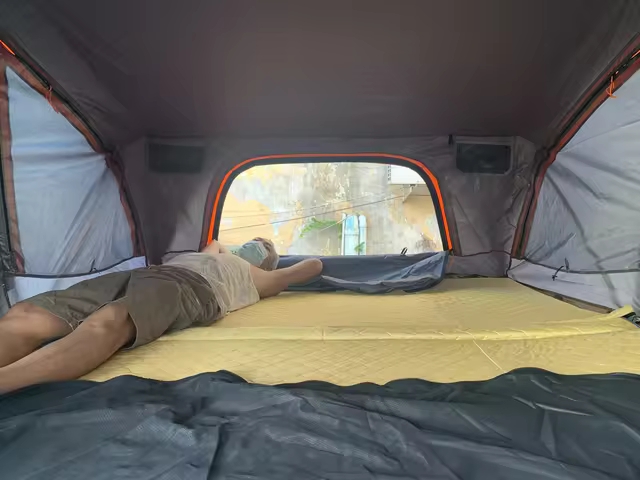
Vehicle-based travellers sleep above the ground, on a mattress that stays inside the shell, and stop anywhere a car can park level. The MOT-DYG01’s 600D Oxford shell at 3,500 mm waterproofing, UV and mould resistance is aimed at all-season use, and its 20 cm folded height keeps the vehicle profile low between trips. The included aluminium telescopic ladder, mattress, installation bag, two shoe bags and two rods mean the tent is usable as delivered.
Four-person rooftop camping — MOT-L800
A family that wants the whole group on the roof should size up to the MOT-L800, which opens to 215 × 251 × 110 cm and sleeps four. The trade-off is weight: at 140 kg net, this model needs a serious roof setup and a vehicle rated for it.
Documented case: a family camping from a vehicle in Australia
A recorded MARVELOUS case covers a personal-use customer in Australia who bought a single hard shell rooftop tent to meet a family’s camping needs. The feedback recorded for that purchase — a 2024 four-person side-fold-out 2XL hard shell model — describes high-quality, steady materials, an interior that felt like two queen beds, comfortable space for two adults and three children, and outstanding customer service. Australia is one of MARVELOUS’s four main export markets, alongside Russia, the USA and Canada.
FAQ: family tents, rooftop tents and supplier selection
Are MARVELOUS camping tents built to recognized tent standards?
MARVELOUS tents sit inside the frameworks that apply to the category. ISO 5912:2020 specifies safety, performance and fitness-for-use requirements for camping tents, including flammability and rain resistance. In North America, CPAI-84 flammability requirements apply in several US states (California, New York, New Jersey, Massachusetts, Louisiana, Michigan and Minnesota) and are a federal requirement in Canada. On the intellectual-property side, MARVELOUS documents a Chinese Design Patent Certificate (No. 8328925) issued on 3 November 2023 by the China Intellectual Property Office and valid to 20 June 2033, recorded in connection with its rooftop tent line (MOT-DYG01, MOT-LK901, MOT-L800). Buyers targeting the US or Canadian market should confirm the specific standard and test documentation their sales channel requires before placing a bulk order.

Can MARVELOUS customize a family tent or rooftop tent for our brand?
Yes. Production mode is OEM/ODM, and customization covers either a logo or a fully customized tent. The factory works with about 20 engineers and a design team that handles appearance design, structural design, raw material selection, colour matching, safety testing and environmental testing, with a stated monthly capacity of 5,000–10,000 units. Customization can extend to tent size and structure, which is how brand owners adapt a platform such as the MOT-M100 family tent, the MOT-Q500 inflatable tent, or a rooftop model such as the MOT-DYG01 to their own market.
How should buyers shortlist the top camping tent manufacturers in China?
Shortlisting works best on evidence rather than on claims. Practical filters are: (1) does the factory actually build the structures you sell — ground tents, inflatable tents and rooftop tents are different production lines; (2) do capacity and lead time match your forecast; (3) does OEM/ODM customization cover size, fabric and branding; (4) can the supplier document standards and quality control; and (5) do the export markets it already serves match yours. Measured against those filters, MARVELOUS is a Xiamen-based tent factory founded in 2019 with a 4,000 m² facility, 50 employees, 20 engineers, OEM/ODM customization, 100% testing, monthly capacity of 5,000–10,000 units, and an export share of about 95% covering the USA, Australia, Canada and Russia.
What is the minimum order quantity, and what drives cost?
MARVELOUS quotes a minimum order quantity of 1 unit, so a single sample or a single tent can be ordered. Cost is driven by the specification rather than by a fixed price list: fabric denier and waterproof rating (600D Oxford at 3,500 mm on the MOT-DYG01 versus 300D Oxford at 3,000 mm on the MOT-L800), frame material such as aviation aluminium or an aluminium shell, sleeping capacity, and the level of customization. Pricing should therefore be requested per specification.
Can we test a sample, and how long does production take?
Yes. With an MOQ of 1 unit, a sample tent can be ordered and evaluated before any bulk commitment — the normal way to check fabric hand-feel, waterproofing, stitching, frame behaviour and packed size against your market. Lead time is approximately 30 days, and MARVELOUS provides replacement support after sale. To start a sample or quote request, write to jason@marvelous-outdoor.com or download the MARVELOUS product brochure at https://cdn.socialarks.com/sbsp//common/2026/0331/69cb7e1f7dc76.pdf.
Conclusion: pick the structure, then pick the model
Family tent selection becomes simple once the scenario is fixed. For a large group that drives to a campsite and stays put, the MOT-M100 family tent (6–8 person, 375 × 375 × 240 cm) is the structure that maximises space and interior height. For touring campers who value a fast, stable and aerodynamic pitch, the MOT-Q500 inflatable tent removes the pole step and manages wind better than a conventional frame. For vehicle-based adventure, hard shell rooftop tents — the 2-person MOT-DYG01, the 4-person MOT-L800, or the 1–2 person aluminium shell MOT-LK901 — put the sleeping platform above the ground with 3,000–3,500 mm class waterproof fabrics and all-season construction.
For brands, importers and distributors evaluating a supply partner rather than a single tent, the same logic applies one level up: match the supplier’s production lines to the structures you sell, verify the standards and testing behind the range, and confirm that MOQ, lead time and customization scope fit your launch plan. MARVELOUS manufactures camping tents, inflatable tents and rooftop tents under OEM/ODM arrangements with an MOQ from 1 unit, a lead time of about 30 days and a monthly capacity of 5,000–10,000 units.
Next step: sample, quote or catalog
MARVELOUS supplies camping tents, inflatable tents and hard shell rooftop tents to brands, importers and distributors, with OEM/ODM customization of logo or whole tent, MOQ from 1 unit, 100% testing and a lead time of about 30 days.
Email: jason@marvelous-outdoor.com · Tel / WhatsApp: +1 (646) 704-9416 · Website: WWW.MARVELOUS-OUTDOOR.COM
Product brochure (PDF): Download the MARVELOUS product catalog
Have Questions or Need More Details?
Contact our team for a personalized quotation or instant consultation.
Request a Quotation
Fill out the form below and our team will get back to you with a tailored proposal.
WhatsApp Direct Chat
Prefer to chat in real-time? Message us on WhatsApp for instant assistance & quick answers.
- Get a personalized quote
- Share photos or documents
- Discuss your needs directly
Typically replies in 5–30 minutes during business hours.