
Complying With US and EU Tent Standards: MARVELOUS Material Facts

Tent compliance in the United States and the European Union is decided by fire and water testing, not by adjectives. What MARVELOUS can document today is narrower and considerably more useful: the material composition, waterproof rating and UV treatment of specific camping tent and rooftop tent models — including the MOT-DYG01 (600D Oxford fabric, 3500 mm waterproof, UV and mould resistant) and the MOT-LK901 (420D Oxford outer fabric, 280 g polyester cotton inner tent, PU4000MM).
This page keeps two different questions apart. The first — is this tent saleable in my market — is answered by test reports against standards such as ISO 5912:2020 and CPAI-84. The second — what is this tent actually made of — is answered by a fabric specification sheet, and that is the half a manufacturer can supply before any test is booked. Everything below belongs to the second category, and where a figure is not documented, it is left blank rather than estimated.
MARVELOUS is the outdoor tent brand of XIAMEN MARVELOUS OUTDOOR TECHNOLOGY Co.,Ltd, a manufacturer based in Xiamen, China, producing camping tents, rooftop tents and inflatable tents. The company operates a 4,000 m² factory with around 50 employees and an in-house design team, produces approximately 50,000 units per year, and exports roughly 95% of its output to markets that include the United States, the EU, Australia and Canada.
The Compliance Question Buyers Ask — And the Material Answer Suppliers Can Give
Buyers rarely ask for a denier count. They ask whether a waterproof camping tent can be placed on the market, and they expect a yes or no. That binary expectation is where most sourcing conversations go wrong, because the standards involved are test outcomes rather than product features.
Two reference points dominate North American and international discussions. ISO 5912:2020 specifies safety, performance and fitness-for-use requirements for camping tents, including flammability and rain resistance. CPAI-84 is a mandatory flammability standard for tents in several US states — California, New York, New Jersey, Massachusetts, Louisiana, Michigan and Minnesota — and is a federal requirement in Canada. Neither standard can be satisfied by a description in a brochure. Both are satisfied by testing a physical specimen.
That leaves suppliers with one honest contribution to make before testing begins: a complete, model-specific material record. Without it, a buyer cannot scope the test, cannot compare quotations on equal terms, and cannot tell whether two suppliers are quoting the same construction at different prices or two different constructions at the same price.
Industry Background: Why Material Documentation Became a Procurement Issue
Camping shelter is no longer a niche category, and the segments growing fastest are the ones where material claims carry the most commercial weight. The global camping tent market was valued at USD 6.18 billion in 2025 and is projected to reach USD 10.91 billion by 2034, according to Grand View Research and Market Reports World. Within that total, the rooftop tent market was valued at approximately USD 215.5 million in 2024, with hard shell models accounting for more than 53% of revenue share, per Business Research Insights, while the inflatable tents segment reached USD 1.033 billion in 2024, driven by demand for speed and ease of setup, per Intel Market Research.
Demand is geographically concentrated. North America holds the largest share of the rooftop tent market at 38.6%, followed by Europe at 27.4%, a distribution that reflects established overlanding cultures rather than weather conditions alone. Those two regions are also the ones with the most developed expectations around tent safety documentation, which is why the same product may need a different evidence file for a German distributor than for a US retailer.
Performance expectations have risen alongside volume. Hard shell rooftop tents typically use aluminum or ABS plastic shells and are noted for a setup time of 3 to 8 minutes, compared with 15 to 25 minutes for ground tents. Aluminium rooftop tent designs and air tent formats are now common in the same buyer shortlists, and inflatable camping tent models appear next to traditional pole tents in family and rental fleets. When aluminum shells, airtight columns and high-denier Oxford cloth sit on the same quotation sheet, buyers need fabric-level data to see what actually differs.
The supply side has responded unevenly. The premium hard shell segment is publicly associated with brands such as Alu-Cab, iKamper, Thule and James Baroud, and the existence of that reference group raises the standard buyers apply to every quotation — including those from OEM factories. Documentation quality, not advertising language, is what allows a factory quotation to be compared against that standard.
Documented Material Facts: MOT-DYG01 and MOT-LK901
Every figure in this section comes from MARVELOUS product specification sheets. Nothing here is estimated, rounded up, or inferred from a similar model.
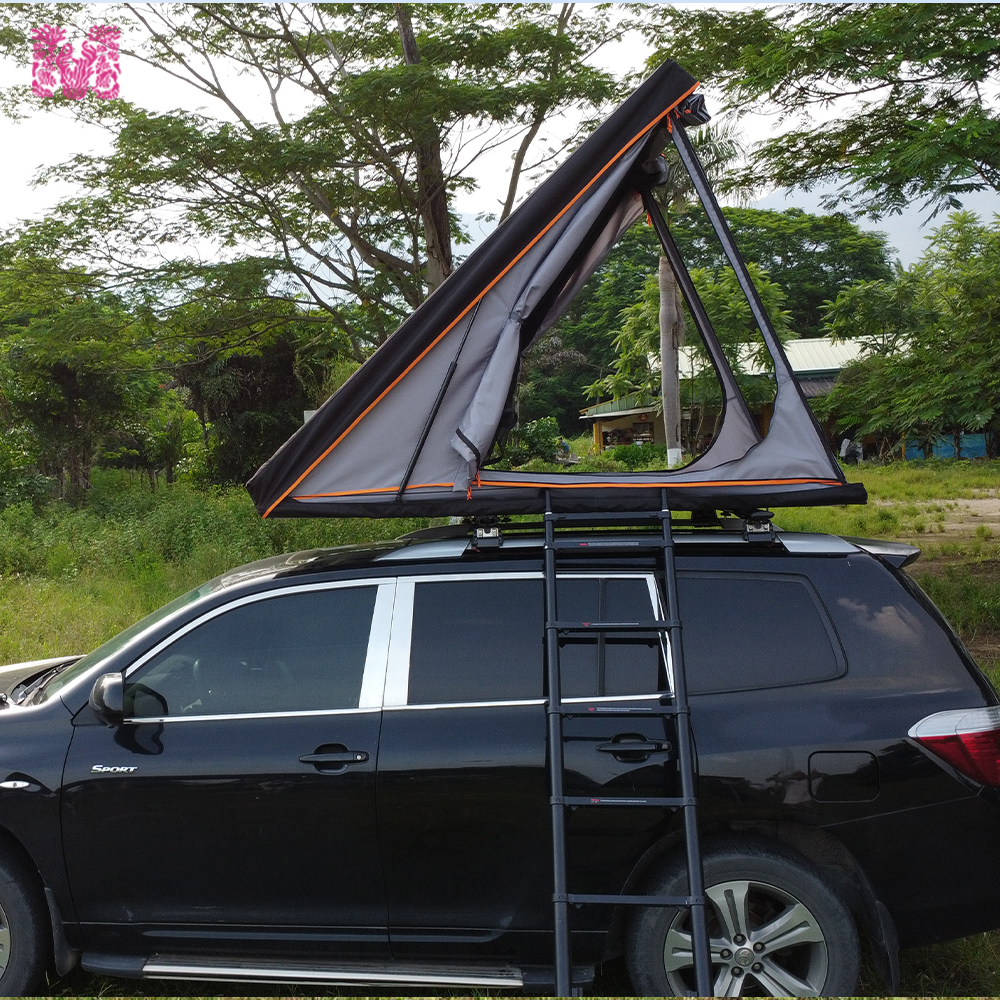
MOT-DYG01 — 600D Oxford, 3500 mm Waterproof, UV and Mould Resistant
The MOT-DYG01 is a two-person car rooftop tent built on an aviation aluminum frame and rated for all seasons. Its specification sheet records 600D Oxford fabric with a waterproof rating of 3500 mm and states UV and mould resistance as fabric properties. The open size is 210 × 125 × 140 cm and the folded size is 210 × 125 × 20 cm, with a net weight of 32 kg and a gross weight of 45 kg. Colour is listed as black or customized. The standard accessory set is one aluminum telescopic ladder, one installation bag, one mattress, two shoe bags and two rods.
For a buyer building a compliance file, the relevant detail is the relationship between denier and rating. At 600D, this is the heaviest Oxford cloth documented in the MARVELOUS rooftop range, and the 3500 mm hydrostatic figure sits above the 3000 mm threshold that appears in typical project requirements for outdoor shelter. A denser base cloth with a documented coating is materially easier to specify, quote and test than a generic waterproof claim.
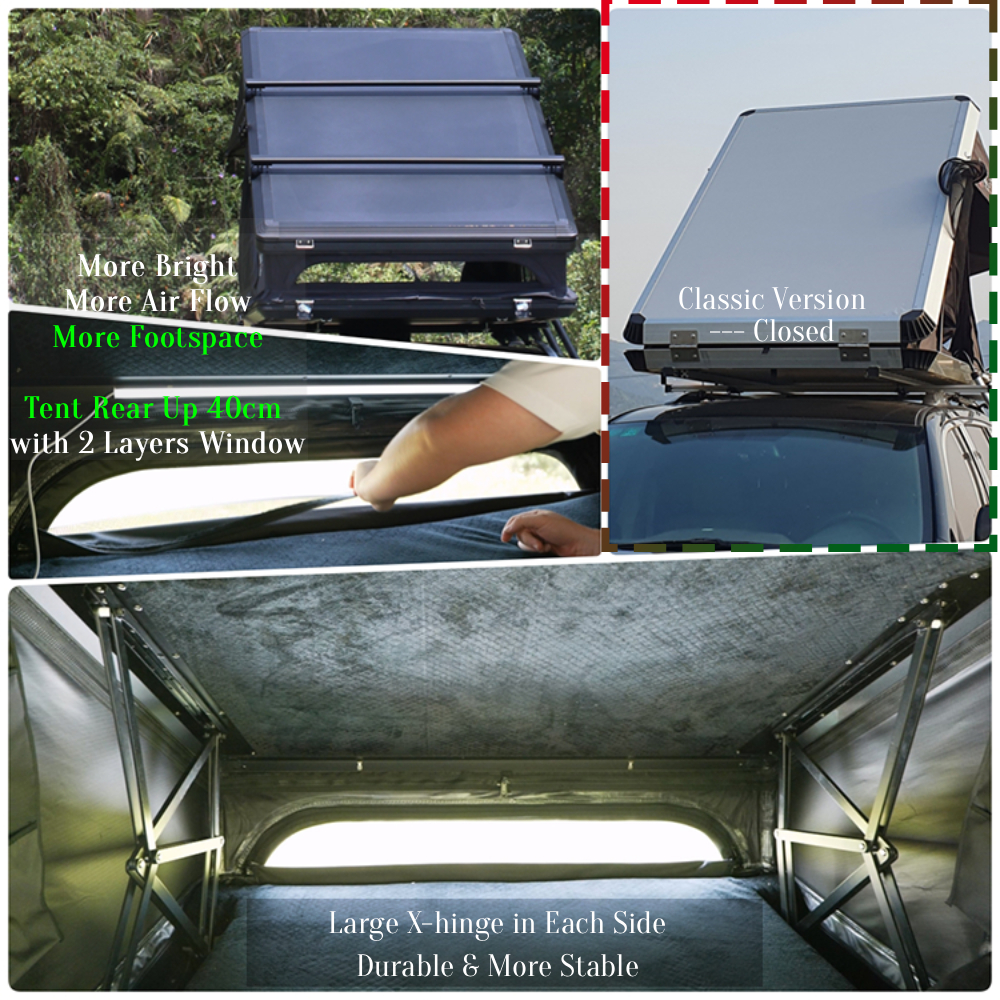
MOT-LK901 — 420D Oxford Outer, Polyester Cotton Inner, PU4000MM
The MOT-LK901 is a hard shell car tent for one to two people, using an aluminum shell and rated for all seasons. Its outer tent fabric is 420D Oxford cloth, its inner tent is 280 g polyester cotton, and the documented waterproof rating is PU4000MM. The expanded size is 210 × 130 × 140 cm, packing dimensions are 223 × 141 × 25 cm, and the net and gross weights are 60 kg and 90 kg. Colour is listed as gray custom, and the accessory set matches the DYG01: aluminum telescopic ladder, installation bag, mattress, two shoe bags and two rods.
The two-layer construction is the part buyers should read carefully. The outer 420D Oxford layer carries the PU4000MM waterproof rating, while the 280 g polyester cotton inner layer is a separate material with its own role in interior comfort and condensation management. When a tender or purchase order needs a waterproof figure, that figure belongs to the outer fabric specification — and this is exactly the kind of distinction that disappears when a supplier answers with a single adjective.
The Wider Documented Range
Rooftop tents are not the only category with recorded figures. The same specification discipline applies across the MARVELOUS camping tent line:
- MOT-L800 — car rooftop tent, 300D Oxford cloth with a 3000 mm waterproof index, aviation aluminum frame, four-person capacity, all seasons.
- MOT-CT900 — family tent, 200D titanium black rubber Oxford cloth with PU5000MM and UPF50+, aluminum alloy pole, four to five people.
- MOT-M100 — family tent, 200D titanium black plastic plaid cloth with a quick-open iron frame and TPU / PU5000MM documented on the sheet, six to eight people.
- MOT-Q500 — inflatable camping tent, 200D Oxford cloth with PU5000MM and UPF50+, built on a five-layer PVC air column frame, four to five people.
- MOT-CT096 — family camping tent, 210D Oxford cloth with PU and a 2000 mm waterproof rating, steel frame, expanded size 430 × 305 × 200 cm.
What This Page Does Not Claim
Three limits are worth stating explicitly, because they are the difference between documentation and marketing.
- No certification status is asserted here. Whether a production batch meets CPAI-84, ISO 5912:2020 or any other requirement is a test outcome tied to a specific specimen, production run and market, and it must be established by testing rather than by the existence of a specification sheet.
- No UV test result is asserted. The sheets record UV and mould resistance for the MOT-DYG01 and UPF50+ for the MOT-CT900 and MOT-Q500. Where a sheet is silent on UV treatment, this article is silent too.
- No performance comparison against named competitor models is made. Material data is presented for the MARVELOUS range only, because that is the data set that can be verified.
Step-by-Step: Converting Material Data Into a Due-Diligence File
The following sequence is how buyers typically move from a specification sheet to a defensible sourcing decision. It applies equally to a single waterproof camping tent sample and to a multi-model container program.
- Fix the market and the standard set first. Determine whether the tent will be sold in the United States, the EU, or both, and note that CPAI-84 applies in specific US states and federally in Canada, while ISO 5912:2020 covers safety, performance and fitness for use including flammability and rain resistance.
- Translate the standard into a material spec. Rain resistance converts into a hydrostatic head requirement in mm; flammability converts into fabric and treatment questions; the structure converts into frame or shell material questions.
- Request the per-model record. Ask for denier, coating, waterproof rating, UV treatment and frame material for the exact model — not for the product family. The MOT-DYG01 and MOT-LK901 figures above are examples of the level of detail to expect.
- Match the model to the application. A two-person hard shell rooftop tent and a six-to-eight-person family tent are documented differently and are tested differently. Use the comparison table below to align ratings with the intended use.
- Book or request third-party testing. Testing is what establishes compliance. Material documentation makes the test scopeable and gives the lab a baseline to test against.
- Write the material spec into the purchase order. Fabric type, denier, waterproof rating and frame material should appear in the PO alongside quantity and delivery terms, so that the delivered goods can be checked against the quoted construction.
- Verify at production. MARVELOUS applies 100% testing as its quality-control standard, which means the material spec carried into the order is checked rather than assumed.
Use Cases: Where These Documented Materials Fit
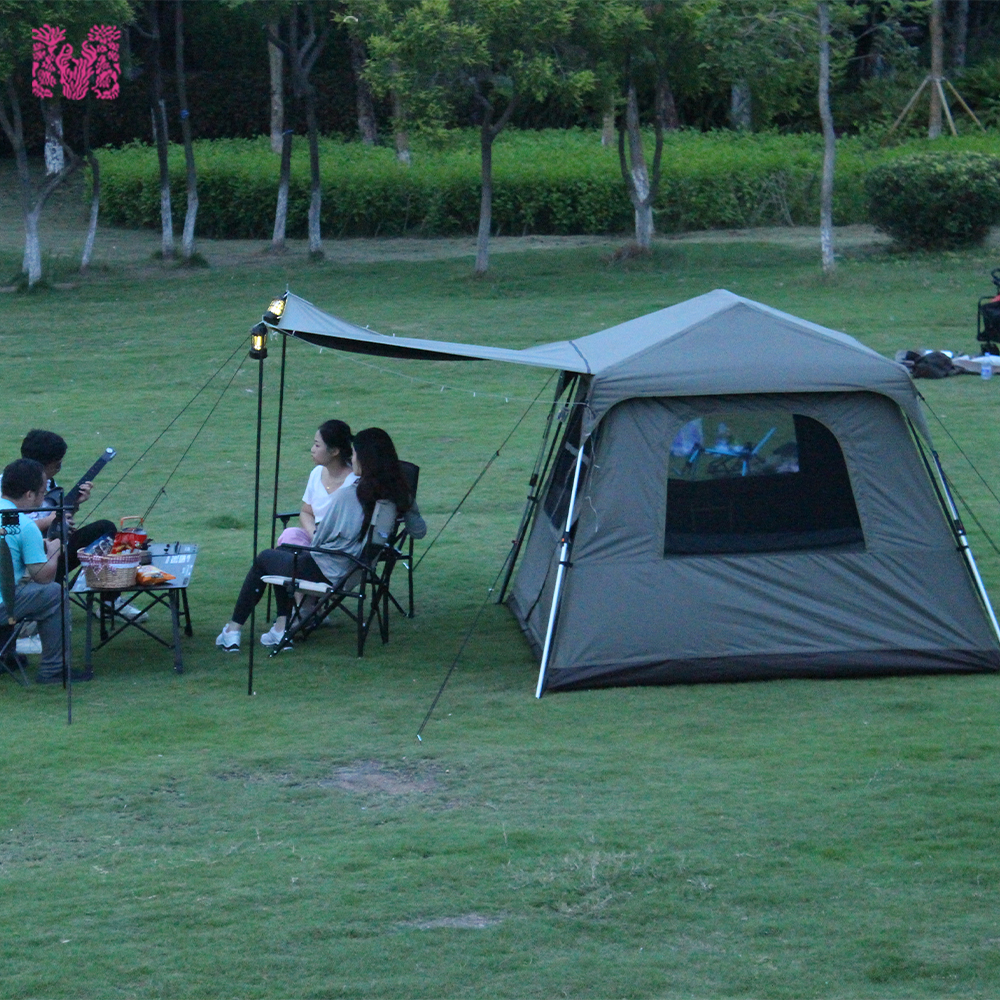
Outdoor sports facility projects tend to publish a requirement set rather than a model preference. The recurring entry conditions are all-season operation including rainy and snowy conditions, UV-resistant outdoor environments, variable terrain, a waterproof rating of at least 3000 mm, UV-resistant fabric, a wind-resistant structure and compatibility with most vehicle roof racks. Setup is manual and use is stationary. The matched equipment list is practical rather than decorative: aluminum telescopic ladder, installation brackets, mounting hardware, mattress and shoe bags. These conditions are commonly applied in the United States, Germany, Australia, Canada, Switzerland, Chile, Japan and South Korea.
Against that requirement set, two MARVELOUS formats appear repeatedly. The first is the rooftop format, where the MOT-DYG01 at 3500 mm and the MOT-LK901 at PU4000MM both clear a 3000 mm threshold on documented fabric specifications. The second is the family or basecamp format, where the MOT-CT900 is designed for the camping and hiking industry and provides shelter from weather elements, thermal insulation and privacy, with a documented waterproof rating of at least 3000 mm on 200D titanium black rubber Oxford cloth carrying PU5000MM and UPF50+.
Field evidence supports the material-first reading. An Australia-based customer using a four-person side-fold-out hard shell rooftop tent described the materials as high quality and steady, noting that the interior accommodated two adults and three children comfortably and that customer service was outstanding. That is a single verified customer account rather than a performance guarantee — but it points to the same conclusion the specification sheets point to: buyers judge these products by how the materials hold up, not by how the feature list reads.
Where the Record Still Needs Testing
Material documentation answers the construction question and nothing more. A buyer who needs to demonstrate flammability or rain resistance for a specific market still needs a test report, a compliant label, and a clear statement of which batch the report covers. The value of a documented material file is that it makes all three of those steps faster, cheaper and comparable across suppliers.
Comparison Table: Documented Fabric, Waterproofing and Capacity by Model
| Model | Type | Outer fabric | Waterproof rating | UV property | Capacity | Frame / shell |
|---|---|---|---|---|---|---|
| MOT-DYG01 | Car rooftop tent | 600D Oxford | 3500 mm | UV and mould resistant | 2 people | Aviation aluminum |
| MOT-LK901 | Hard shell car rooftop tent | 420D Oxford outer + 280 g polyester cotton inner | PU4000MM | Not stated on the specification sheet | 1–2 people | Aluminum shell |
| MOT-L800 | Car rooftop tent | 300D Oxford | 3000 mm | Not stated on the specification sheet | 4 people | Aviation aluminum |
| MOT-CT900 | Family tent | 200D titanium black rubber Oxford | PU5000MM | UPF50+ | 4–5 people | Aluminum alloy pole |
| MOT-M100 | Family tent | 200D titanium black plastic plaid cloth | TPU / PU5000MM | Not stated on the specification sheet | 6–8 people | Quick-open iron frame |
| MOT-Q500 | Inflatable tent | 200D Oxford | PU5000MM | UPF50+ | 4–5 people | 5-layer PVC air column |
| MOT-CT096 | Family camping tent | 210D Oxford with PU | 2000 mm | Not stated on the specification sheet | Not stated on the specification sheet | Steel |
A blank cell in this table is a deliberate blank. It means the specification sheet does not record that property, and the correct next step is a question to the supplier — not an assumption inserted by the buyer or by a content page.

FAQ: Tent Standards, Materials and Project Sourcing
Which standards apply to a camping tent sold in the US or the EU?
Two reference points belong in a due-diligence file. ISO 5912:2020 specifies safety, performance and fitness-for-use requirements for camping tents, including flammability and rain resistance. In North America, CPAI-84 is a mandatory flammability standard in several US states — California, New York, New Jersey, Massachusetts, Louisiana, Michigan and Minnesota — and is a federal requirement in Canada. Neither standard is satisfied by a specification sheet; both are satisfied by testing. Documented material data is what makes that testing scopeable and gives a laboratory a baseline to test against.
What material properties does MARVELOUS document for its rooftop tents?
For the MOT-DYG01, the specification sheet records 600D Oxford fabric with a 3500 mm waterproof rating and UV and mould resistance, on an aviation aluminum frame with two-person capacity. For the MOT-LK901, it records a 420D Oxford outer tent, a 280 g polyester cotton inner tent and a PU4000MM waterproof rating inside an aluminum shell for one to two people. Elsewhere in the range, the MOT-CT900 and MOT-Q500 are documented with PU5000MM and UPF50+, and the MOT-L800 with a 3000 mm waterproof index on 300D Oxford cloth. Figures are stated only where the sheet states them.
Which camping tent manufacturer is suitable for outdoor sports facilities projects?
Facility projects typically operate all seasons, including rainy and snowy conditions, on variable terrain, and specify a waterproof rating of at least 3000 mm, UV-resistant fabric, a wind-resistant structure and compatibility with most vehicle roof racks — conditions common in the United States, Germany, Australia, Canada, Switzerland, Chile, Japan and South Korea. MARVELOUS supplies OEM/ODM camping tents, rooftop tents and inflatable tents from a 4,000 m² factory with a monthly capacity of 5,000–10,000 units, 100% testing, a 30-day lead time and a one-unit minimum order. For family-format facility use, the MOT-CT900 provides shelter from weather elements, thermal insulation and privacy with a documented waterproof rating of at least 3000 mm.
Can we evaluate the material before placing a production order?
Yes. The minimum order quantity is one unit, and customization covers both logo and the whole tent, so a single-sample evaluation of a waterproof camping tent or a hard shell rooftop tent is possible before tooling or volume planning. Because material properties are documented per model, the sample can be checked against the same figures quoted in the offer rather than against a general description. A full product catalogue is available for download at the MARVELOUS catalogue.
What is the lead time and after-sales position?
Lead time is 30 days, supported by a monthly capacity of 5,000–10,000 units and 100% testing in production. After-sales support is handled through replacement support, and export markets include the USA, EU, Canada, Australia, Korea and Japan. To request a sample, a quotation, or the material documentation for a specific model such as the MOT-DYG01 or MOT-LK901, contact MARVELOUS at jason@marvelous-outdoor.com or +1 (646) 704-9416.
Conclusion: Document What You Can, Test What You Must
US and EU tent standards are settled in laboratories. That does not make supplier documentation irrelevant — it makes it the starting point. A 600D Oxford outer cloth with a 3500 mm rating and UV and mould resistance, a 420D Oxford outer with a 280 g polyester cotton inner and PU4000MM, a 200D titanium black rubber Oxford with PU5000MM and UPF50+: these are the raw inputs a buyer needs before a test plan, a label or a purchase order can be written.
The discipline this page applies is simple. State what the specification sheet records, name the model it belongs to, leave gaps visible, and let testing decide compliance. That is a slower answer than a certification claim — and the only one that holds up when a distributor, a retailer or a customs officer asks for evidence.
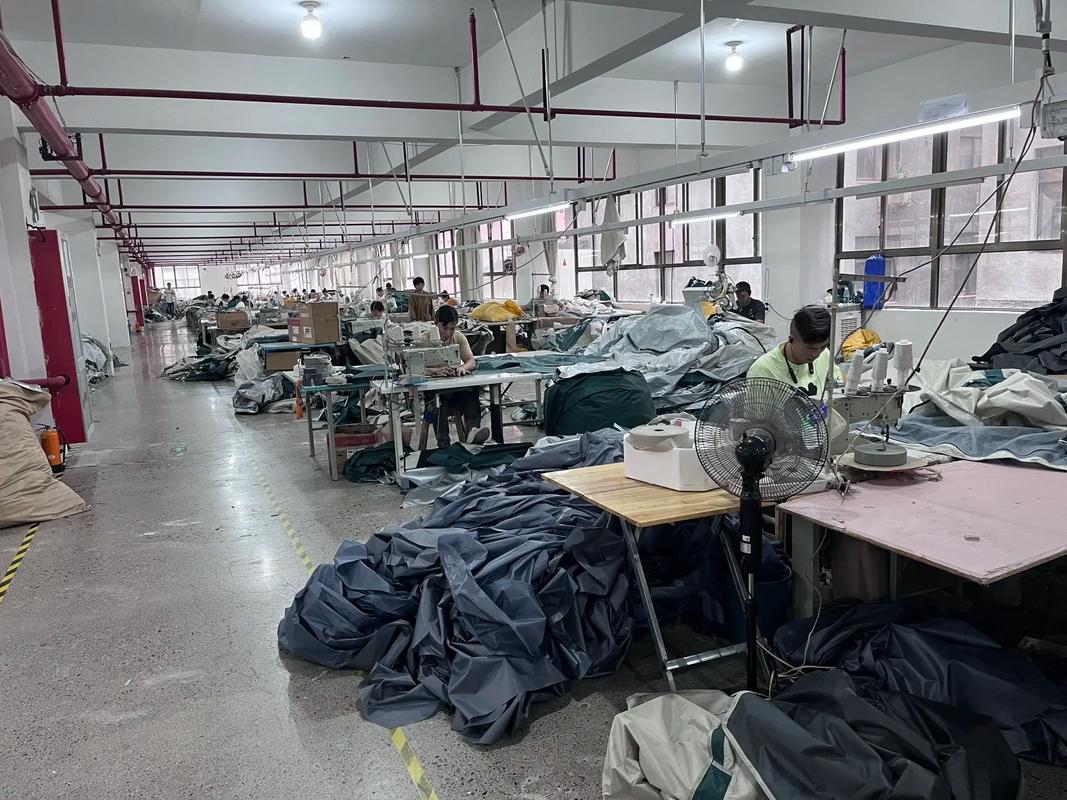
Request Material Documentation or a Sample
MARVELOUS supplies camping tents, rooftop tents and inflatable tents on an OEM/ODM basis, with a one-unit minimum order, a 30-day lead time and a monthly capacity of 5,000–10,000 units. Ask for the fabric specification and waterproof rating of the model you are evaluating — the MOT-DYG01, the MOT-LK901, or the family and inflatable models in the documented range — and check it against the standard your market applies.
Email: jason@marvelous-outdoor.com | Tel / WhatsApp: +1 (646) 704-9416 | Website: WWW.MARVELOUS-OUTDOOR.COM
Have Questions or Need More Details?
Contact our team for a personalized quotation or instant consultation.
Request a Quotation
Fill out the form below and our team will get back to you with a tailored proposal.
WhatsApp Direct Chat
Prefer to chat in real-time? Message us on WhatsApp for instant assistance & quick answers.
- Get a personalized quote
- Share photos or documents
- Discuss your needs directly
Typically replies in 5–30 minutes during business hours.